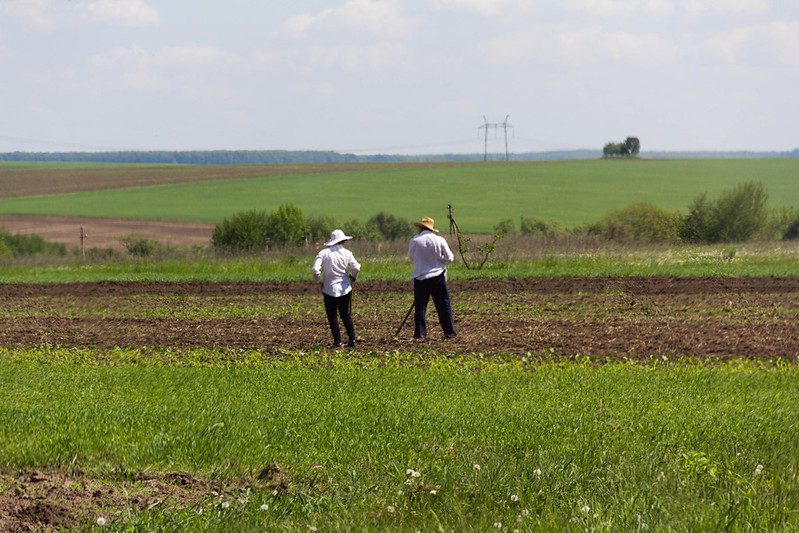
 The United Nations’ SDG3 calls on nations to “ensure healthy lives and promote well-being for all at all ages.” In Ukraine, where fields once symbolized stability and nourishment, this goal now depends on resilience, innovation and survival.
Long known as the “breadbasket of Europe,” Ukraine’s vast chernozem, or black soil, has produced crops that feed hundreds of millions. Before Russia’s full-scale invasion in February 2022, Ukraine ranked among the world’s top exporters of wheat, corn, barley and sunflower oil—key exports supporting food security in Asia, Africa and the Middle East. Yet the war turned fertile farmland into danger zones and disrupted one of the world’s most essential supply chains.
A War Against Food Security
Russia’s invasion devastated Ukraine’s agricultural economy and left Ukraine facing the world’s largest contamination problem since the Second World War. Ports and grain silos were bombed, transport lines cut, and tractors shelled in open fields. By the end of 2024, mines and unexploded ordnance contaminated nearly 139,000 square kilometres—an area larger than Greece—and drove an estimated $83.9 billion in agricultural losses
Farmers now face a deadly paradox: the world needs Ukraine’s grain, yet farming can cost them their lives. “In this village, we can only feel safe in our own yard,” said a smallholder farmer from Kamianka. “When you go outside, there is danger waiting for you.”
These disruptions ripple far beyond Ukraine’s borders. Many low-income countries rely on Ukrainian imports to prevent hunger and stabilize food prices. When exports slowed in 2022 and 2023, food prices across Africa and the Middle East surged. Each lost harvest season deepened global food insecurity, an often overlooked casualty of the war.
Digital Farming: Safety and Survival
In response, farmers and their partners have embraced digital farming in the grain sector as a vital lifeline. Digital farming in Ukraine uses data and technology like satellite imagery, drones and remote sensors to monitor soil and crops when entering the field is unsafe. These tools provide real-time information about weather, soil moisture and damage from explosives.
Farmers now rely on digital mapping to plan where planting is feasible and where fields remain too dangerous. Drones and sensors capture crop data from above, helping identify safe areas for cultivation. Precision agriculture also maximizes yields on secure land, conserving scarce inputs like fertilizer and fuel.
Organizations such as the Food and Agriculture Organization (FAO) and the World Bank have supported these efforts. The FAO has enhanced the State Agrarian Registry and advanced digital mapping capabilities, while the World Bank’s Seeds of Hope project finances new technologies to restore production. Through these partnerships, Ukrainian farmers can continue working, feeding families and sustaining exports even in conflict conditions.
GRIT: Clearing the Way Forward
Digital farming in Ukraine extends beyond crop management. The new Geoinformation System for Demining (GRIT) platform is transforming how humanitarian teams clear land. GRIT integrates large data sets, maps and local reports to help identify, prioritize and monitor demining efforts.
By focusing first on high-impact agricultural zones, GRIT ensures land restoration aligns with food production needs. This evidence-based system accelerates clearance operations and coordinates national and international demining partners. As a result, fertile fields return to safe use faster, restoring livelihoods and preventing rural communities from collapsing under economic strain.
Demining also links directly to SDG 3. Clearing land reduces physical injury risks, supports income recovery, and strengthens food access, each a cornerstone of healthy living. Every hectare restored means safer work, lower food prices and renewed optimism.
Health and Well-Being Beyond Borders
Farming in conflict zones is not only an economic challenge; it’s a public-health crisis. Farmers risk severe injury from mines, exposure to toxic residues, and chronic stress. Whole families live with the psychological burden of displacement and uncertainty. Meanwhile, global nutrition suffers when Ukrainian exports falter, since wheat and corn from Ukraine form the base of diets in many developing countries.
Digital farming mitigates these threats. Satellite tools lower worker exposure, while precise land monitoring reduces contamination risks. Even a modest recovery in crop output helps stabilize local markets and global prices, keeping food affordable for households worldwide. Through this lens, technology becomes a critical health intervention.
Global Partnerships for Resilience
Ukraine’s struggle has also sparked a wave of international collaboration. Western governments, agricultural firms, and tech companies are sharing data infrastructure and tools. Private agritech firms contribute satellite services, while nonprofits distribute digital tablets and software to local cooperatives. The European Union has allocated €10 million to support access to digital solutions for rural farmers, ensuring that innovation reaches communities most affected by the conflict.
These partnerships demonstrate that resilience is not built alone. When the international community invests in digital recovery tools, it helps sustain agriculture as a global public good. Ukraine’s experience shows how supporting farmers in crisis zones protects both livelihoods and health outcomes worldwide.
Seeds of Recovery
Despite unimaginable hardship, Ukrainian farmers continue to plant, harvest and adapt. Grain exports, while reduced, have resumed through alternative routes via the Danube and land corridors to Europe. Digital farming in Ukraine allows them to make smart decisions, stretch limited resources and keep Ukraine on the global agricultural map.
As the world moves toward 2030, Ukraine stands as a testament that achieving good health and well-being requires more than clinics and vaccines. It requires protecting livelihoods that sustain life itself. Digital farming proves that in times of crisis, technology can be the bridge between survival and recovery, ensuring that the breadbasket of Europe continues to feed the world with resilience and courage.
– Lola Chambers
Lola is based in Vancouver, British Columbia, Canada and focuses on Technology and Politics for The Borgen Project.
Photo: Flickr

Renewable Energy in Africa: Startups Driving Sustainable Growth
The Energy Challenge and Opportunity
Despite Africa’s enormous renewable potential, it holds about 60% of the world’s best solar resources, and the continent has historically received a small share of global clean energy investment. Renewables accounted for around 14% of total energy supply in 2020, and Africa received 2% of global clean energy funding in recent years.
Currently, energy access remains a development priority. Nearly half of the population in sub-Saharan Africa lives without reliable electricity, limiting business growth, health services and education. However, the growth in renewable energy, especially solar, signals a shift toward long-term, sustainable infrastructure across both urban and rural communities.
Startups Powering Progress
Several startups are leading the charge in delivering renewable solutions that expand access to power and stimulate local economies:
Business, Health and Social Benefits
The spread of renewable energy in Africa is not only an environmental benefit; it is also a business and social solution. Consistent electricity enables small enterprises to scale, increases educational opportunities by providing light for study after dark and powers clinics and refrigeration for vaccines. Solar power investment also creates jobs, from installation technicians to business service providers, boosting local economies and workforce development.
Looking Ahead
Investors are taking notice, with grid and clean energy ventures attracting hundreds of millions in funding in recent years, showing growing confidence in Africa’s renewable energy market. Indeed, with continued innovation and investment, the region is positioned to make renewable energy a cornerstone of sustainable economic growth and climate resilience. Renewable energy in Africa is not just a technical solution; it is reshaping markets, supporting communities and helping build a cleaner future for millions.
– Nishanth Pothapragada
Photo: Flickr
Poverty Reduction and EVs in Ethiopia
Several global players are currently benefiting from the new EV policy. For instance, international EV manufacturers have experienced substantial market growth in sub-Saharan Africa. The Toyota bZ4x EV has become increasingly popular in Ethiopia since 2024, as has the Mercedes-Benz EQ range.
The policy’s impact on the environment cannot be understated. Ethiopia aims to accommodate 60 EV manufacturing plants by 2030 and have 500,000 EVs on the roads by 2032; both aims will lead to a significant and sustainable reduction in the state’s hydrocarbon emissions. The policy, while contributing to environmental protection and the growth of international conglomerates, is also set to aid poverty reduction in Ethiopia through three distinct pathways.
Import Cost Redistribution
The new EV policy will free up significant government resources, which it can invest in vital infrastructure and social services. Before passing the EV bill, the Ethiopian government spent roughly $7.6 billion per year importing fossil fuels, approximately 5% of its GDP. This led to the accrual of billions of dollars in international debt.
Ethiopia defaulted on its sovereign bonds in 2023 and received an International Monetary Fund (IMF) bailout in 2024. Without the enormous financial pressure imposed by the cost of importing fossil fuels, the Ethiopian government will have more capital to invest in education, health care and infrastructure.
Approximately 55% of children in Ethiopia complete primary schooling. Increased investment in education could encourage school attendance by subsidizing stationery, uniforms and school meals. An increase in educational access in Ethiopia would provide a stable basis for economic development in traditionally deprived communities, contributing to the alleviation of poverty.
Job Creation
The new EV policy, through the construction of EV manufacturing plants, is set to create thousands of new jobs. The policy’s staggered import tariff favors the assembly of EVs in Ethiopia over traditional vehicle imports. As a result, many new manufacturing plants are currently being built in Ethiopia. Seventeen are currently operational.</span>
Ethiopia’s labor market is stable; unemployment sits at just 3.9%. However, the growing EV industry will provide opportunities for workers traditionally employed in agriculture to earn higher, less seasonally dependent wages in skilled secondary-sector manufacturing jobs. This will support poverty alleviation through increased wage stability.
Vehicle Distribution
Vehicle ownership in Ethiopia has traditionally been concentrated in Addis Ababa. Cars are a rare luxury in the sub-Saharan country, with just 13 cars per 1,000 people. The increase in local car manufacturing is forecast to lower vehicle prices by offsetting import tariffs and other costs.
Cheaper cars will democratize access, allowing a greater proportion of Ethiopia’s population to commute. These activities will encourage economic development in areas that have traditionally lacked strong transport links, such as deprived rural areas, thereby contributing to poverty reduction. Overall, Ethiopia’s new EV policy is set to help alleviate local poverty.
It will do so by freeing government resources for reinvestment in social infrastructure, providing secondary-sector employment and democratizing vehicle ownership. Large corporations and states, while also benefiting from the policy, are not the only actors set to benefit from EVs in Ethiopia.
– Arthur Horsey
Photo: Flickr
Digital Farming in Ukraine: A Lifeline for Global Food Security
Long known as the “breadbasket of Europe,” Ukraine’s vast chernozem, or black soil, has produced crops that feed hundreds of millions. Before Russia’s full-scale invasion in February 2022, Ukraine ranked among the world’s top exporters of wheat, corn, barley and sunflower oil—key exports supporting food security in Asia, Africa and the Middle East. Yet the war turned fertile farmland into danger zones and disrupted one of the world’s most essential supply chains.
A War Against Food Security
Russia’s invasion devastated Ukraine’s agricultural economy and left Ukraine facing the world’s largest contamination problem since the Second World War. Ports and grain silos were bombed, transport lines cut, and tractors shelled in open fields. By the end of 2024, mines and unexploded ordnance contaminated nearly 139,000 square kilometres—an area larger than Greece—and drove an estimated $83.9 billion in agricultural losses
Farmers now face a deadly paradox: the world needs Ukraine’s grain, yet farming can cost them their lives. “In this village, we can only feel safe in our own yard,” said a smallholder farmer from Kamianka. “When you go outside, there is danger waiting for you.”
These disruptions ripple far beyond Ukraine’s borders. Many low-income countries rely on Ukrainian imports to prevent hunger and stabilize food prices. When exports slowed in 2022 and 2023, food prices across Africa and the Middle East surged. Each lost harvest season deepened global food insecurity, an often overlooked casualty of the war.
Digital Farming: Safety and Survival
In response, farmers and their partners have embraced digital farming in the grain sector as a vital lifeline. Digital farming in Ukraine uses data and technology like satellite imagery, drones and remote sensors to monitor soil and crops when entering the field is unsafe. These tools provide real-time information about weather, soil moisture and damage from explosives.
Farmers now rely on digital mapping to plan where planting is feasible and where fields remain too dangerous. Drones and sensors capture crop data from above, helping identify safe areas for cultivation. Precision agriculture also maximizes yields on secure land, conserving scarce inputs like fertilizer and fuel.
Organizations such as the Food and Agriculture Organization (FAO) and the World Bank have supported these efforts. The FAO has enhanced the State Agrarian Registry and advanced digital mapping capabilities, while the World Bank’s Seeds of Hope project finances new technologies to restore production. Through these partnerships, Ukrainian farmers can continue working, feeding families and sustaining exports even in conflict conditions.
GRIT: Clearing the Way Forward
Digital farming in Ukraine extends beyond crop management. The new Geoinformation System for Demining (GRIT) platform is transforming how humanitarian teams clear land. GRIT integrates large data sets, maps and local reports to help identify, prioritize and monitor demining efforts.
By focusing first on high-impact agricultural zones, GRIT ensures land restoration aligns with food production needs. This evidence-based system accelerates clearance operations and coordinates national and international demining partners. As a result, fertile fields return to safe use faster, restoring livelihoods and preventing rural communities from collapsing under economic strain.
Demining also links directly to SDG 3. Clearing land reduces physical injury risks, supports income recovery, and strengthens food access, each a cornerstone of healthy living. Every hectare restored means safer work, lower food prices and renewed optimism.
Health and Well-Being Beyond Borders
Farming in conflict zones is not only an economic challenge; it’s a public-health crisis. Farmers risk severe injury from mines, exposure to toxic residues, and chronic stress. Whole families live with the psychological burden of displacement and uncertainty. Meanwhile, global nutrition suffers when Ukrainian exports falter, since wheat and corn from Ukraine form the base of diets in many developing countries.
Digital farming mitigates these threats. Satellite tools lower worker exposure, while precise land monitoring reduces contamination risks. Even a modest recovery in crop output helps stabilize local markets and global prices, keeping food affordable for households worldwide. Through this lens, technology becomes a critical health intervention.
Global Partnerships for Resilience
Ukraine’s struggle has also sparked a wave of international collaboration. Western governments, agricultural firms, and tech companies are sharing data infrastructure and tools. Private agritech firms contribute satellite services, while nonprofits distribute digital tablets and software to local cooperatives. The European Union has allocated €10 million to support access to digital solutions for rural farmers, ensuring that innovation reaches communities most affected by the conflict.
These partnerships demonstrate that resilience is not built alone. When the international community invests in digital recovery tools, it helps sustain agriculture as a global public good. Ukraine’s experience shows how supporting farmers in crisis zones protects both livelihoods and health outcomes worldwide.
Seeds of Recovery
Despite unimaginable hardship, Ukrainian farmers continue to plant, harvest and adapt. Grain exports, while reduced, have resumed through alternative routes via the Danube and land corridors to Europe. Digital farming in Ukraine allows them to make smart decisions, stretch limited resources and keep Ukraine on the global agricultural map.
As the world moves toward 2030, Ukraine stands as a testament that achieving good health and well-being requires more than clinics and vaccines. It requires protecting livelihoods that sustain life itself. Digital farming proves that in times of crisis, technology can be the bridge between survival and recovery, ensuring that the breadbasket of Europe continues to feed the world with resilience and courage.
– Lola Chambers
Photo: Flickr
Innovations in Poverty Eradication in Saint Lucia
Poverty and Gender Gap
While rates of unemployment dropped to a historic low in 2024, and the percentage of households with internet access increased from 26.5% to 89.1% between 2010 and 2022, innovations in poverty eradication remain a necessity in Saint Lucia.
Presently, 13,600 of Saint Lucia’s 183,600 population are living in poverty of less than $8.30 USD a day. Of those, the groups with the highest poverty rates are women and 0-14 years old, 8.5 and 13.5 respectively. Gender inequality exacerbates the issues for women as they receive on average salaries that are three quarters of the salaries that men earn.
Fortifying Tourism and Shifting to Blue Economy
As part of ongoing efforts to drive economic growth, generate innovations in poverty eradication, fortify their tourism industry and secure increased levels of foreign aid and investment, Saint Lucia has been transitioning towards a blue economy. To do so, it has developed and implemented a National Ocean Policy, Strategic Action Plan and Coastal and Marine Spatial Plan, all of which work together across a 15-year timeframe to sustainably develop marine resources, protect ecosystems and manage the use of coastal and marine space. It is hoped that these initiatives will encourage the greater levels of international aid that is required to establish an attractive climate for foreign investments by helping mitigate the impacts of changing weather patterns.
These hopes have not been misplaced. The government of Saint Lucia has secured two major investment projects. These agreements are with the ATLAS Group and the Caribbean Hospitality Management Group, to construct a major luxury development and luxury residential venture respectively. Both projects will prioritize sustainability and integrate agriculture and education, according to local officials.
These projects followed an initiative introduced by the United Nations Development Programme (UNDP) to work closely with the government, private sector, and multilateral development banks to increase access to finance for women and youths in Saint Lucia, Antigua and Barbuda. The Innovative Finance For Underserved Groups Programme ran between January 2024 and December 2025 and signified a total contribution of $584,437 USD.
Water For Resilience (W4R)
International and grassroots efforts have also targeted agricultural innovation and reforms. The UNDP, Canada and United Kingdom have collaborated to establish and fund Water For Resilience (W4R). This initiative supports vulnerable communities in the islands of Saint Lucia, Grenada, Saint Vincent and the Grenadines, helping them access sustainable water supplies and enhance their ecosystem conservation as part of improved water resources management. W4R focuses on supporting woman-led households, rural women farmers and youths, seeking to amplify their voices and limit the gender gap. Members of W4R collaborate with young farmers across the Marquis Watershed in Saint Lucia, an area of considerable importance as it serves as the site of construction for the major luxury development agreed with the Atlas Group.
The EnGenDER Programme
The UNDP, Canada and the U.K. have further tried to lessen the damage created by the gender gap through the establishment of the Enabling Gender Responsive Disaster Recovery, Climate and Environmental Resilience in the Caribbean (EnGenDER) programme. The objective of EnGenDER is to integrate gender equality and human rights based approaches into strategies that focus on disaster risk reduction and adaptation to changing weather patterns. The ultimate goal is to ensure equal access to disaster relief funds and environment solutions to all groups. EnGenDER also supports projects aimed towards aiding differently-abled people, such as the UN Aquaponics Project, which provided employment opportunities for more than 40 Saint Lucians living with disabilities.
Combined, these agricultural reforms and innovations in poverty eradication have strengthened the position of vulnerable groups in Saint Lucia. The increased access to sustainable water supplies, disaster relief and environmental solutions serves to aid poverty alleviation for rural women, as they now have greater economic stability and will be less impacted financially in the event of a natural disaster.
The National Schools’ Science and Technology Fair
There have also been highly promising innovations made at the local level, specifically by the youth of Saint Lucia. At the National Schools’ Science and Technology Fair 2025, students from Vieux Fort Comprehensive unveiled their ‘Pineapple Purification’ system, which sees pineapple waste become a natural water filter for farm pollution. The filtration system could potentially provide local farmers with a low-budget and sustainable solution to prevent the spreading of harmful bacteria, increasing their earning potential. According to Vieux Fort, The Global Environment Facility has expressed interest in expanding the scale of the project.
What Comes Next?
While strong progress has been made to shorten the gender gap, establish sustainable tourism and alleviate poverty levels in Saint Lucia, more is needed. More foreign aid, investment, support and attention are all required to ensure that Saint Lucia becomes a paradise not just for visitors and tourists, but for Saint Lucians themselves.
– Sean Welsh
Photo: Flickr
Organizations Supporting Farmers in Pakistan
Pakistan ranks among the world’s 10 most climate-vulnerable countries, with devastating monsoon rains, floods, droughts, landslides and earthquakes. These natural catastrophes destroy livelihoods, shove civilians into poverty and hit the agricultural industry the hardest. When the aftermath damages crop yields, farmers suffer.
There are more than 11 million farmers in Pakistan. When major climate shifts strike, the government cannot provide for such a large segment of the population. Thus, farmers have no economic security in the event of a natural disaster. On top of this, a recent sharp increase in the costs of fertilizers, diesel, pesticides, farming machinery and electricity in Pakistan makes it expensive for farmers to produce the few crops that survive amid unpredictable climate instability.
Crop costs have also fallen globally and this growing disparity leaves farmers at a loss. Fortunately, here are five organizations that uplift farmers and minimize poverty in Pakistan by providing rural farms with supportive resources.
Hidaya Trust
Hidaya Trust is a nongovernment organization that aims to help underprivileged persons in Pakistan “stand on their own feet”, including farmers. The organization runs various programs covering education, social welfare, health care, the environment and self-employment. Hidaya Trust supplies families in the farmer assistance program with fertilizers, seeds and equipment, as well as education on farming techniques.
For those in the animal farming program, the organization uses its donations to provide families with livestock to start a farm. For example, a $50 donation can buy five chickens and one rooster to start a poultry farm; it costs $70 for seven rabbits, $220 for a pair of goats and $500 for a cow.
Kissan Madadgar
Kissan Madadgar is a real-time farming advisory service that provides expert support and consultation through various channels to farmers at no cost. Farmers in Pakistan can access this service through its 24/7 helpline, mobile application or YouTube channel. Agricultural experts at Kissan Madadgar also visit farms in person to offer on-site support.
This involves teaching farmers more sustainable, productive and feasible solutions and techniques. The goal is to empower farmers, help them prosper and improve Pakistan’s agricultural ecosystem.
Chamber of Food and Agriculture
The Chamber of Food and Agriculture is an independent, nonprofit organization based in Pakistan, created by farmers, for farmers. Agricultural experts and rural development practitioners in Pakistan work with food producers and policymakers worldwide to empower farmers. Run by a people-first policy, the Chamber of Food and Agriculture directly provides training workshops and resources to rural farmers in Pakistan.
It also promotes climate-smart agriculture and technical agricultural innovation. Through this initiative, the organization aims to facilitate stable, accessible markets for farmers, support policy advocacy and increase women’s participation in the farming industry.
The World Bank Group
In 2022, the World Bank Group launched the Punjab Resilient and Inclusive Agriculture Transformation Project, with $200 million in funding. The ongoing project supplies small rural farms in Pakistan with climate-smart farming technology to increase agricultural productivity and farmers’ incomes. This includes training farmers in climate-smart techniques, facilitating efficient and equitable access to water and building resilience to extreme climate emergencies.
The World Bank Group’s project is expected to help 190,000 rural farmers and 1.4 million acres of land.
The Food and Agriculture Organization of the United Nations
In 2020, the Food and Agriculture Organization of the United Nations (FAO) established a livestock farmer field school in the Umerkot district of Pakistan to expand farmers’ knowledge beyond local practices. The organization also distributed 315 kilograms of animal compound feed to each farmer among more than 1,400 of the most vulnerable households to support them throughout the agricultural crisis. Additionally, with support from the World Bank Group, FAO worked with local governments to construct water storage tanks with underwater solar-powered water pumps in 25 rural villages in the Tharparkar district of Pakistan.
FAO provided the villages with water troughs for livestock and drip irrigation systems for kitchen gardens. These resources supported farmers by reducing the impact of the COVID-19 pandemic on their farms. The construction of the water systems also created temporary employment opportunities for those most affected in the region.
The Future for Farmers in Pakistan
In Pakistan, agriculture is the largest sector in the economy. Farming makes up 24% of the country’s total gross domestic product (GDP), employs half of the labor force and is the greatest source of international exports. Farmers also create food security in the country. However, the agricultural sector struggles with low productivity due to its vulnerability to climate change and volatile markets.
Farmers in Pakistan require support with modern technology that accounts for climate instability, as well as further education on proactive farming techniques to maximize crop yields and ultimately help farmers overcome poverty. Given their contribution to Pakistan’s economy, policymakers and government leaders must prioritize farms when allocating funding and resources.
– Umaymah Suhail
Photo: Pexels
HIV/AIDS in Dominica
Considered an epidemic in the Latin American-Caribbean region since the beginning of the 1980s, HIV has had a widespread and lasting impact across many countries. Many Caribbean countries witness a prevalence rate of more than 1%, markedly above the international average of 0.7%.
Despite the fact that the greater region is still witnessing a ‘generalized epidemic’ of HIV, Dominica has made remarkable progress in tackling the disease and today accounts for some of the lowest rates of transmission and new infections in its locality, thanks to targeted testing efforts, expanded training and local education programs. Here is more information about HIV/AIDS in Dominica.
Improvement of Prevalence Rates
Dominica has succeeded in improving all of its incidence rate metrics in the fight against HIV and AIDS. In terms of new infections in the past year, Dominica saw a decisive downturn from a rate of 0.47 per 1,000 people in 1990 to 0.23 by 2024, demonstrating a fall by over half of new cases. This places it significantly below the regional average for the Caribbean, which is at approximately 0.58 per 1,000 people in 2024. Similarly, deaths stemming from HIV infections decreased by almost half from 14.46 per 100,000 people in 2000 to 7.64 by 2021.
In 2021, Dominica announced that it had eliminated mother-to-child transmission of HIV and the World Health Organization (WHO) duly awarded the country the official certification. The organization described this landmark achievement as indicative of the strength of government and civil society efforts and Dominica became the eighth country in the region to be awarded this certification.
Work on the Ground To Address HIV/AIDS in Dominica
Dominica’s success in tackling HIV has been accredited to tireless work on the ground and successful partnership between government bodies and civil society partners.
The National HIV and AIDS Response Programme (NHARP), headquartered in the nation’s capital Roseau, is a government initiative that the Health Ministry overseeds. The program has made significant inroads in minimizing stigma and has helped to dramatically reduce cases through its provision of education, training and support. Its efforts led to regional recognition in 2017, when Dominica received the Most Improved Award at the Caribbean HIV Testing Day ceremony.
Pan Caribbean Partnership Against HIV/AIDS (PANCAP) is another regional organization which supports Dominica in tackling HIV/AIDS. The umbrella organization of governments, local members of civil society, agencies and donors not only funds Regional Testing Day but also advocates for policy coordination in relation to HIV, has established a regional HIV directory search function and manages an accessible log of HIV data for its constituent countries. Such efforts have proven instrumental in the fight against HIV.
Looking Ahead
In conclusion, despite an ongoing struggle against HIV in the Caribbean, Dominica has successfully reduced rates of HIV/AIDS through successful testing and education programs and a directed campaign to support pregnant mothers, which has led to the eradication of mother-to-child transmission. Consequently, Dominica has become one of the most visible examples of successful communicable disease reduction in the region and trajectories suggest the country is moving in a promising direction towards continually reducing HIV rates.
– Phoebe Lang-Clapp
Photo: Flickr
Homelessness in Wallis and Futuna: A Hidden Problem
Housing and Poverty in a Remote Territory
Wallis and Futuna is a French overseas territory with a population of about 11,140 people spread across the islands of Wallis, Futuna and Alofi. As a French collectivity, it enjoys social protection, free public health care and links to France’s welfare system. Despite this, its geographic isolation and small market limit stable job opportunities.
Authorities conducted its latest population and housing census in Wallis and Futuna in 2023. However, the 2018 census most recently counted every household and community residence, including boarding schools and retirement homes. That census tracked the living conditions of residents and housing stock. While agencies/officials have not widely published detailed figures on homelessness in Wallis and Futuna, the census framework indicated that authorities focused on issues like overcrowding, shared homes and vulnerable residents rather than the percentage of people living on the streets.
When Homelessness Means Inadequate Housing
With about 21% of Wallis and Futuna’s residents living below the housing poverty in 2020, this phenomenon of “hidden” homelessness is characterized by residents living in overcrowded conditions, substandard homes and precarious tenure rather than people sleeping outside. Those from low-income backgrounds live in informal and semi-formal settlements that do not meet basic standards regarding safe water access, sanitation and structural quality.
These issues are not new to Wallis and Futuna. The territory has limited land, is vulnerable to tropical storms, and depends on a small, aid-dependent economy. Consequently, those without stable housing often live with extended families, move frequently between islands, or rely on church and community networks. These circumstances align with larger international definitions of housing insecurity and hidden homelessness.
Support Systems and French Policy Connections
French public systems play a significant role in preventing extreme homelessness in Wallis and Futuna. The French government funds a free public health system that residents can easily access. Doctors and officials can quickly evacuate those with serious cases to partner hospitals in Paris under an agreement with France’s national health insurance, ensuring that residents in Wallis and Futuna receive immediate enrollment in social security.
Moreover, the territory benefits from French-supported programs like the “Housing First” plan. This initiative promotes quick access to stable housing for people living in poor conditions, and aims to reduce reliance on emergency shelters. While France designed this plan primarily for the mainland, its principles provide funding and technical support that can reach French overseas territories, including Wallis and Futuna, where social services are under French law. Between 2017 and 2022, France’s Housing First strategy moved about 440,000 people into (or kept them in) stable housing, showing measurable results behind the model.
Climate, Development Projects and Significant Future Risks
Environmental pressures and limited land accelerates housing insecurity in Wallis and Futuna. Rising sea levels, coastal erosion and intense storms destroy homes and traditional landholdings. This pushes individuals and families into temporary accommodations or the overcrowded homes of relatives when their own dwellings become unsuitable to live in.
The European Union, through cooperation with South Pacific territories, has tried to address these risks. Between 2018 and 2024, the PROTEGE program was implemented by the Pacific Community and the Secretariat of the Pacific Regional Environment Programme (SPREP) supported Wallis and Futuna in protecting drinking water resources, promoting agroecological practices and safeguarded biodiversity through concrete actions such as water-catchment protection, and invasive-species control. These measures help to improve rural livelihoods and lessens the risk of environmental shocks that lead to displacement. Since August 2020, the EU’s “Green Overseas” (GO program) led by Expertise France has helped the territory through the GO facility, which provides technical assistance and funding to develop eco-construction and energy-efficiency solutions.
Solutions and Community-Based Approaches
Pacific housing programs demonstrate that combining basic infrastructure, secure tenure and community involvement effectively addresses inadequate housing. By leveraging village networks, church communities and traditional systems, it can create resilient housing and eco-construction with French and EU support. This helps reduce hidden homelessness in Wallis and Futuna and protects its most vulnerable residents.
– Ashirah Newton
Photo: Flickr
Innovations in Poverty Eradication in Madagascar
Despite Madagascar’s unparalleled biodiversity, factors such as deforestation, changing weather patterns, natural disasters and poor economic conditions have ravaged the land. Around 71% of Madagascar’s population lives below the poverty line. However, through new projects and initiatives, there have been plenty of innovations in the journey to eradicate poverty in the country. Here are three recent innovations in poverty eradication in Madagascar.
A New Scientific Approach To Increasing Food Availability
Poverty in Madagascar is harming wildlife as much as the people, especially the coral reefs. Overfishing has immensely decreased the fish population, which has left algae unchecked. Without fish to control the algae, it has overgrown the reefs and corals. Without the coral reefs, the fish lose their habitat where they sleep, eat and find protection from predators.
But scientists now have a new, creative solution to tackle this issue. Emma Gibbons is the Executive Director of Reef Doctor, a U.K.-based nonprofit stationed in southwest Madagascar. Gibbons and Reef Doctor are leading a team that aims to increase the fish population by building coral reefs in the Bay of Ranobe. Here is how they do it:
First, the team drops large pieces of limestone into the water. Then, they plant stacks of flat stones called ARMS (autonomous reef monitoring structures) in real coral reefs to accumulate coral, sponges, algae and other reef life. Then, they move the ARMS to the constructed reefs, and the life begins to spread.
As of October 2025, Emma Gibbons’ team has successfully constructed two of these artificial reefs. Evaluations of these reefs detected hundreds of species thriving within them. The reefs have accumulated life, helping sea life repopulate and bringing more food to the people of Madagascar.
Reef Doctor’s work in Madagascar has created hope for those living on the coast, because for these people, fishing is life. Without as many fish to catch, more than 50,000 fishers are left with a shortage of food and income. This is disastrous for the economy, too; fishing on the coastline of Madagascar produces 5-7% of the national GDP. While this issue persists, Reef Doctor’s work is still an extremely positive development in the fight for poverty eradication in Madagascar.
Gfoundation Prepares To Dispatch Surgeons To Aid in Health Crisis
Gfoundation is a nonprofit organization founded in South Korea to partner up with churches and local organizations across the globe to take on global issues like poverty. Since 2019, they have worked in developing countries like Ethiopia, Mongolia, Namibia and Madagascar to distribute goods, offer education, and provide free health care to those who need it the most.
Gfoundation’s most notable work in Madagascar is its Doctors for Doctorless Program (D4D), which targets Madagascar’s health care crisis. Dr. Jae-Hoon Lee is a surgeon with an extensive resume of activism work in Madagascar, and he is the one responsible for the D4D program, a three-year initiative developed for the Madagascar Government.
This program involves sending qualified doctors and surgeons to underprivileged communities to ensure citizens are no longer dying in preventable ways. These doctors will primarily focus on reducing deaths from appendicitis and C-sections. So far, Dr. Jae-Hoon has worked with the National Institute of Public and Community Health (INSPC) to turn this program from an idea to a reality.
Currently, 20 D4D doctors are trained and ready to help the people of Madagascar, but Gfoundation is still seeking donations so they can purchase ultrasound machines, so these doctors are yet to be dispatched.
New Collaborative Methodology Aims To Improve Infrastructure
In 2024, Madagascar, in collaboration with Bhutan, Chile and Tonga, started development of the Global Methodology for Infrastructure Resilience Review. This methodology is a five-step framework for creating infrastructure that can resist poverty and natural disasters. A detailed game plan to strengthen infrastructure is a game-changer for Madagascar, because natural disasters are a huge cause of the high poverty rate. Madagascar’s infrastructure is hit with roughly $100 million USD worth of damage every year, and right now, the government cannot keep up with damage repair.
The five-step plan is as follows:
This process was implemented in 2024 and rural developers in Madagascar have since use it to ensure that all new infrastructure is much more resilient to disasters.
Looking Ahead
Though conditions remain difficult for poverty-stricken communities across the globe, progress is occurring every day. These three examples are proof that poverty eradication in Madagascar is ever-progressing. Madagascar’s fascinating culture and diversity aren’t going anywhere as long as efforts stay diligent.
– Lucas Cain
Photo: Unsplash
The Gender Wage Gap in Andorra
History of Workforce and Gendered Pay
The 2021 Chamber of Commerce Economic Report revealed that the average wage increased 1.8%, and for the sixth year in a row, Andorra raised the minimum wage by 3.5%. The report shows that the average wage for women was lower than that for men. It notes that the gender wage gap in Andorra actually widened in 2021 to 28.5% despite the commitment to the recommendations of the European Committee of Social Rights in 2020. Specifically in the financial sector of jobs, men’s wages were 80% higher than women’s. The report suggests that the reasoning for the gender wage gap is that there are more women working part-time jobs in lower paying sectors than men. Therefore, women are at more of a disadvantage for poverty rates due to lower income and limited childcare options.
In the executive summary of the Andorra 2022 Human Rights Report, it states that on March 31 of 2022, “parliament approved the country’s first gender equality law.” In 2022, women made up 48.6% of the workforce and the law prohibits unequal pay for equal work. There were no cases filed in 2022 of gender discrimination in terms of pay but the ADA did report cases of gender discrimination in regards to unequal salaries. Women did not file complaints or official cases for fear of repercussions from their employers. “The new gender equality law approved in March requests companies with more than 50 workers to implement gender equality plans.”
European Committee of Social Rights
The European Committee of Social Rights is the governing body of the European Social Charter which identifies European countries’ conformity to seven situations relating to social and economic justice. The 2025 report that came out in January 2026 found that Andorra was in nonconformity with six of the seven situations. The categories in which Andorra did not conform were:
Article 4.3 is the crucial one regarding the gender wage gap in Andorra. With the law that companies with 50 or more workers must keep documentation of the gender pay gap in the workplace, reports have indicated that women earn 26% less than men. Considering the gender wage gap was 22.17% in 2018, Andorra has made no measurable progress to reduce the gender wage gap and is therefore in nonconformity with article 4.3 of the European Social Charter.
Current Efforts To Close the Wage Gap
Andorra’s compliance with Article 20 of the European Social Charter is in part because there has been measurable progress in promoting the participation of women in the labor market. Employers are offering equal opportunity for workplace advancement and the number of women in decision-making positions at companies is increasing. These three factors cause Andorra to be in conformity with article 20 because of the measurable progress it is making to close gender inequality in the workplace.
This translates over to the gender pay gap with the gender equality law that has now been enforced to better analyze the transparency of the gender wage gap in Andorra. In response to the backlash the Andorran government is receiving, it responded to say that it is taking the recommendations “as a constructive roadmap to continue advancing in the deployment of labor rights.” The gender equality law has been strengthened in the last year with regards to the registration of equality plans among individual companies. The 2025 European Social Charter report is a reminder that work to close the gender wage gap in Andorra cannot be stagnant. The government is taking this seriously and is already enacting new enforcers in parliament.
Looking Ahead
With the release of the 2025 European Social Treaty conclusions, Andorra must now address the stagnant issue of the gender wage gap. Its commitment to the European Social Committee in 2020 requires it to be accountable of actively solving problems of inequality. While it has made progress in the areas of women becoming more prominent in positions of power, the gender wage gap in Andorra still presents critical setbacks to women experiencing poverty. Without an equal playing field and equal pay, women are more put at higher risk for poverty than men. It is time to close the gender wage gap and help women rise up in success.
– Kaitlyn Crane
Photo: Flickr
Disability and Poverty in the Seychelles: Progress and Challenges
Policies and Existing Legislation
In 1994, the government passed the National Council for Disabled Persons Act, committing the Seychelles to the safeguarding of disabled persons. In this context, the Seychelles ratified the United Nation’s Convention on the Rights of People with Disabilities (CRPD) in 2009. Undoubtedly, a step in the right direction for disability rights, the government has not automatically assimilated the Convention into domestic law which limits its direct enforceability across the country.
The 2022 census classifies approximately 4.24% of the population as “persons with disability.” Although forming a minority, it is clear that disability in the Seychelles should remain a priority for policy and legislation.
Indeed, the Seychelles has prioritized its social protection spending more than many other African island states. In 2020, the government allocated just under 7% of GDP to social protection, which directly benefits citizens living with disabilities and those at risk of poverty.
The Reality of Poverty in the Seychelles
Although it is true that the Seychelles has committed significant attention to the well-being of persons with disabilities, the reality of poverty in the Seychelles disproportionately affects disabled individuals and their lived experience.
According to the World Bank Poverty and Equity Brief, as of October 2025, the Seychelles has almost entirely eliminated extreme poverty, defined as living on less than $2.15 per day. Nonetheless, inequality across the islands persists. Poverty in the Seychelles is expected to remain at approximately 7%, measured against the $8.30 per day threshold. Those on the lowest incomes remain especially vulnerable, with persons with disabilities bearing the heaviest burden.
The Impact of Geography
The same geographic characteristics that give the Seychelles its idyllic charm present further challenges for accessibility. The topography of the islands means that many essential services are located at the top of steep inclines or in valleys. As a result, accessing these services can be extremely difficult for people with disabilities, particularly those with physical impairments. These geographic barriers compound existing social and economic inequalities, deepening the link between disability and poverty in the Seychelles.
Progress and Future Developments
While acknowledging the ongoing challenges the Seychelles faces in terms of disability advocacy and protection, particularly in the context of economic inequality, the country has made notable progress in strengthening social protection measures. The government has taken proactive steps to improve disability awareness through education initiatives.
Meanwhile, the National Council for Disabled Persons (NCFD), established in 1994, continues to represent the interests of those with disabilities. The council aims to promote inclusion and fair access to opportunities, by coordinating services and organizations that aid employment and rehabilitation for those with disabilities. It also works with the Minister of Health and Social Development to improve legal and administrative frameworks.
Efforts to improve accessibility have also increased following the signing of the CRPD, with infrastructure projects, such as the Baie Ste Anne Primary school, actively incorporating ramps and lifts in their designs. The Seychelles continues to prioritize social spending, placing disability and poverty at the center of its legislative and policy framework.
Looking Ahead
Every citizen, regardless of their economic position or abilities, deserves a world that can and does accommodate their needs. Continuing to address the intersection of disability and poverty in the Seychelles is vital to ensure that all individuals can participate fully in society. For the Seychelles, sustained commitment to inclusive social and economic policies is essential in advancing equality.
– Polly Laws
Photo: Flickr