Poverty in GuatemalaMany people in developing countries rely on second-hand clothing imported from other countries. The second-hand clothing (SHC) sector trades more than 24 billion items annually. As of 2023, the national rate of poverty in Guatemala was 56%. With more than half of the population living in poverty, the ability to afford brand-new clothes is often not possible.

Second-Hand Clothing Industry in Guatemala

According to the Garson and Shaw report on secondhand clothing imports from the United States to Guatemala, in 2023, Guatemala imported 131.25 million kilograms of second-hand clothing, 98.6% of which originated from the United States. HS Code 6309 is an international trade classification for worn clothing used to determine costs and tariffs. People in Guatemala have a high demand for low-cost clothing, as many are unable to meet basic food and health needs. The Guatemalan economy is the largest in Central America and relies heavily on the SHC market to support economic activity.

The largest second-hand retailer in Central America, Megapaca, is based in Guatemala. Megapaca is comparable to the North American company Goodwill, with similarly large stores and a fast turnover rate of clothing.

The SHC market is particularly appealing to women in Guatemala, as a high proportion of people do not complete more than primary or secondary education, with more women than men stopping after primary school. The SHC market is one of the few accessible jobs that generate income for people with limited education. A study conducted by Garson and Shaw found that almost all surveyed participants reported that the SHC market has a positive impact on their families.

Supporting Women Through Fair Trade

The SHC market is a key component of reducing poverty in Guatemala. With a large number of women involved in the sector, it promotes financial independence for women who do not have many other job opportunities.

Trades of Hope is a fair trade company founded by Gretchen and Elisabeth Huijskens in 2010. The organization gives women living in poverty the opportunity to support their families by making clothes, jewelry and bags. Trades of Hope pays these artisans a fair and livable wage and markets their items on its website.

One Guatemalan artisan, Clara, said that she built a workshop in her home so she could work while staying with her children, and that other parents in her village who previously had to travel far for work now work alongside her.

Looking Ahead

With more than half the population of Guatemala living in poverty, second-hand clothing is a necessary industry for people to access affordable clothing and participate in the economy. Companies like Trades of Hope work with women artisans to create stability for them and their families by selling handmade goods at fair wages. The second-hand clothing industry plays an important role in many developing countries in efforts to reduce poverty.

– Kaitlyn Crane

Kaitlyn is based in Rohnert Park, CA, USA and focuses on Good News for The Borgen Project.

Photo: Flickr

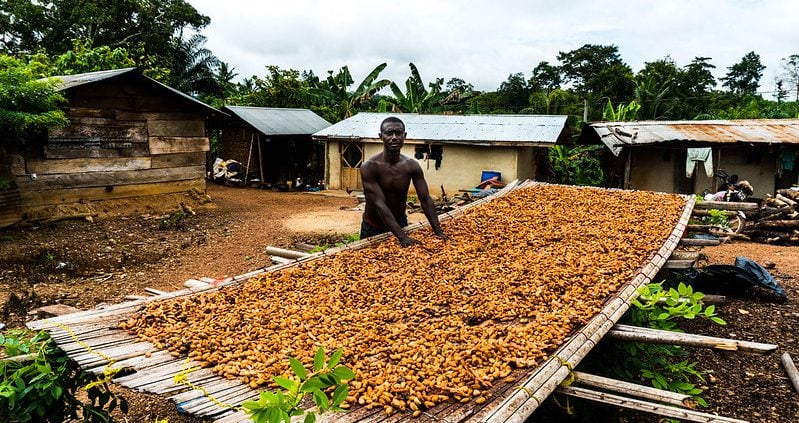
Ghana Cocoa IndustryChocolate is one of the most beloved sweets that people all around the world consume. Switzerland continues to rank as one of the top countries where people consume chocolate (8.8kg per capita/per person) followed closely by Austria, Germany and Ireland. However, cocoa in these sweet treats is not produced in any of the countries named. The top two countries that produce cocoa are Cote d’Ivoire (Ivory Coast) and Ghana.

Despite the cocoa industry bringing in a high export of $1.46 billion, in 2024, many farmers are below the poverty line. They are facing delayed payments from local regulators on top of a very low minimum wage, some earning only $3 per day

Global Poverty of the Chocolate Industry

Only a small share of chocolate’s final value reaches producers. As Frontiers in Sustainable Food Systems reports, “only 7% of the price that consumers pay for chocolate makes its way back to the producers.” Cocoa farmers are on the very end of the value chain because Ghana ships more than 80% of its cocoa abroad in raw form, which means that the most profit is made from the final product.

Though smallholder farmers dominate Ghana’s cocoa industry, they often work on small plots with limited resources. As emphasized in the Cocoa Barometer, poverty is not just one issue among many; it is a central factor underlying many challenges in the cocoa sector.

The Cocoa Barometer highlights how this system reflects deeper historical inequalities tied to colonial trade structures. The result is a persistent “extraction” model, where value leaves producing countries instead of being reinvested locally.

The cocoa industry and cocoa farming have been in the traditions of many farmers in Ghana. There are approximately 800,000 smallholder farm families across regions including Ashanti, Western, North, Eastern and Central Ghana. For this livelihood of many to disappear, farmers would face severe poverty and trigger an economic downturn.

Cocoa Industry in Ghana

Recently, John Mahama, the president of Ghana, has made major efforts to prioritize local processing of raw bean exports, aiming to cease raw cocoa sales by 2030.

In a recent visit to Temple University, in Philadelphia, PA., President Mahama brought light to this situation and his reasoning behind the push.

“It is because for almost 70 years after we gained independence, we’re still exporting raw beans to the world,” Mahama said. “I believe that what has happened in the international market should be a wake up call for us.

President Mahama has put a strict deadline on when he believes the goal of this program should be where they should be; with at least 50% of the country’s cocoa beans in local production, while halting raw mineral ore exports by 2030. “By 2030, there won’t be any raw mineral ores leaving Ghana. You must process all that locally,” said President Mahama.

The Future

The hopes in these major switches have short-term and long-term goals including:

  • Farmer payment timeliness: reducing the payment delays compared to traditional financing
  • Foreign exchange retention rates: domestic revenue capture versus the traditional model
  • Semi-processed product export growth: volume and value expansion in cocoa butter, powder

President John Mahama, is pushing this advocacy of consuming local chocolate, with a short yet powerful statement of, “Eat Chocolate, Grow Ghana.”

– Elizabeth Fryer

Elizabeth is based in Philadelphia, PA, USA and focuses on Good News and Global Health for The Borgen Project.

Photo: Flickr

Women Entrepreneurs in NigeriaWomen entrepreneurs in Nigeria are redefining women’s roles in society and the greatest beneficiary of their inclusion in the entrepreneurship space is the economy. Women in entrepreneurship of Nigeria have played an increasingly significant role in reducing poverty. This shift comes after being previously excluded from formal employment and financial opportunities due to traditional systems that limited women’s participation in business.

Female-led companies have created jobs, driven local economic growth and expanded access to essential goods and services across sectors. Here are some ways women entrepreneurs continue to strengthen the economy of Nigeria while advancing broader efforts to reduce poverty.

Improving Access To Essential Health Services

Olamide Orekunrin was on one of her frequent visits to her home city, Lagos, when her sister became critically ill. With no equipment or drugs to revive her and no reliable way to get her to a hospital, the situation quickly turned critical. What would have been easily accessible lifesaving care in many places instead exposed a gap in Lagos’ health system that led to her sister’s untimely death.

This motivated Orekunrin to start Flying Doctors, a medical emergency service specializing in air ambulances. The organization introduced the first air ambulance service in Nigeria and West Africa. Flying Doctors has successfully evacuated victims of road accidents, bomb blasts, fire outbreaks and other mishaps across Africa. 

Female-led businesses like Flying Doctors combine passion with humanitarianism and have helped ensure that all Nigerians have access to essential emergency medical services.

Supporting Community Development

When it comes to entrepreneurship, women-led businesses reinvest up to 90% of income back into their families and communities, compared to 30–40% for men. Female entrepreneurs in Nigeria have launched initiatives such as skills-training programs, education services and other community-focused enterprises. Tutoring and educational initiatives help keep children in school longer.

Each additional year of schooling for girls can increase future earnings by up to 20%. Child care centers enable mothers to remain in the workforce and accelerate their career paths while balancing motherhood. Skills and training programs do the same. These services, which allow more women to join the workforce and children to stay in school longer, are tackling both child poverty and female poverty.

Job Creations

With women accounting for 43% of micro-enterprise ownership and about 40% of early-stage entrepreneurial activity, their businesses are a major source of employment and income in communities where poverty is widespread. Women-owned businesses employ several low-income women and youth. These businesses provide essential services like tailoring and clothing, transportation and logistics, food retail and hospitality and digital services and e-commerce.

These businesses not only expand access to affordable everyday services in underserved communities, but also create jobs for the people in those communities. In doing so, they are reducing reliance on Nigeria’s limited formal job market. By generating income and supporting more sustainable livelihoods, women-led enterprises are helping households and communities lift themselves out of extreme poverty.

Final Remarks

Ultimately, women-owned businesses often serve female customers and underserved communities, especially in informal sectors and rural areas. Through business networks and support systems, women are also better able to overcome barriers to finance, market access and formal business opportunities. In many cases, women-led enterprises create jobs and income opportunities for other women and young people in their communities in Nigeria.

This ripple effect strengthens local economies while expanding opportunities for groups historically excluded from formal work. Across Nigeria, female entrepreneurs are expanding access to financial services, health care, education, food and employment. From agriculture to digital finance, women-led enterprises are filling critical service gaps in underserved communities and driving more inclusive economic growth.

– Yemi Mary John

Yemi is based in London, UK and focuses on Good News for The Borgen Project.

Photo: Unsplash

Poverty in peruAs of 2024, Peru’s national poverty rate stood at 26.6%. However, in rural communities where many coffee farmers live, the poverty rate rises to 46%. People in these communities often lack access to safe housing, stable income and education.

Poverty in Peru increased after the COVID-19 pandemic, following several years of decline. Providing farmers in rural communities with fair wages and proper tools helps them escape poverty. Here are three companies helping Peruvian coffee farmers break the cycle of poverty:

Café Femenino

Café Femenino is a coffee brand founded in 2004 by Isabel Uriarte and her husband, Victor Rojas. It began with more than 450 female farmers in northern Peru who sought to gain the same benefits men received from the coffee industry. Uriarte launched the initiative by traveling to impoverished villages to speak with women about their rights.

Uriarte hosted workshops and attendance steadily grew as more women joined. Some meetings also included men to help break down barriers surrounding traditional gender roles in these communities. Following these early workshops and conversations with impoverished women, Uriarte formally established Café Femenino.

Café Femenino requires participating farms to grant women farmers legal rights to farmland, leadership positions, financial and business decision-making power and direct payment for their coffee. Through these efforts, more coffee farms have been transferred to women, helping lift them out of poverty and strengthening their communities.

As a result, roads have been built, women have created more sanitary homes and families have gained better access to food. The company is helping reduce poverty in Peru, particularly in rural communities, by providing greater job security. Café Femenino now operates in several countries, including Colombia, Bolivia and Rwanda, fostering economic empowerment for women farmers.

Cedros Café

Cedros Café is a coffee cooperative founded in 2013 that supports small-scale farmers in the Cajamarca region of Peru. Poverty rates in this region remain high because many farmers do not receive adequate payment for their crops. Cedros Café pays its farmers about 30% more than the average market price for coffee.

The cooperative also provides farmers with training in business management, financial literacy and other professional skills. Because many of its farmers are women, Cedros Café equips them with additional skills to diversify their income. The cooperative also helps farmers obtain Fair Trade certification, which recognizes producers who follow sustainable practices and ensure fair treatment of workers. Today, Cedros Café works with 328 small farmers, helping reduce poverty in Peru.

Café Compadre

Café Compadre began when two of its founders created a solar-powered coffee roaster to help remote farmers roast their own beans, which sell for higher prices in the market. The founders soon realized that the roaster alone would not be enough to stabilize coffee farmers’ livelihoods. Because many of these farmers were located in remote areas of Peru, they lacked access to Lima’s coffee consumers.

In response, the founders established the Café Compadre coffee brand in 2014. The company now works with small, local coffee farmers to ensure they receive fair compensation for their work. Café Compadre pays farmers more than 30% above the market price for coffee. 

The company focuses on sustainable farming practices that also protect the environment. Purchasing coffee from Café Compadre supports farmers, promotes environmental sustainability and provides the high-quality coffee consumers seek. These principles form the company’s three core pillars.

Conclusion

These three coffee companies are working to support impoverished coffee farmers in rural communities across Peru. By providing innovative tools, training and prices up to 30% higher than the market average, they are helping farmers build more stable livelihoods.

– Kaitlyn Crane

Kaitlyn is based in Rohnert Park, CA, USA and focuses on Good News for The Borgen Project.

Photo: Flickr

Ethical Fashion and Poverty Reduction in the Global Garment Industry More than 60 million people work in the fashion industry worldwide, but millions of them live in low-income areas, where they frequently face hazardous working conditions and low wages. High-profile figures such as Emma Watson and Zendaya are increasingly spotted wearing sustainable and ethical fashion labels, drawing attention to these structural issues. Celebrity promotion of ethical brands can influence customer behavior, promote company transformation and support programs that assist garment workers in escaping poverty. Ethical fashion and poverty reduction have increasingly become part of global conversations about responsible consumption and labor rights.

Poverty and Unsafe Conditions in Garment Supply Chains

The wages of garment workers in key manufacturing countries like Bangladesh and Cambodia are insufficient to cover their basic living expenditures. Women make up the majority of workers, and because they typically lack bargaining power, they are vulnerable to exploitation.

The 2013 Rana Plaza collapse in Bangladesh killed 1,134 people and injured thousands more, highlighting the deadly consequences of unsafe workplaces and weak supply chain management. Despite this tragedy, fast fashion businesses continue to seek lower prices, resulting in low wages and risky working conditions.

The Clean Clothes Campaign documents these ongoing challenges, noting that many factories remain unsafe and underpaid even a decade after Rana Plaza.

Ethical Fashion as a Direct Poverty-Reduction Strategy

Manufacturing workers benefit from ethical certification programs that ensure fair pay, safe working conditions and a voice at work. Since its start in 2010, Fair Trade USA’s Factory Program has worked with more than 100 accredited manufacturers throughout the world, each meeting more than 100 social and environmental standards. This criterion provides fair wages, safer working conditions, economic opportunities, strong environmental policies and Community Development Funds that employees can utilize as they see fit.

Community Development Funds support local infrastructure, cultural activities, health clinics and scholarships. Fair Trade USA has distributed $100 million in these subsidies so far, directly improving livelihoods and protecting communities. Employees report greater community involvement, financial stability and opportunities for professional and personal growth. Brands like Boll & Branch, e.l.f., Eileen Fisher and Terra Thread demonstrate how ethical certification empowers employees while ensuring accountable, transparent supply chains.

Government and Multilateral Solutions

  • The Bangladesh Accord. Following Rana Plaza, international unions and brands worked together to create the legally binding Bangladesh Accord on Fire and Building Safety. Tens of thousands of safety hazards were discovered during the Accord’s investigation of more than 1,600 factories and the vast majority were repaired. Its regulated framework reduced workplace dangers and demonstrated how legally enforceable contracts may effectively protect garment workers and advance ethical fashion and poverty reduction efforts worldwide.
  • The Better Work Program. The Better Work initiative and the International Labour Organization operate in a number of clothing-producing nations. The effort combines advisory services, public reporting and factory assessments, affecting 2,250 factories and 3.7 million people. According to research, participating factories have lower levels of maltreatment, higher wages and enhanced production. Better Work is an example of how global efforts may directly benefit worker livelihoods and working conditions.

The Influence of Celebrity Advocacy on Consumer Behavior

Celebrities such as Emma Watson and Zendaya make sustainable fashion more appealing by highlighting ethical brands on social media and red carpets. According to McKinsey’s State of Fashion 2026 analysis, 46% of fashion executives expect conditions to worsen in 2026, up from 39% the previous year, suggesting that the industry is still undergoing considerable transition. Despite the challenging climate, 25% of CEOs believe that business conditions will improve, highlighting opportunities for organizations that adapt to changing consumer needs.

Demand for sustainable and ethical fashion remains strong, particularly among younger consumers, as brands respond to shifting trade dynamics and consumer behavior. Celebrity visibility encourages companies to adopt fair labor standards and normalize responsible purchasing decisions, reinforcing the connection between consumer influence and ethical fashion and poverty reduction.

Looking Ahead

Celebrity clothing alone cannot eliminate poverty among textile workers. When combined with legally enforceable agreements and NGO-led initiatives, ethical fashion can contribute to improved pay and safer working conditions. Companies can commit to paying living wages and sourcing products transparently, consumers can support responsible brands and policymakers can strengthen labor law enforcement. Together, these efforts may contribute to structural improvements in the global apparel sector.

– Madison Brown

Madison is based in Nottingham, UK and focuses on Celebs and Politics for The Borgen Project.

Photo: Flickr

Women’s cooperatives in MoroccoWomen’s cooperatives in Morocco are becoming vital in driving development, reducing poverty and advancing female empowerment as the North African nation recovers from the COVID-19 pandemic and seeks to boost economic growth.

Women’s Cooperatives in Morocco: A New Proud Tradition

The cooperative movement in Morocco is a relatively modern phenomenon, becoming prominent only in the late 20th century. Cooperatives were first established as a powerful response to limited employment opportunities for women seeking financial independence and a sense of solidarity and collaboration. They have since transformed into an economic force in both agriculture and artisanal production.

In 2025, there were 7,891 women’s cooperatives in Morocco, comprising more than 73,000 members. They involve 267,000 women who farm, produce and sell products ranging from embroidered textiles and carpets to livestock, agricultural products and cosmetics. This practice not only drives local economies but also unites rural communities, where 61% of women’s cooperatives in Morocco are located. 

It also empowers poor women with limited economic opportunities to gain financial agency, real market power and a stake in the nation’s future.

Toudarte, Agadir: Argan Oil

For the last 22 years, Toudarte has been at the center of a growing community of women finding solidarity, purpose and employment in a growing argan oil cooperative. Meaning “life” in Amazigh, Toudarte has, from the start, prioritized developing an operation that delivers sustainable products and practices for both the environment and the now 100 women who make up its ranks.

Not only does Toudarte empower and economically benefit a region and its residents, but its authentic, traditional production methods also protect a historic Amazigh practice from soulless industrialization. Since its founding in 2004, the co-op has seen steady success. The women at Toudarte now plan to expand their independent business and open an inn for guests who want to experience the argan forest and its production process.

Not only does this development signal an ever-improving economic outlook for Toudarte, but it also brings further hope to a rural community transformed by the presence and success of a women’s cooperative.

Al Kawtar, Marrakech: Homeware and Clothing

The majority of women’s cooperatives in Morocco are rurally situated, making the most of tight-knit, sometimes remote, communities with shared knowledge, interests and fortunes. However, the work of the minority that operates in urban centers like Marrakech is just as vital. That can easily be said of Al Kawtar, a homeware and clothing co-op that specifically offers women with disabilities the chance to earn a steady income and build a community.

The cooperative’s goals are to give women with physical disabilities the opportunity to independently earn a living based on their own talents and abilities. In the process, Al Kawtar creates a space for the most vulnerable women in Morocco to stand on their own two feet and receive fair market prices for their craft.

Coopérative Timnay, Sirwa: Textiles and Carpets

Coopérative Timnay takes the idea of community and self-reliance one step further, incorporating the larger local shepherding community and utilizing regional materials whenever possible. Vitally, it also uses a proportion of the cooperative’s profits to support the paid training of young women and to facilitate the benefits of membership, including health care, a group savings fund, child care and career progression.

Rather than merely a source of income, Coopérative Timnay offers the opportunity for a lifelong career. Understanding the extra demands that women in Morocco face, the charity ensures that a meaningful and rewarding future is available to those who might otherwise be forced to migrate for employment. Cooperatives like these protect Amazigh people and practices, allowing a prosperous future for the rural communities that desperately need it.

The Difference Maker in the Fight Against Poverty?

Since the turn of the 21st century, there has been significant progress in reducing poverty in Morocco, with the national poverty rate steadily decreasing. COVID-19, droughts and the international impact of the Russia-Ukraine war interrupted this trend in the early 2020s. However, with an improving economy in 2023–24, the World Bank expects poverty to resume its two-decade-long decline, falling below 3.9%.

Women’s cooperatives like those mentioned above have the potential to further advance this development by providing women and families with the financial resources they need to improve their economic outlook. Regional surveys prove that membership in a co-op can more than double a family’s household income. An improved income of this scale also offers individuals the freedom to hold bank accounts, build savings and access credit, opening the door to long-term increased prosperity.

The empowerment of women in any developing country is essential to its social and economic success. Women gaining personal and financial autonomy means a larger working population, greater and more diverse markets, higher average incomes and smaller, more prosperous families. The cooperative movement, therefore, has become a driving force in reducing poverty in Morocco. 

It has offered a future for its women, who are more able than ever to access essential opportunities for personal and economic growth and security.

– Evan Meikle

Evan is based in Kingston upon Hull, UK and focuses on Global Health and Politics for The Borgen Project.

Photo: Flickr

Poverty in IndiaNarendra Modi and Donald Trump have reached an agreement. India’s exports to the United States (U.S.) will be subject to a reduced tariff rate, from 50% to 18%, with immediate effect. Modi’s new deal is conditional. India must purchase $500 billion of U.S. goods over the next five years, although this includes current projects, and must transition to purchasing U.S. oil. Although the deal does constrain India to some degree, overall it is set to greatly benefit the Indian economy and is an important example of successful international cooperation in an increasingly volatile era.

Modi wrote on X: “When two large economies and the world’s largest democracies work together, it benefits our people and unlocks immense opportunities for mutually beneficial cooperation.” The tariff reduction will provide society-wide economic benefit, reducing poverty in India. The Indian aviation industry is set to capitalize on the deal. Air India Ltd and SpiceJet Ltd are forecast to purchase $100 billion in aircraft orders from U.S. firms over the next five years. However, those most impoverished in India are expected to benefit in particular.

Tariffs and Poverty in India

High export tariffs directly impact the trade opportunities of corporate entities and governments. However, they can also be particularly detrimental to the standards of living of low-income households. Tariffs reduce the purchasing power of low-income households, both through increasing the prices of goods and services and by decreasing nominal incomes.

According to the World Bank, 5.3% of India’s population lives below the extreme poverty threshold of $3 per day. Tariffs have a significant impact on the quality of life of this sector of the population. Higher food and water prices, increased unemployment and reduced incomes decrease opportunities to escape extreme poverty and can push more of the population below the poverty line.

International Cooperation and Its Benefits

The World Trade Organization (WTO) reports that reduced export tariffs have a positive impact on low-income households and small businesses that cannot compete under high trade restrictions. Through negotiating a new tariff of 18%, Modi has lessened the economic burdens on the most impoverished sector of his population. Millions of Indians may enjoy greater purchasing power with their incomes, easing access to basic necessities. Modi’s deal also contributes to a larger trend of U.S. export tariff reductions in the subcontinent.

The U.S. and Bangladesh have reached an agreement on a 19% reciprocal tariff rate, with a plan to establish a 0% reciprocal tariff rate for textiles and other apparel goods. The textile and apparel industry is the backbone of the Bangladesh economy. The sector accounts for roughly 80% of Bangladesh’s total export revenue and employs around 4 million workers. Many of these workers are part of the 18.7% of the Bangladeshi population that falls below the national poverty line.

A reduced export tariff on this sector will lessen economic pressures on individual firms, which is expected to lead to improved working conditions and potentially higher wages. The reduction may therefore benefit the quality of life of many who experience the daily challenges of poverty.

Looking Ahead

Overall, Modi’s deal demonstrates that large-scale international cooperation, while benefiting major economic players such as governments and corporations, can also provide advantages for alleviating poverty in India. Reduced export tariffs can contribute to poverty reduction on a broader scale.

– Arthur Horsey

Arthur is based in Hampshire, UK and focuses on Business and Politics for The Borgen Project.

Photo: Flickr

ethiopia coffeeEthiopia produces some of the best specialty coffee in the world. Demand for specialty coffee is rising, and Ethiopia’s potential to market 6,000 more varieties creates an opportunity to export coffee at a higher rate. Yet, many of the farmers do not see the benefits of their own labor.

Many farmers lack access to basic necessities such as potable water, a proper education and electricity. Rural and remote coffee farmers produce 95% of the coffee while owning less than five acres of land. A disconnect between the coffee supply chain and smallholder coffee farmers prevents them from receiving fair pay. This causes intermediaries to control the flow of money. REgrow Yirga is reshaping the coffee industry in Ethiopia to address these issues.

REgrow Yirga

The USDA, JDE and Peet’s Coffee started REgrow Yirga to change the Ethiopian coffee sector. Their goals include enhancing competitiveness, increasing productivity, improving supply chain performance and strengthening market conditions, according to TechnoServe.

The program targets the Gedeo Zone in southern Ethiopia, an area widely known for its Yirgacheffe coffee. This project supports 45,000 smallholder coffee farmers and 45 private wet mills by addressing the root problems hindering growth in the coffee sector.

How It Works

The program prioritizes addressing the gap in education on agronomy for Ethiopian coffee farmers. This involves a two-year agronomy training program from the TechnoServe Coffee Farm College, which is responsible for teaching farmers how to adopt regenerative agronomic practices through practical and knowledge-based training. REgrow Yirga equips coffee farmers with the necessary equipment and support to begin independently increasing their incomes.

Another issue that the program is tackling is the replacement of outdated coffee trees. Many of the current coffee trees are more than 20 years old, limiting coffee production. REgrow Yirga is reshaping the coffee industry in Ethiopia by teaching farmers the benefits of cutting coffee trees at the stump in a process called rejuvenation.

The process removes trees from production for one year while they regrow. Many farmers avoid doing this because they cannot afford to lose a year’s worth of income, but this process creates a more productive tree and a higher yield of coffee over time.

Gaining Independence

Through education on renewable practices, and by providing the resources to increase productivity, REgrow Yirga is reshaping the coffee industry in Ethiopia by allowing smallholder farmers to gain independence. This project brings equity to the coffee industry. Farmers gain a fair share of the value that their coffee creates. These long-term sustainability efforts will serve as a model for changes that are driving reform for equality for marginalized farmers worldwide.

– Sachin Kapoor

Sachin is based in Atlanta, GA, USA and focuses on Technology and Solutions for The Borgen Project.

Photo: Flickr

Energizing the EnvironmentRed Bull humbly began in the ‘80s in Thailand as an uncarbonated beverage that utilized natural caffeine remedies. Today, the company has a strong international presence and dominates the energy drink market. Red Bull makes it clear that its marketing success is not based on having the best-tasting energy drink.

Instead, it focuses on offering a product that fuels the energy and excitement consumers associate with once-in-a-lifetime experiences. In other words, Red Bull primarily targets athletes, especially those involved in extreme sports. However, this does not mean that only professional competitors can benefit from the brand’s offerings.

Red Bull is also widely known for creating once-in-a-lifetime experiences through its international charitable initiatives and sponsored events.

Giving Life to the Night

Ho Chi Minh City is working to revitalize urban spaces and create community recreational centers. However, the budget is small, so community spaces are dimly lit and look unapproachable. Red Bull is helping revive the community by repurposing its aluminum cans to create illuminating, solar-powered billboards.

Each billboard is made of 2,475 Red Bull cans. The project, which is called “Giving Life to the Night,” utilizes solar energy explicitly, which naturally converts into electricity. Indeed, the project may seem small and subtle; however, the reliable energy is bringing communities together.

The project has had its greatest impact on young people. Red Bull has consistently worked to engage youth by providing recreational and sports activities, health check-ups and employment opportunities. As a result, Ho Chi Minh City has become a city full of life and energy, with Red Bull’s initiatives helping create job opportunities for more than 70,000 young adults.

Energizing the Environment

The company that owns Red Bull is called TCP Group. The group is constantly organizing events and collaborations that will enhance the global community. For example, TCP Group is reducing its carbon footprint and practicing water sustainability.

Red Bull has set a goal to use 100% recycled packaging in the next few years. Currently, 70% of packaging is recyclable aluminum. Commonly misunderstood, TCP is not just interested in growing the Red Bull brand; one of its core principles is “Energizing the Environment.” As part of this commitment, TCP Group has reduced its water usage by more than 20%.

The company has made significant progress in improving water efficiency and is now setting an example for other Thai companies by encouraging greater water resilience amid growing scarcity. Currently, the company is supporting Thailand’s River Basin Project, which focuses on replenishing water in the Bang Pakong, Yom and Mekong rivers. As the initiative continues, it has achieved net water–positive status, reinforcing TCP’s role in promoting long-term environmental sustainability.

Furthermore, TCP has also been contributing to the WEnergy world campaign, a global initiative to reuse resources and reduce gas emissions. In 2024, the company got creative and organized a running event in which every participant had to donate recyclable cans or packaging.

The Red Bull U-Project

The Red Bull U-Project is a volunteer-based initiative that mobilizes undergraduate students interested in public service. Launched in Thailand in 2013, the program aims to promote social development by supporting projects in key areas, including agriculture, education, health care and technology. Notable initiatives include the Ambulance for Children with Care project and the Herbs for Healthy Life and Self-Sufficiency Economy project, both of which reflect the program’s focus on community well-being and sustainable impact.

Final Remarks

Red Bull’s U-Project and Energizing the Environment initiative, among others, have ensured philanthropic and civic engagement across Asia continues to support community-driven initiatives that address local development challenges and strengthen social infrastructure.

– Mireya Aguilar

Mireya is based in Layton, UT, USA and focuses on Good News and Celebs for The Borgen Project.

Photo: Pexels

TradeDepotAcross Nigeria, small retailers power local economies, yet remain disconnected from efficient global supply chains. This gap drives high costs, inefficient logistics and lost income opportunities for informal businesses. TradeDepot offers a digital solution to this challenge, bridging global supply networks and small retailers in Nigeria.

The Gap Between Small Retailers and Reliable Supply Chains

Small retailers, including family-run shops, street vendors and kiosks, are the backbone of developing economies. Many operate out of homes and are run by women balancing entrepreneurship with domestic work. Together, these businesses account for up to 80% of employment in Africa, making them a powerful driver of income generation and poverty reduction.

Studies by TechnoServe show that targeted support for small retailers can increase incomes by more than 30%. Given the scale of informal retail across Africa, even minor improvements can create lasting economic and social impact. As the final link in the supply chain, small retailers are responsible for distributing essential goods within their communities.

Yet persistent gaps between informal retailers and major suppliers result in fragmented logistics, limited visibility and widespread inefficiency. In Nigeria alone, these systemic gaps generate more than $4 billion in annual losses across the consumer goods supply chain. Most existing supply-chain technologies prioritize large enterprises, leaving informal retailers underserved.

By directly connecting small retailers to reliable supply networks, platforms like TradeDepot enable business owners to save time, reduce costs and increase profits.

TradeDepot’s Digital Solution

African retailers face some of the highest product distribution costs globally and TradeDepot is working to change this reality in Nigeria. By establishing a direct digital channel between manufacturers and informal retailers, the platform streamlines procurement, logistics and inventory management in a single system. Through this platform, small retailers in Nigeria can place orders, track deliveries and manage inventory in real time.

Increased price transparency and access to supplier discounts reduce costs at the earliest stages of the supply chain, directly improving retailer margins. TradeDepot positions itself as the middleman between global brands seeking new markets and Nigerian retailers pursuing growth. As the company scales, it is extending its logistics and distribution expertise to support informal retail ecosystems across Africa.

Market Potential for Global Brands

Africa’s young and rapidly growing population presents major opportunities for global brands. Rising incomes and urbanization are driving demand for quality consumer goods. Yet, fragmented logistics continue to constrain efficient trade and prevent profits from staying within local economies.

TradeDepot’s model reframes poverty reduction through a business lens, shifting power within supply chains toward small retailers. Rather than charity, it provides entrepreneurs with the tools, data and market access required to drive sustainable business growth.

Improved Quality of Life for Small Retailers in Nigeria

TradeDepot’s platform is transforming daily business operations, giving small retailers in Nigeria greater autonomy, predictability and control. As many informal shops are home-based and women-led, these efficiencies have a powerful impact on female entrepreneurs. Women account for 85% of TradeDepot’s retail users and 65% of its distributor network.

Access to tools such as digital wallets and credit lines strengthens financial inclusion, increasing women’s purchasing power and business agency. In a survey of more than 200 customers, 90% reported improved quality of life after adopting TradeDepot’s platform. Retailers no longer need to close shops or travel long distances to source stock.

Instead, they can access consistent inventory at fair prices through nearby depots, improving product availability for communities while boosting retailer profits.

Final Thoughts

By connecting global brands with informal retailers, TradeDepot is driving growth for small retailers in Nigeria, unlocking Africa’s consumer market while navigating the continent’s complex distribution networks. The result is stronger small businesses, more resilient local economies and a scalable, market-driven approach to poverty reduction.

– Hope Jowharian

Hope is based in Paris, France and focuses on Business and New Markets for The Borgen Project.

Photo: Pexels