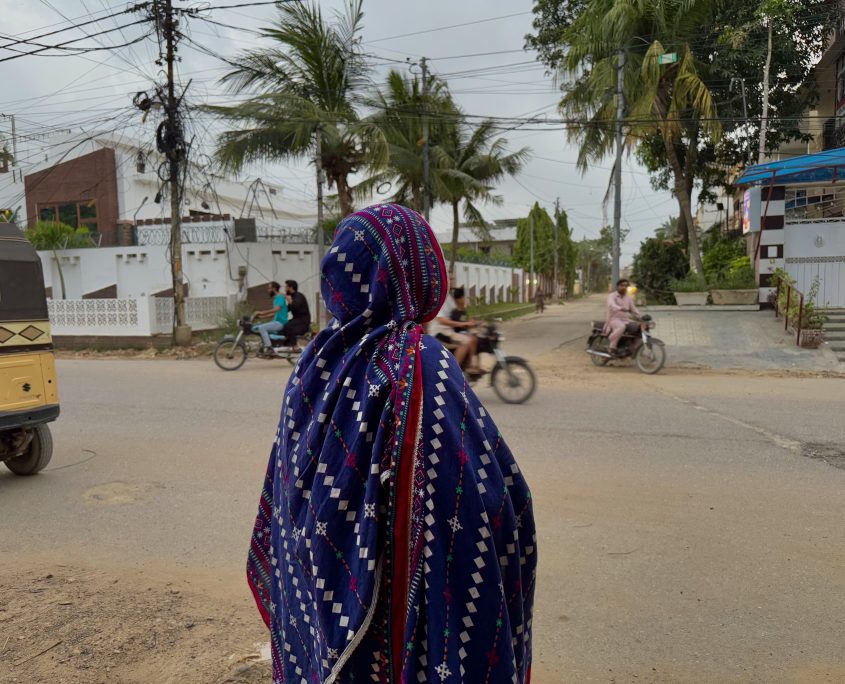
 When Maryam was a little girl, she loved going to school.
“As I grew up, I became more fond of studying,” Maryam told The Borgen Project. “I thought that I would become a teacher, doctor, anything — but that I would study for sure.”
When Maryam was in fifth grade, she stopped going to school to work as a maid and help support her parents and three younger siblings. Her mother wanted her to continue her education, but her father did not think it was feasible.
“The circumstances did not allow it, so I had to stop studying,” she said. “There was no other adult to help out. I was the eldest. I saw that the situation at home was difficult, so I started working on my own.”
Now, Maryam is 26 and works as a maid for three households in Karachi, Pakistan. She lives with her husband, whom she married at 17, and their 4-year-old son in a small one-room apartment that has no gas, a leaky roof and a bathroom with no ceiling and a curtain as a door.
Poverty in Pakistan
Every month, Maryam earns Rs 30,000, equivalent to $150. Including her husband’s income as a rickshaw driver, there is just enough to cover their rent of Rs 15,000, rickshaw installment of Rs 20,000 and their son’s school fees and gas cylinder, both Rs 5,000, along with other monthly household expenses.
Maryam said she used to purchase groceries such as flour, sugar, oil, tea leaves, salt and pepper on a monthly basis for up to Rs 15,000, not including staples like rice or lentils. Currently, she buys her groceries in small amounts every day because it is cheaper.
For those living in poverty in Pakistan, sticking to a tight budget forces them to make sacrifices. When her son started school, Maryam said she sold her phone to pay for his uniform, school bag and stationery on top of tuition fees. She also recently purchased a small fridge for Rs 50,000, which cut into her budget for new Eid clothes, even though one of her employers loaned her Rs 37,000 to help pay for it.
“You have to kill your wishes,” Maryam said. “If I have an interest in something, then I have to look after the house first…either the child or the house, nothing else.”
She said her household usually runs well with her income, but she never has money left at the end of the month.
“I get really angry because I work for the whole month and as soon as some money comes into my hands, it all gets spent,” Maryam said. “If I had my own house, I would not have to pay rent or if I had my own rickshaw, I would have saved some of my income. But no, I never have any savings.”
Rising Cost of Living
Sometimes Maryam picks up extra cleaning jobs after work to pay for new shoes, clothes and educational expenses for her child.
“I work in three houses and I am not saving, so I feel like I should work more. But with time, I am losing my strength. I have been doing this work for so long, I get tired,” she said.
When Maryam managed to save some money, she put a down payment of Rs 120,000 on a 120-acre plot of land with the hope of owning a house and started paying monthly installments totaling Rs 170,000. However, she later found out that five other people were also paying for the same property. Although she was refunded her down payment, she lost the money she put toward the installments. Maryam said she did not pursue legal action, even if it would be free, because she is afraid someone will come after her family.
Another time, Maryam spent Rs 150,000 on a hysterectomy operation for her mother. The procedure required confirmation from an MRI scan, which costs Rs 16,000, an expense her family could not afford. Eventually, one doctor was willing to perform the surgery based on the results of an ultrasound.
Lack of Fair Pay
Maryam said her family only knows two professions: maid or rickshaw driver. The same applies to her relatives who completed their education at the matric, or 10th-grade, level.
“The boys are well-educated, but they still drive a rickshaw and the girls are also well-educated, but they still work,” she said. “It is very difficult to find a job in Pakistan.”
After Maryam married, she pursued a long-time interest and learned beauty work at a salon. Even then, she could not land a job because she had only one year of experience in the field. As a maid, Maryam completes various household tasks, including sweeping, mopping, dusting, ironing clothes, cooking, washing dishes and cleaning bathrooms.
One of her employers pays her Rs 9,000 per month, but Maryam said it should be closer to Rs 15,000 based on the size of the house. Another employer pays her Rs 7,000 per month when it should be Rs 18,000 given the workload. Once, Maryam mentioned her low pay to one of her employers but was told that someone else would do the work for less.
Poor Treatment
Maryam said the most challenging part of her job is not the work itself but tolerating insults from her employers.
“Everyone scolds me…. When people scold me, it makes me feel bad,” she said. “I cannot say anything. I stay quiet. I just cry.”
Whenever her employers feel she did not adequately complete a chore, Maryam said they require her to redo it without paying for the extra work.
“They are not paying me for free, nor am I working for free, so why should I have to listen to so many scoldings?” she said. “I am a human being too.”
Maryam said she does not share these struggles with her husband anymore because he would stop her from working, but her income keeps the peace in her home and pays for her child’s education.
Benazir Income Support Program
Maryam said many people in her husband’s family receive financial assistance from the government through the Benazir Income Support Program (BISP). Families living in poverty in Pakistan are eligible for this assistance if they have a monthly salary of less than Rs 50,000.
Every four months, qualified recipients receive Rs 13,000 in cash, which accounts for Rs 3,250 per month. To register, an individual brings their National Identity Card and children’s Child Registration Certificate to a BISP office and fills out a survey to complete the application, which is free.
However, Maryam said she has not signed up because it would be difficult for her to collect the payments. The address on her National Identity Card is for her family’s home in her village, not where she lives and works in Karachi.
“It costs Rs 3,000 to go to the village and again Rs 3,000 to come back. There is no point,” she said.
She was also told that registering for the program is expensive and lengthy. Maryam said her family members paid someone Rs 20,000 to collect their documents and enroll on their behalf. That person also pocketed the first payment her relatives received.
Saverya Foundation UK
Saverya Foundation, United Kingdom (U.K.), is a women’s empowerment charity that provides shelter and training to women living in poverty in Pakistan. Maryam said she may have heard of it but has not used its services.
The organization’s goal is to help women become financially independent by building skills that will allow them to work or start their own business from home. These skills range from computer education to beauty work, sewing, stitching and embroidery. The charity has helped more than 10,000 women in Pakistan.
The Future for Maryam
Maryam said that whenever she comes home tired from a long day at work, she often thinks about opening her own food stall.
“I really want to cook,” she said. “It is better than doing this job. I have to listen to everyone’s scolding here, but I will not have to [over] there. It will be my own work.”
As for her son, Maryam is determined that he stay in school.
“Whatever degree he wants to study, whatever it is, I will make sure that he can do it,” she said. “I could not fulfill my dreams, but my son will fulfill his.”
– Umaymah Suhail
Umaymah is based in Karachi, Pakistan and focuses on Good News and Global Health for The Borgen Project.
Photo: Umaymah Suhail

Resilience in Haiti with FADEKA
After this event, an initiative to enhance the economic status and community standing of women was formed for women as a resilience in Haiti.
FADEKA Project
The original initiative, Fanm nan Agrikilti se Devlopman Ekonomi Ayiti (FADEKA), meaning Economic Empowerment of Women in the South Department of Haiti, was active from 2018 to 2021. U.N. Women developed the project in partnership with the Government of Norway, releasing a final report in December 2022. Despite the success of the project, Haitian agriculture and women are still struggling with ongoing insecurity and poor infrastructure, and need another FADEKA Project.
For supporters of this topic to want to push for a second initiative, they need to hear about the success of the first one. An independent firm dissected the FADEKA Project in Haiti and the resiliencies made throughout the program, expressing the positives of the project, and providing a guide for a second one.
Success of FADEKA
During the FADEKA Project in Haiti, focus was solely on improving the livelihoods of female farmers through agriculture, fishing, and small-scale processing through catalytic investments and capacity-building for female producer organizations, according to the December 2022 report.
The female agricultural workforce makes up 44.2%, with only a third of Haitian farms managed by women. Agriculture is the primary source of employment in Haiti, with 40% of households involved in activities and around 75% of rural households engaged in a form of agriculture, such as fishing or beekeeping.
Training farmers on extreme weather patterns was also a part of the FADEKA project. A total of 8.7% beneficiaries surveyed said that they had taken training on weather challenges and 7.3% on nursery management within the context of the project. According to the discussion group participants, this training built their technical capacity on weather patterns and resilience.
Improving the Atmosphere Between Men and Women
The report found that 100% of women, when asked about their participation in household expenditure, contributed to it. Along with 65.3% said that household management income is managed equally between men and women, according to the December 2022 report. Overall, women’s voices in their households were strengthened, they had higher participation, more leadership in decision making, and strengthened farmers’ and agricultural entrepreneurs’ preparedness for shocks of weather patterns.
Out of 34 planned activities, the program implemented 26 (76%). The failure of the eight projects could be due to the instability of Haiti’s government. If a second project goes through, the evaluation gave ideas on how to make it more successful.
According to the evaluation report, if a second phase gets the approval, “the focus should be on consolidating the project’s achievements and on capacity-building for local authorities and the beneficiary communities.”
The need for that second project has grown more and more over the past years, with the rise of gang violence, displacement, food insecurity, and the collapse of livelihoods.
Need for a Second Project
Ever since the end of the first project, Haiti has fallen into critical conditions with mass displacement of people, widespread, acute food insecurity and the domination of gang control of Port-au-Prince. Numerous cases of kidnappings, murders, rapes, gang confrontations and other acts of violence against individuals have contributed to a sense of general insecurity in the country.
In order to improve the socio-economic situation and government of Haiti, there are many different approaches, including strengthening local governance to restore resilience and fostering economic independence through agricultural investment.
The Future
With a successful first project, the U.N. Women, along with leaders in Norway, can make the second project more effective.
The FADEKA Project in Haiti is highly relevant but requires an additional period to strengthen its exit strategy. Many beneficiaries found themselves left to their own devices. This argues in favour of a second phase of the project, which could be consolidating the project’s achievements and capacity-building for local authorities and beneficiary communities. These efforts would help many people, and not go in vain.
– Elizabeth Fryer
Photo: Flickr
Addressing Housing and Urban Poverty in Vietnam
Housing and Urban Poverty in Vietnam
According to the deputy chief of the National Office for Poverty Reduction, Vietnam’s overall poverty rate would drop to around 1.1%. This represents roughly 900,000 to 1.1 million individuals living in poverty in Vietnam. Furthermore, Vietnam has developed a new multidimensional poverty index for the next six years, designed to increase the urban income threshold to VND 2.8 million ($106) and rural income to VND 2.2 million ($84) per person per month. Although these numbers highlight Vietnam’s success in tackling extreme poverty, they often ignore the millions of individuals who cannot afford housing in major urban centers, like Ho Chi Minh City.
Thousands of people in Vietnam cannot afford housing because of two main reasons: excess housing demand and a worsening affordability gap.. The director of the Housing and Real Estate Market Management Department explained that Vietnam would need roughly one million more homes to meet the increased demand. Given the growing population in urban centers, housing and urban poverty in Vietnam are increasing.
Affordability Gap
Furthermore, home prices have outpaced income growth by a significant margin, making it almost impossible for an average Vietnamese citizen to afford housing in major urban centers. Prices in major cities, like Hanoi and Ho Chi Minh City, have risen 5.6% so far this year. This means that, on average, apartment prices are roughly 80 million dong ($3,028) per square meter. In comparison, the average annual salary of a Vietnamese worker is 98.4 million dong. This sizable difference has made it almost impossible for Vietnamese to afford housing.
Addressing the Housing Crisis
To successfully address this challenge, the government, private organizations and other nongovernmental organizations (NGOs) have developed effective strategies and projects to decrease housing costs in Vietnam. The government has pledged to adjust land use fee regulations to ensure fairness and prevent companies from raising prices beyond people’s affordability. Habitat for Humanity International (HFHI) in Vietnam, a nonprofit dedicated to addressing housing and urban poverty globally, in collaboration with local unions and organizations, has developed the Decent Housing, Peaceful Life project. This project has supported the construction and revitalization of existing properties in Vietnam to improve the housing situation of individuals facing difficult circumstances.
Looking Ahead
As Vietnam continues to grow as a nation, the government, companies and NGOs in the country continue to address the different challenges that arise. Indeed, as housing affordability and accessibility worsen in Vietnam, the government, in collaboration with other organizations, is taking steps to ease this pressure and secure affordable, safe housing for millions of Vietnamese in major urban centers.
– Rodrigo Salgado
Photo: Flickr
Madhubani Art and Poverty in Bihar
Bihar is heavily reliant on agriculture for its economic survival. However, with 73% of its area designated as flood-prone, the state’s people find themselves stuck in a vicious cycle of survival and sustenance. It has been noted that 76% of the population lives under the recurring threat of floods.
Despite the recurrent cycle of ruin and revival, the people of north Bihar, specifically in Madhubani District, have found a way to use their indigenous knowledge and Madhubani art tradition to generate income. Madhubani art, a distinctive folk art form originating in the region and also known as Mithila painting, has grown from a purely cultural expression into a livelihood that now sustains tens of thousands of families.
From Tradition to Economic Empowerment
Madhubani art originated in the villages of Mithila long before the modern era, where women decorated mud walls and floors with elaborate patterns expressing mythology, nature and community life. The art is defined by bold lines, bright, often natural colors and intricate geometric motifs depicting gods, animals, wedding scenes and ritual imagery.
As droughts struck rural Bihar in the mid-20th century, artists began transferring this heritage onto paper, cloth and canvas, a transformation that unlocked commercial horizons. Today, Madhubani art manifests across surfaces from canvas and handmade paper to sarees, notebooks and decorative homeware, giving artisans access to urban markets, exhibitions and global tourism.
Economic Impact: Numbers That Matter
Recent government records indicate that this traditional craft now provides regular income support to artisan families in Madhubani district. This support also extends to other surrounding areas, far beyond its original birthplace. In core hubs such as Jitwarpur, nearly 70% of local families depend on the sale of Madhubani art for income, with many artists coming from low-income backgrounds.
Formal support measures have also made tangible gains. More than 5,000 artisans in the region have applied for specialized artisan credit cards designed to help them access loans for materials, training and other business needs. Tax policy reforms have reduced the Goods and Services Tax (GST) on handicrafts from 12% to 5%, making artworks more affordable for buyers and providing greater earnings stability for artisans.
Though precise income figures can vary widely by artist and medium, studies of artisan households show that sales revenues often constitute a major share of family earnings. The revenues help cover daily expenses, schooling and health care, providing breakthroughs for communities once mired in seasonal migrant labor. Moreover, success in Madhubani art has given women greater public visibility.
Many women now represent their communities at fairs, exhibitions and cultural events across India and abroad, breaking social norms that once confined them to the home. Women artisans report greater influence over family finances, improved household decision-making power and a stronger ability to invest in their children’s education, outcomes that can improve household well-being and reduce economic vulnerability.
Government Programs and Policy Support
The Bihar government has launched handicraft promotion campaigns and training programs to improve design quality, market access and digital selling skills for rural artisans. It aims to transform the craft into a sustainable enterprise. Nonprofit and livelihood programs, such as Bihar Rural Livelihoods Promotion Society (Jeevika), have also engaged Madhubani artists, linking them to broader rural development and poverty-alleviation strategies.
Such initiatives typically emphasize skills development, collective marketing and cooperative organization to empower artisans economically and socially. Government programs have helped transform this cultural skill into economic opportunity. The National Handicrafts Development Program funded a $1.1 million craft village in Jitwarpur.
The program created artist stalls, training centers and tourism infrastructure that reduce dependence on intermediaries. Meanwhile, Bihar’s JEEViKA self-help groups have enabled rural women artists to access credit, expand production and negotiate better prices. Despite these gains, artists and observers note ongoing challenges.
These include limited year-round demand, exploitation by middlemen and uneven institutional backing, indicating that more coordinated policy is still needed for long-term sustainability.
Changing the Narrative
The growing value of Madhubani art extends beyond individual households. Local tourism circuits, craft villages and cultural initiatives attract visitors interested in heritage experiences, catalyzing secondary employment in hospitality and travel. Artisans have also benefited from global interest, with works reaching buyers in the U.S., Europe and Japan and appearing in prestigious cultural forums and museum collections.
This blend of heritage preservation, gender empowerment and economic diversification offers a replicable model for other rural communities seeking to leverage cultural capital into sustainable development.
A Work in Progress
Despite notable strides, deep rural poverty has not vanished. Many households still supplement art earnings with agricultural or migration income and the market continues to fluctuate with seasonal and economic cycles. Yet, for villages once marked by limited livelihood options, Madhubani art has expanded economic horizons, giving thousands of families greater stability and hope.
Poverty in Bihar has not disappeared, but the shift from single-source farm income to diversified art-based earnings has improved household stability. It also reduced migration pressures and created one of Bihar’s few homegrown rural creative economies.
– Sayanee Mandal
Photo: Unsplash
Faith-Based NGOs Reducing Poverty in Venezuela and Beyond
Faith-based organizations are stepping in to break this cycle of poverty and provide immediate relief and long-term support. Their work spans food distribution, education and income-generating initiatives. Th efforts of faith-based organizations address both urgent needs and structural challenges.
Expanding Aid To Remote Communities in Venezuela
In north-west Venezuela, religious sisters have expanded their outreach to remote villages. With new transport, they can now deliver food and medicine to isolated communities that previously had little access to essential supplies. They care for the sick and elderly, support homeless individuals and provide shelter for 30 orphaned or abandoned girls.
The sisters also run a preschool for 80 children, offering education and meals that help reduce hunger during the school week. These services help break the cycle of poverty by improving access to food, child care and health care in historically underserved communities. Faith-based networks also play a broader humanitarian role across the country.
Church-linked organizations provide food assistance, nutrition support for children and pregnant women and water and sanitation programs to prevent illness. These initiatives help families meet basic needs and reduce the risk of malnutrition, particularly among vulnerable groups. Such interventions help stabilize households and prevent them from falling into extreme poverty.
Promoting Food Security and Income in Colombia
In Bogotá, Colombia, nuns partnered with educators to help women turn backyard spaces into small agricultural enterprises. Families grew vegetables to improve household nutrition and sold surplus produce to earn income. Many participants were grandmothers caring for children and the gardens gave them a source of income and greater financial independence.
This model addresses poverty through both food security and income generation. Entrepreneurship training further strengthened these efforts, with workshops covering financial management, marketing and customer relations. Within 18 months, more than 250 families were earning a livable wage through urban farming and small businesses.
Microloans also helped individuals launch enterprises, including food production and poultry farming. These initiatives show how faith-based collaboration can help communities move from short-term aid to sustainable livelihoods.
Supporting Long-Term Poverty Reduction in Kenya
In Mombasa, Kenya, a faith-run community center supports children living near a large slum, addressing challenges such as hunger, abandonment and lack of access to education. Its leaders also plan to expand the center into a full primary school and launch small-scale agricultural projects to improve food security.
In northern Kenya, religious sisters teach trade skills to young women to promote self-reliance and help them support their communities. This kind of skills training and education helps reduce poverty by improving long-term earning potential.
Across these regions, faith-based initiatives share common strategies. They provide immediate support such as meals, shelter and health care, while also promoting empowerment through education, entrepreneurship and skills training. By combining short-term relief with sustainable development, these faith-based organizations help communities build resilience against poverty.
Conclusion
From delivering food and reducing poverty in Venezuela to supporting women entrepreneurs in Colombia and teaching trade skills in Kenya, faith-based groups continue to play a crucial role in poverty alleviation. Their presence, volunteer networks and focus on community empowerment allow them to reach vulnerable populations and create pathways out of poverty.
– Demetra Mykoniatis
Photo: Pixabay
Gender Inequality in Azerbaijan
Gender Disparity in the Workforce
Azerbaijan has made legal progress on women’s employment, but gender segregation and pay inequality limit women’s economic participation. Women make up 17% of the workforce in transport and storage, 11% in energy and 8% in construction. According to the World Bank, women in Azerbaijan earn 35% less than men on average.
According to the United Nations (U.N.) Women’s data, gender inequality in Azerbaijan remains a structural problem across both public and private sectors. Women and girls aged 15 and above spend an average of 25.4% of their daily time on unpaid care and domestic work. This unequal burden limits women’s ability to participate in paid employment, education and public life.
Women in Politics
According to the Baku Research Institute, the level of women’s political participation remains low. In 2024, women’s representation in Milli Majlis, the national parliament, reached 20.8%. In 2025, women’s representation in municipalities was 39.34%. According to 2025 statistics, there are no female heads of executive authorities or ministers in Azerbaijan, and there are only six female deputy members. According to the Global Gender Gap Index, Azerbaijan ranked 133rd out of 146 countries in 2024 in terms of political participation.
Gender stereotypes, women’s economic dependence and the political environment in Azerbaijan function as interconnected factors that affect women’s political participation. Society often perceives a woman’s place as being in the family and at home, while men are regarded as the main decision makers.
Women-Led Initiatives to Tackle Gender Inequality
In Azerbaijan, efforts to address gender inequality have taken the form of women-led civic initiatives. UNDEF has funded a project to establish Azerbaijan’s first women’s parliament, giving female leaders a platform to push for stronger rights and better governance. The initiative brings together women from civil society, business and academia to address issues such as girls’ education, maternal health, early marriage and support for female entrepreneurs. The project aims to turn women’s participation into influence on public policy.
WARD is an independent nongovernmental organization in Azerbaijan dedicated to advancing gender equality, women’s empowerment and sustainable development. Over the years, WARD has launched the country’s first maternity school, the first Women’s Resource Center, the Women’s Dialogue School and its first expert group on gender. The organization has also led several awareness-raising campaigns across the country.
In an interview with U.N. Women, WARD chair Shahla Ismayil said that women-led think tanks occupy a space where expertise meets empathy and where knowledge becomes a tool for change. She added that initiatives such as the Women’s Dialogue School prepare a new generation of women leaders to enter public life and propose practical solutions, ensuring that women’s leadership becomes institutional rather than episodic.
Looking Ahead
Women in Azerbaijan have made measurable efforts to address gender inequality despite societal challenges. NGOs and activists continue to work toward structural change, with initiatives such as the women’s parliament and WARD’s programs offering pathways for greater representation and economic participation.
– Bonnie Parkinson
Photo: Flickr
Mental Health Resources in Uganda
However, programs have been developed to increase mental health resources in Uganda, such as YouBelong Uganda and Pamoja Afya Initiative.
YouBelong Uganda
Founded in 2016, YouBelong Uganda works to deinstitutionalize people from mental institutions and focus on support through the community. A major concern surrounding mental health resources in Uganda is that many people become trapped in institutional systems and are unable to reacclimate to their communities. YouBelong uses “The YouBelong linked model of engagement and care [to build] a bridge between the institution and the community.”
A key part of this is that YouBelong provides transport for people from institutions back to their communities. YouBelong also uses government resources to prepare the individual for community life and to prepare the community to best support the individual.
The YouBelong HOME is a section of YouBelong that focuses on addressing the inflow and outflow problems at the national mental institution. It works to reintegrate between 40 and 60 people a month from Butabika National Referral Mental Hospital back into their communities. To reduce inflow to the mental hospital, YouBelong is working to expand resources at local health centers to help people before they reach institutionalization.
YouBelong has several programs under its wing. These programs address issues such as inequalities in mental health care for women, early intervention for children experiencing mental health issues, psychosis and learning from the experiences of those in recovery. YouBelong Uganda is a large organization that works at many levels to increase access to mental health resources in Uganda.
Pamoja Afya Initiative
Pamoja Afya focuses on communities surrounding Uganda’s national parks and was founded in 2024. This organization operates on a much broader scale, covering topics such as water and sanitation, snakebite prevention and coexistence with wildlife. Among its many programs, Pamoja Afya Initiative also has a mental health program that provides targeted interventions to help communities.
The initiative brings awareness to youth in schools about disorders such as depression, substance abuse and PTSD. These awareness programs teach students emotional regulation, healthy coping mechanisms and relationship building. Pamoja Afya also works with teachers to foster a more emotionally safe learning environment.
It equips teachers with the tools to support their students and themselves. The program also conducts mental health screenings and gives those diagnosed with mental health issues access to resources.
Conclusion
Programs like YouBelong Uganda and Pamoja Afya Initiative are helping bridge the gap in access to proper mental health resources that many Ugandan citizens lack. By giving small communities resources to address mental health problems early on, people are better able to cope with the growing mental health crisis. YouBelong then steps in to help reintegrate people into their communities and get the support they need.
Mental health resources in Uganda are few and far between, but certain organizations are working to increase access for more people.
– Kaitlyn Crane
Photo: Flickr
Haiti’s Irrigation Canal Fights Food Security Crisis
Building From the Ground Up
With insecurity persisting and food shortages worsening, local agricultural production has become increasingly critical to economic stability. The Kanal la Pap Kanpe (KPK) initiative sits at the center of Haiti’s irrigation canal movement, a grassroots effort to bring water to one of the country’s most fertile and underserved farming regions. By expanding access to water, the project could strengthen food security and support the livelihoods of thousands of farmers.
A Shared Island, a Contested River
The island of Hispaniola is split into two countries, Haiti and the Dominican Republic, which inevitably share common natural resources. However, issues persist between the two countries. A clear example is the Massacre River in the north of the island.
The river not only carries significant historical importance, but is also essential to the livelihoods of the surrounding communities. In 1929, officials from the two countries signed the Treaty of Peace, Friendship and Arbitration. Article 10 of the treaty stipulates that both countries may use the water “justly and equitably,” provided its use does not interfere with the river’s natural flow.
In August 2018, Haiti’s irrigation canal project took shape with the start of construction on the Pittobert canal. The project is designed to irrigate more than 7,000 acres of fertile land on the Maribaroux Plain at a total operating flow of about 1.5 cubic meters per second. In a 2021 report, the Dominican National Institute of Hydraulic Resources (INDRHI) counted 10 irrigation canals on the Dominican side.
Together, they had a total operating flow of 3.22 cubic meters per second, while the Pittobert canal would be the first on the Haitian side. Progress on the canal halted in 2021 with the assassination of Haitian president Jovenel Moïse. However, grassroots efforts led local farmers to resume it in August 2023.
Dominicans strongly opposed this move, framing it as a unilateral act that threatened shared resources and border agreements and claimed that the canal would divert water. This disagreement created a transnational dispute with significant consequences for both sides. On September 11, 2023, President Luis Abinader unilaterally announced the complete closure and militarization of the border, prohibiting the migration of people and goods. In response, the Haitian government announced that the construction of this canal would not halt.
According to the popular Haitian media outlet AyiboPost, this canal has sparked one of the biggest grassroots movements uniting Haitians in decades. Both local Haitians and the diaspora mobilized resources and forces to aid in the construction of the canal and in “the recovery of national dignity,” as stated by Gaston Étienne, the treasurer of the project.
From Irrigation to Export: KPK Rice Making Its US Debut
Although completion of the canal has not yet been confirmed, it has already begun benefiting surrounding communities. In November 2024, a new rice brand named after the movement, KPK, was launched. It uses water from the newly built Haitian irrigation canal to irrigate its rice fields and exports to the U.S. have already begun.
Additionally, construction of a second canal in the Fort-Liberté area, the Malfety canal, is well underway, with support from local and diaspora communities. It is estimated that this canal will irrigate approximately 17,000 acres upon completion. Although imports still account for more than 70% of total cereal consumption in Haiti, mainly wheat and rice, the KPK movement also has implications for other countries.
Why the World Should Pay Attention
First, initiatives like KPK have economic lessons that go beyond Haiti’s borders. As local agricultural production increases, new trade and investment opportunities emerge both domestically and internationally. In Haiti, increased domestic production can reduce its heavy reliance on imports and create new export opportunities. Internationally, this can create more opportunities for actors to partner with local farmers to improve and increase production.
Second, for aid and development organizations and policymakers, projects like KPK highlight the importance of supporting locally driven solutions to economic challenges rather than relying solely on foreign aid. These initiatives demonstrate how targeted infrastructure investments can unlock productivity, strengthen rural economies and improve food security, especially in poverty-stricken areas. Supporting these efforts through technical assistance, financing and market access could further amplify their impact and contribute to long-term stability for these communities.
Final Thoughts
Global attention is increasingly turning toward sustainable development and economic resilience, even as international aid declines and economic challenges persist. In this regard, Haiti’s experience offers valuable lessons. While Haiti navigates ongoing instability, projects like KPK demonstrate how Haiti’s irrigation canal movement and grassroots movements more broadly, can contribute to long-term economic resilience and poverty reduction.
By investing in local production and empowering communities, these initiatives show how countries can build more self-sufficient economies while creating new opportunities for global partnerships. KPK rice reaching U.S. shelves is only the beginning. It is proof that communities do not need to wait for stability to start creating it and that supporting grassroots movements may be one of the most effective investments the international community can make.
– Chloe Bonnefil
Photo: Wikipedia
Working With Seaturns To Strengthen Mauritius’ Ocean Economy
Wave energy is a renewable, high-density power source generated by harnessing the movement of ocean surface waves. In Mauritius, wave energy is vital for assessing renewable energy potential, informing coastal protection against erosion and planning marine infrastructure. This project aligns with the United Nations (U.N.) Sustainable Development Goals (SDGs).
It contributes to the implementation of the European strategy, as defined in the Strategic Research and Innovation Agenda for Ocean Energy (SRIA) 2024. Seaturns is also supported by the FRANCE 2030 program, run by Business France. This project aims to keep Mauritius on the path to a better future since it gained independence.
Staying Above the Poverty Line
Mauritius has been above the poverty line since the late ’80s. By changing the trajectory it was on after gaining independence in 1968, the country set poverty on a path toward eradication. By 2017, extreme poverty had been virtually eradicated.
In recent years, poverty has remained relatively stable at around 7%. With Seaturns being developed with support from the local company Taylor Smith Group, the project aims to create local job opportunities within the maritime sector.
Seaturns’ Goals
The Seaturns technology features a floating, cylindrical buoy that harnesses wave motion for power generation. Choosing Mauritius was a strategic choice for Seaturns. Mauritius is an island country in the Indian Ocean, east of Madagascar and has high-potential, consistent wave energy resources and a commitment to change.
The project is part of the Mauritius Renewable Energy Agency (MARENA) initiative. The initiative supports Mauritius’s energy transition, aims to expand to 10 MW in the future and seeks to establish Mauritius as a regional hub for wave energy technology in the Indian Ocean. In 2025, Mauritius emitted 6.96 megatonnes of CO₂e.
Mauritius relies heavily on fossil fuels, mainly oil and oil products. In 2023 alone, the total energy supply in Mauritius accounted for nearly 62%. With Seaturns providing a clean energy solution, the project helps decrease the island nation’s dependence on imported fossil fuels and reduce greenhouse gas (GHG) emissions from electricity generation. With a goal of reducing GHG emissions by 40% by 2030, Seaturns is a stepping stone for other countries to follow Mauritius’ footsteps.
Countries have the opportunity to learn from this pilot project in Mauritius and become active in lowering their GHG emissions while advancing the blue economy.
The Blue Economy
The blue economy is the sustainable use of ocean, sea and coastal resources for economic growth, improved livelihoods and jobs while preserving the health of marine ecosystems. Mauritius joined this economy in 2013 to become a large ocean state and updated that goal in 2023. Being surrounded by water, Mauritius has a high economic dependence on the ocean relative to its landmass, which has driven its interest in ocean energy.
This economy is vital for poverty reduction in Mauritius, aiming to diversify beyond tourism and sugar by leveraging its large Exclusive Economic Zone. The Mauritian ocean economy contributed 10% to 12% of GDP in 2026. Given that the ocean economy is relatively new, Mauritius is seizing the opportunity to expand in a positive direction.
With the ocean economy growing 2.5 times since 1995, outpacing other global sectors, wave energy is yet another stepping stone toward combating climate instability. Wave energy provides a consistent, renewable and emission-free source of electricity.
Final Remarks
Ocean energy is a relatively new, untapped renewable energy source. It has the potential to cut GHG emissions by up to 3.60 gigatonnes per year in 2050. As countries implement more stringent measures to limit GHG emissions, using renewable resources is a key element toward a better future.
– Elizabeth Fryer
Photo: Wikimedia
Surviving Poverty in Pakistan
“As I grew up, I became more fond of studying,” Maryam told The Borgen Project. “I thought that I would become a teacher, doctor, anything — but that I would study for sure.”
When Maryam was in fifth grade, she stopped going to school to work as a maid and help support her parents and three younger siblings. Her mother wanted her to continue her education, but her father did not think it was feasible.
“The circumstances did not allow it, so I had to stop studying,” she said. “There was no other adult to help out. I was the eldest. I saw that the situation at home was difficult, so I started working on my own.”
Now, Maryam is 26 and works as a maid for three households in Karachi, Pakistan. She lives with her husband, whom she married at 17, and their 4-year-old son in a small one-room apartment that has no gas, a leaky roof and a bathroom with no ceiling and a curtain as a door.
Poverty in Pakistan
Every month, Maryam earns Rs 30,000, equivalent to $150. Including her husband’s income as a rickshaw driver, there is just enough to cover their rent of Rs 15,000, rickshaw installment of Rs 20,000 and their son’s school fees and gas cylinder, both Rs 5,000, along with other monthly household expenses.
Maryam said she used to purchase groceries such as flour, sugar, oil, tea leaves, salt and pepper on a monthly basis for up to Rs 15,000, not including staples like rice or lentils. Currently, she buys her groceries in small amounts every day because it is cheaper.
For those living in poverty in Pakistan, sticking to a tight budget forces them to make sacrifices. When her son started school, Maryam said she sold her phone to pay for his uniform, school bag and stationery on top of tuition fees. She also recently purchased a small fridge for Rs 50,000, which cut into her budget for new Eid clothes, even though one of her employers loaned her Rs 37,000 to help pay for it.
“You have to kill your wishes,” Maryam said. “If I have an interest in something, then I have to look after the house first…either the child or the house, nothing else.”
She said her household usually runs well with her income, but she never has money left at the end of the month.
“I get really angry because I work for the whole month and as soon as some money comes into my hands, it all gets spent,” Maryam said. “If I had my own house, I would not have to pay rent or if I had my own rickshaw, I would have saved some of my income. But no, I never have any savings.”
Rising Cost of Living
Sometimes Maryam picks up extra cleaning jobs after work to pay for new shoes, clothes and educational expenses for her child.
“I work in three houses and I am not saving, so I feel like I should work more. But with time, I am losing my strength. I have been doing this work for so long, I get tired,” she said.
When Maryam managed to save some money, she put a down payment of Rs 120,000 on a 120-acre plot of land with the hope of owning a house and started paying monthly installments totaling Rs 170,000. However, she later found out that five other people were also paying for the same property. Although she was refunded her down payment, she lost the money she put toward the installments. Maryam said she did not pursue legal action, even if it would be free, because she is afraid someone will come after her family.
Another time, Maryam spent Rs 150,000 on a hysterectomy operation for her mother. The procedure required confirmation from an MRI scan, which costs Rs 16,000, an expense her family could not afford. Eventually, one doctor was willing to perform the surgery based on the results of an ultrasound.
Lack of Fair Pay
Maryam said her family only knows two professions: maid or rickshaw driver. The same applies to her relatives who completed their education at the matric, or 10th-grade, level.
“The boys are well-educated, but they still drive a rickshaw and the girls are also well-educated, but they still work,” she said. “It is very difficult to find a job in Pakistan.”
After Maryam married, she pursued a long-time interest and learned beauty work at a salon. Even then, she could not land a job because she had only one year of experience in the field. As a maid, Maryam completes various household tasks, including sweeping, mopping, dusting, ironing clothes, cooking, washing dishes and cleaning bathrooms.
One of her employers pays her Rs 9,000 per month, but Maryam said it should be closer to Rs 15,000 based on the size of the house. Another employer pays her Rs 7,000 per month when it should be Rs 18,000 given the workload. Once, Maryam mentioned her low pay to one of her employers but was told that someone else would do the work for less.
Poor Treatment
Maryam said the most challenging part of her job is not the work itself but tolerating insults from her employers.
“Everyone scolds me…. When people scold me, it makes me feel bad,” she said. “I cannot say anything. I stay quiet. I just cry.”
Whenever her employers feel she did not adequately complete a chore, Maryam said they require her to redo it without paying for the extra work.
“They are not paying me for free, nor am I working for free, so why should I have to listen to so many scoldings?” she said. “I am a human being too.”
Maryam said she does not share these struggles with her husband anymore because he would stop her from working, but her income keeps the peace in her home and pays for her child’s education.
Benazir Income Support Program
Maryam said many people in her husband’s family receive financial assistance from the government through the Benazir Income Support Program (BISP). Families living in poverty in Pakistan are eligible for this assistance if they have a monthly salary of less than Rs 50,000.
Every four months, qualified recipients receive Rs 13,000 in cash, which accounts for Rs 3,250 per month. To register, an individual brings their National Identity Card and children’s Child Registration Certificate to a BISP office and fills out a survey to complete the application, which is free.
However, Maryam said she has not signed up because it would be difficult for her to collect the payments. The address on her National Identity Card is for her family’s home in her village, not where she lives and works in Karachi.
“It costs Rs 3,000 to go to the village and again Rs 3,000 to come back. There is no point,” she said.
She was also told that registering for the program is expensive and lengthy. Maryam said her family members paid someone Rs 20,000 to collect their documents and enroll on their behalf. That person also pocketed the first payment her relatives received.
Saverya Foundation UK
Saverya Foundation, United Kingdom (U.K.), is a women’s empowerment charity that provides shelter and training to women living in poverty in Pakistan. Maryam said she may have heard of it but has not used its services.
The organization’s goal is to help women become financially independent by building skills that will allow them to work or start their own business from home. These skills range from computer education to beauty work, sewing, stitching and embroidery. The charity has helped more than 10,000 women in Pakistan.
The Future for Maryam
Maryam said that whenever she comes home tired from a long day at work, she often thinks about opening her own food stall.
“I really want to cook,” she said. “It is better than doing this job. I have to listen to everyone’s scolding here, but I will not have to [over] there. It will be my own work.”
As for her son, Maryam is determined that he stay in school.
“Whatever degree he wants to study, whatever it is, I will make sure that he can do it,” she said. “I could not fulfill my dreams, but my son will fulfill his.”
– Umaymah Suhail
Photo: Umaymah Suhail
Toward Ending Poverty in Mayan Communities in Guatemala
Conditions are generally worse for Mayan communities, many of whom live in rural areas far from major cities. As a result, access to essential services such as health care and education is often extremely difficult and in some cases, impossible. Poverty affects 75% of Indigenous populations in the country, compared to 36% of non-Indigenous people.
A Brief History
The Mayan civilization was a highly advanced, agriculture-based Mesoamerican society. It established city-states, developed sophisticated trade routes and made significant advances in writing, mathematics and astronomy. The Spanish conquest of the Maya in the 16th century led to a sharp decline in civilization, marking the first of three major periods of cultural erasure.
The Liberal Revolution of 1871 triggered a second wave of repression against Mayan communities. The new government dispossessed Indigenous populations of their land, including farms belonging to Mayan families. Many were then forced into exploitative labor systems, working on lands that had been taken from them.
In the ’80s, during a period of military rule, General Efraín Ríos Montt led a counterinsurgency campaign targeting Mayan communities that had long advocated for basic rights and cultural recognition. The army destroyed more than 600 villages, killing or disappearing more than 200,000 people. It also displaced more than 1.5 million others during three years of conflict.
Despite these periods of violence and repression, Mayan communities in Guatemala have endured. Today, the country is home to 24 Indigenous ethnic groups that continue to practice their cultures and preserve their languages.
Medicine and Health
Access to health care is often more difficult for rural Indigenous communities around the world and Mayan communities in Guatemala are no exception. With few hospitals located in rural areas, many people must travel for hours to receive care. Maternal mortality rates among Mayan women are also significantly higher.
The maternal mortality ratio for Mayan women is 166, compared to 78 for non-Indigenous Guatemalans. This disparity is partly driven by limited access to health facilities in rural areas, which forces many women to give birth at home. At the core of these disparities is a “deep-seated mistrust of institutional health care, rooted in historical trauma and systemic neglect.”
Beyond physical distance, Mayan communities also face major cultural and structural barriers, including language, cost and discrimination. For many, the challenge is not only a lack of access to health facilities, but also a lack of what some experts describe as “cultural accessibility.”
Wuqu’ Kawoq (Maya Health Alliance) strives to address the health care challenges Mayan communities face every day. With a mission to advance health equity, the alliance serves more than 11,000 people annually. It plays a significant role in improving both access to care and the quality of health care available to Mayan communities in Guatemala.
Education
Access to education is similarly restricted when children have no nearby schools to attend each day. Karla Sucely Ramos Reyes, a kindergarten teacher based in Guatemala City, told The Borgen Project that in some cases, “children have to walk several kilometers to attend” school, contributing to low attendance and a “shortage of teachers.” She also noted that while nearly all children in major cities complete secondary education, “in rural areas, boys typically study up to the sixth grade of primary school.”
Adult literacy rates in Guatemala are relatively high overall, reaching 82% in 2024, according to the World Bank. However, literacy rates are significantly lower among Indigenous communities, at just 33%. Reyes also noted that “public schools [in Guatemala] do not have libraries.” She added that the government “provides little funding to libraries,” which means many rely largely on “donations from organizations that support literary and cultural arts.”
Chajul, a small town in Guatemala and home to the Ixil Maya community, opened its first public library, the Saber Sin Límites (Limitless Knowledge) Community Library, in 2010. The library houses more than 11,500 books in English, Spanish and Ixil, along with quiet study rooms and community spaces designed to support learning and growth. It also offers a range of programs, classes and projects to bridge the educational gap and encourage young people to embrace their Indigenous language and culture.
Labor and Employment
The labor market is often unforgiving for many urban Mayan people. Linguistic and cultural barriers continue to shape employment opportunities, as those who speak little or no Spanish and wear traditional clothing often face discrimination when seeking work. This can severely limit access to stable employment, social security and a livable income.
Women’s labor force participation in urban areas is nearly 50%. For Indigenous women in rural areas, however, that figure is significantly lower. Reyes also told The Borgen Project that gender-based wage inequality is more common in rural areas than in major cities.
Employment patterns also reflect deep inequality. For example, Mayan people make up 80% of domestic workers in private homes. In politics, by contrast, Indigenous people account for only 15% of parliamentarians.
Mayan Power and Light (MPL), a project developed by the nonprofit Appropriate Technology Collaborative, is one initiative helping Mayan women pursue careers as entrepreneurs through training in green technology, particularly solar energy. Through workshops and training sessions, MPL seeks to address unemployment and gender inequality in the workforce. MPL also promotes sustainable, renewable energy solutions in Guatemala. In doing so, it is helping create a brighter future in more ways than one.
Looking Forward
Several other organizations are also making a meaningful difference for Mayan communities in Guatemala. The Office of the Ombudsman for Indigenous Women (DEMI), for example, is a government institution that works to defend the rights of Indigenous women by addressing discrimination and other forms of vulnerability. Although many initiatives are working to challenge inequality and confront the lasting effects of colonial oppression on Mayan communities in Guatemala and beyond, significant work remains.
Advocating for increased government investment in health care and education, while raising awareness of the inequalities faced by Mayan communities across the country, are essential steps toward a brighter, sustainable and equal future.
– Brittany Buscio
Photo: Flickr