Working With Seaturns To Strengthen Mauritius’ Ocean Economy
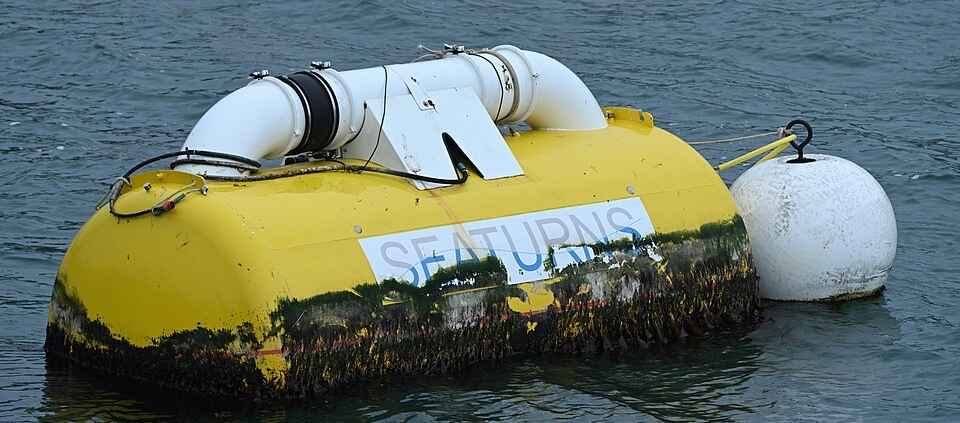 In March 2026, a two-megawatt (MW) wave energy pilot project was announced and launched in Mauritius, an island nation in East Africa. Developed by the French company Seaturns in partnership with Taylor Smith Group, a privately owned family business in Mauritius, it is designed to be grid-connected to the Central Electricity Board (CEB). This pilot project represents a significant step in the company’s full-scale trials scheduled for 2026 and 2027.
Wave energy is a renewable, high-density power source generated by harnessing the movement of ocean surface waves. In Mauritius, wave energy is vital for assessing renewable energy potential, informing coastal protection against erosion and planning marine infrastructure. This project aligns with the United Nations (U.N.) Sustainable Development Goals (SDGs).
It contributes to the implementation of the European strategy, as defined in the Strategic Research and Innovation Agenda for Ocean Energy (SRIA) 2024. Seaturns is also supported by the FRANCE 2030 program, run by Business France. This project aims to keep Mauritius on the path to a better future since it gained independence.
Staying Above the Poverty Line
Mauritius has been above the poverty line since the late ’80s. By changing the trajectory it was on after gaining independence in 1968, the country set poverty on a path toward eradication. By 2017, extreme poverty had been virtually eradicated.
In recent years, poverty has remained relatively stable at around 7%. With Seaturns being developed with support from the local company Taylor Smith Group, the project aims to create local job opportunities within the maritime sector.
Seaturns’ Goals
The Seaturns technology features a floating, cylindrical buoy that harnesses wave motion for power generation. Choosing Mauritius was a strategic choice for Seaturns. Mauritius is an island country in the Indian Ocean, east of Madagascar and has high-potential, consistent wave energy resources and a commitment to change.
The project is part of the Mauritius Renewable Energy Agency (MARENA) initiative. The initiative supports Mauritius’s energy transition, aims to expand to 10 MW in the future and seeks to establish Mauritius as a regional hub for wave energy technology in the Indian Ocean. In 2025, Mauritius emitted 6.96 megatonnes of CO₂e.
Mauritius relies heavily on fossil fuels, mainly oil and oil products. In 2023 alone, the total energy supply in Mauritius accounted for nearly 62%. With Seaturns providing a clean energy solution, the project helps decrease the island nation’s dependence on imported fossil fuels and reduce greenhouse gas (GHG) emissions from electricity generation. With a goal of reducing GHG emissions by 40% by 2030, Seaturns is a stepping stone for other countries to follow Mauritius’ footsteps.
Countries have the opportunity to learn from this pilot project in Mauritius and become active in lowering their GHG emissions while advancing the blue economy.
The Blue Economy
The blue economy is the sustainable use of ocean, sea and coastal resources for economic growth, improved livelihoods and jobs while preserving the health of marine ecosystems. Mauritius joined this economy in 2013 to become a large ocean state and updated that goal in 2023. Being surrounded by water, Mauritius has a high economic dependence on the ocean relative to its landmass, which has driven its interest in ocean energy.
This economy is vital for poverty reduction in Mauritius, aiming to diversify beyond tourism and sugar by leveraging its large Exclusive Economic Zone. The Mauritian ocean economy contributed 10% to 12% of GDP in 2026. Given that the ocean economy is relatively new, Mauritius is seizing the opportunity to expand in a positive direction.
With the ocean economy growing 2.5 times since 1995, outpacing other global sectors, wave energy is yet another stepping stone toward combating climate instability. Wave energy provides a consistent, renewable and emission-free source of electricity.
Final Remarks
Ocean energy is a relatively new, untapped renewable energy source. It has the potential to cut GHG emissions by up to 3.60 gigatonnes per year in 2050. As countries implement more stringent measures to limit GHG emissions, using renewable resources is a key element toward a better future.
– Elizabeth Fryer
Elizabeth is based in Philadelphia, PA, USA and focuses on Good News, Global Health for The Borgen Project.
Photo: Wikimedia
