Toward Ending Poverty in Mayan Communities in Guatemala
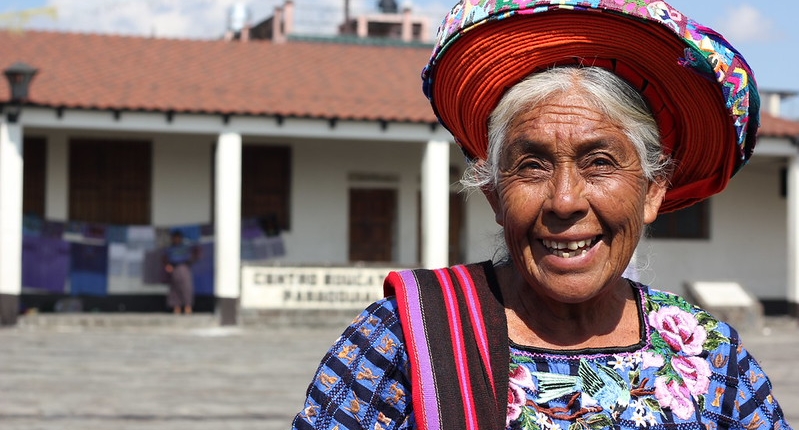 Mayan communities are Indigenous to present-day Guatemala, Belize, Honduras, El Salvador and Mexico. In Guatemala, Mayan people make up 51% of the population, making it the only Central American country where more than half of the population is Mayan. Guatemala is considered one of the most impoverished countries in the region, with 56% of its population living below the national poverty line.
Conditions are generally worse for Mayan communities, many of whom live in rural areas far from major cities. As a result, access to essential services such as health care and education is often extremely difficult and in some cases, impossible. Poverty affects 75% of Indigenous populations in the country, compared to 36% of non-Indigenous people.
A Brief History
The Mayan civilization was a highly advanced, agriculture-based Mesoamerican society. It established city-states, developed sophisticated trade routes and made significant advances in writing, mathematics and astronomy. The Spanish conquest of the Maya in the 16th century led to a sharp decline in civilization, marking the first of three major periods of cultural erasure.
The Liberal Revolution of 1871 triggered a second wave of repression against Mayan communities. The new government dispossessed Indigenous populations of their land, including farms belonging to Mayan families. Many were then forced into exploitative labor systems, working on lands that had been taken from them.
In the ’80s, during a period of military rule, General Efraín Ríos Montt led a counterinsurgency campaign targeting Mayan communities that had long advocated for basic rights and cultural recognition. The army destroyed more than 600 villages, killing or disappearing more than 200,000 people. It also displaced more than 1.5 million others during three years of conflict.
Despite these periods of violence and repression, Mayan communities in Guatemala have endured. Today, the country is home to 24 Indigenous ethnic groups that continue to practice their cultures and preserve their languages.
Medicine and Health
Access to health care is often more difficult for rural Indigenous communities around the world and Mayan communities in Guatemala are no exception. With few hospitals located in rural areas, many people must travel for hours to receive care. Maternal mortality rates among Mayan women are also significantly higher.
The maternal mortality ratio for Mayan women is 166, compared to 78 for non-Indigenous Guatemalans. This disparity is partly driven by limited access to health facilities in rural areas, which forces many women to give birth at home. At the core of these disparities is a “deep-seated mistrust of institutional health care, rooted in historical trauma and systemic neglect.”
Beyond physical distance, Mayan communities also face major cultural and structural barriers, including language, cost and discrimination. For many, the challenge is not only a lack of access to health facilities, but also a lack of what some experts describe as “cultural accessibility.”
Wuqu’ Kawoq (Maya Health Alliance) strives to address the health care challenges Mayan communities face every day. With a mission to advance health equity, the alliance serves more than 11,000 people annually. It plays a significant role in improving both access to care and the quality of health care available to Mayan communities in Guatemala.
Education
Access to education is similarly restricted when children have no nearby schools to attend each day. Karla Sucely Ramos Reyes, a kindergarten teacher based in Guatemala City, told The Borgen Project that in some cases, “children have to walk several kilometers to attend” school, contributing to low attendance and a “shortage of teachers.” She also noted that while nearly all children in major cities complete secondary education, “in rural areas, boys typically study up to the sixth grade of primary school.”
Adult literacy rates in Guatemala are relatively high overall, reaching 82% in 2024, according to the World Bank. However, literacy rates are significantly lower among Indigenous communities, at just 33%. Reyes also noted that “public schools [in Guatemala] do not have libraries.” She added that the government “provides little funding to libraries,” which means many rely largely on “donations from organizations that support literary and cultural arts.”
Chajul, a small town in Guatemala and home to the Ixil Maya community, opened its first public library, the Saber Sin Límites (Limitless Knowledge) Community Library, in 2010. The library houses more than 11,500 books in English, Spanish and Ixil, along with quiet study rooms and community spaces designed to support learning and growth. It also offers a range of programs, classes and projects to bridge the educational gap and encourage young people to embrace their Indigenous language and culture.
Labor and Employment
The labor market is often unforgiving for many urban Mayan people. Linguistic and cultural barriers continue to shape employment opportunities, as those who speak little or no Spanish and wear traditional clothing often face discrimination when seeking work. This can severely limit access to stable employment, social security and a livable income.
Women’s labor force participation in urban areas is nearly 50%. For Indigenous women in rural areas, however, that figure is significantly lower. Reyes also told The Borgen Project that gender-based wage inequality is more common in rural areas than in major cities.
Employment patterns also reflect deep inequality. For example, Mayan people make up 80% of domestic workers in private homes. In politics, by contrast, Indigenous people account for only 15% of parliamentarians.
Mayan Power and Light (MPL), a project developed by the nonprofit Appropriate Technology Collaborative, is one initiative helping Mayan women pursue careers as entrepreneurs through training in green technology, particularly solar energy. Through workshops and training sessions, MPL seeks to address unemployment and gender inequality in the workforce. MPL also promotes sustainable, renewable energy solutions in Guatemala. In doing so, it is helping create a brighter future in more ways than one.
Looking Forward
Several other organizations are also making a meaningful difference for Mayan communities in Guatemala. The Office of the Ombudsman for Indigenous Women (DEMI), for example, is a government institution that works to defend the rights of Indigenous women by addressing discrimination and other forms of vulnerability. Although many initiatives are working to challenge inequality and confront the lasting effects of colonial oppression on Mayan communities in Guatemala and beyond, significant work remains.
Advocating for increased government investment in health care and education, while raising awareness of the inequalities faced by Mayan communities across the country, are essential steps toward a brighter, sustainable and equal future.
– Brittany Buscio
Brittany is based in Montreal, Quebec, Canada and focuses on Good News and Global Health for The Borgen Project.
Photo: Flickr
