Launched in November 2020, PIX is Brazil’s instant payment system created and managed by the Central Bank of Brazil. It allows people and businesses to transfer money between accounts within seconds. The system was designed to increase competition, reduce payment costs and make digital transactions more accessible.
PIX has become widely used across Brazil. According to the Central Bank of Brazil, more than 170 million individuals have used PIX as of 2026, representing about 80% of the country’s population. The system processed more than 7 billion transactions in May 2026 alone.
The scale of PIX expands financial inclusion because the cost of making and receiving payments can affect whether people and businesses participate fully in the formal economy. Traditional payment methods can involve fees, intermediaries or physical infrastructure that may be more difficult for small businesses and low-income consumers to access.
PIX serves as an alternative. Individuals generally do not pay fees to send or receive transactions, while businesses may pay transaction fees. Wire transfers, for example, can cost $1.50 to $3 per transaction. Debit or credit card transfers cost 1.1%-2.2% for a business per transaction. PIX transactions cost an average of 0.22% to 0.33% per transaction for businesses.
For Brazil’s small businesses, these lower payment costs are particularly important. Micro and small businesses account for about 95% of businesses in Brazil and face significant barriers to accessing financing. PIX can help address this challenge by making it easier and less expensive for businesses to accept digital payments.
How PIX is Expanding Financial Inclusion
PIX is expanding financial inclusion by making digital payments faster, less expensive and more widely available. These differences matter for people and businesses operating with limited financial resources. When transaction costs are lower, a greater share of a payment remains with the person or business receiving it. For a small business with narrow margins, reducing payment expenses can make digital payments more practical. Lower costs mean businesses retain more while getting access to the formal financial system. By connecting more people to digital financial services, PIX provides an additional tool to manage money and respond to financial challenges.
Supporting Small Businesses
Small businesses are an important part of Brazil’s economy and are particularly relevant to the connection between payment costs and financial inclusion. Research from Innovations for Poverty Action found that 96% of surveyed micro and small business owners used PIX for either business or personal transactions, while nearly half used it daily. Many business owners also reported using PIX for a substantial share of their non-cash business revenue.
PIX can benefit small businesses in several ways. Entrepreneurs can accept digital payments without relying on some of the infrastructure traditionally associated with electronic payments, while funds are transferred rapidly into an account. Combined with lower transaction costs, money that would otherwise go toward payment-related expenses can remain available for inventory, operating costs or other business needs.
PIX can also help businesses establish a digital record of transactions. That record does not automatically provide access to credit, but it can become useful financial information. Businesses using PIX more frequently were significantly more likely to adopt Open Finance. Open Finance allows businesses to securely share financial information across institutions, potentially helping financial providers evaluate their financial activity. The correlation between PIX and Open Finance suggests that greater use of formal digital finance may create additional opportunities for small businesses to access financial services.
PIX and Access to Financial Services
PIX is a payment system, not a complete financial-services platform. Its primary function is to move money quickly between accounts. However, some additional services are official PIX features. PIX Saque allows users to withdraw cash at participating businesses, while PIX Troco allows customers to receive cash as part of a PIX transaction at participating establishments. The Central Bank introduced these services to expand access to cash and reduce some of the costs associated with cash management.
Therefore, PIX can interact with Brazil’s broader digital financial infrastructure. Through Open Finance, individuals and businesses can choose to share financial information with other institutions. This creates a potential pathway from low-cost payments to broader financial inclusion. PIX makes digital transactions easier, while other financial systems can use its information to develop or evaluate additional financial services.
Financial Infrastructure and Poverty Reduction
PIX reduces some of the costs and barriers associated with making and receiving payments. Those changes can be particularly relevant for low-income households and small businesses, which may have fewer financial resources to absorb transaction fees and other costs.
For households, easier and lower-cost digital payments can make everyday financial transactions more accessible. For businesses, immediate payments and lower acceptance costs can improve the efficiency of receiving revenue and managing cash flow. Thus, PIX is expanding financial inclusion. Its potential contribution to poverty reduction comes from underlying improvements in economic participation.
PIX demonstrates how payment infrastructure can become part of a broader strategy for financial inclusion. The system does not eliminate poverty on its own, but by making financial transactions cheaper, faster and more accessible, it can remove some of the barriers that prevent people and businesses from fully participating in the economy.
– Julia M Kozin
Julia is based in Seattle, WA, USA and focuses on Technology and Solutions, and Politics for The Borgen Project.
Photo: Wikimedia Commons
 Between June 2024 and May 2025, remittances to Kenya totaled KES 931.8 billion (approximately $7.2 billion). Recipients spent the largest share of remittance income on food, household goods, education and medical care, a pattern linked to progress on the Sustainable Development Goals covering
 Nigeria is one of the fastest-growing populations in Africa, with a growth rate of about 2.1%. Like other post-colonial nations, it has struggled to provide its youth population with employment. This has led to
 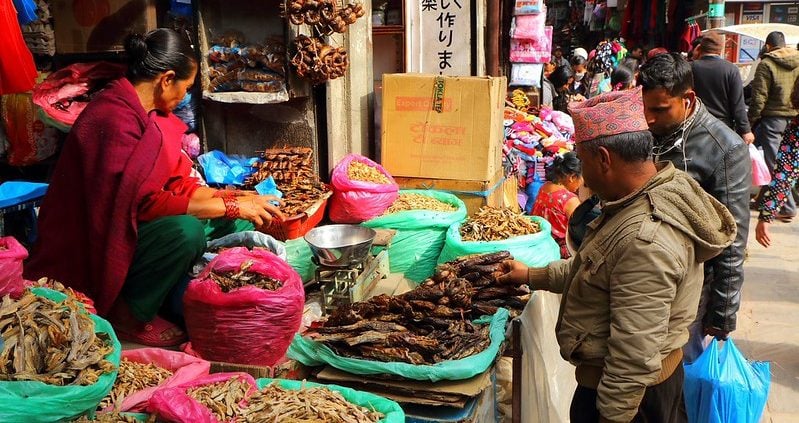 Nepal has made remarkable progress in reducing poverty over the past three decades, but many people living in rural and mountainous communities still face barriers to financial services.