Gender Inequality in Azerbaijan
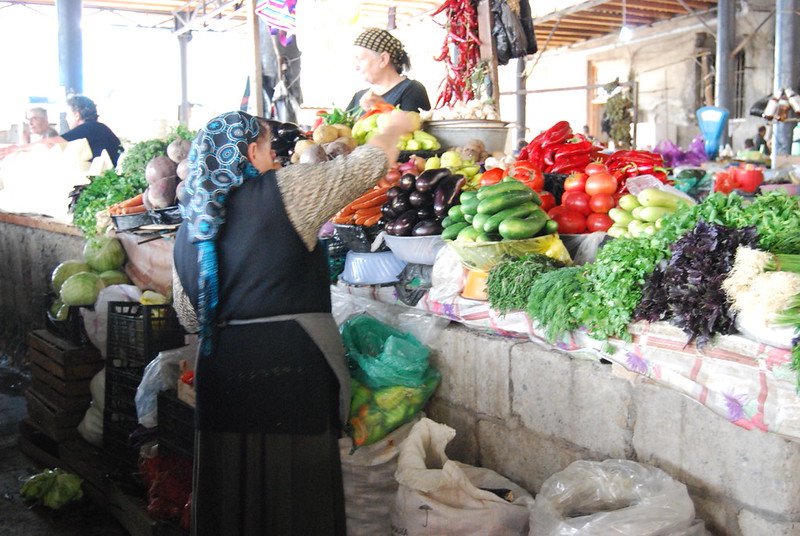 Azerbaijan, in southwestern Asia, has a population of more than 10.2 million people, with more than 5 million women. While progress has been made through projects by the United Nations Democracy Fund (UNDEF) and the Women’s Association for Rational Development (WARD), patriarchal values and gender stereotypes continue to hinder socioeconomic and political equality.
Gender Disparity in the Workforce
Azerbaijan has made legal progress on women’s employment, but gender segregation and pay inequality limit women’s economic participation. Women make up 17% of the workforce in transport and storage, 11% in energy and 8% in construction. According to the World Bank, women in Azerbaijan earn 35% less than men on average.
According to the United Nations (U.N.) Women’s data, gender inequality in Azerbaijan remains a structural problem across both public and private sectors. Women and girls aged 15 and above spend an average of 25.4% of their daily time on unpaid care and domestic work. This unequal burden limits women’s ability to participate in paid employment, education and public life.
Women in Politics
According to the Baku Research Institute, the level of women’s political participation remains low. In 2024, women’s representation in Milli Majlis, the national parliament, reached 20.8%. In 2025, women’s representation in municipalities was 39.34%. According to 2025 statistics, there are no female heads of executive authorities or ministers in Azerbaijan, and there are only six female deputy members. According to the Global Gender Gap Index, Azerbaijan ranked 133rd out of 146 countries in 2024 in terms of political participation.
Gender stereotypes, women’s economic dependence and the political environment in Azerbaijan function as interconnected factors that affect women’s political participation. Society often perceives a woman’s place as being in the family and at home, while men are regarded as the main decision makers.
Women-Led Initiatives to Tackle Gender Inequality
In Azerbaijan, efforts to address gender inequality have taken the form of women-led civic initiatives. UNDEF has funded a project to establish Azerbaijan’s first women’s parliament, giving female leaders a platform to push for stronger rights and better governance. The initiative brings together women from civil society, business and academia to address issues such as girls’ education, maternal health, early marriage and support for female entrepreneurs. The project aims to turn women’s participation into influence on public policy.
WARD is an independent nongovernmental organization in Azerbaijan dedicated to advancing gender equality, women’s empowerment and sustainable development. Over the years, WARD has launched the country’s first maternity school, the first Women’s Resource Center, the Women’s Dialogue School and its first expert group on gender. The organization has also led several awareness-raising campaigns across the country.
In an interview with U.N. Women, WARD chair Shahla Ismayil said that women-led think tanks occupy a space where expertise meets empathy and where knowledge becomes a tool for change. She added that initiatives such as the Women’s Dialogue School prepare a new generation of women leaders to enter public life and propose practical solutions, ensuring that women’s leadership becomes institutional rather than episodic.
Looking Ahead
Women in Azerbaijan have made measurable efforts to address gender inequality despite societal challenges. NGOs and activists continue to work toward structural change, with initiatives such as the women’s parliament and WARD’s programs offering pathways for greater representation and economic participation.
– Bonnie Parkinson
Bonnie is based in London, UK and focuses on Good News and Politics for The Borgen Project.
Photo: Flickr
