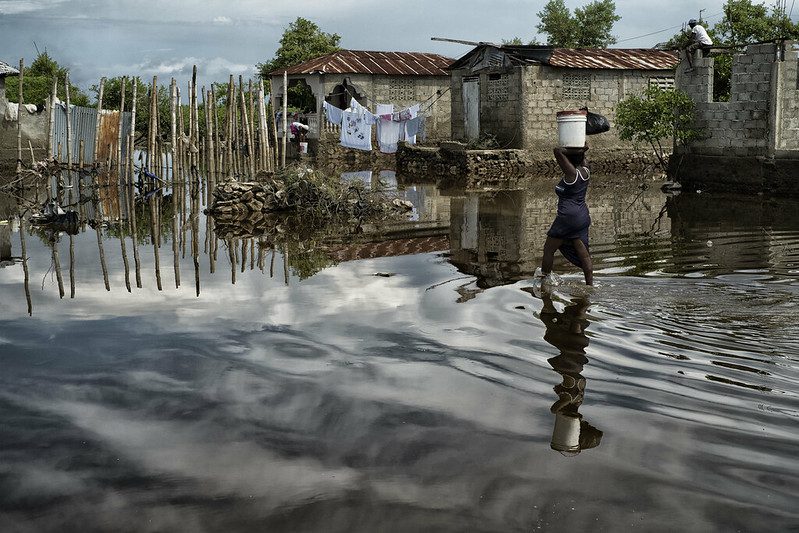
 It has been almost five years since a catastrophic earthquake hit Haiti, leaving behind a tremendous amount of damage. The 7.2 magnitude earthquake killed 2,247 people, injured more than 12,700, and destroyed more than 53,000 homes. 1,060 schools were damaged, compromising the education of thousands of children. This event helped start an initiative to enhance the economic status and community standing of women and their resilience in Haiti.
After this event, an initiative to enhance the economic status and community standing of women was formed for women as a resilience in Haiti.
FADEKA Project
The original initiative, Fanm nan Agrikilti se Devlopman Ekonomi Ayiti (FADEKA), meaning Economic Empowerment of Women in the South Department of Haiti, was active from 2018 to 2021. U.N. Women developed the project in partnership with the Government of Norway, releasing a final report in December 2022. Despite the success of the project, Haitian agriculture and women are still struggling with ongoing insecurity and poor infrastructure, and need another FADEKA Project.
For supporters of this topic to want to push for a second initiative, they need to hear about the success of the first one. An independent firm dissected the FADEKA Project in Haiti and the resiliencies made throughout the program, expressing the positives of the project, and providing a guide for a second one.
Success of FADEKA
During the FADEKA Project in Haiti, focus was solely on improving the livelihoods of female farmers through agriculture, fishing, and small-scale processing through catalytic investments and capacity-building for female producer organizations, according to the December 2022 report.
The female agricultural workforce makes up 44.2%, with only a third of Haitian farms managed by women. Agriculture is the primary source of employment in Haiti, with 40% of households involved in activities and around 75% of rural households engaged in a form of agriculture, such as fishing or beekeeping.
Training farmers on extreme weather patterns was also a part of the FADEKA project. A total of 8.7% beneficiaries surveyed said that they had taken training on weather challenges and 7.3% on nursery management within the context of the project. According to the discussion group participants, this training built their technical capacity on weather patterns and resilience.
Improving the Atmosphere Between Men and Women
The report found that 100% of women, when asked about their participation in household expenditure, contributed to it. Along with 65.3% said that household management income is managed equally between men and women, according to the December 2022 report. Overall, women’s voices in their households were strengthened, they had higher participation, more leadership in decision making, and strengthened farmers’ and agricultural entrepreneurs’ preparedness for shocks of weather patterns.
Out of 34 planned activities, the program implemented 26 (76%). The failure of the eight projects could be due to the instability of Haiti’s government. If a second project goes through, the evaluation gave ideas on how to make it more successful.
According to the evaluation report, if a second phase gets the approval, “the focus should be on consolidating the project’s achievements and on capacity-building for local authorities and the beneficiary communities.”
The need for that second project has grown more and more over the past years, with the rise of gang violence, displacement, food insecurity, and the collapse of livelihoods.
Need for a Second Project
Ever since the end of the first project, Haiti has fallen into critical conditions with mass displacement of people, widespread, acute food insecurity and the domination of gang control of Port-au-Prince. Numerous cases of kidnappings, murders, rapes, gang confrontations and other acts of violence against individuals have contributed to a sense of general insecurity in the country.
In order to improve the socio-economic situation and government of Haiti, there are many different approaches, including strengthening local governance to restore resilience and fostering economic independence through agricultural investment.
The Future
With a successful first project, the U.N. Women, along with leaders in Norway, can make the second project more effective.
The FADEKA Project in Haiti is highly relevant but requires an additional period to strengthen its exit strategy. Many beneficiaries found themselves left to their own devices. This argues in favour of a second phase of the project, which could be consolidating the project’s achievements and capacity-building for local authorities and beneficiary communities. These efforts would help many people, and not go in vain.
– Elizabeth Fryer
Elizabeth is based in Philadelphia, PA, USA and focuses on Good News and Global Health for The Borgen Project.
Photo: Flickr

Comoros’ Ylang-Ylang Industry: Why Greener Growth Matters
This industry also strengthens the national economy. Agriculture accounts for about one-third of Comoros’ GDP and export crops such as ylang-ylang, vanilla and cloves drive much of that growth.
Greener Practices, Stronger Incomes
Ylang-ylang creates direct economic opportunities for many families in Comoros. Around 10,000 producers cultivate the crop, particularly on the island of Anjouan. Farmers and workers earn a steady income from harvesting and selling the flowers. Women play a central role, spending long hours collecting blossoms to sell by the kilogram.
Because producers can harvest ylang-ylang flowers multiple times each month, the crop provides income year-round. This cycle of greener growth helps households manage expenses and reduces income instability. The industry also supports broader economic activity.
Small distilleries purchase flowers from independent farmers, allowing even small-scale producers to participate in export markets. These businesses create jobs and strengthen local skills in processing and production. Licensed exporters help maintain quality standards and connect Comoros to global markets.
As a result, even remote communities benefit from international trade. In 2022, ylang-ylang exports generated about $5.56 million, making the crop one of Comoros’ most valuable export products. Major markets include France, Switzerland, the U.S. and the U.K. This global demand brings valuable foreign income into the country.
Comoros’ Ylang-Ylang Industry
Recent developments are improving both sustainability and economic resilience in Comoros’ ylang-ylang industry. Producers are upgrading distillation equipment to reduce costs and improve efficiency. Improved ovens and stainless-steel alembics use less wood, lowering production expenses and making operations more sustainable.
Farmers are also planting trees such as mango and breadfruit to secure fuel sources while protecting natural forests. These efforts support long-term productivity and help preserve the resources on which livelihoods depend.
A Future Rooted in Prosperity
New environmental programs are also creating additional income streams for rural communities. NGOs now pay farmers, known as “water guardians,” to restore forests and protect water systems. These initiatives provide financial incentives while strengthening local ecosystems.
By linking conservation with income generation, these programs help reduce poverty and build economic security. Ylang-ylang already generates export revenue, employment and steady income for rural communities. Now, greener production methods are improving efficiency, protecting natural resources and creating new opportunities.
With these changes, the “flower of flowers” can continue to drive economic growth while helping communities move out of poverty. Looking ahead, greater investment in ylang-ylang production could further accelerate poverty reduction in Comoros. Training farmers in improved harvesting techniques could increase yields and raise incomes without requiring more farmland.
Expanding local distillation capacity would also allow communities to capture more value before export, creating additional jobs. Improved infrastructure, including transport and storage, could reduce waste and increase profitability. As international demand for sustainable fragrances grows, Comoros is well-positioned to establish itself as a premium, ethical supplier.
This shift could strengthen export earnings while supporting rural livelihoods. By combining sustainability with productivity, ylang-ylang production offers a practical path toward inclusive economic growth and long-term poverty reduction.
– Demetra Mykoniatis
Photo: Flickr
How Legal Aid Clinics in Uganda Help Deliver Justice
Why Access to Justice Matters
Legal problems are widespread in Uganda and they often hit low-income households the hardest. A 2024 justice-needs study by The Hague Institute for Innovation of Law found that 45% of legal problems had not yet been resolved, with 29% still ongoing and 16% abandoned. The report also identified land problems, family disputes, crime and domestic violence as some of the most serious justice issues people face. It noted that family problems and domestic violence are more common among people who say they cannot cover their basic needs.
These figures help explain why legal aid clinics in Uganda matter for poverty reduction. Legal support is not only about court cases. It can help families keep land, secure child maintenance and settle disputes before they become even more damaging. For households already living on tight budgets, that can protect income, housing and long-term stability.
How Legal Aid Clinics are Improving Access to Justice
One of the main ways legal aid clinics in Uganda are expanding access to justice is by bringing free services closer to vulnerable communities. The International Development Law Organization’s (IDLO) 2022 annual report says the Uganda Law Society clinic in Kampala is one of six regional legal aid clinics supported through its Community Justice Programme. These clinics provide pro bono services on both civil and criminal matters, including legal representation, legal advice and counseling. They also support cases involving land disputes and run community sensitization on issues such as gender-based violence, family law and children’s rights.
This matters because many justice problems have a direct connection to poverty. Land disputes can threaten the asset a family depends on most. Family cases can determine whether a parent receives financial support for a child. By offering free legal help, clinics make it more possible for low-income Ugandans to act on rights that might otherwise remain out of reach.
Results for Vulnerable Communities
The impact of legal aid clinics in Uganda becomes clearer in the numbers. IDLO reported that in 2022, Uganda Law Society clinics supported through its programme provided free legal advice and representation to 10,423 vulnerable justice seekers. In the same year, 956 people secured timely remedies through mediation, plea bargaining, police bonds, bail or quick-win sessions. Another 163 civil cases were concluded through litigation. IDLO also reported that through the clinics, 34 complainants recovered 154 acres of disputed land, while 10 others received monetary compensation.
IDLO’s 2023 annual report shows that this work continued. It says the six clinics provided free legal aid support to 4,390 people in 2023, including legal representation, advice, counseling and community sensitization. The report highlights the importance of land cases in particular, noting that one of the main reasons people approach the clinics is for help resolving disputes over land rights.
Justice at the Individual Level
The benefits of legal aid clinics in Uganda are also visible in individual cases. In one example from IDLO’s 2022 annual report, a university student Rose went to a Uganda law society legal aid clinic in Kampala after the father of her child refused to provide support, with help from the clinic, she took the case to court. After several court appearances and home mediation sessions, the case was settled with a monthly support payment that allowed her to provide a more stable life for her child.
IDLO’s 2023 report also describes a land case in Masese, where a resident sought help from the Uganda Law Society legal aid clinic in Jinja after learning that land titles in his community had been sold off to outside buyers. Lawyers from the clinic filed the case in court and advised the community on how to understand and claim their rights. The beneficiary won his case, beginning a process to cancel the illegal land titles and strengthening the community’s position in future negotiations.
Technology is Helping Close the Justice Gap
Some organizations are widening access through digital tools as well. BarefootLaw, a Ugandan nonprofit founded in 2013, says it has empowered more than 1 million people across Uganda, Kenya and Malawi through pro bono legal support. Its 10th anniversary report says its lawyers receive support from Winnie, an artificial intelligence tool that helps respond to legal questions more quickly. For people who cannot easily travel to a legal office, that kind of support can offer an important first step.
As organizations such as the Uganda Law Society and BarefootLaw continue to expand legal support, more Ugandans are gaining practical ways to defend their rights. In that sense, legal aid clinics in Uganda are doing more than improving access to justice. They are helping vulnerable families protect land, income and personal safety, making justice more reachable for people living on the economic margins.
– Tom Basu
Photo: Flickr
How Running Programs Are Reducing Poverty in Kenya
In places like Iten, often called the “home of champions,” runners train every day, hoping to compete at a higher level. What is different now is that there are more structured programs and training camps that actually support these athletes and give them a better chance of succeeding.
Running as a Pathway Out of Poverty
For many athletes, running starts simply. It is just part of daily life. But with the right support, it can lead to real opportunities. Training programs can provide coaching, meals and even housing, which helps take some of the financial pressure off.
One example is Kenya Experience, a program that allows runners to live and train in a high-performance environment alongside other athletes. It connects runners with experienced coaches, structured training and exposure to international competitions, which many would not otherwise have access to. Programs like this make a difference by allowing athletes to focus more on training and less on everyday struggles.
Over time, this can lead to opportunities such as competing in major races, earning prize money or even securing sponsorships.
Opportunities Beyond the Track
Success in running not only benefits the athlete. When runners begin to earn money from competitions or sponsorships, they often use that income to support their families. In many cases, one successful runner can help pay for school fees, housing and basic needs for several people.
So it is not just one person benefiting. It can impact an entire household and sometimes even an entire community. Running also creates opportunities beyond just competing.
Coaches, trainers and even local businesses benefit from the presence of training camps and athletes. Places like Iten have seen growth partly because of the running culture there.
Why Kenya Stands Out
Kenya has become one of the most successful countries in long-distance running and that success has helped build a system around the sport. Young athletes grow up seeing people from similar backgrounds succeed, which makes it feel more realistic. There are also more camps and programs now than before, which means more access to training and support.
Not everyone will become a professional runner, obviously, but the chance alone can change how people think about their future.
Looking Ahead
Running is not a complete solution to poverty in Kenya, but it does help create opportunities. For people in areas with limited job options, it can offer a different path. As more programs continue to grow and connect athletes to greater opportunities, running will likely remain an important part of economic growth in certain communities. It is not perfect, but for many people, it is a start.
– Aaron Scott
Photo: Flickr
Dairy Farming Innovation in Africa
In an unexpected corner of agricultural science, a new approach is taking shape, one that begins not with infrastructure or aid packages but with cows. Increasingly, dairy farming innovation in Africa is helping reshape what opportunity looks like for rural families.
A Cross-Continental Scientific Partnership
At the heart of this transformation is a collaboration between British scientists and African researchers, working through institutions like Scotland’s Rural College and the International Livestock Research Institute (ILRI). Together, they are rethinking how dairy farming can empower smallholder farmers by breeding cows that are not only more productive but better suited to local environments.
The science began in the U.K. Researchers Raphael Mrode and Mike Coffey focused on a simple question: what if cows could produce more milk while requiring fewer resources? According to a Gates Foundation report, the team studied ways to breed smaller cows that would require less feed and less land to graze on while producing more milk than larger cows. They identified the genetic traits that led to healthier cows with higher milk production.
Even in Scotland, the gains were measurable. Farmer Rory Christie noted that since the project began, his herd has produced about 1,000 liters per cow per year extra. This breakthrough laid the groundwork for dairy farming innovation in Africa, showing how science could directly improve productivity.
From Research to Real-World Impact
Recognizing this potential, the research expanded beyond Europe. Scientists Okeyo Mwai and Julie Ojango in Nairobi joined forces with Mrode, forming a partnership that would eventually become the African Dairy Genetic Gains (ADGG) program. The goal of ADGG is to provide small-scale dairy producers in Sub-Saharan Africa access to feed-efficient and well-adapted cows to increase their income.
The challenge in countries like Kenya was not a lack of cows but a lack of clarity. Local herds had become what Julie Ojango described as a “fruit salad” of mixed breeds. Years of unstructured crossbreeding and imported genetics meant that farmers often had no reliable way to know which animals would be most productive. Despite continued investment in imported semen, results were inconsistent.
ADGG set out to change that by bringing data into the equation. The program began systematically collecting information on thousands of animals, tracking performance and applying genomic tools to identify the most promising traits. The initiative aimed at developing and testing a genetic gains platform that uses on-farm performance information and basic genomic data to identify and prove superior crossbred bulls for the benefit of smallholder farmers in Africa.
The Power of Hybrid Cows
Researchers discovered that certain hybrid cows outperformed both traditional local breeds and exotic imports. These hybrids were not only more productive but also better adapted to African climates and farming conditions.
Currently, these improved cows are being distributed through community networks and artificial insemination programs. The impact is measurable across Kenya, Tanzania and Ethiopia, where thousands of farmers are seeing higher milk yields, more stable incomes and new opportunities.
Okeyo Mwai, principal scientist at ILRI, said that milk is one of the most nutritious animal-sourced foods, and increasing milk yield expands opportunities for food and national security for both farmers and their neighbors.
From Subsistence to Opportunity
For many families, milk is reshaping futures. One Kenyan farmer, Josephine Kimonyi, said the milk from a single improved cow helped her household pay school fees for her children and brought stability to the family.
Across the region, increased milk production is enabling farmers to move beyond subsistence. With surplus milk to sell, families are becoming small-scale entrepreneurs, investing in education, health care and better living conditions. These accounts highlight how dairy farming innovation in Africa is changing livelihoods at the household level.
Looking Ahead
Governments, scientists, nongovernmental organizations (NGOs) and farmers are collaborating in this effort. ADGG data shows that more than 56,000 farmers and more than 94,000 animals have been registered across Africa, and the program continues to grow. By combining science with local knowledge and focusing on tools farmers can use, this initiative is turning an everyday resource into a pathway out of poverty.
– Lucy Kerr
Photo: Flickr
AguaClara: Clean Water in Honduras and Beyond
The Link Between Lack of Safe Water and Poverty
Lack of access to safe water not only reflects poverty but also drives it. Without safe water, economic opportunity is limited, and communities face cycles of illness, lost productivity and time spent locating water sources. The World Bank classifies India and Honduras, the primary beneficiaries of AguaClara’s projects, as lower-middle-income countries. Both countries experience large inequalities of wealth. In Honduras, the poverty rate was 62.90% as of 2024, based on the national poverty line. While data for poverty at the national level is unavailable for India, the World Bank reports that in 2022, the poverty rate at $3 a day was 5.25%. Initiatives like AguaClara play a role in helping to reduce poverty through clean water.
The Consequences of Unsafe Water
With a large proportion of Hondurans living in poverty, an estimated 2.7 million do not have access to safe drinking water. The World Health Organization (WHO) identifies waterborne diseases as a primary cause of child mortality. The National Survey of Demography and Health shows that only 50% of households in Honduras have access to E. coli-free water, with rural and low-income communities particularly affected.
Conditions in India are similar. As of 2025, 91 million people in India had no guaranteed way of securing clean water sources. Waterborne diseases in India resulted in an estimated 11,728 deaths from 2014 to 2018. Unsafe water also deepens poverty, with waterborne diseases costing the country around $600 million each year.
AguaClara’s Community-Led Mission
According to AguaClara Reach, the organization advances global access to safe drinking water through community-scale, gravity-powered water treatment technologies, capacity building with local implementation partners and research and education with university partners.
To sustainably reduce poverty through clean water access, AguaClara Reach implements its technologies with the community in mind. Its method relies on an understanding of the political and social context of each project area to support a long-term solution.
Since 2008, the AguaClara plant in Tamara, Honduras, has provided locals with clean and safe water. Each household pays a $5 tariff, allowing the water board to continuously upgrade water infrastructure. The community accepts this fee on the basis that access to reliable water eases financial pressure. Improvements made by the Tamara water board include an expanded storage tank, the use of stacked rapid sand filters and a self-cleaning clarifier. In Tamara, AguaClara technology has improved the quality of life and will continue to do so as the equipment evolves.
Looking Ahead
Efforts to improve access to clean, safe water continue across developing nations. The work of AguaClara Reach offers one model for addressing this challenge, with measurable impact across communities in Central America and India. As the organization expands its reach, its community-led approach provides a path forward to reduce poverty through clean water.
– Polly Laws
Photo: Flickr
Diagnostic Tampons: Fighting Cervical Cancer in Latin America
Positively, vaccines for this disease are extremely effective, when administered at a young age HPV vaccine prevents infection, cervical cancer and other HPV-related disorders. The World Health Organization (WHO) has the goal to reduce the number of annual cases of cervical cancer to fewer than four per 100,000 women. Despite having such effective vaccines, a major issue lies with the accessibility and distribution of diagnostic tests and the subsequent intervention provision.
Cervical Cancer in Latin America
While the WHO’s elimination goal is ambitious, the reality for Latin America tells a different story – cervical cancer deaths in the region are projected to surpass 51,500 by 2030, with 89% of those occurring in Latin America and the Caribbean. Women across the region feel the burden. In El Salvador, 2.53 million women aged 15 and older are at risk of developing cervical cancer, representing a significant proportion of the country’s 6.3 million population.
The picture is similarly concerning in Guatemala, where 6.10 million women face the same risk out of a population of 18.6 million. Compounding this, HPV vaccination coverage in Guatemala stands at just 35%, with only 15% of individuals completing their final dose. El Salvador fares only marginally better at 43%, a figure that still falls well short of the WHO’s 90% target.
An example of how improved vaccination rates reduce prevalence and mortality together can be observed from Costa Rica. Here the Crude incidence rates sit at 14.4 for females with HPV-related cancers.
Prevention
A recurring challenge across the region is lack of awareness surrounding HPV, its link to cervical cancer, and the safety of available vaccines. In many indigenous and rural communities, misinformation and limited access to health education contribute to the low vaccination uptake seen in countries like Guatemala and El Salvador. Addressing this through community-led outreach and culturally sensitive health programs could be a foundational step towards closing the gap.
The Cervical Cancer Foundation works in collaboration with non-profits to lobby for legislative change and vitally provide health training to educate communities on the importance of HPV screening and available vaccines. Crucially, they provide cervical cancer prevention strategies within Latin America to aid in the reduction of this gap. With financial support from the Union of International Cancer Control, they aim to train more than 200 health educators from El Salvador to Costa Rica.
Screening
Yet even when education and vaccination efforts improve, a separate challenge remains: screening. The WHO’s elimination framework calls for screening of 70% of women with high-performance tests by the age of 35 and again by 45. In much of Latin America, this target is still far due to a shortage of trained gynaecologists, limited clinical infrastructure and the geographic remoteness of many at-risk communities. This is where an emerging technology may offer a meaningful solution- the diagnostic tampon.
A recent and applicable advancement for HPV has been analysed and assessed for usage in other LMIC’s. For example, in Tanzania, the use of diagnostic tampons has emerged as a promising, accurate method for cervical cancer screening. This reduces the need for trips to far or inaccessible hospitals for rural communities and those most at risk.
Studies comparing the accuracy of diagnostic tampons with clinician-collected samples for detecting HPV further corroborate this, demonstrating that use of diagnostic tampons has an overall accuracy of 95%, proving an easily implementable and highly specific screening tool.
Looking ahead
The diagnostic tampon is not a standalone solution. Eliminating cervical cancer in Latin America could require sustained investment across the entire health care system- from early education and vaccine distribution mechanisms to clinical infrastructure. However, this diagnostic tampon does represent significant advancements: practical and high-accuracy screening tools which meet women where they are rather than navigating systems which have historically excluded them. Thus, integrating this screening tool into existing public health frameworks, further backed by education, political will and adequate funding, offers a credible path towards turning the tide on one of the more preventable cancers.
– Juliette Dall’Aglio
Photo: Flickr
How Hydropower in the DRC is Reducing Poverty
The Congo River: A Blueprint for Hydropower in the DRC
The Congo River is the engine of the DRC’s immense hydropower capacity and is essential to fighting poverty. Its position across the equator ensures a steady, year-round surge, unaffected by the seasonal droughts that plague other hydropower regions.
Despite this reliable flow, the DRC remains one of the world’s most impoverished nations. While the river could technically power the entire African continent, the vast majority of its energy currently escapes into the Atlantic Ocean, leaving millions of Congolese homes and businesses in the dark. Bridging this gap is no longer just an engineering goal; it is a human rights necessity. By finally tapping into this ‘liquid gold,’ the DRC is beginning to unlock four critical pathways out of poverty.
Powering Rural Entrepreneurship
Reliable electricity is currently helping rebuild the DRC’s local economies by shifting manual labor toward productive use. Through initiatives like the Virunga Alliance, rural villages gaining access to electricity now allow market vendors to refrigerate produce and preserve perishables like fish and meat. This infrastructure is sparking immediate entrepreneurship; electric saws or sewing machines could be serving as catalysts for increased trade in newly electrified zones.
This transition is moving local communities from subsistence living to micro-enterprise, creating a stable cash flow that was previously impossible due to the prohibitive cost of diesel generators.
Boosting Agricultural Value Chains
The Virunga Alliance has “introduced modern farming techniques, provided high-quality seeds, and organised cooperatives to cultivate nearly 80 hectares of wheat, with plans to expand to 500 hectares.” According to the Alliance, “the introduction of mechanised tools such as tractors, harvesters, and threshers has significantly increased efficiency, enabling faster harvesting and the preparation of additional land for cultivation.”
The ability to process crops locally is increasing market value — rather than selling raw, perishable goods at a loss, farmers are now selling shelf-stable, higher-value produce. This shift could directly increase household income and reducing post-harvest waste in regions where hydropower and electricity are available.
How Localized Hydropower is Creating Jobs in North Kivu
While the world waits for project “Grand Inga,” decentralized projects like “Run-of-River” are already transforming the lives of many across the DRC, specifically in North Kivu. The Virunga Alliance is at the heart of this success, using the Congo River’s natural flow to generate electricity as opposed to using traditional dams with massive reservoirs. Not only is this much cheaper, requiring less capital, it is also faster and helps those in poverty now versus in 20 years — with minimal environmental disruption.
The Matebe hydroelectric plant is another great example, providing 13.6 MW of stable energy to the city of Goma and surrounding villages. Every megawatt generated by their plant creates approximately 1,000 local jobs. So far, the plant has connected more than 42,000 households and 2,800 businesses with power, offering young people viable employment alternatives to joining local armed groups.
Ending Poverty Through Hydropower in the DRC
The scale of the DRC’s energy crisis is as vast as the Congo River itself, but the success of decentralized projects is paving the way for further development in the nation. While infrastructural issues remain, the shift to localized run-of-the-river hydropower offers a scalable blueprint to move forward with.
Prioritizing smaller, high-impact investments, the DRC can bypass the decades-long wait for mega-dams and begin lifting millions out of poverty today.
Leveraging the river’s natural flow is no longer a technical challenge; it is a key driver behind providing the Congolese people with the necessary tools to build a more stable, brighter future.
– Rebecca Cameron
Photo: Flickr
Yemen’s Health Care Amid Conflict
Conflict, Funding Collapse and Deliberate Obstruction
The Trump administration labeled the Houthis as a terrorist organization in 2025, causing U.S. funding to decrease. This was meant to pressure the Houthis, but it punished ordinary Yemenis instead, scaring away donors and giving NGOs legal exposure for any activity that could be construed as materially supporting the Houthis.
Human Rights Watch documented how the Houthis’ systematic detention of aid workers is deepening Yemen’s humanitarian catastrophe. As of early January 2026, at least 69 U.N. staff (all Yemeni nationals) and dozens of staff from international and local NGOs have been arbitrarily detained since mid-2024, with arrests occurring in several waves. The arrests, combined with office raids and the seizure of equipment have effectively paralysed aid operations in Houthi-controlled areas. The U.N. suspended operations in Saada entirely – the majority of Saada’s population has moved from crisis level to emergency level food insecurity in that period.
The World Food Program (WFP) announced in January 2026 that it is shutting down its operations in Houthi-controlled northern Yemen entirely. All 365 WFP staff in the region will have their contracts terminated by the end of March. Northern Yemen accounts for around 70% of the country’s humanitarian requirements, and more than 18 million people were already at risk of acute food insecurity, with tens of thousands facing famine-like conditions. An estimated 4.8 million people remain internally displaced across Yemen as a whole.
A Broken System Looking for a Fix
Yemen’s health care operates in a legal and institutional vacuum. The government, currently based in Aden under the Presidential Leadership Council, nominally controls the Ministry of Public Health and Population (MoPHP), which retains legal authority over health care. Any formal tiered licensing system would need MoPHP sign-off to have legal standing. The practical problem is that MoPHP’s writ does not run in Houthi-controlled areas (most of the north, including Sana’a), where a parallel health bureaucracy has operated since around 2016.
Launched in September 2024 in Aden, Yemen’s National Quality of Health Care Strategy 2025–2030 is a joint initiative between WHO and Yemen’s Ministry of Public Health and Population. It aims to improve the quality, safety and equity of health services across the country despite the ongoing challenges of conflict, poverty and weak infrastructure. Furthermore, it has the support of seven years of collaboration between WHO, MoPHP and the World Bank’s International Development Association, with current implementation supported through the Emergency Human Capital Project, which could be a major funding vessel. WHO and MoPHP should co-develop a short-form pharmacist diagnostic certificate and acknowledge honestly that MoPHP cannot certify in Houthi territory, so NGOs operating there would need to serve as the de facto credentialing body on a provisional basis.
Medicine Availability: The Data
A peer-reviewed academic study involved researchers who surveyed 30 health care facilities across 13 districts in three southern Yemeni governorates (Aden, Lahij, and Abyan) between November 2017 and February 2018. On average, only 52.8% of essential medicines were available across all facilities – well below the WHO’s voluntary target of 80%.
Yemen imports 80-90% of its medicines, and the conflict has severely disrupted supply chains, destroyed infrastructure, and caused economic collapse.
With the WFP’s withdrawal from the north, Houthi detention of aid workers continuing and the conflict destroying health infrastructure, the formal system is contracting further while need accelerates. Yemen’s southern governorates, more accessible and more stable than the north, offer a viable starting point. A tiered licensing framework, negotiated between the internationally recognized government and established NGO networks, could begin there. Understanding Yemen’s health care means understanding what happens when a health system disappears entirely.
– Anisa Begum
Photo: Flickr
Resilience in Haiti with FADEKA
After this event, an initiative to enhance the economic status and community standing of women was formed for women as a resilience in Haiti.
FADEKA Project
The original initiative, Fanm nan Agrikilti se Devlopman Ekonomi Ayiti (FADEKA), meaning Economic Empowerment of Women in the South Department of Haiti, was active from 2018 to 2021. U.N. Women developed the project in partnership with the Government of Norway, releasing a final report in December 2022. Despite the success of the project, Haitian agriculture and women are still struggling with ongoing insecurity and poor infrastructure, and need another FADEKA Project.
For supporters of this topic to want to push for a second initiative, they need to hear about the success of the first one. An independent firm dissected the FADEKA Project in Haiti and the resiliencies made throughout the program, expressing the positives of the project, and providing a guide for a second one.
Success of FADEKA
During the FADEKA Project in Haiti, focus was solely on improving the livelihoods of female farmers through agriculture, fishing, and small-scale processing through catalytic investments and capacity-building for female producer organizations, according to the December 2022 report.
The female agricultural workforce makes up 44.2%, with only a third of Haitian farms managed by women. Agriculture is the primary source of employment in Haiti, with 40% of households involved in activities and around 75% of rural households engaged in a form of agriculture, such as fishing or beekeeping.
Training farmers on extreme weather patterns was also a part of the FADEKA project. A total of 8.7% beneficiaries surveyed said that they had taken training on weather challenges and 7.3% on nursery management within the context of the project. According to the discussion group participants, this training built their technical capacity on weather patterns and resilience.
Improving the Atmosphere Between Men and Women
The report found that 100% of women, when asked about their participation in household expenditure, contributed to it. Along with 65.3% said that household management income is managed equally between men and women, according to the December 2022 report. Overall, women’s voices in their households were strengthened, they had higher participation, more leadership in decision making, and strengthened farmers’ and agricultural entrepreneurs’ preparedness for shocks of weather patterns.
Out of 34 planned activities, the program implemented 26 (76%). The failure of the eight projects could be due to the instability of Haiti’s government. If a second project goes through, the evaluation gave ideas on how to make it more successful.
According to the evaluation report, if a second phase gets the approval, “the focus should be on consolidating the project’s achievements and on capacity-building for local authorities and the beneficiary communities.”
The need for that second project has grown more and more over the past years, with the rise of gang violence, displacement, food insecurity, and the collapse of livelihoods.
Need for a Second Project
Ever since the end of the first project, Haiti has fallen into critical conditions with mass displacement of people, widespread, acute food insecurity and the domination of gang control of Port-au-Prince. Numerous cases of kidnappings, murders, rapes, gang confrontations and other acts of violence against individuals have contributed to a sense of general insecurity in the country.
In order to improve the socio-economic situation and government of Haiti, there are many different approaches, including strengthening local governance to restore resilience and fostering economic independence through agricultural investment.
The Future
With a successful first project, the U.N. Women, along with leaders in Norway, can make the second project more effective.
The FADEKA Project in Haiti is highly relevant but requires an additional period to strengthen its exit strategy. Many beneficiaries found themselves left to their own devices. This argues in favour of a second phase of the project, which could be consolidating the project’s achievements and capacity-building for local authorities and beneficiary communities. These efforts would help many people, and not go in vain.
– Elizabeth Fryer
Photo: Flickr
Addressing Housing and Urban Poverty in Vietnam
Housing and Urban Poverty in Vietnam
According to the deputy chief of the National Office for Poverty Reduction, Vietnam’s overall poverty rate would drop to around 1.1%. This represents roughly 900,000 to 1.1 million individuals living in poverty in Vietnam. Furthermore, Vietnam has developed a new multidimensional poverty index for the next six years, designed to increase the urban income threshold to VND 2.8 million ($106) and rural income to VND 2.2 million ($84) per person per month. Although these numbers highlight Vietnam’s success in tackling extreme poverty, they often ignore the millions of individuals who cannot afford housing in major urban centers, like Ho Chi Minh City.
Thousands of people in Vietnam cannot afford housing because of two main reasons: excess housing demand and a worsening affordability gap.. The director of the Housing and Real Estate Market Management Department explained that Vietnam would need roughly one million more homes to meet the increased demand. Given the growing population in urban centers, housing and urban poverty in Vietnam are increasing.
Affordability Gap
Furthermore, home prices have outpaced income growth by a significant margin, making it almost impossible for an average Vietnamese citizen to afford housing in major urban centers. Prices in major cities, like Hanoi and Ho Chi Minh City, have risen 5.6% so far this year. This means that, on average, apartment prices are roughly 80 million dong ($3,028) per square meter. In comparison, the average annual salary of a Vietnamese worker is 98.4 million dong. This sizable difference has made it almost impossible for Vietnamese to afford housing.
Addressing the Housing Crisis
To successfully address this challenge, the government, private organizations and other nongovernmental organizations (NGOs) have developed effective strategies and projects to decrease housing costs in Vietnam. The government has pledged to adjust land use fee regulations to ensure fairness and prevent companies from raising prices beyond people’s affordability. Habitat for Humanity International (HFHI) in Vietnam, a nonprofit dedicated to addressing housing and urban poverty globally, in collaboration with local unions and organizations, has developed the Decent Housing, Peaceful Life project. This project has supported the construction and revitalization of existing properties in Vietnam to improve the housing situation of individuals facing difficult circumstances.
Looking Ahead
As Vietnam continues to grow as a nation, the government, companies and NGOs in the country continue to address the different challenges that arise. Indeed, as housing affordability and accessibility worsen in Vietnam, the government, in collaboration with other organizations, is taking steps to ease this pressure and secure affordable, safe housing for millions of Vietnamese in major urban centers.
– Rodrigo Salgado
Photo: Flickr