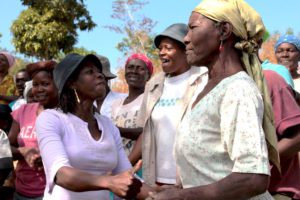
 Grassroots groups driving women’s empowerment in Haiti are addressing the deep intersection of poverty and gender inequality in one of the most economically challenged countries in the Western Hemisphere. More than 60% of Haiti’s population lives below the poverty line, with more than 25% in extreme poverty. Despite these conditions, women remain active in the workforce, with a labor force participation rate of 58.3% compared to 69.7% for men.
However, economic participation has not translated into equality. Haiti ranked 163rd out of 170 countries on the Gender Inequality Index and its Gender Development Index score of 0.898 falls well below the regional average of 0.963. These figures highlight that women contribute significantly to the economy but still lack access to resources, financial security and decision-making power.
Barriers Facing Women in Rural Economies
Women in Haiti face persistent structural barriers that limit their economic advancement. In rural areas, where agriculture supports nearly half of the workforce, women play a central role in farming and household management but often lack access to land, credit and formal markets. Environmental challenges such as drought, soil degradation and limited infrastructure further reduce productivity and income stability.
Cultural norms also restrict women’s participation in leadership and higher-paying sectors. For example, in the fishing industry, women are often confined to processing and selling fish while relying on fishermen for supply, which limits their bargaining power. These overlapping challenges reinforce cycles of poverty and economic dependence.
Grassroots Solutions Creating Economic Opportunity
Grassroots groups in Haiti are responding to these challenges through community-led, cooperative-based solutions. One example is the Women’s Initiative from The Haiti Project, which supports women in the rural village of Chermaitre. The initiative began when women came together to share their experiences of hardship and resilience, eventually forming the Chermaitre’s Women cooperative.
This program focuses on developing business skills, strengthening collaboration and creating sustainable income opportunities. By centering local leadership, the initiative ensures that women actively shape their economic futures and build solutions tailored to their community’s needs.
Women’s Empowerment in Haiti
The cooperative model combines economic opportunity with long-term social empowerment. Women in the Chermaitre’s Women cooperative produce goods such as coffee, peanut butter and handmade crafts, including textiles and jewelry, which they sell in local and international markets. By pooling resources and sharing profits, the cooperative reduces financial risk and increases collective bargaining power.
Women use their earnings to pay school fees, invest in agriculture and improve household stability, particularly during periods of environmental stress. Participation also builds financial literacy, confidence and leadership skills. This creates a clear chain of impact: income leads to independence, independence strengthens decision-making power and decision-making power increases women’s influence in their communities.
In this way, these grassroots organizations empowering women in Haiti transform economic participation into meaningful advocacy.
The Impacts of Grassroots Cooperatives on Women
The success of this model reflects a broader global pattern in which grassroots women’s cooperatives drive sustainable development. Evidence shows that cooperatives increase income while also expanding leadership capacity by giving women opportunities to make decisions, manage finances and resolve conflicts. Many women in these groups take on leadership roles for the first time, helping to challenge traditional gender norms.
These cooperatives also support environmental sustainability through activities like reforestation and soil restoration. Globally, gender equality is essential to achieving development outcomes, including poverty reduction, food security and climate resilience. In fact, empowering women is considered critical to achieving all 17 Sustainable Development Goals (SDGs), reinforcing that economic inclusion drives long-term progress.
Funding Gaps Limit Grassroots Impact
However, despite their effectiveness, grassroots organizations in Haiti face significant funding challenges. For instance, of the total $6.43 billion invested in Haiti’s development from 2010-2012, only 0.6% of that funding has gone directly to Haitian-based nonprofit organizations. At the same time, 90% of women-led and women’s rights organizations globally report experiencing funding cuts.
Despite limited resources, grassroots groups in Haiti continue to strengthen leadership, improve safety for women and girls and respond to ongoing crises. This imbalance highlights a critical gap: the most effective, community-based solutions often receive the least financial support. Expanding direct investment would allow these organizations to scale their impact and reach more women.
A Path Toward Sustainable Change
Ultimately, women’s grassroots groups in Haiti demonstrate that economic empowerment can drive lasting social change. Programs like the Women’s Initiative show that when women gain access to income, skills and leadership opportunities, they do more than support their families; they strengthen entire communities. Expanding support for grassroots, cooperative-based initiatives offers a clear pathway toward reducing poverty, advancing gender equality and building a more sustainable future for Haiti.
– Kianna Hines
Kianna is based in Brooklyn, NY, USA and focuses on Global Health for The Borgen Project.
Photo: Flickr

Poverty Reduction and Women Entrepreneurs in Nigeria
Female-led companies have created jobs, driven local economic growth and expanded access to essential goods and services across sectors. Here are some ways women entrepreneurs continue to strengthen the economy of Nigeria while advancing broader efforts to reduce poverty.
Improving Access To Essential Health Services
Olamide Orekunrin was on one of her frequent visits to her home city, Lagos, when her sister became critically ill. With no equipment or drugs to revive her and no reliable way to get her to a hospital, the situation quickly turned critical. What would have been easily accessible lifesaving care in many places instead exposed a gap in Lagos’ health system that led to her sister’s untimely death.
This motivated Orekunrin to start Flying Doctors, a medical emergency service specializing in air ambulances. The organization introduced the first air ambulance service in Nigeria and West Africa. Flying Doctors has successfully evacuated victims of road accidents, bomb blasts, fire outbreaks and other mishaps across Africa.
Female-led businesses like Flying Doctors combine passion with humanitarianism and have helped ensure that all Nigerians have access to essential emergency medical services.
Supporting Community Development
When it comes to entrepreneurship, women-led businesses reinvest up to 90% of income back into their families and communities, compared to 30–40% for men. Female entrepreneurs in Nigeria have launched initiatives such as skills-training programs, education services and other community-focused enterprises. Tutoring and educational initiatives help keep children in school longer.
Each additional year of schooling for girls can increase future earnings by up to 20%. Child care centers enable mothers to remain in the workforce and accelerate their career paths while balancing motherhood. Skills and training programs do the same. These services, which allow more women to join the workforce and children to stay in school longer, are tackling both child poverty and female poverty.
Job Creations
With women accounting for 43% of micro-enterprise ownership and about 40% of early-stage entrepreneurial activity, their businesses are a major source of employment and income in communities where poverty is widespread. Women-owned businesses employ several low-income women and youth. These businesses provide essential services like tailoring and clothing, transportation and logistics, food retail and hospitality and digital services and e-commerce.
These businesses not only expand access to affordable everyday services in underserved communities, but also create jobs for the people in those communities. In doing so, they are reducing reliance on Nigeria’s limited formal job market. By generating income and supporting more sustainable livelihoods, women-led enterprises are helping households and communities lift themselves out of extreme poverty.
Final Remarks
Ultimately, women-owned businesses often serve female customers and underserved communities, especially in informal sectors and rural areas. Through business networks and support systems, women are also better able to overcome barriers to finance, market access and formal business opportunities. In many cases, women-led enterprises create jobs and income opportunities for other women and young people in their communities in Nigeria.
This ripple effect strengthens local economies while expanding opportunities for groups historically excluded from formal work. Across Nigeria, female entrepreneurs are expanding access to financial services, health care, education, food and employment. From agriculture to digital finance, women-led enterprises are filling critical service gaps in underserved communities and driving more inclusive economic growth.
– Yemi Mary John
Photo: Unsplash
Grassroots Groups Driving Women’s Empowerment in Haiti
However, economic participation has not translated into equality. Haiti ranked 163rd out of 170 countries on the Gender Inequality Index and its Gender Development Index score of 0.898 falls well below the regional average of 0.963. These figures highlight that women contribute significantly to the economy but still lack access to resources, financial security and decision-making power.
Barriers Facing Women in Rural Economies
Women in Haiti face persistent structural barriers that limit their economic advancement. In rural areas, where agriculture supports nearly half of the workforce, women play a central role in farming and household management but often lack access to land, credit and formal markets. Environmental challenges such as drought, soil degradation and limited infrastructure further reduce productivity and income stability.
Cultural norms also restrict women’s participation in leadership and higher-paying sectors. For example, in the fishing industry, women are often confined to processing and selling fish while relying on fishermen for supply, which limits their bargaining power. These overlapping challenges reinforce cycles of poverty and economic dependence.
Grassroots Solutions Creating Economic Opportunity
Grassroots groups in Haiti are responding to these challenges through community-led, cooperative-based solutions. One example is the Women’s Initiative from The Haiti Project, which supports women in the rural village of Chermaitre. The initiative began when women came together to share their experiences of hardship and resilience, eventually forming the Chermaitre’s Women cooperative.
This program focuses on developing business skills, strengthening collaboration and creating sustainable income opportunities. By centering local leadership, the initiative ensures that women actively shape their economic futures and build solutions tailored to their community’s needs.
Women’s Empowerment in Haiti
The cooperative model combines economic opportunity with long-term social empowerment. Women in the Chermaitre’s Women cooperative produce goods such as coffee, peanut butter and handmade crafts, including textiles and jewelry, which they sell in local and international markets. By pooling resources and sharing profits, the cooperative reduces financial risk and increases collective bargaining power.
Women use their earnings to pay school fees, invest in agriculture and improve household stability, particularly during periods of environmental stress. Participation also builds financial literacy, confidence and leadership skills. This creates a clear chain of impact: income leads to independence, independence strengthens decision-making power and decision-making power increases women’s influence in their communities.
In this way, these grassroots organizations empowering women in Haiti transform economic participation into meaningful advocacy.
The Impacts of Grassroots Cooperatives on Women
The success of this model reflects a broader global pattern in which grassroots women’s cooperatives drive sustainable development. Evidence shows that cooperatives increase income while also expanding leadership capacity by giving women opportunities to make decisions, manage finances and resolve conflicts. Many women in these groups take on leadership roles for the first time, helping to challenge traditional gender norms.
These cooperatives also support environmental sustainability through activities like reforestation and soil restoration. Globally, gender equality is essential to achieving development outcomes, including poverty reduction, food security and climate resilience. In fact, empowering women is considered critical to achieving all 17 Sustainable Development Goals (SDGs), reinforcing that economic inclusion drives long-term progress.
Funding Gaps Limit Grassroots Impact
However, despite their effectiveness, grassroots organizations in Haiti face significant funding challenges. For instance, of the total $6.43 billion invested in Haiti’s development from 2010-2012, only 0.6% of that funding has gone directly to Haitian-based nonprofit organizations. At the same time, 90% of women-led and women’s rights organizations globally report experiencing funding cuts.
Despite limited resources, grassroots groups in Haiti continue to strengthen leadership, improve safety for women and girls and respond to ongoing crises. This imbalance highlights a critical gap: the most effective, community-based solutions often receive the least financial support. Expanding direct investment would allow these organizations to scale their impact and reach more women.
A Path Toward Sustainable Change
Ultimately, women’s grassroots groups in Haiti demonstrate that economic empowerment can drive lasting social change. Programs like the Women’s Initiative show that when women gain access to income, skills and leadership opportunities, they do more than support their families; they strengthen entire communities. Expanding support for grassroots, cooperative-based initiatives offers a clear pathway toward reducing poverty, advancing gender equality and building a more sustainable future for Haiti.
– Kianna Hines
Photo: Flickr
Solar-Powered Vaccine Cold Chain in Chad and Sudan
Why Vaccine Delivery Remains a Challenge
Although many vaccines are available today, low vaccination rates in Chad and Sudan mean that only a few can be prioritized immediately. In 2024, Gavi, the Vaccine Alliance, launched pneumococcal, rotavirus and malaria vaccines in Chad. This approach centers on reducing vaccine-preventable deaths, making these vaccines the most immediately impactful.
Vaccines are not widely manufactured in Africa and are often transported from overseas. Most also need to be stored at specific temperatures to remain effective. Adding to the challenge, each vaccine requires its own storage conditions. For this reason, the Centers for Disease Control and Prevention provides a detailed toolkit on vaccine storage and handling.
The cold chain is the critical system that allows vaccines to reach their destination safely and remain usable. If required temperatures are not maintained throughout the process, vaccines can lose potency and health workers must discard them. This means that everyone involved in the cold chain process, from transport personnel to staff managing refrigeration at medical facilities, requires specialized training.
It also demands strong infrastructure and tightly coordinated logistics to ensure there are no gaps in storage or delivery. Because cold chain delivery and storage require such close oversight, the UNICEF Supply Division treats them as a major operational priority.
The Status Quo
While the vaccine cold chain requires particular attention, refrigeration is also essential for many other perishable supplies that must be transported to especially hot climates, such as Chad and Sudan. According to the WHO’s Communications Officer for News and Media, the organization published an evidence brief for this reason. Titled “Solar direct-drive vaccine refrigerators and freezers,” the brief explains how solar power can play a particularly important role in vaccine storage.
Because electricity is unreliable in many parts of Chad and Sudan, clinics and transporters often rely on kerosene and gasoline to power cold chain storage and refrigeration. Unfortunately, these fuel-powered systems are both costly and difficult to maintain. Rising prices and supply chain disruptions can also make kerosene and gasoline hard to keep in stock.
In addition, because these fuels are used with absorption refrigeration systems rather than the more reliable electric refrigerators, reliability remains a major concern.
Where Do Solar Panels Come In?
As demand for reliable energy grows, researchers are exploring alternatives to fossil fuels. Beyond climate concerns, fossil fuels are finite and increasingly expensive. While no energy source currently known to scientists is without cost, many groups have spent years searching for sustainable options with the lowest possible operating costs.
While energy needs vary across regions, Northern Africa’s arid climate and abundant sunshine make solar power a strong candidate for a major energy source. Globally, CleanEnergy predicts that solar power will become a leading source of energy generation by 2050. WHO and UNICEF, alongside partners such as the World Bank, are actively scaling up solar energy to stabilize critical health, water and education services in Chad and Sudan.
Barriers To Creating a Solar-Powered Vaccine Cold Chain
Transitioning to new energy sources does not come without cost. Although sunshine is abundant in Northern Africa, installing solar panels would require a major investment. While exact figures are unclear, providing solar-powered refrigeration and cold chain storage for vaccines in Chad and Sudan would likely require large organizations such as the WHO and UNICEF to purchase and install a significant number of solar panels.
There would also be initial challenges in integrating solar energy into existing power systems. Although this would likely be a short-term issue, failures during the transition could lead to the loss of vaccines and other perishable supplies. In addition, while Chad and Sudan are still developing their solar regulatory frameworks, government policy remains an important consideration when implementing large-scale energy or grid infrastructure projects.
Looking to the Future
While 2050 is more than two decades away, solar energy use is rapidly expanding worldwide and creating a solar-powered vaccine cold chain in Chad and Sudan will soon be a reality. Given the evidence highlighting refrigeration’s critical role in vaccine distribution, solar power is likely to be prioritized and expanded in the region sooner rather than later.
– Nicole Miller
Photo: Flickr
How Women’s Self-Help Groups in India Are Reducing Poverty
The World Bank reports that SHGs connect underserved communities with financial institutions and help millions of unbanked households enter the formal economy. Today, more than 80 million women participate in these networks, making SHGs one of the largest community-driven financial systems worldwide. In addition to financial access, SHGs provide platforms for training, information-sharing and community support.
These groups help women increase household income, improve health practices and strengthen their role in decision-making. As a result, SHGs expand financial inclusion while also driving long-term social and economic change in rural communities.
National Rural Livelihoods Mission
In 2011, the Government of India launched the National Rural Livelihoods Mission (NRLM) to reduce rural poverty by strengthening women-led economic networks. As one of the world’s largest livelihood initiatives, the program aims to reach around 350 million people across 12 states, where the majority of India’s rural poor live. NRLM organizes rural women into SHGs and provides them with training, financial literacy and access to credit.
These groups help women build savings, invest in small businesses and connect with formal banking systems. In addition, the program supports farmers, artisans and small producers by linking them to markets and strengthening their ability to negotiate fair prices. Beyond financial support, NRLM also invests in skill development for rural youth and promotes entrepreneurship at the local level.
By combining access to finance with market opportunities, the initiative helps women move beyond subsistence work and build more stable sources of income. This large-scale approach has also created opportunities for collaboration with organizations and local initiatives that further support women’s economic participation.
Strengthening Women Entrepreneurs in India
Several organizations in India actively support women entrepreneurs by providing skills, networks and access to economic opportunities. These initiatives focus on helping women build stable incomes rather than rely on short-term support.
The Self-Employed Women’s Association (SEWA), founded in 1972, organizes women working in India’s informal economy and represents more than 3.7 million members across the country. SEWA provides financial services, training and collective support, enabling women to improve their working conditions and secure more reliable incomes. By bringing informal workers together, the organization strengthens both economic security and bargaining power.
The Raise India Foundation works directly with communities to improve access to education, skills training and job opportunities. Over the past decade, the organization has reached more than 1.8 million people through projects across several Indian states. Its programs equip women with practical skills and support them in entering the workforce or starting small businesses.
At the same time, individual entrepreneurs are creating new pathways for economic participation. Designers like Diya Joukani build independent brands by combining local craftsmanship with digital platforms. Through her work, she creates and sells her own designs, generating income while promoting locally made products.
Together, these efforts show how structured support and individual initiative can strengthen women’s economic participation and contribute to poverty reduction across India.
Women Entrepreneurs Transforming Local Communities
At the community level, women-led businesses are reshaping everyday economic life. From tailoring and food production to small retail ventures, these businesses generate income while creating new opportunities within local economies. As more women gain access to financial tools, training and support networks, they continue to build independent livelihoods and strengthen economic stability.
This progress highlights how women’s self-help groups in India are helping reduce poverty by expanding financial inclusion and supporting entrepreneurship. Through both organized initiatives and individual efforts, women are increasing household incomes and contributing to long-term community development.
India’s experience shows that when women receive the right support, the impact extends far beyond individual success. Women entrepreneurs are not only improving their own living conditions but also helping to build more resilient and inclusive communities for the future.
– Elif Oktar
Photo: Flickr
Poverty Reduction in Vietnam
Economic Growth
Economically, Vietnam has reduced poverty over the past decades through several key strategies, including the introduction of the Đổi Mới reforms and increased participation in international trade. Initiated to shift the country from a centrally planned system to a more market-oriented economy, these reforms allowed individuals to start businesses, supported agricultural workers and attracted foreign investment.
International trade expanded significantly not only because of the Đổi Mới reforms but also because Vietnam joined the World Trade Organization (WTO) in 2007. This move introduced new trading partners, including the U.S. and the European Union. It opened the door to new economic opportunities, advanced technology and business growth.
By transforming its economy in these ways, Vietnam created more financial opportunities and improved living conditions for its people. These changes helped many communities rise out of poverty and move toward a more stable and prosperous future.
Advancing Agriculture
Another way Vietnam has reduced poverty is by developing its agricultural sector. The government promoted household farming, which significantly increased productivity, created jobs and improved food distribution. These changes began with the Đổi Mới reforms and continued to expand in the years that followed.
Vietnam transformed from an impoverished nation into one of the world’s leading rice exporters. As global demand for rice grew, incomes for agricultural workers increased. Access to personal land also made it easier for people to find work and earn a stable income, reducing barriers related to location and job availability.
Overall, the growth of agriculture played a major role in reducing poverty, with poverty declining by about 1–2% per year.
Poverty Reduction Programs in Vietnam
Vietnam has alleviated poverty by implementing various poverty reduction programs in recent years to prevent its recurrence. These include the National Target Program on Sustainable Poverty Reduction (2021–2025) and the National Targeted Program on New Rural Development (NTP-NRD).
Vietnam’s National Target Program on Sustainable Poverty Reduction focuses on reducing poverty among the poorest regions and ethnic minorities. The program aimed to halve the number of poor and near-poor households by 2025. It supports projects like infrastructure, livelihood programs, vocational training, housing and access to social services to improve living standards and reduce inequality.
The NTP-NRD is a program designed to modernize rural areas in Vietnam by improving education, healthcare, income and livelihoods, while also reducing poverty. It focuses on supporting communities that have not experienced significant economic progress over the past decade, particularly those in areas with limited access to resources and services. The program extends to more than 9,000 communes across all 63 provinces in the country.
Final Remarks
Over the past decade, Vietnam has made significant strides in improving living conditions, transforming from widespread poverty to a country admired for its progress. The nation has advanced across diverse sectors, including economic and agricultural development and the implementation of various social programs.
– Danielle Johnson
Photo: Flickr
Update on SDG 1 in Myanmar: Progress in Ending Poverty
Current Situation of Poverty in Myanmar
Myanmar, a Southeast Asian country with more than 54 million people, continues to face economic challenges. According to the World Bank, the country shows only moderate economic recovery while ongoing conflict and recent shocks continue to affect livelihoods. These disruptions have limited income opportunities, especially in rural and conflict-affected areas. Reduced access to jobs and essential services such as health care and education, continues to place pressure on vulnerable populations and increase poverty risks.
Social Protection and Policy Solutions
Innovative social protection policies have played an important role in reducing poverty in Myanmar. According to UNICEF, programs that provide cash transfers and targeted support to vulnerable households have helped families maintain access to essential services such as food, health care and education. These policies focus on protecting low-income populations from economic shocks while improving long-term resilience.
Evidence shows that well-designed social protection programs can reduce poverty levels and support household stability, particularly during crises such as COVID-19. By strengthening national systems and expanding access to financial assistance, these initiatives contribute directly to Sustainable Development Goal 1. This update on SDG 1 in Myanmar highlights that policy-driven approaches remain a key solution in addressing poverty and improving living conditions.
NGO-Led Livelihood and Agriculture Solutions
International organizations continue to play a key role in addressing poverty in Myanmar. Save the Children implements programs that support children and families through education, protection and livelihood assistance in vulnerable communities. These efforts aim to improve household income and increase access to essential services.
Oxfam also supports communities in Myanmar by strengthening food security and helping farmers adapt to climate-related challenges. Its programs focus on improving agricultural practices and building resilience among vulnerable populations. These initiatives help communities maintain stable incomes and reduce long-term poverty risks.
Challenges To Achieving SDG 1
Despite these efforts, Myanmar continues to face major obstacles in achieving SDG 1. Political instability, ongoing conflict and economic decline limit access to essential services and slow development progress. Rural communities and displaced populations remain the most affected.
Limited infrastructure and restricted access to education and employment opportunities also create barriers to poverty reduction. Without sustained investment and stability, these challenges may continue to hinder progress.
Future Outlook for Poverty Reduction
Achieving SDG 1 in Myanmar requires strong collaboration between international organizations, NGOs and local stakeholders. Evidence shows that combining financial assistance with livelihood support creates more sustainable outcomes. Programs that improve income opportunities while expanding access to education and services can help reduce poverty over time.
This update on SDG 1 in Myanmar highlights that while challenges remain, ongoing efforts continue to support vulnerable communities. With sustained investment and coordinated action, Myanmar can move closer to reducing poverty and improving living conditions for millions.
– Murshid Alam
Photo: Pixabay
Surf Therapy for South Africa’s Youth Mental Health
About Waves for Change
Waves for Change was founded in 2009 and officially became a registered nonprofit in 2011. Before then, the organization began as voluntary weekend surfing sessions at Muizenberg Beach in Cape Town, led by its two founders, Apish Tshetsha and Tim Conibear. From there, the nonprofit quickly expanded with support from universities, mental health practitioners and a dedicated team of relatable surf coaches.
Operating across the Western Cape and Eastern Cape of South Africa, the organization combines the adrenaline of surfing with its Take 5 model:
The Surf Therapy Program
The fight to improve mental health support in high-stress environments has grown significantly since the COVID-19 pandemic. Waves for Change has delivered free surf therapy programs to 2,800 adolescents living in high-stress environments and has trained 215 coaches who have gone on to support more than 10,000 young people. The organization also shares its evidence-based protocols globally through its website, allowing surf schools around the world to adopt this sustainable, community-driven approach.
In essence, the surf therapy program teaches participants essential self-regulation skills while supporting healthier emotional and behavioral responses to the daily stress many South African youth face. Documented short-term benefits include a stronger sense of belonging among peers and opportunities to develop new social skills. They also include an engaging approach to stress management and emotional well-being while encouraging more positive future goal-setting.
Long-term benefits include reduced risky behavior, greater confidence and emotional control and lower stress levels. They may also include improved physiological responses and a reduced risk of developing mental health conditions such as depression, anxiety and substance abuse.
Final Remarks
With 90% of the world’s adolescents living in low- and middle-income countries, exposure to toxic stress and unpredictable environments poses a significant risk to youth mental health. South Africa continues to face high rates of violent crime, social inequality and widespread poverty. However, in response, Waves for Change is helping support some of the country’s most vulnerable communities in the Cape through a unique approach: surf therapy.
– Alyssa Forget
Photo: Unsplash
The Incorporation of the InnovAgro Program in Agriculture in Algeria
What is the InnovAgro program?
The Ministry of Knowledge Economy, Start-ups, and Micro Enterprises founded InnovAgro, a porgram mixing agriculture in Algeria with modernity. By targeting entrepreneurs whose creative ideas carry a lot of potential to be successful, the mission of this program is to offer such entrepreneurs the necessary support to bring their innovations to life.
However, support is not the only thing that the program provides. It additionally offers impactful guidance to effectively conduct their operations. The aim is to turn clever proposals into useful solutions for farming. This program is part of the “Development of Digital and Green Entrepreneurship” project. Additionally, the program also receives funds from the European and German unions, with the German Agency handling its sophisticated implementation.
Selecting Entrepreneurs
Many people have intelligent ideas regarding technological innovations that could help make farming life simpler. However, the question lies in choosing which ideas to invest in. In the competitive event “Agripreneurs Challenge,” participants create potential solutions that involve the incorporation of AI, Internet of Things (IoT), and drone technology. The selection process recognizes which proposals are most likely to improve agriculture. The purpose of this competition is to guarantee that the program’s funding goes towards the projects with the most promising future.
Future plans
The principal goal of the InnovAgro project is to address significant issues in farming, such as water scarcity and land management, as well as to monitor the crops in real time with the use of technology. As the program is still fresh, these goals can be demonstrated through previous studies.
Water scarcity has been a crucial issue in agriculture, especially in countries like Algeria. This is due to its dry climate, unreliable rainfall, and the increase in evaporation rates.
This is where technology enters the equation to improve the result. In a 2024 study, researchers highlight how, with the integration of IoT in farming, sensors can record real data. This data involves the soil’s moisture and luminance, as well as the temperature. Integrating this technology gives way to managing agricultural resources with precision. Moreover, studies have shown that the use of IoT in agriculture diminishes the rate of waste and thus assists in lowering costs. In addition, it helps increase productivity in resources like water, energy, and land.
A more recent study in 2025 applauds the significant optimization in resources because of technology. It is reported that water consumption was reduced by 43% while simultaneously showing a development in crop yields.
Land management
Drone technology can help detect signs of stress, pest infestation or diseases on the land, helping farmers make the necessary decisions to improve their crop production. A 2024 research paper on Tanzania reports the fundamental skill of drones in capturing “high-resolution, localized imagery of crops”. The data extracted from the visual images allows the prevention of blanket treatments and chemical use. This is because the information that the drones provide permits the workers to recognize exactly when to intervene and when not to. Additionally, this way there are fewer input costs and environmental consequences.
Moving forward
The InnovAgro program aims to bring technology and agriculture together with technological projects that focus on IoT, drone technology, and so on. The purpose is to help reduce waste and improve crop production. By reporting some examples like the above, the entrepreneurs who are crafting their ideas might gain some inspiration. They could use these similar perspectives to upgrade their own projects before entering the “Agripeneurs Challenge.” This program wants to motivate this “new generation of innovators,” targeting growth, strengthening national food security, and making a positive impact in managing resources.
– Lara Ibrahim
Photo: Flickr
Addressing Poverty in Nigeria’s Rural Communities
Poverty in Nigeria
According to a World Bank report, as of 2025, 75.5% of Nigeria’s rural population was living below the poverty line. This is in comparison to just 41.3% of the urban population in the country. These numbers have increased dramatically due to the COVID-19 pandemic and are expected to continue rising, given the current situation.
There is a clear inequity in the country’s economy, leaving many areas ignored by certain initiatives and programs. Confounding factors, such as limited access to education in some rural areas, also contribute to inequality. As a result, many organizations have emerged to specifically support Nigeria’s rural communities.
The RPREI
The RPREI is a nongovernmental, apolitical organization that works to reduce rural poverty in Nigeria. It aids impoverished communities and, overall, sustains safe and healthy lives for Nigerians. The nonprofit addresses these issues through a variety of initiatives.
These include empowering Nigeria’s rural communities, promoting climate-smart agriculture, providing clean water, preventing HIV/AIDS, providing relief after natural disasters, supporting women and children and building communities. Over the past 15 years, the RPREI has worked on six projects across 10 local government areas. By working with the youth to create long-lasting projects, its mission continues to grow.
It has also ensured equality among its programs, prioritizing women and farmers. It is through these actions that the initiative gets closer to its goal of breaking the cycle of rural poverty in Nigeria. It hopes to help in creating strong communities that continue to thrive.
ActionAid Nigeria
Originally established in 1999, ActionAid Nigeria is also a nonprofit that is a part of the greater ActionAid International Federation. Its work focuses on eliminating oppression and poverty in Nigeria and achieving justice. It works directly with communities experiencing poverty and prejudice to do so.
ActionAid Nigeria aims to empower communities to make a larger-scale impact. By starting local movements across the country and supporting existing campaigns, its advocacy work is more likely to be recognized by the government and the private sector. ActionAid Nigeria is working to bring about sustainable change for rural populations across Nigeria.
One initiative it helped start is the Local Rights Program (LRP), founded in 2005. It funded the program to improve the quality of life for women and children in rural areas through local policy.
Lutheran World Relief
While it began operations in Europe in 1945, Lutheran World Relief now helps impoverished communities across the globe, including those in Nigeria. The organization has established a significant presence in Nigeria, focusing on agricultural development and strengthening smallholder farmers, particularly in cocoa-producing communities. Its work in Nigeria specifically aims to increase rural incomes and build agricultural resilience.
In collaboration with the U.S. Department of Agriculture’s Food for Progress Program and others, Lutheran World Relief is helping to implement the Traceability and Resilience in Agriculture and Cocoa Ecosystems of Nigeria (TRACE) project. TRACE is a five-year program, running from 2022 to 2027, that increases cocoa productivity in the country through climate-smart agriculture and supports Nigeria’s cocoa in the market. It has been implemented in many of the country’s cocoa-producing states.
The project aims to train 51,000 smallholder farmers and provide 68,400 farmers with access to larger markets. By working with smaller farms in rural communities and connecting them to the broader market, Lutheran World Relief is strengthening these communities’ economies and reducing poverty across Nigeria.
Final Remarks
Even though poverty rates in Nigeria continue to rise, the RPREI, ActionAid Nigeria and Lutheran World Relief remain steadfast in their missions. As long as poverty persists in the country, organizations like these will continue to work hard to support citizens in rural areas.
– Megan McGrath
Photo: Flickr
SDG 5 in Kazakhstan: Barriers and Reform Efforts
Legal Barriers
In Kazakhstan, the legal marriage age is officially 18. However, exceptions allow marriage at 17, with parental consent or as young as 16 in cases of pregnancy. These provisions undermine SDG 5’s target to eliminate child marriage without exception. According to UNICEF, around 7% of girls in Kazakhstan marry before the age of 18 and early unions are more common in rural areas and among lower-income families.
Moreover, bride kidnapping, though illegal, continues to occur in some regions, reflecting harmful traditional practices that persist despite awareness campaigns.
Organizations such as UNICEF Kazakhstan, Equality Now and the Kazakh Women’s Rights Committee have been active in advocating for stricter enforcement of marriage laws and awareness programs to discourage underage unions. These groups recommend raising the marriage age to 18 with no exceptions, improving legal protections for girls and expanding education campaigns in rural areas.
Gender-Based Violence in Kazakhstan
Gender-based violence remains one of the most serious barriers to achieving SDG 5 in Kazakhstan. According to U.N. Women, about 17% of women aged 18–49 in Kazakhstan have experienced physical or sexual violence by a partner, though underreporting remains a major issue. In 2024, the parliament introduced a new bill aimed at strengthening penalties for sexual, psychological and economic abuse and expanding state protection for survivors. The bill also proposes mandatory restraining orders and specialized crisis centers for victims.
The government is also preparing to ratify the Istanbul Convention on preventing violence against women, signaling a stronger international commitment. Local NGOs such as the Union of Crisis Centers also play a vital role in documenting cases, running hotlines and helping victims access legal support.
Political Underrepresentation
Despite progress, women still hold a limited number of leadership positions. In 2024, women made up 19.4% of Kazakhstan’s parliament, below the global average of 27.5%. This remains the case despite a 30% quota for women and youth on party electoral lists introduced in 2021. The issue lies in implementation, as women are often placed lower on party lists, reducing their chances of being elected.
Advocacy organizations such as the Kazakhstan Feminist Initiative “Feminita” and the National Commission on Women’s Affairs and Family Policy are calling for greater transparency in the enforcement of quotas and for leadership training programs for young women. These groups argue that stronger female representation can lead to more inclusive public policies, particularly on child care, workplace equality and anti-violence legislation.
Economic Gaps
Kazakhstan has made strides in women’s economic participation. In 2024, 65.99% of women were part of the labor force, above the global average. The government has worked to remove outdated job restrictions for women and expand entrepreneurship programs.
Women’s Entrepreneurship Centers, launched by the Ministry of Economy and the United Nations Development Program (UNDP), now operate across the country, offering financial training and startup support. However, women still carry the majority of unpaid domestic and care work, which continues to limit their economic mobility. SDG 5 calls for shared responsibility for unpaid work and greater access to affordable childcare.
Strengthening maternity protections, introducing flexible work policies and expanding public childcare centers could help ensure women’s continued participation in Kazakhstan’s growing economy.
Solutions Advancing SDG 5 in Kazakhstan
The U.N. and the Government of Kazakhstan are jointly implementing the 2026–2030 Gender Equality Roadmap, with more than $172 million invested since 2021 in data collection, justice reform and prevention programs. Women’s advocacy groups, from urban NGOs to rural community networks, are also helping drive policy reform while increasing visibility for gender equality nationwide.
With stronger laws, greater support for survivors of violence and continued reform in politics and the workplace, Kazakhstan is building the foundation to achieve SDG 5. The goal is to ensure gender equality and empower all women and girls by 2030.
– Niaz Youssefian
Photo: Flickr