Yemen’s Health Care Amid Conflict
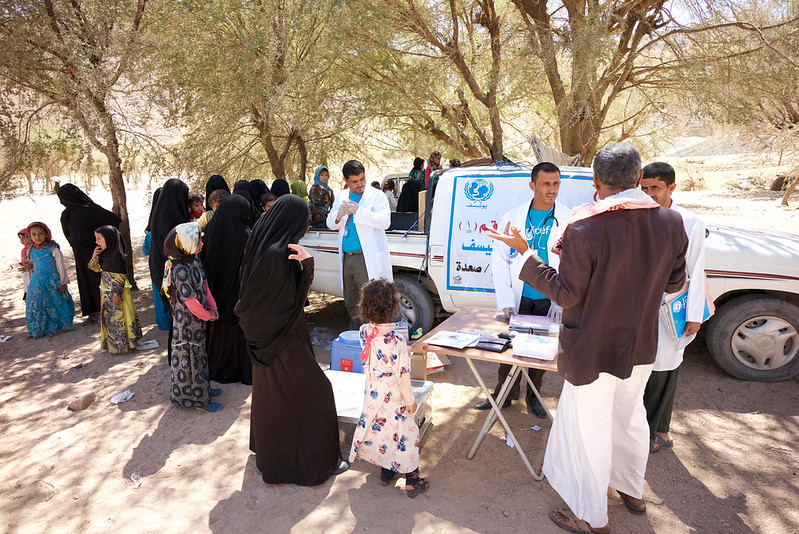 The Republic of Yemen has been in civil war since 2014, pitting the Iran-backed Houthi movement against a Saudi-led coalition supporting the internationally recognized government. This has led to the systematic collapse of formal health care. The Houthis are running a quasi-state in the north that exploits aid as a tool of political control. With hospitals destroyed and clinics inaccessible, Yemen’s private pharmacists diagnose conditions, dispense prescription medications without oversight and provide basic medical advice. Yemen could formalize pharmacists’ expanded role through tiered licensing, basic diagnostic training and integration with telemedicine networks.
Conflict, Funding Collapse and Deliberate Obstruction
The Trump administration labeled the Houthis as a terrorist organization in 2025, causing U.S. funding to decrease. This was meant to pressure the Houthis, but it punished ordinary Yemenis instead, scaring away donors and giving NGOs legal exposure for any activity that could be construed as materially supporting the Houthis.
Human Rights Watch documented how the Houthis’ systematic detention of aid workers is deepening Yemen’s humanitarian catastrophe. As of early January 2026, at least 69 U.N. staff (all Yemeni nationals) and dozens of staff from international and local NGOs have been arbitrarily detained since mid-2024, with arrests occurring in several waves. The arrests, combined with office raids and the seizure of equipment have effectively paralysed aid operations in Houthi-controlled areas. The U.N. suspended operations in Saada entirely – the majority of Saada’s population has moved from crisis level to emergency level food insecurity in that period.
The World Food Program (WFP) announced in January 2026 that it is shutting down its operations in Houthi-controlled northern Yemen entirely. All 365 WFP staff in the region will have their contracts terminated by the end of March. Northern Yemen accounts for around 70% of the country’s humanitarian requirements, and more than 18 million people were already at risk of acute food insecurity, with tens of thousands facing famine-like conditions. An estimated 4.8 million people remain internally displaced across Yemen as a whole.
A Broken System Looking for a Fix
Yemen’s health care operates in a legal and institutional vacuum. The government, currently based in Aden under the Presidential Leadership Council, nominally controls the Ministry of Public Health and Population (MoPHP), which retains legal authority over health care. Any formal tiered licensing system would need MoPHP sign-off to have legal standing. The practical problem is that MoPHP’s writ does not run in Houthi-controlled areas (most of the north, including Sana’a), where a parallel health bureaucracy has operated since around 2016.
Launched in September 2024 in Aden, Yemen’s National Quality of Health Care Strategy 2025–2030 is a joint initiative between WHO and Yemen’s Ministry of Public Health and Population. It aims to improve the quality, safety and equity of health services across the country despite the ongoing challenges of conflict, poverty and weak infrastructure. Furthermore, it has the support of seven years of collaboration between WHO, MoPHP and the World Bank’s International Development Association, with current implementation supported through the Emergency Human Capital Project, which could be a major funding vessel. WHO and MoPHP should co-develop a short-form pharmacist diagnostic certificate and acknowledge honestly that MoPHP cannot certify in Houthi territory, so NGOs operating there would need to serve as the de facto credentialing body on a provisional basis.
Medicine Availability: The Data
A peer-reviewed academic study involved researchers who surveyed 30 health care facilities across 13 districts in three southern Yemeni governorates (Aden, Lahij, and Abyan) between November 2017 and February 2018. On average, only 52.8% of essential medicines were available across all facilities – well below the WHO’s voluntary target of 80%.
- Private pharmacies had the best availability at nearly 80%;
- Private hospitals around 73%, because they are commercially supplied;
- Public hospitals came in at 53%;
- Public health care centres involved availability at just 19% – ⅘ essential medicines were not on the shelves.
Yemen imports 80-90% of its medicines, and the conflict has severely disrupted supply chains, destroyed infrastructure, and caused economic collapse.
With the WFP’s withdrawal from the north, Houthi detention of aid workers continuing and the conflict destroying health infrastructure, the formal system is contracting further while need accelerates. Yemen’s southern governorates, more accessible and more stable than the north, offer a viable starting point. A tiered licensing framework, negotiated between the internationally recognized government and established NGO networks, could begin there. Understanding Yemen’s health care means understanding what happens when a health system disappears entirely.
– Anisa Begum
Anisa is based in Birmingham, UK and focuses on Business and Global Health for The Borgen Project.
Photo: Flickr
