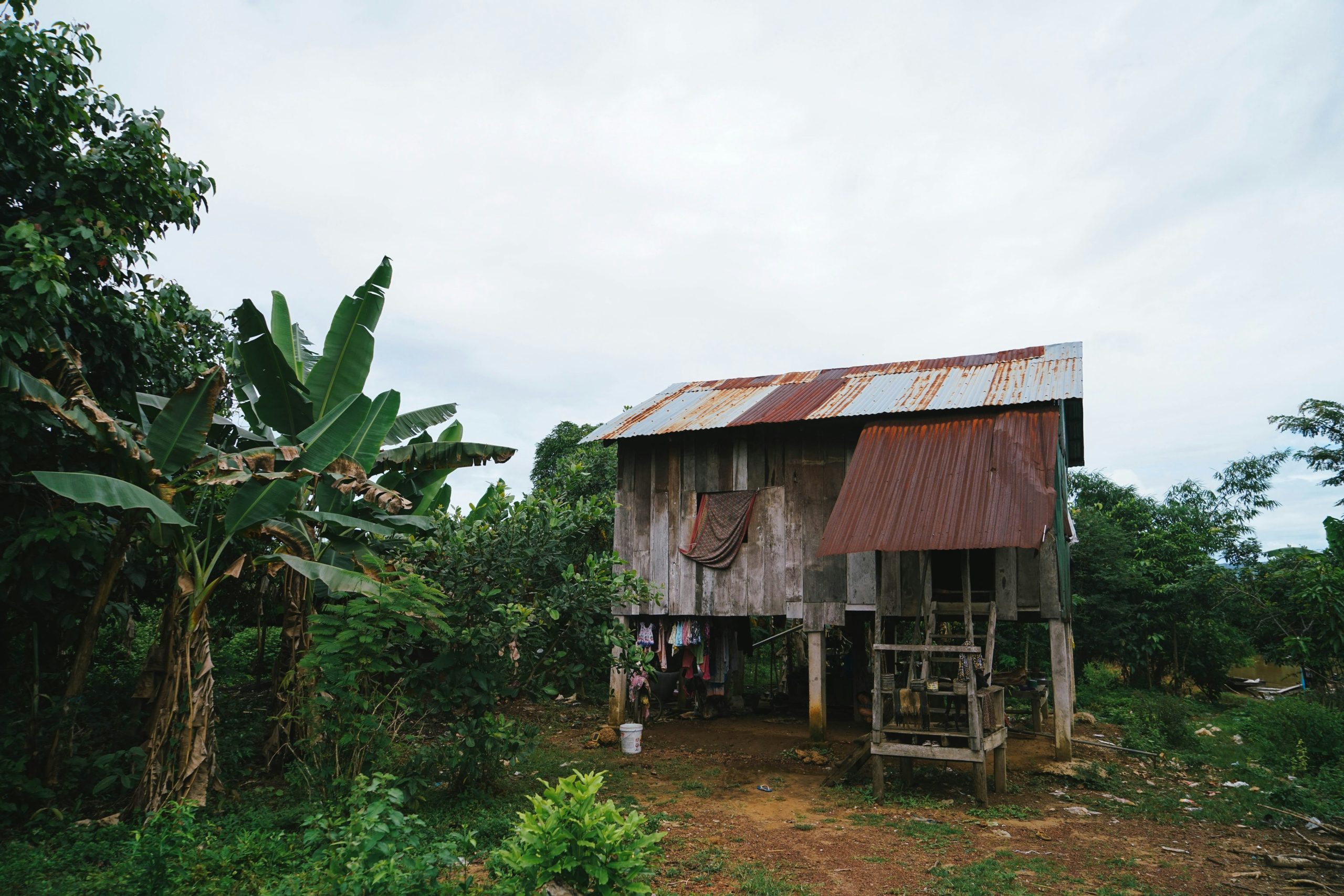
 Despite the stunning natural landscapes and architecture, Cambodia struggles with poverty among its population. According to the Asian Development Bank (ADB), 17.8% of the population lived below the poverty line in 2019, while “the proportion of employed population below $2.15 purchasing power parity a day in 2023 was 20.5%.” Additionally, 24 per 1,000 children die before the age of 5 and the country struggles with a housing crisis, with many families not having access to safe and sustainable housing.
Planète Enfants & Dèveloppment (PE&D)
Some of the areas that the housing crisis affects the most are rural villages outside of major cities. Two of the biggest factors include habitat and living conditions and a lack of safe and sustainable housing. Planète Enfants & Dèveloppment (PE&D) launched the Habitat and Living Conditions Improvement project in the hope of helping poor communities in Phnom Penh in 2018.
This project builds on a previous partnership with local partner Samathepel Khnom Organisation (SKO) and aims to support residents living in informal settlements around the Phnom Penh area. Its primary goal is to improve the security of homes and develop community organization and action. Family support and training also added to the project and this includes domestic and gender-related violence.
PE&D is a child protection organization that focuses on the safeguarding of vulnerable children. By providing support, education and resources, it focuses on responding to the urgent needs of children in danger to educate, grow and integrate them as the future of the world. For almost 40 years, PE&D’s goal has been to alleviate children from poverty and give them a chance to grow and develop into adults.
Working With Local Authorities
Another branch of PE&D’s project includes working with local NGOs and meeting with local authorities every six months to strengthen ties with these rural communities and build trust, according to the Urban Sustainability Exchange (USE). A better relationship with local authorities and supporting residence groups enables communities to improve their living conditions and also campaign for land rights to push the government to recognise the basic right for people to have housing.
In Cambodia, land rights complications make enforcing and practising upgrading housing difficult. However, this project tries to give residents access to finances so that they can make home improvements themselves. This housing project is also addressing issues of gender-based violence inequalities, a theme which PE&D specializes in.
Through its connections with local aid groups and NGOs, the PE&D project involves eight large informal settlements which are home to around 10,000 people. Vulnerable families are given priority to housing, especially those who are either currently living in unsafe homes and women at risk of or who are experiencing domestic violence, according to the World Habitat.
Sustainability Training
So far, the project has improved 88 homes and upgraded them to structurally safe, trained 297 people (190 women) to use sustainable construction methods and provided social support to 206 families in the area, the World Habitat reports.
PE&D’s work has also allowed 152 people, 124 of which are women to get Participatory Approach for Safe Shelter Awareness (PASSA) training, which refers to a specific method of disaster risk prevention of shelter safety. These people also get supplementary training relating to financial education and gender issues for 140 people, 100 of those being women. Other training topics include savings, credit groups and family support, according to the World Habitat.
Housing and Poverty
Housing is vital to alleviating poverty around the world. Every human should have a basic right to safe and sustainable housing and this project aims to bring just that to struggling communities in Cambodia. Without housing, it is difficult to find a stable income and provide essentials for families such as food and water.
Unstable living arrangements also often mean an increased risk of domestic violence, health issues, depression, child abuse, neglect and food insecurity. Safer and sustainable living arrangements for people suffering from poverty give them a greater chance of getting out of their current situation.
Before PE&D started its project, in the around 300 informal settlements in and around Phnom Penh, poverty was everywhere and most homes consisted of precarious and makeshift housing. Other issues with these rural communities include poor sanitation and hygiene, makeshift housing, a lack of land for people to live on, high unemployment, and a lack of security and services, according to the World Habitat.
Projects like this are helping alleviate poverty around the world and are providing humans with their right to essentials such as food, water, hygiene and safe and sustainable housing.
– Lachlan Wellington
Lachlan is based in Fareham, Hampshire, UK and focuses on Technology and Global Health for The Borgen Project.
Photo: Unsplash

Hunger and Anxiety Amid Uncertainty: Food Insecurity in Haiti
General State of Food Insecurity in Haiti
According to the World Food Programme’s (WFP) report, more than four million Haitians are affected by food insecurity, with nearly 1.5 million requiring urgent aid to survive. The cost of food in Haiti has been rising at an unsustainable rate, with average prices being 30-70% higher than in other Caribbean countries. This increase is due to a steady decline in agricultural production caused by years of land degradation and severe deforestation, which has led to an increased demand for imports.
Within the capital city of Port-au-Prince and its surrounding metropolitan area, the United Nations Office for the Coordination of Humanitarian Affairs (OCHA) through the WFP has played a crucial role by providing necessary food assistance for those who have been internally displaced due to gang violence. Currently, there are more than 80 displacement camps within the area and the WFP has directly given aid to nearly 100,000 persons in need.
Environmental Challenges
Haiti is predominantly tropical and mountainous, with 65% of its land considered suitable for agriculture. However, due to extreme deforestation for farming and fuel purposes, the country’s arable land has lost necessary nutrients and root patterns, which allow for healthy soil and seed stability. Additionally, being located in the hurricane belt, the country experiences severe storms and frequent major flooding, worsening the environmental challenges.
The extreme environmental degradation of traditional farmland has led Haiti to increase importation. The country imports more than 700,000 tonnes of rice and wheat for consumption, as agricultural production has been halted or delayed due to current violence. A way to increase food production and assist in replenishing arable land is to develop the average one-quarter-hectare farms to model bush and tree-based permaculture.
Permaculture can be defined as the development of agriculture in an environment that promotes biodiversity and the incorporation of crops into the general ecosystem; permaculture has been shown to improve environmental stability by protecting necessary topsoil erosion and increasing nutrients within soil compositions.
The practice of permaculture has seen success in the Caribbean, with farms in Puerto Rico, the Virgin Islands and Cuba. These examples show an increase in equitable treatment of laborers and the distribution of resources, which contrasts with the current Haitian model of agriculture, where only 60.9% of farmers have access to mechanized assistance and irrigation.
Political Challenges
On March 4, 2024, Haiti declared a state of emergency after more than 3,000 prisoners escaped from its National Penitentiary, located within Port-au-Prince. By April, the violence being perpetrated by the sum 200 gangs operating within Port-au-Prince had severely limited aid distribution as gangs took control of the only airport as well as the country’s largest port.
After President Jovenel Moise’s assassination in 2021 and the subsequent loss of parliamentary legitimacy, the Haitian government has become increasingly outdated and powerless. In this time of turmoil, Henry governed from abroad through decrees, facing criticism from both Haitian citizens and the international community about his legitimacy.
Sanctions and travel restrictions imposed by the international community severely damaged the country’s growing tertiary market economy. Similarly, the general violence has done nothing but exacerbate food insecurity in Haiti, with only 5% of the population receiving humanitarian aid.
Final Remark on Food Insecurity in Haiti
While the issue of food insecurity in Haiti has several facets, the current state of political instability means that no permanent solutions are viable, as the development and implementation of proper environmental change are time-consuming and arduous. However, in March 2024, the U.N. expressed the need for political stabilization to be developed for and by the Haitian people, with limited international interference.
– Jamie Sackett
Photo: Pexels
Mental Health in Andorra: A Country Focused on Improvement
The Lack of Data
Despite being nestled between France and Spain, Andorra has a surprising lack of data on its mental health services. As of 2020, there was no data on the total amount spent on mental health per person, the suicide mortality rate or the community-provided mental health services that are available.
Even though nearly one-fifteenth of Andorra’s population has a mental disorder and a quarter of the country’s research focuses on mental health, data on the subject is scarce. This lack of information is concerning, given the vital importance of mental health.
As of 2019, a study found that for more than 20 years, consistently, 14% of the population or around 14,000 people, reported having a mental disorder in Andorra. During COVID-19, Andorra saw an increase in anxiety and depression symptoms. Of note, the World Health Organization’s (WHO) 2020 profile on Andorra found that only one program is available to the public and this program could not be determined as either effective or ineffective.
Moving Forward With Hope
Despite the lack of available data, there is good news in terms of treatment options. The Andorran government covers the cost of various mental health treatments and care. It is committed to strengthening its early child developmental programs. Additionally, it has shown its support in deepening mental health aid available to the public.
The main Andorran hospital, Our Lady of Meritxell Hospital, provides professional help, including options for medication, psychiatrists and therapy. Similarly, a private psychological center, Andorra Psychological Center, offers workshops and various therapies run by licensed professionals.
Many nonprofit organizations are also helping to combat mental health challenges in Andorra. These include Caritas Andorra and the Andorran Red Cross, which both offer mental health aid through their social services. Specifically, they provide support groups and various talk therapy options. However, according to a 2011 study, inpatient services are rarely available, if at all.
What Else Is Being Done?
The Andorran government implemented the National Plan of Action on Children and Adolescents 2023-2026 to protect the world’s future through children. This plan was highly successful, to such an extent that a United Nations (U.N.) Special Representative and pediatrician Dr. Najat Maala M’jid praised Andorra for its child protection efforts. According to M’jid, a part of this program’s success is due to two specific protocols: the identification and prevention of child abuse.
In 2022, the European Social Charter published conclusions on Andorra’s social policies. The report highlighted the need for Andorra to implement various protections for its population’s civil rights. Specific concerns around mental and physical medical aid are mentioned. The primary focus was on Andorra’s response to COVID-19. The European Social Charter found that Andorra could offer more programs and assistance to people struggling to maintain a healthy mentality.
Final Remark
Andorra has committed to fulfilling the rights and requests of the European Social Charter, as evidenced by the Andorran Minister of Health (Albert Font) cosigning a memorandum. This memorandum will deepen cooperation and improve the environment for both Spain and Andorra regarding mental health conditions. It is evident through this memorandum that Andorra is fighting for better mental health services for its people.
– Paige Tamasi
Photo: Unsplash
Poverty and Electricity in Indonesia
Generating Wealth Through Electricity
On March 1, 2024, BPS reported an 8.47% increase in food prices, significantly affecting staples such as rice, peppers and oils. This price hike further exacerbates the challenges faced by Indonesia’s impoverished communities. In response, many are focusing on energy costs to secure adequate heating and cooking resources.
Proper energy access can boost household income by 21% and reduce the yearly poverty rate by 1.5%. The installation, training and maintenance of energy facilities and outreach properties generate jobs. Between 2.1 and 3.7 million jobs are estimated to be created by 2030 in Indonesia’s mission for cleaner and more efficient energy. Significant employment and distribution of energy in Indonesia are under review as it transitions to clean energy compared to its recent 61.5% reliance on coal for energy.
The Renewable Energy Skills Development Project
With clean energy in scope, Indonesia is heavily investing in skills development through the Renewable Energy Skills Development Project. This initiative aims to train and increase the number of qualified staff for the planning, maintenance and design of energy plants. This will ensure that expertise is more accessible. By providing education and higher-paying job opportunities in the energy sector, the project not only improves energy accessibility but also boosts household incomes.
The positive impacts are substantial. Developing a skilled renewable energy workforce positions Indonesia as a global leader in sustainable energy. Additionally, it will enhance energy security and reducing greenhouse gas emissions. Economically, higher household incomes increase consumer spending, stimulate local businesses and foster economic growth. Improved financial stability leads to better access to education and health care, enhancing overall quality of life.
The focus on renewable energy attracts innovation and foreign investment, further driving economic development. This comprehensive investment in skills development and renewable energy ensures sustainable economic growth, better living standards and a healthier environment for future generations, highlighting the extensive benefits of this strategic initiative.
Policies and Electricity in Indonesia
Indonesia’s Electricity Law ensures affordable, high-quality electricity, prioritizing domestic energy for sustainability. Law No. 15 of 1985 allowed limited IPP participation, expanded by Law No. 20 of 2002. However, this was revoked in 2004 to keep control under the government. Law No. 30 of 2009 confirmed PLN (State Electricity Company) as the primary provider, though private businesses can now obtain supply licenses. Regulations from 2006 to 2013 introduced feed-in tariffs for renewable energy, requiring PLN to purchase from small- and medium-scale sources.
The Indonesian government plans to leverage the power sector to achieve emission reductions in line with NDC targets. With a current 5% growth in demand driven by a 5-6% increase in electricity consumption, Indonesia has significant potential for solar energy. The government aims to achieve a primary energy mix of 23% from new and renewable resources by 2025, increasing to 31% by 2050. This is outlined in Presidential Regulation No. 22/2017 on the General Plan for National Energy (RUEN). This transition is supported by the 2022 regulations that endorsed energy transfer policies.
– Demi Olin
Photo: Unsplash
Yemen’s Water Crisis
Causes of the Water Crisis
The American Education Global Majority Journal identifies five primary causes for Yemen’s water crisis: high population growth, misguided agricultural policies, water consumption for qat cultivation, lack of law enforcement in water regulation and high vulnerability to climate change. Additionally, the ongoing conflict since 2014 has severely disrupted water and agricultural systems, particularly in peri-urban and internally displaced persons (IDP) areas. It impedes the construction of responsive infrastructure and diverts internal funding away from water projects. Understanding these dynamics is essential for addressing Yemeni security challenges.
Impact of the Water Crisis
The destruction of water and sanitation systems during wartime in Yemen has facilitated the spread of water-borne diseases. For instance, a cholera outbreak in 2016 spread across 19 governorates, affecting 53,000 people and it is estimated that half a million children suffer from diarrhea at any given time. Additionally, UNICEF predicts that 2 million boys and girls in Yemen are denied an education due to the scarcity of wells and flowing water networks. The need to travel miles for water often falls on children, pulling them away from their education. In the Dhamar governorate, for example, the water network has suffered significantly due to limited financial resources and the ongoing crisis, forcing many students to leave school to help fetch water from remote areas to support their families.
Currently, 257,000 hectares of Yemen’s agricultural land reveal signs of distress. Water scarcity not only reduces agricultural production but also exacerbates food and nutrition security issues, leading to widespread health problems. This is compounded by ongoing conflict that has disrupted agrifood systems throughout the country.
Local Efforts to Alleviate Yemen’s Water Crisis
Saba Relief, one of many local charity organizations in Yemen, provides water wells, family water tanks and public water tanks funded by public donations. This support enables families to access water without traveling long distances, freeing up time for other opportunities, such as schooling for children.
International Aid and Technological Innovations
International charities like Muslim Aid USA are leveraging scientific advancements such as solar water disinfection. Unlike conventional well pumps that use grid electricity, a solar-powered pump operates on free energy from the sun. Solar water wells use this solar energy to purify biologically contaminated water, significantly reducing disease risk and bringing stability to communities in drought-prone areas affected by wartime migration.
Another benefit of international involvement is the sharing of techniques and methods to tackle the water crisis in Yemen. For example, the Ministry of Foreign Affairs of the Netherlands has successfully implemented water-saving measures in agricultural practices, reducing usage by 19% from 72.6 cubic meters per hectare a year (approximately the volume of a one-car garage) to 58.56 cubic meters (about twice the volume of a large U-Haul truck) per hectare per year. The project began by importing modern irrigation equipment into the Sana basin. A second ongoing project builds on this success and aims to enhance water use efficiency further.
Strengthening Local Governance and Infrastructure
In 2023, the United Nations (U.N.) initiated the ‘Strengthening Inclusive Local Governance and Peacebuilding in Yemen’ project, which successfully rehabilitated the main water networks in Maghrib Ans and Al-Jadad. Samira Al-Qanoun, member of the Consultation Committee in Dhamar Governorate, praised the project, noting, “The rehabilitation of the network allows us access to clean and safe water, enhances our community safety and improves the overall living conditions of families.” Currently serving 420 households, the newly rehabilitated water network is set to expand service to more than 800 households, setting the stage for future community projects supported by international aid.
Toward a Sustainable Solution
As stated by Ahmed Ali Al-Dourani “We cannot achieve peace without providing access to clean and safe water to every community member.” Efforts to combat Yemen’s water crisis reveal promise through local initiatives and crucial international support. By continuing to embrace technological innovations and strengthening governance, Yemen could further enhance water access for its citizens.
– Kathryn Dodd
Photo: Flickr
Everything You Need To Know about Poverty in New Zealand
Child Poverty
Child poverty in New Zealand is one of the most important issues in the country. Much of the national conversation about poverty surrounds families and children currently experiencing deprivation. One of the most important recent developments in the battle against poverty in New Zealand is the Child Poverty Reduction Act 2018.
The Child Poverty Reduction Act 2018 introduced nine measures to help combat childhood poverty. Eight of these measures had a significant effect on reducing the levels of poverty experienced by New Zealand’s children and families. Another one of the bill’s responsibilities is holding current governments accountable for the state of childhood poverty. Every 10 financial years, the government must evaluate the state of childhood poverty. This is based on the standards set forth in the bill. This bill was instituted as a direct answer to the statistics discovered by the New Zealand government.
In 2017, the New Zealand government studied the nation’s children. It found that 22.5% of the nation’s children were living below the 50% median disposable household income after the deduction of housing costs. Stats New Zealand also found that 12.5% of children were living in material hardship. This means they were unable to afford clothes and healthy food. These statistics were a major force that pushed New Zealand to combat childhood poverty. This war on poverty is not just linked to material hardship but to extreme poverty as well.
Homelessness
In 2018, 0.86% of New Zealand’s population were without homes, that is 41,000 people. The most comparable nation is Australia with 0.48% of the populace being registered as homeless. New Zealand’s failing approach to poverty is another reason the Child Poverty Reduction Act 2018 was put into place, but some are saying that the pressures that COVID-19 put on the country’s support systems as well as the Labour government are resulting in a more desperate New Zealand populace.
The New Zealand government has spent millions of dollars on emergency housing for the thousands of people living on the street or on the brink of extreme poverty. This massive spending has been spearheaded by the Labour Party, but this has not curbed the party’s loss of support.
Anecdotal and statistical evidence point toward the Labour Party’s lack of headway in the war against poverty as a major reason they lost support. In the 2020 election Labour won 50% of the vote, but has since lost 23% of their voter base. This massive drop in support is an indication of the disappointment that the people of New Zealand have experienced in their leading governmental party.
Final Thoughts
The situation of poverty, especially childhood poverty, is multifaceted and complex, and so is the solution. The New Zealand Government has worked hard and implemented a few pieces of legislation that have decreased childhood poverty. The Families Package is a $5.5 billion investment that, among other things, improves parental leave pay, increases financial aid for families and increases tax credits for working families. This paired with increases in minimum wage and free school lunches show the way forward for New Zealanders.
– Charles McFadden
Photo: Flickr
Lassa Fever in Nigeria
Socioeconomic Impact
The disease’s prevalence is particularly pronounced in Nigeria and has become a significant public health concern. The country’s endemic status is exacerbated by socioeconomic conditions, including widespread poverty. In regions where Lassa fever is rampant, many households lack the means to maintain proper sanitation and secure food storage, creating ideal conditions for rodent infestations. In addition, limited access to health care services and inadequate infrastructure hinder timely diagnosis and treatment, compounding the disease’s impact.
Lassa Fever and Global Poverty
The disease’s transmission is closely tied to environmental and socioeconomic factors. In addition, the changing climate is exacerbating the situation. Hotter and drier conditions drive rodents into human habitats for food and water, increasing the risk of transmission. As these environmental changes unfold, the interplay between Lassa fever and global poverty becomes starkly evident. Poverty-stricken communities, often lacking adequate housing and sanitation, are more susceptible to rodent infestations, thereby heightening their risk of contracting the virus.
The health infrastructure in impoverished regions is typically under-resourced, making early diagnosis and effective treatment more challenging. Health care costs and limited access to medical facilities mean that many affected individuals cannot afford or access timely medical care, leading to higher mortality rates. The burden of Lassa fever in Nigeria thus reflects the broader issue of global poverty, where infectious diseases disproportionately impact vulnerable populations.
Public Health Response
Health authorities and strategic planners in Nigeria have implemented a multifaceted public health response to Lassa fever, involving immediate medical interventions and long-term strategies to reduce transmission. In fact, the country hosted the first Lassa fever treatment trials in 40 years. These trials mark a critical step forward in finding effective treatments for this devastating disease. The initiative is a collaborative effort involving local health authorities, international organizations and pharmaceutical companies, highlighting the global recognition of the need to combat Lassa fever.
Strengthening Health Infrastructure
The World Health Organization (WHO) has played a pivotal role in supporting Nigeria’s response to Lassa fever outbreaks. The WHO is strengthening disease surveillance, enhancing diagnostic capacities and training health care workers as part of its comprehensive strategy. These efforts ensure that health care workers detect and manage cases of Lassa fever in Nigeria promptly, thereby reducing the potential for widespread outbreaks. Furthermore, the WHO emphasizes the importance of community engagement and education to raise awareness about preventive measures, such as proper food storage and hygiene practices to limit rodent exposure.
Economic Considerations
The economic burden of Lassa fever in Nigeria extends beyond the immediate health impacts. Outbreaks can disrupt local economies, as affected individuals cannot work and health care costs soar. This further entrenches poverty, making it harder for communities to recover and prevent future outbreaks. International support, such as funding for research and health care infrastructure improvements, is vital in breaking this cycle. The global community’s investment in combating Lassa fever in Nigeria underscores the interconnectedness of health and poverty and the need for a coordinated, sustained response to address both issues simultaneously.
Looking Ahead
Efforts to combat Lassa fever in Nigeria involve significant collaboration among local health authorities, international organizations and pharmaceutical companies. These initiatives focus on strengthening disease surveillance, improving diagnostic capabilities and educating communities about preventive measures, with hopes of alleviating Lassa fever.
– Maya DaSilva
Photo: Flickr
Financial Assistance Schemes for Singapore’s Low-Income Families
Impact of Poverty on Educational Success
Studies indicate that poverty significantly impacts children’s ability to succeed in educational settings. Children born into poverty from birth to age 2 are 30% less likely to complete high school, severely limiting their future opportunities. Those who do not finish high school often struggle to find employment as adults. Research by the Center for Universal Education has revealed that millions of children reach adolescence without acquiring basic skills. In developing countries, individuals lacking skills contribute to higher poverty rates. UNESCO reports that 59 million children are out of school.
Government and Organizational Support for Education
The Singaporean government, along with organizations like the Ministry of Education Financial Assistance Schemes (MOE FAS), actively provides financial aid to low-income families to help cover school-related expenses. For primary and secondary school students, MOE FAS completely covers school fees, standard miscellaneous fees, school uniforms, meals, transportation subsidies and textbooks. For pre-university students, the organization provides all the aforementioned support plus a $1,200 cash bursary.
Extended Financial Aid
Ongoing financial assistance schemes extend beyond primary and secondary school students. The Singaporean government subsidizes a large portion of educational costs for citizens pursuing higher education at publicly-funded institutions. Additionally, the Ministry of Education provides financial relief to students in Special Education (SPED) programs. The SPED Financial Assistance Scheme (SPED FAS) offers waived school fees and supplies materials for low-income families with students who have disabilities.
The Role of Subsidized Education in Social Inclusion
The Ministry of Social and Family Development reports that a subsidized education is a key component of the Singaporean approach to social inclusion and social mobility. Subsidized education is reportedly instrumental in the creation of equal opportunity. Moreover, ensuring a quality education is a conduit for what the ministry calls “leveling up,” which involves ensuring that students who come from disadvantaged backgrounds can still become successful and stay on an educational track.
Looking Ahead
Singapore’s financial assistance schemes aim to provide low-income families with greater access to educational resources. By expanding these initiatives, the government seeks to address income inequality and improve social mobility. As these programs continue to develop, they focus on enhancing educational opportunities for young Singaporeans and contributing to a more equitable society.
– Hailey Nurry
Photo: Flickr
Safe and Sustainable Housing for Rural Communities in Cambodia
Planète Enfants & Dèveloppment (PE&D)
Some of the areas that the housing crisis affects the most are rural villages outside of major cities. Two of the biggest factors include habitat and living conditions and a lack of safe and sustainable housing. Planète Enfants & Dèveloppment (PE&D) launched the Habitat and Living Conditions Improvement project in the hope of helping poor communities in Phnom Penh in 2018.
This project builds on a previous partnership with local partner Samathepel Khnom Organisation (SKO) and aims to support residents living in informal settlements around the Phnom Penh area. Its primary goal is to improve the security of homes and develop community organization and action. Family support and training also added to the project and this includes domestic and gender-related violence.
PE&D is a child protection organization that focuses on the safeguarding of vulnerable children. By providing support, education and resources, it focuses on responding to the urgent needs of children in danger to educate, grow and integrate them as the future of the world. For almost 40 years, PE&D’s goal has been to alleviate children from poverty and give them a chance to grow and develop into adults.
Working With Local Authorities
Another branch of PE&D’s project includes working with local NGOs and meeting with local authorities every six months to strengthen ties with these rural communities and build trust, according to the Urban Sustainability Exchange (USE). A better relationship with local authorities and supporting residence groups enables communities to improve their living conditions and also campaign for land rights to push the government to recognise the basic right for people to have housing.
In Cambodia, land rights complications make enforcing and practising upgrading housing difficult. However, this project tries to give residents access to finances so that they can make home improvements themselves. This housing project is also addressing issues of gender-based violence inequalities, a theme which PE&D specializes in.
Through its connections with local aid groups and NGOs, the PE&D project involves eight large informal settlements which are home to around 10,000 people. Vulnerable families are given priority to housing, especially those who are either currently living in unsafe homes and women at risk of or who are experiencing domestic violence, according to the World Habitat.
Sustainability Training
So far, the project has improved 88 homes and upgraded them to structurally safe, trained 297 people (190 women) to use sustainable construction methods and provided social support to 206 families in the area, the World Habitat reports.
PE&D’s work has also allowed 152 people, 124 of which are women to get Participatory Approach for Safe Shelter Awareness (PASSA) training, which refers to a specific method of disaster risk prevention of shelter safety. These people also get supplementary training relating to financial education and gender issues for 140 people, 100 of those being women. Other training topics include savings, credit groups and family support, according to the World Habitat.
Housing and Poverty
Housing is vital to alleviating poverty around the world. Every human should have a basic right to safe and sustainable housing and this project aims to bring just that to struggling communities in Cambodia. Without housing, it is difficult to find a stable income and provide essentials for families such as food and water.
Unstable living arrangements also often mean an increased risk of domestic violence, health issues, depression, child abuse, neglect and food insecurity. Safer and sustainable living arrangements for people suffering from poverty give them a greater chance of getting out of their current situation.
Before PE&D started its project, in the around 300 informal settlements in and around Phnom Penh, poverty was everywhere and most homes consisted of precarious and makeshift housing. Other issues with these rural communities include poor sanitation and hygiene, makeshift housing, a lack of land for people to live on, high unemployment, and a lack of security and services, according to the World Habitat.
Projects like this are helping alleviate poverty around the world and are providing humans with their right to essentials such as food, water, hygiene and safe and sustainable housing.
– Lachlan Wellington
Photo: Unsplash
The Socioeconomic Situation of Children in Syria
Children Bear the Burden
Syria remains a country deeply devastated by the ravages of war, with more than 90% of its population living in poverty. A study conducted in 2022 by UNICEF concluded that an estimated 14.6 million Syrian civilians were in need of humanitarian aid. The most affected of this group of individuals was children, with more than 6.5 million in need of assistance.
Syrian children bear the burden of the conflict as many are forcibly pulled from school and thrust into the labor force in an attempt to salvage their family’s crumbling economic state. The Syrian Response Coordination Group detailed that child labor remains an ongoing issue in Syria, specifically among the displaced. The group reported that more than 37% of children between the ages of 14 and 17 are active participants in the labor force.
The humanitarian group also reveals that of the 85% of Syrian children who no longer attend school, 318,000 sought work. Though the exact professions vary, some include physically compromising trades. Young boys occupy positions in these dangerous trades, while young girls tend to take up work in agricultural fields. Bassel Muhammad, a shopkeeper in Idlib City, tells Syria Direct, “No business is empty of children, to say nothing of street vendors.” Muhammad then shares that he has employed two children, one 13 and the other 15, both of whom have left school to provide for their families.
A Changed Generation
Though child poverty persists in Syria, various initiatives have been taken to combat it. In 2013, UNICEF and World Vision joined forces to create No Lost Generation, a program that campaigns for the rights of Syrian youth. With the financial support of various donors, nongovernmental organizations (NGOs) and United Nations (U.N.) agencies, the initiative focuses on education and child protection.
Another initiative advocating for the rights of Syrian children is Mart Team, a Damascus-based charity. Through its campaign “Aqlamouna Amalouna,” meaning “Hope in our pens,” the charity aims to provide aid to students in need. In an interview conducted by Arab News, Marwan Alrez, the General Manager of Mart Team, states, “Parents have told us that schools demand hefty fees, prompting many of them to remove their children from school and force them into the labor market in order to contribute to household earnings.”
Alrez reveals that the average cost of school supplies for a single student is around 200,000 Syrian pounds, an estimated equivalent of $16. This places a great strain on the average Syrian household since many employed individuals only earn 185,940 Syrian pounds (about $14.8) monthly. Alrez’s charity initiative has helped an estimated 300 primary students meet their needs, whether for school supplies or school fees.
World Vision has also focused on the cause of Syrian children and developed six educational-based projects. These projects provide children in need with lunches, hygiene packages and school supplies. Furthermore, the Syrian government has noted this growing issue and has asked that schools be more lenient with their demands, whether regarding uniform policies or certain school supplies.
Final Remark
Adele Khor, UNICEF Regional Director for the Middle East and North Africa, proclaims, “A generation of children in Syria have already paid an unbearable price for this conflict.” Despite all of the admirable efforts from various groups, the Syrian children’s plight remains an issue.
– Yasmine Nowroozi
Photo: Flickr
Addressing Gender Wage Inequality in Uganda
Household Dynamics and Marital Status
In Uganda, labor market participation varies significantly between men and women, influenced by household type and marital status. Men consistently have higher employment rates across all categories. The gender employment gap is smallest in single-person households, at 3.9 percentage points (p.p). This gap increases slightly to 4.1 p.p for households with one child and 4.6 p.p for those with two children. The largest disparity occurs in households with more than one adult and no children, where the gap widens to 10.8 p.p. Marital status further affects this gap, with married women facing more significant challenges in the labor market than their single counterparts, often due to childcare and family responsibilities. Additionally, the gender employment gap widens among individuals with secondary and tertiary education, particularly as the number of children in the household increases. This complexity is another facet of wage inequality in Uganda.
Working Hours and Education
Analysis reveals that women tend to work fewer hours than men across all education levels. While women aged 15 to 24 work more hours, the gap widens as they enter older age brackets, with women aged 25 to 64 working significantly fewer hours. Moreover, occupational segregation is particularly pronounced among individuals with secondary education, where more than half of women and men would need to swap jobs to achieve occupational parity.
Occupational Segregation
Occupational segregation plays a significant role in perpetuating gender wage disparities. Women in Uganda often work in lower-paying sectors such as agriculture, informal trade and domestic work. Men, on the other hand, dominate higher-paying sectors like manufacturing, construction and technology. In the highest-skill occupational group, which includes legislators and managerial workers, women are also underrepresented across all categories. Interestingly, in this group, women earn 8.5% more than men on average. However, a glass ceiling is evident, as the gender pay gap is larger among the top 10% of wage earners.
Government Efforts to Address Gender Wage Inequality
Although the government has made significant strides in fostering gender equality through its policies, gender inequality persists. Uganda has formulated gender-responsive policies and strategies to enhance gender equality and empower women and girls, in line with the constitution, which prohibits discrimination and promotes women’s rights.
Key initiatives include:
High-level policymakers have developed and endorsed a comprehensive set of priority gender indicators, known as the National Priority Gender Equality Indicators (NPGEIs). These indicators, aligned with global commitments, integrate into the national standard indicator framework to systematically track progress on gender equality.
Recommendations by the World Bank
The World Bank proposed that to close gender gaps in economic empowerment, policy actions need to be taken in three key areas:
Looking Forward
Uganda’s commitment to bridging the gender wage gap holds promise for more equitable economic development. Targeted policies and ongoing initiatives aimed at supporting women in the workforce could foster significant progress in combating wage inequality in Uganda. With continued governmental and community support, Ugandan women can potentially achieve greater economic empowerment and contribute more fully to the nation’s prosperity.
– Teniola Yusuf
Photo: Flickr