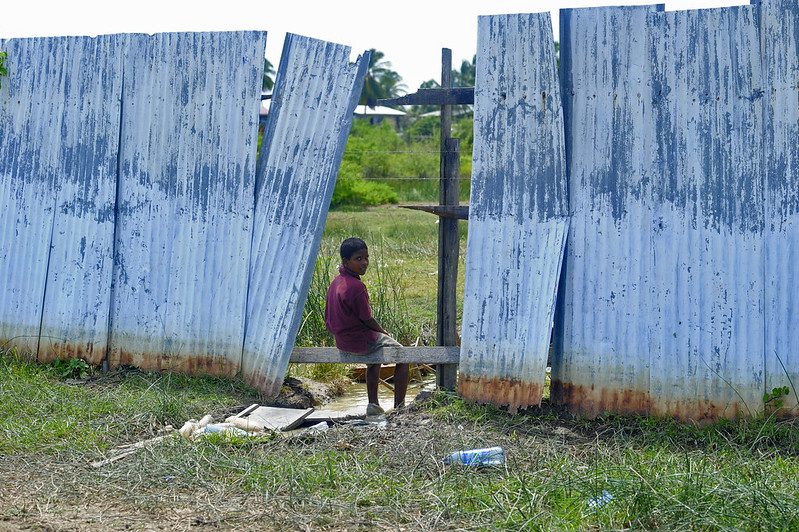
 Despite having a stock of gold, timber and bauxite, Guyana has struggled to overcome poverty and attract investments to improve its economy. According to UNICEF, Guyana’s teen and youth poverty rates in 2019 were 33.7% and 47.5% for those under 16. There have been no recent reports on the child poverty rates, but the COVID-19 pandemic may have pushed more into greater poverty. Many factors contribute to child poverty in Guyana, such as access to sanitation, health care, education, food and child labor. However, the government and many international organizations are currently working to solve these problems regarding child poverty in Guyana.
Child Food Poverty
Ideally, a child should eat around five or more different food groups a day to not suffer from food poverty. From 2016 to 2022, 20% of children lived in severe food poverty, eating up to two food groups and 40% lived in moderate food poverty, receiving three to four food groups daily. There has been an increase in food poverty for children, changing from 10% in 2012 to 20% in 2022. Guyana has since introduced many initiatives such as the National School Feeding Programme which targets around 126,000 students in 2024. According to Guyana Times, around 85.0000 students benefitted from this initiative in 2023.
Sanitation
In 2020-2021, around 86% of the population had access to basic sanitation. Two percent of the population in Georgetown have access to a sewage system whereas the rest of the population disposes of waste through septic tanks and pit latrines. Due to poor waste disposal and pollution, waterborne diseases are a risk to the health and well-being of both children and adults.
To overcome this, Guyana Water Incorporated (GWI) has planned to advance its water, sanitation and hygiene accessibility in Region One, which has a large population of indigenous descent. Through working with UNICEF, it provided a new well in White Water which provides drinking water to more than 70% of the community. GWI has also constructed around 35 Ventilated Improves pit latrines in several communities within Region One, which has benefitted thousands of Venezuelan migrants and Guyanese people.
Right to Health
Health care is free throughout Guyana, but the standard of health care is lower than in other developed countries. Medical facilities are limited, even in the capital Georgetown and there are no medical facilities in remote regions. This means that children living in remote areas cannot access health care. However, recently there have been announcements of more being built within its various regions to improve access to health care facilities, with construction in East Demerara being carried out on a Pediatric and Maternal Hospital to help improve infant and maternal survival rates.
With health care facilities improving and existing in more regions, child poverty in Guyana regarding health should begin to decrease. In May 2024, Demerara Waves reported that child mortality rates are decreasing due to the improvements in the health care system in the country.
Education
Education is free to all in Guyana and is compulsory from the ages of 6 to 15, according to Humanium. However, in rural areas, many children cannot access education due to “poor infrastructure, long distances to schools, transportation costs and a shortage of qualified teachers,” which potentially leads to many children dropping out of school. The COVID-19 pandemic further hindered access to education due to “the lack of information technology and the limited availability of electricity in rural and riverine communities.”
In 2023, the World Bank announced it would contribute $35 million towards reforming the education sector in Guyana. The main aims of these reforms are to invest in access to educational materials, and teacher training and upgrade school facilities. The World Bank aims to ensure affordable textbooks are available to all students and will provide training to teachers. This project will also improve the infrastructure of school buildings and the facilities within them.
As a result of this program, smart classrooms have been introduced, with touchscreen whiteboards, cameras for recording lessons, and monitors to display videos. This helps students who miss school for various reasons as they can access their lessons online through recordings, ensuring that they do not miss large amounts of curriculum.
Child Labor
Child labor often comes about due to family debt, insufficient income or human trafficking. Low education rates are also a contributing factor. Around 41% of Amerindian Indigenous children partake in domestic work and 34% in hazardous work, according to the U.S. Department of Labor. Children in Guyana face terrible forms of child labor, such as commercial sexual exploitation or performing dangerous tasks in mining. The U.S. Department of Labor reports that 4.9% of children working are used to take part in illicit activities, including the planting of marijuana, and smuggling of drugs, weapons and goods.
Since 2021, law enforcement authorities have taken measures to prevent child labor in Guyana by establishing a National Steering Committee on Child Labour and a Ministerial Task Force on Trafficking in Persons. Authorities have also introduced policies like the National Action Plan for the Elimination of Child Labor 2019-2025, according to Humanium. Through policies like these, there have been increased police reports of child labor cases, such as 9 cases of children in forced labor and 14 cases of young girls in commercial sexual exploitation since 2021, according to the U.S. Department of Labor.
Moving Forward
In recent years, the Guyanese government and international organizations have begun to invest more in long-lasting and permanent solutions regarding child poverty in Guyana. With these improvements and many more in the future, child poverty should steadily decline dramatically, ensuring each child’s safety in society and allowing them to lead healthy and enriching lives.
– Kimran Gill
Kimran is based in Leicester, UK, and focuses on World News for The Borgen Project.
Photo: Flickr

Women’s Workforce Participation in Chile
Workforce Participation
In 2002, 74% of men and only 37% of women participated in the workforce. By 2023, statistics reveal that approximately 50% of women in Chile are working, either part-time or full-time. Although these numbers are encouraging, women’s workforce participation in Chile remains among the lowest in Latin America. Women in the workforce often face unequal opportunities compared to men. They are more likely to hold part-time positions, rarely occupy high-level leadership roles and typically earn less than their male colleagues. The World Bank notes that Chilean law does not require equal pay for work of equal value nor does it prohibit gender discrimination in accessing credit, which puts women at risk for financial insecurity.
Care Labor and Conjugal Society
The low rate of women’s workforce participation in Chile is largely due to the prevalence of a traditional household structure. In the majority of Chilean households, the husband earns wages and the wife takes care of domestic tasks. Women are expected to perform unpaid care labor: caring for children and elderly parents and cleaning and cooking for their families. Because they are burdened with the tasks of a domestic caretaker, women inevitably have little time to earn money — if they participate in the workforce at all, part-time positions are the only feasible option.
The default legal marital arrangement in Chile declares men as the head of the household and prevents women from making financial decisions without the permission of their husbands. According to The United States (U.S.) Department, in Chile “a husband has the right to administer joint property, including his wife’s property, without consultation or written permission from his wife, but a wife must demonstrate that her husband has granted his permission before she is permitted to make financial arrangements.” Consequently, women have almost no financial autonomy within their marriage, which puts them at risk for financial insecurity, particularly in the event of divorce or if their husbands refuse to allocate money toward women’s needs.
Women’s Rights Movement
In 2019, a wave of feminist protests spread throughout Chile, acting as a catalyst for change. Protestors called on the Chilean government to act on issues like income disparity, gender-based violence and the persistence of traditional gender roles. A 2023 survey revealed that 74% of the Chilean population recognized that women face inequality and discrimination. This percentage is higher than the global average, which suggests that the movement successfully raised awareness and focused national attention on women’s rights.
In response to the growing movement, the Chilean government passed the Comprehensive Violence Against Women Act in March of 2024. Historically, gender-based violence has caused women to quit their jobs or drop out of higher education. According to the World Bank, “the procedure established by [Chilean] law to investigate and punish [sexual assault] can oftentimes lack transparency and result in humiliation for victims, proving that it is virtually ineffective.” The 2024 Violence Against Women Act marks a hopeful turn toward more legal rights, less restrictive gender roles and greater society-wide respect for women.
Mujeres Emplea
Mujeres Emplea, an online platform created in collaboration with several global NGOs, including United Nations (U.N.) Women is a promising new initiative that provides excellent resources to Chilean women. The platform offers digital skills training, matches female candidates with employers and provides information about available childcare. A participant reflected, “In this world, more women are needed to join the workforce and these trainings are needed for our wellbeing, for our lives, for our families.” This platform provides invaluable resources, encourages women’s workforce participation in Chile and supports women in becoming economically autonomous.
Global Alliance for Care
The Chilean government is also a member of the Global Alliance for Care, which is the first global community that facilitates and fosters spaces for dialogue, analysis, exchange of experiences and learning about care, its recognition as a need, as work and as a right. The organization considers its mission central to accelerate the pace toward achieving women’s economic autonomy. Participation in this alliance raises awareness of the importance of women’s contributions to society and helps to emphasize the urgent need to reduce gender inequality.
Looking Ahead
Despite significant strides in reducing poverty among women in Chile, challenges in achieving gender equality persist. Legislative advancements, such as the 2024 Comprehensive Violence Against Women Act and initiatives like Mujeres Emplea, underscore ongoing efforts to improve women’s economic participation and autonomy. Chile’s involvement in the Global Alliance for Care highlights the commitment to recognizing and valuing women’s contributions. Continued focus on these ongoing issues could foster greater gender equality and enhance the economic prospects of women across the country.
– Maren Fossum-Wernick
Photo: Flickr
USAID Programs Push Yemen toward National Stability
Food Security
In Yemen, 17.6 million people face high levels of food and nutrition insecurity. USAID funding supports the efforts of the World Food Programme (WFP) and seven NGOs to provide food assistance across Yemen. The funding provides communities with U.S. and locally sourced commodities and cash vouchers for individuals without enough money to shop at local markets, according to a 2024 USAID fact sheet.
In October 2023, USAID contributed $10.1 million for ready-to-use therapeutic food (RUTF) providing for 144,000 cases of treatment to severe and acute malnutrition.
Health
Years of conflict have left more than 30 million people in need of humanitarian assistance, yet 50%, of health facilities in Yemen are non-functioning or only partly functioning due to a lack of funds, medicines, supplies electricity, and equipment. USAID funding provides primary care and nutrition services to Yemen through static and mobile medical facilities. Additional funding equips health facilities with medical supplies and pharmaceuticals, according to a 2024 USAID fact sheet. USAID funding enabled the World Health Organization (WHO) to provide medical oxygen to more than 1 million patients at 25 hospitals in Yemen during 2021 and 2022.
Water Sanitation
Ongoing conflicts in Yemen increasingly destroy the country’s water and hygiene infrastructure. Now, Yemen faces one of the world’s worst water crises with 16 million people in urgent need of water sanitation and hygiene. With the help of USAID, an additional 1.8 million Yemenis have access to clean water and improved sanitation services in 2024. USAID funds the rehabilitation of water systems, improved sanitation services such as repaired sewage networks, and the installation of toilets and handwashing facilities in homes and health facilities.
Education
A lack of reliable school facilities and resources leaves millions of Yemeni children uneducated. USAID funding in Yemen reached 275,000 children across 676 formal and informal educational settings in 2024, according to the Yemen Country Profile. Aid funds teacher training, educational equipment, teaching materials, child protection, water sanitation and hygiene activities. Due to conflicts and natural disasters, USAID funds home learning programs to maintain education in communities battling school closures.
National Economy Support
USAID programs focus on strengthening the Yemeni economy hoping a stable national economy will increase overall stability in Yemen. USAID helped Yemen establish its first foreign exchange auctions, increasing transparency and stabilizing previously volatile exchange rates, while also supporting the implementation of 17 World Trade Organization (WTO) trade facilitation agreements. Additionally, USAID facilitated more than $2 million in export sales agreements. USAID works to strengthen economic institutions such as the Central Bank of Yemen.
Despite the severe humanitarian crisis and ongoing conflicts, the United States remains committed to providing crucial humanitarian support via USAID programs in Yemen. Through multi-faceted programs addressing food security, health, water and sanitation, education, and economic development, this assistance aims to alleviate suffering, build resilience, and support Yemen’s fragile transition towards stability. While challenges persist, this comprehensive approach demonstrates the international community’s dedication to helping Yemen overcome adversity and create a more promising future for its citizens.
– Lauren Thompson
Photo: Flickr
Elderly Poverty in Mauritius
Elderly Population in Mauritius
As of 2024, around 13.9% of the total population of Mauritius consists of people from the age group of 65 years and above, according to The World Factbook. The dependency ratio of a country is determined by the number of people who are currently not in the labor force, or those aged 0-14 years and 65 years and above and it stands at 40.7% in Mauritius. The elderly dependency ratio constitutes 17.3% of the total.
A matter of concern for Mauritius is that the dependency ratio has been increasing recently, which means an increase in the dependent population of the country. A decline in fertility rates from 2.3 in 1990 to 1.41 in 2021 and a recent “brain drain” could be some of the reasons for an increase in the elderly population.
According to the U.N., elderly poverty represents the percentage of people aged 65 or above whose income is lower than half the income that is available to a household to spend and save. Reasons for elderly poverty can be both income (reducing working hours and earning lower wages) as well as health-related.
Integrated Care for Elder People Approach
Every one in 10 old-age people in Mauritius are victims of elderly poverty. The number of elderly people who are prone to mental health issues like Alzheimer’s and Dementia is increasing day by day. To tackle this low-income and health situation, the World Health Organisation (WHO) has initialized an Integrated Care for Elder People Approach (ICOPE) plan to take a step towards ensuring that elderly people have access to proper health and well-being.
Development Context of the ICOPE involves understanding the challenges that older people face in terms of health care and social care and catering to these challenges. Strategic planning aims to improve the general health and well-being of older people by providing prioritized health services, according to WHO. The methodology and processes of the ICOPE aim to understand elderly health care by conducting various workshops.
The guiding principles propose that access to free health care for elderly people should be a right. These principles pose the relationship between human rights and elderly health care, thereby suggesting that elderly health care is a right as much as it is a necessity. The vision, mission and goal of this approach is to ensure that older people enjoy their rights alongside receiving proper integrated health care services.
Strategic Objectives
The strategic objectives are a set of goals that aim to improve elderly health care from the very base. From early screenings recognizing diseases in elderly people to integrated health care which involves the coming together of different social sectors to cater to all the needs of the elderly, the cover everything related to elderly health care. The objectives also focus on influencing legislation and policies to increase government funding for health care, according to WHO.
Poverty and health care are interrelated terms in the sense that good health leads to a better quality of life. Elderly poverty in Mauritius is being tackled through things like health care schemes for this very same reason. Organizations like the WHO are taking various steps to be able to ensure better standards of living for the country’s aging population.
– Adya Umesh
Photo: Wikimedia Commons
Poverty and the Gender Wage Gap in Peru
Gender Inequality in Peru
Gender inequality in Peru originates from an adherence to traditional gender roles. Women are less likely to work full time for pay, for example, occupied instead with unpaid work such as household chores and child care. Women in Peru spend around 24 more hours per week on unpaid tasks than men, while men spend roughly 21 more hours per week on paid tasks than women. The prevalence of these gender roles affects economic participation and wages for women — the median full-time female worker in Peru earns 17% less than the median full-time male worker.
The labor force participation rate for women in Peru was 65.9% in 2023, compared with 79.5% for men. The effects of motherhood intensify this gap, with 41% of women in Peru stopping working after their first child, a percentage that remains after 10 years. Women with children often seek more flexible occupations such as part-time or informal jobs to accommodate their added responsibilities, according to the OECD. Traditional gender roles reinforce these effects of motherhood and may discourage the full-time participation of women in the workforce.
Bridging the Gap
Increasing the participation of women in the workforce could both strengthen efforts to reduce the gender wage gap in Peru and bolster the nation’s economy. Women represent a large portion of the population — their contributions to the workforce could help Peru’s formal economy grow, especially after COVID-19. Addressing this gap could be key to restoring and revitalizing the nation’s economy in the wake of the pandemic.
Education level is an important step towards achieving these goals. Women who graduated from upper secondary school and university have 80% and 90% labor market participation rates, respectively, while those with lower levels have under 50% participation, according to the OECD. Encouraging higher education could thus stimulate Peru’s economy by incorporating more people into the workforce, while simultaneously addressing gender inequality.
However, while reducing gender inequality in Peru still needs more work, education rates have increased for both genders in recent years. Rates of enrollment for boys and girls from pre-primary to upper secondary education are virtually the same, and illiteracy has essentially vanished among older teenagers of either sex, at a rate of about 0.5 percentage points. By contrast, among 60+ year-olds, women tend to be more frequently illiterate, with the gap between genders reaching roughly 18.7 percentage points, according to the OECD.
Encouraging higher education and economic participation among women could help bridge the gender wage gap in Peru — heightened labor participation and education provide girls with a stronger political voice and representation. Bridging this gap in itself could incentivize more women in Peru to work, including those in disadvantaged communities. Thus addressing gender inequality could gradually reduce the national poverty rate and bolster Peru’s economy.
Addressing Poverty and Gender Inequality in Peru
Organizations such as Peruvian Hearts, a nonprofit that focuses on educating girls and women in Peru, encourage the independence and economic participation of women. This organization’s PH Scholars program offers university scholarships and psychosocial support to disadvantaged girls to empower and educate women. It focuses specifically on girls from low-income families and has raised $666,072, as of June 2024, to address gender inequality and the interconnected problem of national poverty.
Globalteer’s Women’s Empowerment Project also aims to educate disadvantaged women in Peru and encourage their participation in the workforce. Concentrated in rural villages near Cusco, this project provides resources, financial backing, market knowledge and support to women in these areas to encourage economic independence and address poverty in Peru. This organization has currently raised $5,759, as of June 2024, to bridge Peru’s gender divide.
Peru has undoubtedly made significant progress in addressing gender inequality. However, in the wake of the COVID-19 pandemic, reducing the gender wage gap can encourage more women to participate in the workforce and thus bolster Peru’s economy.
– Lana Swindle
Photo: Flickr
Saudi Arabia Sent Its 53rd Relief Plane for Gaza
Furthermore, as of May 21, 2024, only one-third of the 36 hospitals in Gaza still function, which impacts thousands of Gazans struggling with urgent health issues. As a result, countries such as the Kingdom of Saudi Arabia and organizations such as the United Nations (U.N.) have utilized their resources to aid the people through food and medical assistance.
The King Salman Humanitarian Aid and Relief Center
On June 12, 2024, the Kingdom of Saudi Arabia, through the King Salman Humanitarian Aid and Relief Center (KSRelief), delivered its 53rd relief plane for Gaza to help the people severely impacted by the fighting. KSRelief’s 53rd relief plane for Gaza contained food and medical supplies to alleviate the pain of the Gazans. The aircraft arrived at Egypt’s El-Arish International Airport to be transferred across the border to Gaza. This highlights the importance of international collaboration in providing aid to Gazans when the conflict has rendered humanitarian assistance almost impossible.
KSRelief’s 53rd relief aircraft for Gaza reflects Saudi Arabia’s consistent support for the people enduring pain and suffering in Gaza and Palestine as a whole. For example, on March 20, 2024, KSRelief announced that it provided $40 million to the United Nations Relief and Works Agency for Palestine Refugees in the Near East (UNRWA) to help with its life-saving operations in Gaza.
Furthermore, the Kingdom of Saudi Arabia raised more than $100 million for Gaza and Palestine via its “Sahem” national portal, which allows Saudi citizens to donate money to support humanitarian aid. Saudi Arabia’s national and multilateral efforts to help Gaza and Palestine as a whole have been a beacon of hope for those severely impacted by the fighting.
International Organizations at the Forefront
International humanitarian organizations have also been working extensively to help the people in Gaza since the war started on October 7, 2023, despite the immense challenges facing them. For example, as of June 6, 2024, the WHO has supplied essential trauma emergency kits and kits for noncommunicable diseases and severe acute malnutrition to those most affected by the conflict.
In addition, in May 2024, the World Food Programme (WFP) provided food aid to more than a million people in Gaza and the West Bank despite reducing rations due to access constraints. This illustrates how international humanitarian organizations have been unwavering in their determination to help Gaza even as the fighting intensifies.
Humanitarian Aid andEnding the War in Gaza
Although people have been inundated with horrific stories about Gaza, there have also been many instances where countries such as Saudi Arabia and international organizations such as the WHO are working tirelessly to help the people and give them hope. KSRelief’s 53rd relief plane for Gaza shows how regional countries have been working hard not just to provide aid but to put an end to the war and hopefully bring peace to them and the entire Middle East.
On the other hand, the WFP’s courageous efforts to deliver food to Gaza despite access constraints show how even actors outside the region want to help end the fighting. This highlights how humanitarian aid is not just a short-term solution to this war but a tireless effort to bring lasting peace to people who endure pain daily.
– Abdullah Dowaihy
Photo: Flickr
5 Charities Operating in Armenia
Armenian Relief Society (ARS)
Founded in 1910, ARS provides comprehensive humanitarian assistance to vulnerable populations. It works to preserve Armenia’s rich culture and history. With a network of hundreds of thousands of dedicated volunteers and members, 220 chapters that operate in more than 27 regions, ARS is able to lead the charge on the front line in the battle against poverty.
Through a wide array of programs, including health care, education and social services, ARS empowers Armenian citizens to overcome adversity and build resilient communities. From orphanages and medical clinics to vocational training centers, ARS’s initiatives impact the lives of thousands, offering them pathways to a better future.
Children of Armenia Fund (COAF)
Dedicated to supporting the future of tomorrow, COAF focuses on promoting education, health care and socioeconomic empowerment. Through the construction of schools, renovation of health care facilities and implementation of educational programs, COAF empowers Armenian youth with the tools and resources necessary to thrive in today’s uncertain world. Through initiatives like the SMART Center, a hub for technology, arts and sports, COAF champions creativity, critical thinking and leadership skills, preparing the next generation of leaders in Armenia.
Fuller Center for Housing Armenia (FCHA)
A covenant partner of the umbrella organization, FCHA works to provide Armenians access to safe and affordable housing. Amid a major housing crisis, housing and shelter remain a pressing issue throughout Armenia today, particularly in rural areas. FCHA takes on this challenge by partnering with communities to build and renovate homes for families in need.
Through mobilizing volunteers, engaging local stakeholders and using sustainable building practices, FCHA not only provides shelter but also promotes community development and solidarity. Through its various housing initiatives, FCHA works to pave a path to stability and self-reliance while laying the foundation for brighter futures.
Tufenkian Foundation
Established in 1999, the Tufenkian Foundation remains committed to promoting social justice and cultural preservation in Armenia. The organization promotes initiatives that celebrate Armenia’s rich history while simultaneously empowering its people. From supporting local businesses and entrepreneurs to preserving historical landmarks and promoting environmental sustainability, the Tufenkian Foundation’s efforts encompass a wide variety of programs aimed at promoting inclusive growth and community.
Through investment in education, entrepreneurship and cultural preservation, the Tufenkian Foundation fosters a sense of pride and belonging amongst Armenians, further strengthening its people and communities.
Birthright Armenia
Founded in 2003, Birthright Armenia offers a unique opportunity for young Armenians from around the world to connect with their roots, contribute to community development and celebrate their cultural heritage. Through a variety of volunteer opportunities, internships, cultural immersion experiences and educational events, Birthright Armenia empowers Armenian youth across the world to make valuable contributions to Armenian society while furthering their understanding of the country’s culture and history. By creating connections and promoting a sense of belonging, the organization empowers a new generation of global citizens committed to the support and advancement of Armenia and its people.
Looking Ahead
Throughout Armenia and beyond, these five charities stand as pillars of development and progress. Through their devout dedication and support, these organizations exemplify the immense power of charity and collective action in creating positive change. As the country continues its journey toward a brighter future, these five charities operating in Armenia continue to empower individuals and communities to overcome challenges, create opportunities and shape a more inclusive and prosperous future.
– Benjamin DeMarais
Photo: Unsplash
Whole Day School Improves Education in Croatia
These demographics include the unemployed and the undereducated. Although some Croatians struggle with poverty and income, vocational training has become a steady remedy for these struggles. The most significant remedy is changes in education—both among students and teachers.
Programs Benefit Teachers and Students
Implementing programs that better the classroom for both students and teachers is a positive addition to communities in more ways than one. Education not only improves job opportunities but also makes a society more employable overall. Empowering individuals to become more involved in political and economic decisions, increasing income and productivity and fostering cohesion in social aspects are all the ways that education helps to eliminate poverty.
While Croatia has had its dips and changes in the poverty index, it has been relatively stable in the past couple of years because of the implementation of educational changes in both its vocational training and early childhood development years.
Whole Day School and SEE
In 2021, the Deputy Prime Minister and the Minister of Finance, H.E. Zdravko Marić and the World Bank’s Country Manager for Croatia, Mr. Jehan Arulpragasam, approved a Loan Agreement for Croatia: Towards Sustainable, Equitable and Efficient Education Project (SEE Education). This project aims to strategically strengthen school infrastructures, improving learning environments for Croatian students. The project will do this through Whole Day School, which improves students’ learning outcomes.
Whole Day School supports the reform of the schoolroom, which is necessary for both the teachers and the students. Teachers are required to have “increased instructional hours and improved teacher training.” Fine-tuning the credibility of this ensures that students are learning in a productive environment and that teachers are receiving the most they can out of their jobs.
In addition, the Whole Day School has set the school day to align with the windows of the work day. Parents whose students are now going to school can alleviate the stress of their labor market demands as their children are safely in school while they are working.
Vocational Educations
While there have been improvements in the educational sector for children, teachers are also reaping the benefits of these reforms. Croatia is making sure that “vocational education training is more relevant to the labor market.” According to the Organisation for Economic Co-operation and Development (OECD), teaching is a first-choice career for 67% of teachers in Croatia. Many of these teachers (at least 91%) “cite the opportunity to influence children’s development or contribute to society as a major motivation” to entering this labor market.
Final Remark
With a combination of increased instructional hours and a system such as the Whole Day School model that benefits not only the students but also the parents, Croatia has seen a remarkable change in its educational institutions in the last 30 years.
– Hailey Nurry
Photo: Flickr
Addressing Child Marriage in Ghana
A Multifaceted Issue
Child marriage is difficult to eradicate in Ghana because it is rooted in cultural norms and is a symptom of deep-seated gender inequality that commodifies girls and women. Parents may betroth their young daughters to evade the risk of out-of-wedlock pregnancy, which is intertwined with notions of family honor, or in exchange for a bride price. These practices affect girls from rural communities more than twice as much as those residing in urban areas.
Financial hardship is a powerful catalyst for marriage because the latter often acts as an economic harbor for girls and their families; 33% of female minors from Ghana’s poorest wealth quintile marry before they turn 18, compared with 5% from the richest. Moreover, child marriage in Ghana often comes with a lack of formal education. In the absence of alternative prospects, 43% of Ghanaian girls who have not completed secondary education marry as children, compared with 13% who have, UNICEF reports.
The Impacts of Child Marriage in Ghana
With more than 90% of child brides in Ghana aged between 15 and 17 out of school, compared with 18% of their peers, according to UNICEF data, child marriage disempowers girls by cutting them off from their potential and preventing them from engaging in their communities and Ghana’s labor market. Despite the temporary financial relief the practice may offer, it keeps generations of young women stagnated in poverty and in turn hampers Ghana’s socioeconomic development.
Furthermore, beyond the violating nature of the practice itself, child brides are more likely to experience intimate partner violence than women who marry as adults. Globally, girls who marry before 15 are 50% more at risk. With one in five child brides in Ghana married to a man 10 or more years their senior, according to UNICEF data, severely imbalanced power dynamics, combined with reduced access to personal development through education, could leave them vulnerable to continued exploitation. Those who become pregnant also find themselves at a heightened risk of related health complications and maternal death.
Efforts to Protect Girls
The government has shown a strong commitment to eliminating child marriage in Ghana, which is reflected in tangible progress. The proportion of girls married as minors fell from 34% in 1993 to 19% in 2018, according to UNICEF, placing Ghana ahead of the vast majority of other West and Central African nations.
In 2014, the Ministry of Gender, Children and Social Protection instituted the Child Marriage Unit, which champions new initiatives and coordinates national efforts to end the practice. Furthermore, in 2016 the government launched its 10-year National Strategic Framework on Ending Child Marriage in Ghana, which sets clear goals and provides direction to all institutions involved, creating a holistic action plan, according to UNICEF.
A 2019 survey revealed a consensus in Ghana that authorities could better enforce the law when it comes to child marriage and that local chiefs should make greater use of their platforms to speak up against it. ActionAid Ghana is one of many NGOs to recognize the necessity of uprooting the practice on a local level, training community-led anti-violence teams that work to bring the issue to light and commune with the authorities to impose justice on the perpetrators.
Education as a Pathway
The UNFPA-UNICEF Global Programme to End Child Marriage has partnered with Girls Not Brides to develop the Child Marriage Research to Action Network (CRANK), which gathers the latest and most robust data on child marriage, and advocates for policy changes and initiatives addressing these findings. The most recent report identifies education as fundamental to steering girls clear of the practice and promoting other protective factors such as engagement with health services.
CAMFED is one of several NGOs working in this area. In addition to providing financial backing to female students living in impoverished rural areas, it has implemented several initiatives centered on community development. The Learner Guides Program trains female graduates and former beneficiaries of CAMFED’s support as mentors for girls in their districts. They learn how to deliver the My Better World program, which empowers girls by helping them to set goals and develop skills that will aid them in future life. Learner Guides also act as empathetic role models, providing pastoral support and health information and connecting vulnerable girls to the appropriate services. They can also access interest-free loans through the program, allowing them to start local businesses and in turn increase their prospects and generate jobs.
CAMFED Ghana has helped more than 248,000 girls access school through donor funds, and its community initiatives and members of the CAMFED Association, a growing network of young women from various backgrounds spearheading CAMFED’s projects, have supported more than 846,000. Its work addresses several other priority areas that the latest CRANK report highlights, such as the importance of female entrepreneurship and of creating safe spaces to empower and inform girls.
Moving Forward
Despite significant progress, child marriage in Ghana persists and more remains to be done to change this. However, momentum characterizes the country’s fight against the practice. Hope is strong for a future where child marriage cannot extinguish the light of childhood for any more of Ghana’s girls.
– Leila Powles
Photo: Flickr
Cyber Technology Reduces Poverty in the Dominican Republic
. Artificial Intelligence (AI) could help alleviate global poverty. Parts of Africa and Latin America are already using cyber technology to boost agriculture and their economy. Agriculture remains one of the key industries across the Caribbean. Around one-fifth of the Dominican Republic’s workers work in agriculture and the country exports valuable goods, including sugar, bananas, cocoa and rice. Demands for wheat have also accelerated, especially from Haiti, following the uprising crisis. This has paved the way to assist in the reduction of poverty in the Dominican Republic.
About Extreme Poverty in the Dominican Republic
Rates of extreme poverty fell by 10% between 2015 and 2019 but jumped again when the pandemic arrived in 2020. Greater tourism and increased trade with other nations mean that, both internally and externally, poverty in the Dominican Republic has been reduced. The country now has more surplus money to invest in emerging technologies.
AI could come in handy in this area. In Africa, for instance, drones are already being used to detect and prevent poachers. They deliver medical aid and support the conservation of wildlife. Satellites are also being used to improve agricultural yields by understanding shortcomings and adapting plans for farmers to fill these gaps.
Lessons To Be Learned
Since many farmers need more training in advanced agricultural practices, machine learning will eventually come in handy. Cyber technology not only helps to quickly calculate complicated equations but also improves the ease of communication between developing and developed countries. With AI speeding up these processes, less money goes into agricultural work and more funding enters the economy.
The barrier comes in the provision and funding of these technologies. The Dominican Republic has proven itself willing to engage with the next generation of tech by using AI. However, the costs will be high and require greater communication and support from nations with high Human Development Index (HDI) ratings. Embracing e-learning platforms will allow this.
Networking
AI is already being used to boost customer relationships and experiences in the banking sector under the “know your customer” initiative. This process tailors support to the specific needs of customers to provide them with the most relevant support possible. Eight “multiple banks” currently employ AI-generated systems.
A developing ecosystem across the Caribbean is also currently sharing data between multiple economies to overcome generic technological and scientific obstacles. None of this could have been achieved without the benefits of machine learning. With agriculture being such a profitable sector, a growth in exports would create a flourishing economy for the country. Increased connections with other nations would match an accelerated connection to local people.
The Weather Creates Significant Obstacles
Machine learning also warns of volatile weather conditions to help farmers be best informed about how to overcome climate issues. Tackling natural disasters has already been proven a government priority with the Caribbean Catastrophe Risk Insurance Facility. The facility provides insurance for natural disasters such as earthquakes, cyclones and excessive rainfalls.
Pangu-Weather, the AI model developed by Huawei Cloud in 2023, offers weather forecasts and predictions for the paths of tropical cyclones. This would come in handy in the Dominican Republic, where unpredictable weather conditions often undermine the hard work of agriculturalists. Alternatively, Google has offered a 10-day forecast called GraphCast, which it could roll out to the international market for greater availability.
The way forward is using drones to gather sensor data. This data analyzes natural nutrient levels to understand how quickly crops will grow compared to how quickly they need to grow. Drones can also deliver 3D mapping, warnings of irrigation leaks and a consistent tracker of livestock health.
Final Remark
Impoverished nations have some lessons to learn from Latin America. The Dominican Republic is in control of its cyber technology. It has the highest regional rating on the National Cyber Security Index and a defense system against cyber attacks. This development is the first step to a bright future, where progress has already been made in tackling poverty through cyber technology and can continue to expand the prosperous agricultural sector across the region.
– Lewis Eyre
Photo: Unsplash
Solving the Problems of Child Poverty in Guyana
Child Food Poverty
Ideally, a child should eat around five or more different food groups a day to not suffer from food poverty. From 2016 to 2022, 20% of children lived in severe food poverty, eating up to two food groups and 40% lived in moderate food poverty, receiving three to four food groups daily. There has been an increase in food poverty for children, changing from 10% in 2012 to 20% in 2022. Guyana has since introduced many initiatives such as the National School Feeding Programme which targets around 126,000 students in 2024. According to Guyana Times, around 85.0000 students benefitted from this initiative in 2023.
Sanitation
In 2020-2021, around 86% of the population had access to basic sanitation. Two percent of the population in Georgetown have access to a sewage system whereas the rest of the population disposes of waste through septic tanks and pit latrines. Due to poor waste disposal and pollution, waterborne diseases are a risk to the health and well-being of both children and adults.
To overcome this, Guyana Water Incorporated (GWI) has planned to advance its water, sanitation and hygiene accessibility in Region One, which has a large population of indigenous descent. Through working with UNICEF, it provided a new well in White Water which provides drinking water to more than 70% of the community. GWI has also constructed around 35 Ventilated Improves pit latrines in several communities within Region One, which has benefitted thousands of Venezuelan migrants and Guyanese people.
Right to Health
Health care is free throughout Guyana, but the standard of health care is lower than in other developed countries. Medical facilities are limited, even in the capital Georgetown and there are no medical facilities in remote regions. This means that children living in remote areas cannot access health care. However, recently there have been announcements of more being built within its various regions to improve access to health care facilities, with construction in East Demerara being carried out on a Pediatric and Maternal Hospital to help improve infant and maternal survival rates.
With health care facilities improving and existing in more regions, child poverty in Guyana regarding health should begin to decrease. In May 2024, Demerara Waves reported that child mortality rates are decreasing due to the improvements in the health care system in the country.
Education
Education is free to all in Guyana and is compulsory from the ages of 6 to 15, according to Humanium. However, in rural areas, many children cannot access education due to “poor infrastructure, long distances to schools, transportation costs and a shortage of qualified teachers,” which potentially leads to many children dropping out of school. The COVID-19 pandemic further hindered access to education due to “the lack of information technology and the limited availability of electricity in rural and riverine communities.”
In 2023, the World Bank announced it would contribute $35 million towards reforming the education sector in Guyana. The main aims of these reforms are to invest in access to educational materials, and teacher training and upgrade school facilities. The World Bank aims to ensure affordable textbooks are available to all students and will provide training to teachers. This project will also improve the infrastructure of school buildings and the facilities within them.
As a result of this program, smart classrooms have been introduced, with touchscreen whiteboards, cameras for recording lessons, and monitors to display videos. This helps students who miss school for various reasons as they can access their lessons online through recordings, ensuring that they do not miss large amounts of curriculum.
Child Labor
Child labor often comes about due to family debt, insufficient income or human trafficking. Low education rates are also a contributing factor. Around 41% of Amerindian Indigenous children partake in domestic work and 34% in hazardous work, according to the U.S. Department of Labor. Children in Guyana face terrible forms of child labor, such as commercial sexual exploitation or performing dangerous tasks in mining. The U.S. Department of Labor reports that 4.9% of children working are used to take part in illicit activities, including the planting of marijuana, and smuggling of drugs, weapons and goods.
Since 2021, law enforcement authorities have taken measures to prevent child labor in Guyana by establishing a National Steering Committee on Child Labour and a Ministerial Task Force on Trafficking in Persons. Authorities have also introduced policies like the National Action Plan for the Elimination of Child Labor 2019-2025, according to Humanium. Through policies like these, there have been increased police reports of child labor cases, such as 9 cases of children in forced labor and 14 cases of young girls in commercial sexual exploitation since 2021, according to the U.S. Department of Labor.
Moving Forward
In recent years, the Guyanese government and international organizations have begun to invest more in long-lasting and permanent solutions regarding child poverty in Guyana. With these improvements and many more in the future, child poverty should steadily decline dramatically, ensuring each child’s safety in society and allowing them to lead healthy and enriching lives.
– Kimran Gill
Photo: Flickr