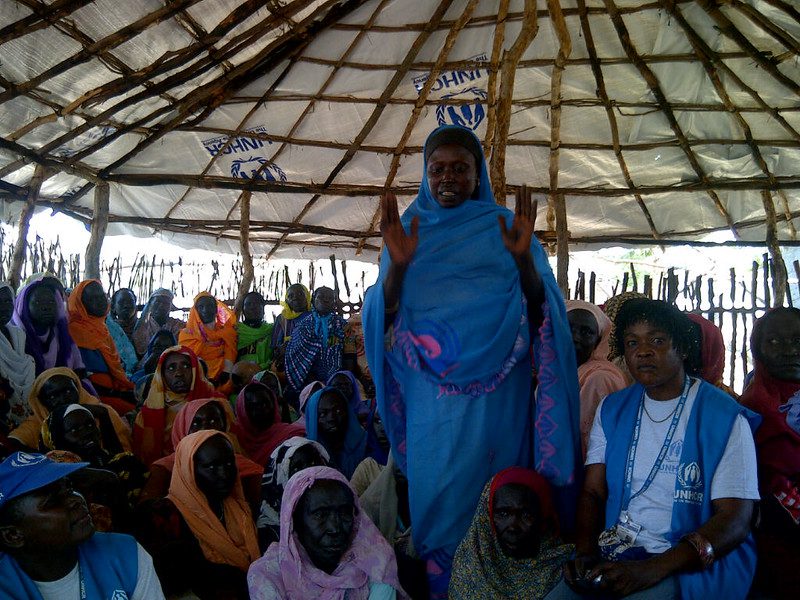
 In April 2023, war broke out between Sudan’s national army and a powerful paramilitary force known as the Rapid Support Forces. Within months, it had become the largest displacement crisis on earth. Now in its fourth year, the conflict has driven more than 4.4 million Sudanese across international borders, with millions more displaced within the country itself. The United Nations Refugee Agency (UNHCR) has published its 2026 Regional Response Plan, a $1.6 billion appeal covering seven countries and 123 partner organizations.
UNHCR’s 2026 Regional Response Plan
The plan sets out how humanitarian organizations intend to support refugees and the communities hosting them across the Central African Republic, Chad, Egypt, Ethiopia, Libya, South Sudan and Uganda throughout 2026. It targets approximately 5.9 million people in total. This figure includes both refugees and 1.8 million host community members whose own resources and public services are under mounting strain.
The money requested breaks down across 10 sectors. Food security takes the largest share at around $407 million, a sum that reflects the scale of the immediate threat: one in 10 newly arrived Sudanese refugee children in Chad is malnourished on arrival. Protection, covering everything from legal documentation and asylum access to gender-based violence response and child protection, accounts for $286 million. Health care and nutrition take $238 million, shelter $100 million, water and sanitation $139 million and education $102 million. A further $132 million is allocated to livelihoods and economic inclusion, funding that reflects the plan’s broader ambition to move beyond emergency aid toward genuine self-sufficiency.
Rather than distributing food parcels and goods, the UNHCR’s 2026 Regional Response plan prioritizes giving refugees direct cash transfers wherever possible. Cash gives people dignity and choice, stimulates local economies and costs less to deliver than in-kind aid.
Transitioning Past Emergency Response
What began as an emergency response is being forced, by necessity, to evolve. The plan is explicit that the response must now bridge immediate humanitarian needs with what it calls “solutions from the start.” In this way, decisions regarding both short and long-term intervention are made with integration in mind. This means connecting refugees to national health, education and social protection systems rather than building parallel humanitarian structures that only deepen aid dependency. It means supporting host governments to let refugees work, move freely and access services. It also means engaging development banks, private sector actors and bilateral donors alongside traditional humanitarian funders.
The conflict driving all of this shows no signs of ending. Sudan was ranked the deadliest conflict in Africa in 2025, with more than 17,000 civilian deaths recorded between January and November alone. Sexual violence has been widespread. The Rapid Support Forces captured El Fasher, the last majority city in Darfur not under their control, in October 2025, triggering a fresh surge of displacement. By December, fighting had spread to Kordofan. For the millions who have already fled, return remains a distant prospect and the current picture varies considerably depending on where they are located.
Chad and Egypt
Chad carries the heaviest burden of any country for those who fled after the 2023 outbreak of fighting, hosting more than 1.3 million Sudanese refugees by the end of 2025, projected to reach 1.48 million through 2026. Most crossed from the Darfur region into Chad’s already impoverished eastern provinces. The response plan here, with the largest single-country allocation at $568 million, is tied to a government strategy that aims to turn the influx into a driver of long-term development for the region.
Egypt hosts the largest overall number of Sudanese refugees, around 1.5 million, who live in urban areas alongside Egyptian communities rather than in camps. A significant legal development came in December 2024 when Egypt passed a new asylum law, for the first time establishing a framework for a state-led national asylum system. Partners will spend 2026 supporting its implementation. Refugees currently face serious daily challenges: rising costs of living, administrative barriers and very limited access to formal employment.
Libya and South Sudan
Libya presents some of the more acute dangers. More than 538,000 Sudanese have arrived since 2023, more than 80% of them women and children, most entering through the remote desert crossing at Alkufra. Only around 70,000 have been formally registered. Without documentation, refugees cannot access services and risk arrest and deportation — more than 3,700 were deported in 2025 alone. For many, the calculation becomes whether to risk the Mediterranean. In 2025, Sudanese nationals were among the top nationalities intercepted at sea and among those arriving in Italy and Greece. The $116 million Libya allocation is, in significant part, an investment in preventing those journeys from becoming the only option.
South Sudan has perhaps the most complex humanitarian landscape of any host country. It is simultaneously managing more than 700,000 Sudanese refugees, two million of its own internally displaced people and more than 880,000 South Sudanese who were themselves refugees in Sudan and have since returned home. Climate shocks, cholera outbreaks, food insecurity and ongoing conflict compound everything. The $362 million allocation is the second largest in the plan.
Ethiopia, Uganda and the CAR
Ethiopia has maintained an open-door asylum policy throughout, receiving more than 77,000 Sudanese since 2023. It is also receiving more than 21,000 Ethiopians returning from Sudan. A recent Right to Work Directive offers refugees legal access to the labor market, a meaningful policy advance in a region where most refugees are barred from formal employment.
Uganda, despite not sharing a border with Sudan, hosts around 91,000 Sudanese as part of a total refugee population of nearly two million. Its legal framework, giving refugees the right to work, move freely and use national services, is held up internationally as a model. However, severe underfunding in 2025 forced cuts to food, health and protection programs. The 2026 plan works through a triage system: lifesaving needs first, then essential services, then longer-term resilience.
The Central African Republic (CAR) hosts around 40,000 Sudanese in remote border regions with almost no infrastructure and very limited partner presence. Armed actors crossing from Sudan, the reduced capacity of the U.N. peacekeeping mission and seasonal rains that cut off roads for months at a time make this one of the most difficult operational environments in the entire response.
The Funding Problem
Running through the entire plan raises significant concerns about money. The 2025 response was severely underfunded, and the plan does not expect 2026 to be easier. Without sustained financial support, hard-won gains will be reversed, more refugees will attempt onward movement through dangerous routes and regional instability will grow. The appeal is not only for emergency donations but for predictable, multi-year commitments — the kind that allow organizations to build systems rather than simply respond to the latest crisis.
UNHCR’s 2026 Regional Response Plan describes a humanitarian operation of enormous scale, under enormous strain, attempting something genuinely difficult: keeping millions of people alive while simultaneously trying to build the conditions in which they might one day need less help.
– Andrew Geddes
Andrew is based in Edinburgh, UK and focuses on Politics for The Borgen Project.
Photo: Flickr

Everything You Need to Know About Poverty in Mexico
Who Poverty in Mexico Affects Most
National figures only tell part of the story and might suggest that quality of life is improving nationally, however, poverty in Mexico continues to fall unevenly, with rural and Indigenous communities carrying a far heavier burden than the country as a whole. In rural areas, the poverty rate stood at an alarming 45.8% in 2024, compared with 25% in urban areas. This divide reflects more than geography alone. It indicates long-standing gaps in infrastructure, formal employment and access to support systems.
The disparity is even sharper for Indigenous communities. In 2024, 60.8% of Mexico’s Indigenous population was living in poverty. Although that figure represents an improvement from previous years, it does so at a less than the national rate, illuminating how deeply inequality remains embedded in communities that have had less access to opportunity and public investment.
Why Poverty Persists in Mexico
Part of the reason poverty in Mexico remains so difficult to overcome is that it is not just about wages. Mexico measures poverty through a multidimensional system, taking into account access to essentials such as education, health care and social protections. For many families, economic vulnerability persists because single setbacks such as illness, job losses or rising cost of living can quickly push them into poverty.
This is especially true where social protections remain weak. In 2024, nearly half of Mexico’s population did not have formal employment-based protections such as pensions, health coverage or other long-term support. This helps explain why national progress can coexist with persistent hardship, especially in the country’s most vulnerable regions.
Reducing Poverty in Mexico
What is helping, however, is easier to see in the latest data. Recent reporting suggests that social welfare programs and other support measures helped reduce hardships for many families. While that kind of support does not solve the deeper causes of poverty, it can make an immediate difference for households under financial pressure and help prevent even deeper forms of deprivation.
National programs have also tried to address poverty through employment schemes and rural development. Jóvenes Construyendo el Futuro, for example, has supported millions of young people who are not in work or education with training and financial support, while Sembrando Vida is aimed at strengthening rural livelihoods by supporting farmers and local production. While these efforts are not enough to eliminate every structural cause of disproportionate poverty in Mexico, they show that targeted investment can expand opportunity and reduce vulnerability for many families, making a palpable difference to many lives.
Looking Forward
Poverty in Mexico remains a major issue, particularly for rural and Indigenous communities that continue to face the highest levels of hardship. Even so, the latest figures offer a measure of hope. Poverty has declined in recent years, and national support programs appear to be helping prevent even deeper deprivation. With sustained investment and continued attention to the communities most affected, Mexico has a real opportunity to build on that progress in the years ahead.
– Elliott J. Carter
Photo: Unsplash
How Are Smartphones Driving Financial Inclusion in South Asia?
The Rise of the “Portable Bank Branch”
In South Asia, women in rural areas often face challenges in accessing physical banks. Women are compelled to rely on cash, which increases the risk of theft and prevents them from building a credit history. This lack of formal financial access traps women in a cycle of poverty. Women cannot access the capital required to grow a small business or save for investments.
In countries like India and Pakistan, the smartphone has transitioned from a communication device to a portable bank. The rise of India’s Unified Payments Interface (UPI) has become essential for women entrepreneurs as it processes more than 20 billion transactions per month. In Bangladesh, women manage their earnings using digital wallets such as PhonePe or bKash, without needing to visit a bank in person. Visiting a bank was a significant hurdle for women in remote areas where social norms or distance often restricts mobility.
This shift helped the rise of the micro- entrepreneur. In Pakistan, initiatives like Benazir Income Support Program (BISP) have successfully migrated to digital wallets such as JazzCash to ensure that the aid and business earnings reach women directly. This digital advancement enables women to maintain control over their financial assets, often using their savings for critical life improvement areas such as their children’s education or their own growth.
Financial Inclusion and the Poverty Gap
Poverty disproportionately affects women in South Asia. In Pakistan, the poverty rate among women is often higher because of a lack of property ownership and formal employment. Women are restricted to the household and often face hurdles to achieving financial freedom. Women with no control over income and finances are more likely to have less influence over household spending.
Cultural, economic and systemic barriers often constrain women’s autonomy in South Asia. In many rural areas, women require permission to leave home, and in some regions, women are restricted from stepping out of their homes. Women in rural areas are often dependent on male relatives for basic needs. People in those areas often see financial independence as rebellion.
Lack of access to technology does not limit digital inclusion; it is more about autonomy, according to the GSMA Mobile Gender Gap Report. The research findings indicate that while the overall gender gap in South Asia remains wide, the frequency of use among connected women is rapidly increasing. Women in this region are increasingly tech savvy, as they are not using these devices for just entertainment but to increase their awareness, access property rights information and health services. Utilization of mobile internet for e-learning is also becoming very popular.
Organizations are further working to improve women’s experience by creating safe, digital-first spaces where women can learn to invest and save. Organizations like India’s LXME, founded in 2018, further accelerate this trend. LXME created a women-only digital community. Women can learn about mutual funds, insurance, saving in a jargon-free environment and in local languages. Since its establishment, LXME has empowered more than 1000,000 women to decide their financial future. Making financial literacy accessible in local languages and easy-to-manage interfaces is bridging the gap between having a phone and having financial power.
Closing the Final Gap
While this silent transition is improving, challenges persist. Significant efforts are required to improve the situation, as 60% of the world’s unconnected women live in South Asia and sub-Saharan Africa. Millions of women risk being left behind in a rapidly digitalizing global economy, and aggressive investment in digital literacy and affordable information and communication can mitigate the risk.
As access to mobile internet is increasing, South Asian women’s situation is moving from helplessness to innovation. Financial inclusion in South Asia has improved as millions of women can make transactions via QR codes and manage business from their palms. A smartphone is not just a gadget; it is a new factor contributing to an equitable economy.
– Noor Ul Ain Ameer
Photo: Pexels
How Climate Instability Affects Pastoralism in the Sahel Region
A Fragile Way of Life
For centuries, pastoralism has been a strategy for adapting to the dry environment of the Sahel region. Herders move livestock across wide areas so animals can find new pasture and the land can recover. However, that system only works when mobility remains possible and water is not scarce.
Changing climatic conditions in the Sahel are disrupting both. Rainy seasons are less predictable, droughts are becoming more severe and springs and streams that once sustained herds are disappearing. These changes do not just reduce income; they threaten an entire social and economic system.
In the Sudano-Sahel region, more than 20 million people depend on pastoralism for survival and livestock is often the main source of food, cash and status. When grass fails or water holes dry up, families lose animals, nutrition worsens and their ability to recover from shocks weakens. These difficulties affect not only people who live off livestock but also farmers who grow crops for the animals.
Drought and Loss
The human and economic costs of drought can be devastating. One major drought in Niger in 2010 killed more than 4.8 million cattle, roughly a quarter of the country’s herd, causing losses of more than $700 million. For herding families, such losses are not abstract statistics.
They translate into lower school fees, less milk for children and the collapse of savings built up over years, if not generations, through entire flocks. Pastoralism in the Sahel region is also harmed by diseases and herd weakness caused by climate stress. As animals are concentrated into smaller areas with less fodder, they become more vulnerable to illness and malnutrition.
At the same time, governments may impose tighter controls on animal movement due to concerns about livestock disease, making it even harder for herders to follow the rains and preserve their herds. Additionally, longer transhumances may expose animals to stress, disease vectors (such as ticks and flies) and consequential zoonotic diseases. This is not only an issue for animal health but also for humans, increasing the transmission of infectious diseases such as brucellosis and tuberculosis.
Tensions Over Land
As pasture disappears, herders are increasingly pushed into zones where farming is expanding, especially in the southern Sahel. This creates competition over land and water between farmers and herders, a pressure that can turn local disputes into small armed conflicts when land-use rules are weak or unenforced. Climate emergency does not cause every conflict in the Sahel, but it intensifies competition over scarce resources and makes peaceful coexistence more difficult.
Mobility, once a strength of pastoral systems, is becoming harder to sustain. Fragmented landscapes, insecurity and armed groups on transhumance routes can trap herders in unsafe or overused areas. This is further worsened by the growing availability of weapons and by political entities in the region exploiting these issues.
When families can no longer move freely, they face more grazing pressure, more conflict and fewer ways to adapt.
The PRAPS-2 Strategy
Sahelian governments and regional stakeholders are already collaborating to address shared environmental and economic challenges that endanger pastoralism in the Sahel. In addition to flagship efforts like the Great Green Wall, smaller-scale initiatives such as the Lake Chad Basin Commission and the Lake Victoria Basin Commission aim to improve the management and restoration of transboundary natural resources.
The most important of these initiatives, specifically designed to address pastoral needs, is the PRAPS-2 project. It is based on strengthening national responses while reinforcing regional coordination. Its objective is twofold. First, it seeks to enhance regional coherence in natural resource governance, support the implementation of national regulations and facilitate cross-border trade.
Second, it aims to generate and disseminate scientific and technical knowledge that supports sustainable pastoral practices and informs both national and regional strategies, recognizing their economic, social and environmental significance. Regionally, the program is implemented by the Permanent Interstate Committee for Drought Control in the Sahel (CILSS). The CILSS oversees coordination under the political leadership of the Economic Community of West African States (ECOWAS) and the West African Economic and Monetary Union (WAEMU).
At the national level, implementation is led by the relevant ministries responsible for livestock or rural development across the six participating countries. PRAPS-2 is structured around five core components:
Progress is being made, but this crisis highlights how rising temperatures can deepen insecurity and instability in already fragile regions, making the protection of pastoral livelihoods essential for sustaining resilience, dignity and peace.
– Riccardo Chiaraluce
Photo: Pexels
Facts About Elderly Poverty in San Marino
This statistic will continue to grow as San Marino projects low birth rates and high life expectancy. As a result, the government has taken steps to ensure that quality of life is obtainable by setting out to reform and expand its laws to alleviate elderly poverty in San Marino.
Elderly Poverty in San Marino
In San Marino, elderly poverty is not recorded as San Marino’s poverty rate is low enough to not make a distinction. However, the country has a high cost of living and income inequality that directly translates over to the elderly, who now face the lack of social support services provided.
Due to San Marino’s landlocked position and size, it is heavily reliant on Italy for support and resources. Additionally, with a rising prevalence in chronic disease, San Marino’s healthcare system has experienced strain. In local hospitals, where certain treatments and capabilities are unavailable, many patients are referred to hospitals in Italy, and while not ideal for immediate care, speaks to their strong diplomatic relationship.
San Marino’s social security program, updated in 2018, is detailed and has a set of conditions for each coverage. Depending on the coverage of the insured, the type of provisions according to their pensions are different, causing a disparity in accessibility.
However, despite these limitations, San Marino boasts a universal health care system, making it not only accessible but free for its citizens and residents and greatly benefiting the elderly population, who are no longer in the workforce and at a higher risk for health issues.
San Marino’s Pension System
With San Marino having their population growth decreasing, there will be difficulties in sustaining and maintaining a workforce. As a result, San Marino sought to reform their pension system through Law no. 157 on November 29, 2022, ensuring that the retirement age for the elderly is at 66 years, introducing incentives and disincentives for those considering early or late retirement.
With this reform, it ensures citizens aged 60 or higher are entitled to a seniority pension, regardless of the requirements outlined in Law no. 158, which San Marino’s government passed in October 2011. This is one way of ensuring that the government minimizes and controls elderly poverty in San Marino. This is one way to ensuring that the government minimizes and controls elderly poverty in San Marino.
However, like many of its laws, this reform is strict and is subject to pension reductions depending on the age of the insured. This can prove to be a problem for older citizens who have severe health issues that cause early retirement. While it is not perfect, San Marino is able to ensure that more of its residents are able to live comfortably post-retirement.
The Società Unione Mutuo Soccorso (SUMS-Maschile), which directly translates into The Mutual Aid Union Society, founded in 1876, provides mutual aid to workers in the event of accidents, illnesses, old age or disability, to make up for lack of a welfare state. SUMS continues to provide aid to Sammarinese citizens, becoming a branch of support when government policies are not enough.
Looking Ahead
San Marino is ready to take the next step in continuing to alleviate elderly poverty in San Marino by improving living conditions not only for its older residents, but also for their younger ones as well. While its mortality rates and decline in birth rates are issues of their own, they have highlighted San Marino’s efforts in supporting its elderly population and how they have acted accordingly to shifts in their demographics. Through a continuation of reforming laws, help from SUMS-Maschile, and close attention to its changing demographics, San Marino is heading towards a society where its citizens are able to live in equal measures.
– Kianna Phosouvanh-Sythong
Photo: Wikimedia Commons
The Strengths and Limitations of Coconut Farming in Indonesia
The Strengths of the Indonesian Coconut Industry
Roughly 6.6 million Indonesian farmers rely on the coconut industry as their main source of income. In a country where infrastructure development is severely constrained by its island chain geography, coconut farming in Indonesia is a lifeline for the eastern region in particular. In this region, communities are spread across thousands of scattered islands.
Due to geographic isolation and limited infrastructure, 80% of livelihoods in certain areas of Eastern Indonesia rely on subsistence farming. Coconut farming in Indonesia remains accessible to rural communities, as the country’s climate supports year-round growth. Additionally, coconut crops require less fertilizer than many other crops, allowing lower-income households to cultivate small plots and harvest multiple times throughout the year.
This sector not only supports farming households but also entire rural communities. Beyond smallholder farmers, the industry sustains a wide network of livelihoods, including transport workers, market sellers and processing workers, all of whom rely on coconut production for income. As global demand for healthy alternatives and plant-based options surges, the Indonesian coconut industry is projected to grow at a faster rate in the coming years.
This growth could create new opportunities for exports, value-added production and increased income potential for smallholder farmers in Indonesia.
The Limits of the Coconut Industry
Despite its scale, coconut farming in Indonesia faces limitations that prevent many farmers from earning higher incomes. One of the most significant issues is low productivity. Coconut yields in Indonesia average around 1.1 tons per hectare, although higher-performing varieties can yield more than 2.8 tons per hectare. This is due to the use of older trees, less efficient farming methods and the continued use of lower-yield crops.
Additionally, pests, disease and land conversion make it difficult for farmers to maintain strong production, ultimately reducing their potential income. Replanting efforts also remain limited, as new coconut trees can take six to 10 years to reach full productivity. This makes it difficult for smallholder farmers to replace aging crops without facing short-term income losses.
As a result, many farmers continue relying on older trees with declining yields, reinforcing cycles of low productivity and low income. When coconut farming in Indonesia is stable, farmers often remain at the lowest level of the value chain. Most smallholders sell raw coconuts or copra rather than value-added products such as coconut oil or packaged goods.
Low Returns
A significant portion of profits is captured later in the supply chain by processors and exporters. This leaves farmers with relatively low returns. In Indonesia’s eastern archipelago, communities are spread across remote, dispersed islands. This geography limits infrastructure development, making it difficult to transport goods. Farmers in these areas often face higher transportation costs and reduced access to larger markets, forcing them to sell locally at lower prices.
Coconut farming in Indonesia is also vulnerable to price fluctuations in global markets. Coconut prices are influenced by broader vegetable oil markets, including competition with palm oil, which is often cheaper and more widely used. As the world’s largest producer of palm oil, Indonesia has historically directed more investment and policy support toward that sector, leaving coconut farming comparatively underdeveloped.
Strengthening Indonesia’s Coconut Sector
While coconut farming continues to support millions of livelihoods, these structural challenges highlight its limits. For many rural communities, the industry provides stability and income, but often at a level that sustains households rather than significantly improving long-term economic mobility. However, efforts to strengthen Indonesia’s coconut sector are already underway.
Government programs and international organizations are focusing on replanting aging trees, improving farming techniques and expanding access to value-added production. These initiatives aim to help farmers move beyond raw coconut sales and capture a larger share of the industry’s profits. At the same time, investments in rural infrastructure and market access could make it easier for farmers in eastern regions to connect with larger supply chains.
While coconut farming in Indonesia alone may not be enough to lift communities out of poverty, targeted support and modernization efforts show that the industry still holds significant potential to improve livelihoods across the country.
– Kale Overton
Photo: Unsplash
How the Agricultural Economy is Reducing Poverty in Côte d’Ivoire
How War is Affecting Côte d’Ivoire
The conflict has already pushed fuel prices higher across Africa. Many countries rely heavily on imported energy, making them vulnerable to global disruptions. Governments across the continent have raised petrol and diesel prices, increasing inflation and putting pressure on low-income households. These increase the risk of deepening poverty as transport and food costs rise.
The war has also disrupted fertilizer exports. Shipping constraints through the Strait of Hormuz have reduced access to key agricultural inputs. Experts warn this will raise production costs and reduce yields, especially in developing countries. For farmers in West Africa, including those in Côte d’Ivoire, fertilizer shortages could significantly affect cocoa production and household incomes.
These pressures are particularly concerning because agriculture underpins livelihoods in Côte d’Ivoire. The country produces a large share of the world’s cocoa and relies on the crop for export revenue and rural employment. Many households depend on cocoa farming for income, making them vulnerable to price shocks and rising costs.
The Iran war is also expected to worsen global food insecurity. Disruptions to energy and fertilizer supply chains could push millions more people into hunger, particularly in sub-Saharan Africa. Rising input costs reduce crop yields, which in turn increases food prices and threatens household purchasing power.
How Ivorians Are Fighting Back Against Economic Pressures
Despite these challenges, Côte d’Ivoire is implementing measures to protect farmers and reduce poverty. The government has intervened to stabilize cocoa markets and ensure farmers continue to receive income. It has pledged to purchase surplus cocoa stocks at guaranteed prices to support producers facing falling demand and volatile global markets. These interventions help prevent economic shocks from pushing farmers into deeper poverty.
Stabilizing cocoa earnings also supports local economies, as agricultural income circulates through rural communities. However, long-term poverty alleviation requires more than emergency support. Rising fertilizer costs highlight the need for improved productivity and resilience. Investments in sustainable farming practices, diversified income sources and infrastructure can help farmers withstand global shocks.
Increasing yields and improving market access would strengthen household incomes and reduce vulnerability. Côte d’Ivoire also continues broader economic efforts to reduce poverty. Government initiatives and infrastructure investment have supported growth and improved access to services. While poverty remains widespread, targeted policies seek to support vulnerable households and strengthen rural livelihoods.
Final Remarks
The Iran war demonstrates how global conflicts can threaten poverty reduction efforts far beyond the battlefield. For cocoa-dependent economies like Côte d’Ivoire, rising input costs and supply disruptions pose serious risks. Yet proactive government intervention and agricultural investment can help protect livelihoods.
By stabilizing cocoa incomes, supporting farmers and investing in resilience, Côte d’Ivoire is working to limit the impact of global shocks. These efforts show that even amid international crises, targeted policies can help safeguard communities and advance poverty alleviation.
– Demetra Mykoniatis
Photo: Flickr
Sudanese Refugees and UNHCR’s 2026 Regional Response Plan
UNHCR’s 2026 Regional Response Plan
The plan sets out how humanitarian organizations intend to support refugees and the communities hosting them across the Central African Republic, Chad, Egypt, Ethiopia, Libya, South Sudan and Uganda throughout 2026. It targets approximately 5.9 million people in total. This figure includes both refugees and 1.8 million host community members whose own resources and public services are under mounting strain.
The money requested breaks down across 10 sectors. Food security takes the largest share at around $407 million, a sum that reflects the scale of the immediate threat: one in 10 newly arrived Sudanese refugee children in Chad is malnourished on arrival. Protection, covering everything from legal documentation and asylum access to gender-based violence response and child protection, accounts for $286 million. Health care and nutrition take $238 million, shelter $100 million, water and sanitation $139 million and education $102 million. A further $132 million is allocated to livelihoods and economic inclusion, funding that reflects the plan’s broader ambition to move beyond emergency aid toward genuine self-sufficiency.
Rather than distributing food parcels and goods, the UNHCR’s 2026 Regional Response plan prioritizes giving refugees direct cash transfers wherever possible. Cash gives people dignity and choice, stimulates local economies and costs less to deliver than in-kind aid.
Transitioning Past Emergency Response
What began as an emergency response is being forced, by necessity, to evolve. The plan is explicit that the response must now bridge immediate humanitarian needs with what it calls “solutions from the start.” In this way, decisions regarding both short and long-term intervention are made with integration in mind. This means connecting refugees to national health, education and social protection systems rather than building parallel humanitarian structures that only deepen aid dependency. It means supporting host governments to let refugees work, move freely and access services. It also means engaging development banks, private sector actors and bilateral donors alongside traditional humanitarian funders.
The conflict driving all of this shows no signs of ending. Sudan was ranked the deadliest conflict in Africa in 2025, with more than 17,000 civilian deaths recorded between January and November alone. Sexual violence has been widespread. The Rapid Support Forces captured El Fasher, the last majority city in Darfur not under their control, in October 2025, triggering a fresh surge of displacement. By December, fighting had spread to Kordofan. For the millions who have already fled, return remains a distant prospect and the current picture varies considerably depending on where they are located.
Chad and Egypt
Chad carries the heaviest burden of any country for those who fled after the 2023 outbreak of fighting, hosting more than 1.3 million Sudanese refugees by the end of 2025, projected to reach 1.48 million through 2026. Most crossed from the Darfur region into Chad’s already impoverished eastern provinces. The response plan here, with the largest single-country allocation at $568 million, is tied to a government strategy that aims to turn the influx into a driver of long-term development for the region.
Egypt hosts the largest overall number of Sudanese refugees, around 1.5 million, who live in urban areas alongside Egyptian communities rather than in camps. A significant legal development came in December 2024 when Egypt passed a new asylum law, for the first time establishing a framework for a state-led national asylum system. Partners will spend 2026 supporting its implementation. Refugees currently face serious daily challenges: rising costs of living, administrative barriers and very limited access to formal employment.
Libya and South Sudan
Libya presents some of the more acute dangers. More than 538,000 Sudanese have arrived since 2023, more than 80% of them women and children, most entering through the remote desert crossing at Alkufra. Only around 70,000 have been formally registered. Without documentation, refugees cannot access services and risk arrest and deportation — more than 3,700 were deported in 2025 alone. For many, the calculation becomes whether to risk the Mediterranean. In 2025, Sudanese nationals were among the top nationalities intercepted at sea and among those arriving in Italy and Greece. The $116 million Libya allocation is, in significant part, an investment in preventing those journeys from becoming the only option.
South Sudan has perhaps the most complex humanitarian landscape of any host country. It is simultaneously managing more than 700,000 Sudanese refugees, two million of its own internally displaced people and more than 880,000 South Sudanese who were themselves refugees in Sudan and have since returned home. Climate shocks, cholera outbreaks, food insecurity and ongoing conflict compound everything. The $362 million allocation is the second largest in the plan.
Ethiopia, Uganda and the CAR
Ethiopia has maintained an open-door asylum policy throughout, receiving more than 77,000 Sudanese since 2023. It is also receiving more than 21,000 Ethiopians returning from Sudan. A recent Right to Work Directive offers refugees legal access to the labor market, a meaningful policy advance in a region where most refugees are barred from formal employment.
Uganda, despite not sharing a border with Sudan, hosts around 91,000 Sudanese as part of a total refugee population of nearly two million. Its legal framework, giving refugees the right to work, move freely and use national services, is held up internationally as a model. However, severe underfunding in 2025 forced cuts to food, health and protection programs. The 2026 plan works through a triage system: lifesaving needs first, then essential services, then longer-term resilience.
The Central African Republic (CAR) hosts around 40,000 Sudanese in remote border regions with almost no infrastructure and very limited partner presence. Armed actors crossing from Sudan, the reduced capacity of the U.N. peacekeeping mission and seasonal rains that cut off roads for months at a time make this one of the most difficult operational environments in the entire response.
The Funding Problem
Running through the entire plan raises significant concerns about money. The 2025 response was severely underfunded, and the plan does not expect 2026 to be easier. Without sustained financial support, hard-won gains will be reversed, more refugees will attempt onward movement through dangerous routes and regional instability will grow. The appeal is not only for emergency donations but for predictable, multi-year commitments — the kind that allow organizations to build systems rather than simply respond to the latest crisis.
UNHCR’s 2026 Regional Response Plan describes a humanitarian operation of enormous scale, under enormous strain, attempting something genuinely difficult: keeping millions of people alive while simultaneously trying to build the conditions in which they might one day need less help.
– Andrew Geddes
Photo: Flickr
Africa’s Investment in 2026: The Continent’s Economic Rise
For decades, global narratives have often framed Africa as a recipient of aid, a perception shaped by economic crises, humanitarian emergencies and international development campaigns. However, in recent years, a shift has begun. According to projections from the International Monetary Fund (IMF), Sub-Saharan Africa is expected to outpace Asia in economic growth in 2026 for the first time. Six out of the 10 fastest-growing economies of 2026 are African countries. This growth signals a broader transition from aid dependency to investment-driven development.
Africa’s Investment in 2026
Africa is now receiving less in aid than it is in remittances and foreign direct investment (FDI). More countries are participating in African investment in 2026 than at any previous point. FDI in Africa rose sharply in 2024, increasing by 75% to $97 billion and raising the continent’s share of global FDI from 4% to 6%.
Europe, the United States and China remain the lead investors in Africa. However, in 2025, a broader range of countries began to increase their presence on the continent. Japan and India are committed to a partnership focused on investing in African mineral resources. An Emirati conglomerate, International Resources Holding, acquired a controlling stake in a tin mine in the Democratic Republic of the Congo, following a similar investment in a Zambian copper mine in 2024. Meanwhile, Saudi Arabia’s Public Investment Fund (PIF) purchased a majority stake in Olam Agri, a Singaporean agribusiness firm with a significant presence in Africa.
Gulf-based companies such as DP World are also expanding port infrastructure across the continent, while firms like France’s TotalEnergies continue to invest in large-scale energy projects in Mozambique. Global technology companies, including Microsoft and Google, are increasing investments in digital infrastructure, reflecting growing interest in Africa’s emerging tech markets. Venture capital is also expanding, with initiatives such as Norrsken22, a $200 million tech investment fund focused on African startups, supporting innovation and entrepreneurship.
An Opportunity to Become a Global Player
Although recent global challenges, including the COVID-19 pandemic and ongoing conflicts, have exposed Africa’s reliance on imports and structural weaknesses, they have also created opportunities for the continent. More countries, particularly in Europe, are turning toward Africa for resources such as critical minerals and oil, as well as for opportunities to invest in infrastructure projects. This growing external interest is one of the key drivers behind the surge in Africa investment in 2026.
Africans are also increasingly investing in Africa. Nigerian billionaire Aliko Dangote has focused on finding opportunities across the continent. Dangote Cement is Africa’s largest cement producer, with operations from Ethiopia to Senegal to South Africa. Dangote Refinery and Petrochemicals operates an oil processing facility with a capacity of 650,000 barrels per day, designed to supply fuel to West, Central and East Africa. The Dangote Group recently announced a minimum $1 billion investment in a pipeline, power generation and cement plant in Zimbabwe. Ranked by Forbes as Africa’s wealthiest individual, Dangote has demonstrated the value of investing in the home continent.
African Governance and Sovereignty
African countries are building more robust economic systems. In 2025, South Africa, Ghana, Uganda and Rwanda, among others, made changes diverting more funds toward private equity and venture capital.
With encouragement from the African Union (AU), countries have also begun increasing exchanges with one another, whether through trade, cash flows or movement of people. African governments are becoming more integrated rather than relying solely on partnerships with Europe, the U.S. and China.
This assertion of agency extends beyond economics. Mali, Burkina Faso and Niger have removed French as their official language, reflecting broader efforts to assert political and economic sovereignty and redefine relationships with former colonial powers.
Looking Ahead
The continent continues to face significant challenges, including extreme poverty, ongoing conflicts and a historical dependence on foreign powers. However, the trajectory of Africa’s investment in 2026 points in a new direction. Africa’s tech sector continues to expand, with startups attracting increasing investment and driving innovation in finance, logistics and digital services. African countries are also diversifying their global partnerships, attracting investment from the Middle East, Asia and private sector actors beyond traditional Western donors. These developments signal a broader transition toward investment, self-sufficiency and long-term economic growth.
As stated by South African business executive, Euvin Naidoo: “You can make money, you can lose money in Africa. But opportunities, boy oh boy, they exist.” Africa investments in 2026 reflect that growing confidence.
– Chloe Bonnefil
Photo: Flickr
Social Policies in Paris and Barcelona Reduce Poverty
For decades, Paris and Barcelona have led their respective national gender-equality policies to promote urban poverty reduction and prevention. Their application of social policies such as gender-responsive budgeting and comprehensive social service access supports women and children in Barcelona and Paris. These groups are most likely to be systemically impacted by poverty and are prioritized as recipients of targeted care.
Paris, France: Tackling Homelessness and Supporting Families
Despite being France’s largest and most economically productive city, post-pandemic rates of urban poverty in Paris remain higher than the national average. It is widely recognized that the principal driver of such inequality in Paris is the lack of affordable, stable housing. This issue disproportionately affects women and single-parent families.
Since 2000, the French government has attempted to combat the housing crisis. It does this by implementing laws that require cities to have at least 25% social housing, meaning lodgings suitable for low-income families or those with additional needs. The city of Paris currently meets the legal requirements and in 2022, announced plans to reach 40% social housing within the next decade.
These plans include repurposing “offices, empty schools and garages” to meet growing demand and provide secure, stable housing for thousands more Parisians. As house prices and rents continue to rise across the city, sustaining these policies remains essential to preventing further inequality among low-income households.
Income distribution in Paris is uneven and wage disparities in the region amount to a 21% gap between women and men. Families living in the suburbs, known as the “banlieues,” face further barriers to the kinds of social inclusion that drive poverty alleviation. In response, the Parisian government has made significant progress in supporting low-income, single-parent families, which are statistically more likely to be headed by women.
Monthly financial aid helps reduce cost burdens and stabilize these households, preventing them from falling into urban poverty. By directly addressing housing insecurity and its disproportionate effect on single-parent households, these policies demonstrate how Paris’ structural investment in affordable housing and social support can reduce urban poverty, particularly among women-led households.
Barcelona, Spain: Gender-Responsive Public Spending
Barcelona is a vibrant, youthful city with heralded architecture and cultural icons. However, it also experiences disproportionate rates of urban poverty compared with national averages. Women in Barcelona are significantly more likely to live in conditions of poverty than men, accounting for 20.9% of those at risk of poverty.
In response, the government of Barcelona introduced its “Strategy against the feminization of poverty” initiative in 2016. Over the span of a decade, the policies have worked to address equal hiring practices, workplace treatment, income equality and social support for working mothers and caregivers. They have also systematically evaluated how public spending impacts men and women differently and the subsequent impact on the urban economy.
This approach, known as gender-responsive budgeting, ensures that public spending and resources are directed toward the specific needs of women, especially those balancing employment and caregiving responsibilities. Other policies, such as B-MINCOME, have provided financial support to low-income households to help families meet basic needs and improve access to employment and social services. They are predicted to empower hundreds of thousands of citizens financially.
The B-MINCOME initiative addresses rising poverty and social inequalities, in which the average income of Barcelona’s lowest-earning households has dropped by 27% over the last few years. By directing such investment and proactive welfare toward those most affected by poverty, the city is working to reduce inequality at its root. This demonstrates how city-level policy can create more effective urban poverty reduction.
Different Approaches, Same Outcome
While Paris and Barcelona have adopted different approaches to tackling inequality, both demonstrate the effectiveness of targeted, city-level strategies in addressing the drivers of urban poverty. Whether through structural investment in housing or gender-responsive public spending, these policies prioritize those most affected, particularly women and low-income households. As urban populations continue to grow, these approaches offer valuable insights into how local governments can contribute to meaningful and sustainable urban poverty reduction.
Social policies in Paris and Barcelona are shaped around lived realities. This creates more inclusive, resilient and empowered communities for the future.
– Hannah Michie
Photo: Flickr
Cash-in-Hand in Honduras’ Informal Economy
The Informal Economy: What Is It?
While formal work involves a written contract between employer and employee and generally ensures workers’ protection, rights and stability, informal labor is a broad term with multi-faceted meanings. This might include a family-owned shop where an employee helps on the weekends, street vendors, gig workers, micro-businesses and domestic workers in cash-in-hand employment.
While this type of work occurs in every country, there are notable trends. In 2024, the OECD drew upon the survivalist aspects of informal work, noting how these jobs are often characterized by a lack of social benefits, poor working conditions, lower remuneration and poverty. Currently, 90% of the global workforce is made up of informal employees, largely from low-income countries.
While policy change is urgently needed, much informal work is also produced and performed within the household, making it difficult to categorize or track. Women are more likely to be part of the informal labor force, and four in 10 people in LAC countries currently depend solely on informal work. More than half the people in countries such as Colombia, El Salvador, Paraguay, Peru, Bolivia and Honduras are vulnerable to exploitation, with low earnings, excessive working hours and poor working conditions — conditions that may carry on into future generations.
A Case for Formalization
Employees working informally do not contribute to a country’s GDP, largely due to tax avoidance. Workers within the informal economy earn less than their formal counterparts, and their country’s economy is often weaker as a result.
J.P. Morgan notes that “informality thrives where entry is hardest” and is thus bound to disproportionately affect those without formal education or with low social standing. For these reasons, it is more likely to affect women and girls. The shift from informal to formal economies is not straightforward, but can be achieved through policy and business action, reducing the gender pay gap and the potential for violence and abuse facing women and girls.
Honduras: A Case Study
The OECD report shows Honduras’ informal economy to be the largest among the LAC countries examined, with nearly 80% of salaries coming from informal channels.
Despite this, organizations such as CAVEXSA, COCASAM and UPROCASUR have been aiding the transition from informal to formal work. These are small to medium enterprises in the agricultural sector, harvesting, packaging and transporting commodity goods such as sugar and coffee.
Backed by the ComRural II project and the World Bank Group, they are committed to providing technical training and job opportunities for rural communities. More than 3,200 Hondurans have attained job security, with numbers set to increase with every harvest. These are jobs in previously male-dominated sectors, signaling economic growth that also challenges gendered stereotypes.
Looking Ahead
Honduras’ informal economy remains essential for many, but procedures such as effective minimum wages, community-driven businesses, contributory schemes and social protection are among the ways the OECD suggests alleviating the burden of informal work.
Denis Calderón, a former okra producer and current board member of CAVEXSA, is a single mother of five. “I was a housewife — I’m not ashamed to say it,” she said, adding that “women are capable of anything,” in agriculture, domestic life and beyond. The leadership of women like Calderón in these businesses reflects a broader shift in how economic growth is taking shape in the global South.
– Grace Sandall
Photo: Flickr