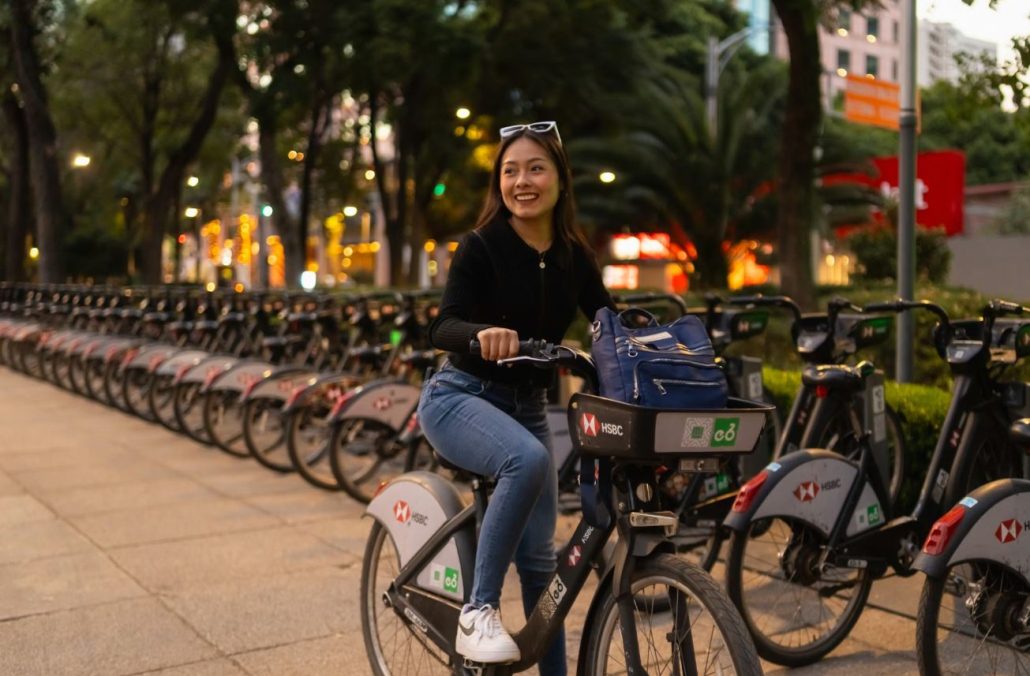
 Many people associate bikes with an expensive international sport that is growing in popularity. With professional cyclists gaining attention on social media and brands using aggressive marketing, cycling is often seen as an exclusive activity for those who can afford it. In major cities around the world, it has become a strong attraction for sports enthusiasts.
In the United States, for example, a record 112 million Americans rode a bike at least once in 2024. Bikes and cycling can positively impact millions of people worldwide, especially in densely populated urban areas. One key example is Mexico City, the capital of Mexico.
In recent weeks, it officially became the largest metropolitan area in North America, with an estimated population of 25.6 million. That status brings major challenges, including urban poverty, inequality and rising pollution. Bicycles, however, have the potential to help address these issues. Through bike-share programs across the city, Mexico is using bikes to fight poverty, inequality and climate challenges.
Shared Mobility Services
Bikes can help address pollution and transportation affordability in urban areas. As more people migrate to cities, carbon emissions have continued to rise. Emissions from transportation, especially in cities, account for 22% of global fuel emissions. In response, many cities are turning to shared mobility services that reduce emissions by lowering the number of vehicles on the road.
These services not only cut pollution in densely populated areas, but also give people more ways to reach their destinations without relying on a single mode of transport. These programs allow low-income households and individuals to move faster and more cheaply across the city, freeing some of their income to spend on other priorities. Bike-share programs are one form of shared mobility service being implemented worldwide to fight poverty.
Major cities in Colombia, Mexico and Brazil have introduced bike-share programs for their populations. American cities like New York City and more than 150 European cities have also implemented similar programs. Although these initiatives continue to face regulatory and other challenges, there is a clear global shift toward supporting their success.
Mexico City is leading such efforts in Latin America. It has the largest program in the region, “with [more than] 6,000 bikes and a competitive ride-hailing market with an estimated 200,000-plus drivers.”
Poverty in Mexico City
Although the government has worked over the last two decades to fight poverty across the country, poverty and inequality continue to plague Mexico City. The biggest challenge within the capital is inequality, with the “richest 1% of the population [owning] 40% of the country’s wealth, while nearly 19 million people struggle to put food on the table.” This is not new for residents, but it has worsened in recent years.
For instance, “Mexico’s 22 billionaires have seen their fortunes double in the last five years,” while the average Mexican citizen has not seen proportional growth in economic status. Inequality within the city is evident in its real estate and housing environment. Those who are wealthy “have been very effective at isolating themselves from the rest of the country,” living in luxury apartments in the heart of Mexico City, where more economic opportunities are available.
On the contrary, those with lower incomes are “relegated to sprawling cinder-block slums” located far from those opportunities. As a result, commuting to and from work is often costly and inefficient for low-income families. During an interview with Lucia Margarita Vazquez Alcantara, a resident of Mexico City for the last 40 years, she expressed frustration with the cost of gasoline for her car and taxis.
“It is impossible to afford gas if you want to go anywhere in the city,” she stated. The distance and cost of transportation place a heavy burden on lower-income families in Mexico City, making it harder to escape cycles of poverty or afford basic necessities.
Bike-Share Programs in Mexico City
Bike-share programs offer an effective and environmentally friendly solution to reduce transportation costs in Mexico City and help lower-income families travel to their places of work. Ecobici is the city’s official bike-share program, allowing users to “take a bicycle from any cycle station and return it to the nearest one to their destinations in unlimited 45-minute rides.” If users wish to use it longer, they can pay for an affordable $32 subscription.
This program shows how Mexico is actively using bikes to fight poverty. Women in particular are benefiting greatly from the Ecobici program in Mexico City. In urban areas, women often have “less access to quick and reliable transportation” and tend to make trips with multiple purposes.
The bike-share program improves mobility across the city and women have “gained a cheap, efficient and flexible mode of transportation.” Since its implementation, Ecobici has increased women’s bicycle use in the city from 10% to 38%. “I am too old to be riding bicycles, but now some of my friends’ daughters use them to get to work or go to ‘la tienda’ (grocery store) when needed,” said Alcantara.
She added that although she does not ride bikes, she has seen tangible changes in Mexico City. The sky is clearer, pollution is lower and she sees more people smiling instead of yelling at each other behind the wheel.
Beyond their economic benefits, biking is growing in popularity among Mexico’s population. Monica Castilla, a hotel cook in the Zona Rosa area of Mexico City, expressed her preference for riding her bike over driving a car or taking the bus. “You get the stress out. You [get] exercise. And it’s faster,” she said. Mexico has 250 miles of bike lanes and “closes major avenues in the city center every Sunday” so cyclists can use them recreationally.
Conclusion
Bike-share programs are proving that simple transportation solutions can create real social change. In Mexico City, initiatives like Ecobici are reducing travel costs, expanding mobility for low-income families, supporting women’s independence and helping cut urban pollution. As the city continues to grow, Mexico is showing how two wheels can help move people closer to economic opportunity and a better quality of life.
– Rodrigo Salgado
Rodrigois based in Boulder, CO, USA and focuses on Good News and Technology for The Borgen Project.
Photo: Unsplash

The Story Behind India’s Midday Meal Scheme
States like Tamil Nadu, Gujarat, Andhra Pradesh and Karnataka have implemented strict measures to ensure students have access to healthy food. The scheme provides free, freshly cooked meals to children in government and government-aided schools. The Akshaya Patra Foundation reports, “The Government of Karnataka was the first state government to involve NGOs in providing midday meals to school children in India.”
The Nutritional Impact of the Scheme
Hunger acts as a significant barrier to education, primarily among children from low-income families. Sometimes, the meal provided by the scheme is the only nutritious meal children receive in a day. The program has been working to improve children’s health.
According to Dhristhi IAS, “India is home to about 30% of the world’s stunted children.” The scheme aims to reduce stunting and improve child growth. The nutritional gains from the meals significantly improve learning outcomes. Better nutrition also enhances other cognitive skills, such as attention span, participation and concentration.
In addition, school enrollment and attendance rates have increased by 16–19 percentage points after the enforcement of midday meals. Families often face the decision of whether to send their children to school due to economic constraints. The Midday Meal Scheme helps address these problems and reduces the financial burden of feeding their children and covering education costs.
How It Changes Lives for Women
Aside from financial costs and hunger, another notable achievement of this scheme is gender equality. According to a study published in ScienceDirect, “The analysis found the effect of the midday meal program on girls to be almost twice its effect on boys for primary school enrollment.” Historically, communities have existed where girls’ desire for education and public roles has been undervalued.
One of the biggest factors is social and economic. This scheme creates an incentive for families to send their daughters to school. It provides girls with access and reduces gender gaps in areas such as education and literacy. In the long run, girls in low-income communities have the opportunity to pursue their education.
Similar to its impact on youth, the Midday Meal Scheme has also contributed to women’s empowerment. Historically, women have been prevented from participating in the economy and from establishing themselves in their communities. However, through the scheme, women are given jobs as assistants and cooks.
This gives them the chance to provide their households with a stable income and to independently control their finances.
Future of the Scheme
In 2021, the government rebranded the Midday Meal Scheme to Pradhan Mantri Poshan Shakti. With this new name comes a heavier focus on nutrients for students. The new scheme aims to integrate local and seasonal produce and also introduces new, healthier options like fortified rice. According to MicroSave Consulting, the scheme uses the Automated Monitoring System to prevent mishaps and track the number of meals provided.
India’s Midday Meal Scheme has made a huge impact and is a key part of India’s development. With more attention, it can cover millions more children in other states.
– Hasini Muddapu
Photo: Unsplash
Using Bikes To Fight Poverty in Mexico City
In the United States, for example, a record 112 million Americans rode a bike at least once in 2024. Bikes and cycling can positively impact millions of people worldwide, especially in densely populated urban areas. One key example is Mexico City, the capital of Mexico.
In recent weeks, it officially became the largest metropolitan area in North America, with an estimated population of 25.6 million. That status brings major challenges, including urban poverty, inequality and rising pollution. Bicycles, however, have the potential to help address these issues. Through bike-share programs across the city, Mexico is using bikes to fight poverty, inequality and climate challenges.
Shared Mobility Services
Bikes can help address pollution and transportation affordability in urban areas. As more people migrate to cities, carbon emissions have continued to rise. Emissions from transportation, especially in cities, account for 22% of global fuel emissions. In response, many cities are turning to shared mobility services that reduce emissions by lowering the number of vehicles on the road.
These services not only cut pollution in densely populated areas, but also give people more ways to reach their destinations without relying on a single mode of transport. These programs allow low-income households and individuals to move faster and more cheaply across the city, freeing some of their income to spend on other priorities. Bike-share programs are one form of shared mobility service being implemented worldwide to fight poverty.
Major cities in Colombia, Mexico and Brazil have introduced bike-share programs for their populations. American cities like New York City and more than 150 European cities have also implemented similar programs. Although these initiatives continue to face regulatory and other challenges, there is a clear global shift toward supporting their success.
Mexico City is leading such efforts in Latin America. It has the largest program in the region, “with [more than] 6,000 bikes and a competitive ride-hailing market with an estimated 200,000-plus drivers.”
Poverty in Mexico City
Although the government has worked over the last two decades to fight poverty across the country, poverty and inequality continue to plague Mexico City. The biggest challenge within the capital is inequality, with the “richest 1% of the population [owning] 40% of the country’s wealth, while nearly 19 million people struggle to put food on the table.” This is not new for residents, but it has worsened in recent years.
For instance, “Mexico’s 22 billionaires have seen their fortunes double in the last five years,” while the average Mexican citizen has not seen proportional growth in economic status. Inequality within the city is evident in its real estate and housing environment. Those who are wealthy “have been very effective at isolating themselves from the rest of the country,” living in luxury apartments in the heart of Mexico City, where more economic opportunities are available.
On the contrary, those with lower incomes are “relegated to sprawling cinder-block slums” located far from those opportunities. As a result, commuting to and from work is often costly and inefficient for low-income families. During an interview with Lucia Margarita Vazquez Alcantara, a resident of Mexico City for the last 40 years, she expressed frustration with the cost of gasoline for her car and taxis.
“It is impossible to afford gas if you want to go anywhere in the city,” she stated. The distance and cost of transportation place a heavy burden on lower-income families in Mexico City, making it harder to escape cycles of poverty or afford basic necessities.
Bike-Share Programs in Mexico City
Bike-share programs offer an effective and environmentally friendly solution to reduce transportation costs in Mexico City and help lower-income families travel to their places of work. Ecobici is the city’s official bike-share program, allowing users to “take a bicycle from any cycle station and return it to the nearest one to their destinations in unlimited 45-minute rides.” If users wish to use it longer, they can pay for an affordable $32 subscription.
This program shows how Mexico is actively using bikes to fight poverty. Women in particular are benefiting greatly from the Ecobici program in Mexico City. In urban areas, women often have “less access to quick and reliable transportation” and tend to make trips with multiple purposes.
The bike-share program improves mobility across the city and women have “gained a cheap, efficient and flexible mode of transportation.” Since its implementation, Ecobici has increased women’s bicycle use in the city from 10% to 38%. “I am too old to be riding bicycles, but now some of my friends’ daughters use them to get to work or go to ‘la tienda’ (grocery store) when needed,” said Alcantara.
She added that although she does not ride bikes, she has seen tangible changes in Mexico City. The sky is clearer, pollution is lower and she sees more people smiling instead of yelling at each other behind the wheel.
Beyond their economic benefits, biking is growing in popularity among Mexico’s population. Monica Castilla, a hotel cook in the Zona Rosa area of Mexico City, expressed her preference for riding her bike over driving a car or taking the bus. “You get the stress out. You [get] exercise. And it’s faster,” she said. Mexico has 250 miles of bike lanes and “closes major avenues in the city center every Sunday” so cyclists can use them recreationally.
Conclusion
Bike-share programs are proving that simple transportation solutions can create real social change. In Mexico City, initiatives like Ecobici are reducing travel costs, expanding mobility for low-income families, supporting women’s independence and helping cut urban pollution. As the city continues to grow, Mexico is showing how two wheels can help move people closer to economic opportunity and a better quality of life.
– Rodrigo Salgado
Photo: Unsplash
From Seeds to Market With the DeHaat App
By combining technology with agriculture, DeHaat is helping to modernize the farming sector through modern agrotech solutions for farmers, making information and resources far more accessible. In doing so, the app is simultaneously helping farmers increase crop productivity and secure better prices for their produce.
The following sections outline the key features of the app and how each one of them contributes to reducing poverty and promoting long-term economic stability.
Crop Insurance
One of the most significant advantages of this app is its provision of crop insurance, which plays a critical role in alleviating poverty among farmers. A major challenge in the Indian agricultural sector is the impact of extreme weather events on harvests. In India, since 2020, floods, storms or hailstorms have damaged“[…] 1.32 million acres – nearly seven times the size of New York City.”
Such losses could be devastating and force farmers to restart from the beginning, wiping out their income and pushing them deeper into financial insecurity. However, through integrated insurance services, DeHaat provides a vital financial safety net. This support ensures that farmers are not left without resources in times of crisis, helping them recover quickly and stabilise their income.
Therefore, by protecting farmers against unpredictable losses, the platform not only strengthens agricultural resistance but also promotes long-term economic security, making it a potent tool in the broader effort to reduce rural poverty.
Weather Alerts
Similar to its insurance feature, the app’s frequent weather alerts also play a key role in alleviating poverty. By providing timely meteorological updates and guidance for different stages of the growing season, farmers are able to plan ahead more effectively. This allows them to choose the right crops for specific conditions, allowing them to plant produce at optimal times.
For instance, if a storm is forecast to reach their farmland, farmers can prepare by fortifying crops or adjusting their harvesting schedule to minimize damage. These proactive decisions could help reduce crop losses, ensuring the farmer retains more of their income and produce.
Consequently, these agritech solutions for farmers could help lower the risks associated with unpredictable weather. DeHaat helps farmers to maintain more consistent earnings, reducing farmers’ vulnerability to condition-induced poverty over time.
Farm Tagging and Connect with Experts
A third significant feature of the app is its ability to directly and swiftly connect rural farmers with expert agriculture advice. Through the Dehaat platform, farmers can access guidance on critical aspects of farming such as pest control, irrigation techniques and the appropriate use of fertilizers. This immediate access to professional knowledge helps address one of the key challenges faced by smallholder farmers: the lack of reliable support.
By creating a more informed and responsive farming environment, the platform enables farmers to make better decisions and manage their land more thoroughly. Rather than relying on trial-and-error procedures, farmers can instead implement reliable and proven science-based solutions.
From a poverty-alleviation perspective, such expertise could be truly transformative because it could reduce the likelihood of crop failures, which would subsequently lead to lower production yields. In the long term, this intellectual exchange between farmers and experts empowers farmers to cultivate a secure and stable farming career, which could increase their ability to make money.
Market Linkage
The final, and most significant, feature of the app is its ability to connect farmers directly to local markets and facilitate the sale of their produce. Historically, the Indian agricultural sector has faced challenges related to corruption and exploitation. For example, findings from the BBC and Comptroller and Auditor General (CAG) identified that, “90,000 farmers between April 2011 and March 2012 found serious irregularities,” underscoring the vulnerability of small holders within traditional market systems.
By enabling direct access to institutional buyers, DeHaat could help reduce farmers’ reliance on intermediaries who may exploit information systems, helping ensure fairer pricing and more secure transactions, which helps farmers to avoid falling into debt traps. This greater financial independence contributes to a more equitable farmer experience that plays a role in reducing declines into rural poverty.
Conclusion
Ultimately, this app is an extraordinary example of how technology can provide effective solutions to reduce rural poverty by strengthening every stage of the farming process. From crop insurance to weather alerts to formal market guidelines, DeHaat agritech solutions for farmers help foster a proper, long-term, stable economic future for many individuals.
– Sophia Lupo
Photo: Flickr
Life, Community and Poverty in Al-Qalamoun
The town’s supportiveness is discussed in The Borgen Project’s interview with one of the town’s most famous women, who noted that Al-Qalamoun is very hospitable. She also described life in the town, touching on poverty, its consequences and especially the supportive community of Al-Qalamoun.
Poverty in Al-Qalamoun
There have been some changes in this town over the last few years that continue to the present. Education is no longer given the same value it once was. A witness to this change states that the level of public schools has decreased. Before, only a few parents placed their children in private schools, while the rest trusted public schools. They all cared about guaranteeing a good education for their children.
However, in this modern age, parents struggle to afford the fees to enroll their children in private schools. This has demotivated some parents and led them to neglect the importance of education. This poses a threat to the future of the town’s new generation. The possible future of this is intertwined with the town’s job market.
According to Baynetna Media, the job market is in a “deep crisis.” There are many jobless people despite the town’s large potential. Jobs could be created due to the rich harvest linked to olives, oranges and floral water. However, many young adults did not attend college and therefore have not acquired a high level of education.
The interviewee explains how this disrupts the marriage market: “Poverty affects the marriage market.” Interestingly, although the town is quite populated, the number of marriages is diminishing. As some families are more impoverished than others, some young adults in Lebanon do not have a clear career path. Especially in this town, they either travel to another country to work in a clothing store or a restaurant or they do not work at all. This leads some of them to grow up with no prospects and, thus, no marriage potential. The lack of education leaves them unable to secure a job.
Baynetna Media highlights that the youth are most affected by the Lebanese labor market. Additionally, the instability of the Lebanese dollar rate plays a significant role in poverty. This prompts people living in urban areas like Al-Qalamoun to “rely on informal and casual employment” to stay afloat. Studies show that “The Lebanese pound ranks as the weakest currency in the world in 2026.” Therefore, even employed citizens suffer from the country’s fragile economy.
An Attempt To Prevent Poverty in Al-Qalamoun
The issue in Al-Qalamoun is a scarcity of jobs in the town itself. Therefore, people seek jobs outside the town. An expert on the town explains, “Money is being spent while making money.” In other words, people spend money on gas or other necessities to work outside the town. However, despite the challenges of finding a job, this does not mean the town’s residents are divided.
On the contrary, whenever people are made aware of who is in need, they immediately raise awareness. This is done through a WhatsApp channel created for residents, of which all are part. Through this channel, announcements are published and whoever has the capacity to help does so. Additionally, the interviewee expressed how proud she is of the medical community, especially the Red Cross.
She explained that back in the day, when her mother needed help, they would have to wait for ages. However, nowadays, the Red Cross is very active in Al-Qalamoun. The Lebanese Red Cross is highly significant, as it helps citizens with whatever emergencies they are facing. It makes every effort to help in times of crisis.
Furthermore, there is a significant community group that distributes food every month called the Ibad Al Rahman Association. It is reliable and of great help to people in need. In addition, it is especially active during the holidays. Another example of the stable aid available in this town is the money sent by relatives living abroad.
In Lebanon, people who travel abroad often try their best to provide their families back home with as much financial help as they can. As a result, in Al-Qalamoun, a significant portion of the support provided comes from individuals who no longer reside in the area. They try to lessen the financial burden of their loved ones.
The town of Al-Qalamoun is itself an underserved region, in that much of its funding comes from outside. However, that does not mean it is declining. In reality, the support offered by these communities and relatives abroad helps the town’s residents stay afloat.
Moving Forward
Al-Qalamoun is built on a community full of love and support. This support comes from inside and outside the town, showing the impact of its generous and welcoming residents. The interviewee, who has lived there her whole life, offers insight into what poverty looks like in Al-Qalamoun. However, despite the turmoil in Lebanese lives, no one gives up on one another. Together, the town’s residents make sure no one is left behind as they work to ease the financial burden on people’s backs.
– Lara Ibrahim
Photo: Wikimedia
The Fight for Justice: Disabilities in Libya
To rebuild Libya, Libyan leaders and the international community must prioritize the rights and inclusion of these citizens.
Disabilities in Libya
Libya, since the 2012 overthrow of dictator Muammar Gaddafi, has been embroiled in a constant state of warfare. The history of warfare negatively impacts those living with disabilities; even in the fleeting moments of calm, the lingering effects of war remain. The conflict has left a deadly, invisible legacy in the streets of Sirte, Tripoli and Benghazi: unexploded ordnance (UXO) continues to claim lives and trap families in a cycle of poverty years after guns fall silent.
Unlike traditional minefields found in Iraq or Syria, Libya’s contamination plagues densely populated cities. The HALO Trust reports that urban centers remain littered with “suicide” mines, booby traps and cluster munitions. Cities like Sirte, under occupation by ISIS until 2016, suffer from explosives hidden within the rubble of homes, schools and hospitals.
This contamination prevents displaced families from returning, effectively freezing the economic recovery of entire neighborhoods. Conflict-related injuries in Libya, in particular landmines, commonly result in permanent disabilities.
Survivors
A survivor of landmines, Omar Musa, a taxi driver from Tawergha, fled his home in 2011 to escape the violence. When he finally returned seven years later, he discovered a rocket-propelled grenade (RPG) wedged into one of his palm trees. Musa did not touch the device. Instead, he contacted the Free Fields Foundation (FFF), a local NGO supported by the European Union. Today, Musa works with the FFF, training other returnees to find unexploded devices.
For others, the experience with mines is less fortunate. Mahmoud, a professional deminer, was blinded when a mine went off while working alongside his brother, Muhammed, for a professional demining team. Muhammed was killed instantly in the blast. Mahmoud was stripped of his sight and had to have his leg amputated.
While many would see this as an unavoidable tragedy of war, Mahmoud identifies it as a deliberate crime. He points directly to the Russian Wagner Group and the forces of Khalifa Hafter, who retreated from the area in 2020 but left behind a landscape of prohibited anti-personnel mines and “trick” explosives designed to maim civilians and first responders alike. Mahmoud refused to accept his disability, transforming his survival into a vocal campaign for legal reparations.
The Fight for Inclusion
In Libya, losing a limb often has devastating results. While landmines themselves physically harm, a fractured health care system ensures the injuries remain permanent. The “right to health” in Libya has become a luxury that few survivors can afford. Libya once boasted one of the highest Human Development Indices in Africa, providing free health care to its citizens; today, that system is in near collapse.
Only a handful of physical rehabilitation centers (PRCs) remain operational in cities such as Tripoli, Misrata and Benghazi. Survivors in rural or southern regions must travel hundreds of miles through dangerous territory to access basic fittings. In response, the United Nations Support Mission recently issued a National Charter that includes a bold 7% quota for persons with disabilities in the next government and across all sovereign councils.
Director Al-Awjali has called for a transition from traditional social care to true political empowerment, positioning women with disabilities as “decision-makers” rather than just service recipients. True inclusion requires more than medical aid; it requires a seat at the table. The Libyan Forum of Persons with Disabilities, in collaboration with international partners such as UNICEF, is also working to break the stigma by advocating for political representation, which serves as a bedrock for other rights.
These advocates keep the path open for people like Mahmoud to continue to stride forward in a nation plagued by war for more than a decade.
– Haydn Goodboy
Photo: Flickr
Updates on SDG 1 in Venezuela
What SDG 1 Means for Venezuela
SDG 1 is broader than income alone. The goal includes reducing poverty according to national definitions, strengthening social protection systems and helping vulnerable populations gain access to essential services. In Venezuela, this matters because poverty is not only expressed through low wages or unstable income. It is also reflected in whether families can afford food, whether children can remain in school and whether households can meet basic needs with dignity.
That distinction is especially important in the Venezuelan case. A household may experience a small increase in income and still remain in a deeply precarious situation if access to health care, education and adequate nutrition continues to lag. For that reason, updates on SDG 1 in Venezuela must be understood through a multidimensional lens rather than through income data alone. UNICEF’s Venezuela social protection program links poverty directly to family income, unmet needs and structural inequality.
What Recent Data Shows
Recent data presents a mixed picture. According to ENCOVI 2024, Venezuela’s economic reactivation has contributed to a decrease in monetary poverty. However, the same report states that these changes have had only a limited impact on improvements in access to education and health care, where significant deficits remain. This means that while some households may be earning slightly more, broader living conditions have not improved at the same pace.
International SDG tracking also reflects these limits. The Sustainable Development Report 2025 gives Venezuela an SDG Index score of 63.8 and ranks it 115th out of 167 countries. The profile also notes that Venezuela completed one Voluntary National Review between 2016 and 2025. This suggests that overall progress toward SDG goals, including SDG 1, remains limited.
Social Protection and Humanitarian Support in Venezuela
Despite these challenges, there are still efforts underway that connect directly to SDG 1. UNICEF Venezuela states that its main objective in social protection is to ensure that children and adolescents have access to inclusive social protection and live free of poverty.
UNICEF implements programs such as:
These programs have reached thousands of vulnerable families and contributed to increased food security and household stability.
Humanitarian assistance also remains essential. The World Food Programme (WFP) began implementing its school meals program in Venezuela in 2021. According to WFP, 5.1 million people in Venezuela urgently require food assistance, and the agency reached 750,000 people in 2025. Its school meals program supports more than 330,000 people across more than 1,100 schools, helping reduce pressure on vulnerable households and improve child nutrition.
Why Progress on SDG 1 Remains Uneven
Even with these efforts, progress on SDG 1 in Venezuela remains uneven. ENCOVI 2024 makes clear that improvements in monetary poverty have not translated into equally strong advances in education and health. UNICEF also notes that low household income and unmet basic needs continue to limit long-term progress. This shows that poverty in Venezuela remains both economic and structural.
Recent 2026 reporting reinforces this fragility. Reuters reported that the IMF described Venezuela’s situation as “quite fragile,” citing inflation, currency depreciation, and persistent inequality. Additional reports indicate that rising oil prices may improve national revenue but can also increase food and fuel costs, placing further pressure on low-income households.
The Road Ahead for SDG 1 in Venezuela
The future of updates on SDG 1 in Venezuela depends on whether the country can move from short-term relief toward broader stability and inclusion. Better poverty measurement, stronger social protection and sustained humanitarian assistance remain essential. Organizations such as UNICEF and WFP demonstrate that practical support is possible even in difficult conditions.
Venezuela remains far from achieving SDG 1, but the country’s situation also highlights why the goal matters. Poverty is not only about income. It is connected to food security, education, health and the ability of families to live with dignity. Understanding these factors is key to building more effective responses and moving toward long-term poverty reduction.
– Adriana Carolina Herrera
Photo: Wikimedia Commons
How Agricultural Innovation Aids Poverty Reduction in Laos
The most significant driver of Laos’s economic growth remains within the agricultural sector in accordance with the Lao People’s Democratic Republic. Laos workforce encompasses roughly 60% of agricultural development. In comparison to its neighbors, Laos has focused on strengthening its agricultural base while integrating environmentally conscious practices. This approach has supported the growth of green jobs, an innovative approach to ending poverty in a developing country. These contribute not only to economic stability but also to environmental preservation. As a pioneer, Laos has established an increasingly critical priority in global agricultural development.
Foreign Aid and Poverty Reduction
The Laotian government has also partnered with international institutions, such as the World Bank, to advance poverty-reduction initiatives. These partnerships have supported national agendas to improve infrastructure and expand access to essential services. In turn, these partnerships will continue to foster long-term economic resilience. Foreign aid continues to play a pivotal role in Laos’s development trajectory. Programs funded through international assistance have provided opportunities to empower local communities, thereby, further promoting economic sustainability and environmental growth.
One notable initiative is the Poverty Reduction Fund, which emphasizes a bottom-up approach by prioritizing community-driven development projects. Established in 2003, the Poverty Reduction Fund (PRF) contributes to growing development in the most disenfranchised and remote communities in Laos. The PRF has accomplished many things, one notable achievement was the training of 68,000 community members for the expansion project. Thus far, the Poverty Reduction Fund has and continues to reduce poverty rates within the country.
Alongside the Poverty Reduction Fund, Laos’s bottom-up model highlights poverty at its source and addresses the root cause of it by increasing the effectiveness and sustainability of poverty alleviation efforts within local communities. Due to its effective efforts to alleviate poverty, poverty reduction in Laos is seen as a compelling case study in the intersection of climate policy and poverty reduction.
Unlike most developed nations, which prioritize large-scale corporate investment, Laos has demonstrated the value of investing in communities and natural resources. The country’s progress suggests that foreign aid, when strategically implemented, can provide meaningful and lasting results. As stated in End Poverty – Build A More Resilient Economy in Lao PDR, poverty is a global problem that affects nations across the globe. However, Laos has established a higher standard to resolve poverty within its borders. These standards utilize foreign aid proactively for local communities and the growth of sustainable agricultural development.
The 3 Pillars Towards Progress
The Poverty Reduction Fund has contributed much to development in Laos, such as the partnership with the Swiss Agency for Development and Cooperation. Moreover, Laos has forged new development in establishing innovative programs, such as the Road Maintenance Groups, a program designed to provide support to the impoverished women of Laos. Established in 2017, the Road Maintenance Group holds a dual mission in the reduction of poverty in Laos. The program provides impoverished women with reliable employment within maintenance work that does not require the operation of heavy machinery, while simultaneously improving the conditions of roads in 85 rural villages. Ultimately, the program held many shortcomings in executing its mission to women in extreme poverty. The program within itself was a step towards more innovative development towards establishing aid and reducing poverty, both for women and rural communities.
Despite advancements in poverty reduction in Laos, poverty remains a global challenge affecting nations at all income levels. Laos’s strategy offers a framework for addressing both economic inequality and the importance of environmental growth simultaneously. This approach is built on three core pillars, which consist of strengthening national institutions to improve revenue. Investing in human capital through education and healthcare, and lastly, fostering environmental resilience. As the global community continues to confront interconnected challenges of poverty and changing weather patterns. Laos experience in poverty reduction underscores the potential of sustainable, community-focused development as a pathway toward long-term progress.
– Rayonna Sanders
Photo: Flickr
The Economic Crisis In Zimbabwe
About Zimbabwe
Zimbabwe is a landlocked country in southern Africa, bordered by Zambia, Mozambique and Botswana. When the country gained its independence in 1980, Zimbabwe encountered several economic challenges that prevented it from achieving broader social advancement. Fast-track reforms, controversial land redistribution cases and the misuse of governmental funds severely impacted agricultural production, hindering future economic development. These decisions led to public protest and the suspension of international economic aid. The withholding of financial support, combined with the public’s increasing distrust of the government, worsened the crisis in the years that followed.
Due to these events, the economic crisis has taken a significant toll on civilians, with many struggling to afford basic necessities as a result of rising inflation. The problem has been recognized by several parties both inside and outside the country, and multiple short and long-term solutions have been proposed with varying degrees of success.
Solutions
A significant development involves Zimbabwe’s engagement with the International Monetary Fund (IMF). Founded in 1944, the IMF is a global organization with the goal of ensuring economic cooperation and reducing global poverty. In early 2026, the IMF met with Zimbabwean officials to form strategies for economic recovery. One outcome was the Staff Monitored Program (SMP), which aims to strengthen credibility around new policies by positively adjusting monetary and fiscal frameworks and advancing governmental reforms. According to the IMF, Zimbabwe’s economic growth is projected to increase to around 4.6% to 5% as of early 2026.
Looking Ahead
While the economic crisis in Zimbabwe has been acknowledged and efforts are underway to stabilize it, permanent long-term results remain to be seen. Lasting recovery will depend on cooperation from all parties to rebuild both the national currency and the trust between policymakers and the public.
– William Mancuso
Photo: Flickr
Child Poverty in Panama Through One Woman’s Story
She remembered how her childhood was shaped by church, school and carnival traditions, as well as by financial difficulties and limited opportunities. Her story is an example of a broader problem across this Central American country. A report from the World Bank and UNICEF in 2026 stated that 34.5% of children and teens in Panama live in monetary poverty, with 16% living in extreme poverty.
Employment Shaped Daily Life
The interviewee reminisced that, while daily life in Colón felt close-knit and joyful growing up, finding steady work was difficult. She discussed living in an economy where jobs paid very little. She remembered that many families depended on better wages from employment in the Canal Zone.
In her account, unemployment affected every aspect of people’s lives. Current research supports this view. According to the World Bank and UNICEF, households with children living in poverty are more likely to be led by adults with limited education and participation in the labor market, making it harder for these families to move toward financial stability.
When Poverty Interrupts Education
The woman said her family struggled to keep paying for private school and she eventually moved to a lower-cost government school. This shift shows that financial hardship can narrow a child’s opportunities early in life. Reflecting on that reality, she told The Borgen Project, “If you don’t pay, you can’t go to school.”
UNICEF says preschool and secondary education services in Panama remain hard to access in rural, peri-urban and Indigenous communities and around 30% of children still lack access to preschool education. UNICEF also reports that girls in Indigenous areas face a greater risk of educational exclusion than children in other parts of the country. When a family’s income is unstable, school becomes one more cost that is difficult to sustain.
The Burden Falls Unevenly Across Panama
Although the interview centers on life in Colón, a city with a significant Afro-descendant population, today’s data shows that child poverty in Panama is especially severe in rural and Indigenous territories. The World Bank-UNICEF report says 83% of children in Indigenous comarcas (regions) live in poverty, while 55% live in extreme poverty. In the Ngäbe-Buglé comarca, child poverty exceeds 90%.
UNESCO likewise reports that children and youth in both remote rural and Indigenous areas face lower participation rates and weaker learning outcomes compared to other students in Panama. These extreme disparities show that child poverty in Panama does not affect everyone evenly across the country. It is highly concentrated in places where families have less access to services, infrastructure and formal employment.
Cash Transfers Offer One Active Response
One existing response is Red de Oportunidades (Opportunities Network), Panama’s conditional cash transfer program. The United Nations Economic Commission for Latin America and the Caribbean (ECLAC) describes it as a national program that supports households living in extreme poverty. The program places special attention on those living in rural and Indigenous areas.
It is designed to help impoverished mothers with children obtain sufficient schooling and health follow-ups. Programs like this are important because they ease immediate pressure on families while helping children stay connected to education and basic services. For households facing precarious financial situations, this support prevents temporary hardship from becoming further exclusion.
Early Childhood Support Could Make a Long-Term Difference
Panama is also placing more attention on early childhood. A 2024 report from the Panama Ministry of Social Development (MIDES) states that three in 10 children in Panama live in multidimensional poverty. That figure rises to nine in 10 in the comarcas. The same report notes that most early childhood centers are concentrated in urban areas and estimates that only 3% of children under 3 have access to them.
In response, MIDES says the Contigo Creciendo model is being tested in 13 pilot communities in Panamá Oeste and the Emberá-Wounaan comarca, with UNICEF’s support. MIDES, UNICEF and the Development Bank of Latin America and the Caribbean (CAF) also presented three caregiving guides in 2024 for children from birth to 47 months, designed for low-cost use in vulnerable and hard-to-reach communities. These are the kinds of interventions that can help families before poverty causes even greater damage to children’s development.
The interviewee said that access to better employment and housing would have made a significant difference for families like hers. As she put it, “Without money, you can’t do anything.” Her story shows how survival often depended on persistence, family sacrifice and adaptation, not on actual security.
Current data suggests that many Panamanian children still face those same structural barriers today, especially in more impoverished rural and Indigenous areas. However, Panama has effective tools to reduce child poverty, including cash transfer programs, early childhood initiatives and more targeted support for socially isolated communities. If these efforts continue to expand where the need is greatest, the next generation may face fewer of the limits that shaped her childhood.
– Ashirah Newton
Photo: Flickr
School Meals and Refugee Education in Chad
That matters in a country where issues such as conflict spillover, climate shocks and poverty continue to disrupt education. School meals and refugee education in Chad are essential because food support and classroom access can work together during emergencies.
The Crisis in Eastern Chad
The pressure has only intensified since war broke out in neighboring Sudan in April 2023. The World Food Programme (WFP) says the Central African country now hosts 1.5 million refugees. They include 900,000 people who immigrated from Sudan, putting greater strain on communities that were already experiencing immense poverty and food insecurity.
In eastern Chad, UNICEF reported in April 2026 that 900,000 children were not registered in an educational institution. The same report said nearly 300,000 refugee children in the east were not receiving any schooling.
Why School Meals Matter
School meals are one of the clearest tools helping children stay in class. WFP says its emergency response to this problem included providing school meals for more than 125,000 children in refugee-hosting areas in 2025. It also supports home-grown school feeding programs that connect schools with local farmers so children can consume locally sourced meals while rural producers gain a market for their crops.
According to WFP, this approach has already improved nutrition and school attendance outcomes for more than 110,000 children. In a crisis setting, a meal at school helps improve learning and household food security.
Education Support Beyond Food
Education support is also expanding beyond meals. Education Cannot Wait says more than 40% of the 66,600 children targeted through its new grant will be refugees. The program will also train more than 1,500 teachers in pedagogy, psychosocial support and risk reduction.
This broader work strengthens school meals and refugee education by combining food assistance with improved classroom support. This is important, since Chad not only needs more students attending school, but it also requires schools that can handle displacement and overcrowding. UNICEF says eastern Chad still needs about 5,000 temporary learning spaces and 10,000 latrines to meet minimum standards.
A Positive Path Forward
These efforts are particularly important for girls. In its 2024–2028 Chad country strategic plan, WFP said that increasing home-grown school feeding can help improve nutrition and health while also keeping girls in school. UNICEF’s report on eastern Chad states that without enough education support, 70,000 children, including refugees, returnees and those from host communities, could miss school days or drop out.
This raises the risk of child labor and child marriage. In this situation, school meals do more than tackle hunger. They help safeguard children’s futures.
Closing Remarks
School meals and refugee education in Chad are deeply connected. Food support helps children show up in class and stay enrolled, while new education funding helps schools respond to crises more effectively. Despite this, Chad still faces a major gap.
However, active programs from WFP, UNICEF and Education Cannot Wait show that investments can keep more children in school. If those efforts continue to expand, they could strengthen educational access and long-term resilience for families across the country.
– Ashirah Newton
Photo: Flickr