Sudanese Refugees and UNHCR’s 2026 Regional Response Plan
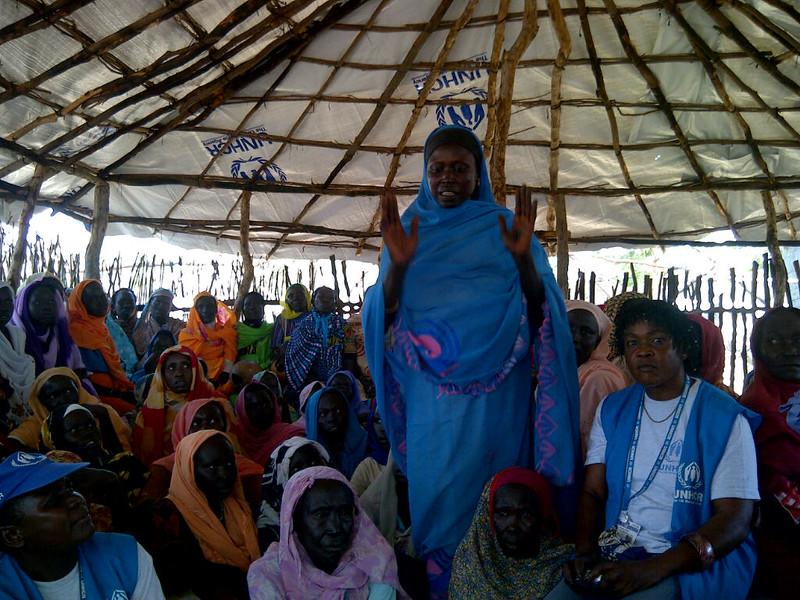 In April 2023, war broke out between Sudan’s national army and a powerful paramilitary force known as the Rapid Support Forces. Within months, it had become the largest displacement crisis on earth. Now in its fourth year, the conflict has driven more than 4.4 million Sudanese across international borders, with millions more displaced within the country itself. The United Nations Refugee Agency (UNHCR) has published its 2026 Regional Response Plan, a $1.6 billion appeal covering seven countries and 123 partner organizations.
UNHCR’s 2026 Regional Response Plan
The plan sets out how humanitarian organizations intend to support refugees and the communities hosting them across the Central African Republic, Chad, Egypt, Ethiopia, Libya, South Sudan and Uganda throughout 2026. It targets approximately 5.9 million people in total. This figure includes both refugees and 1.8 million host community members whose own resources and public services are under mounting strain.
The money requested breaks down across 10 sectors. Food security takes the largest share at around $407 million, a sum that reflects the scale of the immediate threat: one in 10 newly arrived Sudanese refugee children in Chad is malnourished on arrival. Protection, covering everything from legal documentation and asylum access to gender-based violence response and child protection, accounts for $286 million. Health care and nutrition take $238 million, shelter $100 million, water and sanitation $139 million and education $102 million. A further $132 million is allocated to livelihoods and economic inclusion, funding that reflects the plan’s broader ambition to move beyond emergency aid toward genuine self-sufficiency.
Rather than distributing food parcels and goods, the UNHCR’s 2026 Regional Response plan prioritizes giving refugees direct cash transfers wherever possible. Cash gives people dignity and choice, stimulates local economies and costs less to deliver than in-kind aid.
Transitioning Past Emergency Response
What began as an emergency response is being forced, by necessity, to evolve. The plan is explicit that the response must now bridge immediate humanitarian needs with what it calls “solutions from the start.” In this way, decisions regarding both short and long-term intervention are made with integration in mind. This means connecting refugees to national health, education and social protection systems rather than building parallel humanitarian structures that only deepen aid dependency. It means supporting host governments to let refugees work, move freely and access services. It also means engaging development banks, private sector actors and bilateral donors alongside traditional humanitarian funders.
The conflict driving all of this shows no signs of ending. Sudan was ranked the deadliest conflict in Africa in 2025, with more than 17,000 civilian deaths recorded between January and November alone. Sexual violence has been widespread. The Rapid Support Forces captured El Fasher, the last majority city in Darfur not under their control, in October 2025, triggering a fresh surge of displacement. By December, fighting had spread to Kordofan. For the millions who have already fled, return remains a distant prospect and the current picture varies considerably depending on where they are located.
Chad and Egypt
Chad carries the heaviest burden of any country for those who fled after the 2023 outbreak of fighting, hosting more than 1.3 million Sudanese refugees by the end of 2025, projected to reach 1.48 million through 2026. Most crossed from the Darfur region into Chad’s already impoverished eastern provinces. The response plan here, with the largest single-country allocation at $568 million, is tied to a government strategy that aims to turn the influx into a driver of long-term development for the region.
Egypt hosts the largest overall number of Sudanese refugees, around 1.5 million, who live in urban areas alongside Egyptian communities rather than in camps. A significant legal development came in December 2024 when Egypt passed a new asylum law, for the first time establishing a framework for a state-led national asylum system. Partners will spend 2026 supporting its implementation. Refugees currently face serious daily challenges: rising costs of living, administrative barriers and very limited access to formal employment.
Libya and South Sudan
Libya presents some of the more acute dangers. More than 538,000 Sudanese have arrived since 2023, more than 80% of them women and children, most entering through the remote desert crossing at Alkufra. Only around 70,000 have been formally registered. Without documentation, refugees cannot access services and risk arrest and deportation — more than 3,700 were deported in 2025 alone. For many, the calculation becomes whether to risk the Mediterranean. In 2025, Sudanese nationals were among the top nationalities intercepted at sea and among those arriving in Italy and Greece. The $116 million Libya allocation is, in significant part, an investment in preventing those journeys from becoming the only option.
South Sudan has perhaps the most complex humanitarian landscape of any host country. It is simultaneously managing more than 700,000 Sudanese refugees, two million of its own internally displaced people and more than 880,000 South Sudanese who were themselves refugees in Sudan and have since returned home. Climate shocks, cholera outbreaks, food insecurity and ongoing conflict compound everything. The $362 million allocation is the second largest in the plan.
Ethiopia, Uganda and the CAR
Ethiopia has maintained an open-door asylum policy throughout, receiving more than 77,000 Sudanese since 2023. It is also receiving more than 21,000 Ethiopians returning from Sudan. A recent Right to Work Directive offers refugees legal access to the labor market, a meaningful policy advance in a region where most refugees are barred from formal employment.
Uganda, despite not sharing a border with Sudan, hosts around 91,000 Sudanese as part of a total refugee population of nearly two million. Its legal framework, giving refugees the right to work, move freely and use national services, is held up internationally as a model. However, severe underfunding in 2025 forced cuts to food, health and protection programs. The 2026 plan works through a triage system: lifesaving needs first, then essential services, then longer-term resilience.
The Central African Republic (CAR) hosts around 40,000 Sudanese in remote border regions with almost no infrastructure and very limited partner presence. Armed actors crossing from Sudan, the reduced capacity of the U.N. peacekeeping mission and seasonal rains that cut off roads for months at a time make this one of the most difficult operational environments in the entire response.
The Funding Problem
Running through the entire plan raises significant concerns about money. The 2025 response was severely underfunded, and the plan does not expect 2026 to be easier. Without sustained financial support, hard-won gains will be reversed, more refugees will attempt onward movement through dangerous routes and regional instability will grow. The appeal is not only for emergency donations but for predictable, multi-year commitments — the kind that allow organizations to build systems rather than simply respond to the latest crisis.
UNHCR’s 2026 Regional Response Plan describes a humanitarian operation of enormous scale, under enormous strain, attempting something genuinely difficult: keeping millions of people alive while simultaneously trying to build the conditions in which they might one day need less help.
– Andrew Geddes
Andrew is based in Edinburgh, UK and focuses on Politics for The Borgen Project.
Photo: Flickr
