The Strengths and Limitations of Coconut Farming in Indonesia
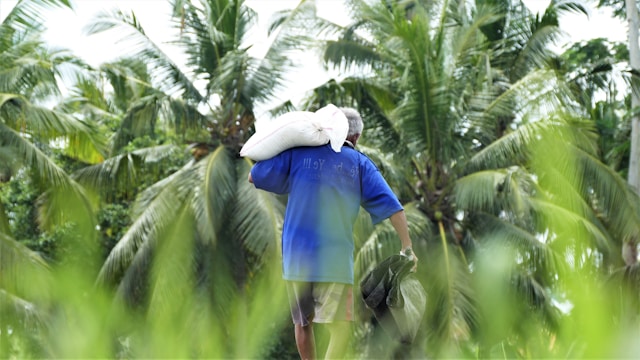 While Indonesia is the world’s top exporter of coconuts, generating more than $1 billion annually, according to upper-middle-income definitions, roughly 68% of Indonesians live in poverty. Although Indonesia and the Philippines accounted for about 67% of crude coconut oil export, coconut farming in Indonesia highlights both the strengths and limits of agriculture in reducing poverty.
The Strengths of the Indonesian Coconut Industry
Roughly 6.6 million Indonesian farmers rely on the coconut industry as their main source of income. In a country where infrastructure development is severely constrained by its island chain geography, coconut farming in Indonesia is a lifeline for the eastern region in particular. In this region, communities are spread across thousands of scattered islands.
Due to geographic isolation and limited infrastructure, 80% of livelihoods in certain areas of Eastern Indonesia rely on subsistence farming. Coconut farming in Indonesia remains accessible to rural communities, as the country’s climate supports year-round growth. Additionally, coconut crops require less fertilizer than many other crops, allowing lower-income households to cultivate small plots and harvest multiple times throughout the year.
This sector not only supports farming households but also entire rural communities. Beyond smallholder farmers, the industry sustains a wide network of livelihoods, including transport workers, market sellers and processing workers, all of whom rely on coconut production for income. As global demand for healthy alternatives and plant-based options surges, the Indonesian coconut industry is projected to grow at a faster rate in the coming years.
This growth could create new opportunities for exports, value-added production and increased income potential for smallholder farmers in Indonesia.
The Limits of the Coconut Industry
Despite its scale, coconut farming in Indonesia faces limitations that prevent many farmers from earning higher incomes. One of the most significant issues is low productivity. Coconut yields in Indonesia average around 1.1 tons per hectare, although higher-performing varieties can yield more than 2.8 tons per hectare. This is due to the use of older trees, less efficient farming methods and the continued use of lower-yield crops.
Additionally, pests, disease and land conversion make it difficult for farmers to maintain strong production, ultimately reducing their potential income. Replanting efforts also remain limited, as new coconut trees can take six to 10 years to reach full productivity. This makes it difficult for smallholder farmers to replace aging crops without facing short-term income losses.
As a result, many farmers continue relying on older trees with declining yields, reinforcing cycles of low productivity and low income. When coconut farming in Indonesia is stable, farmers often remain at the lowest level of the value chain. Most smallholders sell raw coconuts or copra rather than value-added products such as coconut oil or packaged goods.
Low Returns
A significant portion of profits is captured later in the supply chain by processors and exporters. This leaves farmers with relatively low returns. In Indonesia’s eastern archipelago, communities are spread across remote, dispersed islands. This geography limits infrastructure development, making it difficult to transport goods. Farmers in these areas often face higher transportation costs and reduced access to larger markets, forcing them to sell locally at lower prices.
Coconut farming in Indonesia is also vulnerable to price fluctuations in global markets. Coconut prices are influenced by broader vegetable oil markets, including competition with palm oil, which is often cheaper and more widely used. As the world’s largest producer of palm oil, Indonesia has historically directed more investment and policy support toward that sector, leaving coconut farming comparatively underdeveloped.
Strengthening Indonesia’s Coconut Sector
While coconut farming continues to support millions of livelihoods, these structural challenges highlight its limits. For many rural communities, the industry provides stability and income, but often at a level that sustains households rather than significantly improving long-term economic mobility. However, efforts to strengthen Indonesia’s coconut sector are already underway.
Government programs and international organizations are focusing on replanting aging trees, improving farming techniques and expanding access to value-added production. These initiatives aim to help farmers move beyond raw coconut sales and capture a larger share of the industry’s profits. At the same time, investments in rural infrastructure and market access could make it easier for farmers in eastern regions to connect with larger supply chains.
While coconut farming in Indonesia alone may not be enough to lift communities out of poverty, targeted support and modernization efforts show that the industry still holds significant potential to improve livelihoods across the country.
– Kale Overton
Kale is based in Ames, Iowa, USA and focuses on Good News and Politics for The Borgen Project.
Photo: Unsplash
