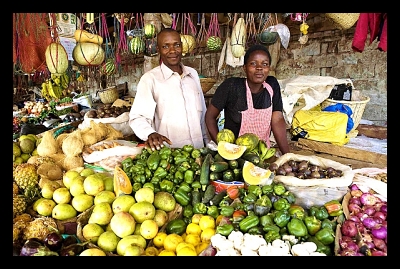
The Global Food Security Index ranks 105 countries according to their access to affordable, available and quality food. The index was launched in 2012 by The Economist – Intelligence Unit (EIU) with sponsorship from the DuPont Corporation. The index is a dynamic quantitative and qualitative scoring model, constructed from 25 unique indicators which measure drivers of food security across both developing and developed countries.
Food security is defined as the state in which people at all times have physical, social, and economic access to sufficient and nutritious food that meets their dietary needs for a healthy and active life based on the definition established at the 1996 World Food Summit. The overall goal of the study is to assess which countries are most and least vulnerable to food insecurity through the categories of Affordability, Availability, and Quality and Safety.
Beginning in October 2012, the EIU began updating the index on a quarterly basis to adjust for the impact of fluctuating food prices. This food price adjustment factor is applied to each country’s Affordability score and is based on changes in income growth and global and domestic food prices. Over time, countries’ scores improve if food prices fall, and deteriorate if prices rise. The country-specific adjustments and their goal of translating fluctuations in global food prices to the national level result in different levels of score changes for each country, with vulnerable countries hurt the most by rising prices.
All scores are normalized on a scale of 0-100 where 100=most favorable. There are scores based on three categories: 1. Affordability, 2. Availability, and 3. Quality and Safety.
As of the first quarter of 2013, the top three scores and the bottom three scores in each category are as follows:
Affordability
Top three countries: USA (95.2), Australia (92.4), Switzerland (91.5)
Bottom three countries: Madagascar (20.4), DR Congo (17.4), Chad (14.4)
Availability
Top three countries: Denmark (92.4), Norway (91.8), France (88.3)
Bottom three countries: Niger (25.0), Haiti (22.4), Chad (21.7)
Quality & Safety
Top three countries: France (90.2), Israel (90.2), USA (89.3)
Bottom three countries: Togo (22.7), Ethiopia (20.0), DR Congo (16.1)
In a report titled ‘The Global Food Security Index 2012: An assessment of food affordability, availability and quality’, the EIU found that there is a positive correlation between countries with good food security and their related policies. Example policies include improving access to financing for local farmers, developing food safety net programs like school feeding programs, investing in agricultural technology, research & development, and promoting nutrition awareness.
Other key findings from the report :
- The U.S., Denmark, Norway and France are the most food-secure countries in the world.
- The food supply in advanced countries averages 1,200 calories more per person per day than in low-income economies.
- Most food secure nations score less well for micronutrient availability.
- Several of the sub-Saharan African countries that finished in the bottom third of the index, including Mozambique, Ethiopia, Rwanda, and Nigeria, will be among the world’s faster-growing economies during the next two years.
- China experienced the least volatility of agricultural production during the last 20 years, and three North African countries—Morocco, Tunisia and Algeria—among the most.
- Landlocked countries fared nearly as well as those with a coastline.
– Maria Caluag
Source: Global Food Security Index
Photo: UN Earth News

New Goals for the Fourth World
This past week, the UN considered a set of recommendations for reworking the Millennium Development Goals at their headquarters in New York. This time, however, a new group wants a seat at the discussion: the extreme poor.
The Fourth World, as it is called, has always been home to the population most at-risk and, unfortunately, the most difficult to help. Juan Baltazar, a former street-dweller in Bolivia and current development researcher, says he never knew about development efforts when he was homeless.
ATD Fourth World, an organization dedicated to studying and eradicating extreme poverty, compiled a report based on a three-year action-research program across twelve countries and involving over 2,000 men and women like Baltazar. Entitled “Towards Sustainable Development that Leaves No One Behind: The Challenge of the Post-2015 Agenda”, the report lists the five most important new development goals based on suggestions from the extreme poor. They are:
1. Leave no one behind: Fighting discrimination based on race, gender, and class is the most urgent need of those living in extreme poverty to access education, jobs, and so forth.
2. Introduce people living in poverty as new partners in building knowledge on development: The best way to assist the highly marginalized is to bilaterally share information and support to foster input and agency on their part.
3. Promote decent jobs and social protection: Policies that drive job-creation and fair social outcomes are essential to helping the poor help themselves.
4. Achieve education and training for all: Education must be relevant, equitable, and accessible to everyone in order to provide a firm social foundation for the “Fourth World.”
5. Promote participatory governance: Democracy is key to any sustainable approach to poverty alleviation, and the voices of the disempowered must be heard in order to help them effectively.
The report seeks to shift the emphasis in development from economic and health benchmarks to aligning policy with human rights standards. Pursuant to that, ATD believes that no real progress can be made without hearing the contributions of the poor themselves.
– John Mahon
Sources: Devex, ATD Fourth World
Photo: Amazonaws
What Does BRAC USA Do?
BRAC USA is part of the largest international development program in the world, BRAC, which aids the world’s extreme poor through sustainable solutions to poverty. Though the program focuses on an American audience, its effect is felt globally. By raising awareness in the United States and other developed nations, BRAC USA allows Americans and others to invest in their own future, as well as the futures of those in extreme poverty.
BRAC is an international development organization that focuses on alleviating poverty and issues related to poverty in 11 developing nations across the globe. Their organization model concentrates on empowerment of the poor through local, community-based programs, such as “barefoot lawyers,” a project that increases awareness legal rights and delivers services to the doorsteps of the poor. This program helps impoverished individuals recognize and defend their legal rights, including vital property rights.
Most important to its continued success, the international organization takes an approach mindful of establishing self-sustainable programs to better equip target communities, both women and farmers, to continue to address the causes and symptoms of extreme poverty and take matters into their own hands. The organization’s micro-financing program offers micro-loans to women to promote economic entrepreneurship in local communities and revitalize local economies, while also addressing issues related to gender inequality.
BRAC USA, a sub-group of BRAC, reaches out to Americans to encourage support for the global program in three ways: public education, strategic and program services, and grant-making. In the context of public education, the United States-based BRAC branch employs social and traditional media, as well as speaking engagements and word of mouth initiatives to increase American awareness of global poverty and the organization’s work. Some of the strategic and program services supported by BRAC USA include assistance with design and implementation of international development projects in developing nations, alongside enabling access to financing that makes these projects feasible. This assistance also takes the form of grants, made possible by the American program.
Programs like BRAC USA that encourage sustainable development in developing nations actually give back to developed nations, like the United States. By promoting development abroad, the program increases the likelihood that target nations will foster a market for developed-world goods. That is, by creating sustainable markets, we also create sustainable consumers that are historically proven to direct their newly-acquired purchasing power toward the nation providing initial development aid. To encourage investment in our own economy, we have all the more reason to encourage market development and a sustainable economy in developing nations abroad.
– Herman Watson
Sources: BRAC USA, The Borgen Project
The Story of Iraq’s Baby Noor
Baby Noor was found at only 3 months old. She had been born with a severe case of Spina Bifida, a spinal cord defect. Without medical treatment, the defect would certainly kill her. In war-torn Iraq, proper medical care would be next to impossible to find.
The soldiers immediately wanted to move her to a place where she could find the care she needed. Col. Brown urged the U.S. Army to help the child. His persuasion worked. Soon Noor was on a C-130 transport plane with her father and grandmother en route to Atlanta, Georgia. It was there where doctors successfully operated and treated Noor’s Spina Bifida. During her stay in the United States, Baby Noor charmed the world. Photos of her smile were soon spread across television screens and newspapers. “Iraq’s Miracle Baby” enthralled the country.
Noor returned to Baghdad six months later in June 2006. While life may have seemed blissfully hopeful in Atlanta, reality soon set in. For a poor family, caring for a child with special needs was extremely difficult. Noor was paralyzed from the waist down. She was prone to urinary tract infections, and she had headaches caused by the shunt doctors inserted into her brain to collect fluid buildup. Noor was also quickly running out of medical supplies, and her family could not afford to repurchase them.
In addition to the challenges of raising a special needs child, Noor’s family also faced retribution for their association with Americans. Her father claims that he was kidnapped and accused of spying by men associated with Al Qaeda who demanded a ransom from the poor family.
While Noor was growing up, Col. Brown never forgot about her, wondering what happened to the child he had rescued. Then one day, Brown saw CNN’s story “The Unfinished Miracle of Baby Noor.” As it turns out, readers had responded to the story of Noor by donating money to Childspring International, the very same charity that helped Noor stay in the US the first time. With the money collected, Childspring was able to purchase a two-year supply of medical equipment, including a wheelchair and many children’s toys.
Seeing this as the perfect opportunity to reconnect with Noor, Brown stepped in to help ship the large package to Baghdad. Through his connections with the U.S. Embassy, Brown was able to enlist the help of USAID’s Iraq Access to Justice Program and the Iraqi Alliance of Disabilities Organization. Along with CNN staffers, these groups coordinated to bring the shipment to Noor’s home in Baghdad.
Is Noor’s story finished then? Certainly not, Noor will continue to need medical supplies for the rest of her life. However, the story of Iraq’s miracle baby is not only special because she was saved once; it is truly a miracle because her story continues today.
– Grace Zhao
Sources: CNN, Viral Nova
Photo: Flickr
Can GMOs End Global Hunger?
While genetically modified (GM) foods have become a hot topic in the United States, they have received enormous attention in Africa.
At the same time that the United States has begun to debate mandatory labels for GM foods, scientists, farmers, and international organizations in Africa are pressuring governments to relax restrictions on GM technology.
This disparity in opinions towards GM crops mirrors the similar disparity of interests between the developed and developing world.
Despite the U.S.’s concern that GM crops will require more pesticides which contaminate and harm the environment, international relief organizations argue that GM crops can potentially alleviate plant diseases, the effects of climate change, and other grave threats to food production that African farmers may face.
In countries like Uganda, most people are farmers living off of their own crops and thus are more vulnerable to invasive pests and weather changes than Americans who shop in supermarkets and are more distanced from their food production.
The banana provides one example of a way that GM crops can help Uganda farmers and consumers. In the past year, “bacterial wilt disease has been cutting banana yields from 30 to 50 percent in Uganda.” When one considers that Ugandans consume up to one pound of bananas each day, it’s clear that this decrease in crop output means disastrous consequences for the Ugandans’ diet.
Recently, the National Agricultural Research Organization genetically engineered a bacteria-resistant version of the banana by breeding the fruit with pepper genes. Unless the Ugandan government passes a law that allows for use of GM crops, however, the disease-resistant banana hybrid will remain in the lab, untouched.
Though GM foods do have some clear benefits, they also come with disadvantages that prevent Ugandan farmers from fully supporting the GM law. Many Ugandans practice organic farming that rejects the use of pesticides and fertilizers because they can consequently damage other organisms like bees and fish that are important national exports.
GMOs can improve developing nations’ economies and prevent chronic hunger, but they may harm the environment and cultural traditions of these community farms in the process. This conflict of interest has many Ugandan farmers—and farmers around the world who have a stake in GM crop production—on edge, as they anxiously wait to see whether the futuristic potential of GM foods will be harnessed or rejected.
– Alexandra Bruschi
Source: NPR, FAO, International Society for Horticultural Science, National Banana Research Program
Photo: Tumblr
How a Teenage Soccer Player Provides Clean Water
Over a year ago, Jake Yonally of Santa Barbara joined the youth movement for global water access, Hands4Others (H4O). He and his teammates in the Santa Barbara Soccer Club even went on to create their own chapter, Soccer4Water. Hands4Others is a group of young people who came together to look past their own lives and help those in need. It was started by 3 local teenagers after they witnessed the disparity between those with water and those without. Their goal is to provide sustainable access to clean water all across the world by helping more than two million people in 500 villages by 2015. They have already helped over 100,000 people in 10 countries and are quite capable of executing their goals.
Presidio Sports, Santa Barbara’s sports news site, interviewed Jake when he came back from his most recent trip to Honduras. There he and others from Hands4Others worked for a week to install safe water systems and latrines for the people of various villages across South America. Honduras is among the poorest countries in Latin America, with 60% of its population living below the poverty line. And where there is poverty, there is a lack of clean drinking water.
Jake was not just building while he was in Honduras, though. He and his teammates also spent time playing soccer with children in the village with balls donated by the soccer club. He stated, “I love to connect with people through soccer and help others at the same time.” His coach, family, and the board members of the soccer club all stand behind his dream of helping others.
Jake, his teammates, and other members of their soccer club raised money in support of his goal to get a total of $10,000 to provide an entire clean water system for a village during the Hands4Others Walk4Water last June in Santa Barbara. Jake has also raised money by scoring goals in soccer matches, sending out direct appeal letters, and working in his family’s olive grove in his free time. So far, he has raised 60% of his goal and hopes to reach the full amount by the end of the summer.
Without the assistance of people like Jake and his team, 9 million people will die from a lack of clean water to drink this year alone. But when someone stands up and decides they will no longer accept the idea that so many people live in poverty, we see real sustainable change take place.
– Chelsea Evans
Sources: Presidio Sports, Hands4Others, World Vision
What is the Global Food Security Index?
The Global Food Security Index ranks 105 countries according to their access to affordable, available and quality food. The index was launched in 2012 by The Economist – Intelligence Unit (EIU) with sponsorship from the DuPont Corporation. The index is a dynamic quantitative and qualitative scoring model, constructed from 25 unique indicators which measure drivers of food security across both developing and developed countries.
Food security is defined as the state in which people at all times have physical, social, and economic access to sufficient and nutritious food that meets their dietary needs for a healthy and active life based on the definition established at the 1996 World Food Summit. The overall goal of the study is to assess which countries are most and least vulnerable to food insecurity through the categories of Affordability, Availability, and Quality and Safety.
Beginning in October 2012, the EIU began updating the index on a quarterly basis to adjust for the impact of fluctuating food prices. This food price adjustment factor is applied to each country’s Affordability score and is based on changes in income growth and global and domestic food prices. Over time, countries’ scores improve if food prices fall, and deteriorate if prices rise. The country-specific adjustments and their goal of translating fluctuations in global food prices to the national level result in different levels of score changes for each country, with vulnerable countries hurt the most by rising prices.
All scores are normalized on a scale of 0-100 where 100=most favorable. There are scores based on three categories: 1. Affordability, 2. Availability, and 3. Quality and Safety.
As of the first quarter of 2013, the top three scores and the bottom three scores in each category are as follows:
Affordability
Top three countries: USA (95.2), Australia (92.4), Switzerland (91.5)
Bottom three countries: Madagascar (20.4), DR Congo (17.4), Chad (14.4)
Availability
Top three countries: Denmark (92.4), Norway (91.8), France (88.3)
Bottom three countries: Niger (25.0), Haiti (22.4), Chad (21.7)
Quality & Safety
Top three countries: France (90.2), Israel (90.2), USA (89.3)
Bottom three countries: Togo (22.7), Ethiopia (20.0), DR Congo (16.1)
In a report titled ‘The Global Food Security Index 2012: An assessment of food affordability, availability and quality’, the EIU found that there is a positive correlation between countries with good food security and their related policies. Example policies include improving access to financing for local farmers, developing food safety net programs like school feeding programs, investing in agricultural technology, research & development, and promoting nutrition awareness.
Other key findings from the report :
– Maria Caluag
Source: Global Food Security Index
Photo: UN Earth News
Smallholder Farming in Africa: 5 Major NGOs
Almost three-quarters of Africans rely on smallholder farming for their livelihood, yet one-third of all Africans go hungry. To meet that need, those farmers must increase their production dramatically over the next 40 years—and most of the world’s uncultivated land is actually in Africa. Clearly, smallholder farming in Africa is a big deal. Want to know the major players in the development of African farming? Read on.
1. TechnoServe
This is one of those organizations that has been working behind the scenes, primarily in Africa, for decades. Since the 1960’s, TechnoServe has been quietly targeting failing food markets, identifying unmet demand in those markets, finding the businesses that can meet that demand, and partnering with those businesses so that they grow and uplift their communities. Their emphasis is on partnership—they want to find the locals already doing great work and help them do it better. In 2011 alone, they helped their partners collectively earn $315 million in revenue and impacted over 2.5 million people’s lives in over 30 countries as a result.
2. One Acre Fund
This is the organization that claims to, within three years, represent the largest network of African smallholder farmers. How? They predicate their entire model on one simple idea: when a farmer increases their harvest, they lifts themselves and their community out of hunger and poverty. Toward that end, the organization offers a comprehensive “market-in-a-box” that lends farmers crucial agricultural inputs (seed and fertilizer), trains them how to use it, and connects them with markets to sell their yield. Their simple model has already reached over 60,000 farmers in Kenya, Rwanda, and Burundi, and they project that they will reach 1.4 million farmers by 2020.
3. Farm Africa
One of the leading African agricultural development organizations, Farm Africa does it all: bringing farmers better tools, showing them how to double or triple their harvest, and training them how to navigate the market. What makes them different? They say it is their unique, compound approach of agricultural innovation and marketing savvy. Because they are highly specialized in farming, they have a wide inroad into the development of Africa’s unfarmed land and untrained famers. In 2012 alone, they increased coffee crop revenue for farmers in Ethiopia by 600% and helped 30,000 people in Tanzania double their crop yields.
4. Self-Help Africa
If you really want to know what’s going on in the African farming world, you need to know about Self-Help. For over 25 years, this organization has been supporting farming entrepreneurs in Africa with microcredit programs, enterprise development, community cooperatives, access to inputs, and policy advocacy. Because the success of smallholder farmers lies at the heart of so many poverty-related issues in Africa, their mission is to empower Africa’s rural population. They work in nine countries across Africa and have reached millions of Africans with their services.
5. Practical Action
Yes, the name is broad—but so is the organization. Although Practical Action is one of the great champions of agro-economic development in Africa, it works all over the world. Its focus is “technology justice”, which is the equitable application of technology for positive social impact. So what are they doing in African agriculture? The answer: radical community development, policy advocacy focused on food rights, and over a dozen groundbreaking agricultural innovations, to say the least.
– John Mahon
Sources: IPS, Practical Action, One Acre Fund, Farm Africa, TechnoServe
Photo: The Guardian
Feed My Starving Children
Feed My Starving Children is a Christian nonprofit organization that aims to feed the hungry. The organization uses volunteers to hand-pack cost effective and easily shippable meals to malnourished children. These packages are then sent to 70 countries around the world.
Feed My Starving Children was first established in 1987 after businessman Richard Proudfit went on a mission trip to Honduras. There he was challenged by the hunger he saw and felt compelled to aid the starving. From then on, Proudfit and many others would work to create the perfect meal plan for the hungry.
By 1993, Cargill food scientist Dr. Richard Fulmer partnered with other scientists from Pillsbury and General Mills to develop “Fortified Rice Soy Casserole” for starving children. For the Feed My Starving Children organization, this nutritious mixture would be known as MannaPack, named after the miraculous food in the Bible. Next in the process would be the hunt for the ideal packaging. In 1994, 1 million plastic bags were donated by Green Giant. Soon, the first shipments of meals were sent off to Rwanda, Haiti, Belarus, and Paraguay.
The finalized product is made up of four primary parts: rice, extruded soy nuggets for protein, vitamins and minerals and vegetarian flavoring, and dehydrated vegetables. The bag of food is simple to prepare and provides a many life-saving calories and nutrition to starving children.
Since its early days, Feed My Starving Children has also developed other packaged meals such as its MannaPack Potato-W formula for weaning children and MannaPack Potato-D, the first and only food developed to help people recover from diarrhea. Furthermore, in 2012 alone, the organization has sent out 153,000,000 meals to countries around the world. One bag of food, which contains meals for 6 children, costs only $1.32 to produce.
Today Feed My Starving Children is one of the nation’s most trustworthy charities. It has earned Charity Navigator’s highest rating for eight straight years.
– Grace Zhao
Sources: Feed My Starving Children, Charity Navigator
Photo: Pitch Engine
Jennifer Lopez Criticized for Tribute to Dictator
Recently Jennifer Lopez traveled to Turkmenistan to sing in an event hosted by the China National Petroleum Corp., and, in participating, inadvertently praised the nation’s repressive leader. Although it wasn’t on the set list for the evening, at the last minute J. Lo was asked by the executives of the company to sing “Happy Birthday” to Gurbanguly Berdimuhamedow, the leader of Turkmenistan, who was attending the concert. Human Rights Watch has listed the dictator as one of the most repressive leaders in the world.
Lopez herself has worked on many philanthropic projects involving human rights. Recently she worked with Amnesty International to curb violence against women in Mexico. She also made an appearance for the Children’s Defense Fund and is currently working for increasing health care in Panama. Despite being involved with several human rights organizations to improve life for others, she claimed that she was unaware of the repressive conditions in Turkmenistan.
J. Lo’s situation should be a reminder to all of us to raise awareness and keep in touch with what is going on around the world. It is important for both cultural icons and ordinary citizens to learn about which countries struggle with obtaining even the most basic rights, and discover the reasons behind those struggles.
– Katie Brockman
Sources: ABC News, Variety
Photo: University UN
Global Links 101
Global Links is a medical relief organization that is committed to promoting both environmental steward shipment and better healthcare in poor communities. Each year, hospitals in the United States wind up with hundreds of tons of “medical surplus” supplies. Usually, these still very useful materials are simply thrown into landfills. Global Links takes the surplus from the U.S. healthcare industry and delivers it to under-served communities that lack the supplies and equipment necessary for proper medical care.
Global Links’ model of recycling and reusing medical equipment connects two social issues: excess waste and lack of resources in developing areas. In linking the two, Global Links is able to convert an environmental burden into a beneficial tool.
The Global Links model breaks down into 5 simple steps:
1. Global Links Staff assess nine program countries and meet with health authorities, medical staff, and Pan American health organization officials. The organization does this in order to evaluate and ensure medical donations would be useful to that location.
2. Global Links trucks visit hospitals that have been saving surplus medical supplies and equipment for the organization.
3. At a sorting facility, the donated material is sorted and shelved. Volunteers organize supplies and check for expiration dates. Materials are also cleaned and re-vamped if necessary.
4. Volunteers pack supplies into boxes and staff members load them onto a 40-foot shipping container.
5. The shipping containers are sent to communities that need the supplies.
Since its founding in 1989, the organization has shipped over 410 tractor-trailer sized loads of medical material to developing countries. These containers have contained over 6 million pounds of equipment and material that otherwise would have been dumped into landfills. The value of the materials exceeds $173 million.
– Grace Zhao
Sources: Global Links, Charity Navigator
Photo: Global Links