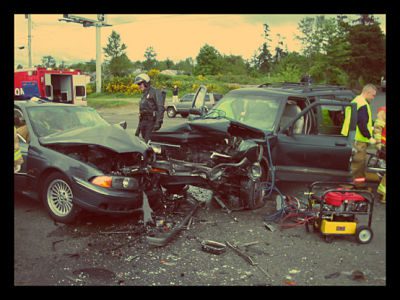
According to the World Health Organization, approximately 1.24 million people die every year on the world’s roads. As well as 20 to 50 million incur nonfatal injuries as a result of road traffic crashes. The WHO report, ‘Global Status Report on Road Safety 2013: Supporting a Decade of Action,’ attributes road traffic casualties to be the eighth leading cause of death globally with an impact similar to that caused by many communicable diseases, such as malaria.
Current trends suggest that, by 2030, traffic accidents will become the fifth leading cause of death unless urgent action is taken. While the report offers recommendations that focus on legislative reforms, there are also corporate examples, like that of Chevron’s, which help promote awareness of road safety.
Road traffic deaths are the leading cause of death for young people aged 15–29 years, and as a consequence, take a hefty toll on those entering their most productive years. Economically disadvantaged families are hardest hit by both direct medical costs and indirect costs such as lost wages that result from these injuries.
At the domestic level, road traffic injuries result in considerable financial expenses, especially to developing economies. “Road traffic injuries are estimated to cost low- and middle-income countries between 1–2 percent of their gross national product, estimated at over US$ 100 billion a year,” which is a serious impediment to poverty eradication.
Only 28 countries, representing 449 million people (7 percent of the world’s population), have adequate laws that tackle all five risk factors for road traffic (speed, drunk driving, helmets, seat-belts and child restraints).
The WHO report recommends that all governments enact legislation to make the roads safer and invest money and human resources to help enforce those traffic laws. Pedestrian safety should also be considered when planning for infrastructure.
The Global Road Safety Partnership (GRSP) is an organization supporting the WHO report. Its role is to create and support multi-sector road safety partnerships that are engaged with front-line, good practice, road safety interventions in countries and communities throughout the world. The partnerships include businesses. Current business partners with the GRSP include Bridgestone, Michelin, BP, Chevron, Honda, Shell, Nestle and Toyota.
Many businesses support road safety to benefit their corporate image, to develop new markets through demonstration projects, or to brand their products as safe. Also, corporate sponsorships have been used for social marketing campaigns to increase the public’s awareness of road safety. In the end, businesses benefit from the lower costs associated with fewer road crashes and safer driving practices.
One American company, Chevron, has implemented what they call the Arrive Alive program. The program strives to protect people living in high-risk areas from traffic related injuries and fatalities.
Depending on the country’s needs, Chevron will form a coalition between non-profit organizations, other companies and the local government. The Arrive Alive coalitions have made significant strides on two continents and in four countries since its inception in 2004.
A coalition in Nigeria founded in 2006 advocated for stricter regulations on okada (motorcycle) riders. That year, laws went into effect to regulate the operation of okadas.
To address the 12,000 lives lost annually on South Africa’s roadways, Chevron formed another coalition to implement a publicity campaign aimed at the most vulnerable pedestrian population – youth and teens. Extensive use of poetry in print, radio and billboard communication directed messages towards youth about irresponsible road behavior and its consequences.
– Maria Caluag
Sources: WHO, GRSP, Chevron
Photo: My Legal World

Will Botswana Be Africa’s Success Story For Long?
For a sparsely populated and landlocked nation in the middle of the Kalahari Desert, Botswana has achieved much in terms of social and economic development. The country has experienced stable economic growth since claiming independence in 1966. Unlike many other African nations, Botswana is not frustrated by political instability and widespread corruption. In addition, the government has long championed environmental stewardship and sustainable tourism. For now, Botswana remains one of Africa’s success stories.
But the nation is confronting a range of near and long-term problems that will require innovative solutions. First, Botswana is struggling to diversify its economy. Diamond exports comprise nearly 50 percent of government revenues and more than 70 percent of the nation’s export earnings. In last year’s State of the Nation address, President Ian Khama said, “Dependency on anything is never healthy.”
Sensing the consequences of this dependency, the government is initiating programs to bolster other industries such as agriculture, tourism and textile manufacturing. They have also created the Citizen Entrepreneurial Development Agency, which provides low-cost financing and mentoring programs for aspiring business owners. To date, there is little evidence that these programs are stimulating Botswana’s economy. Many economists believe that its proximity to South Africa will make it difficult for Botswana to successfully compete in global markets.
For years, Botswana’s unemployment rate has exceeded 15 percent. Even graduates of Botswana University have had trouble finding jobs that are commensurate with their skills and education. Many well-qualified young people are competing for a small pool of jobs. This dilemma contributes to Botswana’s growing poverty rate, which is currently just above 20 percent. To combat the problem, the government has increased expenditures on social programs, which more than doubled between 1997 and 2005.
Increased funding of social programs is the natural result of an expanding government. In 2005, the average wage of government workers exceeded those in the private sector by more than 40 percent. This disparity between the public wage and private wage has created a wage reservation, whereby people in the private sector believe they should be paid the same as public sector employees. For this reason, many Batswana refuse to seek employment and instead rely solely on the government’s social programs.
Botswana has achieved exceptional economic improvement since 1966. But reliance on diamond mining and government social programs is undermining the country’s ability to sustain economic growth. Appropriate policies should be implemented to diversify revenues, increase private participation in the labor force and reduce dependency on social programs. Otherwise, Botswana’s success could be in jeopardy.
– Daniel Bonass
Sources: Council on Foreign Relations, African Economic Outlook, International Monetary Fund
Photo: Telegraph
Top Five Bill Gates Quotes
This past May, Bill Gates made headlines again when he reclaimed the title of “World’s Richest Man.” According to the Bloomsberg Billionaires Index, Gates had a net worth of nearly $73 billion. Gates’ groundbreaking advancement of computer technology has long established him and his company, Microsoft, as household names during the last three decades.
Unlike his contemporaries, Gates is not one to lavishly spend his money. Instead he and his wife, Melinda Gates, are fervent believers of the mantra, “with wealth comes responsibility.” The power couple established the Bill & Melinda Gates Foundation in 1997 to address the issues of global poverty and disease, as well as those of domestic education and systemic inequality. For nearly two decades the foundation has worked to eradicate everything from malaria to the recreational use of tobacco. To date, Gates has donated almost $30 billion to the foundation.
Gates, however, is not only a man of great action but also of sound philosophy. His belief in a harmonious balance between philanthropy and capitalism, as well as his faith in government action and public policy as ideal agents for social change, are awe-inspiring. Hopefully, with Gates’ continued success as both a business mogul and humanitarian leader, more elite members of America’s top 1 percent will learn to share the wealth.
1. “I believe that if you show people the problems and you show them the solutions they will be moved to act.”
2. “People always fear change. People feared electricity when it was invented, didn’t they? People feared coal, they feared gas-powered engines. There will always be ignorance, and ignorance leads to fear.”
3. “You know capitalism is this wonderful thing that motivates people, it causes wonderful inventions to be done. But in this area of diseases of the world at large, it’s really let us down.”
4. “The Internet is becoming the town square for the global village of tomorrow.”
5. “Governments will always play a huge part in solving big problems. They set public policy and are uniquely able to provide the resources to make sure solutions reach everyone who needs them. They also fund basic research, which is a crucial component of the innovation that improves life for everyone.”
– Melrose Huang
Read quotes about global poverty.
Read humanitarian quotes.
Sources: Bill & Melinda Gates Foundation, USA Today, BrainyQuote
Photo: Techno Crates
LifeStraw Providing Safe Drinking Water
900 million people in the world are without access to safe drinking water. This a serious problem which the world is trying to address in the Millennium Development Goals (MDGs). A product developed by the Swiss-based company Vestergaard Frandsen is making great progress towards water sanitation. The product is called LifeStraw. It is a 25 cm straw that purifies water by simply sucking on the product, like a straw. LifeStraw uses no chemicals when it purifies water.
LifeStraw comes in two different sizes; the LifeStraw can provide 1000 liters of safe drinking water, and LifeStraw Family can provide 18,000 liters of drinking water. The LifeStraw removes 99.9999% of waterborne bacteria and 99.9% of parasites. However, the LifeStraw does not filter out heavy minerals or desalinate water.
LifeStraw could provide safe drinking water to many impoverished people who would otherwise suffer from the many diseases unsanitary drinking water causes. The most prevalent illness caused by unsanitary drinking water is diarrhea. Nearly one in five child deaths – about 1.5 million each year – are due to diarrhea. Diarrhea kills more young children than AIDS, malaria and measles combined.
LifeStraw uses the point-of-use (POU) approach to bring about effective, and affordable drinking water. The philosophy of POU is that purification of drinking water at the point of consumption is much more cost-effective and disease preventative. By purifying water in the household it reduces the risk of water being contaminated at other points during the purification process. POU empowers people to control the quality of their own drinking water. In the developed world, household water-quality interventions can reduce diarrhea morbidity by more than 40%.
The LifeStraw currently costs $20 in the US, but it is subsidized and made cheaper for those in need. LifeStraw was distributed to those in need during the 2010 Haiti earthquake, the 2010 Pakistan floods, and the 2011 Thailand floods. LifeStraw won the “Best Invention of 2005 Award” by Time Magazine and the 2008 Saatchi and Saatchi Award for “World Changing Ideas.”
LifeStraw is providing hundreds of thousands with affordable drinking water and is making a tremendous dent in the MDG to provide safe drinking water to all.
– Catherine Ulrich
Sources: PRINKA, The Daily Star
Photo: Cool Material
Crop Price Insurance for Farmers in Ghana
According to Innovations for Poverty Actions (IPA), 50 percent of the rural population in Ghana lives in poverty. “In the Eastern Region, where the Mumuadu Rural Bank (MRB) operates, an estimated 70 percent of households make a living in the agricultural sector, but agricultural loans make up only 2 percent of the bank’s loan portfolio.”
Why? Because farmers are reluctant to take on loans out of fear that fluctuations in crop prices might lead them to default, while banks worry that the risks associated with farming might fall back on them.
Price fluctuations due to factors external to farm-holding directly affect farmers, who often barely have enough to pay for their own family’s survival. Baseline surveys suggest that there is an unexploited market for crop insurance as “farmers in the area served by MRB express that they would be willing to pay to guarantee a certain minimum crop price.”
Nevertheless, in addition to their reluctance to provide loans due to the associated risks, banks also face incomprehension from farmers because “insurance is not a commonly understood concept among farmers in the region.”
In coordination with the MRB, a system of loans, including a crop insurance parameter, was introduced in the region in order to ensure a form of insurance against low crop prices. The system went like this: if the price for eggplant fell below the 10th percentile of historical prices and the price of maize fell below the 7th percentile of historical prices, the bank would forgive 50 percent of the loan and interest payments.
The goal of introducing price insurance for maize and eggplant was to enable farmers to reduce the risk of investing in agricultural input and improve their harvesting capacity and technology. Eggplant and maize were targeted because both plants are widely grown in the region and have had volatile, but well documented prices.
The average loan size is $159, a substantial cash flow for a farmer in Eastern Ghana. The project was conducted at no cost among 84 farmers, and researchers at the MRB have been able to draw conclusions from the crop insurance experiment.
Although the sample size was small, crop insurance tended to be adopted by older people who had a record of borrowing. The reduced success of crop insurance might be explained by a lack of understanding of the risks and benefits associated with loans, or by the fact that price fluctuations might not be as important for investment as had so far been believed.
The MRB experiment conducted in Ghana paves the way toward improving agriculture in poor rural regions. Once the ideal loan and insurance system is established and once farmers are fully able to understand it, there is hope that farmers might invest in long-lasting technologies that will considerably improve their harvesting capacity. But, for farmers to make long-term investments, crop price fluctuation risks must be reduced to the maximum.
– Lauren Yeh
Sources: Innovation for Poverty Action, SOW
Photo: The Guardian
Arrive Alive by Chevron Drives Home Road Safety
According to the World Health Organization, approximately 1.24 million people die every year on the world’s roads. As well as 20 to 50 million incur nonfatal injuries as a result of road traffic crashes. The WHO report, ‘Global Status Report on Road Safety 2013: Supporting a Decade of Action,’ attributes road traffic casualties to be the eighth leading cause of death globally with an impact similar to that caused by many communicable diseases, such as malaria.
Current trends suggest that, by 2030, traffic accidents will become the fifth leading cause of death unless urgent action is taken. While the report offers recommendations that focus on legislative reforms, there are also corporate examples, like that of Chevron’s, which help promote awareness of road safety.
Road traffic deaths are the leading cause of death for young people aged 15–29 years, and as a consequence, take a hefty toll on those entering their most productive years. Economically disadvantaged families are hardest hit by both direct medical costs and indirect costs such as lost wages that result from these injuries.
At the domestic level, road traffic injuries result in considerable financial expenses, especially to developing economies. “Road traffic injuries are estimated to cost low- and middle-income countries between 1–2 percent of their gross national product, estimated at over US$ 100 billion a year,” which is a serious impediment to poverty eradication.
Only 28 countries, representing 449 million people (7 percent of the world’s population), have adequate laws that tackle all five risk factors for road traffic (speed, drunk driving, helmets, seat-belts and child restraints).
The WHO report recommends that all governments enact legislation to make the roads safer and invest money and human resources to help enforce those traffic laws. Pedestrian safety should also be considered when planning for infrastructure.
The Global Road Safety Partnership (GRSP) is an organization supporting the WHO report. Its role is to create and support multi-sector road safety partnerships that are engaged with front-line, good practice, road safety interventions in countries and communities throughout the world. The partnerships include businesses. Current business partners with the GRSP include Bridgestone, Michelin, BP, Chevron, Honda, Shell, Nestle and Toyota.
Many businesses support road safety to benefit their corporate image, to develop new markets through demonstration projects, or to brand their products as safe. Also, corporate sponsorships have been used for social marketing campaigns to increase the public’s awareness of road safety. In the end, businesses benefit from the lower costs associated with fewer road crashes and safer driving practices.
One American company, Chevron, has implemented what they call the Arrive Alive program. The program strives to protect people living in high-risk areas from traffic related injuries and fatalities.
Depending on the country’s needs, Chevron will form a coalition between non-profit organizations, other companies and the local government. The Arrive Alive coalitions have made significant strides on two continents and in four countries since its inception in 2004.
A coalition in Nigeria founded in 2006 advocated for stricter regulations on okada (motorcycle) riders. That year, laws went into effect to regulate the operation of okadas.
To address the 12,000 lives lost annually on South Africa’s roadways, Chevron formed another coalition to implement a publicity campaign aimed at the most vulnerable pedestrian population – youth and teens. Extensive use of poetry in print, radio and billboard communication directed messages towards youth about irresponsible road behavior and its consequences.
– Maria Caluag
Sources: WHO, GRSP, Chevron
Photo: My Legal World
Human Trafficking in Myanmar
Despite recent governmental actions to curb modern day slavery in Myanmar, human trafficking remains a common practice throughout the country.
Human trafficking takes on various forms within Myanmar, including forced labor, the use of child soldiers for the Myanmar government, and sex trafficking and prostitution. The most common countries of trade include Thailand, China, Malaysia, Bangladesh, and Pakistan. China and Thailand stand out as the two countries with the greatest volume of human trafficking with Myanmar, often with people sent to work in fishing villages, mines, and factories or as a prostitute or a bride.
Myanmar has been traced as both a source country for producing modern day slaves and a destination country to receive illegal slaves. Internally, the country has struggled with forced labor and military recruitment of child soldiers. According to 2011 data from the U.S. Department of State, 92 percent of families in Myanmar’s Chin State had at least one family member forced into serving the government without pay. The government recruits thousands of its citizens into forced labor, requiring them to work in infrastructure development, agriculture and, most commonly, the military. While exact numbers are unknown, thousands of these workers and soldiers are reported to be children with the youngest on record being only 11 years. The government forces the Burmese people into these situations with economic and physical threats, often targeting ethnic minorities.
The primary cause of trafficking in Myanmar traces back to the often-criticized military regime government itself. With the government’s blatant abuse of human rights and use of child soldiers, it is only natural for the Burmese people to follow their government’s lead and turn to human trafficking as a means of generating income. Furthermore, the government fails to recognize smaller ethnic minorities as citizens, which leaves them easy targets for traffickers.
Despite these problems, Myanmar officials claim they are committed to fighting this crime. Current governmental plans to address these problems include focusing on victims, building partnerships between government and civil society, and producing results in taking actions against known human traffickers. While the government pledges to increase arrests and prison sentences to address the trafficking problems, widespread government corruption remains an obstacle to progress in putting criminals away.
As of August 1, the United States and Myanmar governments convened to work on a U.S.-Myanmar Trafficking in Persons dialogue to address the issues the country has been facing. While the country faces many challenges in fighting this issue, in particular with regard to government corruption and economic strife, officials remain hopeful that Myanmar is headed in the right direction to curbing the flow of human trafficking within its borders. The test of time will demonstrate how serious the Myanmar government is in creating this change.
– Allison Meade
Sources: Human Trafficking , Republic of the Union of Myanmar , Knoxville Daily Sun
US Foreign Aid to Africa: What We Give and Why
In 2012, the United States provided nearly $12 billion in official development assistance (“ODA”) to African nations. The ODA is allocated to education, health, infrastructure and economic development programs in recipient countries. Currently, the United States allocates foreign aid to 47 African nations and USAID operates 27 missions on the continent.
US Foreign aid to Africa began in the 1960s as many African nations gained independence and the United States sought strategic alliances to counter the influence of the Soviet Union. With the exception of disaster and famine relief, most foreign aid to Africa began to decrease with the collapse of the Soviet Union.
In the 2000s, President Bush more than tripled aid to Africa by establishing programs such as the Child Survival and Health Programs Fund as well as the Global HIV/AIDS Initiative.
Though foreign aid programs are designed to assist recipient nations with development, they also benefit the United States in a number of ways.
First, these programs help build strategic alliances and foster support for democratic transitions. It also stimulates Africa’s growth and development, which provides opportunities for increased trade and direct investment in the continent’s emerging markets.
But for all the benefits, foreign aid to Africa has no shortage of detractors. Many critics point out that much of the money allocated to Africa never reaches the people who most need the assistance. “Eighty percent of U.S. aid to Africa is spent right here in America — on American contractors, American suppliers, and so forth,” said George Ayittey, president of the Free Africa Foundation.
In more corrupt nations, politicians and civic leaders are often charged with misappropriating funds designated for the people. Others critics claim that foreign aid to Africa simply does not work—after 50 years of assistance, Africa still confronts the same issues.
But even critics would have to agree on one crucial point: foreign aid is an integral part of U.S. foreign policy. In Africa, aid programs support a large framework of social and economic assistance for developing nations.
Critics are correct that American companies and corrupt politicians siphon a large portion of foreign aid. But aid to Africa has also done much to improve infrastructure, bolster economic development and improve health care conditions for millions of people on the continent.
– Danial Bonasso
Sources: Foreign Policy Initiative, Washington Post, NPR, One.org
Photo: James Bovard
SoleRebels: Shoes With An Impact
Recently profiled by both CNN and Forbes as an important businesswoman to watch, Bethlehem Tilahun Alemu is quite the success story. While growing up in the small Ethiopian town of Zenabwork, Alemu remembers waiting for a better life to develop for her friends and family, before realizing that she would have to create the reality that she wanted to see. And so, in 2004, she created soleRebels.
SoleRebels is a Fair Trade shoe company that harnesses the artisan skills and recycling habits inherent in Zenabwork’s culture. The company employs locals and pays four to five times the legal minimum wage and over three times the industry average, allowing workers to earn a respectable income and support their families. Workers are paid a straight wage without regard to individual quotas. Most workers live within walking distance of the factory, but transportation is provided for disabled workers who can’t make the trek. Workers and their families are also provided with complete medical coverage, including site visits by board-certified practitioners. Such site visits are especially important considering that competent doctors can be few and far between in Ethiopia.
The company’s original shoe design was based on the traditional selate and barabosso shoes made from recycled tires. In a poignant nod to Ethiopian history, these were the same shoes worn by rebel fighters who opposed colonization by westerners, and who helped make Ethiopia one of only two African countries never to be colonized. This is incredibly consistent with soleRebel’s mission, which is largely based on the need for more African start-up companies that fuel economic growth and independence, rather than NGOs and charity organizations that often do more harm than good.
Currently, their market has expanded considerably. The company now makes numerous different types of shoes, including tooTOOs (similar to TOMs), lace-ups, sandals, slip-ons and coZEEs (similar to UGGs). They even have a line of vegan footwear called b*knd. Their products are sold online and in 30 countries worldwide.
Although their production has increased substantially, almost all products are still made and sourced locally. For example, every piece of fabric used in the making of soleRebel’s shoes is hand-loomed using traditional eucalyptus looms. This process preserves an ancient craft, cuts down on electricity bills, produces absolutely no carbon output and creates beautifully unique fabrics. And the company still uses hand-cut recycled tires for the soles of every shoe, preserving tradition and saving the environment in one fell swoop.
SoleRebels is a great example of poverty fighting done right. This shoe company continues to empower countless numbers of people, who use their talents and preserve their traditions to stake their claim in the world market. Locally and fairly sourced products, combined with beautiful craftsmanship and entrepreneurial know-how, create some great-looking shoes that will leave you feeling even better.
– Katie Fullerton
Sources: soleRebels, Forbes, CNN
Photo: INSP
What is Global Poverty?
What is global poverty? That thing called poverty – how exactly is it defined? What does it mean to lead an impoverished life? Poverty is much more than just statistics about economies, hunger, and homelessness. Poverty is a state of life, affecting all of humanity.
Poverty is most commonly defined by economic standards, based on income levels and access to basic human necessities, such as food, water, and shelter. Poverty is often described with a scale, ranging from extreme to moderate levels. The internationally agreed-upon measurement of extreme poverty currently lies at $1.25 a day, with the next lowest measure of poverty standing at $2 per day. The geographic breakdown of regions with the highest levels of poverty ranging from worst to best include: Sub-Saharan Africa, South Asia, Pacific East Asia, Latin America and the Caribbean, North Africa and the Middle East, and Europe and Central Asia.
Assessing the Impact: What is Global Poverty?
Poverty has many ties to physical health as well, as the world’s poorest countries consistently demonstrate the lowest life expectancies. The majority of these health problems can be traced back to unsafe drinking water and malnutrition, which causes an estimated 8 million people to die every year in addition to 30,000 children’s deaths per day.
Another problem with poverty is the acts of desperation it drives people to. When humans are deprived of basic life necessities, they are forced to take desperate measures in an effort to change their bleak future. Historically, poverty has proven to be the cause of much violence and conflict and continues to be so today. In many situations human trafficking, the use of child soldiers, and prostitution can all be linked to poverty.
In what is perhaps a testament to the subjective definition of poverty, there are mixed results in reducing poverty levels today. According to data from The Economist, nearly one billion people have been lifted out of chronic poverty over the last two decades. While this initially sounds very positive, one must also consider the huge levels of wealth disparity that have shot up in this same time period, as the poorest 20 percent of the world’s population uses a mere 1.3 percent of global resources in contrast to the richest 20% consuming an approximated 86 percent of the world’s resources.
Poverty can be a controversial subject in modern society, as individuals have different understandings of what it means to be poor and what appropriate solutions to poverty should look like. Skeptics criticize the economic definition of poverty because it fails to factor in quality of life. Rather than focusing on pure economic data, most agree that the definition of poverty must also include political and cultural factors and access to opportunities, education, and healthcare. If there’s one thing that can be agreed on, it would be that poverty is a real problem affecting millions of people around the world today, and poverty is a complex issue with multiple layers.
– Allison Meade
Sources: United Nations, World Health Organization, Global Issues, World Bank, ASCD
Agape Family Life House
Agape Family Life House is a foster home and care center for orphans in the city of Langfang, China. The home specializes in medical treatment and care for children with Osteogenesis Imperfecta or brittle bones. The home also supports adoption and placement of children into new homes where they can be loved and cared for properly.
Agape Family Life House was founded by Keith and Cheryl Wyse from the United States. In 2002, the Wyses felt called to move to China to aid handicapped children. The Wyses had already adopted their own daughters from China, Rebekah and Rachelle, twins suffering from OI. So they sold everything they owned and moved to China to pursue their passion. Eventually they would open Agape Family Life House in Langfang which cares for 29 people from age 1.5 to 27. They would also start the Bread of Life Bakery, a bakery that employs some of the oldest girls who were living at the home. The Wyses also dedicated themselves to working with local hospitals and American hospitals to bring surgical procedures and treatments to China. Together with Dr. Wu Guo Hua of the Langfang Orthopedic Hospital, Keith Wyse co-founded the OI Association of China.
Children who suffer from OI have bones that can fracture or break with the slightest bump or injury. As a result, they are often left with severely stunted growth or deformed bones and limbs. Thus the children often grow very slowly and maintain a very youthful appearance despite their actual age. Individuals with OI also often have blue tinged eyes that supplant the usual white sclera of normal eyes.
The children that Agape Fmaily Life House serves are known as “children of glass”. The children of the Agape Family Life House come from all parts of China and varying degrees of poverty. One boy, Joseph, is all the way from the province of Xin Jiang that borders Kazakhstan. Another child Lydia was delivered to Agape Family Life House with a broken arm and a note that read “When she dies, just give this note to the authorities and they will understand that it was not your fault.” Other children have been sent by their orphanages in various provinces to the home to receive better medical treatment.
In each case, children are found or sent to Agape Family Life House because they could not be cared for in their original homes. Other children are simply abandoned by parents who could either not afford to care for a child with OI or for whatever reason, did not want the child. Children who grow up with OI in China face a bleak future if they cannot be treated medically. Furthermore, people with OI in China face the strong possibility of falling into poverty and destitution if they cannot find employment or support.
There are many ways to support Agape Family Life House. Anybody can make individual donations or financially sponsor a child. Donations can also be made to a fund that supports parents interested in adopting any of the children from Agape Family Life House. The home also offers many opportunities to volunteer or intern with the home. Volunteers can interact with children or help around anywhere at the home. Long term or short term arrangements can be made as well. With increasing help from volunteers in the recent years, Agape Family Life House has been able to expand and provide a second chance for many orphans in China.
– Grace Zhao
Sources: Agape Family Life House, CCTV
Photo: International Voice of the Orphan