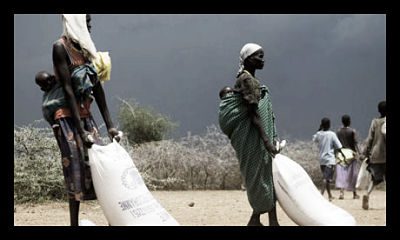
Here are 10 surprising facts about Africa that significantly influence aid and development within the continent. These facts about Africa are important to keep in mind when considering Africa within the larger international context. Moreover, these facts can illuminate both the challenges and prospects towards African development.
1. Africa is the second largest continent, both in size and population.
Making up 22% of the world’s total landmass and with 1.1 billion people, Africa is the second most populated continent on the planet. Moreover, Africa’s population is expected to double by 2050. Africa will become the fastest growing continent in the world, population-wise. However, this rapid population growth may not be such a bad thing. In Europe, there are 170 people living per square km; whereas in Africa, there are only 70. Hence, Africa has room to expand and accommodate the upcoming population growth. But in order to accommodate responsibly, much must be done to improve Africa’s infrastructure. Additionally, Africa’s population growth is not coming from an increase in birth rates, but from longer life expectancy. Furthermore, population growth and urbanization are correlated, just as urbanization and economic growth are. From 1990-2009, Africa’s urban population increased by 114%. During the same period, the world’s urban population increased by only 51%. Sustained population growth will drive urbanization, which will in turn inspire innovation and economic development.
2. Other than Ethiopia and Liberia, all African countries were once colonized by non-African countries.
Africa was divided up in 1884-1885 at the Berlin Conference, which was attended by the UK, France, Belgium, Spain, Italy, Portugal and Germany. National borders were determined without knowledge or concern for local boundaries. The main concern of the colonizers was to assume control over populations and gain access to their natural resources, which they would later extract for their own profit. When the nations of Africa became independent from the colonial leaders, many nations were fraught with intense ethnic conflicts as tribes fought for power. This struggle for power oftentimes led to racial or ethnic oppression. Post-colonial powers often used the oppressed for hard labor and seldom educated these subjugated populations. Moreover, these practices contributed to generations of lost human capital.
3. 61% of all Africans live in rural areas
Poverty occurs in both rural and urban areas, but poverty takes on a different characteristic in rural areas. In developing nations, which most of the nations in Africa are, rural populations partake in subsistence farming, only producing enough to feed their immediate family. Without a steady source of income, families cannot contribute to the larger community’s infrastructure development and the community as a whole suffers. This makes access to education, health and other public services difficult if not impossible.
4. There are an estimated 1,500 languages spoken in Africa and over 3000 distinct ethnic groups (tribes)
Of the 1,500 languages spoken in Africa, hundreds of them are at risk of becoming extinct. As urbanization and globalization increasingly become a reality in Africa, many of the distinct ethnic groups are likely to lose their cultural identity and traditions. If globalization were to encourage the preservation of African cultural identity, these cultures could be preserved in museums and archives. However, passing these traditions down by generation and truly preserving them as living entities may not be possible without considerable efforts by the tribes themselves.
5. There are fewer people with internet access in Africa than New York City alone.
The United Nations recently stated that internet access should be an international human right. Without access to the internet, a majority of the world’s citizens cannot learn, share, or spread ideas. The internet plays a key role in how we interact with one another; our impact is magnified by the modern PA system, which is the Internet. Moreover, most of Africa is without internet access. To provide such services would be to create a market where one has never existed. As Africa develops and technology services become more wide-spread, we can expect to empower a generation.
6. The average life expectancy in Africa is 52.5 years, compared to 69.2 in the rest of the world.
The average life expectancy in Africa varies from country to country. Some nations, like Sierra Leone, have a low life expectancy of 47. Whereas other African nations, like Seychelles, have a long lifespan of 74. Although the average African lifespan is below the average world life expectancy, there is hope. The life expectancy in Africa increased by 5% between 2000-2009, compared to merely 3% in the rest of the world.
7. The prevalence of HIV for people 15-49 in Sub-Saharan Africa is 7 times that of the world prevalence.
HIV/AIDs is the most common cause of death in the Sub-Saharan region. Possible reasons for why HIV/AIDs is so much more common include: high rates of poverty, rapid urbanization, genetics, or gender inequality.
8. 90% of all malaria cases occur in Africa. 3,000 children die each day in Africa from malaria.
People who have limited immunity to malaria, such as young children, women, and travelers from out of the area are more susceptible the disease. In addition, lack of access to health care in rural areas makes treatment for malaria more difficult.
9. Merely 42% of the urban population has access to improved sanitation, while only 24% of the rural population does.
In developed countries, like the US and the UK, 100% of the population has access to improved sanitation. In order to provide better access to proper waste disposal systems and clean water, a hefty investment is required by the governments of African nations, or else by the private sector, in the continent’s sanitation infrastructure. Low access to proper sanitation can be a health risk to exposed communities, which can lower one’s expected lifespan.
10. In 21% of Sub-Saharan African Countries, one or two products accounts for at least 75% of total exports.
In most developed nations, a huge strategy towards economic proficiency is to diversify exports. With few exports at their disposal, Sub-Saharan African nations set themselves up for poor economic growth and a potentially stagnant private sector. Diversity in exports can reduce income volatility for countries with large populations in poverty and reduces vulnerability to sharp declines in trade. Diversification increases the potential for generating spillovers. Traditionally, as a country’s average income rises, their exports become more diversified. But to increase average national income, many of these countries require investment in the private sector. Investment in Sub-Saharan African nations, be it through enhanced public education or career services or through corporate foreign direct investment, can raise national average income.
– Kelsey Ziomek
Sources: Facts, About, Traveling Myself, World Bank, World Bank, World Bank, Brookings
Photo: The Guardian

Counterpart International
There are thousands of non-profits that work in less developed countries with a responsibility to be ethical. Counterpart International is a nonprofit organization that stresses a commitment to integrity, transparency and respect in its work across the world.
The three main development sectors that Counterpart International focuses on are:
1) Food Security and Nutrition – Food security involves the obtainment of affordable, quality food in sufficient quantities.
2) Economic Development – Economic development involves creating opportunities for people to increase incomes and provide better for their families.
3) Effective Governance and Institutions – Addressing citizens’ needs by connecting civil groups within a country or region.
In January 2013, Counterpart International joined the United Nations Global Compact—an 8,000 plus member international initiative committed to corporate responsibility. The UN Global Compact has its volunteer members commit to 10 universally accepted principles in the areas of human rights, anti-corruption, labor, and the environment.
In Niger, extreme drought causes food shortages in which the marginalized populations suffer the most. Handicapped and blind children are often purposefully overlooked. Counterpart saw the need for these disabled people to get sufficient nutrition and created FAIR. FAIR, or Food Aid for Disabled Children Project, now provides over 300 children and 1,500 adults with hot meals or food rations. The children receive the hot meals at schools that are designed to teach the blind, deaf, or physically disabled.
Even more impactful work is being done in Mauritania, another drought-stricken country in Western Africa. Counterpart was hired by the United States Agency for International Development (USAID) to implement a Multi-Year Assistance Program titled the Community Action Nutrition and Livelihoods project. This particular project provides sustainable solutions to poverty for Mauritanians through micro-enterprise opportunities, community healthcare training and agriculture practices.
$250,000 in loans through Counterpart’s program helped approximately 3,500 Mauritanian entrepreneurs, most of which were women. Women empowerment is crucial in a region where women lack most of the UN’s Universally Declared Human Rights. In addition, nearly 600 healthcare workers were trained, providing local care to individuals who may be suffering from diseases and deficiencies that can easily be prevented and treated. Healthcare for farm animals was also implemented under the program in Mauritania. Training veterinary assistants not only provided jobs for the people, but prevented the loss of livestock.
Counterpart International is in charge of the Global Civil Society Strengthening Leader with Associates (GCSS LWA). This association teams up with the United States Agency for International Development and Global Civil Society Strengthening to encourage civic growth and participation. In addition to promoting better governance, GCSS LWA and its over 23,000 local and regional partners seek to empower independent media outlets.
This year, as Counterpart International celebrates its 48 year anniversary, nearly half a century of development work in over 65 countries, it continues to maintain transparency and uphold its responsibility to be ethical in all of its interactions.
– Aysha Rasool
Feature Writer
Sources: Counterpart International: News, Counterpart International: Blog, Global Civil Society Strengthening
Photo: Counterpart International
Africa Aid: 10 Key Facts And Why They Matter
Here are 10 surprising facts about Africa that significantly influence aid and development within the continent. These facts about Africa are important to keep in mind when considering Africa within the larger international context. Moreover, these facts can illuminate both the challenges and prospects towards African development.
1. Africa is the second largest continent, both in size and population.
Making up 22% of the world’s total landmass and with 1.1 billion people, Africa is the second most populated continent on the planet. Moreover, Africa’s population is expected to double by 2050. Africa will become the fastest growing continent in the world, population-wise. However, this rapid population growth may not be such a bad thing. In Europe, there are 170 people living per square km; whereas in Africa, there are only 70. Hence, Africa has room to expand and accommodate the upcoming population growth. But in order to accommodate responsibly, much must be done to improve Africa’s infrastructure. Additionally, Africa’s population growth is not coming from an increase in birth rates, but from longer life expectancy. Furthermore, population growth and urbanization are correlated, just as urbanization and economic growth are. From 1990-2009, Africa’s urban population increased by 114%. During the same period, the world’s urban population increased by only 51%. Sustained population growth will drive urbanization, which will in turn inspire innovation and economic development.
2. Other than Ethiopia and Liberia, all African countries were once colonized by non-African countries.
Africa was divided up in 1884-1885 at the Berlin Conference, which was attended by the UK, France, Belgium, Spain, Italy, Portugal and Germany. National borders were determined without knowledge or concern for local boundaries. The main concern of the colonizers was to assume control over populations and gain access to their natural resources, which they would later extract for their own profit. When the nations of Africa became independent from the colonial leaders, many nations were fraught with intense ethnic conflicts as tribes fought for power. This struggle for power oftentimes led to racial or ethnic oppression. Post-colonial powers often used the oppressed for hard labor and seldom educated these subjugated populations. Moreover, these practices contributed to generations of lost human capital.
3. 61% of all Africans live in rural areas
Poverty occurs in both rural and urban areas, but poverty takes on a different characteristic in rural areas. In developing nations, which most of the nations in Africa are, rural populations partake in subsistence farming, only producing enough to feed their immediate family. Without a steady source of income, families cannot contribute to the larger community’s infrastructure development and the community as a whole suffers. This makes access to education, health and other public services difficult if not impossible.
4. There are an estimated 1,500 languages spoken in Africa and over 3000 distinct ethnic groups (tribes)
Of the 1,500 languages spoken in Africa, hundreds of them are at risk of becoming extinct. As urbanization and globalization increasingly become a reality in Africa, many of the distinct ethnic groups are likely to lose their cultural identity and traditions. If globalization were to encourage the preservation of African cultural identity, these cultures could be preserved in museums and archives. However, passing these traditions down by generation and truly preserving them as living entities may not be possible without considerable efforts by the tribes themselves.
5. There are fewer people with internet access in Africa than New York City alone.
The United Nations recently stated that internet access should be an international human right. Without access to the internet, a majority of the world’s citizens cannot learn, share, or spread ideas. The internet plays a key role in how we interact with one another; our impact is magnified by the modern PA system, which is the Internet. Moreover, most of Africa is without internet access. To provide such services would be to create a market where one has never existed. As Africa develops and technology services become more wide-spread, we can expect to empower a generation.
6. The average life expectancy in Africa is 52.5 years, compared to 69.2 in the rest of the world.
The average life expectancy in Africa varies from country to country. Some nations, like Sierra Leone, have a low life expectancy of 47. Whereas other African nations, like Seychelles, have a long lifespan of 74. Although the average African lifespan is below the average world life expectancy, there is hope. The life expectancy in Africa increased by 5% between 2000-2009, compared to merely 3% in the rest of the world.
7. The prevalence of HIV for people 15-49 in Sub-Saharan Africa is 7 times that of the world prevalence.
HIV/AIDs is the most common cause of death in the Sub-Saharan region. Possible reasons for why HIV/AIDs is so much more common include: high rates of poverty, rapid urbanization, genetics, or gender inequality.
8. 90% of all malaria cases occur in Africa. 3,000 children die each day in Africa from malaria.
People who have limited immunity to malaria, such as young children, women, and travelers from out of the area are more susceptible the disease. In addition, lack of access to health care in rural areas makes treatment for malaria more difficult.
9. Merely 42% of the urban population has access to improved sanitation, while only 24% of the rural population does.
In developed countries, like the US and the UK, 100% of the population has access to improved sanitation. In order to provide better access to proper waste disposal systems and clean water, a hefty investment is required by the governments of African nations, or else by the private sector, in the continent’s sanitation infrastructure. Low access to proper sanitation can be a health risk to exposed communities, which can lower one’s expected lifespan.
10. In 21% of Sub-Saharan African Countries, one or two products accounts for at least 75% of total exports.
In most developed nations, a huge strategy towards economic proficiency is to diversify exports. With few exports at their disposal, Sub-Saharan African nations set themselves up for poor economic growth and a potentially stagnant private sector. Diversity in exports can reduce income volatility for countries with large populations in poverty and reduces vulnerability to sharp declines in trade. Diversification increases the potential for generating spillovers. Traditionally, as a country’s average income rises, their exports become more diversified. But to increase average national income, many of these countries require investment in the private sector. Investment in Sub-Saharan African nations, be it through enhanced public education or career services or through corporate foreign direct investment, can raise national average income.
– Kelsey Ziomek
Sources: Facts, About, Traveling Myself, World Bank, World Bank, World Bank, Brookings
Photo: The Guardian
Asian Americans Facing High Poverty Rates
It is often assumed that Asian Americans are one of the minority groups in the United States that is doing well economically. However, this statement too broadly categorizes all Asian subgroups. According to the official poverty rate from the U.S. Census in 2011, the Asian American poverty rate was actually 2.5% higher than that of Caucasians.
In fact, amongst poor Asian Americans, Southeast Asians face some of the highest poverty rates in the whole country. Researchers at the University of California, Los Angeles conducted a study on income sources, home foreclosures and housing burden. The study indicated that Southeast Asians in the United States have consistently relied on food stamps for many decades. Moreover, language barriers are still major roadblocks that prevent Southeast Asian Americans from entering new labor markets.
The poverty rate for Asian Americans is highest amongst Hmong, Cambodian, Laotian and Vietnamese. Hmong Americans have a startlingly high poverty rate at 37.8%, followed closely by Cambodian Americans at 29.3% and Laotian Americans at 18.5%.
According to a study by UCLA scholars on Asian Americans in eight different states, 23% of Hmong Americans in Fresno, California relied on cash public assistance for income. This is comparably higher than the 10% of Asian Americans that also did so. It is also significantly higher than the 3% of Caucasians who used public cash assistance. Hmong Americans were also amongst the least likely to receive social security benefits or retirement income.
Additionally, Southeast Asians have especially high rates of depression and suffer higher rates of post-traumatic stress disorder compared to the rest of the general Asian American population. These facts definitely counter the model minority stereotype that all Asian Americans belong to one monolithic group.
A study on social trends by Pew Research has found that with a population exceeding 18.2 million – or 6% of the U.S. population – Asian Americans have become one of the fastest growing minority groups in the U.S. Moreover, Asian Americans have become the nation’s best-educated and highest-paid racial or ethnic group. Yet these findings run the risk of perpetuating the stereotype of Asians as high achieving.
Additionally, such facts tend to hide the growing poverty amongst Southeast Asian Americans.
The National Council of Asian Pacific Americans has stated that the media has narrowed in on “one-dimensional narratives of exceptionalism,” of successful Asian American families, usually eastern Asians such as Chinese or Japanese.
Due to popular perception of Asian Americans in general, poverty amongst sub-groups is not well known. Thus in order to truly fight poverty in the United States a more inclusive examination of poverty trends is vital.
– Grace Zhao
Sources: LA Times, Diverse Education, White House, National Alliance in Mental Illness
Photo: Asia Foundation
India’s energy sector gets a $100 million boost from USAID
India, the fourth-largest consumer of energy worldwide, is showing the rest of the world how to eradicate energy poverty by looking skyward towards the sun.
A recent USAID announcement plans to invest $100 million towards renewable energy in India, which, coupled with the country’s National Action Plan on Climate Change, will make a solid dent in shrinking India’s energy gap.
The announcement came as U.S. Secretary of State, John Kerry, visited India for the first time. During a speech, Secretary Kerry urged Indian officials to cut greenhouse gas emissions while simultaneously maintaining its commitment to end poverty. Mr. Kerry stated, “The worst consequences of the climate crisis will confront people who are the least able to be able to cope with them.”
Energy poverty in India is a major concern–over 300 million people function off the grid and another 700 million rely on sporadic service. The blackout that occurred in northern India in July 2012, which darkened the country for two days and disrupted service for 620 million people (nine percent of the world’s population), underscored this reality. Policymakers took note.
As a result, the Indian government is intensely pursuing a diverse portfolio of sustainable energy options, with the primary focus on solar power.
The government’s primary solar initiative, known as “Solar India,” aims to commission 20,000 megawatts of grid-connected solar power projects by 2022. Considering the current installed capacity for solar energy in India is just below 1,700 megawatts, this is an ambitious plan.
The $100 million USAID investment marks the first time USAID is partnering with a private investment fund, Nereus Capital’s India Alternative Energy Fund, to facilitate an investment. One of the expressed goals of the investment is to make India more attractive to U.S. energy entrepreneurs by lowering the barriers to entry and building the infrastructure needed to get started.
The investment could create as much as 300-400 additional megawatts of new energy capacity. Three to four hundred additional megawatts might not sound like a lot considering that India’s carbon emissions are projected to increase 60 percent by 2030, but every little bit helps. Each new megawatt of sustainable energy generated represents a seismic shift towards an India where energy availability for all of its citizens is the rule, not the exception.
With pressure coming from the U.S. Department of State and the timely announcement of the USAID investment, the time for India’s energy sector to expand its use of clean energy is now.
– Aaron Faust
Sources: USAID, Center for Climate Energy Solutions, NY Times, Jawaharlal Nehru National Solar Mission, International Finance Corporation
Barefoot Lawyers Empower the Poor
In the developing world, where education is not guaranteed for all and literacy rates are low, billions of people are denied their legal rights simply because they have no access to information about their rights. Enter the barefoot lawyers, who teach people in their communities how to make the law work for them. BRAC (the one-time Bangladesh Rural Advancement Committee) is the world’s largest non-governmental provider of legal aid, whose Barefoot Lawyers share their expertise. After graduating from BRAC’s crash course in law, the all-female band of paralegals teach others in their community how to protect themselves from bribery or false arrest by asking the right questions and knowing what a real arrest warrant looks like. The key to a functioning democracy are laws that protect the citizenry from abuses of power, but if a population is unaware of these legal protections, the protections might as well be null and void. Basic knowledge of legal rights could help widows receive inheritances, settle arguments over dowries, or prevent unlawful detention and exploitation. Legal literacy could help a farmer keep his land and property, or help a community receive compensation after their land and water has been devastated by a mining project. Many go unprotected by the law simply because they do not know how to put it to use. For these reasons, and for the bigger picture of empowering marginalized people to lift themselves out of poverty, organizations like BRAC think legal empowerment is important enough that it should be one of the Millennium Development Goals. Spreading awareness of legal entitlements enables people to access financial programs which could break the cycle of extreme poverty for families who take advantage. As more people are empowered by the law, which is designed to be of service to all citizens regardless of their economic standing, the idea that all people deserve clean water, food, and shelter as a basic human right will grow. – Jennifer Bills Sources: BRAC Blog
Global Poverty Top 5 Books
If you are looking to know more about global poverty and modern international issues, the list below will give you a good starting point. Enjoy your reading!
1. Half the Sky: Turning Oppression into Opportunity for Women Worldwide (Nicholas Kristof and Sheryl WuDunn) – Gender Equality
In their latest publication, Nicholas Kristof and Sheryl WuDunn captivate readers with accounts of women across the developing world. The struggles of these women are devastating and immense: more women have been murdered due to their gender than people killed in all of the 20th century genocides combined. Yet, amongst the murder, sexual assault and misogyny that so many women still face in regions characterized by poverty, Kristof and WuDunn have uncovered stories of resilience and hope. Tellingly, the struggle for gender equality simultaneously remains the paramount moral struggle of the 21st century, as well as the greatest source of optimism for the future.
2. Mountains Beyond Mountains: The Quest of Dr. Paul Farmer, a Man Who Would Cure the World (Tracy Kidder) – Public Health
In a non-fiction biography, Tracy Kidder illuminates the industrious philanthropist and physician Paul Farmer and his transformative work fighting tuberculosis in Haiti. Harvard-educated and a MacArthur “genius,” Farmer works tirelessly as an advocate for those most in need of modern medicine. Intricately and beautifully, Mountains Beyond Mountains conveys the dire medical needs of those living in abject poverty while also illuminating the radical change that can stem from one person.
3. Behind the Beautiful Forevers: Life, Death, and Hope in a Mumbai Undercity (Katherine Boo) – Global Poverty
Having lived in Bombay’s Annawadi slum for three years, Katherine Boo’s newest work illuminates the lives of those who live on the edge of traditional poverty and widespread globalization, a precarious position unique to the 21st century and India. The narrative, which follows the struggles and triumphs of the slum’s residents, uncovers the grace and poignancy in those too often forgotten, those whose real, daily struggles stretch beyond the reach of the Western imagination.
4. The Dragon’s Gift: The Real Story of China in Africa (Deborah Brautigam) – Chinese Politics in Africa
Deborah Brautigam’s latest book on global poverty demystifies the recent upsurge in Chinese aid throughout Africa. The account, which addresses the tendentious, ongoing conversation revolving around the reality of the Chinese involvement, addresses the surplus of opinions concerning the nature of such aid. Brautigam dismisses myths and underscores facts, providing a lucid account of Chinese aid. Instead of simplifying the conversation to a discussion of merely advantageous economics, Brautigam provides intelligent and interesting insights into China as an unexpected philanthropic force.
5. The Bottom Billion: Why the Poorest Countries are Failing and What Can Be Done About It (Paul Collier) – Global Poverty
Written by one of the world’s foremost experts on African economies, Paul Collier transforms the traditional way in which readers think about global poverty and aid. Collier’s solutions, many of which revolve around empowerment and domestic sustainability, captivate and motivate. Imbued with a wealth of information, The Bottom Billion is an essential text for anyone involved in the struggle against global poverty.
– Anna Purcell
Sources: NY Times, Huffington Post, The Guardian
Photo: Global Fusion
Sanitation and Clean Water is an Issue In Liberia
In 2003, Liberia finally came out of a thirteen-year long civil war that ravaged the country and left the inhabitants riddled with poverty. Right after the end of the war, the unemployment rate was listed at 85 percent of the population. The populations in the slums skyrocketed and the people living there were left with little choice of where to obtain water or where to use the bathroom. During the war, rebels destroyed much, if not all, of the water and sanitation infrastructure the country once had. A decade later, much of the population is still impoverished and lacking access to the basic needs of potable water and a sanitary living area. In 2010, there were almost 4 million people living in Liberia, over 1 million of which were rural poor. However, there is a stress for clean water in slums, from where a number of people from rural areas fled to Monrovia during the fighting and violence in an attempt to find refuge. For every four people, there is one living without access to clean water and sanitation in Liberia, and for every five deaths in the country, one is a result of contaminated water sources. In fact, in 2012, the World Health Organization discovered that E. coli was present in 58 percent of the city’s water due to public defecation. This spreads illness such as diarrhea and perpetuates the issue, creating a cycle of illness through dirty water. Liberian president, Ellen Johnson Sirleaf, has pledged to double the amount of access to safe water in four years, but has clearly fallen short of this claim. Phillip Marcelo of Rhode Island’s Providence Journal is spending two weeks in Liberia this month to investigate what progress has been made since the end of the war and the installation of democracy within the country. He notes that at the entry to the slums at West Point Beach, there is a massive pile of trash marking the place. The defecation of children is all over the beach and people are being forced to buy their water from “distributors.” While adults have been banned from using the beach as a bathroom and there are pay toilets in the slum, there is often still no other option. Because of this, the spread of cholera is common along with other water-borne diseases. The government is opening up nine new toilets for the area, but the inhabitants are not sure a real difference can be made considering there are more than 50,000 people living the area. Aid groups are investing time and money into providing Liberia with better access to clean water, with the hope that this will cease to be an issue in the coming years, if not in time to meet the Millennium Development Goals. Non-profit organization Waves for Water has raised $15,100 towards the goal of $25,000 to help provide clean water filters for over 60,000 people living in poverty in Liberia. WaterAid, another NGO, also works in Liberia and happens to be an organization for which President Sirleaf is an ambassador. Last year, they were able to reach 17,000 people and provided them with clean water or sanitation facilities. Help for Liberians is out there and there are solutions to the present issues, but it will take a while to recover completely from the devastation of the war. Simply put, it is going to take plenty of hard work and a revamp of the entire infrastructure of the country in order to change the conditions of those living in the slums of Liberia. – Chelsea Evans Sources: Providence Journal, Rural Poverty Portal, Waves for Water, PBS, WaterAid Photo: Sanitations Update [hr top]
$30 billion per year is needed to end world hunger.
$660 billion per year is the amount Congress spends on Defense.
CSR: Ethics or Marketing?
As a modern business trend, it is hard to know whether “corporate social responsibility”—or CSR—will be a lasting ethos that transforms the way companies conduct business or a passing fad designed to make big corporations more likable. CSR may be thought of as a corporation’s conscience—a set of internal policies that govern how the company interacts with and relates to its community, its people and its environment.
There is no question that executives and business leaders have adopted the lexicon of corporate social responsibility. As The Economist notes, “It would be a challenge to find a recent annual report of any big international company that justifies the firm’s existence merely in terms of profit, rather than service to the community.” In the late 1990s, a group of CEOs went as far as launching a global organization—the World Business Council for Sustainable Development—for the purpose of discussing strategic issues related to sustainable business practices. The rhetoric is clear: corporations care.
The question is what kinds of corporate actions have resulted from the emerging ethos of CSR. One area where companies have been keen on improvement is energy reduction. For example, General Mills instituted an energy audit program, and in 2012 reduced its energy consumption by 7 percent. It’s a win-win for General Mills—the company saves money and highlights its commitment to the environment. Other corporations like Solo Cup Company are engaging their employees to help with community cleanup events, trash collection programs or recycling drives at Solo facilities.
But some critics question the motives of companies that institute policies and public relations campaigns related to corporate social responsibility. One argument is that CSR is simply a marketing scheme developed to attract consumers to certain brands.
Many dissenters point out that markets are not concerned with ethics or social responsibility. In an article for the Stanford Social Innovation Review, Deborah Doane explains, “CSR can hardly be expected to deliver when the short-term demands of the stock market provide disincentives for doing so.”
While the companies and critics each present compelling arguments for or against CSR, it may be that corporate social responsibility is just a negotiated balance between companies and the communities in which they operate. It is how the company achieves or bolsters legitimacy with its potential consumers. The business benefit, of course, is that the company will profit in some way from its investment in CSR. After all, conventional wisdom says the primary objective of any corporation is not principle, but profit.
– Daniel Bonasso
Sources: Standford Social Innovation Review, The Economist, Corporate Watch
Photo: Career Realism
Join The Borgen Project in Fighting for the Underdog
What is it? from THE BORGEN PROJECT on Vimeo.
Zonal Champions: Reinventing Word of Mouth Advertising in South Africa
Despite advances in advertising in recent years, word of mouth is still considered by many marketing experts to be the best form of advertisement. As businesses look to increase their presence in South Africa, word of mouth publicity could be the key to appealing to otherwise unreachable demographics.
Zonal champions, as they are called by marketing agency Creative Counsel, are human advertisements. They are members of local communities who are employed to represent a brand and promote appropriate products during their everyday conversations. The potential consumers are able to freely question zonal champions about the products, allowing for all curiosities to be satisfied before a purchase is made.
Nontando Vena, a zonal champion for South African mobile phone company Vodacom, says she doesn’t have conventional work hours. Instead, she promotes the brand “24/7, 365,” and members of her community occasionally refer to her as “Miss Vodacom.”
The merits of zonal champions are numerous for both the customers and the providers. For businesses, zonal champions are able to reach rural parts of Africa that traditional advertisements are unable to. Upwards of 550 million people are without electricity in Africa, which represents a massive untapped market for businesses to sell products. A zonal champion only needs two to four days to be properly trained, and they can continuously reach rural customers on a daily basis.
South African consumers are more welcoming of zonal champions than they would be of commercials and billboards. Consumers are more trusting of a friend or family member than they are of an advertisement, and this is especially true in South Africa. Zonal champions are able to give a familiar face to otherwise detached companies, which let consumers feel more comfortable with new brand names.
Economically, zonal champions are also beneficial to the many rural consumers who are forced to be judicious with their income. While the income of South Africans has risen by upwards of 170% in the past decade, the average annual income is still about $6,258. As a result, South African consumers are extremely hesitant to invest in products they are unfamiliar with. By answering questions and recommending products, zonal champions are able to engage local citizens and let them know if the product being offered will meet their needs.
In addition to the benefits for businesses and consumers, the zonal champions themselves are able to benefit from this unique form of employment. Unemployment in South Africa remains very high, with up to 24% of citizens without work. Many of these people have no access to education, and therefore are considered “unemployable.” There are no prerequisites to become a zonal champion, and the work itself primarily involves being present in a community. This allows a new opportunity for these “unemployable” citizens to find work and curb the harsh unemployment rate in the process.
Africa’s economy is among the fastest growing in the world now, and international businesses are starting to take notice. President Obama’s recent trip to Africa highlights the continent’s growing relevance in the global economy, and zonal champions will surely play a large role in growing markets in these once impoverished parts of the country. With the numerous advancements in technology and advertising in recent years, zonal champions prove that old fashioned conversation is still as relevant as ever.
– Timothy Monbleau
Sources: Linkedin, How We Made It In Africa, CNN, Creative Counsel, BBC, Google Currency Conversion, World Bank, Vodacom
Photo: Riger Jabber
Saving the World One Drop at a Time
The struggle to access clean water in many developing nations is no secret. Every year, between six to eight million people perish due to water-borne diseases or lack of water. Another cause of concern lies in the fact that over two thirds of the global population lives on the driest half of earth. Experts estimate that 2.5 billion people lack proper water sanitation, and another 783 million completely struggle to locate access to any source of water.
In response to these alarming facts, the United Nations has declared 2013 the UN International Year of Water Cooperation to bring a revitalized focus and attention to these water issues. The purpose of using water as the year’s theme is to ignite change in this crisis. The plan is to draw more attention to successful water projects that have worked in various areas in an attempt to spark innovation and spread ideas in areas needing water development. Other initiatives in the Year of Water Cooperation include increasing water education, working with regional leaders to develop relationships focused on addressing issues, settling border disputes involving water, and fundraising and developing necessary legal limits.
The UN chose the name International Year of Water Cooperation to highlight the necessity of forming regional bonds and of leaders working together to address the problems. The theme is meant to inspire countries to share and work as a team to save millions of lives. Since there are many different cultural, political and social factors at play in this global issue, cooperation remains the key to moving forward.
This initiative was started back in December 2010, among a United Nations General Assembly delegation. The idea began by thinking of water as a chain: connected by various water basins, rivers and groundwater flow all around the world. One objective of the year is to increase collaboration over sharing these resources to reach a maximum number of people, effectively creating a chain reaction.
If the water initiative goes successfully, not only will millions of lives be saved from simple prevention of disease, diarrhea and dehydration, but conflicts over water and ethnic fighting will simultaneously decrease. The UN chose a strikingly important issue to focus on during 2013, with the potential to make an impact on the lives of billions of people around the planet.
– Allison Meade
Sources: UN News Centre, UN Water, United Nations
Photo: