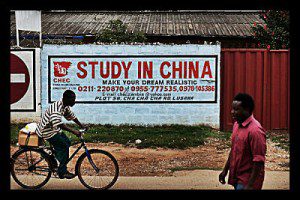
Schooling in the United States and Europe was a source of great fascination to Africans in the 1970s, 80s and early 90s. Over 80 percent of Africans seeking to further their education abroad ended up in these two regions.
Today the West continues to be the first choice for African students, with nearly 55 percent of those studying abroad choosing Western countries, especially France. More and more Africans, however, are now being drawn to Asian universities.
China, a country at the center of this new development, is continuing to improve and advance its educational ideals. In the last five years, Beijing has spent more than $1.26 trillion on education, a target of 4 percent of China’s GDP. The country has an unswerving teacher development scheme. Historically, teaching has been a highly respected profession.
Once teachers are employed in China they must experience a vigorous system of continuous professional development. Groups of teachers work together with master teachers on lesson plans and general improvement.
According to China’s university and college admission system, the number of international students studying in China has significantly increased. In particular, African students are pouring into more than 660 higher education institutions in the country.
Besides the thriving educational culture, the increased enrollment is imperative for Africa’s future because the country can learn from China how best to utilize and manage its many natural resources.
Africa has a dream of reproducing China’s success in manufacturing, construction, technology and healthcare. The economic powerhouse’s sustained growth has primarily been anchored on continuous technological innovation and industrial diversification. The industrial dynamics caused the shift from an agrarian society, where nearly 90 percent of the labor force worked, to non-agriculture and manufacturing sectors. The change was gradual, but continuous and unstoppable.
Today, manufacturing is the economic backbone of China. Its emergence as a manufacturing powerhouse has been shocking. In seventh place in 1980, China overtook the US two years ago to become the world’s largest producer of manufactured goods.
China also used its large manufacturing engine to increase living standards by doubling the country’s GDP per capita over the last decade — the kind of achievement that took the industrializing United Kingdom 150 years. Now, Africans seek to imitate China’s economic accomplishments through knowledge transferred from Chinese classrooms and lecture halls.
The process started a decade ago when African nations began to sponsor their most academically gifted students to attend schools in China. Meanwhile, China also sponsored students majoring in medicine, engineering, economics and journalism. In 1983, China sponsored 400 students. In 2005, the number increased to 2,000. Last year, it funded university education for 5,500 students.
As Africa seeks to learn the best from the best, it is important that the country also cultivates the culture of working hard. China’s forward-looking system has put it on the right path to success. There is no mystery to its methods. China succeeded because it knew what it wanted. This should be the culture that African students studying in China bring back home.
– Scarlet Shelton
Sources: Global Times, UNESCO, Novexcn.com
Photo: Moment

Higher Education in China for African Students
Schooling in the United States and Europe was a source of great fascination to Africans in the 1970s, 80s and early 90s. Over 80 percent of Africans seeking to further their education abroad ended up in these two regions.
Today the West continues to be the first choice for African students, with nearly 55 percent of those studying abroad choosing Western countries, especially France. More and more Africans, however, are now being drawn to Asian universities.
China, a country at the center of this new development, is continuing to improve and advance its educational ideals. In the last five years, Beijing has spent more than $1.26 trillion on education, a target of 4 percent of China’s GDP. The country has an unswerving teacher development scheme. Historically, teaching has been a highly respected profession.
Once teachers are employed in China they must experience a vigorous system of continuous professional development. Groups of teachers work together with master teachers on lesson plans and general improvement.
According to China’s university and college admission system, the number of international students studying in China has significantly increased. In particular, African students are pouring into more than 660 higher education institutions in the country.
Besides the thriving educational culture, the increased enrollment is imperative for Africa’s future because the country can learn from China how best to utilize and manage its many natural resources.
Africa has a dream of reproducing China’s success in manufacturing, construction, technology and healthcare. The economic powerhouse’s sustained growth has primarily been anchored on continuous technological innovation and industrial diversification. The industrial dynamics caused the shift from an agrarian society, where nearly 90 percent of the labor force worked, to non-agriculture and manufacturing sectors. The change was gradual, but continuous and unstoppable.
Today, manufacturing is the economic backbone of China. Its emergence as a manufacturing powerhouse has been shocking. In seventh place in 1980, China overtook the US two years ago to become the world’s largest producer of manufactured goods.
China also used its large manufacturing engine to increase living standards by doubling the country’s GDP per capita over the last decade — the kind of achievement that took the industrializing United Kingdom 150 years. Now, Africans seek to imitate China’s economic accomplishments through knowledge transferred from Chinese classrooms and lecture halls.
The process started a decade ago when African nations began to sponsor their most academically gifted students to attend schools in China. Meanwhile, China also sponsored students majoring in medicine, engineering, economics and journalism. In 1983, China sponsored 400 students. In 2005, the number increased to 2,000. Last year, it funded university education for 5,500 students.
As Africa seeks to learn the best from the best, it is important that the country also cultivates the culture of working hard. China’s forward-looking system has put it on the right path to success. There is no mystery to its methods. China succeeded because it knew what it wanted. This should be the culture that African students studying in China bring back home.
– Scarlet Shelton
Sources: Global Times, UNESCO, Novexcn.com
Photo: Moment
Poor People: Do They Hold Societies Back?
You’ve probably heard people discuss the burden that poor people place on society, or the need for them to “pull themselves up by their own bootstraps.” If not, only look to Mitt Romney’s infamous comment from the 2012 presidential campaign, in which he referred to the 47% of Americans who are “dependent on the government” and who could never be convinced to “take personal responsibility and care for their lives,” for an example.
Psychologist Herbert Gans writes about the labeling of the poor as “undeserving” and the effects that such labels have in society. He posits that deeming the poor undeserving fulfills a wide array of functions for the affluent. Primarily, this phenomenon distances the labeled from the labelers, allowing the situation to be cast firmly as “us-versus-them.”
By casting poverty as something that happens to “them,” but not to “us,” one can tap into a well-known psychological bias explained by psychologist Jeremy Dean on PsyBlog.
He describes the phenomenon using sports teams. When a fan sees a member of their team score, they are likely to praise the player’s talent and hard work. On the other hand, when a fan sees a member of the opposite team score, it’s usually attributed to dumb luck or a missed call. By the same token, when a fan’s team loses, it can easily be chalked up to a rough week or a rowdy crowd.
However, a fan would rarely claim that his team won because another team had a difficult week. In other words, one works much harder to make excuses for people that they perceive as “one of us.” This same principle can be applied to almost any facet of society, including poverty.
When poor people are considered to be fundamentally different from us, it becomes more difficult to empathize with their situations. Unfortunately, it also becomes easier to blame the poor for their poverty and struggles, consciously or otherwise.
Some may not concretely be thinking that women in sub-Saharan Africa should just stand up for themselves already, but it is often easier to sympathize with women who live in societies that look most like ours.
For example, when America discovered that Ariel Castro had held three women captive in his Ohio home for a decade, outrage erupted. People were horrified that something this appalling could happen here, to people “like us.” Meanwhile, similar atrocities are happening worldwide every day and our indignation may go just far enough to get us to make an online donation.
While it is incredibly difficult for one to truly comprehend the obstacles faced by the poor, it is important to remember that “we” are not so terribly different from “them.” The balance between recognizing these differences and the similarities is a delicate and important one, and one that is immensely tough to strike.
It is imperative to acknowledge that everyone has different experiences and struggles, and that the wealthy often do not know how best to help the poor. Simultaneously, it is important to keep in mind that the wealthy and the poor are both just groups of people, who usually have a lot more in common than they think.
– Katie Fullerton
Sources: The American Journal of Sociology, PsyBlog, NY Daily News, ABC News
Sources: Danutm
New Strategy to test Tuberculosis in Asia
Over 600 million people in Bangladesh, Pakistan, and India are infected with the tuberculosis bacterium Mycobacterium tuberculosis. Each year, at least three million people reach the potentially deadly staged called active TB. The disease is still treatable at this stage with antibiotics, but traditional tests miss more than one out of three active cases. An average of 400,000 people die from the disease in South Asia every year.
For the first time, thanks to a new strategy developed at University of California, Davis (UC Davis) Health System, the disease can be effectively detected in children. Over 20,000 people in Pakistan will now be tested for the dangerous stage using the scientific breakthrough.
In traditional screening, a laboratory worker must identify the bacterium in a sputum sample observed under a microscope. Unfortunately, this test rarely picks up more than 50 percent of active cases of lung TB. The new TB screening looks for antibodies in the blood that are found only when a person is fighting off active TB. This new test is expected to detect 80 percent of active cases.
Another advantage to the new strategy is the speed of the screening. While the sputum microscopy test requires three sputum samples collected over a three-day period, the new test requires only a few drops of a blood sample and results are provided in two hours. According to researchers, because it takes such little time, millions more people can be screened worldwide per year.
An additional limitation of conventional screening comes from the very use of sputum samples. Children often have trouble providing a sputum sample, and are often missed in TB screening. TB can also be inactive in the lungs but active in other organs and tissues, cases that are missed by sputum screening. These two undetectable groups account for over 20 percent of all active TB cases.
The new strategy is based on an FDA-approved diagnostic instrument and was developed by UC Davis Medical Center scientists along with colleagues in Pakistan. Preliminary trials were funded by the U.S. Agency for International Development (USAID), and were reported in the journal Clinical and Vaccine Immunology. USAID and the World Health Organization (WHO) fund today’s large-scale research. An additional grant was awarded in July 2013 from the U.S. State Department and USAID, which will focus on developing and commercializing the TB test in partnership with the Forman Christian College in Pakistan.
“The fast turn-around time of the new antibody diagnostic test, in combination with high number of patients who can be tested, should enable millions of more TB patients to be screened,” said Imran Khan, assistant professor in the Department of Pathology and Laboratory Medicine, and Center for Comparative Medicine at the UC David Medical Center. “As a result, effective treatment can be provided in a more timely fashion to reduce the spread of this deadly disease.”
– Ali Warlich
Sources: UC Davis Health System, WHO
Photo: News Medical
What is Venture Philanthropy?
Venture philanthropy originated in the mid-1990s in the United States and began spreading through Europe around 2002. It is largely modeled after venture capitalism, in which professional investors use third-party funds to help startup businesses get off their feet.
In a similar way, venture philanthropists use their influence and skills to provide charities or socially minded enterprises with financial and non-financial aid. Venture philanthropy is often undertaken by organizations, which lend support to anywhere from 3 to 15 charities or socially conscious businesses. Individuals, families, and institutions usually provide the organizations’ funds.
The venture philanthropy movement originally began as an alternative to traditional philanthropy, in which high-quality nonprofits are given capital and room to work as they see fit.
Meanwhile, venture philanthropists are much more highly involved. Beyond just donating significant amounts of money, they may hold positions as board members or offer skills-based donations, such as business planning or executive coaching.
According to a 2004 report by Venture Philanthropy Partners, small and local nonprofits often lack the support they need. They can, therefore, be significantly helped by venture philanthropy, which provides long-term financial support, strategic advice, and helpful professional connections.
Depending on the goal of the philanthropy, and the types of organizations supported, venture philanthropists often choose to give in different ways. While some organizations dole out non-returnable grants seen as investments with only social returns, others use various types of loans to help charities or social enterprises get started and continually grow. Once these loans are repaid, the money is reinvested in another organization or startup company.
Venture philanthropists also generally commit to multi-year support at a substantial level, with the goal of financial independence once funding ceases. Additionally, venture philanthropists aim to improve the long-term viability of their investees by funding core operating expenses, rather than individual projects or programs.
Finally, venture philanthropists highly emphasize results and good business practices. They generally hold their recipients to high accountability and management standards, and expect goals to be achieved. This highlighting of measurable outcomes is one of the more obvious similarities between venture philanthropy and venture capitalism.
Venture philanthropy allows donors to become highly invested while working with charities and social entrepreneurs. It also provides many organizations, especially small and local ones, with the long-term and varied assistance they need.
By providing an alternative to hands-off donations, venture philanthropy encourages people to actively change the world around them. It has possibly even substantially widened the range of people becoming philanthropists by appealing to a field of entrepreneurs whose experience and expertise can be valuable assets to charities and socially conscious startup businesses.
Venture philanthropy offers a unique and very often successful approach to improving our society and the world, and should therefore enjoy continued support.
– Katie Fullerton
Sources: Social Innovations Europe, Forbes, Slate, Venture Philanthropy Partners
Photo: Francis Moran
Tax on Carbon Dioxide Emissions to Potentially Help South Africa’s Poor
This year, South Africa has launched a new tax on carbon dioxide emissions in an effort to create a lower carbon future and a greener economy.
Finance Minister Pravin Gordhan has announced a Carbon Tax Policy White Paper that will describe the placement of taxes based on pounds of carbon dioxide emissions. Currently, South Africans already pay some unofficial carbon emission taxes, such as taxes on automobile emissions and electricity. However, the new carbon tax policy would introduce a new tax of 120 rands, or about 12 dollars, per ton of carbon dioxide equivalent.
The tax will be effective in 2015 and increase 10 percent between 2015 and 2020.
South Africa is one of the 20 nations that produce the most carbon emissions into the atmosphere. Increasing use of fossil fuels in recent years has led to rapid climate change. For developing or poor nations, the warming climate means that people are losing the ability to grow enough food.
In other places, environmental disasters bring ruin to land. Drying water sources means that women and children will have to walk farther and farther to find water. As carbon emissions increase, inequality and poverty only grow. Thus, it is imperative for nations such as South Africa to make a difference by reducing their carbon footprint.
The creation of a stricter carbon emissions tax means that the government, businesses, civil society and other stakeholders must have the same understanding of carbon emissions: it is something that needs to be eliminated progressively.
By enforcing taxes, the government of South Africa provides an incentive for companies and organizations to take up greener technologies. This would help to shift production from a high emissions approach to a new standard of a green technology.
Though the carbon tax sounds like a good way to fight environmental degradation, the tax could still negatively affect poorer households. The poor of South Africa spend significantly more of their income on food and energy. In some instances, these poor will eventually spend up to 40 percent more of their income on such basic necessities.
Furthermore rising coal-based electricity prices have increased more and more in recent years. This has put enormous pressure on low-income households. For these households that don’t have the luxury of spending freely on energy, a tax on carbon dioxide producing energy sources could be a great burden.
Moreover, there is also a worry that the carbon tax won’t be strict enough due to the possibility of exemptions. The proposed carbon tax provides a tax-free exemption threshold of 60 percent. When such exemptions exist, it is easy for carbon emissions to simply be ignored as groups or companies vie for exemptions. Exemptions mean that the people may be tempted to prioritize money over truly reducing the carbon footprint.
Perhaps the best way to think about this potential carbon dioxide tax is to consider poverty first. While the tax helps to reduce emissions, it can also generate billions of rands in revenue.
Additionally, it is important to note that greener technology can provide thousands of new employment opportunities for South Africa’s jobless.
– Grace Zhao
Sources: Mail and Guardian, BD Live, Times Live
Photo: The Guardian
EU Fights Against AIDS in Eastern Europe
For the last decade, the European Union (EU) and other organizations and coalitions like the United Nations (UN) have delivered significant results in treating and preventing AIDS-related illnesses in the developing world. For example, according to the World Health Organization, (WHO) deaths from AIDS in Ethiopia have decreased by over 45%. In countries like Zimbabwe and Botswana, this number is over 60%.
Unfortunately, over the same timespan, there has been a considerate increase in the rate of deaths from AIDS in Eastern Europe. Even though the number of cases of HIV/AIDS in Eastern Europe is lower than in African nations, any percentage increase is great cause for concern. As a result, many are urging the European Union to review their objectives and to improve treatment and prevention of this disease in not only developing countries, but Eastern Europe as well.
In Ukraine, there has been a 144% increase in the number of AIDS-related deaths, and in Belarus, it was an 1100% increase. These startling statistics have led many to criticize the European Union in their decision to concentrate funding for response to HIV/AIDS in developing countries instead of Eastern European nations. The majority of EU funding for the treatment and prevention of AIDS currently goes to developing countries.
Due to the rise in infections of AIDS in European Nations over the last decade, however, various organizations are placing pressure on the European Nation to review the appropriation of funding that goes to fight this disease, especially in Eastern Europe, Russia, and Central Asia.
In addition to inadequate funding for middle-income countries like Ukraine for HIV/AIDS response, there exist many problems in directly dealing with this increasing disease crisis. Many of these countries have religious taboos of HIV, since many times people relate sexually transmitted diseases to promiscuous sexual practices. In addition to this stigmatization, since many cases of disease transmissions are due to unsafe drug use and needle sharing, the government will have to exhibit courage and make a stance in supporting sterile needle programs for drug users. This type of support is unheard of in many religiously conservative countries.
Many affirm that it is important for the European Union to recognize that it is also important to invest in middle-income countries, because they also struggle with infectious diseases like those in developing countries. The stigma and discrimination that the people living in Eastern Europe face may even make it harder for them to receive treatment. Nevertheless, the increase in HIV transmissions in any part of the world is unacceptable as the international community attempts to treat, prevent, and cure HIV/AIDS and many other diseases in the world.
– Rahul Shah
Sources: PANCAP, EurActiv
Photo: IPS
Philanthropy and Adult Entertainment
Phil Harvey is the founder and president of DKT International, a D.C.-based charity organization that supports family planning and HIV/AIDS prevention programs in 19 different countries. Phil Harvey is also president of Adam & Eve, one of the world’s largest purveyors of “adult entertainment.” His company, Adam & Eve, provides major revenue for DKT International’s benevolent works. In this regard, Harvey is using what seems taboo and untouchable for a charitable cause.
Harvey worked for CARE International for five years during the 1960s. There he became convinced that the best way to improve the lives of the poor was to provide family planning, contraception and fertility control. Eventually Harvey would go on to study family planning at the University of North Carolina where he met Tim Black. Black and Harvey were both extremely passionate about the topic of family planning. Realizing that rural areas often lacked the right medical infrastructure to provide the proper tools for family planning, Black and Harvey focused on social marketing techniques. They sought to place low-cost contraceptives in market places so that anybody could afford them. To do so they would have to advertise heavily to subsidize the cost and brand them carefully. Black and Harvey decided to test their ideas by selling condoms by mail order. At the time, mailing of condoms was considered illegal, as “obscene” materials could not be mailed.
Along the way, Harvey and Black’s mail order condom business would grow into the organization DKT International. Additionally, the company Adam & Eve would rise from mail order as well. DKT International branched out into developing nations while Adam & Eve grew to sell over $70 million worth of films and goods a year. However the two companies were linked together because Harvey’s Adam & Eve now provides 10% of DKT’s funding. Furthermore, Adam & Eve donates about 25% of its revenue from adult entertainment to charity.
Few customers of Adam & Eve know that much of their purchases are going toward charities. The company once attempted to inform customers of its philanthropic activities, but there was little difference in sales. Today, Adam & Eve is facing challenges to its business. One challenge is the rise of new competitors. Phil Harvey has been known for being very libertarian and has fiercely defended freedom of speech. He has also defended Adam & Eve against a variety of accusations about its obscenity. However, unwittingly, by defending his adult entertainment company, Harvey has opened doors for other sexual entertainment groups claiming the same right to free speech and expression.
Furthermore, there is also the entire issue of whether or not adult entertainment should be used to promote anything related to public health. Even though it is paying for millions of contraceptives for those in poverty, is pornography an appropriate means to do so? The adult entertainment industry, while seemingly innocuous, is also filled with a variety of its own flaws. Thus pornography and charity seem highly at odds with one another. Yet the truth is that sex sells and that money can be used for charitable purposes. For some, the idea may seem preposterous even disgusting, but Phil Harvey is certainly donating a lot more funds than many others.
– Grace Zhao
Sources: The Economist, How To Make a Difference
Photo: How to Make a Difference
Four Facts About India That Will Surprise You
What do you really know about India? Maybe that it just celebrated its 66th year of independence from British rule on August 15th. Or that the famed, and often revered, Mahatma Ghandi was Indian. Here are some more facts about India that may really surprise you.
While none of these facts about India is pleasant, each reveals the reality of what the people are currently facing and what they might have to deal with in the years to come. A lot of work will have to be put in to effectively change these statistics and realities, but the right focus and effort could make all the difference.
– Chelsea Evans
Sources: Business Insider, World Bank, The Hindu, Boston Globe, PBS, Numbeo, Business Standard
International Health Institutions Changing the World
The needs and rights of the world’s poor come in all shapes and sizes. For decades, aid organizations have used their funds, manpower and resources to mobilize corrective programs for these vulnerabilities. Health organizations in particular play a critical role serving the world’s poor by employing a wide range of expertise to aid in mitigating international health concerns. These organizations believe that all people deserve the dignity of regular, healthy meals, and to have access to basic and affordable medical treatment. Here are four top international health institutions that stand out:
World Health Organization
The WHO is probably the best-known health institution in the world. Established in 1948 as the United Nations’ global health authority and headquartered in Geneva, Switzerland, the World Health Organization leads the world in public health statistics, public health policy, emergency response, and research. The WHO is probably most visible in disaster relief and immunization programs, which reach tens of millions of people. Their experts also publish health and wellness guidelines and work with UN-member states to promote these guidelines for maximum impact. WHO workers also keep close tabs on achieving Millennium Development Goals and other international standards to ensure that progress promised is progress made. Overall, the World Health Organization continues its work as the world’s leading international health coordinating and authoritative body.
Oxfam International
While the World Health Organization’s focus is all-encompassing with regard to international health standards and policy, Oxfam International has a more targeted approach on relief and development. Headquartered in Washington, D.C. with advocacy offices in Brussels, Geneva, New York, Brasilia and Addis Ababa, Oxfam has a much heavier focus on advocacy and emergency response initiatives. Oxfam focuses its development, emergency assistance, campaigning, advocacy and policy research to empower the global poor to exercise their economic rights and right to development. And like many international organizations, they have Hollywood Ambassadors that bring star power to the cause. One of Oxfam’s most notable campaigns is Health & Education for All, which pushes for clinics and schools to be built in post-conflict communities by partnering with local actors and mobilizing the necessary resources. The relief and development agency’s programs aim to empower those living in poverty to exercise their rights so that they can live lives of dignity.
GAIN Alliance
In contrast to Oxfam’s mission of advocacy and emergency response and the World Health Organization’s all-encompassing approach to international health issues, GAIN Alliance has a much more precise mission: provide nutritional foods to malnourished communities all over the world. GAIN operates in more than 30 countries, just over half of them in Africa. Its work centers on healthy aid provisions for more than 667 million people, half of which are women and children. Projects to improve nutrition in poor communities address maternal and infant nutrition, large scale food fortification and supporting local agricultural initiatives to be more market-friendly and nutritious.
UNICEF
While not specifically an international health institution, the United Nations Children’s Fund (UNICEF) makes critical contributions to improved global health. Its work invariably encompasses investing in improved health outcomes for infants and young children in chaotic environments and emergency situations. The nexus of UNICEF and better health outcomes for children is clearly visible in its efforts to provide adequate, nutritious meals to 180 million children under the age of 5 who suffer physical and mental impairments as a result of malnutrition and stunted growth. Further, UNICEF aligns its health initiatives with many of its focus areas, which include programs focusing on HIV prevention, child protection, promoting gender equality and basic education. UNICEF has made great strides in its health programs, underlining UNICEF’s mission to foster children’s holistic development and protection.
– Zach Crawford
Sources: World Health Organization, Oxfam International Health and Education for All, GAIN Alliance 2011-2012 annual report, TIME Magazine
Photo: United Nations
Home Gardens Grow Developing Countries
Home gardens in developing countries is now being viewed as a key to alleviating hunger and providing a source of nutrition for millions of people in developing countries. The quantity of food that low-income families consume must also be supplemented by adequate nutrition; research conducted by the Lancet earlier this year concluded that malnutrition kills 3.1 million children annually, and caused stunting in 165 million in 2011.
In countries where women are traditionally responsible for providing their families with food, the disparity in access to land between men and women can often cause problems. According to the FAO, women receive only 5% of agricultural extension services globally making it difficult for them to grow food, especially food rich in essential micronutrients such as vitamin A, iron, and zinc. Therefore, several development organizations have taken the step to help women make better use of the space they can control–their home gardens.
In 2009, Care International launched the EU-funded Food Security for the Ultra-Poor (FSUP), which aimed to support 55,000 women living in the northeast region of Bangladesh in providing food. The project addresses the underlying causes of social and economic exclusion and seasonal imbalances in food availability and affordability in order to achieve sustainable improvement in food access and utilization. One element of the program included homestead gardening.
Women were taught to grow crops such as cucumber, gourds, red amaranth, spinach, papaya, carrots, tomatoes, and beans. The program taught women how to use various gardening tools and how to identify space in their houses that could be utilized for growing vegetables. They were then provided with vegetable seed packets to start their own gardens. While these harvests were not huge, they did provide families with crucial nutrients in regions where people would otherwise rely heavily on rice.
For these women, and for their families in Bangladesh, access to vegetables and fruits has not only increased but has also given them a surplus of produce which they are then able to sell to the community. A sample of 1,614 families participating in FSUP showed that between December 2012 and March 2013, households produced an average of 53kg of vegetables and fruits of which they consumed an average of 36kg and sold an average of 18kg.
As women begin to make an income they are able to make financial choices that positively impact their families. Larissa Pelham, food security adviser at Care International UK, said “when women have control over household resources, they are likely to spend it on the wellbeing of the household overall.” Other organizations have built on the success of this program and have included the additional element of combining gardening training with support in maternal health, nutrition, immunization, and financial services to women. This holistic approach is empowering women in developing countries, allowing them to use the land they own to build a better future for themselves and for their families.
– Chloe Isacke
Sources: The Guardian, Care