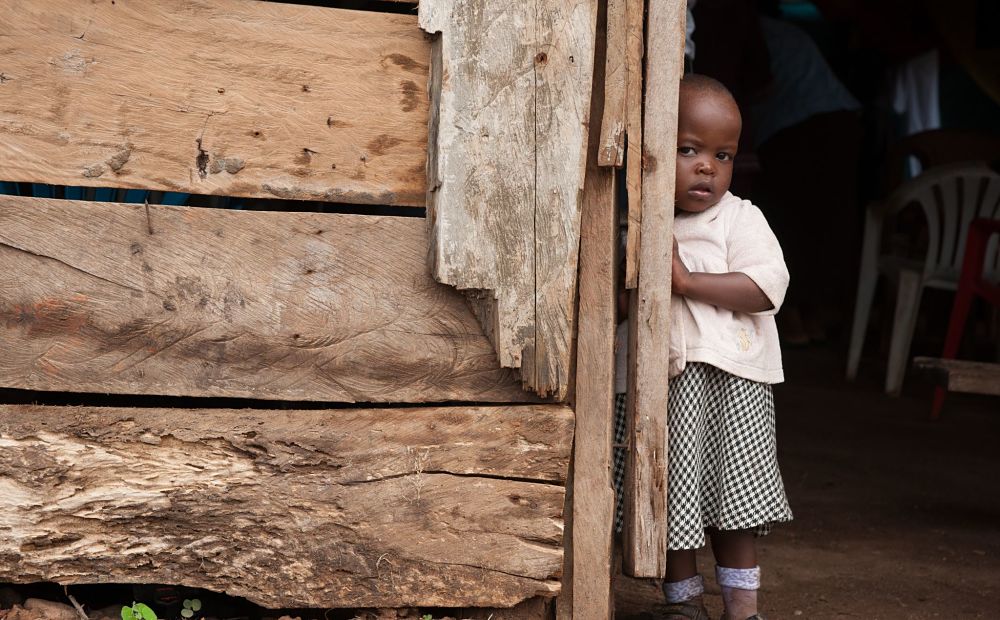
Hunger is a living, breathing thing that seems to be consuming the world one impoverished nation at a time. The numbers keep fluctuating and more of the world falls into malnutrition. Here are 10 world hunger statistics to raise awareness about people struggling with hunger.
1. On a regular basis, 842 million people in the world do not get enough to eat.
While the number of people struggling with hunger has fallen by 17% since 1990, the percentage of people who are hungry has grown by 7% since 2009.
2. The majority of hungry and impoverished peoples live in developing nations.
Nearly 15% of the people in developing nations can be malnourished, while 7% of the people in first world nations and developed countries go hungry.
3. Asia has the most hungry people.
More than 500,000 people in Asian countries are malnourished; half of these people are children under the age of five.
4. Africa had the highest prevalence of hungry people.
Nearly 30% of people in Africa suffer from extreme hunger, meaning more of their population is hungry in comparison to the rest of the world.
5. First world countries spend more on pet food than they do helping the hungry.
Today alone in America and the UK, people have spent 44 million dollars on pet food and only five million on aiding people who are starving.
6. Americans wasted 124,000 tons of food today alone.
Each day Americans can waste up to 150,000 tons of food by throwing it away. Every year Americans alone have the potential to waste well over 1.8 million tons of food.
7. Five million people died of hunger this year.
This year so far, well over five million people have died of starvation or malnutrition. More than half of these deaths were children.
8. One in every 15 children dies from hunger in developing countries.
Children often face the worst parts of starvation or malnutrition. More children will die of starvation than adults each year.
9. Due to hunger, 315,000 women die in childbirth each year.
Women who do not get enough nutrients, most specifically iron, in their diets during pregnancy are at a greater risk of dying in childbirth from hemorrhaging. It is not uncommon for women, even women with child, to be forced to give up nutrient-heavy foods in lieu of their male counterparts.
10. More than half of people suffering from hunger in the world are in Asia and the South Pacific.
Roughly 63% of all the people suffering from starvation and malnutrition can be found in Asia and the South Pacific. This means more people are suffering in these two areas than there is anywhere else in the world.
While starvation is preventable, millions of people will still die each year from not having enough food or enough nutrients to survive. Isn’t it time you did something?
– Cara Morgan
Sources: Do Something, Stop the Hunger, World Hunger, World Food Programme
Photo: Flanboyant Eats

Social Media and Global Health
Social media has been transforming the way in which information about global health is being spread. For example, the Strategic Health Operations Centre in the World Health Organization utilizes social media to help manage global health crises. By paying attention to social media, WHO is able to receive up-to-the-minute updates about global health, as well as being able to rapidly share important health information with millions around the world. WHO has two staff members simply devoted to social media. Other world health organizations are beginning to follow suit.
While social media can allow for the rapid spread of information about global health issues, there are also risks involved with using social media with issues about global health. Social media can sometimes provide an avalanche of data that can be difficult to sort through. Similarly, some of the information could be inaccurate or misleading.
Regardless of the benefits and disadvantages of social media and global health, social media does play a large role in global health. Here are three recent popular social media posts that focus on global health:
1. The Council on Foreign Relations generated a map of vaccine-preventable outbreaks around the world.
2. GAVI launched a colorful graph of vaccine introductions organized by countries, diseases and number of people reached for the last few years.
3. A Twitter campaign launched by End Polio Now celebrated India becoming polio free with a picture illustrating its successful immunization campaign.
While there are drawbacks to using social media to discuss global health, the images created by global health initiatives are still effective ways of educating people about important issues relating to global health. Similarly, by using technology to generate graphs or share pictures, social media allows for information that is more interesting and accessible to be shared, while presenting this information in a format that is easy to understand. As long as it is easy to find and accurate, social media can truly be a powerful tool for educating the world about issues relating to global health.
-Lily Tyson
Sources: Huffington Post, Impatient Optimists, SciDevNet
Photo: hcsmmonitor
Pollution & Health in India
China has become infamous due to its high levels of air pollution, but another Asian country has a staggering pollution problem as well: India. According to a study done by the World Health Organization, the Indian capital of New Delhi has the most polluted air in the world. Furthermore, the top four most polluted cities are all located in India, indicating a countrywide problem.
Pollution is monitored by measuring the size of the particulate matter (PM) in a certain concentration per a specific amount of air. In May, the New York Times reported that air pollution was found at 2.5 PM (meaning “particulate matter less than 2.5 micrometers in diameter”), concentrated at 350 micrograms in one cubic meter of air. The most alarming part is the size of the particulate matter. The New York Times discloses that 2.5 PM “is believed to pose the greatest health risk because it penetrates deeply into lungs” due to its small size.
Time Magazine reports that air pollution was the “fifth largest killer in India” in 2013. A myriad of respiratory issues, some “unidentified,” were the cause of 600,000 premature deaths. The Indian Journal of Community Medicine outlined some of the medical issues directly associated with pollution in Delhi, and compared the prevalence of those issues with rural communities. Respiratory symptoms all around were 1.7 times higher, upper respiratory symptoms were 1.59 times higher, and lower respiratory symptoms were 1.67 times higher. Rates of asthma were “significantly higher” and overall lung function was diminished.
The list of problems goes on, including headache, eye and skin irritation, increased blood levels of lead, and even a connection to ADHD in children. Schools have been closed on days with especially poor air quality, parents try to keep children indoors as much as possible and physicians discourage outdoor exercise for the elderly.
The Indian Journal of Community Medicine reports that even in 1997, the amount of air pollution was excessive. 3000 metric tons of air pollution was produced by Delhi alone, “with a major contribution from vehicular pollution, followed by coal-based thermal power plants.” The study reported that there were 3.4 million cars on the roads of Delhi in 1997. That number has risen to 7.2 million in 2014.
The problem, while once neglected, can no longer be ignored. The government in Delhi has imposed some measures to decrease the amount of pollution. Various policies calling for less harmful car fuels have been instituted. Different roads and subways have been constructed, with the intention of “smoothing traffic flow.” Drivers are required to obtain a “Pollution Under Control” certificate for their vehicles as well.
Industrial policies exist as well, but their plans are far more vague in a “comprehensive document envisioning higher industrial development in Delhi, with one of its mandates being to develop clean and non-polluting industries.” While these plans are ideal, they do not explicitly call for immediate action.
Researchers call for “existing measures to be strengthened and magnified to a larger scale.” While government policies provide the guidelines, it is up to “participation of the community” to insure that reduction in pollution actually happens. Use of public transportation, continual checking of Pollution Under Control certificates and greater education on reduction measures is suggested.
-Bridget Tobin
Sources: The New York Times, National Center for Biotechnology Information, TIME
Photo: Every Stock Photo
Aspen Ideas Festival 2014
ASPEN, Colorado – Celebrating its tenth anniversary this summer, the week-long Aspen Ideas Festival brought together some of the most influential leaders from around the world to speak and present to audiences. The thought-provoking festival is organized by the Aspen Institute, an educational policy studies organization that aims to foster leadership based on lasting values and to provide a nonpartisan venue for tackling critical issues.
Held in Aspen, Colorado, the annual ideas exchange hosted seminars, panels and discussions from an array of presenters composed of innovators, politicians, artists, writers, diplomats, scientists, entrepreneurs and more. Notable figures at this year’s festival included Hillary Clinton, Al Gore, Tony Blair and David Petraeus, all four of who participated in the Afternoon of Conversation, an event that constitutes the halfway mark of the festival and features high-profile leaders who discuss solutions to today’s most critical issues.
This year’s theme was imagining 2024, and thinkers from all over the U.S. and abroad gathered to surmise what innovations the next decade might bring. Topics of debate and discussion encompassed future megacities, urban America in 2024, the shifting world of work in a networked economy, the fate of our forests, national security in 2024, fracking, the revolutions of the Middle East, the economics of happiness and a new cold war with Russia.
Showcasing the wide variety of topics covered, Harvard University President Drew Faust talked about the development of higher education in a digital environment while The Atlantic editor-in-chief James Bennet debated the ethics of genetically modifying embryos. At other discussions, College Board President David Coleman questioned the SAT and college preparation testing methods and former U.S. Director of National Intelligence Mike McConnell pondered with audiences on how to counter the foreign cyber attack threat on U.S. corporations.
Years ago, the Aspen Institute envisaged a gathering of leaders from myriad backgrounds and specializations to discuss the issues of the day and come up with innovative solutions, citing the potential and power that comes from a forum where leaders, innovators and citizens alike debate and discuss global and societal issues. This vision culminated in the first Aspen Ideas Festival in 2005, which featured such prominent speakers as Jane Goodall and Toni Morrison, whose ranks have been joined by key figures like Bill Gates and Sandra Day O’Conner since that first festival.
The 2014 Aspen Ideas Festival took place from June 24 to July 3. The festival’s events were streamed live throughout the festival on The Atlantic, National Public Radio, and the festival website, the last of which also archives videos and audio from past AIF events.
— Annie Jung
Sources: Aspen Ideas Festival, The Atlantic, The Aspen Institute
Photo: TIME Magazine
mDiabetes for a Healthy Ramadan
As many Senegalese begin celebrating Ramadan, those with diabetes must be particularly careful fasting and feasting because it can trigger complications, and put their health at risk.
Every year during Ramadan in Senegal, there is a spike in those needing urgent hospitalization due to uncontrolled diabetes. To help solve this problem is mDiabetes, a free service that sends text messages to mobile phones before, during and after the month of Ramadan to give those with diabetes tips and tricks to fasting safely.
Text messages include advice such as,
“Drink one liter of water every morning before you begin fasting.”
“Take care to not overeat and watch out for foods high in sugar such as dates.”
“Ask your doctor to adapt the dose and timing of your diabetes medication before you fast.”
Simple texts like these will help the thousands of people living in Senegal with diabetes, which has increased in the past decade due to rapid urbanization. Obesity in young people has escalated drastically, putting them at risk for type 2 diabetes. It is estimated that four to six percent of the Senegalese population are living with diabetes, at least 400,000 people, yet only 60,000 have been diagnosed.
Part of the difficulty lies in the fact that many are unaware that they even have diabetes since they do not know the causes or symptoms. This is particularly common in rural areas where access to health services is limited.
mDiabetes is part of a campaign by the World Health Organization (WHO) and the International Telecommunication Union (ITU) called, “Be He@lthy Be Mobile.” Through the use of technology such as text messages and apps, they can “control, prevent, and manage non-communicable diseases such as diabetes, cancer, and heart disease.”
Similar programs have been implemented in other countries such as the mCessation program in Costa Rica for tobacco, mCervical cancer program in Zambia and others like mHypoertension and mWellness have been planned for the future.
Eighty-three percent of the Senegalese population have mobile telephones, and 40 percent of those have smart phones, capable of receiving pictures and videos. Utilizing this technology that is becoming increasingly more prevalent in the daily lives of those around the world, is effective way to educate thousands, at no cost to the public.
Thanks to mDiabetes, this Ramadan thousands of Senegalese will be able to fully practice their faith without risking their health.
— Kim Tierney
Sources: World Health Organization, Diabetes and Ramadan International Alliance
Photo: Hong Kiat
Population Action International’s Impact
Population Action International is a nonprofit organization that “advocates for women and families to have access to contraception in order to improve their health, reduce poverty and protect their environment.” Its goal is to stem rapid population growth which will help lift families out of poverty and prevent damage to the environment caused in high population density areas.
The organization divides its work into a few different areas including advocacy and research. Each area strives to increase access to contraception around the world.
In terms of advocacy, Population Action International works both in the United States and abroad to create political support behind contraception programs.
For example, in the U.S., the organization works directly with Congress to promote reproductive health programs. Population Action International has made significant progress doing so over the last few years, including helping to significantly increasing funding for family planning. PAI is currently “working hard to protect these gains in the face of spending cuts and attacks on women’s health programs.”
On the global level, the organization supports countries by providing grants to fund family planning advocacy programs, often in developing countries. Because access to contraception is not a high priority in certain countries, these Population Action International grants are often the only source of funding for in-country advocacy programs.
One of Population Action International’s key research areas is identifying “links between demographics for governments and global institutions to combat poverty, ensure growing nations develop sustainably, and create a more stable world.”
When countries have uncontrolled population growth with little to no access to contraception, poverty is often a result, which can lead to conflict. PAI’s research in this field has identified relationships between large population growth and a number of factors including food security, health, climate change, violent conflict and economic progress.
Because of the results of this research, the organization believes that providing high population, low socioeconomic communities with contraception will enable them to thrive again.
In addition, Population Action International focuses its research on the effects large population growth areas have on climate change. Larger populations put increased pressures on the environment, whether that means using more resources or occupying more land. Supporting family planning, therefore, also supports environmental protection, the organization argues.
According to Population Action International, they exist “because providing women the family planning they want can save hundreds of thousands of lives.” The organization is a leader in the field of contraception, providing women around the world with access to reproductive health services in the hopes that it will help stem population growth and, among other things, alleviate poverty.
– Emily Jablonski
Sources: Charity Navigator, Population Action International, Vimeo
Displaced Syrian Refugees Seek Safety
The violent blitzkriegs currently commanding Syria and Iraq are causing unfathomably grave circumstances-so many that it is impossible to convey their consequent terror and devastation. Among countless other results, is the widespread population displacement occurring throughout the region.
It is estimated that 2.8 million displaced Syrian refugees are currently residing in neighboring areas, such as northern Iraq, having been forced out of their native country due to the infamous civil war. This number significantly increases daily, as the violence continues to grow in breadth and magnitude. Over 9.3 million Syrian refugees have been displaced as a result of the conflict. Many refugees are living in camps and in host communities in the Kurdish, northern region of Iraq. In last August, alone, over 60,000 Syrian refugees arrived at these designated camps. In one record day that month, a whopping 10,000 refugees arrived. Initially, the Iraqi government accepted the refugees and accommodated their medical needs, in addition to providing shelter and work permits. However, the massive influx stretched the Iraqi accommodations, dramatically.
This is a growing humanitarian crisis that demands attention. An average of 100,000 Syrians are registering as official refugees, every month. The refugees often suffer from dehydration and diarrheal diseases as a result of scarce resources, poor nutrition, and unhygienic conditions. Among the millions are a considerable amount of children; the United Nations reported that, of the displaced, over 1.4 million are child refugees. These circumstances are inherently devastating and disorienting; for children it is particularly disrupting, as they are forced to pick up and leave, ending their educations in the process. The crowded conditions have been conducive to child outbreaks of polio and measles, threatening the children’s lives, as well as their safety and well-being.
Humanitarian group Mercy Corps has intervened on behalf of all the refugees, as well as the child refugees. They have been distributing necessary items, such as shelter materials and mattresses. They additionally built a playground for children and brought toys to an Arbat refugee camp, to ease the children’s traumatic transitions. World Vision is also helping to alleviate refugee strife; the group has been distributing personal sanitation supplies and clean water. They are providing education services for children in addition to creating Child-Friendly Spaces, which are designated areas in which children can play and unwind.
As the conflict continually unfolds in geographical conjunction with the current crises resulting from the ISIS presence, the amount of displaced refugees increases daily.
– Arielle Swett
Sources: MercyCorps, World Vision
Photo: UNHCR
10 World Hunger Statistics
Hunger is a living, breathing thing that seems to be consuming the world one impoverished nation at a time. The numbers keep fluctuating and more of the world falls into malnutrition. Here are 10 world hunger statistics to raise awareness about people struggling with hunger.
1. On a regular basis, 842 million people in the world do not get enough to eat.
While the number of people struggling with hunger has fallen by 17% since 1990, the percentage of people who are hungry has grown by 7% since 2009.
2. The majority of hungry and impoverished peoples live in developing nations.
Nearly 15% of the people in developing nations can be malnourished, while 7% of the people in first world nations and developed countries go hungry.
3. Asia has the most hungry people.
More than 500,000 people in Asian countries are malnourished; half of these people are children under the age of five.
4. Africa had the highest prevalence of hungry people.
Nearly 30% of people in Africa suffer from extreme hunger, meaning more of their population is hungry in comparison to the rest of the world.
5. First world countries spend more on pet food than they do helping the hungry.
Today alone in America and the UK, people have spent 44 million dollars on pet food and only five million on aiding people who are starving.
6. Americans wasted 124,000 tons of food today alone.
Each day Americans can waste up to 150,000 tons of food by throwing it away. Every year Americans alone have the potential to waste well over 1.8 million tons of food.
7. Five million people died of hunger this year.
This year so far, well over five million people have died of starvation or malnutrition. More than half of these deaths were children.
8. One in every 15 children dies from hunger in developing countries.
Children often face the worst parts of starvation or malnutrition. More children will die of starvation than adults each year.
9. Due to hunger, 315,000 women die in childbirth each year.
Women who do not get enough nutrients, most specifically iron, in their diets during pregnancy are at a greater risk of dying in childbirth from hemorrhaging. It is not uncommon for women, even women with child, to be forced to give up nutrient-heavy foods in lieu of their male counterparts.
10. More than half of people suffering from hunger in the world are in Asia and the South Pacific.
Roughly 63% of all the people suffering from starvation and malnutrition can be found in Asia and the South Pacific. This means more people are suffering in these two areas than there is anywhere else in the world.
While starvation is preventable, millions of people will still die each year from not having enough food or enough nutrients to survive. Isn’t it time you did something?
– Cara Morgan
Sources: Do Something, Stop the Hunger, World Hunger, World Food Programme
Photo: Flanboyant Eats
Every Newborn Action Plan Targets Preventable Deaths
Five babies are born every second, and every day over 400,000 women around the world facilitate the miracle of life. Many of these children, however, are given poor chances of survival. 44 percent of children who die before their fifth birthday are taken from the world within their first month of life. 2.9 million babies die within the first month, and an additional 2.6 million babies are stillborn. Arguably more alarming than the statistics is that these deaths are typically preventable.
That’s where the Every Newborn Action Plan (ENAP) comes in. Endorsed in May and launched on June 30, ENAP is an initiative aimed at accelerating action to prevent the numerous newborn deaths around the world. USAID, the UN and other global organizations have banded together to support and promote this plan.
Children are at their most vulnerable during the child delivery process and the first few months of life. Prematurity, asphyxiation and infection are among the serious threats to newborn survival, but they can be minimized with the right steps. Training doctors and nurses to anticipate and prevent these possibly fatal conditions is a vital step in minimizing newborn deaths, and ENAP aims to address this.
ENAP was launched in Johannesburg, South Africa, where the UN Secretary General, Ban Ki-Moon spoke. He said, “If we increase investments, focus on equity and promote human rights, we can create a world free of preventable maternal and child deaths in just one generation.”
The plan has a timetable, hoping to reduce the neonatal mortality rate per 1000 live births from 15 to 7 by 2035, with less extreme mile markers between now and then. To achieve these goals, over 90 countries have to get behind the movement and accelerate their progress and 29 of these countries will have to “more than double current rates of progress in policy and private sector commitments to save newborn lives.” ENAP outlines how this can be achieved.
ENAP focuses on improving healthcare across myriad specialties including prenatal, pregnancy, postnatal and infant care. It emphasizes thoroughness at every stage, beginning with early pregnancy and not ending until the child and the mother are experiencing stable health. Their plan includes a checklist of criteria for improved pregnancy healthcare, including points like “early initiation of breastfeeding” and “birth companion of choice and skilled attendant at birth.” These things are often a given in the U.S., but are sometimes a luxury in impoverished countries.
Higher survival rates for newborns and mothers would mean great things for fighting global poverty. Population growth is often uncontrollable in impoverished areas because, without a guarantee that children will survive, families often have more children than they can support. This puts strain on communities and lowers quality of life standards significantly. As ENAP reduces newborn deaths, population growth can transition to a steadier rate that can be more easily supported by countries, which will lead to more stable economies and happier people.
With the backing of countries worldwide, the support of institutions such as USAID and the UN and effective implementations of the guidelines of the plan, Every Newborn Action Plan has the potential to save millions of lives in just over two decades.
– Magdalen Wagner
Sources: United Nations, World Health Organization, GhanaWeb, Huffington Post, Mail Online
Photo: IBTimes
Defining a Third World Country
The term “third world country” was created during the Cold War and was used to categorize a country’s alignment during the war. There were three categories at this time: those countries whose views aligned with the North Atlantic Treaty Organization and capitalism (i.e. the First World); those countries whose views aligned with the Soviet Union and communism, (i.e. the Second World); and all the other countries, aligned with neither view, the “Third World.”
Today, the term “third world” is an antiquated term most commonly used to describe the developing countries in Asia, Africa and Latin America, and is a term typically associated with poverty. What classifies a country as part of the “Third World”? Below are four of the indicators that are used to classify third world countries:
1. Low Gross National Income (GNI)
Third world countries experience low economic development, and high rates of poverty. For the 2015 fiscal year, low-income economies—such as those in Tanzania, Haiti and Cambodia—are defined as those with a GNI per capita of less than $1,045 in 2013. The GNI for high-income economies, such as the United States, is $12,746 per capita.
2. Economic Dependence on Other Countries
Developing third world countries, as a result of the state of their economies, rely heavily on more economically and technologically advanced countries. And, third world countries’ economies—which, for the most part, lack modernity and independence—are typically geared towards serving and are controlled by more developed countries. This imbalance of control and dependence widens the gap between the wealthy countries, such as the U.S., and low-income economies such as Cameroon’s.
3. Low Human Development Index (HDI)
The HDI, published annually by the United Nations, measures three basic dimensions of human life: knowledge, a long and healthy life and a decent standard of living. The U.S. is ranked fifth on the HDI scale, while a developing country such as the Democratic Republic of Congo is ranked 186th.
4. Lack of Political Rights and Civil Liberties
Most of the world’s poorest countries are also the countries for which there is a severe lack of political rights and civil liberties. Developing countries such as Sudan are war-torn and civil liberties and rights almost nonexistent in the wake of the violence and war crimes. Citizens of the U.S. experience a life that is on the complete opposite end of the spectrum, with basic rights such as the right to an education strongly in place.
There are other indicators when it comes to categorizing a country as “third world,” and certainly not every developing country shares each of the above characteristics. But one thing is clear: millions of people around the world are citizens of countries in which daily life is excruciatingly difficult.
Poverty, limited access to education, low standards of living and lack of civil liberties and political rights are just a few of the realities for the many third world countries that exist alongside wealthy nations such as the U.S. If wealthier nations stepped in and did more to assist third world countries, surely the term would dissipate, following the alleviation of the effects of extreme poverty.
– Elizabeth Nutt
Sources: The World Bank, One World – Nations Online, United Nations Development Programme, Blurtit
Photo: Mental Floss
Education in the Middle East
The Education for All goals, as part of the Millennium Development Goals, aim to ensure that children everywhere, boys and girls, have basic access to education in the Middle East by 2015. However, certain places in Middle East such as Iraq and Yemen are unlikely to achieve this goal.
Iraq
Decades of war and a poor economic situation in Iraq exacerbated the local education system. According to IRIN news, at least five million of Iraq’s almost 30 million total population cannot read or write. Fourteen percent are school-age children who work to feed their families or simply have no access to education. Also, Iraq has the highest adult illiteracy rate, with almost 30 percent of its rural population unable to read or write.
Yemen
As the civil war between the government and the rebel groups goes on, education in Yemen has been seriously disrupted. In the North of Yemen, where most of the conflicts took place, schools were destroyed or damaged during fighting. According to IRIN, a reallocation of 10 percent of the military budget to education would afford 840,000 children to go back to school.
A video, getting thousand of hits on youtube, shows a Palestinian child carrying a weapon and claiming that he wants to become a martyr and take revenge on Israeli soldiers for killing his uncle. The anti-Semitic rhetoric teaches children violence in the name of Islamic Honor. However, Mahmoud Al-Habbash, the Palestinian Minister of Waqf and Religious Affairs, condemned the efforts to teach children violence and revenge. The belief of “an eye for an eye” will only generate more hatred instead of peace.
During times of conflict, children are afraid to go to school and parents are afraid to send their children to school. Most of the time, children suffer psychological trauma and witness losing their family members. The ultimate method for returning children to school is to stop local violence and regain confidence in education to provide hope for the future.
– Jing Xu
Sources: i24 News, IRIN News
Photo: Learning for Peace: UNICEF