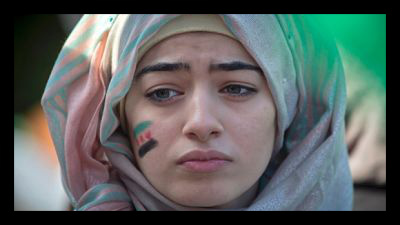
Human Rights Watch (HRW) has recently released a report titled “We are still here: Women on the front lines of Syria’s conflict,” which details the increasingly significant role women in Syria have been playing over the past three years during the vicious war as well as the additional obstacles that women must face.
Protests against the Syrian government began in 2011, and they quickly erupted into a deadly civil war, pitting antigovernment militias against government forces. According to the United Nations, the war has killed 150,000 people and displaced over nine million. As of June, half of the entire population of the country is currently in need of humanitarian aid.
The report released by HRW includes the stories of 17 different women who fled this destruction in Syria and are now refugees in the neighboring country of Turkey. “Their experiences reflect the various roles that women, particularly those opposed to the government or living in areas that came under government attack, have taken on as political activists, caregivers, humanitarians, and providers, as well as the particular ways in which conflict impacts women.”
Because many men have had to leave their homes due to “indiscriminate attacks, arbitrary detentions, enforced disappearances, or engagement in military operations,” women have become especially vulnerable, having less support in the case of an emergency, and having the additional responsibility of sole breadwinner.
Raids by armed forces and abductions, in which women are more highly targeted, become larger threats without this support. When women are abducted or arbitrarily detained, they are also disproportionately prone to receive abuse, including sexual assault and torture.
Some armed groups have explicitly targeted women in Syria, putting in place discriminatory policies that limit “women’s engagement in public life and ability to move freely” and “their access to education and employment.” In addition to fear of conflict, these types of overt restrictions severely limit women’s mobility.
However, many women are fighting back. Maha, a Syrian woman and founder of a peaceful activism organization, is continuing her organization’s civic work in Syria even though she fled the country after losing her husband to a government attack.
Maha is worried, however, that the work her organization and others like it are doing is being covered by the images of violence, saying, “On the news, you only see blood and destruction. You don’t see that behind it, there are civilian groups doing things peacefully.”
This HRW report has helped to shed light on the experiences Syrian women have had during this troubling conflict. They are at a disproportionately high risk to experience abuse and many have had to assume challenging and dangerous leadership roles.
“Recognizing women’s multiple and significant roles in the conflict,” the report noted, “and their experiences as both actors and victims, is critical to developing appropriate responses to women’s needs inside Syria and in refugee communities and to ensuring their ongoing and meaningful participation in determining Syria’s future.”
– Emily Jablonski
Sources: Al Jazeera America, Human Rights Watch
Photo: CTV News

Women in Syria
Human Rights Watch (HRW) has recently released a report titled “We are still here: Women on the front lines of Syria’s conflict,” which details the increasingly significant role women in Syria have been playing over the past three years during the vicious war as well as the additional obstacles that women must face.
Protests against the Syrian government began in 2011, and they quickly erupted into a deadly civil war, pitting antigovernment militias against government forces. According to the United Nations, the war has killed 150,000 people and displaced over nine million. As of June, half of the entire population of the country is currently in need of humanitarian aid.
The report released by HRW includes the stories of 17 different women who fled this destruction in Syria and are now refugees in the neighboring country of Turkey. “Their experiences reflect the various roles that women, particularly those opposed to the government or living in areas that came under government attack, have taken on as political activists, caregivers, humanitarians, and providers, as well as the particular ways in which conflict impacts women.”
Because many men have had to leave their homes due to “indiscriminate attacks, arbitrary detentions, enforced disappearances, or engagement in military operations,” women have become especially vulnerable, having less support in the case of an emergency, and having the additional responsibility of sole breadwinner.
Raids by armed forces and abductions, in which women are more highly targeted, become larger threats without this support. When women are abducted or arbitrarily detained, they are also disproportionately prone to receive abuse, including sexual assault and torture.
Some armed groups have explicitly targeted women in Syria, putting in place discriminatory policies that limit “women’s engagement in public life and ability to move freely” and “their access to education and employment.” In addition to fear of conflict, these types of overt restrictions severely limit women’s mobility.
However, many women are fighting back. Maha, a Syrian woman and founder of a peaceful activism organization, is continuing her organization’s civic work in Syria even though she fled the country after losing her husband to a government attack.
Maha is worried, however, that the work her organization and others like it are doing is being covered by the images of violence, saying, “On the news, you only see blood and destruction. You don’t see that behind it, there are civilian groups doing things peacefully.”
This HRW report has helped to shed light on the experiences Syrian women have had during this troubling conflict. They are at a disproportionately high risk to experience abuse and many have had to assume challenging and dangerous leadership roles.
“Recognizing women’s multiple and significant roles in the conflict,” the report noted, “and their experiences as both actors and victims, is critical to developing appropriate responses to women’s needs inside Syria and in refugee communities and to ensuring their ongoing and meaningful participation in determining Syria’s future.”
– Emily Jablonski
Sources: Al Jazeera America, Human Rights Watch
Photo: CTV News
Refugees in Lebanon Increase with Renewed Conflict
While the current international focus in the Middle East has centered around Syria and the recent violence in Iraq, the impact of increased civil strife across the region will have serious implications for Lebanon.
The Syrian civil war has been going on for four years now, bleeding out into other areas as millions have been displaced from their homes. A huge influx of Syrian refugees have fled to neighboring Lebanon over the past several years, contributing to rising tension within Lebanon’s borders.
In order to escape the violence in their country, nearly 2.5 million Syrians have fled. There are currently over one million refugees in Lebanon alone; nearly half of the total number.
Lebanon’s current political system will not have a high tolerance for conflict as the country has just recently come out of a 15-year civil war.
The problem with Syrian refugees in Lebanon will come with challenges beyond the normal problems associated with displaced people. Refugees from Syria have the potential to increase sectarian violence among Sunni and Shiite communities. The Shiite militant organization Hezbollah supports Syrian president Bashar al-Assad’s regime. This provokes violence in Lebanon from an outraged Sunni community. The Sunni faction ISIS has been taking advantage of a weak government in both Syria and Iraq in order to take control of areas in hopes of creating their own Islamic state.
When leaders of Lebanon’s religious factions lose control over their territories, historically, chaos breaks out. Attacks occur in the form of kidnappings, assassinations and bombings.
Apart from violence, the refugee overflow overwhelms Lebanon’s already fragile infrastructure. Water, electricity and waste management systems have the potential to break down. This could lead to a disastrous shortage of water and electricity which in turn would allow for the spread of disease and contamination.
The United States knows that preventing escalating conflict in Lebanon is necessary to avoid further violence across the region, and to decrease the likelihood of extremists groups expanding. Renewed conflict in Lebanon could also threaten Israel, a U.S. ally, if religious extremists groups continue to grow.
There is no easy solution to growing tension in Lebanon due to the increasing number of refugees. In order to avoid a renewed conflict in Lebanon, state institutions must be effective in calming the growing violence and tension between religious groups. Additionally, public healthcare and sanitation services must be enhanced.
According to Council of Foreign Relations Senior Advisor Monica Yaccoubiana, avoiding a conflict in Lebanon will take a huge effort to mitigate spillover effects of the Syrian conflict. These efforts must include ensuring humanitarian access to civilians inside Syria, working with the United Nations to improve access for aid groups, increase funding for assistance and initiating high level meetings between global political leaders and Lebanese officials in order to encourage consensus building and implement solutions.
– Caroline Logan
Sources: CFR, BBC, UNHCR
Photo: Al Jazeera
Conflicting Results on Microcredit Alleviating Poverty
A new experimental study, out June 10th of this year, examines how microcredit, or the lending of small amounts of money at low interest to new businesses in the developing world, may not help jump start poor populations’ financial growth as much as some may think.
The authors of the study, Bruno Crepon, Florencia Devoto, Esther Duflo, and William Pariente, randomly assigned 162 villages in rural Morocco to either receive microcredit (these villages would serve as the treatment group) or not to receive it (and these would serve as the control group).
The researchers, who are affiliated with the Abdul Latif Jameel Poverty Action Lab (or J-PAL), found that microcredit does not lead to families and businesses exiting poverty in the long-run.
This is in opposition to a similar study conducted by Shahidur Khandker and Hussain Samad of the World Bank in March 2014 which found that microcredit increased personal expenditure, labour supply, household assets and schooling of children in impoverished communities of Bangladesh.
Furthermore, Bono, whose humanitarian work in developing nations is highly documented, has lauded microcredit as an effective means of alleviating poverty, stating, “Give a man a fish, he’ll eat for a day. Give a woman microcredit, she, her husband, her children and her extended family will eat for a lifetime.”
However, the researchers at J-PAL found that microcredit decreased the amount of time Moroccan laborers spent on work. The effect on investment was greatly offset by a reduction in income from wages. The researchers concluded that access to microcredit, at least in Morocco, did not result in income gains, personal consumption or education of the youth.
Writers at the Economist are attempting to analyze the conflicting results of these two studies, and learn why they produced such significant differences. One theory is that microcredit may only reduce poverty and increase income in the long run, making short term studies irrelevant and ineffective at gleaning a meaningful answer.
The two studies also took place in two very different countries on separate continents. One can reasonably conclude that there may be social, environmental, or political factors at play, as well. Economists refer to this issue as “external validity,” meaning the extent to which a study’s results are generalizable outside of its given context. The effects of microcredit may not be clear until researchers readily take place, setting, and social and political structures into account.
Further research is needed to know whether lending sums of money to businesses in poor areas of the developing world may actually be a beneficial policy. Crepon and his co-authors are currently planning a follow-up experiment to study the long term implications of microcredit. All involved hope to find some answers to these questionable methods of alleviating global poverty.
-Paige Frazier
Sources: The Economist, The World Bank, MIT Economics, Look to the Stars
Photo: African Microfinance Network
The Need for Education in Malawi
This week marks Malawi’s 50-year anniversary of independence from Britain. While this is quite a milestone, the country is still in desperate need of improvements, including education.
Malawi is considered to be one of the least developed countries in the world. Up to 40 percent of the country’s budget is funded by donors and outside sources. The United Kingdom is their main sponsor, funding programs for social development, health, education and agriculture.
According to UNICEF, 61 percent of Malawi’s population lives below the poverty line of less than $1.25 per day. Malawi has fallen behind its neighboring countries, as many of them have moved from the low-income bracket to middle-income.
However, Malawi has seen some improvements over the past few years. In 2008, Malawi had the second-fastest growing economy in the world. In 2009, the economy recorded a 9 percent annual growth. Despite these few victories, the country as a whole is still declining.
The largest barrier for Malawi in continuing its growth and development is the country’s lack of education. Only in recent years has education become a focus for the government. During the 2012-2013 fiscal year, 24 percent of Malawi’s budget was allocated specifically for education. Within this percentage, over half of it was set aside for progress in primary education.
A lack of resources, however, makes it difficult for the money to go toward a good use. Schools are lacking in qualified teachers, and classrooms are filling up with 100 students at a time. Education standards are impossible to keep high when there are no sufficient resources.
Increasing education in Malawi will be a huge step toward improving the country’s development. Having an education can increase a person’s income significantly, thus allowing families to help bring themselves out of poverty.
Additionally, education can change major life outcomes, especially for women. UNESCO reports that if all women in sub-Saharan Africa completed primary education, the maternal mortality rate could drop by up to 70 percent. Education also encourages women to wait until a later age to be married, which increases their potential for success.
Malawi would benefit immensely from increasing its education system. It is the key to reducing poverty and spurring developmental growth for the country. Without education, Malawi will be at the same state when the country celebrates its 100-year anniversary of independence.
– Hannah Cleveland
Sources: The Guardian, Al Jazeera
Photo: GOAL Malawi Education
The Reemergence of Tourism in Cuba
Before the Cuban Revolution and Fidel Castro’s rise to power in 1959, Cuba was a popular tourist destination for Americans. Now, only those over the age of 60 can remember a time when the governments of the United States and Cuba were on speaking terms.
In recent years, the Obama Administration has made efforts to improve relations with the neighboring country, including easing the economic embargo—though not lifting it—and allowing Cuban Americans to visit and send money to their families. This has been progressed in part by Raúl Castro taking over as president of Cuba. He has expressed interest in working with the U.S., something his brother never did.
In the wake of these changes, it is also much easier for the average American citizen to travel to Cuba. In the past, it was nearly impossible to reach Cuba without going through another country first. However, it was not the Cubans attempting to keep out American tourists, but rather the American government trying to keep American tourists out of Cuba in order to prevent the spread of communism.
Even now, with the Cold War long over, tourists must travel with a tour group, which will keep them busy with a multitude of activities every day, leaving barely any time for individual exploration. Despite this restricted travel, it has been reported that a half million Americans now legally travel to Cuba every year. This number is expected to grow in the coming years. The nation’s best year for tourism to date was 2013. Tourism is once again becoming an integral part of the Cuban economy.
A typical job in Cuba pays $16 a month. Someone with a well-paying career, like a doctor, will make $30 a month. Now, with an increase in tourism, working at a hotel is a coveted position. One waitress who serves in a hotel restaurant said that on a good night she will make roughly $15 in tips, which is enough to eat three meals a day, pay the electricity bill and purchase a new pair of shoes.
While some believe that the money coming in through tourism in Cuba will trickle down and benefit all Cubans, there is concern among many that it will only serve to create an economic divide between the “haves and the have nots” similar to pre-revolution Cuba. Though the Castros have been promising for years to create a socialist society that still allows for a somewhat capitalist economy with privately owned businesses and competition, changes have been slow to come about. The typical Cuban town is a mix of old, dilapidated buildings with propaganda posters of Fidel Castro in the windows and new, nicer businesses that attract tourists and Cubans who possess more money to spend than the average citizen.
Despite the fact that change may be slow, there is no denying that it is coming. The majority of Cubans are optimistic about the future of their country and their own livelihoods. Even simple sugarcane farmers express excitement that the world is paying more attention to Cuba, citing recent investments from Canada into Cuban sugarcane. The country’s hope and optimism lies in the possible end to the Castro era and the U.S. embargo, which they feel would create the new, prosperous Cuba that is just out of reach.
– Taylor Lovett
Sources: NPR, WABE, Time
Photo: Vintage Ad Browser
Winning the Battle Against Hunger
By the end of 2013, the Food and Agriculture Organization of the United Nations recognized 38 countries that were able to reduce by half the proportion of people suffering from hunger. The result meets the objective for the first U.N. Millennium Development Goal. In 2014, more nations continue to successfully reach the goal.
On 16 June 2014, the FAO recognized China, Morocco and Chile for their exceptional efforts in the fight against global hunger and for achieving the first U.N. Millennium Development Goal, bringing the total number of nations to 40.
China has made significant strides. In 1990 – 92, 272.1 million people suffered from hunger; today that number has been reduced to 158.0 million. The progress accomplished by the Chinese is even more remarkable when looking further back into the nation’s history. In 1979, more than one third of the people in China were hungry and that number has declined to less than 10 percent, which is lower than in the United States. And the country has moved from a recipient of aid to a major global aid donor.
Morocco was also congratulated and formally acknowledged by the FAO for its hunger reducing policies. Impressively, undernourishment in the country dropped from 6.7 percent in 1990-92 to under 5 percent in 2011-13.
The FAO recognized Chile as well. Chile had already achieved the first Millennium Development Goal in 2013. The FAO awarded Chile with a diploma for achieving the 1996 World Food Summit target, which is a more challenging goal to achieve. The 1996 target stipulates that a country decrease the number of hungry people by half in 2015 as compared to the level in 1990. Chile was able to attain this by decreasing undernourishment in the population from 9 percent in 1990-92 to less than 5 percent in 2011-13.
Of the first 38 countries that reached the U.N. goal in 2013, currently 18 have also achieved the World Food Summit target.
The success of these three nations and the other 37 countries demonstrates how governments across the world are taking effective steps to fight hunger and are achieving tangible results. While the task of eliminating hunger may appear daunting, the FAO emphasizes the fact that the goal can be accomplished and that these nations are models for achieving it.
During the ceremony, the FAO also recognized regional movements that have formed to meet the U.N. Zero Hunger Challenge, which seeks to completely eradicate hunger. The organization expressed its support for the 2025 Latin American and Caribbean Hunger-Free Initiative and the African Union’s endorsement of the zero hunger goal for 2025.
While these achievements are pivotal, the FAO continues to stress the need for a continued global effort to reduce hunger. Despite the progress made, more than 840 million people go hungry everyday.
In order to engage continued commitment to fighting hunger and specifically ending malnutrition, the FAO and the U.N. World Health Organization, WHO, are organizing a global governmental meeting, titled the Second International Conference on Nutrition, which is scheduled for November 2014.
-Kathleen Egan
Sources: Food and Agriculture Organization of the United Nations, China.org.cn, Africa Top Success
Photo: China.org.cn
10 Facts About Humanitarian Aid
People talk about it all the time: should we be giving more, less, at all? To whom? When? But exactly how much do people really know about humanitarian aid? Here are 10 facts about humanitarian aid you should know:
1. How much?
It’s difficult to get an exact read on the amount of humanitarian aid given per year because there is no central reporting database and no organization has any obligation to share the amount of humanitarian aid they give. That said, a reasonable estimate for the amount of humanitarian aid given worldwide in 2013 was $22 billion.
2. Span
Humanitarian aid doesn’t just encompass international aid – it also accounts for domestic humanitarian spending.
3. What’s the difference?
Humanitarian aid is different from international aid in another way as well. For aid to be considered humanitarian, it must be allocated according to the principles of humanity, impartiality and neutrality. That is to say, humanitarian aid must be given to save life and prevent suffering considering only the need of the people affected and without supporting any political or military campaign. To put it simply, it’s giving for the good of giving.
4. When is it used?
Political instability in Central African Republic, South Sudan and Syria sent the amount of humanitarian aid given in 2013 to a record high. Humanitarian organizations respond not only to natural disasters and global health conditions but political unrest as well. Not only did government aid increase by nearly a quarter, but private donations increased significantly as well.
5. Is it enough?
It is estimated that one-third of all global need is still not being met.
6. What does it cover?
Responding to death and suffering is only one component of humanitarian aid. Another important part is preventing the situations that cause preventable death and human suffering. In fact, the U.N. recommends donors focus more aid on prevention, as it produces the greatest return on investment in terms of both saving money and reducing human suffering.
7. How much do we give?
Although the U.S. is the top national donor in terms donor in terms of raw dollars allocated to humanitarian aid ($4.7 billion in 2013), the percentage of its GDP it donates is among the lowest in the developed world. We can afford to give much more than we do.
8. Where does it go?
Despite overall increases in humanitarian aid during the past several years, nearly 25 percent of global humanitarian aid goes to just five causes, leaving many other important causes (such as refugees in Algeria) largely neglected.
9. What can it do?
Preserving human dignity is another central goal of humanitarian aid. It’s a hand up to fellow humans with the aim being that those people can eventually help themselves.
10. Is it effective?
Humanitarian aid is effective. For example, aid to West African countries experiencing drought in the last few years was effective in reducing the number of hungry individuals in the region. Though humanitarian aid may not initially be able to completely solve a problem, it is a proven way to improve lives.
– Elise L. Riley
Sources: Global Humanitarian Assistance, The Guardian
Photo: NYSED
Convention on the Rights of the Child
Although they are young, children have rights too. This year will be the 25th anniversary for the Convention on the Rights of the Child (CRC). Twenty-five years ago, certain countries of the United Nations made a promise through CRC that they would protect and promote children’s rights to thrive and survive, to make their voices heard and to allow them to reach to their full potential.
The Convention on the Rights of the Child is a treaty that recognizes the rights of children, including anyone below the age of 18. Since the year 2014, 194 countries have become State Parties to the Convention. It establishes a law that States Parties must ensure that children get health care and education and are able to develop their personalities, abilities and talents to their full potential. It also ensures that they grow up in a happy, loving and understanding environment.
Children should also be able to be informed about their basic human rights and how they should use them. The Convention was one of the first committees to recognize that children deserve human rights and that children are not objects or property of parents. CRC is often a reference that other organizations that work with children often look at to determine their framework.
There has been a lot accomplished through CRC, like declining infant mortality, rising school enrollment and more opportunities for girls. UNICEF has recognized this and has declared the year 2014 as the Year of Innovation for Equity. UNICEF wants to get the world’s attention to help develop solutions for children.
UNICEF promotes the principles and provisions of the Convention and the mainstreaming of children’s rights in a systematic manner, in its advocacy, programming, monitoring and evaluation activities.
– Priscilla Rodarte
Sources: UN Human Rights, UNICEF 1, UNICEF 2 Photo: UNICEF 3
Brutality in Buenaventura, Colombia
Over the years, Colombia has rebuilt its image, moving past stereotypes of violence and drug lords ruling the country. Yet Colombia is facing setbacks in one of its main port cities, Buenaventura. Over 400,000 people call Buenaventura home, and yet more than 50,000 residents have been forced to leave during the last three years due to a myriad of reasons, including extortion and forced gang membership.
Colombia made efforts to build international relationships such as The Pacific Alliance, a group that attempts to unite Latin American countries like Peru and Chile with Asian countries to further their economic reach. Despite the steps forward, the signing ceremony took place in Cali, Colombia, as far from Buenaventura as possible.
The Wall Street Journal reports that the instability stems from a right wing paramilitary group, the United Self Defense Forces of Colombia (AUC), that vowed to put down their arms a decade ago. This would have served as a peace agreement, but many members struggled to survive and picked up the weapons again to fight for survival.
The citizens of Buenaventura struggle to find solace, with 80 percent of its population living below the poverty line and 30 percent below the rate of unemployment, according to The Economist.
To make this danger more tangible, in late June, Colombian police found another dismembered body in the style of gang “chop houses.” This is the 15th body found in such a mutilated state.
Analysts believe the aggression stems from warring drugs gangs with the intent to control the territory and infiltrate the drug trade between southeast Asia and Central America between the sub groups of the national neo-paramilitary groups “Los Rastrojos” and “Los Urbeños.”
These displays of violence are not uncommon as the people of Buenaventura attempt to quietly avoid the brewing conflicts.
It is unlikely that Colombia will reach any sort of economic and social stability as the gang-related danger continues to brew. The country cannot progress when nearly half a million people are forced to live in fear.
– Elena Lopez
Sources: The Economist, Columbia Reports, WSJ
Photo: United Nations High Commissioner for Refugees
Victory for France’s Face Veil Ban
The European Court of Human Rights upheld France’s face veil ban on the wearing of face-covering veils in public settings. The ban, which went into effect three years ago, has caused widespread backlash from Muslim communities in France, which claim the ban imposes on their religious freedom and identity. Labeled as a means to help protect public safety and bridge social gaps, the imposition of the ban was strictly “due to the concealment of the face” and had no correlation with religious animosity, according to the Court.
A woman by the alias of S.A.S. testified against France’s face veil ban in court. A university-educated woman and French citizen, S.A.S. told the courts that she voluntarily wore the veils (the niqab, which leaves the eyes exposed, and the burqa, which covers the body from head-to-toe) and felt no pressure from her husband to wear the dress in public. S.A.S. wished to wear the veils during certain circumstances and felt the ban imposed on her religious obligation to do so.
At the time it was enacted, the Interior Ministry in Paris estimated only around 2,000 women in France still wore the niqab. This is a considerably low number for France’s Muslim community, which — at up to six million — is Europe’s largest. Only about hundreds of women have been fined for wearing the veil, which is usually at around 150 euros, or $215 US dollars.
The European Court, while aware the ban did affect certain members of the Muslim community specifically, upheld it on account of the veil’s restriction from those wearing it to show their face, which is considered a social right and safety concern. While the court denied the ban’s justification on improving public safety or women’s rights, they did agree that it improved social cohesion.
“Some people now feel entitled to attack women wearing the veil even though the infringement is no more severe than, say, a parking ticket,” Ray said.
Nevertheless, the French government has remained satisfied with the ruling, claiming it a victory for “gender equality.”
Sources: The Wall Street Journal, Mail Online, The New York Times
Photo: Telegraph