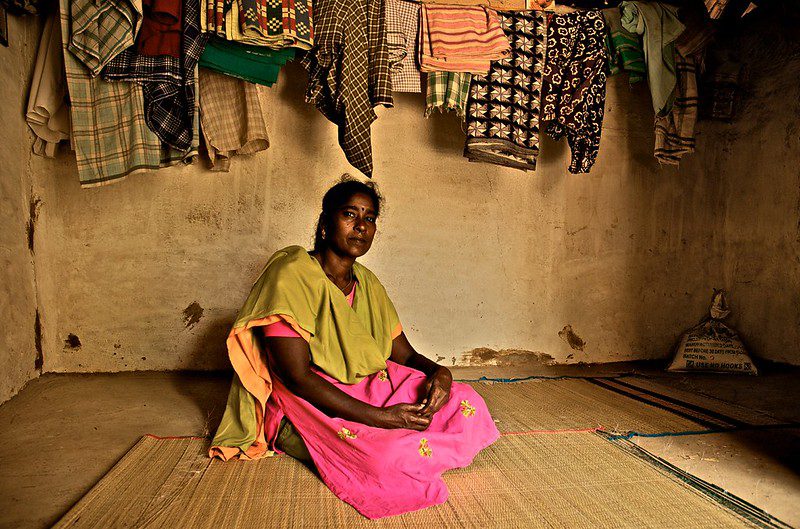
 Human trafficking in Sri Lanka continues to affect economically vulnerable communities, particularly women seeking work abroad due to limited local employment opportunities and financial instability. While many Sri Lankans migrate willingly in search of employment opportunities, economic instability and weak labor protections can increase the risk of trafficking and labor exploitation during the migration process. For women, gender inequality and limited employment opportunities often lead to work in low-wage sectors where legal protections may be weaker.
Organizations in Sri Lanka are expanding prevention, rehabilitation and community education programs aimed at reducing trafficking risks and supporting long-term poverty reduction. Efforts led by groups such as the International Organization for Migration (IOM) and Women in Need (WIN) focus on safe migration education, victim support and economic empowerment programs that help vulnerable women and families reduce their exposure to exploitative migration pathways.
Economic Instability and Human Trafficking in Sri Lanka
Sri Lanka’s recent economic crisis increased financial pressure on low-income households and contributed to rising overseas migration. According to a report, more than 312,000 Sri Lankans left the country for overseas employment in 2024, the highest figure ever recorded, driven by ongoing economic hardship and demand for overseas work. Many Sri Lankan women seek employment abroad in domestic work and caregiving sectors to support their families financially.
This migration pattern is shaped by gender inequality, as women often have fewer local income opportunities and may rely on overseas domestic work to support household expenses. As a result, safe migration information and verified recruitment channels are especially important for families relying on overseas work as a source of income.
International organizations have warned that human trafficking in Sri Lanka may become more difficult to prevent when deceptive recruitment practices, high recruitment costs and exploitative labor conditions affect migrant workers during the migration process. According to IOM, migrant workers, including women in domestic and care work, may face withheld travel documents, debt-related coercion and restricted freedom of movement after arriving in destination countries.
In response, IOM supports safe migration awareness programs in Sri Lanka that help workers identify verified recruitment agencies and better understand labor rights before migrating abroad. IOM also works with local authorities to strengthen victim identification and rehabilitation services for trafficking survivors.
Prevention Through Awareness Campaigns
Community awareness programs have become an important part of efforts to reduce human trafficking in Sri Lanka. In June 2025, IOM and Sri Lanka’s National Anti-Human Trafficking Task Force (NAHTTF) launched a nationwide media campaign to raise awareness about trafficking risks, including forced labor, sexual exploitation and cyber scam-related exploitation. The campaign aimed to help communities identify trafficking risks and encourage the reporting of suspected cases.
The campaign focused on communities where limited job opportunities and unsafe recruitment channels may increase vulnerability to exploitation. By using television, radio and digital media, the initiative worked to provide workers and families with information about safe migration practices and available support services before accepting overseas employment opportunities. For low-income households, this type of information can help protect both worker safety and a potential source of family income.
UNICEF Sri Lanka has also supported community-based education and protection programs for economically vulnerable families affected by migration and financial instability. These initiatives aim to strengthen social support systems and improve awareness of exploitation risks and available support services.
WIN and Rehabilitation Efforts
Local organizations also continue expanding rehabilitation and empowerment services aimed at reducing human trafficking in Sri Lanka and supporting women affected by violence and exploitation. WIN, established in 1987, provides legal assistance, counseling and shelter services for women experiencing abuse and exploitation. According to a review published by the Norwegian Agency for Development Cooperation (Norad), WIN has played a significant role in supporting women affected by violence and promoting women’s rights in Sri Lanka.
WIN also supports vocational training and economic empowerment initiatives to improve long-term financial stability for vulnerable women. Employment training and financial support programs may help reduce trafficking risks by increasing access to stable income opportunities, reducing economic dependence and giving women safer alternatives to risky migration arrangements. Furthermore, it works to improve awareness of gender-based violence and women’s rights through community outreach and educational programs.
These initiatives aim to help women access support services and better understand the legal protections available to survivors of violence and exploitation.
Continued Efforts To Reduce Human Trafficking in Sri Lanka
Human trafficking in Sri Lanka remains closely connected to poverty, migration pressures and limited labor protections for vulnerable workers. However, organizations including IOM, UNICEF Sri Lanka and WIN continue to expand prevention and rehabilitation efforts focused on safe migration education, victim support and economic empowerment.
Despite ongoing challenges, investments in community education, vocational training and survivor support services continue to assist vulnerable communities across Sri Lanka. Continued cooperation between international organizations, local nonprofits and government agencies may help reduce trafficking risks while expanding safer income pathways for vulnerable women and families across Sri Lanka.
– Natalia Fleith Gelasko
Natalia is based in Berlin, Germany and focuses on Business and Politics for The Borgen Project.
Photo: Flickr

From Crisis to Resilience: Food Security in Nicaragua
Agriculture’s Role in Food Security
Agriculture is central to food security in Nicaragua, especially in rural regions where smallholder farmers grow staple crops such as beans, corn and rice. The World Bank reports that climate change has increased the frequency of droughts and the intensity of flooding in areas such as the Dry Corridor, directly impacting crop yields and household incomes. When harvests fail, families lose both their food supply and financial stability.
Farmers adopt strategies that support long-term food security in Nicaragua. These include crop diversification, soil conservation methods and drought-resistant seeds. In some communities, farmers also use small-scale irrigation systems and rainwater harvesting to reduce dependence on rainfall. These changes help reduce risk in regions where weather patterns have become less predictable.
Current Responses:
Continued Efforts Needed
While challenges remain, progress is being made through combined local and international efforts. Strengthening food security in Nicaragua depends on continued investment in rural communities, climate-resilient farming tools and programs that connect local production with stable food systems. Evidence from ongoing initiatives shows that food insecurity can be reduced through coordinated long-term action.
– Suheiry Frayre
Photo: Flickr
Nations Unite on a Historic WHO Pandemic Agreement
This failure was in stark contrast to high-income versus low-income countries during the pandemic. By November of 2023, vaccination coverage in some countries was below one-third, compared to the four-fifths of residents vaccinated in many high-income nations. Legal barriers such as patent waivers for vaccines were dismantled, yet doses still never reached the countries that needed them because of manufacturing capacity issues. One African manufacturer secured the ability to produce a vaccine, but its production lines sat idle because no African governments placed any orders. In short, the system was broken. The Pandemic Agreement was the world’s attempt to fix it.
How the WHO Pandemic Agreement Came to Be
The World Health Assembly session launched the process in December 2021, as the Omicron variant was spreading globally and wealthy nations sat on stockpiles of doses the rest of the world could not access. The Intergovernmental Negotiating Body that followed held 13 formal rounds of talks along with countless informal sessions. Negotiators overcame walkouts, last-minute standoffs and a hostile political environment, including open rejection from some political leaders as well as pressure from the private sector.
What the Pandemic Agreement Does
Critical ideas that had no legal definition during COVID-19, such as One Health or equity, now have standing in international law, offering governments a stable framework for future pandemic response, according to a J Law Med Ethics article.
At the heart of the deal is a pathogen access and benefit-sharing system (PABS). Under this mechanism, countries agree to share genetic sequence data about circulating pathogens with WHO. In return, pharmaceutical manufacturers who participate commit to making 20% of their real-time production of pandemic vaccines, therapeutics and diagnostics available to WHO, with at least half of it being donations and the rest at affordable, realistic prices, according to PAHO. To put that in concrete terms, if a manufacturer makes 10 billion vaccines, around 2 billion will flow to WHO for distribution based on public health needs, particularly to developing countries.
Formal Emergency
The agreement directly links the PABS system to a formal pandemic emergency declaration under the International Health Regulations, making redistribution automatic rather than dependent on the goodwill of individual actors, according to a J Law Med Ethics article.
Beyond access to vaccines, the agreement takes a broader view of what pandemic preparedness means. It incorporates a One Health approach by recognising that around 75% of emerging infectious diseases originate in animals, so it requires countries to have surveillance systems linking human, animal, and environmental data, according to the WHO. A Global Supply Chain and Logistics Network will address gaps in medical supply chains before the next crisis. Plus, for the first time, the protection of health workers during pandemic emergencies is enshrined as an international legal obligation.
A Foundation for a Fairer Future
During COVID-19, the problem was not only a shortage of doses but also of capacity. Article 11 of the agreement pushes beyond the patent waiver model and calls on technology-holders to share know-how, skills, and proprietary information through WHO-led hubs to build genuine manufacturing capability across the Global South.
The agreement still requires work. A critical annex detailing the operational specifics of the PABS system still requires adoption at the 79th World Health Assembly in May 2026, and ratification by at least 60 countries is necessary before the WHO Pandemic Agreement enters into force. But for the first time, the architecture exists. Equity is now a legal obligation, agreed upon by the overwhelming majority of the world’s nations.
– Gia Sen
Photo: Flickr
Solar Bottle Entrepreneurs
This initiative focuses on the idea of using everyday materials found in poor neighbourhoods, allowing the bulbs to be constructed using simple skills. It is constructed by using a clear, plastic bottle filled with water and bleach. The bottle is then fitted securely into a hole in the roof, with part of it exposed to incoming sunlight outside. The water inside the bottle then refracts and disperses natural light below. This design can provide illumination equivalent to 50-60 watts, according to UNFCCC.
Alongside its clear environmental benefits, the Litre of Light campaign also plays a fundamental role in improving the quality of life in low-income communities.
Lowering Household Costs
The most significant impact of these improvised light sources is their ability to reduce household expenses. Currently, the average electric bill in the Philippines per month is ₱5,388 ($87.26). Yearly, this equates to a rough cost of $1,04. By providing affordable, energy-efficient lighting options, low-income families are able to reduce their electricity consumption and save money, often around an estimated average of $6 per month, according to UNFCCC.
Although this may seem like a small amount, it can make a significant difference for poorer households.
Families could redirect this money towards more essential needs, such as school supplies or transportation costs to schools, all of which contribute to improved educational outcomes.
Empowering Communities
Another less direct advantage of this project is that people can build it easily using only a few basic tools and materials. This means that people of all ages and skill sets can participate in assembling this energy product. Participants receive all the tools and materials they need to assemble the bulbs, as well as provide assistance with quality control during the first installations, according to UNFCCC.
This creates a strong community volunteer model that members can scale up effectively. This approach of large-scale implementation has already undergone tests with groups of up to 100 people, and in some cases as many as 300, helping to build hundreds of solar bottles in remote rural areas
The Future
The success of this initiative lies in its ability to contribute to poverty alleviation by creating new sources of income for low-income communities. This project has helped establish a market for solar bottle entrepreneurs, such as Mang Demi, enabling individuals with limited employment opportunities to build small businesses. Once unemployed and struggling to afford electricity bills despite having basic carpentry skills, Demi now earns up to $0.40 per installation, demonstrating how small-scale innovations can cultivate economic opportunities and relieve financial pressures, according to UNFCCC.
Ultimately, this simple innovation shows how small, accessible solutions can create meaningful change. By transforming everyday plastic bottles into a source of light, communities are not only lighting up their homes, but solar bottle entrepreneurs are also expanding opportunities to resist poverty.
– Sophia Lupo
Photo: Flickr
8 Facts About the Gender Wage Gap in Vanuatu
1. Gap in Labor Force Participation
According to the 2020 National Population and Housing Census, the labor force participation rate for women sits at 42.1%, while men participate at a rate of 51.5%. This nearly 10% difference highlights how few women are entering the formal workforce. Beyond the numbers, women are also struggling with a “data gap.” The UN Women Data Hub notes that essential labor indicators, including specific pay gap statistics, are still missing for Vanuatu, making it difficult for policymakers to address the root of the problem. Limited access to formal employment also increases women’s vulnerability to poverty, especially in households that rely on a single income source.
2. Many Women Work in Informal Jobs
Most women in Vanuatu earn their living through informal channels like market vending, subsistence farming and handicraft sales. These jobs rarely offer legal protections or steady paychecks. While women make up between 75% and 90% of all market vendors in the Pacific, they are rarely given a seat at the table when it comes to managing those workplaces. Furthermore, approximately two-thirds of these women remain “unbanked,” meaning they lack the credit and financial tools needed to grow their operations. As a result, many women struggle to escape cycles of poverty because they cannot safely save money or expand their businesses.
3. Rural Communities Face Greater Economic Challenges
Geography plays a major role in the gender wage gap in Vanuatu, as 77.7% of Vanuatu’s female population lives in rural areas. These women must constantly balance agricultural production with domestic duties. The 2022 National Agricultural Census found that women make up 51% of agricultural household members, yet they face the biggest hurdles in turning that labor into a stable income. Without reliable transportation or local banking, rural women are often locked out of the wider economy. These barriers make it harder for women in rural communities to earn stable wages and support their families financially.
4. Lowest Globally for Political Empowerment
Economic power and political power go hand in hand. The World Economic Forum’s Global Gender Gap Report recently ranked Vanuatu among the lowest in the world for political empowerment, with a score of only 0.6% parity. As of early 2024, women held a mere 2% of parliamentary seats. This lack of representation means that women’s perspectives are often missing when laws regarding labor rights, pay equity and economic development are written.
5. Poverty and Economic Inequality Continue To Affect Women
The gender wage gap in Vanuatu continues to drive poverty, especially among women living in rural areas and working in informal sectors. According to the Asian Development Bank, approximately 39% of Vanuatu’s population lives below the national basic needs poverty line. Employers often pay women lower and less stable wages through jobs such as market vending, subsistence farming and informal trade. In addition to earning income, many women also manage unpaid domestic labor and childcare responsibilities, which limits their ability to pursue higher-paying opportunities. The gender wage gap in Vanuatu therefore contributes to cycles of poverty that affect both women and their families, particularly during economic or climate-related crises.
6. UN Women’s Markets for Change
The Markets for Change initiative, launched in 2014, has become a vital lifeline for female vendors. The program has reached more than 50,500 people across 26 markets in the Pacific, including Vanuatu. By focusing on financial literacy and better market infrastructure, the project helps women transition from simply surviving to actually managing their own finances. A second phase of this project, backed by the Australian Government, is currently set to run through 2026. The program has also helped improve sanitation, safety and leadership opportunities within marketplaces, allowing women vendors to work in more stable environments. The initiative reduces poverty among market vendors and their families by improving women’s financial stability and workplace conditions across more than 50,000 participants in the Pacific.
7. The Government and International Partners
Vanuatu’s government is starting to take the income gap more seriously through its National Gender Equality Policy. This plan aims to boost productivity by supporting women-owned businesses and improving local marketplaces. These efforts reflect a growing consensus: closing the gender wage gap in Vanuatu is not just a matter of fairness, it is essential for the country’s economic future. These policies could reduce poverty by increasing women’s access to stable incomes in a country where around 39% of people already live below the basic needs poverty line.
8. SAVER PLUS
The SAVER PLUS initiative supports women working in Vanuatu’s informal economy by helping them open bank accounts, improve financial literacy and develop long term saving habits. Since 2019, the UNDP-ANZ partnership behind the initiative has delivered financial literacy training to more than 2,800 vendors and farmers across the pacific islands. More than 400 women in Vanuatu alone have received training in the past two years. In a 2025 cohort, 28 women market vendors completed a 10-month savings and financial literacy program that offered matched savings of up to VT26,000. These efforts are especially important because only 32% of female adults in Vanuatu previously reported owning a bank account, compared to the 41% of men. By increasing women’s financial independence and access to banking services, SAVER PLUS helps address poverty and supports efforts to reduce the gender wage gap in Vanuatu.
Looking Ahead
The gender wage gap in Vanuatu continues to limit economic opportunities for women across the country, particularly in rural and informal communities. However, government policies and international initiatives are helping women gain financial independence, improve workplace conditions and access banking services. As Vanuatu continues addressing gender inequality, closing the wage gap could play a major role in reducing poverty and strengthening the country’s long term economic stability.
– Nay Mohamad
Photo: Pexels
4 Key Facts About Mental Health in Nicaragua
Yet Nicaragua faces significant barriers that prevent its citizens from receiving adequate care and support. Understanding mental health in Nicaragua requires examining both economic conditions and the healthcare system that serves the population.
Mental Health Struggles and Poverty Have a Close Link
Mental health in Nicaragua is closely linked to poverty, with about 25% of the population living in poverty, according to the World Food Program (WFP). Individuals in Nicaragua are exposed to stressors like food insecurity, economic instability and limited access to basic services for survival. These socioeconomic pressures lead to lifelong struggles and psychological distress.
Addressing the mental health struggles linked to life in Nicaragua’s economy is complicated by financial hardship and limited access to care.
Not Enough Mental Health Professionals Are Available
According to the World Health Organization (WHO), Nicaragua has approximately 610 mental health workers nationwide, including psychologists, psychiatrists and psychiatric nurses. There is only one mental health facility in the whole country, which is located in Managua, called Hospital Psiquiátrico Nacional. Fewer mental health resources and access to care mean an insufficient amount of treatment and awareness.
Mental health issues are not as prioritized as other health problems, leaving people untreated and without support.
Based on the WHO-AIMS evaluation data reported for Nicaragua (circa 2004), the government allocated about 1% of the overall health budget to mental health. The lack of attention and investments leads to minimal resources for the institutions already established. It creates growing concern for mental illnesses left untreated.
Due to Nicaragua’s political instability and recurring natural disasters, mental health care is often not prioritized. These challenges contribute to poor mental health outcomes, yet according to research published in Global Health Action, fewer than 25% of the population receive treatment.
Stigma, high costs of care, a limited number of trained professionals and a lack of services and facilities all contribute to the ongoing crisis in mental health and create significant barriers. While national efforts to address mental health needs represent progress, the primary challenge lies in how effectively funds are allocated.
Final Remarks
Mental health care in Nicaragua faces significant challenges due to underreporting, limited resources and widespread poverty, all of which restrict access to treatment. While developed countries are placing greater emphasis on mental health, developing nations like Nicaragua continue to face financial and political barriers that limit adequate care for citizens. In response to these challenges, Doctors Without Borders (MSF) returned to Nicaragua in 2018 to provide psychosocial support.
The organization assisted people experiencing anxiety, adjustment disorders and post-traumatic stress after witnessing or enduring violence linked to civil and political unrest.
– Suheiry Frayre
Photo: Wikimedia Commons
Higher Education in Tonga
Background of Tonga
The country of Tonga is in the Southwest Pacific Ocean. It has 170 islands, separated into three main island groups. The south has Tongatapo, the center has Ha’apa and the north consists of Vava-u. The Tonga Islands were united in 1845, and unlike many neighboring countries, Tonga was never formally colonized. The country’s current population is 110,353, 99% of whom are literate.
Not Enough Money
Many Tongans do not make enough money to survive in their country. The average person in Tonga makes $10,800 per year, while the cost of living is just over $1,000 per month. While Tonga has free public schools, many families opt to send their children to private mission schools. The mission schools provide education to nearly 83% of primary students, and 90% of secondary students.
In the past, if these students wanted to move on from primary and secondary education to university or college, they had limited options. The two accredited universities in Tonga may not have their program of study, and it could cost a lot of money for them to go to school and live on their own. But in 2020, online education exploded as the world adapted to the COVID pandemic. This was great for Tonga, because distance learning can work well from any environment.
Distance Learning
Distance learning has been successful in Tonga. For one thing, distance learning offers students a high-quality higher education in Tonga. For example, at the end of 2020, the completion rate for lower secondary schools for females was at 89.6% and for males was at 80.9%. In 2021, the literacy rate for female adults ages 15 and up was at 99.5%, and for male adults ages 15 and up, it was at 99.4%. For another thing, distance learning is reaching a lot of students.
The University of South Pacific is one of two regional schools worldwide that provides higher education in Tonga to the people of many Pacific Island nations. The university has introduced distance and flexible learning starting in the 1970s by using its Extension Services. Since allowing students to enroll in their school, it continues to be committed to overcoming the obstacle of giving the best education for people despite any circumstances that make the region continue to change. The total student enrollment in 2016 was 13,475 students studying at this school. This shows the quality of tertiary education in the region.
Training in the Classroom
Teachers need training to teach effectively online, just like in the classroom. In December 2024, 159 Tongan teachers were offered eight courses that covered practical skills for Open Distance and Flexible Learning. As a result, there was proof of positive feedback from more than half of the learners.
It also helps that the Tongan government and international partners are focused on investing in education in Tonga. UN Resident Coordinator to Fiji, Solomon Islands, Tonga, Tuvalu and Vanuatu Sanaka Samarasinha said that “Investment into education is crucial for the creation of peace, tolerance and sustainable development.”
Under these conditions, some Tongan students and academics have truly excelled. In 2025, Dr. Jean M Vaske Allen and Dr. Siobhus Tulakoi accepted the Early Career Research Excellence Award. Dr. Allen received recognition for her work in Pacific Youth well-being, digital relationship and decolonial health education. She also received a $360,000 Marsden Fast-Start Grant for a project on Virtual Voyagers, Amplifying Pacific Gamer Voices, which analyzes the impact online gaming has on Pacific Girls well-being and social connections.
Education
Education is essential for breaking the poverty cycle. In Tonga, many children encounter barriers to getting a quality education. Through online learning, adaptability and hard work, Tongan students can accomplish many achievements in life.
– Debra Pierre
Photo: Wikimedia Commons
US Funding to Alleviate Poverty in Sudan and Afghanistan
Current Situation in Sudan and Afghanistan
In recent weeks, the U.N. has publicly called for more countries to contribute funding for Sudan and Afghanistan. On May 15, 2026, the Integrated Food Security Phase Classification (IPC) issued a report stating that 19.5 million people in Sudan, or 41% of the population, are struggling with high levels of food insecurity, including an estimated 825,000 children under 5 suffering from severe acute malnutrition. According to the United Nations Development Programme (UNDP), approximately 28 million people in Afghanistan were living in poverty in 2025, a figure that has changed little in 2026. These individuals are struggling to afford food, housing and health care due to economic hardships. However, increased U.S. funding enables U.N. agencies to address these issues more effectively.
Ongoing Aid Projects in Sudan
The increased funding from the U.S. will help strengthen ongoing aid projects in Sudan that tackle issues related to poverty. For example, as of May 2026, the United Nations Children’s Fund (UNICEF) runs the SANAD program, which has assisted over 182,000 household members in Sudan by providing them access to cash support and essential health care services. Additionally, the International Rescue Committee (IRC) in Sudan operates a Water, Sanitation and Hygiene (WASH) program that works to upgrade the water and sanitation infrastructure and distribute hygiene and cholera kits to prevent the spread of diseases and infections. Increased funding to the UN will enhance these programs that are already saving lives and will eventually contribute to ending the conflict in Sudan.
Basic Human Needs Programs in Afghanistan
The UN is currently running basic human needs programs (BHN) in Afghanistan that provide vulnerable communities access to essential services that can improve their quality of life. In 2025, BHN programs provided access to health care services to more than 34 million people struggling with urgent health conditions. Furthermore, the BHN programs have helped 4.6 million children deprived of schooling gain access to education. Since 2025, the World Food Programme (WFP) has been providing food rations and nutrition assistance to more than 12.4 million people in Afghanistan. Thus, the increased funding from the U.S. to the U.N. will empower its aid agencies to reach more vulnerable people in Afghanistan who urgently need food, health care and education.
Hope for the Most Vulnerable
The increased funding from the U.S. to the U.N. results from the passionate advocacy of the U.N. and its local partner organizations for vulnerable communities in Sudan and Afghanistan. In Sudan, the U.N. and the IRC have raised awareness of the millions who have accessed essential health care services, clean water, and food, as well as the millions still living in poverty. In Afghanistan, the U.N. and the WFP have highlighted the millions of children who have finally accessed education and nutrition assistance, while emphasizing that the work is far from over. This advocacy means millions of vulnerable women and children will now be able to study and eat healthy food, eventually leading to a higher quality of life for everyone.
– Abdullah Dowaihy
Photo: Flickr
Vertical Agriculture and Food Security in Saudi Arabia
A major technological breakthrough is shifting the paradigm by combining two things the Arab Peninsula has an ample supply of; seawater and sunlight. A new method of desalination is allowing completely solar-powered greenhouses to operate using saltwater piped directly from the sea into wells, creating ideal growing conditions. The innovation was adopted over the last decade in sun-coated countries like Oman and the United Arab Emirates (UAE).
The technology draws inspiration from ancient architectural designs built for extreme heat. Traditional palaces in Persia, for example, integrated cascading wall fountains and courtyard pools to harness evaporative cooling, effectively creating a primitive, self-sustaining air conditioning system.
What is Vertical Agriculture?
To address mounting agricultural threats, Dickson Despommier, an American professor of public and environmental health, introduced the concept of the vertical farm in 1999. A method that optimizes food production by cultivating crops in vertically stacked layers within strictly controlled indoor environments. Because these systems are completely enclosed, they can thrive in any geographic location, spanning from dense city centers to arid, scorching deserts.
While standard vertical farms rely heavily on municipal fresh water, a groundbreaking twist on this design uses the ocean to fuel production. Rather than needing expensive, energy-intensive air conditioning to shield crops from desert heat, specialized facilities trickle raw seawater down porous cooling pads. As hot desert winds pass through the moisture, evaporation cools the interior air by up to 15 degrees Celsius.
Additionally, the moisture-laden air condenses against cold water pipes, creating a constant internal supply of pure freshwater drops that hydrate the vertically stacked plants. According to global infrastructure reports by corporations like Mitsui, scaling these closed-loop ecosystems allows arid nations to generate massive agricultural yields using zero net freshwater.
What Does This Mean for Food Security in Saudi Arabia?
With a landscape that is 95% desert and a population approaching 37 million people, Saudi Arabia faces a critical ecological challenge as it relies on diminishing groundwater reserves that cannot be replenished. Vision 2030 is the Kingdom of Saudi Arabia’s strategic blueprint for economic diversification and long-term environmental sustainability. As the country faces extreme water stress, the initiative heavily prioritizes water resource protection by cutting down on the depletion of natural aquifers.
With vertical agriculture in Saudi Arabia, the government aims to dramatically improve water efficiency by integrating a “circular economy” model that scales up wastewater recycling, implements smart irrigation technologies, and mandates clean, eco-friendly food production systems like vertical farming. By transitioning away from traditional open-field flood irrigation in Saudi, the expansion of vertical farming and high-tech hydroponic systems delivers up to 95% water savings while enabling reliable, year-round yields without pesticide reliance.
How is it Being Implemented?
According to analysis by PwC Middle East, Saudi Arabia has accelerated the adoption of these modern greenhouse solutions through multi-billion Riyal investment plans managed over the past few years. A prominent real-world deployment for vertical agriculture in Saudi Arabia is taking place at King Abdullah University of Science and Technology (KAUST). Located on the shores of the Red Sea, it has served as the primary testing ground for spin-out enterprises like Red Sea Farms. Additionally, Red Sea Global (RSG) – the massive state-backed developer behind the region’s regenerative tourism destinations – has integrated these saltwater-cooled, indoor agricultural networks directly into its food development zones. Strategically placing these commercial facilities along the coast allows them to draw directly from an infinite marine supply, proving that hyper-arid desert terrain can be transformed into localized, climate-resilient food centers without placing any pressure on inland freshwater resources.
Looking Ahead
Ultimately, this agricultural evolution represents a vital structural shift toward self-sufficiency and food security in Saudi Arabia. As international partners continue to invest in climate-resilient food infrastructure, the lessons learned on the Red Sea coast will provide blueprints for other drought-prone nations across East Africa and the Middle East. The scaling of vertical agriculture in Saudi Arabia stands as a powerful testament to how creative engineering can safeguard human livelihoods, protect precious natural resources and pave a sustainable path toward resource-independent food security.
– Celine Dib
Photo: Flickr
Expanding Education Access in Rural Nepal
Organizations such as UNICEF Nepal report that children in hard-to-reach areas of Nepal are experiencing unequal access to quality education. Many rural schools also struggle with a shortage of qualified teachers and educational materials. Community libraries in rural Nepal help address these gaps by giving students access to computers, books and tutoring programs.
Community Libraries in Nepal
In recent years, several community organizations have set up libraries and learning centers within rural Nepal. Many community libraries in rural Nepal offer Wi-Fi, literacy programs and after-school tutoring for children who do not have a good environment for studying anywhere else.
Room to Read is one organization seeking to offer educational opportunities to Nepalese students. Room to Read has been involved in literacy projects in Nepal since its first operation in 2000, providing assistance with girls’ education programs. The organization has published numerous children’s books in regional languages to support literacy growth while establishing many libraries around the world.
In Nepal, these organizations work hand-in-hand with the community and schools to form children’s libraries filled with culturally relevant literature. In addition, the programs ensure that educators and librarians are trained to help children acquire the ability to read. The program claims that these efforts result in good academic results and increased reading.
READ Global is another organization that promotes education in rural areas. In Nepal, READ Global collaborates with local communities to create community libraries and resource centers that offer computer training, educational resources and initiatives for women’s empowerment. The group has established several community libraries across Nepal since its establishment in 1991.
Technology and Literacy Support
In Nepal, community libraries are increasingly offering digital learning opportunities. Libraries are important for children to get access to computers and educational technologies because many rural areas still have poor internet connectivity. Some provide lessons in digital literacy, teaching students how to use online learning resources and develop computer skills that might help them find work in the future.
According to the World Bank, improving education could be the key to reducing Nepal’s poverty. As the level of education and literacy of the population increases, people could get better paying jobs, which in turn helps to boost the local economy
Furthermore, libraries also allow women to access further education. Girls in rural Nepal sometimes drop out of school at an early age due to domestic issues or financial troubles. In this regard, community libraries provide motivating environments for women to engage in literacy activities.
Education Access in Rural Nepal
One of the most effective ways to fight poverty is through education. Community libraries offer Nepalese students and their families opportunities for the future while helping them overcome existing educational barriers. Access to literature, the internet and help with reading could increase students’ success in academic and career opportunities.
Organizations and local groups continue to expand access to education and resources across rural Nepal despite ongoing obstacles. These initiatives are providing kids with the resources they need to pursue higher education and improve their future employment prospects by funding neighbourhood libraries and learning centres.
Community libraries in rural Nepal show how local, community-driven solutions can reduce educational inequality and expand learning opportunities. Organizations such as UNICEF, Room to Read and READ Global continue to support these efforts by funding and developing rural education programs.
By strengthening literacy programs, improving digital access and supporting local communities, community libraries in rural Nepal help create long-term pathways out of poverty through education.
– Avery Hoadley
Photo: Flickr
Human Trafficking in Sri Lanka: Protecting Vulnerable Women
Organizations in Sri Lanka are expanding prevention, rehabilitation and community education programs aimed at reducing trafficking risks and supporting long-term poverty reduction. Efforts led by groups such as the International Organization for Migration (IOM) and Women in Need (WIN) focus on safe migration education, victim support and economic empowerment programs that help vulnerable women and families reduce their exposure to exploitative migration pathways.
Economic Instability and Human Trafficking in Sri Lanka
Sri Lanka’s recent economic crisis increased financial pressure on low-income households and contributed to rising overseas migration. According to a report, more than 312,000 Sri Lankans left the country for overseas employment in 2024, the highest figure ever recorded, driven by ongoing economic hardship and demand for overseas work. Many Sri Lankan women seek employment abroad in domestic work and caregiving sectors to support their families financially.
This migration pattern is shaped by gender inequality, as women often have fewer local income opportunities and may rely on overseas domestic work to support household expenses. As a result, safe migration information and verified recruitment channels are especially important for families relying on overseas work as a source of income.
International organizations have warned that human trafficking in Sri Lanka may become more difficult to prevent when deceptive recruitment practices, high recruitment costs and exploitative labor conditions affect migrant workers during the migration process. According to IOM, migrant workers, including women in domestic and care work, may face withheld travel documents, debt-related coercion and restricted freedom of movement after arriving in destination countries.
In response, IOM supports safe migration awareness programs in Sri Lanka that help workers identify verified recruitment agencies and better understand labor rights before migrating abroad. IOM also works with local authorities to strengthen victim identification and rehabilitation services for trafficking survivors.
Prevention Through Awareness Campaigns
Community awareness programs have become an important part of efforts to reduce human trafficking in Sri Lanka. In June 2025, IOM and Sri Lanka’s National Anti-Human Trafficking Task Force (NAHTTF) launched a nationwide media campaign to raise awareness about trafficking risks, including forced labor, sexual exploitation and cyber scam-related exploitation. The campaign aimed to help communities identify trafficking risks and encourage the reporting of suspected cases.
The campaign focused on communities where limited job opportunities and unsafe recruitment channels may increase vulnerability to exploitation. By using television, radio and digital media, the initiative worked to provide workers and families with information about safe migration practices and available support services before accepting overseas employment opportunities. For low-income households, this type of information can help protect both worker safety and a potential source of family income.
UNICEF Sri Lanka has also supported community-based education and protection programs for economically vulnerable families affected by migration and financial instability. These initiatives aim to strengthen social support systems and improve awareness of exploitation risks and available support services.
WIN and Rehabilitation Efforts
Local organizations also continue expanding rehabilitation and empowerment services aimed at reducing human trafficking in Sri Lanka and supporting women affected by violence and exploitation. WIN, established in 1987, provides legal assistance, counseling and shelter services for women experiencing abuse and exploitation. According to a review published by the Norwegian Agency for Development Cooperation (Norad), WIN has played a significant role in supporting women affected by violence and promoting women’s rights in Sri Lanka.
WIN also supports vocational training and economic empowerment initiatives to improve long-term financial stability for vulnerable women. Employment training and financial support programs may help reduce trafficking risks by increasing access to stable income opportunities, reducing economic dependence and giving women safer alternatives to risky migration arrangements. Furthermore, it works to improve awareness of gender-based violence and women’s rights through community outreach and educational programs.
These initiatives aim to help women access support services and better understand the legal protections available to survivors of violence and exploitation.
Continued Efforts To Reduce Human Trafficking in Sri Lanka
Human trafficking in Sri Lanka remains closely connected to poverty, migration pressures and limited labor protections for vulnerable workers. However, organizations including IOM, UNICEF Sri Lanka and WIN continue to expand prevention and rehabilitation efforts focused on safe migration education, victim support and economic empowerment.
Despite ongoing challenges, investments in community education, vocational training and survivor support services continue to assist vulnerable communities across Sri Lanka. Continued cooperation between international organizations, local nonprofits and government agencies may help reduce trafficking risks while expanding safer income pathways for vulnerable women and families across Sri Lanka.
– Natalia Fleith Gelasko
Photo: Flickr