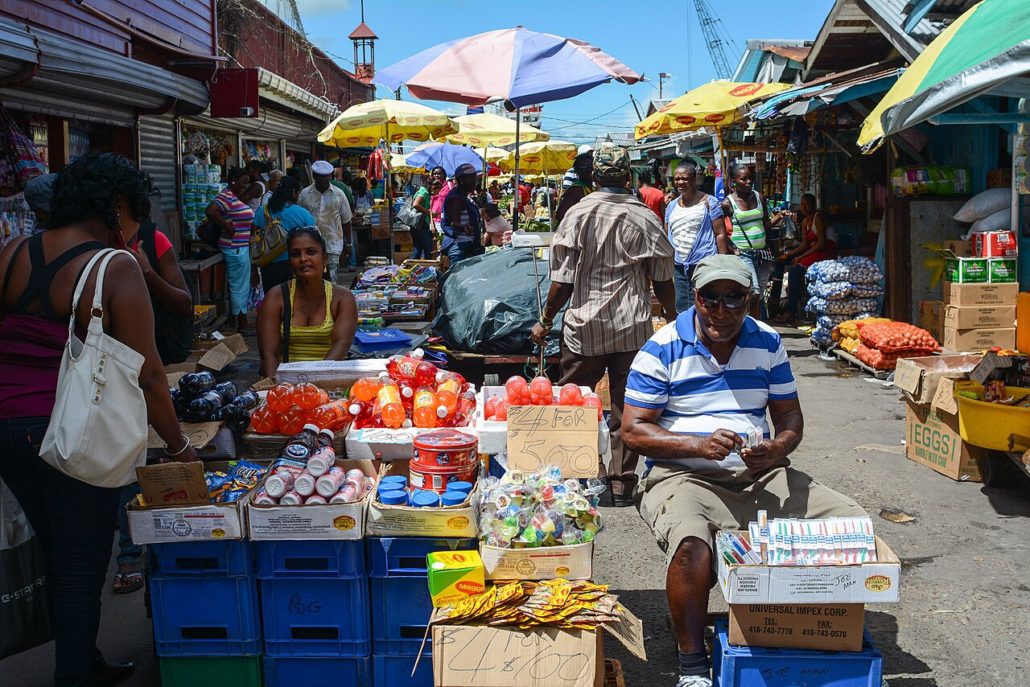
 In 2024, 40% fewer people acquired HIV and 54% fewer died from AIDS-related causes than in 2010. Many countries around the world have invested extensively in combating the HIV/AIDS epidemic, with one country making notable progress despite the many obstacles it faces: Guyana.
Guyana is a country in the northeast region of South America, with a population of 878,674 as of 2022, largely centered on and around the Caribbean coastline. It was until the recent discovery of offshore oil reserves one of the poorest countries in South America, a socioeconomic effect which still impacts the country today in regard to government resources and public health.
Medical hospital infrastructure for instance was, until the most recent decade, a costly and difficult expense. Accessing necessary health treatment required a challenging trip to the capital city, Georgetown, often taking more than half a day to complete and having a disproportionate impact on low-income patients in terms of health and accessibility. Here is more information about HIV/AIDS in Guyana and what some are doing to address it.
International and Governmental Efforts
Recent strategic investments by the Government of Guyana, the Pan-American Health Organization (PAHO) and the World Health Organization (WHO) have helped expand the region’s health care network. These ongoing efforts from international support organizations will, by 2027, open five more “smart” hospitals in the country which will provide far more expansive and high-quality healthcare access than ever before.
Similarly, the Universal Health Voucher Programme (UHVP) was a 2025 initiative by the Government of Guyana through the Ministry of Health, aimed at improving healthcare service accessibility to all of Guyana’s citizens by providing each member of the public a $10,000 health voucher and reduced costs for valuable medical tests. The current president of Guyana, President Mohamed Irfaan Ali, launched the UHVP with the goal of improving Guyanese healthcare and especially through improved health monitoring and early addressing of health conditions.
Critically Affected Populations
Research shows that HIV is still among the leading public health challenges in Guyana and the Caribbean, largely due to the combination of HIV/AIDS solutions lacking full accessibility and awareness in everyday life in Guyana.
There are an estimated 11,000 HIV/AIDS cases in Guyana, a prevalence of 1.5% among the population, and new cases have risen by 19% since 2010. This is compared to the global average of HIV/AIDS, which among adults aged 15–49 sits at around 0.7%, or less than half of Guyana’s HIV impact.
In 2017, the Global Fund approved an HIV grant of $4,539,985 to the Guyana Ministry of Health, lasting from the beginning of 2018 to the end of 2020. The proposed grant program targeted an epidemic of diverse and vulnerable populations, those being “men who have sex with men (MSM), female sex workers, transgender people, miners and loggers,” according to the Global Fund Technical Review Panel (TRP). The program worked to assess and implement a coordinated variety of strategies to address these populations and treat any and all HIV/AIDS cases more broadly, building upon recent efforts by Guyana on aiding key populations and with the goal of eliminating HIV/AIDS and addressing detrimental social and economic impacts the epidemic creates.
Eliminating HIV/AIDS in Guyana
Guyana has made significant progress in its efforts to eliminate HIV/AIDS, though has not managed to meet its optimistic 95-95-95 targets completely. These goals mean for 95% of persons living with HIV to know their disease status, for 95% of persons with HIV/AIDS to have active treatment, and for 95% on treatment to have viral suppression aid. As of the National AIDS Programme 2023 Annual Report, Guyana has reported 94%, 72%,and 87% respectively, showing substantial improvement from a decade prior but without the 95% benchmarks being met which would signal an effective and complete eradication of the epidemic.
However, HIV infections are certainly not yet a settled case in the country. The year 2024 saw almost 500 new HIV infections recorded, with many of them being preventable, according to Guyana’s Health Minister Dr. Frank Anthony. Guyana provides free nationwide testing and treatment services for HIV/AIDS, which is why this increase is so hard to explain by conventional resource explanations.
Studies assessing young people’s knowledge of HIV/AIDS and their views on sexual behavior and contraceptives in Guyana may help explain why. Almost a quarter of teenagers ages 12-14 years old were sexually active, jumping to more than one-third of teenagers for ages 15 or older. Just two out of every five of these groups utilized condoms and other measures, reflecting attitudes toward HIV/AIDS prevention affected by a lack of public knowledge and importance due to age and educational and religious teaching on these contraceptives. Guyanese cases ages 15-24 accounted for 14% of the 580 new HIV/AIDS infections recorded in 2023, and HIV prevalence for the age group rose from 0.2% to 0.3%, suggesting the problem is increasing despite measures being taken.
Actions by the Guyanese Ministry of Health
Rates of HIV/AIDS have stayed constant throughout the country as well, suggesting that the increased health accessibility reforms by Guyana’s government have not had the intended effect in the country. The Government of Guyana already funds every test, HIV tablet, ARV and viral load test, in contrast to most other developing countries which tend to rely on international financing for HIV/AIDS healthcare support.
The Government of Guyana additionally introduced PrEP (pre-exposure prophylaxis) pills in 2019 through the Ministry of Health and the National AIDS Programme Secretariat (NAPS), pills which are highly effective in treatment for HIV/AIDS, but which have been largely ineffective due to a lack of public awareness. Research shows that PrEP awareness in Guyana exists largely through media sources, whereas PrEP access is significantly less commonly prescribed by a health care provider.
Many are concerned about limited access, side effects, and inadequate provider engagement in PrEP and other HIV/AIDS treatments, illustrating a lack of success in providing sufficient awareness efforts by the Guyanese government. However, more than half of the research participants also expressed a willingness to use PrEP, and more than three-quarters expressed a willingness to recommend it to their peers.
Final Thoughts
HIV/AIDS efforts in Guyana have been moderately successful, particularly in expanding healthcare access and treatment potential. Continued problems exist with spreading accurate information and reducing the systemic barriers present to current health care inaccessibility in Guyana, yet greater provider training, routine PrEP integration into medical spaces and targeted community outreach to improve public perception and access can combat it.
– Matthew Hecomovich
Matthew is based in Davis, CA, USA and focuses on Global Health for The Borgen Project.
Photo: Wikimedia Commons

Supporting Poor Families in Brazil: The Criança Feliz Program
UNICEF reports that about 32 million children are in vulnerable situations. These include lack of education, child labor, living in poor conditions or lack of water and food. IBGE also reported that Brazil’s poverty rate fell to 23.1% in 2024, while extreme poverty fell to 3.5%. These improvements show progress, but the number of people still affected by poverty remains high.
The Criança Feliz Program
The Criança Feliz Program, also known as Primeira Infância no SUAS/Criança Feliz, is one response to early childhood poverty in Brazil. The program uses home visits to support families registered in Cadastro Único, Brazil’s registry for low-income families. During these visits, trained workers guide families on child development, family care and access to public services. The program focuses on pregnant women, young children and children with disabilities in vulnerable families. Its goal is not only to provide information, but also to strengthen family and community bonds. By working directly inside the home, Criança Feliz helps caregivers understand how everyday actions, such as talking, playing, reading and responsive care, can support a child’s development.
Connecting Families to Services
Criança Feliz connects families to Brazil’s broader social protection system. Instead of treating childhood poverty as a single problem, the program links families to services related to social assistance, health care, education, culture, human rights and child protection. This is significant because poor families in Brazil often face multiple challenges simultaneously.
In 2025, Brazil’s Ministry of Development and Social Assistance announced that Criança Feliz would be part of the country’s social protection network through the Social Assistance Reference Centers (CRAS) and the Family Protection and Comprehensive Care Service (PAIF). CRAS centers serve as local entry points to programs and social assistance, while PAIF works directly with families to prevent and respond to vulnerable situations. This change makes the program more accessible for public services.
Impact of the Program
Criança Feliz has reached families on a large scale. According to Brazil’s Ministry of Development and Social Assistance, the program surpassed 57 million home visits in 2021 and brought child care information to families in more than 3,028 municipalities. Another government update reported that the program had accompanied 1.5 million families, including 1.4 million children and 374,000 pregnant women.
The program’s impact should be explained carefully. A randomized study of Criança Feliz in 30 Brazilian municipalities did not find clear improvements in child development outcomes under routine conditions. However, researchers also found implementation problems, including low coverage, management challenges and differences in visit quality. This means the program’s reach is large, but its long-term success depends on stronger implementation and consistent visit quality.
Organizations and Partners Supporting the Program
Although Criança Feliz is a federal program, several organizations and partners have helped strengthen its model. The Bernard van Leer Foundation reported that the program’s home visitors use technical material based on the Care for Child Development method developed by UNICEF, the World Health Organization (WHO) and the Pan American Health Organization (PAHO). These materials help guide visits around child development and family care.
The program has also involved support from groups such as UNICEF, UNESCO, UNDP, PAHO, WHO and the Bernard van Leer Foundation. These partners have supported technical material, training methods, monitoring and evaluation. Their role shows how partnerships can help public programs improve services for poor families in Brazil.
Why Support in Early Childhood Makes a Difference
Early childhood support matters because poverty can affect children’s development before they enter school. The World Bank states that millions of young children do not reach their full potential because of poor nutrition, limited early stimulation and learning and exposure to poverty and stress. These early disadvantages can affect health, education and future income. For that reason, programs like Criança Feliz focus on the first years of life. Home visits can help caregivers support children’s growth while also connecting families to services they may not know how to access. When early childhood programs work well, they can help reduce the long-term effects of poverty by supporting children before disadvantages become harder to reverse.
Conclusion
Criança Feliz shows how Brazil is trying to support children by supporting families first. The program does not solve poverty alone and research shows that implementation quality still matters. However, its large reach, home-visiting model and connection to Brazil’s social protection system make it an important effort for helping poor families in Brazil. By focusing on early childhood, family support and access to services, Criança Feliz offers a practical way to address poverty before it shapes a child’s future.
– Mateo Alcocer
Photo: Wikimedia Commons
Understanding Poverty in South Sudan with Poverty Simulations
Poverty Simulations
Now, Poverty Simulations are taking effect all across the U.S. and are enlightening the general public to the candid realities of poverty. Poverty simulations are simulations that imitate what real people in poverty go through. They are garnering more and more support for poverty relief efforts across the globe by educating the public
Poverty simulations are the exact thing that is necessary to help increase support for South Sudan. Most people know about poverty, but few truly understand it. Understanding poverty in South Sudan more deeply is now possible with poverty simulations.
What it is Like to Live in South Sudan
South Sudan is the world’s newest country, having gained independence from Sudan in 2011, less than two decades ago. This youth comes with significant struggles for the population. First of all, the population of the nation is very young. More than 70% of the population is below 18 years old. The young, inexperienced government of the country has struggled since its birth to provide for its people and manage conflict. This has led to a nation overrun by food insecurity and division.
There are few large towns in South Sudan, and most people live in compact, makeshift houses in very small villages. In some regions, people do not even use money for transactions; instead, farming and harvesting are the main sources of sustenance. Sources of aid, like schools, churches and social services, are near nonexistent. Civil conflict is rampant as well. Daily violence often prevents people from going about their daily lives
This level of poverty can be difficult to comprehend, but there is now an accessible way to begin understanding what it’s like on a deeper level.
What are Poverty Simulations and How do They Work?
Poverty simulations are group activities mostly for schools, nonprofit workers, nurses or other individuals who may encounter poverty in their field of work. They aim to help people who live in developed countries, like the U.S., understand and sympathize with people who live in extreme poverty. The activities themselves are comparable to role-play games.
Jason Morrow, an internist and an ethics professor at the University of Texas Health Science Center in San Antonio, was responsible for running a poverty simulation for his medical students to help them empathize with patients who are living in poverty. According to Morrow, “The (poverty) simulation is an immersive experience where students play a role within a family.” “In the exercise, they have to survive and try to thrive with low income and limited resources.”
Individuals are put into groups or families, and each is assigned a particular role. The individual must perform that role as best they can. Resources are also set throughout the setting of the simulation, like social services, the grocery store, the church, and others, where the participants can go for help and amenities. However, the participants can not always receive exactly what they need to thrive. Often, they’re turned away from the help they need; this mirrors the reality that most people in poverty face.
Morrow claims that poverty simulations bestow participants with an understanding of poverty beyond just reading about it: “It’s one thing to read about how poverty strains cognition. It’s another thing to spend two hours running from one side of the room to the other so you can try to pay your utility bills, not get evicted, and make sure your child has some sort of supervision.”
These simulations are extremely valuable for understanding any kind of economic struggle, but this fictional poverty doesn’t even come close to some of the things that people in South Sudan go through. Many live a life without money altogether. They must grow their own food and trade for resources. However, that does not mean poverty simulations don’t help people sympathize with the struggle for wellness. On a fundamental level, all who live in poverty go through a similar mental strain of not knowing how they will make it to tomorrow.
Hope for the Future of South Sudan
With a better understanding of South Sudan’s immense hardships, it’s also important to understand that hope is still there. There are organizations working hard in and around South Sudan to bring relief to those suffering from extreme poverty. Here are a few examples:
Global Care has partnered with the Diocese of Wau to put more than 50 students through educational training to become teachers for the children of South Sudan. Global Care has also established several other schools in the region, which have helped hundreds of children receive an education who would not otherwise have received it.
The United Nations has an ongoing peacekeeping operation in South Sudan. It has established camps to protect civilians from conflict and stationed officials around the country to respond to violent incidents, according to CFR.
Hopeland has partnered with Medair to manufacture and distribute shelter kits in South Sudan to communities affected by severe flooding. Shelter kits are packages made from recycled materials that can be used to create makeshift shelters to shield from harsh weather conditions.
South Sudan has some of the worst poverty rates in the world, but if developed countries are consistently sympathizing more and more with poverty thanks to poverty simulations, then support for relief efforts in South Sudan will remain strong and grow even stronger.
– Lucas Cain
Photo: Flickr
Fighting Poverty in Indigenous Communities in Mexico
The Hunger Project
The Hunger Project is an organization that works to help Indigenous and other marginalized communities to gain independence. It works with four main marginal areas in Mexico: Chiapas, Oaxaca, Yucatán, and Mexico City.
Its main goals are getting Indigenous communities to become self-sustaining by having distinct categories that they focus on management and authority, open-mindedness, food sufficiency, uplifting women, and profit.
The organization works with the government to create change in these categories, and they have seen amazing outcomes such as the way that women are viewed favorably in society and the recognition of injustices against women historically. As well as relationships with government authorities recognizing the independence of the people.
The Hunger Project has helped several other organizations that focus on fighting poverty in Indigenous communities in Mexico.
Indigenous Women-Led Food Security System (Citi Foundation) involves men and women from Oaxaca and Chiapas in a teaching operation that helps create long-lasting food supply, distribution and monetary wellbeing for those communities, their loved ones, and other members of the general public.
Eat Well Program (Guzman and Gomez) helps Indigenous communities strengthen their understanding and create food security by providing healthy foods and full meals from within Indigenous lands.
Plant With Purpose
Plant with Purpose focuses similarly to the Hunger Project on Chiapas, Oaxaca, but also Puebla as well. Its goal is to create connections between people and the land by uplifting families through organic agriculture and financial security.
“Healing the land is restoring hope,” the organization states on its website. One of its main goals is to make sure families stay together even when facing poverty. Due to poverty, farmhands often have to leave behind their families in order to still be able to find work to have an income for their families. So, what Plant with Purpose does is make sure that does not have to happen by helping Indigenous farmers to mend their land, boost land conditions, and harvest produce. This helps with economic sustainability and reduces the demand to find work elsewhere.
Its other goal is to restore land and nourish communities. The organization rebuilds land cleanness using recreation learnings from Indigenous insight. “Healthier gardens mean families can grow nutritious food and send kids to school”. Investment divisions often provide families a monetary safeguard and security for time to come. Discussion groups increase understanding and awareness among communities, fostering improved connection with others.
Pro México Indígena
Pro Mexico Indigena is a Mexican nonprofit that has been working for 26 years to fight poverty, scarcity of assistance and services, and public erasure. It works to empower Indigenous people and has worked with “11 indigenous ethnic groups in nine states of the Mexican Republic”. The organization has helped more than 300,000 indigenous people gain independence and improve their quality of life.
While these solutions are great, there is still a higher poverty rate present in Indigenous communities in Mexico and by increasing the number of organizations available for these Indigenous groups and communities, it will only make it easier and decrease the percentage of Indigenous communities who are still in poverty in Mexico. According to Mexicohistorico “geographical disparities exacerbate poverty levels. Rural areas, particularly in states like Chiapas and Guerrero, experience higher poverty rates compared to urban centers. This geographical divide leads to a concentration of resources and opportunities in metropolitan areas, leaving rural populations in a cycle of poverty that is difficult to escape.
– Leo Hardy
Photo: Flickr
Friendship’s 3-Tier System and Health Care in Bangladesh
In 2002, Bangladeshi entrepreneur Runa Khan began Friendship, a social purpose organization. The organization aims to address the challenges faced by the inhabitants of the chars with floating medical boats and other community initiatives using a three-tier system.
Friendship’s Three-Tier System
Combining Health Care and Climate Adaptation
Friendship not only provides health care services but also addresses other issues like climate resilience. To prepare the communities for natural disasters, Friendship has carried out preventative measures such as restoring forests to protect villages from cyclones. More than 650,000 trees have been planted on the southern coast of the country, protecting at least 125,000 people.
Actions like these help combat many issues suffered due to storms. The destruction of villages and infrastructure can lead to malnutrition from a shortage of resources, a lack of health care due to isolation and an increased risk of waterborne diseases from living in flooded areas. Friendship’s three-tier system with floating medical boats, satellite clinics, and FCMs allows medical staff to reach vulnerable communities in times of need, while also implementing preventative measures to save more lives.
In 2025, Friendship was a finalist for the Earthshot Prize for its incredible work protecting the communities in Bangladesh. The organization’s holistic three-tier system demonstrates how health care and climate adaptation can work together to support the vulnerable communities in Bangladesh.
– Emma Wheeler
Photo: Flickr
AI Health Care in Southeast Asia
However, artificial intelligence (AI) is helping address this medical challenge by transforming standard smart devices into diagnostic hubs and clinical tools instead of relying solely on the construction of physical infrastructure. Local health care workers are utilizing low-cost, AI-integrated handheld devices and natural language processing platforms to conduct clinical screening and triage at the doorstep. AI-powered health care in Southeast Asia is serving as a modern solution to these challenges.
Handheld Diagnostics
Portable handheld devices are actively reducing the need for heavy and expensive hospital equipment and machines. Clarius Ultrasound is a transportable imaging tool that is improving the workflow of community health workers. It is a wireless handheld ultrasound scanner that can be connected to a smartphone. These scanners are cordless, which makes them easy to sanitize and carry anywhere. In remote areas of Southeast Asia, expectant mothers and patients traditionally needed to travel by boat to reach the regional hospital, which often put their lives at risk. The emergence of handheld scanners is transforming this situation.
Smarter Triage
Processing a large volume of patients and identifying who needs urgent care is another major challenge. In regional clinics with limited resources and a large number of patients, traditional triaging methods can be slow and exhausting for the workforce. Bot MD and Halodoc have emerged as solutions to this challenge. Bot MD is AI-powered, providing clinical assistance and a platform for patient engagement. It is specifically designed to assist hospitals and health care workers in automating workflow and remote monitoring.
AI-integrated health care in Southeast Asia is enhanced with the emergence of platforms such as Halodoc. Halodoc is an Indonesian platform that provides digital health care services. It allows patients to access specialists and doctors round the clock through calls, text messages and video consultations. It also allows users to order prescribed medicines and health care products. Options for booking laboratory tests are also available. It is improving health care access across Indonesia’s 17,000 islands.
Optimizing the Sparse Medical Workforce
These AI-integrated health care technologies in Southeast Asia also aim at workforce optimization. In remote areas where few doctors might be handling an entire island, their time becomes extremely valuable. When AI-integrated health care technologies handle language translation, preliminary documentation and baseline image analysis, they effectively reduce the burden on doctors.
Health care workers and volunteers can conduct initial screenings and save the information. AI-powered triage systems can then identify and alert health care professionals about severe cases. Therefore, doctors are not required to focus on routine administrative intake procedures or easily treatable cases. Instead, they can devote their time and energy to high-risk patients who require immediate, complex clinical intervention. AI-integrated health care in Southeast Asia serves as a solution to these challenges of isolated and remote islands.
Conclusion
The digital health care revolution is transforming health care dynamics in Southeast Asia. It demonstrates that it does not always take massive concrete infrastructure to overcome health care challenges; equitable health care can be achieved through small, handheld AI-powered devices. Technologies such as Halodoc, Bot MD and pocket ultrasound systems are helping to bridge the health care gap. AI-powered health care in Southeast Asia is successfully improving patient treatment and access to care.
– Noor Ul Ain Ameer
Photo: Flickr
SDG 4 in Sudan: How Poverty and Conflict Threaten Education
Background of the War in Sudan
Omar al-Bashir, who was the former president of Sudan, helped form the Rapid Support Forces (RSF), known as the “Janjaweed militia,” which was a paramilitary group formed to act as a border guard force and was later moved to the capital city in 2019 to protect al-Bashir from any potential military coups and assassination attempts. However, later on, the RSF joined the Sudanese Armed Forces in overthrowing al-Bashir’s government and forming a new transitional government. The transitional government was later the main reason for the current war, due to the major power struggle between the RSF and the SAF, escalating to what is known now as the Sudanese Civil War.
Potential of Poverty Improvements in Sudan
According to the United Nations officials in Sudan, around seven in 10 people in Sudan live in poverty, compared to a percentage of 38% before the beginning of the war. Additionally, the country could potentially face a rise of extreme poverty, with the possibility of an additional 34 million people becoming impoverished if the conflict continues until 2030. However, according to the UNDP, if the country restores peace using the International Futures modeling system, Sudan’s GDP could reach $58.2 billion USD by 2043, resulting in an increased life expectancy and 17.3 million people being lifted out from extreme poverty, moving the country to a better socioeconomic situation.
SDG 4 in Sudan and the Potential of the Education Sector
SDG 4 is the goal of Quality Education under the United Nations Sustainable Development Goals (SDGs), which aims that by 2030, the world will have inclusive and equitable quality education. There are 10 targets including a focus on providing free primary and secondary education, ensuring equal access to primary and higher education and eliminating discrimination in education, along with many other goals that aim to support lifelong learning around the globe.
Due to the conflict in Sudan, there have been around 88 reports of violence in schools, resulting in harm for students, teachers and school facilities. Those violence reports included killings, injuries, torture, abduction of teachers and sexual violence. Additionally, the military have used school facilities in Sudan for active fighting and storage of weaponry, which makes it unsafe for educational use.
With this being said, in October 2023, around 19 million school-age children have been out of school, causing a severe disruption of their learning and education progress. Additionally, more than 10,400 schools have been closed, and even after an indication that around 65% of these schools were open again by January 2026, more than 7 million students remained out of school.
Addressing Education in Sudan
Despite the severity of the situation, a collaboration between Sudan’s Local Education Group and UNESCO has developed, involving more than 600 participants and more than 34 national and international organizations financially contributing to the project. The project aims to work towards a Transitional Education Plan with the goal of developing Sudan’s education system and acknowledging short-term and long-term humanitarian needs so that the Sudanese education system remains well structured and inclusive even with the current instability in the country.
Additionally, the project is focusing on creating safe learning environments, providing infrastructural support to ensure protective education facilities for school children and rebuilding and supplying equipment for schools. Moreover, it is also using temporary learning spaces to make its plans time-effective and ensure that children do not stay out of school for long periods of time during the conflict, instead, using those temporary spaces for learning during the work of the project. It is also focusing on providing training for marginalized groups to prevent skill gaps, such as for people with disabilities, and ensuring gender equality in terms of the provision of training, hoping to have a transformative impact and prevent a potential collapse on Sudan’s education sector.
Concluding Thoughts
Overall, the findings show that the Sudanese civil war has a significant impact on the Sudanese community and education system, despite the efforts to limit its influence. However, its impact is likely to decline as people, advocates and organizations shed light on it, and dedicate projects toward improving education and addressing SDG 4 in Sudan.
– Annab Ahmed
Photo: Unsplash
Widening Access To Higher Education in Uganda
The Weight of Poverty
Poverty shapes daily life for a large share of Uganda’s population. The World Bank estimates that about 51.5% of Ugandans lived below the international poverty line of $2.15 a day in fiscal year 2024–25, down modestly from 52.9% the year before. Agriculture accounts for 24% of GDP and employs roughly 72% of the labor force, with most workers relying on smallholder subsistence farming. The majority of jobs remain informal, low-productivity and vulnerable to climate shocks such as drought and floods, leaving household incomes unstable across much of the country.
Uganda’s national poverty rate, measured against the country’s own poverty line, stood at 20.3% according to the Uganda National Household Survey 2019/20, the latest available household survey. For families in this bracket, university fees, accommodation and the loss of a working-age child’s contribution to household income can make higher education feel out of reach before an application is ever made.
A Narrow Path After Secondary School
The path into a Ugandan university remains narrow. The National Council for Higher Education (NCHE) estimates the tertiary gross enrollment ratio at 5.3%, far below the Sub-Saharan African average of 9.4% and the global average near 38%. Most secondary leavers do not transition to tertiary study at all, and among the small group that does, Science, Technology, Engineering and Mathematics programs dominate the funded pathways. That leaves humanities students and learners from low-income or rural backgrounds with fewer financing options.
The cost of tuition, living expenses and transport often pushes higher education out of reach for households already balancing food, health care and basic schooling for younger children. NCHE Executive Director Prof. Mary Okwakol has described access for rural and economically disadvantaged students as the sector’s biggest challenge.
Government Loans Closing Some of the Gap
One direct response to the affordability gap in higher education in Uganda comes from the Higher Education Students’ Financing Board (HESFB), which Parliament created under the Higher Education Students Financing Act of 2014 and amended in 2024. The scheme provides loans and scholarships to Ugandan students admitted to accredited institutions who demonstrate financial need. Most loans cover Science, Technology, Engineering and Mathematics programs alongside a small set of humanities courses, and persons with disabilities can apply across both streams.
For the 2025/26 academic year, the Ministry of Education and Sports approved 2,047 of 7,125 applicants, according to a statement Minister of State for Higher Education John Chrysostom Muyingo delivered to Parliament on October 29, 2025. Beneficiaries include 1,196 male and 861 female students, plus 45 students with disabilities, up from 29 the previous year. The allocation formula reserves 60% of slots through a district quota and weighs the remaining 40% on socio-economic vulnerability, an attempt to spread access beyond urban centers. Parliament has since urged the Ministry to expand funding and strengthen rural outreach, citing persistent regional imbalance.
Higher Education Access Programme in Uganda
A second active solution targets students who miss direct university entry by a narrow margin. The Higher Education Access Certificate (HEAC), a one-year accredited bridging program, sits inside the Higher Education Access Programme (HEAP), a partnership between FAWE Uganda and the Mastercard Foundation. Sixty-five universities and 20 other degree-awarding institutions hold licenses to deliver HEAC, offering 89 accredited programs nationwide.
On May 9, 2026, NCHE confirmed that more than 7,000 students have enrolled in HEAC, 44% of them female. Phase II of HEAP, launched in April 2024 and running through 2034, targets 2,000 learners across 65 districts. The program reserves 80% of bursaries for young women and sets aside explicit places for refugees and persons with disabilities. FAWE Uganda awarded 700 bursaries across universities and Technical and Vocational Education and Training institutions in the academic year 2025/26 alone.
Early outcomes look promising. NCHE reports that HEAC graduates perform as well as, and sometimes better than, direct-entry students, and they show high employability within their first year of completion. International interest follows. A delegation from Zimbabwe’s Ministry of Higher and Tertiary Education visited Uganda from May 4, 2026, to May 9, 2026, to study the HEAC model for possible adoption.
Looking Ahead
Cost remains the dominant barrier to higher education in Uganda, and demand for both loans and bursaries far outstrips the supply of available slots. Even so, the combination of a national student loan scheme, an accredited bridging certificate and targeted scholarships shows that inclusive financing can move the needle. When degrees and diplomas reach students from low-income, rural, refugee and disability backgrounds and lead to formal work, higher education becomes less a privilege and more a route out of household poverty.
– Amna Al Harrazi
Photo: Wikimedia Commons
Child Marriage in Hawaii: 5 Key Steps Toward Reform
Why Addressing Child Marriage in Hawaii Matters
Historically, Hawaii has faced a disproportionately high rate of child marriage compared to many other states. A landmark study utilizing American Community Survey data revealed that Hawaii ranked among the top states for child marriage prevalence, with more than 10 out of every 1,000 children surveyed having been married. This statistic highlights a deep-seated issue that many local communities overlooked for decades, leaving young individuals vulnerable to early legal unions before they could fully realize their independence.
Addressing child marriage in Hawaii is also a crucial step toward eliminating local poverty. While Hawaii boasts a thriving tourism industry, many residents face a high cost of living that drives vulnerable families into economic hardship. Research demonstrates that marrying young increases an individual’s likelihood of living in poverty during adulthood by 28 to 31 percentage points – a rate even higher than the poverty risk associated with dropping out of high school. By eliminating child marriage, the state can systematically remove a major barrier to financial stability and protect its youth from long-term economic vulnerability.
1. Strengthening the Legal Foundation
The movement to reform the law regarding child marriage in Hawaii is gaining momentum through several key efforts:
2. Ending Child Marriage in Hawaii Through Education
Advocacy groups highlight how ending the practice of child marriage in Hawaii can lead to better economic outcomes:
3. Prioritizing Safety and Well-Being
Currently, researchers and advocates place a spotlight on the link between age-appropriate marriage and domestic stability:
4. A Rise in Legislative Reform
Addressing child marriage in Hawaii aligns with an inspiring national trend toward total reform:
5. Advocacy and Global Support
The tireless work of organizations like Unchained at Last bolsters the progress concerning child marriage in Hawaii:
The Push To End Child Marriage in Hawaii Continues
The momentum behind reforming the laws surrounding child marriage in Hawaii represents more than just a legal update; it is a vital step in breaking the cycle of poverty. By ensuring that every young person in Hawaii has the opportunity to complete their education and achieve financial independence, the state actively invests in long-term economic stability.
As advocacy grows and legislative efforts persist, Hawaii moves closer to a future where state laws protect, empower and give all children the tools to thrive in an autonomous life.
– Rebecca Cameron
Photo: Flickr
Eliminating the Pests That Spread Infectious Diseases in Taiwan
Hantavirus
Hantavirus is one of many infectious diseases impacting Taiwan that stems from rodents. There were a total of 44 infections between 2017 and 2026 – most of which were found on the northern part of the island in or near New Taipei City. One can become infected by simply breathing in or coming into contact with infected rat feces, urine or saliva. Symptoms include elevated body temperature, muscular pain, nausea and diarrhea. However, the mortality rate for this strain in Asia is much lower than in other parts of the world with only one confirmed death over that span. Although still rare, a deadlier and more common strain of the disease is also found in the southwest part of the United States.
Two Taiwanese men in their 70s were infected with the virus in 2026. A man who died in January was immunocompromised and had other preexisting conditions. A couple of the rats found near his house tested positive for the virus.
Environmental protection agencies respond to incidents such as these by setting traps and exterminating areas with confirmed cases of the virus to help limit its spread. Yearly numbers have always been low, but between 2022 and 2025, there were no more than four total cases each year.
By not leaving out food and keeping one’s area free of clutter, homeowners automatically put themselves in a better position to protect themselves from infestation. The use of gloves and a mask to clean up rat droppings has helped to curb the infection rate as well.
Chikungunya Fever
Infected mosquitoes that originate from China and south East Asian countries have found their way into Taiwan due to increased rainfall and typhoons. Although chikungunya fever has a low mortality rate, people who contract the disease experience joint pain throughout the body, fatigue, nausea and headache. It takes an average of four to eight days for symptoms to appear and about a week to recover.
There are an average of well under 100 infections each year in Taiwan, but in 2019, there were 107. These mosquitoes thrive in pockets of stagnant water like rain barrels, potted plant holders and gutters. In response to the uptick in infections, the government imposed a fine of up to $7,500 TWD for any person who leaves open water containers out in public. Although there have been fewer cases in following years, 2025 saw the highest number of cases since 2019 at 46. By implementing these measures, it has made eliminating the spread of diseases impacting Taiwan that involve mosquitoes much easier.
The government places ovitraps in a variety of infested areas to help determine the number of mosquitoes that carry the disease. An ovitrap is a shallow bucket of water in a shaded area, which is specifically used to count the number of mosquito eggs that appear over time. After data is collected, the areas that need attention are sprayed with insecticide. After the spike in infections for 2019, 2020 saw a grand total of three.
Dengue Fever
Dengue fever is another example of a disease that mosquitoes, both native and foreign to the island, are known to spread. Unlike the other two, dengue fever is primarily found on the south end of Taiwan which shows that the risk for diseases from pests extends to all parts of the island. Dengue fever is much more common. Primary symptoms include fever, headache, muscle pain and pain behind the eyes. Around 1% of cases can develop into severe dengue in which the person has difficulty breathing due to plasma leakage. Older adults with weaker immune systems are at a much greater risk to have this happen.
The number of cases varies significantly from year to year depending on several factors like weather patterns and how much the population has achieved herd immunity. Migrant workers from other countries like the Philippines and Vietnam bring the infection from their home country into Taiwan, increasing the overall rate of the disease impacting Taiwan. It is estimated that the vast majority of baseline cases of mosquito-related diseases originate in other south east Asian countries.
The government has also stepped in to teach people about the seriousness of the disease and how to stay healthy. There is a widespread awareness campaign about how to prevent infections around one’s home as well as protection methods one can use outside the home like covering up skin with light colored clothing.
Just like Chikungunya Fever, there are large-scale efforts to set ovitraps and collect data for the purposes of determining which areas to spray. In 2023, there were 26,706 total cases, but in 2025 there were less than 300. About 44 people died of the disease in 2023, and each year less than 1% of people die from Dengue Fever. The CDC also made surveillance of the disease widely available with more than 430 hospitals signed up to report data about the disease.
Conclusion
There are many other infectious diseases in Taiwan that are transmitted by rodents or mosquitoes besides the three discussed in this article. While herd immunity is attainable through vaccination and widespread recovery from infection, there will always be new variants and other external factors, such as climate, that cause brand new spikes in infection. However, by continuing with the collective effort to curb the spread on the part of both the Taiwan CDC and the Taiwanese citizens, the country will be a much healthier place for both citizens and visitors alike.
– Logan Hessek
Photo: Unsplash
Treatment Access and Awareness for HIV/AIDS in Guyana
Guyana is a country in the northeast region of South America, with a population of 878,674 as of 2022, largely centered on and around the Caribbean coastline. It was until the recent discovery of offshore oil reserves one of the poorest countries in South America, a socioeconomic effect which still impacts the country today in regard to government resources and public health.
Medical hospital infrastructure for instance was, until the most recent decade, a costly and difficult expense. Accessing necessary health treatment required a challenging trip to the capital city, Georgetown, often taking more than half a day to complete and having a disproportionate impact on low-income patients in terms of health and accessibility. Here is more information about HIV/AIDS in Guyana and what some are doing to address it.
International and Governmental Efforts
Recent strategic investments by the Government of Guyana, the Pan-American Health Organization (PAHO) and the World Health Organization (WHO) have helped expand the region’s health care network. These ongoing efforts from international support organizations will, by 2027, open five more “smart” hospitals in the country which will provide far more expansive and high-quality healthcare access than ever before.
Similarly, the Universal Health Voucher Programme (UHVP) was a 2025 initiative by the Government of Guyana through the Ministry of Health, aimed at improving healthcare service accessibility to all of Guyana’s citizens by providing each member of the public a $10,000 health voucher and reduced costs for valuable medical tests. The current president of Guyana, President Mohamed Irfaan Ali, launched the UHVP with the goal of improving Guyanese healthcare and especially through improved health monitoring and early addressing of health conditions.
Critically Affected Populations
Research shows that HIV is still among the leading public health challenges in Guyana and the Caribbean, largely due to the combination of HIV/AIDS solutions lacking full accessibility and awareness in everyday life in Guyana.
There are an estimated 11,000 HIV/AIDS cases in Guyana, a prevalence of 1.5% among the population, and new cases have risen by 19% since 2010. This is compared to the global average of HIV/AIDS, which among adults aged 15–49 sits at around 0.7%, or less than half of Guyana’s HIV impact.
In 2017, the Global Fund approved an HIV grant of $4,539,985 to the Guyana Ministry of Health, lasting from the beginning of 2018 to the end of 2020. The proposed grant program targeted an epidemic of diverse and vulnerable populations, those being “men who have sex with men (MSM), female sex workers, transgender people, miners and loggers,” according to the Global Fund Technical Review Panel (TRP). The program worked to assess and implement a coordinated variety of strategies to address these populations and treat any and all HIV/AIDS cases more broadly, building upon recent efforts by Guyana on aiding key populations and with the goal of eliminating HIV/AIDS and addressing detrimental social and economic impacts the epidemic creates.
Eliminating HIV/AIDS in Guyana
Guyana has made significant progress in its efforts to eliminate HIV/AIDS, though has not managed to meet its optimistic 95-95-95 targets completely. These goals mean for 95% of persons living with HIV to know their disease status, for 95% of persons with HIV/AIDS to have active treatment, and for 95% on treatment to have viral suppression aid. As of the National AIDS Programme 2023 Annual Report, Guyana has reported 94%, 72%,and 87% respectively, showing substantial improvement from a decade prior but without the 95% benchmarks being met which would signal an effective and complete eradication of the epidemic.
However, HIV infections are certainly not yet a settled case in the country. The year 2024 saw almost 500 new HIV infections recorded, with many of them being preventable, according to Guyana’s Health Minister Dr. Frank Anthony. Guyana provides free nationwide testing and treatment services for HIV/AIDS, which is why this increase is so hard to explain by conventional resource explanations.
Studies assessing young people’s knowledge of HIV/AIDS and their views on sexual behavior and contraceptives in Guyana may help explain why. Almost a quarter of teenagers ages 12-14 years old were sexually active, jumping to more than one-third of teenagers for ages 15 or older. Just two out of every five of these groups utilized condoms and other measures, reflecting attitudes toward HIV/AIDS prevention affected by a lack of public knowledge and importance due to age and educational and religious teaching on these contraceptives. Guyanese cases ages 15-24 accounted for 14% of the 580 new HIV/AIDS infections recorded in 2023, and HIV prevalence for the age group rose from 0.2% to 0.3%, suggesting the problem is increasing despite measures being taken.
Actions by the Guyanese Ministry of Health
Rates of HIV/AIDS have stayed constant throughout the country as well, suggesting that the increased health accessibility reforms by Guyana’s government have not had the intended effect in the country. The Government of Guyana already funds every test, HIV tablet, ARV and viral load test, in contrast to most other developing countries which tend to rely on international financing for HIV/AIDS healthcare support.
The Government of Guyana additionally introduced PrEP (pre-exposure prophylaxis) pills in 2019 through the Ministry of Health and the National AIDS Programme Secretariat (NAPS), pills which are highly effective in treatment for HIV/AIDS, but which have been largely ineffective due to a lack of public awareness. Research shows that PrEP awareness in Guyana exists largely through media sources, whereas PrEP access is significantly less commonly prescribed by a health care provider.
Many are concerned about limited access, side effects, and inadequate provider engagement in PrEP and other HIV/AIDS treatments, illustrating a lack of success in providing sufficient awareness efforts by the Guyanese government. However, more than half of the research participants also expressed a willingness to use PrEP, and more than three-quarters expressed a willingness to recommend it to their peers.
Final Thoughts
HIV/AIDS efforts in Guyana have been moderately successful, particularly in expanding healthcare access and treatment potential. Continued problems exist with spreading accurate information and reducing the systemic barriers present to current health care inaccessibility in Guyana, yet greater provider training, routine PrEP integration into medical spaces and targeted community outreach to improve public perception and access can combat it.
– Matthew Hecomovich
Photo: Wikimedia Commons