Nations Unite on a Historic WHO Pandemic Agreement
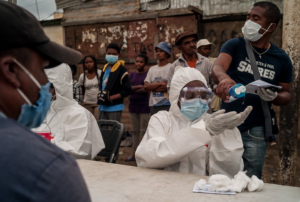 On May 20, 2025, diplomats from around the world voted almost unanimously in favor of the world’s first legally binding WHO Pandemic Agreement, in response to one of the most glaring failures of COVID-19.
This failure was in stark contrast to high-income versus low-income countries during the pandemic. By November of 2023, vaccination coverage in some countries was below one-third, compared to the four-fifths of residents vaccinated in many high-income nations. Legal barriers such as patent waivers for vaccines were dismantled, yet doses still never reached the countries that needed them because of manufacturing capacity issues. One African manufacturer secured the ability to produce a vaccine, but its production lines sat idle because no African governments placed any orders. In short, the system was broken. The Pandemic Agreement was the world’s attempt to fix it.
How the WHO Pandemic Agreement Came to Be
The World Health Assembly session launched the process in December 2021, as the Omicron variant was spreading globally and wealthy nations sat on stockpiles of doses the rest of the world could not access. The Intergovernmental Negotiating Body that followed held 13 formal rounds of talks along with countless informal sessions. Negotiators overcame walkouts, last-minute standoffs and a hostile political environment, including open rejection from some political leaders as well as pressure from the private sector.
What the Pandemic Agreement Does
Critical ideas that had no legal definition during COVID-19, such as One Health or equity, now have standing in international law, offering governments a stable framework for future pandemic response, according to a J Law Med Ethics article.
At the heart of the deal is a pathogen access and benefit-sharing system (PABS). Under this mechanism, countries agree to share genetic sequence data about circulating pathogens with WHO. In return, pharmaceutical manufacturers who participate commit to making 20% of their real-time production of pandemic vaccines, therapeutics and diagnostics available to WHO, with at least half of it being donations and the rest at affordable, realistic prices, according to PAHO. To put that in concrete terms, if a manufacturer makes 10 billion vaccines, around 2 billion will flow to WHO for distribution based on public health needs, particularly to developing countries.
Formal Emergency
The agreement directly links the PABS system to a formal pandemic emergency declaration under the International Health Regulations, making redistribution automatic rather than dependent on the goodwill of individual actors, according to a J Law Med Ethics article.
Beyond access to vaccines, the agreement takes a broader view of what pandemic preparedness means. It incorporates a One Health approach by recognising that around 75% of emerging infectious diseases originate in animals, so it requires countries to have surveillance systems linking human, animal, and environmental data, according to the WHO. A Global Supply Chain and Logistics Network will address gaps in medical supply chains before the next crisis. Plus, for the first time, the protection of health workers during pandemic emergencies is enshrined as an international legal obligation.
A Foundation for a Fairer Future
During COVID-19, the problem was not only a shortage of doses but also of capacity. Article 11 of the agreement pushes beyond the patent waiver model and calls on technology-holders to share know-how, skills, and proprietary information through WHO-led hubs to build genuine manufacturing capability across the Global South.
The agreement still requires work. A critical annex detailing the operational specifics of the PABS system still requires adoption at the 79th World Health Assembly in May 2026, and ratification by at least 60 countries is necessary before the WHO Pandemic Agreement enters into force. But for the first time, the architecture exists. Equity is now a legal obligation, agreed upon by the overwhelming majority of the world’s nations.
– Gia Sen
Gia is based in Mansfield, MA, USA and focuses on Business and Politics for The Borgen Project.
Photo: Flickr
