Higher Education in Tonga
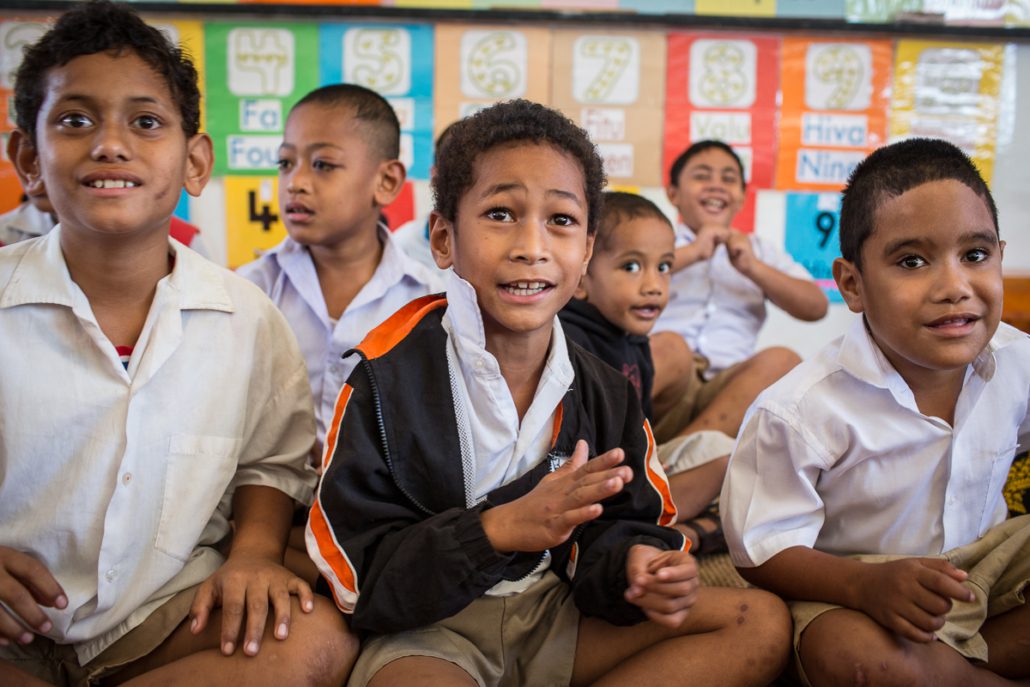 Historically, Tongan students always had to go to school in person. For college students, that meant attending one of the two accredited universities in Tonga – the University of the South Pacific (Tonga campus), or Christ’s University in Pacific – or more commonly, going overseas to places such as the United States, Australia and New Zealand. However, online schooling has reshaped the world, creating more opportunities to learn. Access to higher education in Tonga has improved due to online learning, helping many Tongans rise from challenges to success.
Background of Tonga
The country of Tonga is in the Southwest Pacific Ocean. It has 170 islands, separated into three main island groups. The south has Tongatapo, the center has Ha’apa and the north consists of Vava-u. The Tonga Islands were united in 1845, and unlike many neighboring countries, Tonga was never formally colonized. The country’s current population is 110,353, 99% of whom are literate.
Not Enough Money
Many Tongans do not make enough money to survive in their country. The average person in Tonga makes $10,800 per year, while the cost of living is just over $1,000 per month. While Tonga has free public schools, many families opt to send their children to private mission schools. The mission schools provide education to nearly 83% of primary students, and 90% of secondary students.
In the past, if these students wanted to move on from primary and secondary education to university or college, they had limited options. The two accredited universities in Tonga may not have their program of study, and it could cost a lot of money for them to go to school and live on their own. But in 2020, online education exploded as the world adapted to the COVID pandemic. This was great for Tonga, because distance learning can work well from any environment.
Distance Learning
Distance learning has been successful in Tonga. For one thing, distance learning offers students a high-quality higher education in Tonga. For example, at the end of 2020, the completion rate for lower secondary schools for females was at 89.6% and for males was at 80.9%. In 2021, the literacy rate for female adults ages 15 and up was at 99.5%, and for male adults ages 15 and up, it was at 99.4%. For another thing, distance learning is reaching a lot of students.
The University of South Pacific is one of two regional schools worldwide that provides higher education in Tonga to the people of many Pacific Island nations. The university has introduced distance and flexible learning starting in the 1970s by using its Extension Services. Since allowing students to enroll in their school, it continues to be committed to overcoming the obstacle of giving the best education for people despite any circumstances that make the region continue to change. The total student enrollment in 2016 was 13,475 students studying at this school. This shows the quality of tertiary education in the region.
Training in the Classroom
Teachers need training to teach effectively online, just like in the classroom. In December 2024, 159 Tongan teachers were offered eight courses that covered practical skills for Open Distance and Flexible Learning. As a result, there was proof of positive feedback from more than half of the learners.
It also helps that the Tongan government and international partners are focused on investing in education in Tonga. UN Resident Coordinator to Fiji, Solomon Islands, Tonga, Tuvalu and Vanuatu Sanaka Samarasinha said that “Investment into education is crucial for the creation of peace, tolerance and sustainable development.”
Under these conditions, some Tongan students and academics have truly excelled. In 2025, Dr. Jean M Vaske Allen and Dr. Siobhus Tulakoi accepted the Early Career Research Excellence Award. Dr. Allen received recognition for her work in Pacific Youth well-being, digital relationship and decolonial health education. She also received a $360,000 Marsden Fast-Start Grant for a project on Virtual Voyagers, Amplifying Pacific Gamer Voices, which analyzes the impact online gaming has on Pacific Girls well-being and social connections.
Education
Education is essential for breaking the poverty cycle. In Tonga, many children encounter barriers to getting a quality education. Through online learning, adaptability and hard work, Tongan students can accomplish many achievements in life.
– Debra Pierre
Debra is based in Miami, FL, USA and focuses on Good News for The Borgen Project.
Photo: Wikimedia Commons
