Costa Rica is known worldwide for its rich rainforests and beautiful beaches. As a result of this scenic beauty, there is an inherent marketability from which Costa Rica benefits, especially in regards to the tourism industry. Education, health and social security are other areas in which Costa Rica has seen positive development. While regionally Costa Rica is viewed as a fairly stable and successful country, it is not without its own set of serious economic and social issues.
Economically speaking, the top 20 percent of the country’s population account for about half of the total national income. The GDP per capita of Costa Rica is just over $10,000. However, about 10 percent of Costa Ricans are living on approximately $1.25 per day. It is clear that there is a significant disparity in terms of wealth distribution. Costa Rica is also a very young country, with roughly 26% of its 4.3 million people under the age of 14.
According to UNICEF estimates, there are upwards of 280,000 children not regularly attending school or enrolled in classes. 93% of children under 12 attend school, compared to only 86% and 78% for 14- and 16-year-olds, respectively. The older a child gets, the likelihood that they will graduate from school decreases by a few percentage points. The combination of these factors indicates why approximately 9% of all children between the ages of 5-14 are working to contribute to their families’ income. The majority of these children are either working in the fields, selling wares on the streets or working from home with family members.
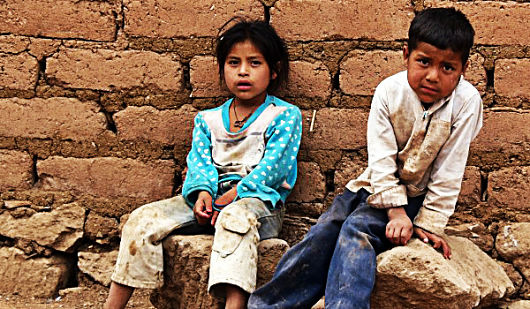
UNICEF estimates that there are 36,000 children living on the streets of Costa Rica. One of the reasons for this high number is because children have either been orphaned or they have left home. In 2010, the National Children’s Hospital treated 2,555 cases of violence and assault toward children. Social attitudes toward corporal punishment in Costa Rica are severely outdated, and it would appear that many children run away from home to escape this abuse. These children in particular are often distressed, hungry and afraid. Because of their desperation, they also are susceptible to being abducted into drug cartels in the local barrios. Being on the streets places children in danger of gang violence, drug trade and sexual abuse.
The child sex industry in particular is a major issue in Costa Rica, as there is a rampant sex tourism industry. The Protection Project estimates that over 5,000 people visit Costa Rica for the sex tourism annually. The majority of these tourists are coming from the United States and Western Europe. Orphaned girls living on the street are the most vulnerable to being lured into underground businesses.
The abuse comes in the form of prostitution, trafficking, and pornography. Child prostitutes can potentially earn hundreds of dollars per day, and trafficking a single child can bring in a profit of $10,000. Costa Rica also has one of the highest HIV/AIDS prevalence rates in Central America with 0.3% of the population affected, or approximately 10,000 cases. Costa Rican street children are at particular risk.
In 2004, World Vision, an international humanitarian group, received funding from the United States to help end child sex trafficking worldwide. The organization’s strategies included using deterrent messages, law enforcement assistance, and prevention programs. In 2008, UNICEF partnered with the Law on the Right of Children and Adolescents to Discipline Free of Corporal Punishment or Humiliating Treatment. This program seeks to reform social attitudes and provide families with advocacy resources on safe child rearing practices.
Additionally, in 2009 UNICEF partnered with the Costa Rican government’s National Council for Children and Adolescents to enact the Public Policy for Children and Adolescents.The purpose of this initiative was to implement a series of educational standards and regulations for children’s rights by 2021, Costa Rica’s 200th anniversary. The government has been heralded internationally for their compliance with international standards on children’s rights.
– The Borgen Project
Sources: SOS Children’s Village International, UNICEF 1, Protection Project 1, UNICEF 2, ABC News, Protection Project 2
Photo: Latest News Link

Street Children in Costa Rica
Costa Rica is known worldwide for its rich rainforests and beautiful beaches. As a result of this scenic beauty, there is an inherent marketability from which Costa Rica benefits, especially in regards to the tourism industry. Education, health and social security are other areas in which Costa Rica has seen positive development. While regionally Costa Rica is viewed as a fairly stable and successful country, it is not without its own set of serious economic and social issues.
Economically speaking, the top 20 percent of the country’s population account for about half of the total national income. The GDP per capita of Costa Rica is just over $10,000. However, about 10 percent of Costa Ricans are living on approximately $1.25 per day. It is clear that there is a significant disparity in terms of wealth distribution. Costa Rica is also a very young country, with roughly 26% of its 4.3 million people under the age of 14.
According to UNICEF estimates, there are upwards of 280,000 children not regularly attending school or enrolled in classes. 93% of children under 12 attend school, compared to only 86% and 78% for 14- and 16-year-olds, respectively. The older a child gets, the likelihood that they will graduate from school decreases by a few percentage points. The combination of these factors indicates why approximately 9% of all children between the ages of 5-14 are working to contribute to their families’ income. The majority of these children are either working in the fields, selling wares on the streets or working from home with family members.
UNICEF estimates that there are 36,000 children living on the streets of Costa Rica. One of the reasons for this high number is because children have either been orphaned or they have left home. In 2010, the National Children’s Hospital treated 2,555 cases of violence and assault toward children. Social attitudes toward corporal punishment in Costa Rica are severely outdated, and it would appear that many children run away from home to escape this abuse. These children in particular are often distressed, hungry and afraid. Because of their desperation, they also are susceptible to being abducted into drug cartels in the local barrios. Being on the streets places children in danger of gang violence, drug trade and sexual abuse.
The child sex industry in particular is a major issue in Costa Rica, as there is a rampant sex tourism industry. The Protection Project estimates that over 5,000 people visit Costa Rica for the sex tourism annually. The majority of these tourists are coming from the United States and Western Europe. Orphaned girls living on the street are the most vulnerable to being lured into underground businesses.
The abuse comes in the form of prostitution, trafficking, and pornography. Child prostitutes can potentially earn hundreds of dollars per day, and trafficking a single child can bring in a profit of $10,000. Costa Rica also has one of the highest HIV/AIDS prevalence rates in Central America with 0.3% of the population affected, or approximately 10,000 cases. Costa Rican street children are at particular risk.
In 2004, World Vision, an international humanitarian group, received funding from the United States to help end child sex trafficking worldwide. The organization’s strategies included using deterrent messages, law enforcement assistance, and prevention programs. In 2008, UNICEF partnered with the Law on the Right of Children and Adolescents to Discipline Free of Corporal Punishment or Humiliating Treatment. This program seeks to reform social attitudes and provide families with advocacy resources on safe child rearing practices.
Additionally, in 2009 UNICEF partnered with the Costa Rican government’s National Council for Children and Adolescents to enact the Public Policy for Children and Adolescents.The purpose of this initiative was to implement a series of educational standards and regulations for children’s rights by 2021, Costa Rica’s 200th anniversary. The government has been heralded internationally for their compliance with international standards on children’s rights.
– The Borgen Project
Sources: SOS Children’s Village International, UNICEF 1, Protection Project 1, UNICEF 2, ABC News, Protection Project 2
Photo: Latest News Link
Foreign Aid Successes and the Millennium Development Goals
Tracking foreign aid successes is essential to understanding how state actions affect the world’s poorest places, as well as dispelling myths about the ineffectiveness of aid. Aid works, and there have been dramatic improvements in education, health and the basic quality of life in the developing world because of it.
The Millennium Development Goals (MDGs) were established and adopted by all members of the United Nations in 2000. Some of these goals include reducing child mortality, combating HIV/AIDS rates and severely curbing extreme poverty by 2015. While not all of these goals have been met, there has been remarkable progress in others. Tracking progress toward these goals thus far can help fill in knowledge gaps about which aspects of global poverty need to be addressed the most.
For example, the rate of extreme poverty since 2000 has been cut in half (extreme poverty being defined as living on less than $1.25 per day). In about a decade, nearly half a billion people were pulled out of extreme poverty, especially in China and India. Poverty rates in Africa are also expected to fall below 40% this year. A Brookings Institute report estimates that this halving of extreme poverty rates took place as early as 2008, a full seven years before the deadline, and continued despite the global recession.
Foreign aid has also had a huge impact on global health. Another one of the MDGs was to reduce under-five child mortality by two-thirds by 2015. This goal was met in Rwanda, a country which only two decades ago was engulfed in a violent civil war; additionally, child mortality was reduced by one- to two-thirds in the last decade in some of the top U.S. aid recipients, such as Ethiopia. Globally, this amounts to a 10% reduction in infant mortality between 2005 and 2013.
Another oft-overlooked example of foreign aid successes are the health services and products that the United States Agency for International Development (USAID) provides to millions of people in the developing world. These products and services, among other things, have led to a total eradication of smallpox. One specific example of the effectiveness of USAID health programs is that U.S. foreign aid saves 3 million lives annually in the developing world through immunizations. USAID was also instrumental in providing 1.3 billion people with safe drinking water, and 750 million others with sanitation by supporting the United Nations Drinking Water Supply and Sanitation Decade.
Millennium Development Goal 6 calls to combat HIV/AIDS and other diseases. The U.S. leads the way in HIV/AIDS treatment and prevention, having established the U.S. President’s Emergency Plan for AIDS Relief (PEPFAR). Since its inception, this program has, according to the National Academies Institute of Medicine, saved millions of lives by providing antiretroviral drugs to affected regions. Additionally, the program has served as a proof-of-concept that HIV/AIDS prevention and treatment services can be effectively implemented on a large scale, something that was thought to be impossible only a few decades ago.
USAID has also helped affect change in education in the developing world. Since 1950, the rate of enrollment for children in primary school has gone from less than half to about 90% globally. Consequently, literacy rates have increased by a third in the last 25 years. Two of the Millennium Development Goals were to achieve universal primary education as well as promote gender equality. USAID is pursuing these two goals by promoting robust programs that expand access to education for women in countries like Liberia and Mali.
There are many reasons to be optimistic about the efficacy of foreign aid. Aid programs should be subject to scrutiny and review so that they may be made more efficient and target the populations that most need them. However, it is also important to take into account the many foreign aid successes that USAID and other donors have had in the developing world. Acknowledging that aid works is the first step in achieving the Millennium Development Goals.
– Derek Marion
Sources: Washington Post, Brookings Institute USAID, World Bank Foreign Affairs, IOM
Photo: International Institute for Sustainable Development
Ethiopia’s Population Dynamic: What the World Can Learn
In the past decade, Ethiopia has opened its doors to foreign investment. Fashion retailer H&M and Walmart already have factories there, or plan to build them. There are also proposals to build the Grand Ethiopian Renaissance Dam, which will be a source of hydropower and accelerate agriculture development.
For Africa’s second most populous country, this will spur an economy that has traditionally been state-led and isolated.
These investments have already had positive impacts beyond their monetary value. Due to financial and economic stability, women are now having fewer children than before. Literacy rates are on the rise, and infant mortality rates have fallen by half.
Just over three years ago, the world’s population crossed the 7 billion mark. By 2100, the United Nations projects that the world population will be roughly 9.1 billion. With distress over resources and a changing climate, overpopulation is a growing concern among world leaders.
While the populations of Europe and North America are beginning to stabilize, Africa is still experiencing accelerated growth. The United Nations cites economic development and the education of woman as solutions to slowing fertility rates.
It has already worked in Ethiopia.
The average number of children women have has fallen from 6.5 to 4.8 in just a decade. In the capital, Addis Ababa, one of the most developed regions in the country, women are now having the replacement level number of children — two.
Although Ethiopia’s fertility rate ensures population growth for the foreseeable future, there remains some hope. Over 64% of Ethiopia’s population is 25-years-old or younger. As this demographic enters an economy catalyzed by foreign investment, continued development will lift many out of poverty, thus slowing the fertility rate even further.
With continued investment, the fertility rate could plummet to 2.5 by 2030.
Ethiopia’s population is well on its way to being sustainable by 2050. International investment works and it is essential if poverty-ridden regions want to experience the success Ethiopia is currently having.
– Kevin Meyers
Sources: CIA, CNBC Africa PRB UN
Photo: U of T Magazine
China’s War on Poverty
The rhetorical phrase “War on Poverty” is commonly used to describe programs and policies aimed at reducing or eliminating poverty. It has been used in the context of United States politics but is now also being applied by the media to Chinese efforts to reduce poverty, especially in rural areas. China has experienced a meteoric rise to economic prominence in a few decades, yet much of the country lies in the past, still experiencing economic hardship without the benefits of the recent successes. What is China doing to fight poverty?
Hundreds of millions of people have been salvaged from poverty since China’s rise to prominence, however, in 2012, China’s GDP per capita was less than other developing countries, including Iraq and Colombia. Part of this statistic lies with the fact that the Chinese economy has to sustain a huge number of people, but another reason for this surprising statistic is that economic growth in China has benefited some more than others. Specifically, those in urban areas have tended to gain more from recent economic advances than those in rural China.
In the past, the millions lifted out of poverty in China were a result in part of strong economic growth. Additionally, less people are working in agriculture and moving into other businesses and improving human capital systems. Anti-poverty actions by the government also played a role but perhaps have not been enough.
In the 1990s, China changed its definition of poverty to a level that was about two-thirds of the international standard, artificially lowering its poverty statistics. However, China has also thrown billions of dollars at the problem in the form of subsidized loans, grants and programs such as “Food For Work,” which aimed to stimulate the economic situation of the poor while at the same time improving infrastructure for water systems and roads.
Whether poverty reduction government programs like Food For Work were strong factors behind China’s first burst of poverty reduction between the 1970s and the late 1990s is hard to determine. Some believe that China’s staggering growth in those decades was the biggest driver for poverty reduction. If that is the case, then a slowdown in the Chinese economy (still at 7% growth approximately) could hurt the reduction in poverty unless new government programs can pick up the slack.
As previously mentioned, many of the poor in China have already benefited from economic growth, but many more are still impoverished. In the past month, President Xi Jinping reaffirmed the government’s responsibility to fight poverty in rural areas while at a conference about China’s 13th Five-Year Plan. A rash of suicides among children in a rural area of China and the death of five homeless children in 2012 (carbon monoxide poisoning from lighting a fire in a trash container where they were taking shelter) has caused hard questions to be asked and for government officials to talk about action. Recognition of the continuing problem by the Chinese government is a positive sign. The additional fact that the Chinese economy is becoming more dependent on a consumer class sheds light on the need for the Chinese economy to pull more out of poverty and into the consumption class. China’s war on poverty — the incentive to work towards ending poverty — is apparent, from both a public relations standpoint and an economic one.
– Martin Yim
Sources: Reuters, The Diplomat, Journal of Chinese Economic and Business Studies, IMF, Asia Society
Photo: Yibada
How Ghana Reduced Hunger and Malnutrition
At the 39th session of the Conference of Member States of the Food and Agriculture Organization (FAO) held in Milan, Italy this June, Ghana was given an award from the FAO for reducing the level of its malnourished population from 7 million in the early 1990s to less than 1 million today.
Ghana is one of the 72 countries that have managed to reduce its level of people suffering from hunger to less than 5% of the population. Ghana has also seen a significant decrease in poverty. As Feed the Future states, Ghana’s GDP growth rate has grown from 4% in 2002 to 8% in 2012, as poverty was reduced from 52% to 28%.
Ghana’s success at decreasing the level of the population in poverty has made it the first Sub-Saharan African country to meet the Millennium Development Goal of halving extreme poverty by 2015. This decline in poverty has led to a corresponding decline in levels of hunger and malnutrition. In 1990, 27% of the Ghanaian population was malnourished. By 2005, this number fell to less than 5%. The level of malnutrition in children has also reduced — it has been halved from the 1980s to today.
Ghana was able to drastically decrease poverty and hunger by investing in its agricultural sector. Ten percent of the Ghanaian budget is devoted to its agricultural sector, which, as The Gates Foundation states, has led to a steady growth in Ghana’s agricultural productivity of almost 5% each year since 1985. Ghana has also significantly increased its production of cocoa, allowing it to increase exports.
The United Nations Development Programme (UNDP) states that besides agricultural growth, there are also other factors which helped to drive much of the population out of poverty. For example, the government of Ghana has introduced special social intervention plans which increase spending on programs that target the poor and vulnerable.
The south of Ghana is the country’s main agricultural area, which has led to a disparity in poverty between the north and the south. The poverty rates in the north are double than those in the south. In order to help decrease this poverty gap, Ghana has established four main interventions. The first is the adoption of security measures which help to end longstanding civil conflicts and attract private investment. The government also increased the number of resources it gives to the Savannah Accelerated Development Authority (SADA), an agency which works to plan a development agenda for the northern ecological zone in Ghana. Ghana has also augmented its infrastructure, providing more access to rural areas, and worked to help social intervention programs such as the Livelihood Empowerment Against Poverty (LEAP).
The gap between the poverty levels in the north and south of Ghana is worrisome, but the four interventions that the government established should help decrease poverty in the north and help the country overall. Ghana’s ability to decrease its level of hunger is remarkable and suggests that other countries that wish to reduce hunger and malnutrition should be prepared to invest heavily in their agricultural sector.
– Ashrita Rau
Sources: Impatient Optimists, Action Aid USA, UNDP, Feed the Future, Ghana Business News, Ministry of Food and Agriculture
Photo: World Food Programme
Canadian Energy Transparency Law Sets Example for US Policymakers
Earlier this month, the Canadian government passed the Extractive Sector Transparency Measures Act (ESTMA), an energy transparency law that aims to shed more light on the financial activity of energy companies in foreign countries. The law applies to nearly 2,000 energy companies that are registered in Canada or listed on Toronto’s stock exchange and will require them to publish detailed records of payments made to foreign governments.
The ESTMA came just before the G7 Summit on June 7, and is the product of Prime Minister Stephen Harper’s commitment at the 2013 G8 Summit to establish stricter standards for the reporting of financial activity by Canadian extractive companies.
The stated purpose of the law is “to foster better transparency to ensure that the resource extractive industries support proper development in the countries where they operate, while at the same time making it harder to conceal illicit payments.” According to Canadian Securities Law, the Act will require affected companies to report any payments made in relation to the commercial development of oil, gas or minerals that exceed either the amount prescribed by regulation or $100,000 on a number of types of payments, including royalties, production entitlements, dividends and infrastructure improvement funding.
While a similar U.S. transparency law has existed since a 2010 amendment to the Dodd-Frank Act, no rules have been officially implemented for extractive industry activity abroad. The Securities and Exchange Commission threw out regulations written in 2013 after a lawsuit from the American Petroleum Institute – the oil industry’s principal U.S. lobbying organization – claimed the regulations were too punitive for its member companies. In the fall of 2014, Oxfam International filed its own lawsuit against the SEC for failure to implement previously mandated regulations and expects a decision “any day now” on whether or not a federal court will set a timeline for the SEC.
As of now, the majority of the world’s largest oil companies, including Exxon Mobil and Chevron, are nor required to report payments made to foreign governments.
For civilians in oil-rich countries, the detriments for allowing foreign energy corporations to extract their resources often outweigh the benefits they realize for hosting them.
“In many countries that are rich in oil, gas and other non-renewable natural resources, the communities from whose territory the resources are extracted bear the brunt of environmental and human rights impacts associated with extractive activity but see few tangible benefits,” said EarthRights International (ERI) in a statement in 2014. “We, along with our partners in Burma and elsewhere, believe that knowing what governments receive from extractive companies is an important step for communities to hold governments responsible for the use of natural resource revenues and to advocate for a fair share of the benefits.”
Since 2009 ERI has worked with Oxfam and other members of the Publish What You Pay Us (PWYP) coalition to fight for revenue transparency in the extractive industry. The stated mission of the PWYP is to “[help] citizens of resource-rich developing countries hold their governments accountable for the management of revenues from the oil, gas and mining industries.”
“Natural resource revenues are an important source of income for governments of over 50 developing countries,” states the PWYP coalition. “When properly managed these revenues should serve as a basis for poverty reduction, economic growth and development rather than exacerbating corruption, conflict and social divisiveness.”
Proponents of stricter oversight of extractive industries note that a lack of financial transparency raises doubts as to how much civilians in host countries benefit from the extraction of their resources by foreign energy companies. Detailed records published by energy companies will reveal more precisely who is benefiting from extractive industry spending and whether – and to what degree – recipient governments use that spending to benefit their own people.
– Zach VeShancey
Sources: Canadian Securities Law, Devex, Earthrights, Publish What you Pay
Photo: The Star
Poverty and hunger are often accepted as issues that have little hope of going away completely because they are so widespread. In reality, however, it is quite the opposite. For example, the world produces more than enough food to feed everyone, which could, in turn, lead to dissolving global hunger and some aspects of global poverty.
The World Health Organization reported that between 2006 and 2008, there was enough food available to feed everyone in the world 2,790 calories each day. This amount increased from the 1960’s by 570 calories person/day.
The availability of food to those in poverty has decreased the percentage of chronically malnourished people from 34% in the 1970’s to 15% at the turn of the 21st century.
Despite this increase in available calories and decrease of impoverished people, the United Nations Food and Agriculture Organization found in studies from 2012 to 2014 that “805 million people of the 7.3 billion people in the world, or one in nine, were [are] suffering from chronic undernourishment.”
Of that 805 million still undernourished people, 11 million reside in developed countries; however, the other 794 million people are from developing countries.
With enough food available to feed everyone, the question remains: why is the food not being distributed more equitably to those suffering from hunger and malnutrition?
A multitude of reasons go into why the food available is not reaching those who need it. The ability (or lack thereof) to mobilize the food is at the forefront. The cost of shipping food can greatly restrict its ability to be transported to areas in need. However, developed countries waste 222 million tons of food each year. That wasted food requires transportation to landfills. Rather than moving food to landfills, the money to move it could be directed to transporting it to people in need.
The 222 million tons of food wasted each year by developed countries is equal to “the entire net food production of sub-Saharan Africa,” according to World Environment Day. Making that wasted food available to those impoverished and hungry would drastically improve lives around the world.
A lack of healthcare and education also impacts the poverty rates around the world. Entering the 21st century with a billion people unable to read makes the possibility of rising out of poverty more difficult for individuals.
In a similar way, healthcare hinders the ability of individuals and families to rise out of poverty. When that individual or a family member is sick and unable to work and help the family, it makes feeding the family that much more difficult.
Food, education and healthcare all come back to one another in the world of poverty. As they each improve, it allows for people to worry less about where they are going to get their next meal. As long as food that could feed those in need is going to waste, and the healthcare and education the poor deserve is not being provided, poverty will continue to exist.
– Katherine Wyant
Sources: Global Issues, 2015 World Hunger and Poverty Facts and Statistics
Photo: Pearls of Profundity
Who Are the Biggest Philanthropists in the World?
1. Warren Buffet: One of the world’s richest people says he views his money as “claim checks” on society that he can turn into consumption to improve the gross domestic product. In 2006, Buffet pledged stocks worth about $30 billion to the Bill and Melinda Gates Foundation, the largest charitable contribution of all time. He often auctions himself off for dinner on eBay, raising close to $1 million dollars per meal. He plans to donate his fortune once he dies because he believes great wealth should not pass from one generation to the next but instead should move out into the world to make a more lasting, widespread impact.
2. Bill and Melinda Gates: The founder of Microsoft and grandfather of the tech start-up world, Bill Gates is the co-founder of the Bill and Melinda Gates Foundation, the wealthiest charity in the world with assets estimated at $34.6 billion. Gates has cited David Rockefeller as a major influence on his philanthropic work and has extensively studied the Rockefeller Family’s charitable pursuits. Gates and his wife Melinda have donated over $28 billion to charity and plan on donating 95% of their fortune when they die.
3. Sir Ka-shing Li: Hong Kong business magnate Ka-Shing Li is the richest man in Asia, with his companies comprising 15% of the market cap on the Hong Kong Stock Exchange. However, Li is best known for leading a no-frills lifestyle and donating about $1.3 billion of his wealth to charity. Most of his donations go to universities around the world, such as Hong Kong Polytechnic University, the University of California, Berkley, Stanford University and the University of Alberta. He also founded Shantou University near his hometown of Chaozhou. Li’s charitable work has earned him the Grand Bauhinia Medal, the highest honor in Hong Kong, the Order of the British Empire and the Legion of Honor.
4. Chuck Feeney: Baseball executive and businessman, Feeney founded The Atlantic Philanthropies, one of the largest foundations in the world. Atlantic has donated more than $6.2 billion since 1982 to social projects in Australia, Bermuda, Northern Ireland, South Africa, the United States and Vietnam. The foundation is the largest funder of aging and immigration reform in the United States and has given numerous gifts to Feeney’s alma mater, Cornell University. Feeney’s philosophy is “Giving While Living.”
5. George Soros: Hungarian-born business magnate and investor, Soros gave away $8 billion between 1979 and 2011, mainly to peaceful political movements and educational institutions. In the 1970s, Soros funded black students in South Africa to attend university under apartheid and worked to promote democracy in post-Soviet states. His foundation, Open Society Foundations, helped assist the transition to capitalism in his native Hungary and gave large funds to Central European University in Budapest. Soros also donated $100 million toward increased Internet access in rural Russian universities and $50 million toward the Millennium Promise. Soros’s political activism has long spurred his charitable work.
These philanthropists have dedicated their lives and fortunes to humanitarian causes throughout the world and can serve as an inspiration to all of us to give back and fuel the causes and institutions in which we most steadfastly believe.
– Jenny Wheeler
Sources: GeorgeSoros.com, Forbes
Photo: BBC News
New Training for Global Health Workers Announced by USAID
The U.S. Agency for International Development (USAID) unveiled a free and readily accessible resource for mobile devices that have an Internet connection. The training tool, named “ORB,” is the first of its kind.
The launch follows criticism of USAID by a panel comprised of business and development leaders last year. Mainly, the panel cited the agency for management problems, including insufficient coordination, accountability and progress-measuring data collection.
In April, Representative Christopher Smith (R-N.J.) introduced H.R. 1567 in an effort to ensure that Congress is doing all it can to assist USAID in saving impoverished lives around the world. The bill, which was unanimously approved by the House Foreign Affairs Committee, would compel USAID to create clear, measurable and transparent goals.
In addition, the bill calls for an approach that would “improve nutritional outcomes, especially for women and children.” More than 6 million children under 5 years of age die from preventable and treatable causes every year, with more than half of these deaths attributed to malnutrition. For developing countries encountering these issues, global health workers are the primary, and sometimes only, source of healthcare, but they often lack the necessary training and support.
This is where the new USAID training comes in. The tool consists of a library of over 200 resources in 13 different languages that can help train health workers all over the world. The agency is anticipating the library will be able to support up to 100,000 frontline global health workers by 2017 with its easy-to-use, open source content.
The hope is that the new USAID training will improve the quality and reach of previous training efforts, leading to more knowledgeable, confident workers who will then alter the outcome of health matters for the more than 10 million women and children they currently service.
– Matt Wotus
Sources: The Library of Congress, Pittsburgh Post Gazette, USAID 1, USAID 2
Photo: USAID
Foreign Aid Decreases the Likelihood of Terrorist Attacks
FDI allows developed nations to invest in developing nations in the form of foreign aid. FDI is critical for the economies of the developing and developed nations, as developing countries need support until they can economically sustain themselves. If these developing nations fail due to a cause such as terrorist attacks, the developed nations that have invested in them experience a drop in stocks that, in turn, can negatively impact citizens.
Economists Sandler Enders and Adolfo Sachsida found in a study that “terrorist attacks lowered U.S. FDI by 1 percent in nations that belong to the Organization for Economic Cooperation and Development (OECD) but had no statistically significant effect in non-OECD nations.”
Due to recent rapid globalization, no disease, repression or crime is isolated from the rest of the world.
First world countries are not immune to terrorism. The 9/11 attacks, the Charlie Hebdo shooting and the Tunisia museum attack are proof of the international impact these terror groups can have (and seek to achieve). Limiting their abilities and presence in the countries from which they originate would then of course be sensible.
Al-Qa’ida, Boko Haram and ISIS – all major terror groups in developing countries with which the world is familiar. These developing countries are more susceptible to terrorist groups arising because of rampant impoverishment. As Susan Rice, author of “The Threat of Global Poverty” attests, poverty “creates conditions conducive to transnational criminal enterprises and terrorist activity.”
Insecurities in developing nations often leave individuals feeling desperate and hopeless. As individuals become more penurious, they are more inclined to join radical alternatives to sustain themselves and their families.
These struggling nations are less established and unable to prevent terrorist groups from rising to power because of financial hindrances.
In a recent study conducted by the United Kingdom’s Department for International Development, it was found that “a country at $250 GDP per capita has on average a 15 percent risk of internal conflict over five years, while a country at $5,000 per capita has a risk of less than 1 percent.”
Multiple developed nations have set foreign aid funds; however, they are often minimal amounts that are only enough for a nation’s government to survive, rather than thrive. By investing enough in developing countries, developed nations can reduce human suffering, curtail the chances of terrorist groups forming and support the domestic economy through the expansion of markets.
– Katherine Wyant
Sources: Center for the National Interest, Federal Reserve Bank of St. Louis
Photo: The Jerusalem Post