In recent times, some of the largest economic growth in South America has occurred in a small and notoriously narrow country, the Republic of Chile. A standard-bearer of free-market capitalism, Chile’s rapid expansion over the past 35 years has been staggering. According to Forbes, “poverty has fallen from 50 percent to 11 percent, per-capita income has increased from 4.000 dollars to almost 20.000 dollars and inflation was reduced from over 250 percent per year to less than 7 percent per year.” Often referred to as the “The Miracle of Chile,” this development seemed to lift the country out of economic and political chaos and into remarkable prosperity.
In 1973, Chile was in dire straits. Its annual rate of inflation had reached 150 percent and its economy was spiraling downward. On top of this, the country experienced the bloodiest coup of 20th century South America in which the military dictatorship of General Augusto Pinochet seized power from the Socialist president Salvador Allende. Over the course of just one month, over 3,000 Chileans lost their lives as military planes strafed and bombed the presidential palace. Ironically, this militaristic dictator became the source of the economic miracle.
General Pinochet promptly began to dismantle Allende’s socialist system and in its place instituted free-market economic policies. To enact these policies, Pinochet gathered together a collection of economists named the ‘The Chicago Group,’ as many members had studied at the University of Chicago. The group endorsed lower tax rates, the privatization of state companies, lower government spending and deregulation. But this growth came at a price to civil liberties and democratic values. In his 1980 constitution, Pinochet set the stage for Chile’s growth by prioritizing economic freedom at the cost of political oppression and social programs.
In 1990, Pinochet failed to retain his office after losing a public election and Chile steered back towards democracy. While his policies in the 1980s had brought the country out of financial failure and into economic prosperity, they left the poorest Chileans behind. Due to tax cuts and lackluster government spending, 45 percent of Chileans still lived in poverty. To the new Chilean government of the 1990s, the next big step was to confront poverty. Their solution was social spending.
Their plan was extraordinarily successful. Between the years of 1989 and 1997, the new Chilean government increased “health and education investments (mostly ignored under Pinochet) by 179.3 and 115 percent respectively,” according to a report from Brandeis University. This social spending helped to dramatically lower poverty; every percentage of growth Chile experienced between 1990 and 1996 counted 50 percent more to the reduction of poverty than under Pinochet’s regime. Ultimately, the poverty rate fell from 39 percent to 20 percent from 1990 to 2000. In comparison, poverty across South America only fell from 48 percent to 44 percent.
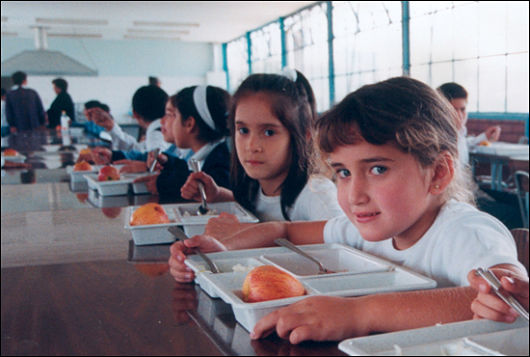
Of all social expenditures, education received the most attention and made the greatest impact. During the 1990s, spending on education grew at a rate of 10.6 percent annually and 274 percent cumulatively over the entire decade. The same Brandeis study mentioned above found that the increases in education spending were particularly effective in decreasing the severity of poverty in Chile.
However, Chile’s expansion, while exceptional, has not exactly been miraculous. According to the Brookings Institute, Chile has one of the highest rates of income inequality in the world. Unfortunately, Chile’s education system, particularly higher education, suffers from a similar form of stratification even though it has expanded by 33 percent in the past two decades. In terms of enrollment, 62 percent of Chileans from the upper 20th percentile in income attend institutions of higher education. By contrast, only 21 percent attend from the lower 20th percentile.
While Chile has developed rapidly, due in large part to social spending in education, it has left many of its poorest behind. With the current president Michelle Bachelet planning further tax increases to provide free education to all Chileans, it is possible that another miracle may be on the horizon.
– Andrew Logan
Sources: BBC, Bloomberg, Brandeis University, Brookings Institute, Forbes, IFPRI, MIT Poverty Action Lab, University of Hawaii
Photo: SnipView

How Many Senators Are There?
What are the requirements for being a senator?
A senator must be at least 30-years-old and is required to have been a U.S. citizen for nine years. A senator must also be a resident of the state that he or she represents. Once elected, a senator stays in office for six years.
Elections for the Senate occur every two years, when one-third of the Congressional branch is up for reelection. After a senator’s six-year term ends, he or she can run for reelection an unlimited number of times. At the beginning of the 114th Congress, the average length of service for current senators was 9.7 years.
What does a senator do?
Legislative business takes up most of a senator’s time. Senators work in committees, such as the Foreign Relations Committee and the Budget Committee, to handle legislative matters. When a committee favors a bill, it meets with experts and executive agencies to gather information before adding amendments or changing the bill’s language. Committees can then report out legislation to the full Senate, where debates take place.
Senators also handle executive business when in session. Specifically, the Senate has the power to rule on treaties that the president proposes. Senators also vote to approve or deny cabinet, ambassador and Supreme Court justice appointments.
Who are my senators?
Who your senators are depends on your state of residence. Find my Senators.
How many minorities are represented in the Senate? How many women?
The current 114th Congress is the most diverse in history. However, out of 100 senators, just six belong to racial or ethnic minorities: three Hispanic, two African-American, and one Asian-American. Twenty women currently serve in the Senate, which is three more than served in the 112th Congress. There was no increase in the number of female senators between the 113th and 114th Congresses.
– Caitlin Harrison
Sources: New York Times,United States Senate, United States Senate 2, United States Senate 3,United States Senate 4,United States Senate 5 United States Senate 6, Federation of American Scientists, U.S. Consulate
Photo: United States Senate
OpenStreetMap Simplifies Nepal Earthquake Relief
The OpenStreetMap Foundation is a nonprofit organization whose goal is to enable people to freely develop geospatial data. In short, it is the Wikipedia of mapping. Entirely operated on volunteer power, any individual can map an area of their choice to add and maintain data. OpenStreetMap is open data, meaning anyone can use it as long as they are credited.
In April of 2015, mappers leaped into action to help with the Nepal earthquake. Within hours, volunteers had Nepal mapped in much greater detail than ever before. Using areal imagery, GPS devices and low-tech field maps, the OpenStreetMap volunteers created a thorough and accurate map for disaster relief organizations to use.
The Humanitarian OpenStreetMap Team partners with relief organizations to map the areas that need immediate aid the most. Because of these efforts, disaster relief organizations can act quickly with knowledge of how to locate people at risk and how to best deliver goods and services.
Halfway across the world, a couple of civil engineering students at the University of Washington chipped in using OpenStreetMaps to help with Nepalese disaster relief. One graduate student James Lew describes his experience saying, “There’s a tendency to want to do the major cities and the infrastructure that’s closest to the major highways, but as you get further and further out, there’s still houses out there that are disconnected. It’s really cool to draw a box around them and say, ‘there’s a family here, don’t forget them.’”
Mapping has a profound role in humanitarian aid. Kathmandu Living Labs (KLL) is a small nonprofit that creates active “crisis maps” using OpenStreetMap data and real-time data submission. KLL created Quakemap.org that allows people in the field to report in real-time what areas need the most aid. KLL then highlights the areas, showing humanitarian aid organizations where they should focus their attention.
Although the organization is small, KLL’s live crisis map has been incredibly valuable to nongovernmental organizations, the local government and even the Nepalese Army in the weeks after the earthquake. Real-time mapping has given relief workers a new edge in delivering quick and efficient help after a crisis.
– Hannah Resnick
Sources: Forbes, Humanitarian OpenStreetMap Team, Kathmandu Living Labs, University of Washington
Photo: Kathmandu Living Labs
Cash Incentive Improves Malawian Girls’ School Attendance
Global poverty is connected to the lack of access to education that many young girls face. In Malawi, a program offers cash incentives to young girls and their families in order to encourage school attendance. The results have exceeded expectations of the girls’ school attendance, and there are also additional health benefits for these young women.
Young girls are often not encouraged to attend school because their parents do not understand the value of education for girls or would prefer for them to help out at home. A recent extreme case in Pakistan is a clear example. A father strangled his three girls to death because he did not want to “waste money” on their education and felt that the girls were a burden to his family.
While stories such as this one are shocking, the conditional cash transfer program in Malawi works to help alleviate the barriers to education for young girls and their families. On the other hand, the father of the young girls in Pakistan refused to provide them with any money, and their school fees had to be paid for by their maternal grandparents.
The Zomba Cash Transfer program in southern Malawi offers girls and young women aged 13 to 22 and their parents up to $15 per month if the girls attend school regularly. An additional group in the study received the money without conditions, and a control group did not receive any money.
Improvements in school attendance were observed after 18 months. There was no significant difference between the two groups that received the cash payments, suggesting that education can be valued without forced restrictions if families can afford to send their children to school.
In addition to the increased school attendance, there were changes in the sexual behavior of these young girls. Girls had less sex and chose safer, younger partners. Child marriage and teenage pregnancy were also reduced. Most significantly, the International Center for Research on Women states that there was a “reduction by 60 percent of HIV prevalence rate and [a decrease of the] HSV2 (herpes simplex virus) infection.”
The program targeted 23,561 households in seven of Malawi’s districts and has the potential to be scaled up even further. In addition to sending their children to school, families used the money to buy food, medicine and farming supplies, and to travel to the hospital to buy antiretroviral drugs to treat HIV/AIDS. The money can help lift families out of poverty and empower young girls. With proper education, these girls can then participate fully in society and help break the devastating cycle of poverty for their own children.
David Bull, Executive Director of UNICEF U.K., believes that investing in education for girls benefits everyone in society. Girls will specifically benefit from the obtainment of skills to participate in society and protect themselves. However, businesses will also be able to hire more qualified women and broaden their customer base. When half of a country’s population is prevented from participating fully in the economy, economic growth will be stunted.
Global health and development, as well as the protection of human rights for girls, are central global goals. While conditional cash transfer programs need to be further evaluated to understand their sustainability and long-term effects, there is promise for great improvements in gender equality.
– Iliana Lang
Sources: Boston University, Daily Mail, The Guardian, International Center for Research on Women, National Center for Biotechnology Information, University of North Carolina at Chapel Hill
Photo: Camfed
Michelle Obama Launches New Education Program for Girls
On a recent visit to London, Michelle Obama unveiled a new international plan to improve girls’ education. Obama’s Let Girls Learn Initiative aims to bring quality education to girls around the world. To kick off the initiative, Obama announced a new $200 million partnership between the United States and the United Kingdom.
The new partnership will be a joint effort by both countries to properly allocate funds to the countries with the greatest educational needs. The first projects will help 450,000 children in the Democratic Republic of Congo receive a primary school education, with benefits also going to Sierra Leone and Liberia.
In developing areas like these, girls often lack access to proper education. In total, there are approximately 62 million girls around the world today that are not in school. Even worse, half of this uneducated female population is made up of adolescents.
Looking ahead, the First Lady’s multi-million-dollar program is expected to benefit more than 755,000 girls between the ages of 10 and 18 over the next five years. Through bilateral collaboration, girls will be provided with access to education.
The plan includes enrolling students in accelerated primary school programs, reducing barriers to school access and mobilizing parental and community support. It will also focus on improving the quality of teaching materials and methods.
The partnership will also encourage other advocacy organizations to collaborate with one another in order to find the best solutions to improve girls’ education worldwide in terms of quality and access.
Shortly after the initiative was originally announced in March, the White House released a statement saying, “When a girl receives a quality education, she is more likely to earn a decent living, raise a healthy, educated family, and improve the quality of life for herself, her family, and her community.”
This press release highlights the connection between girls’ education and even larger, more deeply rooted worldwide problems. It is in the world’s poorest areas that girls’ education suffers the worst deficiencies. Improved education could bring improvements in other important areas as well.
Rocco Blume of the charity Plan International U.K. points out that improved education for girls could result in an influx of contributions to developing economies and impoverished communities. In fact, targeting issues like girls’ education is key in tackling other challenges like poverty and maternal health.
Countries with more girls in secondary school tend to have lower maternal mortality rates, lower infant mortality rates, lower rates of HIV/AIDS and better child nutrition. These facts stand at the foundation of the Let Girls Learn Initiative and the core of the U.S.-U.K. partnership.
Poverty is one small word for one incomprehensibly large problem. It must be tirelessly chipped away at, piece-by-piece. The worldwide effort to combat poverty is strengthened by zeroing in on particular issues like girls’ education. Hopefully, this new partnership will spark increasingly focused on international collaboration.
– Sarah Bernard
Sources: CNN, Essence, Voice of America, The White House
Photo: eNCA
The Grim State of Education in Pakistan
The status of education in Pakistan is a bleak one. Officially, the overall literacy rate is 46%, with 26% of girls being literate. However, third party organizations reduce the overall rate to 26% by excluding people who cannot do more than sign their names. It has the second-highest rate of uneducated children worldwide, with 5.1 million kids out of school in 2010. Two-thirds of the children out of school are girls, giving a ratio of 8 educated girls for every 10 educated boys.
There are merely 40,000 schools in the country that serve girls. Moreover, these schools are concentrated in more heavily populated areas, with more remote girls receiving little access to education. In these regions, half of the girls have never attended school. Furthermore, in many of these rural provinces female education is restricted due to religious reasons. In the provinces of Baluchistan and North-West Frontier, female literacy stands at approximately five percent.
Girls in these areas oftentimes enter the workforce early to support their families and many become domestic workers. Khanzadi, a 10-year-old girl from a rural province who works in a wealthy district in Karachi is “lucky she’s with [a rich household] because [they] can spare some food and help her grow,” her mistress says. However, seeing urban girls her age attend school every day makes Khanzadi feel less than fortunate.
Militant groups, including the Taliban, Al-Qaeda, and foreign groups, have been based in the Federally Administrated Tribal Areas for more than a decade and launch attacks both into Pakistan and neighboring Afghanistan. Since June 2014, more than one million displaced children have been unable to attend school. Hazrat Zaman, a father of 17 who brought his family across the border to Afghanistan to search for schools before returning to Pakistan, said, “We are completely in the dark about our children’s future.”
Several non-governmental organizations (NGOs) have stepped in to improve education access for girls in rural provinces. One organization, Alkhidmat, has set up more than 100 informal schools for girls and women to receive a basic education. The organization operates on the belief that women who are educated will help build a stronger, more developed nation.
Needless to say, there are many long-term impacts on a heavily uneducated population. One in three young Pakistani people, or about 12 million people from the ages of 15 to 24, lack the basic skills necessary to be hired. Men earn, on average, 60% more than women. This income gap is widest among illiterate workers. However, education still makes a huge impact on women’s earnings: educated women earn 95% more money than their uneducated counterparts.
– Jenny Wheeler
Sources: IRIN News, UNESCO 1, UNESCO 2,
Photo: Pakistan Today
The Debate on GMOs in Nigeria
A small study conducted seven years ago showed that a majority of Nigerian scientists had low awareness about genetically modified organisms (GMOs) and their harmful effects. But today, with the help of the Internet and the explosion of social media in Nigeria, people are even more aware.
And with this awareness comes resentment and resistance.
By becoming educated about genetically modified plants, opponents have pointed out their damage to biodiversity. Native plants have become sparse compared to the genetically modified plants that seem to grow with ease.
Opponents have also raised the question over whether consuming genetically modified plants has negative health consequences.
Although Nigerian scientists and GMO supporters reassure that genetically modified food is safe for the consumer, the critics counter that developed countries do not consider GMOs to be safe. By taking into account that developed countries have even stronger risk assessment and regulatory systems, there are still many critics in Nigeria.
GMOs have been coined “the Monsanto Poison” in Nigeria because of the Monsanto Company’s role in Agent Orange. This herbicide was used during the Vietnam War by the United States and has had lasting effects on the health of veterans. Agent Orange was strategically used to deplete vegetation cover and as a way to force starvation on the population. This has caused Nigerians to have a generally negative view of GMOs.
However, there are still some scientists and proponents in Nigeria that would like to expand the use of genetically modified plants. By being able to modify the plants, scientists are able to better understand their biology and physiology.
Genetic engineering has also improved crops such as cotton, soybeans, tomatoes, coffee and bananas. Plants can also be modified to have a higher protein content and higher oil yield. This could all improve the nutrition of those that consume them.
Scientists in support of GMOs in Nigeria also note that GMO technology could be a solution to the challenges that face global food production. Climate change, population growth and competition for land have all affected how food is produced and its quantity.
The debate over the safety of genetically modified organisms has been developing for over 40 years. However, if this technology can be scientifically proven to be safe for consumers, GMOs could feed the world’s hungry. The approval of GMOs in Nigeria would not only be a huge success for science, but also for those in need of food.
GMOs could be the key to solving food shortages, but only time will tell if GMOs are deemed safe for consumers.
– Kerri Szulak
Sources: Genetic Literacy Project, Risk Science Center
Photo: biodiverseed
Education Helps Eradicate Poverty in Chile
In recent times, some of the largest economic growth in South America has occurred in a small and notoriously narrow country, the Republic of Chile. A standard-bearer of free-market capitalism, Chile’s rapid expansion over the past 35 years has been staggering. According to Forbes, “poverty has fallen from 50 percent to 11 percent, per-capita income has increased from 4.000 dollars to almost 20.000 dollars and inflation was reduced from over 250 percent per year to less than 7 percent per year.” Often referred to as the “The Miracle of Chile,” this development seemed to lift the country out of economic and political chaos and into remarkable prosperity.
In 1973, Chile was in dire straits. Its annual rate of inflation had reached 150 percent and its economy was spiraling downward. On top of this, the country experienced the bloodiest coup of 20th century South America in which the military dictatorship of General Augusto Pinochet seized power from the Socialist president Salvador Allende. Over the course of just one month, over 3,000 Chileans lost their lives as military planes strafed and bombed the presidential palace. Ironically, this militaristic dictator became the source of the economic miracle.
General Pinochet promptly began to dismantle Allende’s socialist system and in its place instituted free-market economic policies. To enact these policies, Pinochet gathered together a collection of economists named the ‘The Chicago Group,’ as many members had studied at the University of Chicago. The group endorsed lower tax rates, the privatization of state companies, lower government spending and deregulation. But this growth came at a price to civil liberties and democratic values. In his 1980 constitution, Pinochet set the stage for Chile’s growth by prioritizing economic freedom at the cost of political oppression and social programs.
In 1990, Pinochet failed to retain his office after losing a public election and Chile steered back towards democracy. While his policies in the 1980s had brought the country out of financial failure and into economic prosperity, they left the poorest Chileans behind. Due to tax cuts and lackluster government spending, 45 percent of Chileans still lived in poverty. To the new Chilean government of the 1990s, the next big step was to confront poverty. Their solution was social spending.
Their plan was extraordinarily successful. Between the years of 1989 and 1997, the new Chilean government increased “health and education investments (mostly ignored under Pinochet) by 179.3 and 115 percent respectively,” according to a report from Brandeis University. This social spending helped to dramatically lower poverty; every percentage of growth Chile experienced between 1990 and 1996 counted 50 percent more to the reduction of poverty than under Pinochet’s regime. Ultimately, the poverty rate fell from 39 percent to 20 percent from 1990 to 2000. In comparison, poverty across South America only fell from 48 percent to 44 percent.
Of all social expenditures, education received the most attention and made the greatest impact. During the 1990s, spending on education grew at a rate of 10.6 percent annually and 274 percent cumulatively over the entire decade. The same Brandeis study mentioned above found that the increases in education spending were particularly effective in decreasing the severity of poverty in Chile.
However, Chile’s expansion, while exceptional, has not exactly been miraculous. According to the Brookings Institute, Chile has one of the highest rates of income inequality in the world. Unfortunately, Chile’s education system, particularly higher education, suffers from a similar form of stratification even though it has expanded by 33 percent in the past two decades. In terms of enrollment, 62 percent of Chileans from the upper 20th percentile in income attend institutions of higher education. By contrast, only 21 percent attend from the lower 20th percentile.
While Chile has developed rapidly, due in large part to social spending in education, it has left many of its poorest behind. With the current president Michelle Bachelet planning further tax increases to provide free education to all Chileans, it is possible that another miracle may be on the horizon.
– Andrew Logan
Sources: BBC, Bloomberg, Brandeis University, Brookings Institute, Forbes, IFPRI, MIT Poverty Action Lab, University of Hawaii
Photo: SnipView
Poverty in Quanzhou, China
Urbanization in China experiences challenges when expanding out to rural areas and having to reclassify villagers as urban citizens. One consequence of expansion is the sale of farmers’ land in order to create space for urbanized living or development.
Quanzhou’s gross domestic product is about $84 billion, and the city hosts one of the lowest unemployment rates in the world at 1.22 percent. The economy is driven by textile factories, food processing plants and emerging industries such as petrochemicals and automobiles.
In 2014, protests over the urbanization and development plans through the sale of land became heated, as rows of villagers held up banners to show their dissent. The government did not negotiate with the villagers before selling their property, which forced some residents into poverty.
“The land belongs to the farmers, but the government sold it off, and the farmers haven’t received any of the money,” said Chen, a resident of the Xunbu village in Quanzhou.
The government’s seizure of rural land resulted in violent suppression and pressure for the local villagers to comply with Beijing’s actions.
While property is being sold off for the government to expand their business expenditures, there have been many successful developments and labor changes to alleviate poverty in Quanzhou. For example, improved working conditions make the city attractive to migrant workers. These workers will then be less likely to leave Quanzhou city, softening any labor shortages.
The Quanzhou Federation of Trade Unions has a new model to protect immigrant workers and benefit both workers and employers. These efforts provide individual contracts as well as collective contracts that extend their rights to neighborhood levels, such as street, village, or enterprise. Due to the success of their new model, $12.91 million in salaries have been paid to workers. This has alleviated the poverty felt by many migrant workers of Quanzhou.
With over 13,000 foreign enterprises reaching a total of $34.5 billion in investments, Quanzhou has the ability to expand and become the national center of urbanization and development that China is hoping to accomplish. As long as working conditions continue to improve and wages continue to climb, Quanzhou will be able to fill vacant positions and keep migrant workers returning. If their business model continues to succeed, Quanzhou may become the most important investment city to get the 82 million people below the poverty line out of extreme poverty.
– Donald Gering
Sources: China Daily, China Knowledge, Harvard, International Business Times, RFA, Rappler
Photo: China Mike
Controversial Land Acquisition Amendments Promulgated in India
Last month, the President of India promulgated the controversial Right to Fair Compensation and Transparency in Land Acquisition, Rehabilitation and Resettlement (Amendment) Ordinance despite massive public opposition. This means that even though the bill outlining the amendments has not yet passed in India’s Upper House to legally become law, its content would still be enforced. Multiple farmer organizations have collectively filed a Public Interest Litigation (PIL) against the ordinance, labeling it as “unconstitutional” and an unchecked exercise of executive power.
The bill amends various aspects of the Right to Fair Compensation and Transparency in Land Acquisition, Rehabilitation and Resettlement Act of 2013, which replaced the colonial-era Land Acquisition Act of 1894. The aim of the amendments is to facilitate development projects with greater ease by expediting land acquisition.
But many argue that the amendments violate property rights of vulnerable communities and risk exacerbating economic and social woes. While the 2013 Act made the consent of at least 70-80% of landowners mandatory for a project to be carried out, the new amendments no longer require any level of consent for projects that are for national security and defense, rural infrastructure, social infrastructure, industrial corridors and housing for the poor.
The amendments also no longer mandate a Social Impact Assessment (SIA) to be carried out for these five types of projects or any Public-Private Partnership (PPP) project if the government owns the land. Opponents of the amendment fear that the categories exempt from the consent and SIA requirements are so broad that nearly all land development projects can be carried out without them.
The new amendments also weaken the previous Act’s provision that decreed land be returned to its original owners if it remained unused for more than five years after its purchase. As a report of the Comptroller and Auditor-General of India on Special Economic Zones found last November, land in India is often left undeveloped for long periods of time.
Opponents also criticize the amendments for increasing government officials’ immunity against prosecution. In the old Act, the head of the department that carried out the project would be responsible for any mismanagement or wrongdoing. Now, the head of the department and other civil servants are protected from prosecution until the government gives courts its permission to proceed.
The Modi government, which is behind the amendments, has defended them by asserting that they will attract foreign investors. Land acquisition laws for foreign companies have been riddled with red tape and slow bureaucracy. The World Bank rates India 142 out of 189 economies for ease of doing business. Many companies have dropped their investment plans after just a few years because of these impediments.
But lingering concerns remain about the government’s ability to carry out any provision of either the 2013 Act or its amendments. Indian bureaucracy is riddled with corruption, impunity and mismanagement. An estimated 75% of displaced people since 1951 are still awaiting rehabilitation. Many have not been given their due compensation.
– Radhika Singh
Sources: The New Indian Express, The World Bank, One Law Street, One Law Street (2), The Weekend Leader, The Hindu
Photo: The Wall Street Journal
All You Need to Know About Soft Power
Soft power is an indirect way to exercise power and control. A country with a lot of it can convince other countries to adopt some of its morals, values and prominent institutions. Essentially, a country exerting a large amount of soft power can persuade other countries to want the same things it wants and therefore use their influence to advance its own political agenda. It is getting the outcome one wants through persuasion rather than coercion.
Origens of Soft Fower
Power is the ability to get others to do what you want, and soft power is an essential form of power. Nye states that it can come from three resources:
Its Importance
Soft power is important because, according to Foreign Affairs, it can be used to gain supporters and partners. For example, United States companies, institutions, churches, foundations and other institutions of civil society all play a part in projecting it, and the cultures and values that the United States have are a form of soft power that allows the U.S. to gain allies. Even things that one may not view as important, like Hollywood movies and American pop culture, are forms of it that can help shape other countries attitudes’ and choices in the long-run.
BBC discusses how soft power can be exerted in one of their articles, in which they talk about a woman named Iryna Olova who grew up in Kiev in the Soviet Union. Olova talks about how fascinated she was with movies such as the Wizard of Oz as a child and states that movies made her feel that America was a happy and sunny place. She eventually left Ukraine and moved her family to America. Even though parts of American culture, like movies, may seem inconsequential to International Relations, according to Nye and the theory of soft power, they are anything but. Some political scientists even say that it helped the United States win the Cold War.
Limitations
According to Nye, the limitations of soft power are that it is not easily channeled toward a specific outcome and that it can have diffuse effects on the outside world.
Other Examples
In his book, “Soft Power: The Means to Success in World Politics,” Nye gives some examples of it, including the high number of foreign students enrolled at United States Universities and the prominent consumption of American media products worldwide.
– Ashrita Rau
Sources: Foreign Policy 1, Foreign Policy 2 BBC, Diplomacy Education Oxford Dictionary 1, Oxford Dictionary 2 Foreign Affairs
Photo: Flickr