How Ghana Reduced Hunger and Malnutrition
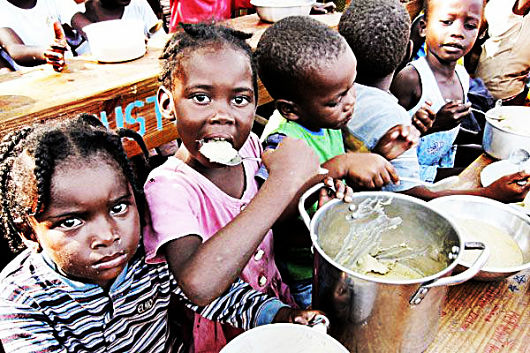
At the 39th session of the Conference of Member States of the Food and Agriculture Organization (FAO) held in Milan, Italy this June, Ghana was given an award from the FAO for reducing the level of its malnourished population from 7 million in the early 1990s to less than 1 million today.
Ghana is one of the 72 countries that have managed to reduce its level of people suffering from hunger to less than 5% of the population. Ghana has also seen a significant decrease in poverty. As Feed the Future states, Ghana’s GDP growth rate has grown from 4% in 2002 to 8% in 2012, as poverty was reduced from 52% to 28%.
Ghana’s success at decreasing the level of the population in poverty has made it the first Sub-Saharan African country to meet the Millennium Development Goal of halving extreme poverty by 2015. This decline in poverty has led to a corresponding decline in levels of hunger and malnutrition. In 1990, 27% of the Ghanaian population was malnourished. By 2005, this number fell to less than 5%. The level of malnutrition in children has also reduced — it has been halved from the 1980s to today.
Ghana was able to drastically decrease poverty and hunger by investing in its agricultural sector. Ten percent of the Ghanaian budget is devoted to its agricultural sector, which, as The Gates Foundation states, has led to a steady growth in Ghana’s agricultural productivity of almost 5% each year since 1985. Ghana has also significantly increased its production of cocoa, allowing it to increase exports.
The United Nations Development Programme (UNDP) states that besides agricultural growth, there are also other factors which helped to drive much of the population out of poverty. For example, the government of Ghana has introduced special social intervention plans which increase spending on programs that target the poor and vulnerable.
The south of Ghana is the country’s main agricultural area, which has led to a disparity in poverty between the north and the south. The poverty rates in the north are double than those in the south. In order to help decrease this poverty gap, Ghana has established four main interventions. The first is the adoption of security measures which help to end longstanding civil conflicts and attract private investment. The government also increased the number of resources it gives to the Savannah Accelerated Development Authority (SADA), an agency which works to plan a development agenda for the northern ecological zone in Ghana. Ghana has also augmented its infrastructure, providing more access to rural areas, and worked to help social intervention programs such as the Livelihood Empowerment Against Poverty (LEAP).
The gap between the poverty levels in the north and south of Ghana is worrisome, but the four interventions that the government established should help decrease poverty in the north and help the country overall. Ghana’s ability to decrease its level of hunger is remarkable and suggests that other countries that wish to reduce hunger and malnutrition should be prepared to invest heavily in their agricultural sector.
– Ashrita Rau
Sources: Impatient Optimists, Action Aid USA, UNDP, Feed the Future, Ghana Business News, Ministry of Food and Agriculture
Photo: World Food Programme
