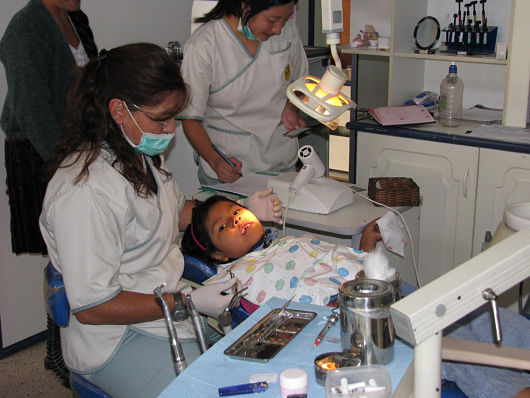
Although the Bolivian government’s new and improved universal healthcare plan has made a considerable dent in child and maternal mortality numbers, the plan still seems to be more suited for improving statistics than the lives of rural Bolivian women.
With one of highest rates of maternal and child mortality in the Latin America, second only to Haiti, Bolivia remains one of the worst places in the world to give birth, especially in rural areas. Mortality rates have historically totaled to 390 mortalities for every 100,000 live births in central cities (like the capital, La Paz), and reach as high as 887 per 100,00 live births in rural areas, according to UNICEF.
Beginning in 1994, Bolivian government officials centered in La Paz developed a series of free healthcare plans—or, more aptly, three free service packages—intended to keep mothers and children alive past the ordeal of childbirth. The most recent addition to these packages is the “Universal Maternal and Child Heath Insurance plan (SUMI).”
Upon its creation, SUMI was lauded as the symbol of iconic change of fate for Bolivian mothers. Targeted at pregnant women and children under the age of five, the program boasted that it would cover 500 common ailments. Additionally, SUMI was the first Bolivian public health program that did not come from a presidential decree, meaning that it would have longevity through congress even as presidential power shifted.
“The system was created to fight child mortality, to fight that economic barrier that prevented the mother from having proper attention from the start,” said Dr. Dante Ergueta, who works with SUMI at the Bolivian Health Ministry, in an interview with the U.K. Guardian. “It is an icon for Bolivia and I might even say for Latin America.”
Initially, SUMI managed to cut the alarming child mortality statistics. After its introduction, Bolivia saw reduction in infant mortality between 37.7% in urban areas. Even in rural areas, the program saw a 29.9% drop in infant mortality, which, although still less than the drop in metropolitan areas, represented a significant change.
However, the effects of SUMI have been blunted, if not entirely counteracted, since this initial drop.
The seeds for this decline can be found written into SUMI itself. According to a study done by Focal, SUMI’s plan to attack statistics was limited to quick fixes. Every service that SUMI provided was a double-edged sword, all of which left the deep roots of maternal health barriers in Bolivia untouched.
Where SUMI expanded the number of ailments covered by insurance, it also drastically tightened the program’s membership requirements, restricting it to women who had given birth within the past six months and children under the age of five. Previously, Bolivian health insurance had covered all women of childbearing age as well as the general population for endemic disease. SUMI cut the general public endemic disease coverage entirely, along with several family planning services for non-pregnant women.
Focal reports that “health indicators worsened after its [SUMI’s] implementation, particularly in rural areas. Inequity in health outcomes also grew because the services of high complexity that the SUMI plan made available in urban areas never reached the segment of the population [rural, indigenous communities] that needed them most.”
This “icon for Bolivia” is perhaps one of the most stark examples of one of the most common failures in public health: the rush to address startling statistics, instead of attacking underlying socioeconomic, or even cultural, gender-based problems.
According to UNICEF, Bolivian women exist in a culturally persistent subordinate role to men. Their rates of illiteracy are significantly higher, ranging as high as 37.91%, compared to 14.42% of men. This gap also drastically decreases the number of women who are capable of participating in the workforce, giving women less access to employment-based private healthcare options.
These socioeconomic and cultural forces show that the answer to improving Bolivian maternal health is more complicated than implementing a system of health-services handouts. It is not about the number of services the state can provide; it is about changing the situations of people receiving those services.
– Emma Betuel
Sources: Unicef, The Guardian, ITG, WHO, Focal
Photo: Projects Abroad

USAID Helps Vietnam Boost Rice Yields
USAID, the United States Agency for International Development, implemented the Vietnam Forests and Deltas Program in 2012, aimed at promoting rice production practices that can reduce greenhouse gas emissions and improve livelihoods with Vietnam’s agricultural extension services.
The program is focused on enhancing climate change resilience and working with all echelons of the Vietnamese society, from the community level up to the national level. Farmers are learning new agricultural techniques and are putting into practice climate-smart livelihoods in order to improve quality of life. They are applying new national policies and strategies in response to rising temperatures and changing weather pattern concerns. The program mainly concentrates on environmental conditions in Vietnam’s vulnerable forest and delta landscapes.
The Thanh Hoa and Kon Tum provinces have been selected by pilots for moving green growth strategies. With the implementation of innovative land use planning and training programs including local government, civil society and the private sector are demonstrating measurable improvements in carbon stocks and environmental services.
The Mekong and Red River Delta areas are increasingly falling victim to climate-related hazards such as storms, flooding, drought, salinity and sea level rise. These deltas are home to some of the most heavily populated and economically productive areas of Vietnam, making the region especially important as well as vulnerable to the country’s stability. USAID is working with the government and communities of the Long An and Nam Dinh provinces to help the population identify climate-related risks and how to take action in order to provide long term resilience.
USAID is working in partnership with several organizations including Winrock International, Vietnam’s Ministry of Agriculture and Rural Development, provincial governments, the Netherlands Development Organization, American Red Cross, Vietnam Red Cross and the Center for Sustainable Rural Development.
In Long An province, with training provided by USAID, farmers across the region have boosted rice yields dramatically, in many cases up to 25 percent more. This means that families once struggling with food insecurity and little to no profit from rice sales are eating better and making a better living, improving quality of life.
Before The Vietnam Forests and Deltas Program went into effect, farmers with minimal agricultural experience suffered preventable crop losses due to ignorance such as overuse or imbalance of fertilizers. As a result of the program, people learned how to apply new techniques including development of internal drainage lines and favoring conditions that lead to stronger and healthier rice plants such as rice paddy leveling.
No matter what one’s views of climate change are, it is a very real problem for the poor with real effects on the people struggling to survive in the delta and forest regions of Vietnam. USAID has proved an essential resource in the developing world. With the programs offered by the agency and its partners, poverty could soon be a thing of the past.
– Jason Zimmerman
Sources: USAID 1, USAID 2, Winrock, MARD
Photo: OceanBitesE
Costa Rica Looks Beyond GDP in National Happiness Index
Earlier this summer, the National Teacher’s Cooperative of Costa Rica released its inaugural Gross National Happiness Index. Their results mirror what the Sustainable Solutions Development Network’s World Happiness Report and the Gallup Poll’s 2014 State of Global Well-Being Rankings find: Costa Rica’s citizens are generally happy. However, the fact that this index was compiled and published is of greater significance than the results it contains.
The acute and unwavering commitment to Gross Domestic Product (GDP) as the ultimate telltale for societal well-being has been distorting policies and steering resources away from sustainable and equitable growth since the Great Depression.
This skewed developmental path has resulted from GDP’s narrow focus on output. GDP, and more specifically its fundamental adherents, has its blinders on an array of other important benchmarks like health, quality of education, altruism and prosocial behavior, environmental health, gender equality, level of social connectivity and support networks, and, of course, financial status.
In other words, the GDP school of thought assumes increased output equals increased income which leads to societies being better off. In a broad, general and abstract sense this seems correct, but it does not hold up in the real world.
A more nuanced approach is required to get humanity back on the right tilt, to allow a better balancing of social, economic and environmental progress. Social scientists are working hard to discover just what makes people happy and societies well off, and how to do so. Their findings may inform a new era of enlightened public policy.
The good news is that when humankind sets a target, we get better at hitting it. We learn how to remove barriers to improvement and shift gears to meet the goals. A whole suite of tools—financial, economic and social—can be tweaked and set in motion to guide and support progress toward an objective.
Costa Rica’s effort to measure their citizens’ happiness marks a trend that has been incubating since 1972, when the King of Bhutan began measuring Gross National Happiness, GNH, instead of GDP. In 1990, the United Nations initiated their Human Development Index, measuring a variety of quality of life indicators. In 2010 Britain declared their intentions to study happiness as well as GDP, and global metrics of happiness and peace, including the World Happiness Report, Global Well-Being Rankings and the Global Peace Index, are on the rise and gaining prestige.
The growing importance of these indicators is a promising sign of a shift. Costa Rica’s high level of happiness and their new effort to measure it should be applauded and replicated by the international community.
– John Wachter
Sources: Foreign Policy, Tico Times 1, Tico Times 2, World Happiness Report
Photo: TicoTimes
Innovation Countdown 2030
As many under-developed countries begin to enter the global market, the struggles their people face are becoming increasingly apparent. Luckily, an amazing NGO called Innovation Countdown 2030 is seeking to fund ideas today that may save the developing world tomorrow.
Innovation Countdown 2030 (IC2030) is an NGO that is mainly focused on advancing global health. In collaboration with PATH, one of the leading innovators in global health, IC2030 has created “a platform to identify, evaluate, and showcase high-impact technologies and interventions that can transform global health by 2030.” The ideas that they have supported include technologies that will add vitamins to rice, long-lasting injectable contraceptives, and devices that can help newborn baby’s breathe better. All of these ideas were the result of massive crowd-sourcing efforts and will inevitably help the world towards reaching the United Nations Sustainable Development Goals (SDGs). People from all over the world submitted their ideas and a panel of expert’s selected 30 innovations which they believed could feasibly change the world in the next 15 years.
For years, innovation has been focused on development. From new types of tractors all the way to robot vacuums, technology development has been focused on developing a better life for those living in developed countries. As the years have gone by, people have become increasingly aware of how reliant we are on one another and the importance of bringing up the developing world in order to benefit the whole world. We are living in a time where children still die from completely treatable diseases and malnourishment, but what if there was a way to provide a sustainable form of nourishment, and a reliable place of medicine? What if people no longer had to worry about basic survival and could instead focus on innovation of their own? This is the philosophy behind many development and global health NGOs, presumably including IC2030, and is one that can only lead to a more prosperous global community.
Much of IC2030’s work focuses on pregnant women and their newborn babies as in line with the SDGs. One invention in particular, a uterine balloon tampon, is predicted to save the lives of over 150,000 pregnant women. The idea was developed in the United States in Massachusetts General Hospital and essentially utilizes water pressure to prevent hemorrhaging in a mother who have just given birth. This device is made out of a simple condom and a catheter and can be filled with water to create pressure. It is low-cost and highly effective, making it an ideal candidate for IC2030’s top 30 devices.
Several of the innovations included on IC2030’s list have already been utilized in more rural areas of Africa and have already begun to save lives. The organization is being led by PATH and has received funding from the Bill & Melinda Gates Foundation, the U.S. Agency for International Development, as well as the Norwegian Agency for Development Cooperation.
Hopefully this organization gains more support, but so far it has succeeded in carrying out its goal of saving lives and promoting innovation throughout the world.
– Sumita Tellakat
Sources: IC2030, NPR
Photo: NPR
Bolivian Healthcare: Percentages over People
Although the Bolivian government’s new and improved universal healthcare plan has made a considerable dent in child and maternal mortality numbers, the plan still seems to be more suited for improving statistics than the lives of rural Bolivian women.
With one of highest rates of maternal and child mortality in the Latin America, second only to Haiti, Bolivia remains one of the worst places in the world to give birth, especially in rural areas. Mortality rates have historically totaled to 390 mortalities for every 100,000 live births in central cities (like the capital, La Paz), and reach as high as 887 per 100,00 live births in rural areas, according to UNICEF.
Beginning in 1994, Bolivian government officials centered in La Paz developed a series of free healthcare plans—or, more aptly, three free service packages—intended to keep mothers and children alive past the ordeal of childbirth. The most recent addition to these packages is the “Universal Maternal and Child Heath Insurance plan (SUMI).”
Upon its creation, SUMI was lauded as the symbol of iconic change of fate for Bolivian mothers. Targeted at pregnant women and children under the age of five, the program boasted that it would cover 500 common ailments. Additionally, SUMI was the first Bolivian public health program that did not come from a presidential decree, meaning that it would have longevity through congress even as presidential power shifted.
“The system was created to fight child mortality, to fight that economic barrier that prevented the mother from having proper attention from the start,” said Dr. Dante Ergueta, who works with SUMI at the Bolivian Health Ministry, in an interview with the U.K. Guardian. “It is an icon for Bolivia and I might even say for Latin America.”
Initially, SUMI managed to cut the alarming child mortality statistics. After its introduction, Bolivia saw reduction in infant mortality between 37.7% in urban areas. Even in rural areas, the program saw a 29.9% drop in infant mortality, which, although still less than the drop in metropolitan areas, represented a significant change.
However, the effects of SUMI have been blunted, if not entirely counteracted, since this initial drop.
The seeds for this decline can be found written into SUMI itself. According to a study done by Focal, SUMI’s plan to attack statistics was limited to quick fixes. Every service that SUMI provided was a double-edged sword, all of which left the deep roots of maternal health barriers in Bolivia untouched.
Where SUMI expanded the number of ailments covered by insurance, it also drastically tightened the program’s membership requirements, restricting it to women who had given birth within the past six months and children under the age of five. Previously, Bolivian health insurance had covered all women of childbearing age as well as the general population for endemic disease. SUMI cut the general public endemic disease coverage entirely, along with several family planning services for non-pregnant women.
Focal reports that “health indicators worsened after its [SUMI’s] implementation, particularly in rural areas. Inequity in health outcomes also grew because the services of high complexity that the SUMI plan made available in urban areas never reached the segment of the population [rural, indigenous communities] that needed them most.”
This “icon for Bolivia” is perhaps one of the most stark examples of one of the most common failures in public health: the rush to address startling statistics, instead of attacking underlying socioeconomic, or even cultural, gender-based problems.
According to UNICEF, Bolivian women exist in a culturally persistent subordinate role to men. Their rates of illiteracy are significantly higher, ranging as high as 37.91%, compared to 14.42% of men. This gap also drastically decreases the number of women who are capable of participating in the workforce, giving women less access to employment-based private healthcare options.
These socioeconomic and cultural forces show that the answer to improving Bolivian maternal health is more complicated than implementing a system of health-services handouts. It is not about the number of services the state can provide; it is about changing the situations of people receiving those services.
– Emma Betuel
Sources: Unicef, The Guardian, ITG, WHO, Focal
Photo: Projects Abroad
Pilot Program Trains Health Workers for Post-Ebola
After tending to Ebola patients in West Africa for over a year, health workers have begun returning to their regular jobs. Because of the disease’s decline, a pilot training program to prepare these employees to return to work took place in May 2015 in Liberia.
The training program’s aim was to “refresh important skills but also address weaknesses exposed by the Ebola outbreak,” according to Foday Kanneh, a Ministry of Health training coordinator. Dr. April Baller, head of World Health Organization’s (WHO) clinical management and infection control—along with other prevention teams and Ministry of Health and WHO staff—created the training program. It was a rigorous course designed to “support the restoration and strengthening of the health system which virtually collapsed during the epidemic, while also giving health workers the confidence and capacity to respond in the event that Ebola re-emerges,” said Baller.
Although Ebola is in decline, no one knows when it could return. This disease first appeared in 1976 and did not resurface in human beings between 1977 and 1994. With such erratic exposure, health workers need to be trained for the post-Ebola environment.
Doris Sannoh, a trainee and social worker in Liberia, said that she normally worked in an outreach capacity to prevent HIV and gender-based violence. During the outbreak, she found herself working in the triage area of the hospital, counseling and assisting sick patients. “I never had any infection prevention training as a social worker, but I needed it. As health workers, we all need training like this.”
The training sessions were led by 40 trained facilitators and assisted by Ebola survivors. The survivors role played the parts of patients and critiqued the trainees on the quality of care they administered. In order to ensure that the training acquired during the sessions was used regularly and effectively, on-site mentoring and monitoring was crucial, according to Kanneh. Currently, the Ministry of Health and the WHO are evaluating the course and, if appropriate, will refine it and expand it throughout the country.
According to the WHO, “The West African Ebola outbreak has been the largest, most severe and most complex in human history.” When the outbreak began in March 2014, health workers from all over the world stepped up to work with the WHO to stop the epidemic. It peaked in September 2014 and is now in decline. Guinea, Liberia and Sierra Leone reported a combined total of 27,705 confirmed, probable and suspected cases up to July 19, 2015. Deaths from confirmed as well as probable and suspected cases totaled 11,269.
The good news is that in the week before July 19, Guinea reported only 22 new confirmed cases, and Sierra Leone reported four. This good news gets even better: Liberia has not reported any new cases in the week before July 19. Currently in Liberia, 56 people who have had contact with Ebola patients are under follow-up care. Eighteen have completed the 21-day surveillance period. If no new cases arise, all contacts will complete follow-up by August 2.
– Janet Quinn
Sources: WHO 1, WHO 2, WHO 3
Photo: World Health Organization
Why Menstrual Hygiene Remains a Challenge in Nepal
Old taboos surrounding menstruation die hard in Nepal where, until 2005, Chhaupadi, the practice of ostracizing women and girls from their own homes during their periods, did not face a national ban.
The Nepalese Supreme Court declared Chhaupadi illegal in 2005. However, the practice still retains a foothold in the country’s western region and myths surrounding women’s natural cycles remain a national problem.
Chhaupadi, which is based upon the belief that menstruating women are toxic, prohibits menstruating women and girls from inhabiting any public space, socializing with others and using water sources that other people share.
According to the tradition, women and girls on their periods are also banned from sharing food or touching anyone. Rather than eating with their families, these “untouchables” must remain outside the house and keep their distance while a family member throws boiled rice to them, like they would to a dog.
The effects of Chhaupadi are extremely dehumanizing and psychologically stressful, with young girls told that they will bring bad luck on their families if they enter their own homes during menstruation. In communities where the tradition is still practiced, even women and girls who do not believe they are truly toxic fear disobeying the rules of Chhaupadi and incurring the anger of family or village elders.
In addition to being emotionally degrading, Chhaupadi also places women and girls at risk for rape, abduction, snakebites and animal attacks, as well as malnourishment. Forced to sleep in rickety huts without adequate insulation or ventilation, women and girls face illness exacerbated by the cold and unhygienic conditions or asphyxiation from improperly ventilated heat sources.
Even in regions where Chhaupadi is not practiced, taboos surrounding menstruation still affect Nepalese women and girls. The Nepali Times reports that today many households in Kathmandu still prohibit menstruating women from entering kitchens or temples, eating with the family and sleeping on their beds.
These practices condition women to view their bodies as unclean and to devalue themselves because they take the blame for any misfortune their families may experience. Chhaupadi’s legacy contributes to a wider disregard of women and girls that places them in danger.
A prime example comes in the wake of the recent earthquake that devastated Nepal. Although the refugees require many resources that aid organizations are working to meet, menstrual hygiene is far from the minds of most.
Female refugees have few sanitary resources. Some reuse the same menstrual products for days, washing them in unfiltered water sources in the same areas where refugees openly defecate.
“There are no proper toilet facilities or private spaces in the camps,” reported Dr. Hema Pradhan, consultant gynecologist and fistula surgeon at the Kathmandu Model Hospital. She called the sanitary practices in these camps “worrisome.”
Ursula Singh, a program officer for women’s rights NGO Loom Nepal, stated, “We went to the village of Kavre on the outskirts and saw some girls sitting huddled in tents, covered in blood.” Most girls, she elaborated, wait until dark to step outside and dispose of or attempt to sanitize menstrual products.
“We want them to at least practice hygienic disposal because they are in super exposed conditions and that puts them at a higher risk to contract diseases,” Singh said. However, the only hygienic means of disposing of sanitary napkins is often digging holes and burying them in the ground.
In a culture with superstitions such as the belief that any plant a menstruating woman touches will die, disposing of menstrual products and trying to manage period blood and symptoms in an area with as little shelter or privacy as a refugee camp must be a traumatic experience. Lingering stigmas place women under intense scrutiny and many would rather risk disease, injury or abuse than suffer negative social responses to their behavior while menstruating.
– Emma-Claire LaSaine
Sources: Time, Nepali Times, IRN News, Reuters, New York Times
Photo: Time
Urban Water and Sanitation Project to Benefit 590,000 in Dakar
Only 62% of households in Senegal’s capital city have access to sanitation facilities. Considering that nearly half the Senegalese people live in urban areas, improving access to clean water and proper sanitation in these regions is imperative to the population’s health and the country’s development.
In an effort to help Senegal extend water and sanitation access throughout urban and peri-urban areas, the World Bank’s International Development Association has just approved $70 million in credit to fund an Urban Water and Sanitation Project, which is estimated to better the lives of 590,000 Senegalese people by 2030.
Senegal has made great strides in the past, achieving a 98% rate of urban access to safe water; however, population growth in the capital city, Dakar, and Petite Côte, a prominent tourist destination, has led to increased water shortages. The water deficits are set to worsen over the next five years, reaching 35,000 cubic meters and 60,000 cubic meters per day respectively in Petite Côte and Dakar by 2020.
Tackling these water deficits will be a major component of the Urban Water and Sanitation Project. One strategy proposed is the desalination of seawater as a supplement to groundwater and surface water resources.
Another area that the project will address is social sustainability, seeking to develop “pro-poor policies” that will improve access for impoverished Senegalese households. The program will target low-income areas in and around urban centers currently underserved by water and sanitation networks.
The project proposal promises that the newly developed water connections will be freely available to beneficiary households after “a small refundable deposit of $31, whereas the average price of a standard connection is $145. Similar rules will apply to social connections to sewers.”
In addition to supplying important access to sanitation services and safe water, the initiative hopes to promote gender equality. As is the case in many developing nations, Senegalese women and girls are largely responsible for the burden hauling water in areas without pipelines and distribution systems. The development of water and sanitation systems to impoverished areas will afford those women and girls more time for employment, education and other activities that promote social mobility.
The Urban Water and Sanitation Project also seeks to actively promote women’s interests, stating: “Attention will be given to promoting women’s entrepreneurship through the project as well as access to opportunities for training, business and leadership where feasible.”
Furthermore, women will take a central role in hygiene education and information programs associated with the Urban Water and Sanitation Project. The proposal also promises that women will also participate in selecting the locations of public sanitation facilities.
“By expanding access to clean water and sanitation, the project will help boost the health of Senegal’s urban population,” noted Matar Fall, World Bank Task Team Leader for the Urban Water and Sanitation Project. “Water access can also form the basis for many types of income-generating activities such as home-based manufacturing and services that can turn the poor into local entrepreneurs.”
The World Bank and Senegal are looking ahead to a future in which sanitation and water work to promote equality and opportunity, rather than functioning as a sign of poverty.
– Emma-Claire LaSaine
Sources: The World Bank, All Africa, USAID, WASH
Photo: Hampton Roads PDC
Women’s World Cup Star Ali Krieger Partners with MiracleFeet
The sports buzz of the past few weeks has surrounded the U.S. Women’s World Cup team as they brought home the title of world champions. Amidst the attention and celebrations, some of the women are doing more than just playing soccer.
Goalie Hope Solo works with a variety of sports foundations and children hospital efforts. Players Ashlyn Harris, Ali Krieger, Abby Wambach, Alex Morgan, Tobin Heath, Christine Press and Megan Rapinoe advocate for the organization To Write Love on Her Arms: an organization that addresses depression, addiction, self-harm and suicide in our society. Midfielder Megan Rapinoe uses her platform for equality and human rights with groups such as HRC and GLSEN.
However, Ali Krieger, defender and midfielder for the U.S. Women’s National Team and Washington Spirit, has specifically paired up with MiracleFeet, an organization that “increases access to proper treatment for children born with clubfoot in developing countries.” Over the course of just five years, the organization has helped provide treatment for more than 10,000 children in 13 various countries.
Clubfoot is a distortion of the foot that is twisted so that the sole cannot properly be placed on the ground. With over 1 million children around the world currently living with untreated clubfoot, it is one of the most common birth defects worldwide. MiracleFeet is directly tackling this serious, but treatable concern for children.
In places such as the United States and Europe, clubfoot is detected before birth via ultrasounds and can be treated promptly after birth, allowing children to continue on with active lives. Mia Hamm and Troy Aikman are among many professional athletes that were born with clubfoot. Their active and successful lives are proof of the worthiness of treatment.
But in developing countries, the technology and methods needed are not readily available for many children. Without treatment, life is increasingly difficult in developing countries. Stigmas, discrimination, shame and the inability to walk directly impacts their access to education and healthcare.
Disturbingly, children and adults with untreated clubfoot also fall prey to increased neglect and physical and sexual abuse.
The good news is that a child in a developing country with clubfoot can be completely treated through MiracleFeet for just $250. While so many issues in our world are unsolvable or out of reach, treating clubfoot is neither of those.
The process to correct clubfoot is known as the Ponseti method. Plaster casts are applied to the child’s feet for four to six weeks and are changed weekly to ensure proper and swift treatment. Over the next several years, a brace is worn at night to prevent relapsing. This simple and inexpensive treatment for children changes their lives forever.
When asked why she has partnered with the organization, Krieger responded that “People need people in this world… With MiracleFeet, every kid has the chance to walk, to run or even one day play soccer.”
By promoting it on her website and through videos describing what MiracleFeet does for children and why she has partnered with them, Ali Krieger has spread the word of this need and cause to people around the world.
“Giving this opportunity to them, it’s something that people should cherish and take a part of.” MiracleFeet is not just correcting clubfoot; it’s rewriting the stories of countless lives.
– Katherine Wyant
Sources: TWLOHA, Human Rights Campaign, GLSEN, Medical News Today, Miracle Feet, Alikrieger, Vimeo
Photo: Soccer.com
10 Jewelry Companies that Help Reduce Global Poverty
Today, many socially conscious companies work to reduce global poverty. They help the poor either by donating directly to charities or by providing jobs and fair wages for those in need. Many of these organizations make jewelry. Here are 10 companies that sell jewelry products in order to help the global poor:
1. Article 22 — Article 22 sells jewelry made by bombs, plane parts or other materials leftover from the Vietnam War. Their first collection, Peacebomb, uses Vietnam War Era bombs and is crafted by Laotian Artisans. Article 22 helps the poor by providing jobs to Laotian Artisans who may have been ignored or forgotten. Also, each Peacebomb item funds the demining of land that is littered by bombs.
2. 31 Bits — The 31 Bits mission statement is “using fashion and design to empower people to rise above poverty.” They work with women in Uganda who earn an income from the jewelry they create. The women also receive counseling, finance training, health education and business mentorships. Each purchase from 31 Bits funds their work in Uganda.
3. Half United — The purchase of any Half United product gives seven meals to children in need in the United States, Fiji, Cambodia and Madagascar.
4. Indego Africa — Indego Africa works with women in Rwanda in order to help them flourish as independent businesswomen. They partner with female artisans and sell their products in their shop. One hundred percent of their profits go toward job skills training programs for their artisans in business management, technology, entrepreneurship and English and Kinyarwanda literacy.
5. Kurandza — Kurandza works with HIV positive women in Mozambique. Many of these women do not have the money necessary for transportation to the hospital and are therefore not able to obtain the medicine that they need. Kurandza works with these women, and the proceeds from the skirts and jewelry that they make go toward transportation to the hospital and other household items, such as schoolbooks for their children.
6. Purpose — Purpose is a fashion jewelry brand launched by International Sanctuary. International Sanctuary was an organization found in 2007 that works to help those who escaped sex trafficking, in both Mumbai, India and Orange County, California. Survivors are placed in mentoring programs and given an education, medical and dental care, scholarships and microloans. In 2014, International Sanctuary founded Purpose as a way to give survivors employment, financial stability and a brighter future.
7. The Starfish Project — The Starfish Project was founded in 2006 in order to help exploited women in China. It works to give them alternative employment and holistic care services and provides them with counseling, vocational training, language acquisition, family education grants, healthcare access and housing in a women’s shelter. The Starfish Project wants to raise awareness about violence against women and its goal is to restore hope for each woman that enters its doors.
8. The Purple Buddha Project — Like Article-22, the Purple Buddha Project works to help demining. As they say, more tons of bombs were dropped on Cambodia than on Germany and Japan combined during World War II. The Purple Buddha Project uses remains of weapons in Cambodia in order to make jewelry, providing jobs to Cambodian artisans. The purchase of each piece goes toward the demining of land in Cambodia or Laos. Many of the Purple Buddha Project bracelets contain positive messages.
9. Mujus — Mujus works to give back to Peru. They pair fair wages and provide health insurance to Mujus artisans in Peru in order to help provide social change to communities around Lima. (Mujus also works with the ALS association in the United States, and has a special collection designed to help raise money for those with Lou Gehrig’s disease).
10. Colorful Minds — While Colorful Minds does not sell specific jewelry pieces, they do sell jewelry boxes and pouches (which you can use to keep all the jewelry you purchased while helping the global poor). Colorful Minds works with vocational centers in India that serve those living with disabilities. They market the products that are made at the vocational centers in order to help those with disabilities to integrate into society, increase self-esteem and motivate them to use their creativity. They also execute a grant program that provides necessary items, such as prosthetics or supplies, to vocational centers.
– Ashrita Rau
Sources: Article 22, Busy Mommy, 31 Bits, Half United, Indego Africa, Kurandza, Purpose Jewelry, Starfish Project, The Purple Buddha Project, Mujus, Colorful Minds
Photo: The Big Piece of Cake
UN Study Says Global Education Has Declined
The number of children and young adolescents receiving education has worsened in a time when primary and secondary education goals have been put in place, according to the UNESCO Institute for Statistics (UIS).
In a study released this month, the UIS data for the school year in 2013 shows that 124 million children and young adolescents have either dropped out of school or never started school. This number rose by 2 million since 2011. The number of primary school aged children not in school increased by 2.4 million between 2010 and 2013. Of these 59 million children, 9 percent are denied the right to education. In addition, there are almost 65 million young adolescents not receiving an education.
The UIS study offers two causes to explain the rise in children and young adolescents out of school.
First, areas in Sub-Saharan Africa have struggled to provide schooling to communities with populations of people aged mostly 6 to 15 years. These developing areas have not yet created stable economies to create proper schools and education systems for the majority of their citizens.
The second reason that the UIS focuses on is the grand procedures that were taken by many countries to create greater access to education. These measures launched global education at the start of the century but did little to institute strategies for continual improvement.
To fix this problem, Irina Bokova, UNESCO’s Director General, agrees with the report that new methods and “serious commitments” must be implemented to reach communities with the least amount of children and young adolescents in school.
“Targeted interventions are needed to reach the most marginalized children and youth who are out of school today, including those with disabilities; from ethnic, religious or linguistic minorities; and children affected by armed conflict,” the UIS study said.
The study also said that the large attempts to end gender discrimination in education have not been successful. In South and West Asia, less than half of the children and young adolescents receiving education are girls.
“While the gap is considerably smaller than in the early 2000s, UIS data show little improvement in recent years, despite the many campaigns and initiative designed to break the barriers that keep girls out of school,” UIS said.
With hopes of changing these numbers, a summit in September will host world leaders in hopes of creating new Sustainable Development Goals to address education.
Although this is a great step for bettering global education, improving education will be more difficult than ever. The World Education Forum in Korea in May 2015 said that in order to achieve education goals, 12 years of funding must be given. Additionally, the Education for All (EFA) Global Monitoring Report team has projected that a sum of at least US$39 billion will be needed to fund universal satisfactory secondary education by 2030.
Aaron Benavot, Director of the EFA GMR, also said that funding needs to be drastically increased: “Aid needs to be shooting upwards, not creeping up by a few percentage points.”
Benavot said that The Oslo Summit on Education for Development and the Third Financing for Development Conference in Addis Ababa in August will show whether or not donors are willing. In agreement with Benavot, the UIS suggests that improvement from the levels reached in 2010 does not look promising, and donors must move education to the top of their list to really make a difference. A large change in funding must be made in order to start a worldwide effort for access to education. This year will show if our world is truly ready to fight for education.
– Fallon Lineberger
Sources: UNESCO 1, UNESCO 2, United Nations
Photo: Saturno