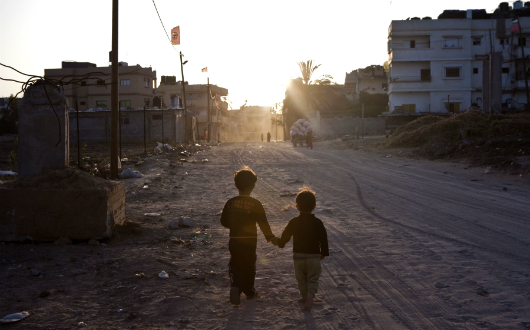
When it comes to the polarizing issue of the $400 million of foreign aid the United States is giving to Palestine, Senator Lindsey Graham (R-S.C.) says, “There’s a new game in town.”
On January 7, Senator Rand Paul (R-KY) introduced a new bill in the wake of Palestine’s application and recent acceptance to the International Criminal Court. Rand, Graham and their proponents argue that this action is in direct conflict with the one of United States’ three stipulations regarding aid to the West Bank, which is that the Palestinians will never seek to persecute Israel at the Hague.
Graham believes this bill presents a change in the dynamic between USAID, Palestine and Israel. Formerly, Israel fought against cutting assistance to Palestine and viewed international aid as an investment in national security and a movement toward the elusive “two state solution.” Rand and Graham now believe that it is time for the tide to turn in favor of a more aggressive statement.
“I cannot tell you the number of times the Israelis have engaged me to try to stop an emotional reaction by the Congress to terminate aid,” Graham said to Foreign Policy. “[But now] I’m going to lead the charge to make sure the Palestinians feel this.”
This aggressive approach is lauded as a defense of Israel, one of the United States’ closest allies. Yet research has shown that making the people of Palestine “feel” the loss of roughly $400 million could have the opposite effect, putting the civilians of the West Bank at a greater risk than ever before.
Primary defenders of the “cut aid” camp argue that aid to Palestine is akin to bankrolling the terrorist group Hamas. When they look at that $400 million, they see missiles pointed directly at Israel’s iron dome. What they do not see is the 515,000 Palestinian civilians who have been raised from poverty by the affordable water programs, infrastructural efforts and humanitarianism that flow from this aid.
According to an investigation done by the Government Accountability Office (GAO), USAID to Palestine has been carefully vetted and primarily channeled through in-kind efforts to change lives on the ground. In 2011, they found that the majority of aid was focused on the building of five hospitals, six clinics, the upgrade of 23 schools and the revamping of over 20 small- and medium-sized water systems. It was used to computerize hospitals in the main city of Mendabollah and provide 127,000 people with access to potable water.
“These aids are very helpful for us,” said Dr. Niha Sawaheh, head of the ER at the Palestinian Medical Center (a USAID project hospital) in Ramallah. “When they stop, they will affect us.”
What happens when the aid stops is not a theoretical question to Sawaheh. It is a recent memory. When the United States froze half of their allocated funds to Palestine in 2011, the hospital saw sharp declines in efficiency and diagnostic potential. After those cutbacks, the new, computerized CT system sat unused in Ramallah’s largest hospital, yet there was no discernible decline in Hamas-initiated bombings of Jerusalem.
Ghassan Khatib, a spokesman for the Palestinian government, commented that “by such a decision, [Congress is] punishing the Palestinian public in education, and in health, in a way that is very, very difficult to understand.”
Research has shown that declines in public education, health and accessibility to necessities such as clean water have little effect on ethnically charged violence like that between the Israelis and Palestinians.
In their famous 2010 paper, Professors Christopher Blattman and Edward Miguel of the University of California Berkeley argue that “greed” or the desire to improve one’s living conditions by targeting another regime is a much more powerful incentive to violence than is “grievance” or deep-rooted primordialism. “At present,” they write, “the economic motivators for conflict are better theorized than psychological or sociological factors.”
Removing the programs that allow Palestinian civilians to live above the margin — where they do not have to live on Hamas’ assurance that the downfall of Israel will put water in their wells and computers in their hospitals — will not, as some argue, quench Hamas’ thirst for terror. Rather, it would push those who in better times would not raise arms to Israel to resort to those same desperate measures. From this perspective, it is likely that Israel (America’s ally) would be the one to feel the effects of the $400 million cuts, not the terrorist groups hell-bent on Israeli destruction.
As this bill and others like it move through Congress, there is no doubt heated debate over “our duty to Israel” and the “message we send to Hamas” will circulate. Yet from a national security standpoint, the answer is simple: $400 million can buy lasting infrastructural development, something that in 30 years will drive off more missiles than even the iron dome.
– Emma Betuel
Sources: Berkley, NPR, Foreign Policy, Huffigton Post, Al-Monitor, GAO, FAS, Reuters
Photo: Caritas

Top Mobile Apps Made in Africa
Not only do Africans use their smartphones to make calls, send text messages and browse the Internet, but they also use their devices to access mobile money services and locate healthcare facilities.
This list compiles the most popular mobile apps in Africa that are available on either Android or iOS devices.
1. Find-A-Med
This location-based mobile application allows its users to find the closest healthcare facility. The app also provides a place where its users can store their basic healthcare information in case of an emergency. Find-A-Med is available on both Android and Apple devices.
2. PesaCalc
PesaCalc is a free Android app that allows users to streamline access to mobile money services in Kenya. This app is compatible with all three of Kenya’s mobile money services. In addition, the app allows users to prepare the correct amount of cash to send, including fees, to both registered and unregistered users.
3. SnapnSave
SnapnSave is a shopping app that gives its users cash back on their everyday grocery purchases. The app was recently launched in Cape Town, South Africa, and its developers are hoping that it will influence their consumers to make smarter purchases.
4. Wumdrop
Wumdrop is a South African-made app that allows for the delivery or picking up of packages. The user is able to request a courier, track them on a map and receive notification of the pending delivery.
5. Slimtrader
This app was founded in 2009 and is popular in Uganda, Kenya, Nigeria and South Africa. Slimtrader allows its users to perform e-commerce transactions, such as buying or paying for goods and services. In other terms, the app allows its users to effectively shop by text messages. However, it is only available on Android devices.
6. M-Farm
Launched in 2012, M-Farm is primarily aimed at Kenyan farmers in order to keep them informed of crop prices and other farming-related matters. The app runs on an SMS-based service and is now available to users in five major towns in Kenya. This app is only available on Android devices.
7. Voicemap
Voicemap allows its users to explore places such as Cape Town with the help of its walking tour setting. These audio walking tours are available in voices belonging to expert correspondents, veteran broadcasters and passionate locals. This app is available on both Android and Apple devices.
8. Kids First Aid
The Kids First Aid app gives parents and teachers access to emergency first aid information when they need it. Ideally, this app will be able to give information to parents when they are travelling in a place where they do not speak the local language or when help is not readily available. This app is available only on Apple devices.
9. Suba
Suba is a location-based group photo album that creates a group photo stream. Once the stream is created, users can add pictures and send invites to others. Suba is available on both Android and Apple devices.
10. Safari Tales
Safari Tales was developed in order to eliminate the shortage of books in Kenya. The app is interactive and available in multiple languages. Safari Tales offers African stories that may not be easily found in countries that lack educational books for children. This app is available on Android devices.
– Kerri Szulak
Sources: IT News Africa, Voices of Africa
Photo: Flickr
Taken From the Streets: The Disappearing Homeless of Japan
A resident of Osaka recently informed me that the homeless in Japan’s Nishinari district are disappearing.
In some contexts this could be positive, for they could be disappearing due to lowering poverty rates or a growth in the number of available shelters. But as it turns out, the Osaka homeless are disappearing to a nuclear plant.
In 2011, an earthquake caused a nuclear accident in Fukushima. Apparently, the disaster was so destructive that the cleanup process was too difficult to regulate adequately. Therefore, when the government tasked Tokyo Electric Power Company (TEPCO) with cleaning up the disaster, TEPCO called on outside subcontractors. These subcontractors had difficulty recruiting a large enough workforce willing to work on such a dangerous, health threatening job. As a result, these subcontractors asked Japan’s notorious gangs to come to their rescue.
The Yakuza are well known for exploiting the homeless such as through putting up, “vulnerable individuals in shoddy, inadequate apartments to scam the welfare system, taking the lion’s share of any benefits from the state they may receive under threat of violence,” says the Japan Visitor Blog. In this circumstance, the gangs pulled on their affinity for exploiting the country’s poor by recruiting them to work in cleaning the Fukushima plant.
The homeless population in Japan, the Nishinari district Osaka in particular, is vulnerable to this sort of exploitation due to their desire to work. The Nishinari district was once a place where men would come to find jobs as day laborers. These jobs now barely exist, though men – especially older men – still live in these areas in hopes that they may one day find some sort of opportunity.
Japan’s Disposable Workers quoted a man in the Nishinari district saying that, “I really want to work but I’m mentally prepared that I will never get another job for the rest of my life.” So when the Yakuza come around offering any sort of job, it is hard for the Japanese homeless to refuse. Especially when there is some threat of violence if they did turn down these “opportunities.”
Beyond the innate exploitation involved in targeting a vulnerable population for such dangerous work, the homeless were not even well compensated. Often the Yakuza took some of these workers wages for themselves. In addition, Russia Today stated that, “many of the cleanup workers, who exposed themselves to large doses of radiation without even knowing it, were given no insurance for health risks, no radiation meters even.”
Reuters’ report on the homeless working for Fukushima discusses the occurrence of workers having such a significant amount of money deducted from their paychecks by companies that they were left with only US$10 at the end of their work. The deductions were for food and accommodations through the company. So sometimes the workers put themselves into a severe health risk for essentially no pay.
I heard that the homeless are likely still disappearing, though there is little to no coverage on the recruitment of workers in the past two years.
It is possible that the homeless are being treated with more respect, or perhaps the effect of growing media censorship in Japan is preventing further news about the exploitation of Japan’s homeless from being released.
– Clare Holtzman
Sources: The Asahi Shimbun, Japan’s Disposable Workers, The Japan Times 1, The Japan Times 2, Japan Visitor Blog, Reuters, Russia Today, World Nuclear Association
Photo: Japan’s Disposable Workers
Unilever’s African Operations
In Africa, there are many foreign corporations investing in and fueling industry, many of which are part of extractive industries that may not be economically beneficial for the continent in the long run. A company that stands apart from this ilk is Unilever.
Unilever is a British-Dutch multinational consumer goods corporation whose products reach 2 billion consumers in over 190 countries, making it one of the world’s top 500 largest corporations. Unilever has been in Africa for over a century and produces annual sales there of more than $5 billion, employing 40,000 people on the continent in offices and building factories in 40 locations.
This megalithic corporation has built an impressive reputation for itself. FORTUNE Magazine consistently recognizes Unilever among the World’s Most Admired Consumer Food Product Companies and in 2013 recognized Unilever as a Top 50 World’s Most Admired Company. Much of this admiration stems from the numerous gender diversity and environmental sustainability awards Unilever has garnered over the years.
Despite these accolades, criticisms are aplenty and certain truths are unavoidable. For example, Unilever’s biggest purchases are palm oil, soya, paper and beef. These are commodities whose global trade is responsible for 50 percent of global tropical deforestation, admitted Gavin Nearth, senior vice president of sustainability at Unilever.
Significantly, these criticisms are not necessarily thrown in a dark corner at Unilever with the hope that they will wither and die. There is an acknowledgement that the vast corporation’s practices have enormous environmental and social impacts that have not been, and still are not in many instances, sustainable.
Yet things do seem to be changing. In 2009, Paul Polman, previously an executive at Nestle and before, Proctor & Gamble, became Chief Operating Officer of Unilever. Within a year he introduced the Unilever Sustainable Living Plan, a series of goals that aim to transform the company by doubling its size while increasing its positive social impact and reducing its environmental footprint by 50 percent. Despite the worry of many stockholders, according to Financial Times, Mr. Polman believes that these goals are necessary to maintain a “license to operate” in an age of public scrutiny.
Increasing social impact includes increasing workplace rights, ensuring that women get a fair deal and improving health and well-being for more than 1 billion people. Reduction of Unilever’s environmental footprint entails ensuring that their products and supply chain meet environmental requirements covering everything from forest protection to pest control. The impact of working toward these goals will manifest in Unilever’s sizable African operation.
Furthermore, Unilever’s business model in Africa impacts the African poor. According to Frank Braeken, Unilever Executive Vice President for Africa, “There is a growing realization that the future of Africa is based around a consumer rather than mining. This is a consumer that has been under-served and over-charged.” For Mr. Braekan, there are hundreds of millions of untouched consumers, most of whom are low-income, known as bottom of the pyramid (BOP), consumers.
A method through which Unilever reaches BOP consumers is low unit packs (LUPs). These are small consumer goods, worth as little as half a cent. Small shop owners buy goods from Unilever companies in large packs and resell them in smaller portions.
LUPs is just one method by which Unilever plans to meet Africa’s poor and their needs. In conjunction with its vast operations on the continent and increasingly sustainable business model, Unilever will be able to be quite the developing force in Africa.
– Connor Bohannan
Sources: BDlive, Financial Times, How We Made It in Africa, Telegraph, Unilever
Photo: Telegraph
Greenfield Microfinance Institutions in Sub-Saharan Africa
The attention of foreign entities intent on aiding the development of Sub-Saharan Africa (SSA) is often focused on providing basic services such as water, electricity and healthcare. And while rightly so, another crucial ingredient for development in Africa is finance. Access to capital for the average African would allow households and small businesses to leverage their savings and earnings to increase productivity, earn higher incomes, create jobs and ultimately, stimulate economic growth.
Unfortunately, SSA has the lowest level of access to finance than any other region in the world, with an average banked population of 24 percent. Microfinance institutions (MFIs), organizations that offer financial services to the poor, are a promising solution to this gross deficit.
Microfinance has played a large role in South Asia with a mixed record. Initially termed micro-credit, it was viewed as a panacea to world poverty when it began to rapidly grow 15 years ago. Since, people have realized that while such loans can empower women and help entrepreneurs, they are not a magic bullet against the characteristics of poverty such as a lack of healthcare, education, access to power, clean water and a reliable food source. In addition, over the last 15 years it has not been uncommon for lenders to charge usurious interest rates on these loans, creating vicious cycles of debt for borrowers.
As the perception of this financial instrument was tempered, no longer viewed as a ‘magic bullet’ to poverty, the term micro-credit became microfinance and the concept was relegated to the toolbox of poverty alleviation. To be clear, microfinance, if not abused by exorbitant interest rates, and if it works within a framework of poverty reduction, can dramatically help the poor by giving them access to financial services.
Access to financial services that are not traditionally available to the poorest segments of society is what microfinance is all about. And that fact is no different in SSA, where most MFIs are greenfields. Greenfield MFIs are local institutions formed by holding communities in communities without pre-existing financial infrastructure, staffs, clients or portfolios.
Microfinance made its debut in the region in 2000 when ProCredit Holding, a German banking group with 21 banks operating in developing and transitioning economies, opened a bank in Mozambique that offered microfinance services.
Since then, many companies have followed suit. In 2006 there were seven Greenfield MFIs in SSA, staffing 1,564 people, with 37 branches, and 220,337 deposit accounts. By 2012, there were 31 Greenfield MFIs in SSA, with 11,578 staff, 701 branches, and almost 2 million accounts. In that time the Gross Loan Portfolio increased from $57 million to $769 million.
To begin a Greenfield MFI in the region, $6-$8million is required over the first 3-4 years of operation. And only after months 42-48 do they emerge fully sustainable. While this investment may seem daunting, research shows that the average SSA Greenfield MFI has been able to sustain fairly rapid revenue growth. Over its first 60 months, it will increase its revenue by $500,000 every 6 months, reaching $5 million by its 5 year anniversary.
The growth of microfinance in SSA is undeniably impressive. The Greenfield MFI model has come a long way in a short time in Africa. And while in the grand scheme of a region containing around 1 billion people, these numbers seem meager, the financial performance of these Greenfield MFIs indicate a future in which Africans have much greater access to capital, and therefore a brighter future.
– Connor Bohannan
Sources: Business Insider, International Finance Corporation, Making Finance Work for Africa, The Consultative Group to Assist the Poor
Photo: European Commission
NBA Africa Game to Raise Funds for South African Nonprofits
The National Basketball Association will soon be holding its first ever game in Africa, with proceeds from the historic event going to support local charities.
The NBA Africa Game will take place in Johannesburg, South Africa. It will feature a face-off between Team Africa, captained by South Sudan native and Miami Heat star Luol Deng, and Team World, led by Chris Paul of the Los Angeles Clippers.
Proceeds from the already sold-out event will go to the local Boys and Girls Clubs of South Africa, SOS Children’s Villages Association of South Africa and the Nelson Mandela Foundation. Official partners of the game include Econet Global Limited, Ford Motor Company of Southern Africa, NIKE Inc. and others.
First and second-generation African players will represent Team Africa in the game, honoring the NBA’s history of recruiting players from Africa as well as their commitment to giving back to the struggling continent. The nonprofit NBA Cares has helped create 58 homes or community centers in Africa and has raised over $250 million for charities.
The exhibition-style game will be played August 1 at Ellis Park Arena in Johannesburg and will “impact young people throughout the continent, both on the court and in the community,” according to NBA Vice President and Managing Director-Africa, Amadou Gallo Fall.
– Gina Lehner
Sources: Biz Community, NBA
Photo: Wikipedia
The Consequences of Cutting Aid to Palestine
When it comes to the polarizing issue of the $400 million of foreign aid the United States is giving to Palestine, Senator Lindsey Graham (R-S.C.) says, “There’s a new game in town.”
On January 7, Senator Rand Paul (R-KY) introduced a new bill in the wake of Palestine’s application and recent acceptance to the International Criminal Court. Rand, Graham and their proponents argue that this action is in direct conflict with the one of United States’ three stipulations regarding aid to the West Bank, which is that the Palestinians will never seek to persecute Israel at the Hague.
Graham believes this bill presents a change in the dynamic between USAID, Palestine and Israel. Formerly, Israel fought against cutting assistance to Palestine and viewed international aid as an investment in national security and a movement toward the elusive “two state solution.” Rand and Graham now believe that it is time for the tide to turn in favor of a more aggressive statement.
“I cannot tell you the number of times the Israelis have engaged me to try to stop an emotional reaction by the Congress to terminate aid,” Graham said to Foreign Policy. “[But now] I’m going to lead the charge to make sure the Palestinians feel this.”
This aggressive approach is lauded as a defense of Israel, one of the United States’ closest allies. Yet research has shown that making the people of Palestine “feel” the loss of roughly $400 million could have the opposite effect, putting the civilians of the West Bank at a greater risk than ever before.
Primary defenders of the “cut aid” camp argue that aid to Palestine is akin to bankrolling the terrorist group Hamas. When they look at that $400 million, they see missiles pointed directly at Israel’s iron dome. What they do not see is the 515,000 Palestinian civilians who have been raised from poverty by the affordable water programs, infrastructural efforts and humanitarianism that flow from this aid.
According to an investigation done by the Government Accountability Office (GAO), USAID to Palestine has been carefully vetted and primarily channeled through in-kind efforts to change lives on the ground. In 2011, they found that the majority of aid was focused on the building of five hospitals, six clinics, the upgrade of 23 schools and the revamping of over 20 small- and medium-sized water systems. It was used to computerize hospitals in the main city of Mendabollah and provide 127,000 people with access to potable water.
“These aids are very helpful for us,” said Dr. Niha Sawaheh, head of the ER at the Palestinian Medical Center (a USAID project hospital) in Ramallah. “When they stop, they will affect us.”
What happens when the aid stops is not a theoretical question to Sawaheh. It is a recent memory. When the United States froze half of their allocated funds to Palestine in 2011, the hospital saw sharp declines in efficiency and diagnostic potential. After those cutbacks, the new, computerized CT system sat unused in Ramallah’s largest hospital, yet there was no discernible decline in Hamas-initiated bombings of Jerusalem.
Ghassan Khatib, a spokesman for the Palestinian government, commented that “by such a decision, [Congress is] punishing the Palestinian public in education, and in health, in a way that is very, very difficult to understand.”
Research has shown that declines in public education, health and accessibility to necessities such as clean water have little effect on ethnically charged violence like that between the Israelis and Palestinians.
In their famous 2010 paper, Professors Christopher Blattman and Edward Miguel of the University of California Berkeley argue that “greed” or the desire to improve one’s living conditions by targeting another regime is a much more powerful incentive to violence than is “grievance” or deep-rooted primordialism. “At present,” they write, “the economic motivators for conflict are better theorized than psychological or sociological factors.”
Removing the programs that allow Palestinian civilians to live above the margin — where they do not have to live on Hamas’ assurance that the downfall of Israel will put water in their wells and computers in their hospitals — will not, as some argue, quench Hamas’ thirst for terror. Rather, it would push those who in better times would not raise arms to Israel to resort to those same desperate measures. From this perspective, it is likely that Israel (America’s ally) would be the one to feel the effects of the $400 million cuts, not the terrorist groups hell-bent on Israeli destruction.
As this bill and others like it move through Congress, there is no doubt heated debate over “our duty to Israel” and the “message we send to Hamas” will circulate. Yet from a national security standpoint, the answer is simple: $400 million can buy lasting infrastructural development, something that in 30 years will drive off more missiles than even the iron dome.
– Emma Betuel
Sources: Berkley, NPR, Foreign Policy, Huffigton Post, Al-Monitor, GAO, FAS, Reuters
Photo: Caritas
Global Public Goods: Knowledge
The idea of knowledge as a Global Public Good is multifaceted and complex, dealing with issues like technology transfers, intellectual property rights and which type of knowledge should be provided by public institutions and how to do so. These are important areas of study as knowledge, its production, dissemination, uptake and development plays a large role in ending poverty. It helps make the world a more prosperous, safe and interesting place. One of the largest differences in living standards between developed and developing nations has been attributed to differences in knowledge.
One important aspect of knowledge is that it has positive externalities. The production of knowledge by one person can have a positive impact that extends beyond the individual responsible for its producing it. In other words, the public benefits from the hard work of an individual. This misalignment of private and public interests can mean that knowledge is undersupplied, as it indeed is.
In an interconnected and interdependent world, ensuring the proper level of knowledge and education is a global challenge. The spillovers of investment in knowledge and the problem of “human capital flight”, or brain drain, require an integrated global response.
Looking at knowledge from the view of Global Public Goods helps strengthen the case for the global response, and can broaden our understanding of how to plug the knowledge gap plaguing the developing world.
Demographic trends mean that a greater share of human capital will be born in the developing world, a place that is struggling to provide quality education to all. Part of the problem is that it might be unfair for these places to be expected to provide national education through national taxes. Take India for example, where the government is tasked with providing education to a quarter of the world’s future work force, of which many will live outside India and work for non-Indian companies. In 2012, “human capital flight” was estimated to cost India $2 billion yearly, a number that is rising.
Still, there is a collective interest in having an educated populace in all countries on the planet, so solving issues like the one above are a high priority for ending poverty. However, this does not necessarily imply more taxes and public provision of the good, as most attempts at correcting externality failures focus on.
The insight that “businesses, donors and governments alike have a mutual interest in co-investing in the outcomes which will benefit all,” which is gleaned from the Global Public Good school of thinking, may incentivize more involvement from the private sector.
Creating a market mechanism whereby private money can be funneled into education — hiring teachers, building schools, updating software and retraining to make teachers more effective — for the payoff of better access to more talented employees in the future may prove to be crucial in addressing the $26 billion funding gap for reaching the goal of universal primary education.
This does not entail the privatization of the education system, it is simply businesses integrating up the supply chain all the way to education, ensuring a global pool of well educated and talented workers.
The concern that “the global talent gap is the issue that keeps me and every other CEO I know up worrying at night,” was voiced by the CEO of a fortune 500 company and reveals that demand for such a market mechanism may already be in place.
Knowledge as a Global Public Goods offers many insights into how to effectively increase the level of knowledge worldwide, and the above example of private funding is just one way in which this new field promises to make the world a better place.
– John Wachter
Sources: Brookings Institution, United Nations Industrial Development Organization, SPARC, United Nations Educational, Scientific and Cultural Organization
Photo: Stilo
Sayana Press: Innovation in Contraception
Safe and effective contraception is one of poverty’s biggest enemies. In fact, it can prevent up to 33 percent of maternal deaths through things like unsafe abortions (which lead to the death of over 50,000 women annually) and too many consecutive pregnancies, which can lead to harm for both mother and child.
As Joy Phumami, Co-chair of the World Health Organization’s Independent Expert Review Group, says, “delaying pregnancy and spacing births enables more young women to complete school, prevents death and disability among many young women and their children, and contributes to economic development.”
It seems like common sense when stated so plainly. However, worldwide, over 200 million women lack access to contraception.
Factors inhibiting access to and use of birth control include everything from lack of education, to lack of proximal availability, to lack of medical professionals available to administer the drugs.
Sayana Press, an injectable form of birth control, provides three months of contraceptive protection and is so simple that the possibility of self-administration is currently being researched. If achieved, this would allow for long-lasting contraception without the need for patients to enter a clinical setting. One study conducted over 12 months showed that 95 percent of women found self-injection to be a convenient option.
Even in its current state, Sayana Press is easy to administer, and doing so requires very little training. Because it lasts for three months at a time, women do not have to meet up with healthcare professionals so frequently that it is a major inconvenience.
How does it work? The popular birth control drug Depo-Provera is delivered using the Uniject injection system, a prefilled, single-dose, disposable, and compact device. Depo-Provera is widely known to be effective, and more than 88 million Uniject systems have been used since 2000 for such purposes as administering the Hepatitis B vaccine to newborns.
Thanks to the innovation and potential of the product, the Sayana Press was showcased in the Innovation Countdown 2030 Report, an initiative led by PATH to increase awareness and investment in technologies designed to improve global health.
PATH, a nonprofit that works to improve global health and save lives, does its work with a focus on accelerating innovation, making the efficiency and effectiveness of the Sayana Press a prime example of a product warranting their support.
PATH’s Sayana Press Pilot Introduction Project, an initiative that began in 2014 and will last until 2016, has brought the product to five countries in Africa and South Asia. If the results are successful, the product will likely be adopted more widely.
Because family planning is so important in the fight against global poverty, the more options there are, and the more widely available they are to those who need them, the better. Sayana Press is being called one of the most exciting innovations in global health today. Part of its beauty lies in its simplicity: a disposable piece of plastic that has the potential to save millions of lives.
– Emily Dieckman
Sources: IC2030, NPR, Science Direct, Path 1, Path 2, Path 3, WHO
Photo: Path
National Solidarity Program Creates Infrastructure in Rural Afghanistan
The first step to helping those in need is having a supportive government enforcing small-scale changes. The National Solidarity Program (NSP) located in Afghanistan is the rehabilitation and development program for rural parts of the nation. It has supported the rights and needs of 18 million people and has helped to construct infrastructure, meet basic community needs, administer democracy and save lives.
The NSP is a program working for the Government of the Islamic Republic of Afghanistan under the jurisdiction of the Ministry of Rural Rehabilitation and Development (MRRD). It has a set budget of $2.6 billion for the years between 2003 and 2016.
The Nangarhar Province has demonstrated resiliency thanks to NSP. Since NSP’s installation in 2003, it has crated 32,000 Community Development Councils (CDCs) within 36 districts of each province in Afghanistan. It has financed 65,000 projects.
In 2013, NSP was known as the largest development program in Afghanistan. Evaluations have proven that NSP advances access to education, basic utilities, health care and counseling, specifically for women. NSP has created a platform for governance, democratic processes and female participation in rural villages.
The program was based on the hopes that villages could improve themselves with two approaches. NSP aimed to create gender-balanced CDCs and to fund villages through family grants. These grants were meant to enhance village projects managed by CDCs along with public input.
More than 250,000 families were provided technical help thanks to 806 CDCs in just four provinces. Effort to improve development has affected 141,050 people.
Some projects underway in the Nangarhar Province include digging wells, creating sewing jobs for women, building sewer drains and constructing buildings for community meetings. One function of the CDC is to take village complaints and design resolutions. Since residents and neighbors to villages find it to be an effective and sustainable practice, they feel safe to make home in the more promising region.
In 2009, there were 275 families in Ghondi-e-Ahmadzai village. There are now 1,200 people living in the village.
The program has increased school attendance and the quality of education for girls. Health institutes have had a rise of child doctors, prenatal visits and curability of preventable disease with thanks to NSP. The program has also managed to increase access to clean water and sanitation.
Funding from World Bank, Afghanistan Reconstruction Trust Fund and Japan Social Development Fund are supporting the program. Haji Zumarai leads the CDC in Ghondi-e-Ahmadzai village. He’s very grateful for the $50,000 grant funding village development efforts since 2009.
Partners of NSP have helped to improve water and sanitation. NSP’s 31 facilitating partners work within CDCs to contrive 86 thousand small-scale reconstruction and development projects. In addition, they maintain rural roads, irrigation, energy supply, health facilities and education.
BRAC is one facilitation partner of MRRD that helps construct infrastructure outside NSP. It builds systems, latrines, irrigation canals, micro-hydroelectric planets, protection walls, roads, bridges and schools.
It’s partnership with NSP is creating a self-sustainable rural Afghanistan. BRAC encourages democracy by helping to supervise and facilitate CDCs in places like Ghondi-e-Ahmadzai. It prioritizes infrastructure capabilities, aids with project overhaul and oversees transparency efforts.
NSP has bettered small-scale efforts for many by focusing on critical and essential needs in rural villages. In Sayed Ahmad Ghazi Village of the Kabul Province, NSP constructed clinics that are saving lives. MRRD granted $50,000 in funding. Local villages helped by producing $14,000.
Under Dr. Mastorah Ahmadi, two women and one man help oversee 50 patients a day. This has benefited 1,400 families. Children are receiving vaccinations and the workers are quickly treating preventable diseases.
Communities continue to prosper with these programs that minimize the hazardous implications of living in rural Afghanistan. Soon rural living will safe and readily sustainable. The Ghondi-e-Ahmadzai village stands as an example of success when community-focused programs like NSP work intricately with members and leaders.
– Katie Groe
Sources: Bakhtar News, World Bank 1, Wadsam, World Bank 2, World Bank 3, BRAC
Photo: Worldbank
How Poverty Can Stunt Brain Development in Children
According to a study published earlier this month in JAMA Pediatrics, children who grow up in poverty can be more likely to experience stunted brain development.
Low test scores and poor social interaction at school have been linked to poverty at home in the past, but these findings help provide scientific evidence for the correlation.
The study states that children living below the poverty line demonstrated “systematic structural differences” in their brains when compared to non-poor children.
The study was conducted by researchers from the University of Wisconsin-Madison and Duke University. Tracking around 400 children and young adults between 2001 and 2007, the researchers took a brain scan of the participants every two years. These scans measured the consistency of gray matter in areas of the brain linked to good academic performance.
“It’s only in the last few years that there’s been any systematic research asking about the biological side of the story,” said John Gabrieli, an MIT neuroscientist who’s published similar studies linking poverty with brain development. “We have so much very strong evidence that there’s lots of room for brain plasticity all the way through adulthood.”
The “environmental circumstances of poverty,” as the study puts it, are most likely one the largest factors in limiting children’s brain development. These factors consist of practices and items that help stimulate brain growth, such as books, coloring items, a comfortable bed to sleep in, and someone to read to you.
While not the first study to link poverty with brain development, the JAMA Pediactrics study is the first to fully connect its results. Hopefully this study will open more doors for further research to be conducted on this subject and more progress can be made.
– Alexander Jones
Sources: Huffington Post, Mother Jones, Star Tribune
Photo: Huffington Post