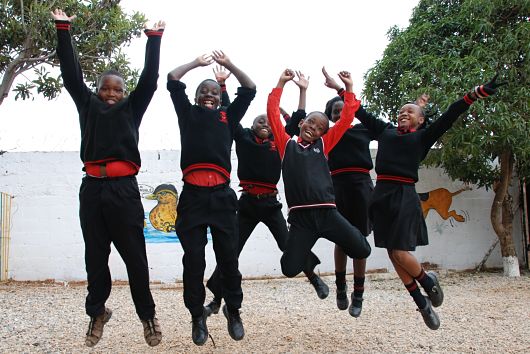
Does your computer process slowly? Are you in need of new software? These are two common reasons why people dispose of computers and laptops. Although they are still in working order, they are tossed away in garbage bins. Is there a sustainable solution? Camara Education thinks so.
Camara Education is dedicated to improving literacy and believes everyone deserves quality education. They collect technology such as computers, keyboards, tablets and smartphones and donate them to developing countries. They hope that by improving education, these communities will be able to lift themselves out of poverty.
Founded in Dublin, Ireland in 2005, Camara Education has been highly successful. Because of their efforts, around 1 million children have had access to technology in classrooms. In the last 10 years, they have shipped 62,000 computers to countries in need.
The organization has donated eLearning centers to over 2,000 schools in Ireland, Africa and the Caribbean. They have installed 40,000 computers, trained over 11,000 teachers to use technology in classrooms and are currently in operation in Jamaica and seven countries in Africa: Ethiopia, Kenya, Rwanda, Uganda, Lesotho, Tanzania and Zambia. They also have headquarters in the U.S. and U.K.
Camara Education believes that technology can open up an entirely new world of information for students and teachers. For this reason, they believe it is essential that all children have access to computers and information and communications technology (ICT).
This year, they plan to provide approximately 3,500 computers to students in Kenya.
“There’s no way the schools could afford this on their own,” Chief Technology Officer of Camara Education for Africa Aseidas Blauvelt says. “They could buy from their informal market, but they’d have no guarantee anything would work, they wouldn’t have training from us and they wouldn’t have a server.”
The team members erase all data from donated computers, keeping all personal information safe. The hard drive is wiped using a U.S. Department of Defense program, which makes it impossible to retrieve any data.
Recently, Camara Education has partnered with the Ministry of Education in Zambia to integrate technology and ICT into schools. On July 16, Camara Education in Dublin sent 1,110 computers to Lusaka, Zambia. With this new shipment, the organization has sent over 11,000 computers to Zambia.
CEO of Camara Education in Zambia says, “There is a strong demand from educational institutions for Camara services. Camara Zambia has been working with the Ministry of Education here to expand our reach to schools. The government this year added Computer Studies to the curriculum for grade 8 and 9 students, so there is much more interest in ICT and education.”
Ultimately, the Ministry of Education and Camara Education hope that the technology will teach valuable tech, communication and learning skills, alleviate poverty in Zambia and promote a prosperous and educated society.
Instead of throwing out old computers, visit https://camara.org/give-computers/ to donate and find drop-off locations.
– Kelsey Parrotte
Sources: Camara 1, Camara 2, Camara 3, LinkedIn
Photo: Camara

Education System in Yemen Suffers in Conflict Zones
Yemen, the poorest country in the Middle East, has experienced numerous violent conflicts over the past few decades. This is mainly due to an inequality in access to power and resources. Corruption is commonplace in Yemen’s relatively weak government, and conflicts are only exacerbated by poor infrastructure, high unemployment, food insecurity and limited social services. Currently, competing groups are fighting for control of the government, resulting in a scenario akin to a civil war. Those loyal to President Abdrabbuh Mansour Hadi, who was forced to flee the capital in February, have come up against a group of Zaidi Shia rebels called Houthis. Regional tensions and instability have increased.
Before the current conflict, many children were already out of school, and few completed secondary education. Primary enrollment stood at 73.8 percent, with a 60.4 percent completion rate. There was a large gender gap, with 85.2 percent of boys enrolled and only 62 percent of girls. Secondary enrollment was much lower, with only 33.5 percent attending. The gender gap persisted, with 43.6 percent of boys attending and 20.7 percent of girls. Literacy rates were also low: 65 percent of the population over the age of 15 could read and write.
The conflict has had a large negative impact on the education system in Yemen. 1.8 million children are out of school. 3,600 schools have been directly affected: 248 of these schools have been damaged, 270 have been repurposed for housing internally displaced citizens and 68 have been occupied by armed groups.
Because schooling has been interrupted for many students, UNICEF has been holding catch-up classes for over 200,000 students who have been unable to go to school for over two months due to conflict. These classes are intended to prepare students in grades 9 and 12 for their national mid-August exams, which they must pass to earn a basic or secondary school certificate. Yemen’s Ministry of Education has played an important role in mobilizing teachers and designating temporary learning spaces in areas where schools were destroyed. UNICEF has also been providing free resources such as notebooks and pencils.
Yemen’s school year is set to begin on September 5, but this could change depending on the security situation. UNICEF is currently trying to raise $11 million to help struggling students and fix schools that have been damaged by conflict. This money will go to rebuilding schools, supplying more teaching and learning resources, training teachers and community workers and running a back-to-school campaign. Education is crucial for Yemeni children to help themselves, their families, their communities and their country in the face of conflict.
– Jane Harkness
Sources: BBC, Index Mundi, UNICEF
Photo: USAID
Barbara Bush and Global Health Corps
Former President George W. Bush is remembered for his efforts to combat AIDS in Africa during his time in the Oval Office, but, as it turns out, he isn’t the only Bush with a passion for global health.
It was on a trip with her father to Uganda in 2003 that Barbara Bush, the elder of the former president’s twin daughters, was shocked by the toll AIDS was taking on population and the health inequality in the country.
One of the 43rd president’s lasting legacies is his creation of the U.S. President’s Emergency Plan for AIDS Relief (PEPFAR), which as of September of last year had supported life-saving treatment for seven point seven million people with the virus, in addition to helping provide over 56.7 million people with testing and counseling.
After graduating from Yale with a humanities degree in 2004, Barbara worked at the Red Cross Children’s Hospital in Capetown, South Africa, where she frequently worked with kids with AIDS, before returning to the United States to try to mobilize the global health movement and get more people involved.
The end result was she and five friends creating Global Health Corps, which she became chief executive of at the age of 26. The organization gives young professionals the chance to work at the front of the fight for global health equity and places fellows in Burundi, Malawi, Rwanda, Uganda, the United States, and Zambia.
According to Global Health Corps website, the goal of the organization is “to mobilize a global community of emerging leaders to build the movement for health equity.” The website also says that health is a human right.
Fellows are placed with organizations, such as Partners in Health, in either of the two continents, where two fellows work together for a year. One fellow is from the host country, whereas the second is from abroad.
For example, young professionals with expertise in logistics worked to improve drug access in Tanzania by working on the supply chain. In Rwanda, architects designed medical clinics with less airflow, making it less likely that those with tuberculosis would infect others.
Today, Global Health Corps is booming, receiving praise from health professionals around the world. In addition, the organization gets around 6,000 applications a year for fewer than 150 fellows positions.
– Matt Wotus
Sources: Global Health Corps, The New York Times, PEPFAR
Photo: Huffington Post
Deworming Rwanda
Unquestionably, one of the most effective weapons fighting global poverty today is education, and in Rwanda, a small country in central eastern Africa, it’s essential. Absence is commonplace however, with children suffering from abdominal pain, diarrhea and nausea. Attendance in school is difficult for children with soil-transmitted helminth infections.
In collaboration with Ministries of Health, a campaign to combat the disease was launched by the World Health Organization (WHO) and has shown success in getting students back in school.
According to WHO, soil-transmitted helminth infections are among the most common infections worldwide and affect the poorest and most deprived communities. They are transmitted by eggs present in human feces, which contaminate soil in areas where sanitation is poor. The disease is easily contracted by walking barefoot on contaminated soil or eating contaminated food.
The main species that infect people are the roundworm (Ascaris lumbricoides), the whipworm (Trichuris trichiura) and the hookworms (Necator americanus and Ancylostoma duodenale).
Soil-transmitted helminth causes a spectrum of health problems, from the indiscernible to the severe, which can includ abdominal pain, diarrhea, blood and protein loss, rectal prolapse and physical and mental retardation. The severity of infection is directly related to the worm burden.
The disease, one of the most common parasitic ailments in the world, affects approximately 2 billion people, nearly two thirds of the world’s population, and it is estimated that 4 billion others are at risk.
In Rwanda, illnesses can be extraordinarily bad. According to WHO, ninety-five percent of school aged children living in the Musanze District were suffering in 2007, one of the highest rates in the country.
There, soil-transmitted helminth is contracted mainly from dirty water, fetched from nearby Lake Ruhondo and those who use the stagnant water from the former banks of the Mukungwa River. Open defecation is still practiced in the area and sanitation is almost non-existent.
In 2007, whole families were getting sick. Parents stayed home caring for sick children, which prevented them from being able to work, and children were too sick to go to school or earn a menial income raising livestock or growing vegetables.
Worldwide, the WHO has been working tirelessly to control the spread of soil-transmitted helminth by facilitating wider access to preventive medicine such as albendazole and mebendazole. According to Dr. Antonio Montresor, Medical Officer for WHO in the Department of Control of Neglected Tropical Diseases, the deworming campaign reached more than 395 million children in 2014, making it one of the largest global public health interventions.
In the Musanze District of Rwanda, the WHO provides the necessary medications to local schools, which are then disseminated to the population. Since the program started, the rate of children with intestinal worms has been reduced by nearly 20 percent.
Education is essential in alleviating global poverty. Every day a child is absent from class, the likelihood they can break the endless cycle disappears a little more. The WHO is striving to keep students in school and families healthy, making a chance to prosper a reality.
– Jason Zimmerman
Sources: WHO 1, WHO 2
Photo: TheGuardian
New Futures Organisation Addresses Poverty in Cambodia
New Futures Organisation, a nonprofit established in 2007, dedicates its time to improving conditions in impoverished communities in Takeo, Cambodia by exposing youth residents to education, technology and empowerment. The members of New Futures Organisation establish village schools in communities that normally cannot afford the resources needed to provide children a proper education, as well as drop-in centers for at-risk students and orphans. As the children in the village schools grow up and transition into university, New Futures Organisation continues to help them find jobs and sponsorships they can use for university costs.
While school in Cambodia is free, many families living in rural farmlands lack the funds necessary to pay for uniforms and books. Cambodian schools in the region are typically located in the heart of Takeo, miles away from the villages. During rainy seasons, the dirt tracks taken by children commuting to school become inadequate for walking. Children are also required to help their families with farming duties. All of these factors make it difficult for many children to attend school full time.
There are currently seven village schools in Takeo that provide education to over 100 students. These schools are cost-free to families who live in rural regions, and are centrally located so children can access them even during rainy seasons. Classes are held to fit the schedule that comes with farm work.
New Futures Organisation originally started as an orphanage and drop-in center for at-risk youths. The drop-in center houses many orphaned children while helping them reconnect with extended family members, or find good homes when the first option is not available. The families that take in orphaned children are provided with care packages each month to make up for the additional money, food and toiletries needed to house these children. The drop-in center also remains open for them to work on homework, earn tuition and receive hot meals when their home life is not fit for such accommodations.
Many of the children living at the drop-in center and attending the village schools aspire to attend college. New Futures Organisation helps these students achieve their goals by providing and finding sponsorships from organizations and community members, giving them emotional support and helping them become empowered adults so they can lead in their communities.
Other projects sponsored by New Futures Organisation to alleviate poverty in Cambodia include teaching English classes to children and adults and hosting local blood drive banks at health centers in Takeo. They also help local police officers by teaching them English and helping them communicate effectively with tourists and westerners.
– Julia Hettiger
Sources: Matador Network, Idealist, New Future Organisation
Photo: My Travel Affairs
Camara Education and Ending Poverty in Zambia
Does your computer process slowly? Are you in need of new software? These are two common reasons why people dispose of computers and laptops. Although they are still in working order, they are tossed away in garbage bins. Is there a sustainable solution? Camara Education thinks so.
Camara Education is dedicated to improving literacy and believes everyone deserves quality education. They collect technology such as computers, keyboards, tablets and smartphones and donate them to developing countries. They hope that by improving education, these communities will be able to lift themselves out of poverty.
Founded in Dublin, Ireland in 2005, Camara Education has been highly successful. Because of their efforts, around 1 million children have had access to technology in classrooms. In the last 10 years, they have shipped 62,000 computers to countries in need.
The organization has donated eLearning centers to over 2,000 schools in Ireland, Africa and the Caribbean. They have installed 40,000 computers, trained over 11,000 teachers to use technology in classrooms and are currently in operation in Jamaica and seven countries in Africa: Ethiopia, Kenya, Rwanda, Uganda, Lesotho, Tanzania and Zambia. They also have headquarters in the U.S. and U.K.
Camara Education believes that technology can open up an entirely new world of information for students and teachers. For this reason, they believe it is essential that all children have access to computers and information and communications technology (ICT).
This year, they plan to provide approximately 3,500 computers to students in Kenya.
“There’s no way the schools could afford this on their own,” Chief Technology Officer of Camara Education for Africa Aseidas Blauvelt says. “They could buy from their informal market, but they’d have no guarantee anything would work, they wouldn’t have training from us and they wouldn’t have a server.”
The team members erase all data from donated computers, keeping all personal information safe. The hard drive is wiped using a U.S. Department of Defense program, which makes it impossible to retrieve any data.
Recently, Camara Education has partnered with the Ministry of Education in Zambia to integrate technology and ICT into schools. On July 16, Camara Education in Dublin sent 1,110 computers to Lusaka, Zambia. With this new shipment, the organization has sent over 11,000 computers to Zambia.
CEO of Camara Education in Zambia says, “There is a strong demand from educational institutions for Camara services. Camara Zambia has been working with the Ministry of Education here to expand our reach to schools. The government this year added Computer Studies to the curriculum for grade 8 and 9 students, so there is much more interest in ICT and education.”
Ultimately, the Ministry of Education and Camara Education hope that the technology will teach valuable tech, communication and learning skills, alleviate poverty in Zambia and promote a prosperous and educated society.
Instead of throwing out old computers, visit https://camara.org/give-computers/ to donate and find drop-off locations.
– Kelsey Parrotte
Sources: Camara 1, Camara 2, Camara 3, LinkedIn
Photo: Camara
30 Medical Devices Addressing Global Health Issues
Many developing countries do not have the same health resources available to them as developed nations. Healthcare workers must come up with creative solutions to problems. PATH is a nonprofit organization that works to solve world health issue with innovative and creative solutions.
This year, PATH–with support of Norad, Bill and Melinda Gates Foundation and USAID–published a list of 30 creative solutions to different healthcare challenges in areas such as maternal, newborn and child health; infectious and noncommunicable diseases; and reproductive health. The inventions were submitted by entrepreneurs, investors, innovators and health experts from around the world. Those selected demonstrated sustainability, success in field testing, high numbers of saved lives, and low cost.
There are new forms of oxytocin, used to stop bleeding after childbirth, that are in powder and tablet form. Both the new forms are easier to transport and are safe for lower-level health workers to use than the typical injection. There are also new ways to create typical medical devices used during delivery, for example, the uterine balloon tamponade. It is typically used in wealthy countries to control bleeding, but developing nations often don’t have access to it. The solution was to tie a condom to a catheter which is then inflated with clean water through a syringe.
For combating diseases, there are Malaria vaccines, BPaZ to treat multi-drug resistant TB in three months, and new nucleic acid amplification test for TB. The Polypill is a low-cost pill for the prevention of cardiovascular diseases. To treat visions issues which affects 300 million people worldwide, there are new portable devices that low-level health officials can use to diagnose eye issues.
In reproductive rights, innovators created a one-year contraceptive vaginal ring so that women have more control for pregnancy prevention
PATH sees this list of 30 innovations as game changers in addressing global health issues. They are low cost and easily portable and administered by lower level health care officials. The hope is that these drugs and devices will help the world reach the 2030 health targets set out by the UN. To read the full list of innovations, visit PATH’s website.
– Katherine Hewitt
Sources: IC 2030, NPR
Photo: IC 2030
Can $160 Per Year Eradicate Hunger?
A new report released last week by the United Nations has predicted that only $160 per year for each individual currently living in extreme poverty is necessary to eradicate hunger in the world by 2030.
The joint report, which was prepared by the UN Food and Agriculture Organization (FAO), World Food Program (WFP), and International Fund for Agricultural Development, argued that such funding to eradicate hunger should be provisioned through both the transfer of cash and certain investments considered supportive of impoverished areas.
In order to meet the current base poverty line of $1.25 per day stipulated by the World Bank, the UN hopes that cash transfers will assist in the immediate elimination of hunger. Officials estimate that this undertaking would cost $116 billion per year, of which $75 billion would be designated to rural areas.
The UN has also estimated that an additional $151 billion per year will be necessary to fund “pro-poor” investment projects designed to support the predicted decreases in the frequency of poverty while also encouraging sustainability. Such endeavors could include the expansion of irrigation systems, the construction of more effective sanitation systems or infrastructural repair.
The FAO stated within their report: “Eradicating world hunger sustainably by 2030 will require an estimated additional $267 billion per year on average for investments in rural and urban areas and social protection so that poor people have access to food and can improve their livelihoods.”
The FAO estimates that over 800 million people across the earth still do not have access to adequate and sustainable food resources. A large portion of these people have been found to live in rural areas, a geographical prevalence which has caused many organizations to shift the focus of development projects towards rural regions in recent years.
Noting the necessity for increased efforts to eradicate hunger, José Graziano da Silva, Director General of the FAO, recently stated: “If we adopt a ‘business as usual’ approach, by 2030, we would still have more than 650 million people suffering from hunger.”
Graziano also argued, “The message of the report is clear: Given that this ($267 billion) is more or less equivalent to 0.3 percent of the global GDP, I personally think it is a relatively small price to pay to end hunger.”
The Sustainable Development Goals, which are new objectives designed by the United Nations to replace the outdated Millennium Development Goals, will be completed this fall and currently have created 17 different goals regarding global development. The second Sustainable Development Goal is focused on the issues of hunger, food insecurity and malnutrition.
In regards to the structure of plans outlined by the new report, Graziano stated: “We are championing an approach that combines social protection with additional targeted investments in rural development, agriculture and urban areas that will chiefly benefit the poor.”
– James Thornton
Sources: Business Day Online, Reuters, India Times
Photo: NDTV
5 Technologies That Promise to Clean the World
1. Algae
For some, this may not be seen as a technology per se, but algae is actually classified as a biofuel. Making algae involves growing acres upon acres of crops, but they can help clean our planet in a very important way. They can be used to fuel vehicles such as cars and planes. James Murray of the BusinessGreen website says, “those eco-warriors in the US Air Force have already successfully trialed biofuels containing algae, and wider test flights are imminent.”
2. Nuclear Energy
When Albert Einstein reviewed the technology involved with these carbon chains, they were first intended to be used as weaponry. Therefore, he refused to be involved in the Manhattan Project that led to the production of the atomic bomb. However, this same technology has the potential to clean the environment via depletion of greenhouse gas emissions. According to David Doody, writer for GreenBiz, “Nuclear reactor design company Transatomic Power’s Waste-Annihilating Molten Salt Reactor and Bill Gates-backed traveling wave reactors are designed to use byproducts of conventional nuclear power production as fuel.” So, rather than use carbon chains as a weapon or create more greenhouse gases, we would use nuclear energy as fuel.
3. Solar Glass
Normally, the first thing people think about when broaching the subject of eco-efficient technology, they might think of wind farms and solar technology. Solar is, at the moment, the most promising renewable energy source. James Murray of BusinessGreen describes solar glass as lightweight and flexible, and the solar cells can be integrated into clothes and even to car park canopies. Eventually, solar cells could be integrated into almost anything.
4. Chemicals
Awareness is continuously being spread about the downsides of using chemicals to clean water. That being said, it’s also possible to clean water with chemicals. There are is a demonstration plant being built in Pennsylvania that aims to clean the water used in the fracking process. This way, oil is still attainable and the water used to attain it can be cleaned. William Kohl, the head of business development for Advanced Water Recovery, say,s “this firm can desalinate water for 70 percent less than current technologies. Cost is generally the biggest factor, keeping more drought-prone regions from building these plants.” That being said, he’s also planning to move in on projects to make drinking water from seawater.
5. Commercialized Carbon
Nuclear technologies that are carbon-based have already been discussed, but what about pure carbon? It can be put underground, but newer companies can harness carbon with their technology and create products, like baking soda or chairs, that people use in their everyday lives. “Once captured through these companies’ technologies, carbon can be used in industrial or commercial production, to produce low-carbon fuels or for other applications.” Yet another solution that can combat climate change and global warming.
– Anna Brailow
Sources: Buzzfeed, Greenbiz, CNN
Photo: LibreShot
Wi-Fi ‘Saves’ Residents in Jordan Refugee Camp
In stark contrast to surrounding refugee camps in the Jordan Valley, such as the neighboring Azraq camp, however, there is one thing which has served to set Zaatari apart: the Internet.
Zaatari, which is home to 100,000 Syrians, started out as a temporary residence in which residents lived in deplorable conditions and frequently complained about the high rate of crime. In the past year, however, the camp has developed into Jordan’s fourth-largest ‘city,’ which boasts an enviable main street by refugee camp standards and is nicknamed the Champs Elysees. The Champs Elysees, which, unlike the rest of Zaatari, has paved roads and functioning street lamps, is also home to a growing number of bootleg charging stations, where customers can pay to refuel their computers and phones with electricity stolen from the camp’s grid. An increasing number of Zaatari residents have begun to tap into the camp’s Internet, using the Wi-Fi in order to stay in touch with family members spread throughout the region, tap into social media, keep up with world news and news about the countries they fled (via trustworthy sources such as the BBC World Service), and even learn English.
The recent influx of Internet users in Zaatari comes despite the fact that the Wi-Fi connection is incredibly clogged, thanks to the influx of thousands of refugees in recent months, which has put a strain on the region’s already slow electricity grid. Refugees hoping to use the Internet for a variety of purposes have to wait hours while a site buffers, even if they upload it in the middle of the night, according to Talash, one of the camp’s electronics vendors.
The success of the Internet and its ability to brighten the lives of Zaatari residents have inspired the United Nations and internet and communications technology (ICT) experts to explore the idea of making Wi-Fi free, and thus widely accessible, to refugees who have been displaced since the crisis in Syria began: a number which currently stands at 4 million.
According to the U.N., free Wi-Fi could bring educational, personal, and career benefits. Syrian refugees in Jordan, for example, who are prohibited from working by Jordanian law, can use the internet in order to tap into a ‘global marketplace.’ Young Syrian children who have suffered from a lack of educational opportunities in the refugee camps are also able to use the Internet to access free classes, thereby helping to circumvent the possibility that the recent crisis has created a Syrian ‘lost generation.’ Free Wi-Fi also offers the added benefit of enabling humanitarian organizations to communicate directly with residents and dispel rumors in the camp, such as the rumor which circulated last year that refugees were all going to be relocated to the less desirable and incredibly remote Azraq refugee camp.
U.N. and ICT officials have acknowledged that installing free Wi-Fi in Zaatari would be a difficult task, especially given the fact that refugee camps hosting Syrian refugees already bear the burden of frequent funding cuts. However, there is precedent for the use of free Wi-Fi accessible to refugees. The U.N. refugee agency’s (UNHCR) innovation team, for instance, recently released a mobile app for Syrian refugees living in Turkey, designed to explain refugees’ legal rights and point them to the nearest U.N. office. Recently, a highly successful app was also created by two Syrian refugees in Turkey for other refugees in the region. The app, which posts jobs that refugees are eligible for, gives them advice about landlords, explains mystifying rules about various camps and has already accrued 11,000 followers.
While U.N. officials consider the idea of installing free Wi-Fi, Zaatari residents have told reporters that they would be ecstatic if it were to come to fruition. Talash, the electronics vendor, told Al Jazeera, “life is comfortable enough here.” But with Internet access, Talash said his time at the camp would be much more tolerable.
“Ya rait [if only],” Talash said, “We’d be so happy.”
– Ana Powell
Sources: Al Jazeera, New York Times
Photo: AljeerzaE
The Tent School System of Pakistan
This issue of low enrollment is deeply rooted in the socioeconomic instability of the region. Many of the children are denied an education as either a direct or indirect consequence of poverty. Parents can neither afford an education for their children to begin with, or they cannot choose a lack of employment in favor of a formal education. UNESCO reports that 17.6 percent of Pakistani children work to support their families. Additionally, some children, especially girls, are denied an education due to social stigmas against female education stemming from poverty and lack of knowledge.
These unfortunate circumstances have led to unequal access to education for many Pakistani children. In areas where the government or nonprofit organizations are attempting to provide schooling for marginalized children, education has often been substandard, as evidenced by the abysmal state of most government-operated free schools.
Recently, a small startup by a college student in Pakistan has garnered some attention for its attempt at a solution to these problems. Named the “Tent School” system after the tents he envisioned as classrooms, the small nonprofit is already making progress in its objectives.
Since 2014, the program is geared towards educating children in impoverished slums of Islamabad, the national capital, and its neighboring areas. The teachers are volunteers, mostly college students, who provide most of the school supplies as well. The program is the brainchild of Zulqarnain Jameel, a software engineer, who combined his passion for universal education with his technological skills to create the Tent School.
The school system, as of yet, enrolls about 30 children from the poorest areas of Islamabad. Classes meet in a small room provided for by the parents, instead of in the namesake tents. The school’s mission is to provide primary education to children who don’t even have the most basic necessities of life, however, it does not skimp on the quality of education whatsoever.
Jameel and his IT developer partner rely on a hands-on teaching experience for the children. They use applications and electronic devices to provide their students with experience learning- a far cry from traditional government schools. Their “online collaborative learning” allows the students to learn from experiences and interactions; they can then apply their knowledge in an “innovation lab” to create their own inventions. The goal of the program is to groom the students’ problem-solving skills while stimulating their curiosity.
The Tent School program is currently operational in Islamabad only, but with increased awareness and contributions, Jameel’s planning to expand it to neighboring areas of the capital as well. But not with any compromise on the quality of education: developing the students’ creativity and honing their ingenuity is to remain a vital part of the program.
The spirited enthusiasm of the program’s founders is a welcome change in the scenery of Pakistani education, which has so far been dominated by behind-the-scenes nonprofits. With appropriate funding and efforts, the Tent School System has great potential in eradicating illiteracy in Pakistan- and ensuring that literacy is not just a numerical statistic, but the promise of a better future.
– Atifah Safi
Sources: UNESCO, Startup Expo, Dawn
Photo: IRC