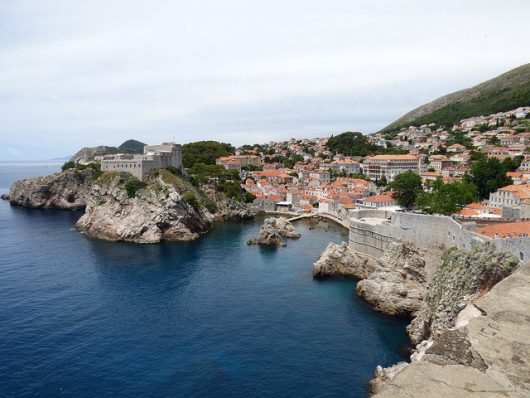
Over the past 30 years, the Balkans have experienced levels of change and turmoil. The lack of stability in the region has resulted in high levels of poverty in the Balkans.
The Balkan Peninsula, or the Balkans, is a region in Eastern Europe with coastlines on the Mediterranean Sea, Adriatic Sea, Aegean Sea, and the Black Sea. The countries that make up the Balkans are Slovenia, Croatia, Bosnia and Herzegovina, Romania, Serbia, Montenegro, Bulgaria, Macedonia, Albania and Greece.
Not all of the countries in the peninsula are experiencing dramatic poverty problems. For instance, less than 10 percent of the population of Montenegro is in poverty. Overall, however, poverty in the Balkans expands to about one-fourth of the region’s population.
Albania has one of the lowest standards of living and the lowest per capita income in all of Europe. Twenty-five percent of its population lives on less than $2 per day.
In Bosnia and Herzegovina, more than 15 percent of the population live in poverty. Croatia just broke through a recession that lasted until 2015. During the recession, the number of children in poverty rose by 50 percent. About one-fifth of Croatia’s population is considered poor.
Greece is in the middle of a longstanding economic crisis, on par with the Great Depression. During this time, jobs have dissipated and wages have decreased. Today, almost a quarter of Greece’s population is considered to be in conditions of severe deprivation.
Other regions experience their own financial difficulties. Kosovo was the poorest region of the former Yugoslavia, and declared its independence from Serbia in 2008. Years of political instability have left 30 percent of Kosovans in poverty. In addition, one-third of the population of Macedonia lives at or below the poverty line. The country faces high unemployment rates. In Serbia, one-fourth of the population is poor, and some of its southern regions lack basic infrastructures and public services.
Despite all of the economic issues in the Balkans, there are certainly signs of optimism, specifically the crime rate. Usually, high levels of poverty coincide with an increase in crime. However, this is not the case in the Balkans, which are regarded as some of the safest countries in all of Europe. Most of the countries are simply lacking the resources necessary to provide for their people. Assistance on an international level is imperative to lift these states out of poverty.
– Dustin Jayroe
Photo: Flickr

Addressing Women’s Health: The AIDS Epidemic
The global AIDS epidemic continues to threaten women’s health. There has been significant worldwide progress in combating this outbreak, as evidenced by a U.N. report showing a 33 percent global reduction in newly diagnosed HIV infections from 2001 to 2012. However, development has been disproportionate for women, especially in regions such as sub-Saharan Africa.
As the Joint U.N. Programme on HIV and AIDS reports, adolescent girls accounted for 64 percent of new HIV infections among youth globally in 2013. In addition, sub-Saharan Africa houses 80 percent of young women with HIV worldwide. Those aged 15 to 24 are nearly twice as likely to contract AIDS compared to their male counterparts.
Such statistics have a number of causes. Women are more likely to be diagnosed with HIV if they have experienced physical or sexual abuse, especially through relationships that involve extramarital sex or little-to-no contraceptive use. Social norms, especially in sub-Saharan Africa, also impose barriers, as men have more dominance over women in relationships.
Lack of education, specifically sex education, also plays a role in women’s disproportionate diagnosis of HIV. A report by the U.N. demonstrated that out of 32 countries, “Women who had some level of secondary education were five times more likely than non-literate women to have knowledge of HIV.”
The probable leading cause of the AIDS epidemic affecting women comes from a lack of health services. Those who have insufficient access to HIV and reproductive health care treatments and support are less likely to monitor their health and thereby reduce infection. This is the case in many African regions. Laws also introduce obstacles; for example, in 2014, nine countries reported regulations that inhibit girls from obtaining HIV-related services.
Executive Director of UNAIDS, Michel Sidibe, confirms: “This epidemic, unfortunately, remains an epidemic of women.” Fortunately, however, a number of organizations have made motions to counter the problem, beginning with UNAIDS itself. In 2015, it introduced a global initiative of reducing HIV infections to about half a million per year by 2020. This plan involves reducing new infections among women by a factor of 75 percent.
As the Human Rights Watch notes, such can be accomplished through legal reform, the implementation of health awareness programs, mandatory education measures and assistance from international NGOs. In order to combat the AIDS epidemic and its effect on women, serious action must continue worldwide.
– Genevieve T. DeLorenzo
Photo: Flickr
Instability and Poverty in the Balkans
Over the past 30 years, the Balkans have experienced levels of change and turmoil. The lack of stability in the region has resulted in high levels of poverty in the Balkans.
The Balkan Peninsula, or the Balkans, is a region in Eastern Europe with coastlines on the Mediterranean Sea, Adriatic Sea, Aegean Sea, and the Black Sea. The countries that make up the Balkans are Slovenia, Croatia, Bosnia and Herzegovina, Romania, Serbia, Montenegro, Bulgaria, Macedonia, Albania and Greece.
Not all of the countries in the peninsula are experiencing dramatic poverty problems. For instance, less than 10 percent of the population of Montenegro is in poverty. Overall, however, poverty in the Balkans expands to about one-fourth of the region’s population.
Albania has one of the lowest standards of living and the lowest per capita income in all of Europe. Twenty-five percent of its population lives on less than $2 per day.
In Bosnia and Herzegovina, more than 15 percent of the population live in poverty. Croatia just broke through a recession that lasted until 2015. During the recession, the number of children in poverty rose by 50 percent. About one-fifth of Croatia’s population is considered poor.
Greece is in the middle of a longstanding economic crisis, on par with the Great Depression. During this time, jobs have dissipated and wages have decreased. Today, almost a quarter of Greece’s population is considered to be in conditions of severe deprivation.
Other regions experience their own financial difficulties. Kosovo was the poorest region of the former Yugoslavia, and declared its independence from Serbia in 2008. Years of political instability have left 30 percent of Kosovans in poverty. In addition, one-third of the population of Macedonia lives at or below the poverty line. The country faces high unemployment rates. In Serbia, one-fourth of the population is poor, and some of its southern regions lack basic infrastructures and public services.
Despite all of the economic issues in the Balkans, there are certainly signs of optimism, specifically the crime rate. Usually, high levels of poverty coincide with an increase in crime. However, this is not the case in the Balkans, which are regarded as some of the safest countries in all of Europe. Most of the countries are simply lacking the resources necessary to provide for their people. Assistance on an international level is imperative to lift these states out of poverty.
– Dustin Jayroe
Photo: Flickr
Water Quality in Norway
Norway is generally a very healthy place, making it one of the top countries to live in. Water quality in Norway is exceptional, as tap water is always safe to drink.
Water quality in Norway ranks second in having the best tap water in the world. The country has special programs that protect its groundwater and other water systems that safeguard the quality of water for its citizens.
Norway’s tap water is exceptional and can be consumed from anywhere, however, this does not guarantee complete safety. More than 1.3 million Norwegians live in regions where their drinking water is not treated against parasites. Experts advise those living in the untreated areas to pay special attention to the water’s tint. The color of the water is an indication of overall quality, and if water quality is poor, it is colored or foul-smelling or recently changed, and should not be used without taking precautions.
The current water quality in Norway can be attributed to its strong hydropower expertise. The country’s main sources of water contamination are agriculture, municipal sewage and fish farming, which are integrated with water in terms of irrigation, drinking water supply and livestock.
More than 80 percent of the population in Norway is connected to the drinking water systems, which serve more than five thousand persons each. Ninety percent of the Norwegian populous drinks surface water while ten percent drink groundwater.
The water quality in Norway is exceptional and the Norwegian government continues to actively work to maintain the standard of drinking water.
Norway provides one of the best water supply systems in the world. While the challenges for Norway in maintaining its water supply include increased overflow discharges, leakage from sewers, reduced treatment capacity and minor outbreaks that could be linked to the country’s water supply, the water quality in Norway remains far superior compared to many countries in the world.
– Rochelle R. Dean
Photo: Flickr
Organizations Helping Child Soldiers Recover
Around 250,000 children around the globe are child soldiers.
Child soldiers are people under the age of 18 who are used for military purposes. They can be boys or girls and can range in age from four to late teens. The tasks of a child soldier vary from fighting to being a messenger. Discussed below are the three leading organizations that help child soldiers recover from being involved in such activities.
Organizations Helping Child Soldiers
Child Soldiers International
Child Soldiers International is an organization based in London that has been around since 1998. Established by other leading human rights organizations such as Amnesty International, Child Soldiers International works to end recruitment and use of children on behalf of armed groups.
Among things such as reduction of violations and promoting the ban on child recruitment, the organization puts an emphasis on reintegration. For instance, Child Soldiers International offers literacy and numeracy classes for girls in the Democratic Republic of the Congo. The organization also advocates “to increase the quantity and quality of reintegration programs.”
War Child
War Child, a Canadian based organization, has been around since 1999. “By providing access to education, opportunity and justice, War Child gives children in war-affected communities the chance to reclaim their childhood.” With better education and opportunity, one can better resist the appeal of armed groups.
United Nations International Children’s Emergency Fund (UNICEF)
UNICEF has been committed to children for the past 70 years. UNICEF has played a big role in helping children around the world by releasing children associated with armed forces and providing them with assistance to return home. The organization supports a variety of recovery services such as physical and mental health, education and skills training.
Since 1998, UNICEF has helped more than 100,000 former children associated with armed groups reintegrate into their communities. The organization discourages the use of the term ‘child soldier’ as it doesn’t adequately include the variety of roles children are recruited to do for military purposes.
These three organizations helping child soldiers recover are making a difference in the lives of children around the world who find themselves caught in the conflict.
– Shannon Elder
Photo: Flickr
10 Facts About Water Pollution
Water is one of the most important natural resources that is essential to sustain every form of life, but it is becoming increasingly scarce in many parts of the world. According to the World Economic Forum, rising water pollution is the foremost global risk in terms of its potentially devastating impact on society. Below are ten interesting water pollution facts.
Water Pollution Facts
There is ample water for everyone, but these 10 facts about water pollution illustrate how it is becoming scarce due to insufficient infrastructure. Safe, clean water is a human right, yet rising water pollution is a serious health threat for the world’s poorest.
– Preeti Yadav
Photo: Flickr
GAVI Launches Cholera Vaccine Campaign in Somalia
One of the world’s leading organizations in the fight for global health has just begun to carry out a nationwide campaign in Somalia to fight cholera. Gavi, the Vaccine Alliance, issued a press release on March 15 announcing its comprehensive strategy to stop the spread of cholera among Somali citizens. This Gavi cholera vaccine campaign seeks to save potentially thousands of lives in the drought-stricken African country.
According to the Centers for Disease Control, the southern half of the continent (where Somalia resides) is home to the bulk of cholera cases reported worldwide, and those cases have a higher likelihood of causing death than in other regions. This is primarily due to the lack of access to safe, clean water and sanitation as the disease-causing bacteria, Vibrio cholerae, thrives in public water sources and is spread through the waste products of those infected.
The situation in Somalia has been worsened by an ongoing harsh drought, which has forced people to use contaminated water and has hastened the spread of the disease.
Notorious for its contagiousness, cholera infected over 170,000 people globally in 2015. Year to date, more than 10,500 cases of cholera have been reported across 12 regions of Somalia, resulting in nearly 270 fatalities. The spread of the epidemic has been swift, with 400 new cases appearing in a single day in early March.
The Gavi cholera vaccine campaign plans to reduce these alarming numbers by delivering 953,000 doses of oral vaccine to a population of more than 450,000 people at risk of being infected. Administration of the vaccines will be completed by the Somali government, focusing on the regions of Somalia with the highest concentration of cases: Banadir, Beledweyne, and Kismayo. The doses will be administered over two waves, the first taking place from March 15-19, and the second from April 18-22.
The campaign marks an alliance between the United Nations Children’s Fund (UNICEF), the World Health Organization (WHO) and Gavi, who has provided the vaccines themselves as well as an additional $550,000 to support the program.
“Cholera is a major health issue in Somalia. The current drought has worsened the situation for many. Therefore we’re very glad to have the support of Gavi to implement the first oral cholera vaccine campaign in Somalia,” said Dr. Ghulam Popal, Somalia’s WHO representative.
Recognizing that cholera is not bound by political borders, Gavi is also launching a simultaneous vaccine campaign of 475,000 doses in South Sudan. This latest campaign is another step in realizing Gavi’s continuous mission to save lives and protect the health of all people in lower-income countries.
– Dan Krajewski
Photo: Flickr
Top Italian Diseases
Italy attracts thousands of tourists because of its food, history and beautiful coastlines. However, the diseases that Italians are prone to are often overlooked. In 2012, certain diseases resulted in 613,520 deaths in Italy. Here is a quick overview of the top Italian diseases.
Heart Diseases
Ischemic heart disease took the lives of 75,098 Italians in 2012. Other types of heart diseases killed 48,384 Italians in 2012. In general, heart conditions accounted for 30 percent of all deaths in Italy that year. Symptoms of ischemic heart disease include recurrent chest pain and discomfort due to a lack of blood flow to the heart. Ischemic heart disease develops when cholesterol particles accumulate on artery walls that supply blood to the heart. Eventually, the arteries become clogged, blocking the flow of blood to the heart.
Cerebrovascular Diseases
Cerebrovascular diseases have resulted in the deaths of thousands of Italians. Cerebrovascular diseases refer to all disorders in a specific area of the brain that is impacted by ischemia or bleeding. Strokes and aneurysms are common examples of cerebrovascular diseases.
Cancer
Trachea, bronchus and lung cancer killed 33,538 Italians in 2012. Such cancers were the second causing cause of death for men in that year. Each of these cancers impacts the lungs and throat area of the body and are caused by smoking.
The top Italian diseases generally result from poor lifestyle decisions, such as lack of exercise, smoking and excessive alcohol consumption. The most common diseases in the country can be prevented if Italians commit to making simple lifestyle changes. Proper lifestyle choices can help decrease the prevalence of these diseases and can allow many Italians to enjoy their beautiful country and culture for longer periods of time.
– Mary Waller
Photo: Flickr
Improving Literacy Rates and Education in Malta
Nine Facts About Refugees in Georgia
Georgia is a nation well-known for its conflict with Russia over provinces South Ossetia and Abkhazia in 2008. Georgia is a former member of the Soviet Union, and South Ossetia and Abkhazia declared independence from Georgia shortly after it left the Soviet Union. However, neither Abkhazia nor South Ossetia is fully recognized as independent from Georgia internationally. Their declarations of independence resulted in conflict with Georgia.
Nine Facts About Refugees in Georgia
1. As of mid-2015, there were more than 250,000 “refugees and other persons of concern to UNHCR” in Georgia. This includes refugees, people in refugee-like situations (who have not been formally recognized as refugees), internally displaced persons, asylum seekers and other stateless persons.
3. The 2008 conflict created 150,000 Georgian asylum seekers. Fewer than 1,000 Georgian asylum seekers had been accepted each year globally since the early 2000s.
4. More than 1,400 refugees from other countries were accepted into Georgia in 2015. The majority of them were from Iraq and Syria.
5. Since Russia’s second invasion of Chechnya in 1999, about 12,000 Chechnya refugees came to Georgia. Russia has made claims that Georgia hid Chechnya rebels, but Georgia has deemed those claims as false.
6. The International Criminal Court started investigating the war crimes of South Ossetia, Russia and Georgia in and around South Ossetia in order to bring justice to over 6,000 victims. Still, it is doubtful the victims will receive reparations.
7. There are almost 300,000 internally displaced persons in Georgia due to the conflicts with Abkhazia and South Ossetia over the last 20 years. Five percent of the population is internally displaced.
8. During Georgia’s conflict with Abkhazia in 1992-1993, both sides terrorized civilians based on which group they were from and this led to many displaced persons.
9. The EU voted in February to allow Georgians to travel visa-free into the EU for up to 90 days. The EU was concerned this could cause an upsurge in Georgian migrants overstaying illegally, therefore it reserved the right to reinstate visa requirements if needed.
These are just nine facts about refugees in Georgia. Refugees in Georgia are affected by the conflict in South Ossetia, Abkhazia and Russia.
– Jennifer Taggart
Photo: Flickr
“Power Africa” and the Return on Investment of USAID
On the surface, the term “foreign aid” indicates a government policy that is purely altruistic. The reality is that foreign aid is also an investment. Aid opens new opportunities for American businesses overseas and promotes domestic job growth by developing future trading partners. The Power Africa initiative is a prime example of the return on investment of USAID.
Two-thirds of people in sub-Saharan Africa do not have access to electricity. Established in 2013, Power Africa is a government-led partnership aiming to double access to electricity in sub-Saharan Africa. The initiative aims to establish 60 million new connections for homes and businesses by 2030. American firms, such as General Electric and SunEdison, sponsor and manage projects in conjunction with other international and local businesses.
Sen. David Perdue (R-GA) recently highlighted the return on investment of USAID and the Power Africa initiative. He elaborated, “USAID put $8 billion up and attracted more than $45 billion [in commitments].” According to USAID, $2.8 billion has been spent thus far and $14 billion guaranteed. That amounts to a return on investment ratio of one to five.
The return on investment of the Power Africa initiative should not solely be considered a short-term goal; USAID funding and assistance have fostered immediate short-term investments by U.S., African and other international businesses. However, the long-term ramifications of the development of the energy sector in sub-Saharan Africa have the potential for much larger returns.
Growing the energy sector and bringing more and more African citizens into the global marketplace creates new opportunities for American exports. Access to electricity boosts business growth in the local economy, improves medical care, encourages investment and creates a platform to further integrate Africa into the global economy.
Power Africa benefits current and future generations of Africans as it gives them the opportunity to become more self-reliant and less dependent on foreign subsidies. For example, South Korea received billions of dollars in U.S. foreign assistance from the 1940s through the 1970s. In 2013, South Korea was the sixth-largest trading partner of the U.S., with exports of $42 billion and imports of $62 billion.
The Marshall Plan is another notable success story of the return on investment of international development money. The Marshall Plan was a policy under President Truman in which the U.S. government spent just over $120 billion in today’s dollars to rebuild Western European economies after World War II. The policy was a resounding success. The U.S. now exports approximately $240 billion to the EU every year, and millions of Americans have jobs as a result.
Historical examples provide concrete evidence that both the recipient and donor benefit from foreign aid. Power Africa has the potential to transform the energy sector in sub-Saharan Africa and provide further evidence of the return on investment of USAID.
– Michael Farquharson
Photo: Flickr