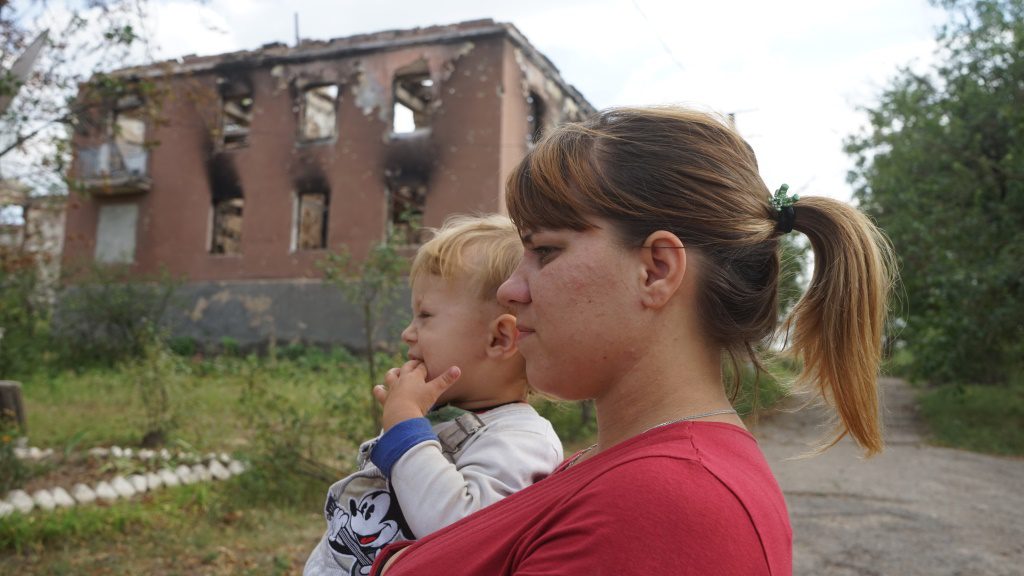
Once seen as the “breadbasket of Europe” because of its rich resources, Ukraine has since had tumultuous issues regarding hunger.
Hunger in Ukraine is a prevalent issue due to years of war and conflict. The 2014 Ukraine crisis — in which Russia controversially annexed Crimea — soon led the eastern part of the country to erupt in war, creating widespread political and economic upheaval. Since 2014, there have been multiple ceasefires, but none have been able to successfully quell the conflict.
Facing the Effects of Conflict
The war exacerbated hunger in Ukraine, particularly in the easternmost regions of Donetsk and Luhansk. A 2019 U.S. Agency and International Development report found that approximately 558,000 people in Ukraine were food insecure and 103,000 people were severely food insecure. In 2016, Ukraine was the only European country to receive assistance from the World Food Programme, an organization that began its efforts in the region in 2014.
In 2016, the WFP reported that as eastern Ukraine reeled from this geopolitical conflict, 1.5 million people were left hungry and nearly 300,000 people needed near-immediate assistance. The WFP gave 370,000 people monthly food packages and 180,000 people assistance through cash transfers, according to a 2016 press release.
The United Nations’ Food and Agriculture Organization stated in a December 2017 report that Ukrainians living in rural areas most heavily affected by the war were the most at risk for hunger. The report concluded that the most at-risk populations in the region needed $5.9 million in immediate assistance.
Before the FAO released the report, the organization delivered $2.3 million worth of seed potatoes to the Donetsk and Luhansk regions. The initiative was part of the organization’s attempt to bolster agriculture in the conflict-ridden regions and stymie issues of hunger and food insecurity.
“This is a hard time in the conflict area, and it is important that we use the short window of planting season,” said Farrukh Toirov, FAO’s emergency response program coordinator in Ukraine circa May 2017.
Toirov continued, “I see an essential need to continue distributing high-quality inputs like vegetable seeds that can improve the self-production of food for household consumption and also enrich local markets.”
To combat hunger in Ukraine, USAID’s Office of Food for Peace donated more than $4 million during its 2019 fiscal year to non-governmental organizations to offer food assistance to people in the most affected regions.
Changes in Aid for Hunger in Ukraine
Despite the ongoing crisis, Ukraine has seen some improvement in food security over the last 20 years. According to the Global Hunger Index, Ukraine had a score of less than five in 2019, indicating that it had an overall low level of hunger. In 2000, the Global Hunger Index gave Ukraine a score of 13.7, showing that the country had moderately higher levels of hunger.
But even though most of Ukraine does not deal with pervasive hunger, millions in the Donetsk and Luhansk regions continue to deal with food insecurity, and international efforts have slowed in recent years.
The WFP halted its efforts in tackling hunger in Ukraine in 2018, citing a lack of funding and access. Even in four years, the WFP delivered food assistance to millions of Ukrainians and pumped $60 million into the Donetsk and Luhansk economies.
“In those four years, WFP touched many lives across the country and those lives touched us too,” the organization wrote in a Medium post. “WFP will continue to monitor the food security situation in the country while other humanitarian actors will take over assisting the most vulnerable.”
Currently, organizations like the FAO and USAID are continuing to pump millions of dollars in food assistance and agriculture, hoping to eventually relieve hunger in eastern Ukraine amid immense conflict.
– Meghna Maharishi
Photo: Flickr

Why Is There Hunger in Mongolia?
Hunger in Mongolia stems from the dzud, a weather phenomenon where a summer drought is followed by a harsh winter. Dzuds negatively affect the economy, especially among the herder population, which accounts for over a third of all employment in the country. Their livestock, which herding families rely on for food, transportation and income, often do not survive the dzud, resulting in food insecurity and malnutrition.
According to the secretary-general of the Mongolian Red Cross, Nordov Bolormaa, over 150,000 Mongolians across 17 of 21 provinces were affected by this February’s dzud. The Mongolian government discovered that over 40,000 animals had died by early February. Over a million livestock died in the winter of 2015-2016, and the dzud of 2009-2010, one of the worst recorded, saw over nine million animal deaths.
Several organizations are working to address both the short-term and long-term effects of hunger in Mongolia. The Red Cross placed an emergency appeal for over $835,000 to help over 25,000 people in Mongolia who are vulnerable to the effects of the dzud. The Asian Development Bank approved a grant to address child malnutrition, planning to work directly with families in Mongolia to educate them about the causes of malnutrition and ways to prevent it. These programs are vital to helping Mongolians better endure the dzud and establish a solid foundation to reduce hunger and malnutrition.
– Jalil Perry
Photo: Flickr
Pope and Catholic Church Target Hunger in Vatican City
Due largely to the Catholic Church’s presence in the world’s smallest country, many of the poor and needy draw near to the Vatican. As the impoverished seek refuge, hunger is becoming a bigger problem for the Church to address. With Pope Francis at the helm of the Vatican’s efforts, the needy are being tended to with a vigorous priority.
Pope Francis has personally addressed hunger by appealing to the United Nations Food and Agriculture Organization and pointing out the “uneven distribution of resources and the lack of agricultural development.” The Vatican has sponsored several refugees and their families facing the challenges of displacement, especially hunger. Further, the rest of Europe’s Catholic community has been encouraged to follow suit in accepting, housing and aiding those seeking refuge.
Contrary to tradition, Pope Francis insists on mobilizing the church by sending out the Vatican’s almoner. In the past, the almoner waits for letters from the poor for guidance on how to meet needs. However, Polish Archbishop Konrad Krajewski has taken to the streets of Vatican City in attempts to help the poor and hungry. Krajewski’s method aligns with the rumors of Pope Francis instructing him to “sell his desk” since he would not be needing it.
One of the more controversial techniques to fight hunger in Vatican City came with a corporate lease of a Vatican building to McDonald’s in 2016. While some members of the Church and the Catholic community responded with alternative uses of the building, like housing the homeless, that attitude has since shifted as McDonald’s promised to hand out over 1,000 meals to the poor in their first six months of operations.
The 2030 Development Agenda of the U.N. reflects this same commitment of the Catholic Church. The fight for universal food security cannot be put off and Pope Francis recognizes that it is a demanding task. However, intentions to provide for everyone are not enough. Rather, people need to make a commitment to their country to increase the level of nutrition, to improve agricultural operations, to improve living conditions of rural communities and promote effective distribution of resources like food supplies. When a country is unable to provide for its people, then intergovernmental institutions need to step in. As Pope Francis said in his July 4 address, every person has a right to be free from poverty and hunger. Further, it is the duty of the entire human family to intervene and actually do something about it.
– Taylor Elkins
Photo: Flickr;
Poverty and Hunger in Finland
In America, Finland (along with its fellow Scandinavian nations) is often portrayed as a utopia bereft of human suffering and a model for the rest of the world. The simple truth, however, is that economic troubles in Finland are real, and the nation has had its own set of struggles in the wake of the Great Recession.
The Finnish labor market has experienced three recessions since the 2007-2008 financial crisis. Business Insider reports that Finland suffered the worst economic contraction of any Eurozone nation during that same crisis. The country’s public debt doubled to more than 60 percent of its GDP by 2015.
According to Eurostat, as of August 2017, Finland’s unemployment rate stood at 8.7 percent. That number is not bad, but could be better. Today, 35 percent of Finland’s unemployed are long-term unemployed, representing a significant challenge for the nation as a whole.
However, the potential for these issues to cause poverty and hunger in Finland has been mitigated by the nation’s public welfare system. No one in Finland lives below the international poverty line due to a wide net of benefits covering both the young and the old. According to OECD data, the poverty rate ratio is only 0.04. Social spending at 30.8 percent of GDP and a well-funded, efficient public schooling system undoubtedly contribute to these successes. And there are other innovative ideas as well.
Those who pay close attention to American politics will know that 2016 Democratic presidential candidate Hillary Clinton recently revealed that she considered running on a platform of universal basic income, a plan she scrapped because she could not make the numbers work. Earlier this year, the Finnish government started a test run for that very same idea.
Finland’s idea was to give 2,000 Finns ages 25 to 28 who had been unemployed for a year or more, or had less than six months of work experience, a monthly subsidy of €560 for two years, regardless of whether they found work.
However, after a government pushing austerity came to power, the trial size was cut to one-fifth of the original plan, making it too small to be scientifically useful, and regular social programs were scaled back, making it even more difficult to measure the program’s effects. The program may or may not help alleviate poverty and encourage economic growth, but it will be hard to know given the small sample size and lack of controls. Still, the presence of ideas like this show a healthy willingness to experiment by trial and error.
Earlier this year, the Finnish central bank affirmed that Finland finally seems to be emerging from the Great Recession. The bank forecasts that this year will see exports recover and GDP growth reach 1.3 percent, in part due to the Competitiveness Pact signed last year. Strong social programs, powered by economic activity inherent in free and open markets, will hopefully keep poverty and hunger in Finland at a historic low.
– Chuck Hasenauer
Photo: Flickr
Food from Electricity as a High-Tech Solution to Poverty
This research is the result of a collaboration between the VTT Technical Research Centre of Finland and Lappeenranta University of Technology (LUT). VTT scientist Juha-Pekka Pitkänen has affirmed that, in practice, “all the raw materials are available from the air. In the future, the technology can be transported to, for instance, deserts and other areas facing famine.” As this method does not require a location with the appropriate temperatures or soil type for agriculture, desert conditions will have no effect on its viability.
Business Insider theorizes two possible ways the technology might be used: to provide food for starving people in areas inhospitable to traditional agriculture and to reduce the demand for food livestock and the crops necessary to sustain it.
The second manner of use would bring down global emissions of greenhouse gases, a large portion of which the livestock industry is directly responsible for. Studies show that poorer countries are most vulnerable to the effects of climate change, not least because they lack the financial means to combat those effects. Poorer nations are disproportionately in low-lying areas vulnerable to sea level rises. The nation of Kiribati, spread out over many island reefs and atolls in the Pacific, is a good example of a place already wrestling with less fertile soil and frequent flooding.
As a high-tech solution to poverty, food from electricity has a long way to go. LUT reports that producing one gram of protein in this manner currently takes about two weeks. As researchers model and adjust the process to allow the microbes to grow better, the hope is that the total time required will be reduced. At the same time, researchers want to produce larger quantities of the protein so as to pilot a commercialization effort and eventually develop the process into a compact product for mass production and distribution.
Aside from addressing general poverty, food from electricity has the rare potential to address climate change from both sides of the equation, tackling it at its source while mitigating its impoverishing effects. It will be interesting to see how this technology develops in the future.
– Chuck Hasenauer
Photo: Google
15 Facts About the Syrian Civil War
– Richa Bijlani
Photo: Flickr
Water Quality in the Maldives
A few miles from the capital city, Malé, an artificial island has been built in order to solve Malé’s trash problem. However, with over 10,000 waste-producing tourists visiting the Maldives each week, the trash island has grown into a pile covering over 124 acres. While tourism has sparked a healthy economy and turned the Maldives into the richest country in South Asia, the industry is consequentially producing an environmental burden with the unsustainable creation of waste. The trash island “grows” nearly one square meter each day. The island—named Thilafushi—is concerning environmental campaigners at an alarming rate.
The waste is brought to the island on ships and taken ashore, then sifted through by hand. While some trash is incinerated, the majority of waste is buried in landfills. As a result, environmentalists are “seeing batteries, asbestos, lead, and other potentially hazardous waste mixed in with the municipal solid wastes being put into the water.” Malé environmentalist, Ali Rilwan, notes, “these wastes are a source of heavy toxic metals and it is an increasingly serious ecological and health problem in the Maldives.”
Some of the reasons Thilafushi is such a big problem are very simple. Firstly, the islands of the Maldives are small, which means so are the freshwater sources. By housing large amounts of waste, water contamination is bound to occur and according to Rilwan, it is occurring. Secondly, because of the small landmass and the large tourism industry, waste is going to be produced and it has to go somewhere. At this point, India is being paid to take some of the waste.
Fortunately, water quality in the Maldives is more of an anticipated problem than it is a present one. According to the U.N. Global Analysis and Assessment of Sanitation and Drinking-Water, access to drinking water is high. While water degradation due to salinity and pollution make the access challenging, the U.N. reports over 90 percent of the Maldives do have access.
In response to the call for improved quality, the nation has set forth a number of specific goals, including keeping rural water supplies functioning long-term, improving continuity of urban water supplies and rehabilitating broken public facilities. The Maldives has embraced financing a WASH program, which recognizes drinking water and sanitation as a human right.
The government is active in making the right to drinking water a reality across the islands. After taking notes from the problems of small freshwater resources and the pollution that is seemingly unavoidable as a result of tourism, the government has joined with Aquaver and Stelco—a power company—to address the problem with a new idea: desalination plants.
To better ensure good water quality in the Maldives, the partnership is seeking to build a desalination plant on every island, in order to provide a safe and reliable drinking source that also has an energy-producing capacity which capitalizes on the heat exchanges that occur during the desalination process. The plan includes distribution kiosks with reusable containers. Overall, this would reduce waste and increase access to high-quality water, which directly aids the Maldives in solving two pending problems.
With the government’s careful monitoring and proactive initiative with local businesses, the future for water in the Maldives is looking good. In the recent past, water quality in the Maldives has been a quiet topic, as it brings hidden secrets—such as Thilafushi—into the conversation. However, by revealing what is damaging the water quality and addressing the issues with innovative solutions that grow business, increase safe water access and remove one less piece of trash from the nation’s waste, the future looks nearly as crystal clear as its famous beach waters.
– Taylor Elkins
Photo: Flickr
Florida Schools Waive Regulations for Caribbean Scholars
In a public address, Stewart announced, “Entire communities were destroyed, and we do not know how long it will take to restore schools and other essential infrastructure…It is critical that these students and teachers have the opportunity to participate in our state’s outstanding public education system. We are pleased to remove barriers to enrollment and help these students and teachers return to the classroom.”
As of now, students from the islands are able to continue their classes and permeate into the Florida public school curriculums without their birth certificates, official transcripts and health forms that transfer students would traditionally be required to have. Also, those who are seeking teaching positions are being given the opportunity to apply without their health records and age verifications, along with proof of degree-attainment and subject-mastery documentation. The federal government has obliged school districts to label students affected by hurricanes as “homeless” to allow the students to be eligible for free meals and more accessible transportation.
Futhermore, some public colleges in Florida have agreed to offer in-state tuition to affected Caribbean students. These colleges include: Broward College, Hillsborough Community College, Miami Dade College, Palm Beach State College, Seminole State College of Florida, the University of Central Florida, Valencia College and St. Petersburg College.
In a statement made by Scott, the governor claimed he wanted to, “ensure students from Puerto Rico can more easily continue their education here in Florida and that teachers from Puerto Rico have every opportunity to continue to succeed in their careers.” He also pointed out that, “as families work to rebuild their lives following the unbelievable devastation caused by Hurricane Maria, we are doing everything we can to help them throughout this process.”
While their education is furthered in the U.S., many of the students wish for recovery for their respective homes. However, because these Florida schools have waived their rules and regulations for Caribbean scholars affected by the hurricanes, many students are able to continue following their dreams and their career paths. Without initiatives like these, many hurricane victims would have to be stuck on pause until the recovery of their homes.
– Jalil Perry
Photo: Flickr
Hunger in Ukraine Amid Conflict
Once seen as the “breadbasket of Europe” because of its rich resources, Ukraine has since had tumultuous issues regarding hunger.
Hunger in Ukraine is a prevalent issue due to years of war and conflict. The 2014 Ukraine crisis — in which Russia controversially annexed Crimea — soon led the eastern part of the country to erupt in war, creating widespread political and economic upheaval. Since 2014, there have been multiple ceasefires, but none have been able to successfully quell the conflict.
Facing the Effects of Conflict
The war exacerbated hunger in Ukraine, particularly in the easternmost regions of Donetsk and Luhansk. A 2019 U.S. Agency and International Development report found that approximately 558,000 people in Ukraine were food insecure and 103,000 people were severely food insecure. In 2016, Ukraine was the only European country to receive assistance from the World Food Programme, an organization that began its efforts in the region in 2014.
In 2016, the WFP reported that as eastern Ukraine reeled from this geopolitical conflict, 1.5 million people were left hungry and nearly 300,000 people needed near-immediate assistance. The WFP gave 370,000 people monthly food packages and 180,000 people assistance through cash transfers, according to a 2016 press release.
The United Nations’ Food and Agriculture Organization stated in a December 2017 report that Ukrainians living in rural areas most heavily affected by the war were the most at risk for hunger. The report concluded that the most at-risk populations in the region needed $5.9 million in immediate assistance.
Before the FAO released the report, the organization delivered $2.3 million worth of seed potatoes to the Donetsk and Luhansk regions. The initiative was part of the organization’s attempt to bolster agriculture in the conflict-ridden regions and stymie issues of hunger and food insecurity.
“This is a hard time in the conflict area, and it is important that we use the short window of planting season,” said Farrukh Toirov, FAO’s emergency response program coordinator in Ukraine circa May 2017.
Toirov continued, “I see an essential need to continue distributing high-quality inputs like vegetable seeds that can improve the self-production of food for household consumption and also enrich local markets.”
To combat hunger in Ukraine, USAID’s Office of Food for Peace donated more than $4 million during its 2019 fiscal year to non-governmental organizations to offer food assistance to people in the most affected regions.
Changes in Aid for Hunger in Ukraine
Despite the ongoing crisis, Ukraine has seen some improvement in food security over the last 20 years. According to the Global Hunger Index, Ukraine had a score of less than five in 2019, indicating that it had an overall low level of hunger. In 2000, the Global Hunger Index gave Ukraine a score of 13.7, showing that the country had moderately higher levels of hunger.
But even though most of Ukraine does not deal with pervasive hunger, millions in the Donetsk and Luhansk regions continue to deal with food insecurity, and international efforts have slowed in recent years.
The WFP halted its efforts in tackling hunger in Ukraine in 2018, citing a lack of funding and access. Even in four years, the WFP delivered food assistance to millions of Ukrainians and pumped $60 million into the Donetsk and Luhansk economies.
“In those four years, WFP touched many lives across the country and those lives touched us too,” the organization wrote in a Medium post. “WFP will continue to monitor the food security situation in the country while other humanitarian actors will take over assisting the most vulnerable.”
Currently, organizations like the FAO and USAID are continuing to pump millions of dollars in food assistance and agriculture, hoping to eventually relieve hunger in eastern Ukraine amid immense conflict.
– Meghna Maharishi
Photo: Flickr
USAID to Help Salvadorans with Youth Education Programs
Youth are the primary victims of violence in El Salvador. Furthermore, many young people have a hard time accessing basic healthcare. Due to the low quality and limited access to basic health services, 41 percent of the HIV/AIDS cases in El Salvador are among young people age 15 to 19.
Poverty, along with the lack of education and job opportunities, forces youth to migrate across international borders to seek better opportunities. Most make their way to the United States, however many enter illegally. As a result, they have limited access to healthcare and social security in the U.S. as well. This puts young adults at a higher risk of becoming a part of youth gangs, participating in criminal activities and substance abuse.
USAID provides aid that will help Salvadorans thrive, eliminating the need for high rates of migration to other states. USAID is partnering with the government of El Salvador, the Ministry of Education, private sector partners and higher education institutions in both the U.S. and El Salvador.
The activities provided are directed towards young adults at the lower secondary level, grades seven to nine, as they are most susceptible to dropping out of school and most vulnerable to joining gangs.
The education programs that USAID has provided in El Salvador, particularly in high-crime areas, help to keep more than 100,000 youth in school. By providing young Salvadorans with education and a safe environment, they are less likely to join gangs. Further, with USAID’s new programs, over 20,000 youth have now received job training.
– Chloe Turner
Photo: Flickr
Investments Key to Improving Education in Guinea
Several factors contribute to extreme poverty in Guinea. Guinea has made it a priority to address the major factors that add to this plight, one of which is education. With a population of around 10 million and a literacy rate of around 30 percent for young males and females, Guinea’s Strategic Poverty Reduction Document includes education as an important factor in helping to reduce overall poverty in the country. Guinea has received help from a few different nonprofits in order to develop strategies to meet these goals.
UNICEF is working to resolve the lack of investment in education that Guinea experiences. Classrooms have begun to overcrowd recently, partially due to refugee influxes, making it difficult for students to get the time and attention they need to succeed. Investments in additional classrooms and training staff are a part of UNICEF’s plan to alleviate this pressure, as well as adding new teaching styles to cater to the uniqueness of pupils.
Through UNICEF, the Global Partnership for Education is chipping away at specific goals to target the main issues surrounding education in Guinea. The partnership has set priorities of making education more universal and available, making improvements in quality and training and strengthening government to make investments in their people’s education and support reforms.
World Education, a nonprofit dedicated to improving quality of life through access to education, has been present in Guinea since the late 1990s. World Education has focused its efforts primarily on capacity building through several different methods. They have worked to engage NGOs within Guinea and support community participation projects as well as received funding to kickstart such programs.
While most extremely poor nations experience education issues, it is important to recognize the work of the aforementioned organizations and the role of government in education. With consistent effort in this area, the state of education in Guinea can improve.
– Casey Hess
Photo: Flickr