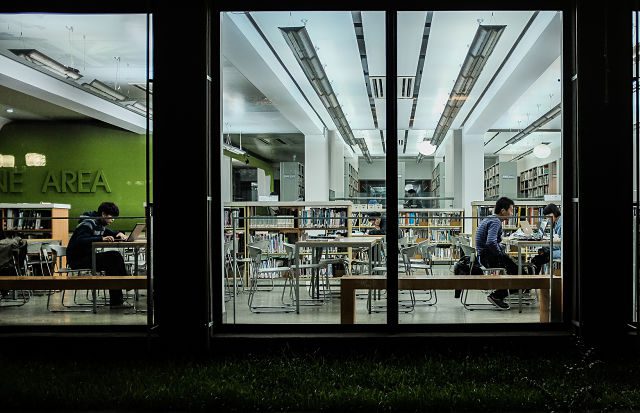
 In 2015, 72 countries participated in The Organization for Economic Cooperation and Development’s (OCED) triennial Programme for International Student Assessment. The test examines 15-year-olds’ aptitude in reading, math and science. Singapore, China, Japan, South Korea, Estonia, Canada and Switzerland are consistently among the top 10 performing countries in all subjects, with Singapore ranking number one across the board.
Science
- Singapore
- Japan
- Estonia
- Chinese Taipei
- Macao (China)
Reading
- Singapore
- Canada
- Ireland
- Estonia
- South Korea
Math
- Singapore
- China
- Japan
- South Korea
- Switzerland
What makes these countries different from low performing ones? Four notable components emerge from experts’ conversations about what makes education superpowers successful.
- Equality and a strong education policy
- High-quality instructors
- Parental involvement
- Objectivity
Equality and education policy
There is only a narrow socioeconomic discrepancy between schools in the top-ranked countries, proof of a remarkably consistent educational system. For example, Canadian students score high regardless of being an economically advantaged or disadvantaged student.
In Macao and Vietnam, students with unfavorable socioeconomic conditions still outperform advantaged students internationally on PISA exams, citing a successful and consistent educational framework as one of the reasons for this.
High-quality teachers
The support and training for teachers in education superpower countries is extensive. These countries tend to have high salaries and comprehensive policy frameworks that support teachers and reflect the importance of teacher quality and preparation.
In a three-year study, the Stanford Center for Opportunity Policy in Education’s leading researcher Linda Darling-Hammond found that countries that best prepare their students focus on two things: building an effective and long-term educational system and professionalizing the teaching career.
The qualifications and training process of becoming a teacher are denser, but systems are in place to make this a more affordable process. In Canada, teachers are paid salaries comparable to that of engineers and other societal professionals. Singaporean primary school teachers earn an average of S$51,000 annually.
Parental involvement
In a comparative study reading parents’ involvement in the learning process between American and Chinese students, Cecilia Sin-Sze Cheung and Eva Pomerantz found that parental involvement was positively associated with the child’s achievement in both countries, especially in the education superpower of China.
Andreas Schleicher, OECD’s education director, argues that Singapore’s success is in part due to the high priority that parents in Asian countries put on education. This ultimately contributes to their child’s educational success and achievements.
Education superpowers don’t buy into the myths
Contrary to popular belief, a high rate of immigrants does not necessarily contribute to a lower success average in schools. In Canada’s case, embracing immigrant students has contributed to the overall success of the Canadian educational system.
OCED acknowledges that counties with high immigrant student populations are not associated with poor student performance.
The cost of being an education superpower
The top-performing countries also rank high on the World Health Organization’s adolescent suicide rate chart. Hong Kong, Japan and South Korea all near the top of both lists. Countries such as Albania and Peru that are among PISA’s lower test performers have a higher proportion of students who enjoy school.
Though preparing students for a global economy and cultivating abilities to compete on a universal level is worth applauding, it may be at the cost of happiness. The most important things for education superpowers to work on are reducing the stress put on students and making their education enjoyable as well as enriching.
– Sloan Bousselaire
Photo: Flickr

Teachers Key to Improving Education in Samoa
Samoa became independent from New Zealand in 1962, which brought over 100 years of foreign dominance to an end. Internationally, Samoa is thought of as a tropical paradise where the inhabitants are welcoming of tourists, but there are still problems on the small island nation, one of which is education.
The major challenges for education in Samoa include the quality of education and access to early childhood education, according to a 2015 report filed by the government of Samoa. Early childhood education helps get children ready for primary school, but most teachers do not have the skills to fully prepare them. Another concern for early childhood education in Samoa is children’s performance in basic education. A number of children do not gain basic literacy and numeracy skills, which are important for them to further their education.
The quality of teaching poses a problem for early childhood education in Samoa as well. There are some challenges when it comes to qualifications and certifications, but the main problem is the competence of teachers and principals. Many early childhood education teachers are untrained.
Primary and secondary education in Samoa also has problems. Various schools do not achieve the minimum standards for the quality of learning in the classroom. Many primary school teachers do not have the proper training and support, and teachers seldom have the skills to identify and teach special needs students. Teachers often have a lack of commitment to the profession as well. For many teachers in Samoa, teaching is not their career of choice, and they often leave when the opportunity comes up. This makes keeping good teachers a challenge in both the primary and secondary levels. To improve the quality education in Samoa, high quality teachers must be retained.
Despite this, the graduation rate among high school seniors continues to be above 90 percent, according to the Samoa Observer. Between 2011 and 2014, the graduation rate was 98 percent, but it fell to 96 percent in the 2014-2015 academic year. The CIA reported that the literacy rate among adults was 99 percent, but the country ranks 48th in education spending.
Although education in Samoa has made significant progress, it still faces problems with quality. In order to improve on this, they must they must prepare children for further schooling in their early life. Public awareness of the importance of early childhood education must be raised as well.
For primary and secondary education, marketing for teachers must be more aggressive in order to attract teachers and keep them committed to the profession. Teachers should be encouraged to find creative ways to deliver a lesson in order to keep students engaged.
– Fernando Vazquez
Photo: Flickr
Facts About the Selk’nam Genocide
European settlers began to settle the main island in the 1880s. At the time, the Selk’nam tribe had between 3,000 and 4,000 members. In 1883, the government issued the first sheep ranching concession for the island and settlers began establishing sheep farms. With no concept of private property or ownership, the Selk’nam hunted the sheep.
Missionary Thomas Bridges urged the Selk’nam to respect the property rights of the ranchers. This request did not make sense to the group who held no concept of property. The Selk’nam felt entitled to hunt any animals within their territory and continued to hunt the sheep.
Settlers began to chase the Selk’nam off the lands they had claimed, but soon began an extermination campaign with the support of the Argentine and Chilean governments. In addition to hunting the Selk’nam, settlers also poisoned their food.
Large companies offered a reward of one pound sterling per Selk’nam dead. This was confirmed by a pair of hands, ears or a skull. Within 10-15 years, the number of Selk’nam was reduced to 500.
Some Selk’nam who were captured were sent to European “human zoos” to be displayed. Few survived the trip and fewer were returned to their homeland. Remaining Selk’nam were forced into reservations near established missions on the island. There, European diseases spread rapidly through the population.
Missionaries were allowed into the Selk’nam reservations to aid them and attempt to assimilate them, but the culture and people had been largely destroyed. The severe reduction in the population of the tribe caused by the Selk’nam genocide did not initially completely wipe out the tribe. The last full-blooded Selk’nam descendant died in 1974.
The U.N. Genocide Convention defines genocide as any of five acts committed with intent to destroy, in whole or in part, a national, ethnical, racial or religious group. The first of these acts is killing members of the group. With the express intent of the settlers being to kill the Selk’nam, resulting with the extinction of the entire tribe, the Genocide Convention accurately describes the Selk’nam genocide.
– Erik Beck
Photo: Flickr
Socioeconomic Conditions That Lead to Extremism
These factors strengthen the four drivers of radicalization that arise in developed countries: historic conflict, corruption, acceptance of human rights and the marginalization of groups.
Two major categories of socioeconomic conditions that lead to extremism include relative deprivation and general corruption. These ideas largely capture the four elements that are common among both developing and developed nations where radicalization is most common.
Relative Deprivation
Relative deprivation is the discrepancy between individuals’ expectations of justice and the state and an opposing reality and is a precursor to radicalization.
Kartika Bhatia and Hafez Ghanem argue that unemployment and underemployment can increase the likelihood of violent extremism, explaining the positive relationship between relative deprivation and radicalization. Furthermore, those with secondary educations who are unemployed or underemployed have the highest risk of becoming radicalized.
The Global Terrorism Index discloses that those who move to Syria to become an ISIL foreign fighter experience relative deprivation in that they typically have high educations but low incomes.
Corruption
According to the Global Terrorism Index, acts of terror between 1989 and 2014, “93 percent of all terrorist attacks occurred in countries with state-sponsored terror including extra-judicial deaths, torture and imprisonment without trial” versus only 0.5 percent of countries not experiencing political terror suffering from internal terrorist acts.
Poor socioeconomic conditions like widespread poverty can lead to political instability that reinforces antidemocratic values and the disenfranchisement of citizens. This reciprocal relationship between poor socioeconomic circumstances and corruption negatively influence one another, both factors swelling each other’s occurrence.
The report also notes that “when group grievances against the state are high, and the opportunity cost of joining a rebellion is low, groups are most likely to form”.
Today and the Future
Despite it all, there is good news. In 2016, the number of terrorist attacks and deaths from the attacks have both declined by 10 percent.
A decrease in the number of instances is significant and certainly good news. But getting to the root of what is causing radicalization is the best strategy to ameliorate the socioeconomic conditions that lead to extremism in general.
The creation of anti-corruption measures is being enforced globally. The United Nations Convention Against Corruption recognizes the destructive effects that corruption has on citizens. Postulating corruption as a global issue, the convention proposes a set of regulations that fights to eliminate corruption both before and after it occurs.
Matthew Murray, former U.S. Deputy Assistant Secretary of Commerce for Europe, the Middle East and Africa, takes the position that freedom from official corruption is a human right and international law should reflect that.
The legal advocacy of recognizing corruption as a crime against human rights is a fundamental step toward global initiatives that will combat corruption preying on vulnerable nations.
– Sloan Bousselaire
Photo: Flickr
Three Underrated Global Health Organizations
There are also organizations around the world who have done a lot for the health community that are not talked about as much. Here are some organizations that have made differences in local and global communities also and deserve to be recognized:
1. Pakistan Children Heart Foundation (PCHF)
The PCHF is an organization that focuses on providing heart surgeries to children born with congenital heart defect. Every year, approximately 50,000 infants are born with congenital heart defect in Pakistan. Because of a lack of a specialized children’s heart hospitals in Pakistan, PCHF works to build a research clinic as well as establish funds for children in need. Thus far, PCHF has provided 819 surgeries.
2. HealthRight Foundation
HealthRight is an organization whose goal is to provide healthcare to marginalized communities because, as their slogan states, “Health is a Human Right.” HealthRight uses global resources and works with local partners to address local health needs. HealthRight works with women and children, migrants and at-risk youth. All of these people face health discrimination, whether it involves lack of access to healthcare or lack of means to access healthcare. HealthRight works to provide healthcare for these underrepresented groups.
3. Population Services International (PSI)
PSI is an organization that focuses on promoting healthy behavior and making healthcare products more affordable. PSI originated in 1970, with a focus on reproductive health. Since then, it has expanded to helping over 50 countries with solutions to malaria, HIV, family planning, sanitation, pneumonia and diarrhea. PSI works with local governments and organizations in order to make health solutions. PSI also uses marketing strategies and analysis to keep health products affordable.
Helping impoverished people around the world have better access to healthcare is not a feat that should be ignored. These three global health organizations have made and continue to make positive changes in the world and provide hope for the future of healthcare around the globe.
– Rebekah Covey
Photo: Flickr
Young Business Leaders in Tanzania Development
Sub-Saharan Africa has a lot of countries that are facing ‘youth bulge’ because of high fertility rates. In Tanzania alone, over 73 percent of the population is under the age of 30. With the help of USAID’s Consortium for Elections and Political Process Strengthening and their partner, The International Republican Institute, Abella was able to create the Tanzania Bora Institute.
Bateyunga, a Governance Officer at the BBC Media Action in Tanzania, has been working with nonprofit organizations for over nine years. She also completed the Washington Fellowship for Young African Leaders for Civic Leadership in 2014. Bateyunga, a former lawyer and radio reporter, used her skill sets to develop ways to engage the Tanzanian youth in the driven strategies for employment and as a way to give youth their own voice.
Bateyunga is known for combining education and entertainment to encourage Tanzania’s youth to engage in their communities’ social, economic and political advancements. She encourages young leaders in Tanzania to realize their potential and ability to make a change where they feel it is needed. Abella continues to work on civic education programs in Tanzania today.
Two years after the creation of the Tanzania Bora Initiative, the positive changes can be seen not only in the Tanzanian media but in society as a whole. One of the projects implemented was Data Zetu, a way to make information meaningful and accessible for citizens and prompt them to take action in their communities. The young people of Tanzania gather data from the local government on certain services, analyze it and then determine ways in which it may improve.
The projects implemented by Bateyunga demonstrate the ability of young business leaders in Tanzania to create a positive impact in society and development.
– Chloe Turner
Photo: Flickr
10 Facts About the Porrajmos Genocide
Who are the Roma?
The Roma, known widely as the pejorative “Gypsy,” are a traditionally nomadic people who migrated to Europe from Northern India between the eighth and tenth centuries C.E. In the thousand years since that migration. they have lived and worked all over Europe as one of the most oppressed ethnic groups in the history of the region.
The reasons for the massive prejudices held against the Roma people range from a European perception of the people as unclean, thieving and socially different, to the extent that they were believed to be Egyptian migrants (as the etymology of the term “Gypsy” suggests). The unifying factor of these prejudices is quite simple: they are untrue. Nevertheless, it was the hate bred by these misconceptions that led to the Nazi genocide campaign, resulting in the murder of an estimated 220,000 people, or 25 percent of all European Roma.
In the interest of rectifying their unequal representation in the history of World War II, what follows is a list of facts about the Porrajmos genocide, and the “forgotten people” who were its victims.
The Facts
This list, though nauseating, demonstrates the brutal nature of Roma internment during the war, and brings to light some compelling questions, such as “why has history forgotten them?” and “where are they now?”. The answers to these questions are intimately tied to the prewar European prejudices mentioned above. While the result of the Jewish Holocaust was an opening of the conversation, that of the Roma effectively intensified their dissociation from European identity.
Now, 72 years and a Porrajmos genocide later, Europe has yet to open a healing dialogue about the Roma’s place in European society or offer any concrete policy changes to help the transition of Roma communities out of shantytowns and into proper housing. As a result, unemployment, discrimination, lack of education and racist violence against the Roma have become a devastating norm for Europe’s oldest ethnic minority.
-Katarina Schrag
Photo: Google
10 Facts About Isaaq Genocide
Almost 27 years after the Isaaq genocide event, Somalia still faces a violent crisis between different political and religious groups. Organizations like the United Nations are trying to stop the violence in the country and provide security to its citizens.
– Dario Ledesma
Photo: Google
Education Superpowers and What We Can Learn from Them
Science
Reading
Math
What makes these countries different from low performing ones? Four notable components emerge from experts’ conversations about what makes education superpowers successful.
Equality and education policy
There is only a narrow socioeconomic discrepancy between schools in the top-ranked countries, proof of a remarkably consistent educational system. For example, Canadian students score high regardless of being an economically advantaged or disadvantaged student.
In Macao and Vietnam, students with unfavorable socioeconomic conditions still outperform advantaged students internationally on PISA exams, citing a successful and consistent educational framework as one of the reasons for this.
High-quality teachers
The support and training for teachers in education superpower countries is extensive. These countries tend to have high salaries and comprehensive policy frameworks that support teachers and reflect the importance of teacher quality and preparation.
In a three-year study, the Stanford Center for Opportunity Policy in Education’s leading researcher Linda Darling-Hammond found that countries that best prepare their students focus on two things: building an effective and long-term educational system and professionalizing the teaching career.
The qualifications and training process of becoming a teacher are denser, but systems are in place to make this a more affordable process. In Canada, teachers are paid salaries comparable to that of engineers and other societal professionals. Singaporean primary school teachers earn an average of S$51,000 annually.
Parental involvement
In a comparative study reading parents’ involvement in the learning process between American and Chinese students, Cecilia Sin-Sze Cheung and Eva Pomerantz found that parental involvement was positively associated with the child’s achievement in both countries, especially in the education superpower of China.
Andreas Schleicher, OECD’s education director, argues that Singapore’s success is in part due to the high priority that parents in Asian countries put on education. This ultimately contributes to their child’s educational success and achievements.
Education superpowers don’t buy into the myths
Contrary to popular belief, a high rate of immigrants does not necessarily contribute to a lower success average in schools. In Canada’s case, embracing immigrant students has contributed to the overall success of the Canadian educational system.
OCED acknowledges that counties with high immigrant student populations are not associated with poor student performance.
The cost of being an education superpower
The top-performing countries also rank high on the World Health Organization’s adolescent suicide rate chart. Hong Kong, Japan and South Korea all near the top of both lists. Countries such as Albania and Peru that are among PISA’s lower test performers have a higher proportion of students who enjoy school.
Though preparing students for a global economy and cultivating abilities to compete on a universal level is worth applauding, it may be at the cost of happiness. The most important things for education superpowers to work on are reducing the stress put on students and making their education enjoyable as well as enriching.
– Sloan Bousselaire
Photo: Flickr
Education in Comoros: Focus on Improving Literacy
Comoros has had a history of political violence since its independence in 1973. Since then, it has been highly dependent on foreign aid. The country continues to work with the GPE and UNICEF to increase access to primary education in Comoros so that students can take advantage of this resource.
– Melanie Snyder
Photo: Flickr
Education in Cabo Verde Successes: Enrollment
Cabo Verde is a small nation that consists of a group of islands just under 400 miles off Africa’s northeast coast. Nine of the 10 islands are inhabited and they are divided into two groups. The Barlavento group in the north includes the islands of Santo Antão, São Vicente, Santa Luzia, São Nicolau, Sal and Boa Vista. The Sotavento group in the south includes the islands of Maio, Santiago, Fogo and Brava.
According to a 2014 report by the World Bank, 3 percent of primary school aged children were not enrolled in school. Girls were less likely to receive an education in Cabo Verde; only 1 percent of primary school aged boys were not in school compared to 4 percent of girls. The rate of completion of primary education in Cabo Verde is 99 percent, which shows that the small nation is making progress towards its goal of universal primary education.
Compared to other low to middle-income nations, access to education in Cabo Verde ranked among the 85th percentile, but it only ranked at the 61st percentile in learning. Despite this, the literacy rate of the youth population was 98 percent, which was higher than the average in other lower to middle-income nations. This is good news for education in Cabo Verde, because literacy is a necessary skill for accessing higher levels of education.
Although Cabo Verde has made great strides in access to education, there are still some obstacles to overcome. One problem for education in Cabo Verde is that many students and teachers alike speak Creole at home and have a weak command of Portuguese, which is the language used in the academic setting. Aside from that, there is not enough spending on supplies, books and lunches, and there is also a high rate of repetition. Students are more likely to repeat grade two during their primary education. The rate of repetition in grade two was 18 percent in Cabo Verde, which was double the average of other primary grades.
Cabo Verde‘s high enrollment and literacy rates show that education is a priority in the country. By addressing its students’ obstacles to learning, it can ensure that they get the most out of the education they are receiving.
– Fernando Vazquez
Photo: Google