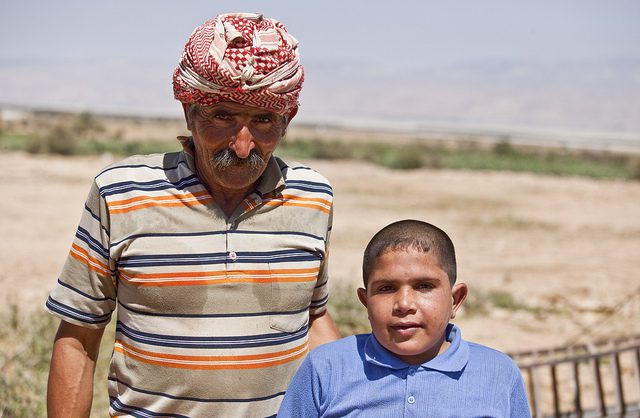
 Jordan’s economy is projected to grow within the next year. Despite regional instability in Africa and the Middle East, five development projects in Jordan work toward the common goal of improving socio-economic conditions for its citizens.
City-to-City Exchange
In 2015, the US Agency for International Development conducted a city-to-city exchange program between Pocatello, Idaho and Hooksett, New Hampshire and three cities in Jordan: Al-Shou’la, Muath bin Jabal and Tabaquet Fahel. The program began in March of 2015 with the objective to advise the local Jordanian government on economic development ideas and approaches.
US representatives acting as advisors collaborated on plans for a local farmers market in Al-Shou’la, municipal development in Muath bin Jabal and the development of a refrigeration system in Tabaquet Fahel. These projects were devised to stimulate the economy and benefit local farmers and producers. The city-to-city program hopes to help in areas of infrastructure, education and the deliverance of basic needs to Jordanians.
Al-Manar Project
The Al-Manar Project is a free national human resource development center that works to advance the career prospects of Jordanians. This is accomplished by offering human resource information that may support Jordanian advancement in the career field. Gender and social inclusiveness are the main concerns for the project.
Al-Manar provides career counseling, online career development, access to human resource information and guidance for university students and professionals alike. Career Development Coordinator Dr. Khaled AlQudah is currently working on improving support in schools. Distribution of information is accomplished via physical locations and updated online databases accessible by anyone.
The Rural Economic Growth and Employment Project
The Rural Economic Growth and Employment project was developed in 2015 to involve small-scale local farmers and reinforce the agricultural sector to benefit the country collectively. Designed to reduce unemployment among the youth, the six-year-long project includes loan extensions to farmers and the promotion of their produce. This may include ISO safety and quality certifications.
Renewable Energy
Steady economic growth is succeeding in Jordan, says a 2017 report from the International Institute for Applied Systems Analysis. Accordingly, the growth is positively correlated with the use of fossil fuel consumption. Fossil fuels currently act as Jordan’s main electrical supply.
The government has set out to replace at least 10 percent of nonrenewable resources with renewable energies by 2020. Nuclear energy, wind and solar energies are among those in contention to comprise the 10 percent goal. Governmentally sanctioned development projects in Jordan are in the planning and implementation phases of working toward this goal, the report says.
Jordan’s Vision 2025
Jordan’s vision for 2025 is a holistic approach that includes the development of nine economic pockets throughout the kingdom. These include support for local businesses and entrepreneurship. E-commerce and gaming were among some of the prospects tied up in this vision’s plan.
Under the same program, Jordan’s foreign trade policy is designed to supplement local businesses by improving market access to Jordanian exports like clothing, pharmaceuticals and produce. The side-effects of empowering local businesses such as Jordan’s Classic Fashion Apparel Industry Co. Ltd. include an emphasis on employee satisfaction and social responsibility.
According to the 2016 World Bank’s Economic Outlook Report for Jordan, these five development projects in Jordan are contributing to its improved future. With all the kingdom’s recent success, the pursuit of economic and social victories are sure to continue.
– Sloan Bousselaire
Photo: Flickr

Why Vietnam Loves the US
In the 2016 U.S. presidential election, both Hillary Clinton and Donald Trump opposed the Trans-Pacific Partnership, a trade agreement that would lower tariff barriers on trade. The United States withdrew from the negotiations. But Vietnam remained in, as 89 percent of Vietnamese were supportive of the TPP, according to a Pew survey. And, as predicted by economists Michael Plummer and Peter Petri, the nations involved in the TPP could gain $147 billion in income by 2030.
Vietnam’s support for free trade draws from its history. In addition to the 20th-century war, the U.S. trade embargo on Vietnam added to the country’s economic woes. The Asian country enriched itself once market opportunities opened up. Growing tourism on Vietnam’s beaches also gave the country the money required for a sustainable recovery.
Tran Thuc Huyen, a master’s candidate currently residing in Washington, commented on how economics, more than goodwill, explains why Vietnam loves the U.S. “What we’ve seen is the U.S. efforts to make war reparations here in Vietnam, like offering education scholarships as part of its soft-power diplomacy,” he said.
Despite Vietnam’s status as a poorer country, it ranks fifth among nations sending their students to American institutions. In addition, it grades in the top 10 among foreign buyers of residential properties in the U.S. These economic interests travel both ways. Forbes Magazine and the World Bank consider Vietnam an investment haven for entrepreneurs. Vietnam looks to American infrastructure investments as an alternative to their inefficient government-run programs.
In 2014, Llewellyn King of the Huffington Post toured Vietnam and interviewed its people. The Vietnamese had little interest in talking about the war. “They wanted to know three things,” said King, “…how could they get American goods, how could they sell their goods in the U.S. market, and what was the United States going to do about China?” Vietnam loves the U.S. because it wants to enrich its people, with the same methods America used, to become an economic superpower.
– Nick Edinger
Photo: Flickr
Financial Inclusion a Key Part of Credit Access in India
PMJDY and Financial Inclusion
Though financial inclusion has become a recent focus for policymakers, 40 percent of people still lack access to basic financial services. Financial inclusion is the basis of perpetual economic growth. “Without financial inclusion, we cannot think of economic development because a large chunk of the total population remains outside the growth process,” said Dr. Harpreet Kaur and Kawal Nain Singh of Punjabi University and The Rayat Institute of Management.
Many low-income individuals have relied on informal, and sometimes devastating, options to borrow money or gain credit access in India. In response to this, formal options such as Pradhan Mantri Jan Dhan Yojana (PMJDY), a mega financial inclusion plan, was designed. PMJDY aims to ameliorate poverty and fast track financial growth. The program targets those from remote areas and promotes financial literacy, universal access to banking services and insurance. This is all to “commence the next revolution of growth and prosperity,” the plan explains.
Unfortunate Faults
More than a few studies have reported the same findings as Dr. Joy Deshmukh-Ranadive of the Human Development Resource Centre in New Delhi. In the doctor’s report on rural micro-finance in India, she explains that “the track record of these formal sources has not been positive. Micro-finance…circumvents the drawbacks of both formal and informal systems of credit delivery.” These downsides include exploitative interest rates and fortifying systems of oppression.
Entrepreneurship in Rural India
The micro, small and medium enterprise sector (MSME) account for 37 percent of India’s GDP, and more than 40 percent of the country’s total exports, according to the World Bank. Despite this, MSMEs have been limited by inadequate access to financial services.
Fortunately, the International Finance Corporation devised a program called India Collateral. The program is modeled after a similar program that has had success in China. The project hopes to revise the discrepancy by opening access to banking services for more MSMEs by increasing lenders’ confidence.
While there are programs formulated to improve access to credit in India, there remains a gender bias. Though loan rejection and approval are issued at an equal rate to both men and women, women tend to seek financial services less often. Higher gender bias countries like India see more women deferring from the loan process, according to a report by the European Central Bank.
It is an interesting paradox: those who have money are those who typically qualify to borrow it. The necessary condition for credit access is already established finances. Those who stand to benefit the most from borrowed money are those who do not have it. Steps toward financial inclusion in India are governed by this idea. Many programs continue to amend credit access in India, develop the informal credit market and lower interest rates in the hopes of developing the country’s economy from the bottom up.
– Sloan Bousselaire
Photo: Flickr
How Safe Spaces Help Children In Extreme Poverty
“Safe spaces” are places or environments in which people can feel confident that they will not be exposed to discrimination, criticism, harassment or any other emotional or physical harm. Often, safe spaces are discussed with respect to American colleges. However, psychological aid and safe spaces help children in developing countries as much as food and water. Here are therapeutic success stories from around the globe.
Bangladesh
The South Asian country became host to hundreds of thousands of child refugees from Rohingya. In addition to basic survival needs, UNICEF has provided Bangladesh’s children with facilities for psychological therapy. Trained therapists have become just as vital as Art Corners in providing refugee kids a childhood. “I try to heal them by talking about their drawings,” said counselor Mosammat Mili Akhter in an interview with Al Jazeera.
In the UNICEF guide to developing Child-Friendly Spaces (CFS), the organization highlights the importance of providing toys and art supplies. After a disaster, reasons UNICEF, children lack social settings and avenues for play, which are essential for developing resilience and dignity.
Nepal
Children can be just as devastated by material loss as adults. When a magnitude 7.8 earthquake struck Nepal in 2015, many families lost everything. World Vision set up CFS centers to give kids an escape from local chaos. Volunteers led children in drawing, coloring, singing and puzzle solving.
Young victims in an emergency, according to UNICEF, lose their routines and social protection networks in addition to their possessions. Emergencies affect children’s cognitive and emotional development. These safe spaces help children overcome trauma and become self-sufficient later in life.
Arpanah Rongong, the child protection specialist working for World Vision, defended devoting resources to entertaining children instead of just feeding them. “It’s important for the children to get back to a schedule, and to have something they can enjoy that they know is going to happen at a certain time each day,” said Rongong.
Uganda
The safe center set up by the Christian Children’s Fund in Northern Uganda not only gives children a place to play, but it also teaches children about basic hygiene and nutrition. A comparative study of two camps, one with a safe center and one without, proved that safe spaces help children in extreme poverty. According to UNICEF, “children who had participated in the CFS seemed more prepared to return to school and less violent with other children.”
UNICEF adds that the Uganda CFS center was designed to support adolescents aged seven to 13, though it was soon adapted to help younger children. This discovery suggests that therapy is a useful tool for trauma survivors of any age. These safe spaces help children with the power to match the most generous charity donation.
– Nick Edinger
Photo: Flickr
Infrastructure in the Maldives: Connecting Locals and the World
The Maldives is a tourist destination that ranks highly in visitor satisfaction, but it is also home to 436,000 people. The government must balance its priorities of ensuring the longevity of its islands and people, while also bolstering tourism, the country’s main industry.
With tourism and finances in mind, the expansion of its international airport is a logical next step.
Adil Moosa, Managing Director of Maldives Airports Company Limited, said: “With the increasing flow of visitors to the Maldives, it was becoming a strain to maintain efficiency and deliver quality experiences due to numerous manual processes.”
These changes come after years of growth that anchored tourism as the Maldives’ main economic contributor. The airport serves close to 2.6 million passengers annually.
In order to ensure that the Maldivian people maintain their land above sea level, upholding the tourism industry is necessary for financial reasons.
The Maldives consists of 26 coral atolls and has a high point of less than eight feet above sea level. It has the lowest average elevation in the world. This puts the islands in serious danger of being submerged under rising seas.
To address this problem head-on, the country has invested in infrastructure in the Maldives, beginning with the construction of man-made islands. Hulhulmalé is one such island, situated near the capital city of Malé and the Velana Airport. Built by pumping sand from surrounding atolls, it is being fortified with walls 3 meters above sea level. The project is should be completed by 2023 and it will be able to accommodate about 130,000 people. Eight such islands have already been built and three more are planned.
Shiham Adam, Director of the Maldives Marine Research Center, believes reclaiming islands in this manner is the solution to the issue brought up by climate change. The people of the Maldives must have land to live on and jobs to work.
In the near future, the China-Maldives friendship bridge will connect Hulhulmalé, Hululé and the capital of Malé. The project budget is $300 million: $100 million has been provided in free-aid from China and a further $170 million was loaned by China with an interest rate of two percent. The Maldivian government is spending $30 million on the project.
The bridge will span from the eastern edge of Malé to the western corner of Hulhulé where the international airport is located.
A lack of bridges has been an issue in the development of infrastructure in the Maldives for years. Local residents have had to make do by traveling between islands via ferry.
– Sam Bramlett
Photo: Flickr
Women’s Empowerment in Guatemala
CNN reported in 2012 that gender-based violence is highly prevalent in Guatemala and the country ranked third in femicide worldwide. There are two women killed each day in the small country making women’s empowerment in Guatemala an important issue.
During Guatemala’s civil war there was a great deal of violence committed against women. This left a legacy of violence that still plagues the country today. The military and paramilitary personnel that committed these crimes with impunity were integrated back into society. Many of these men remain in positions of power and have not changed their thoughts about women, because of this women’s empowerment in Guatemala is an issue that must be discussed.
Just over 20 years after the end of the civil war violent crime is higher than it was during the conflict. Although the homicide rate is high, the UN estimates that only two percent of cases go to court. Women are especially prone to violence because of gender bias. Many women are brutally killed because of their gender. The methods used include rape, torture and mutilation which were also common during the civil war. This culture of gender-based violence makes women’s empowerment in Guatemala difficult to accomplish.
Drug cartels from Mexico and other criminal groups help contribute to the excessive violence that plagues Guatemala which leaves fewer recourses for authorities to investigate femicides. Many cases go unreported because women fear retaliation which further hampers women’s empowerment in Guatemala.
The Central American nation is deeply rooted in machismo culture which is one of the greatest obstacles for women’s empowerment in Guatemala. Around 80 percent of men believe that women need permission to leave their home and 70 percent of women believe the same. Ideas like this make life difficult for women in Guatemala.
Despite the problems women face in Guatemala, there are signs of progress. According to PCI Global, the Asociación para el Desarollo Sostenible de la Juventud (ADESJU) was created by a group of young Guatemalans in 2004. In 2014, ADESJU began to apply the Women Empowered Initiative (WE) with the help of PCI. This has helped around 2000 women become economically and politically empowered. ADESJU has organized 94 WE groups with 1839 participants. WE wants to encourage women to become economically independent and active members of their communities. Women’s empowerment in Guatemala faces many obstacles but organizations like these are doing what they can to advance it.
– Fernando Vazquez
Photo: Flickr
Infrastructure in Equatorial Guinea
Equatorial Guinea is one of the largest oil producers in Africa, producing 186,000 barrels of oil per day and ranking 37 out of 98 countries in crude oil production.
Equatorial Guinea’s economy significantly improved after it struck oil in the mid-1990s; its gross domestic product skyrocketed from .254 to 8.663 within eight years. Despite the country’s inherent wealth, over 70 percent of its population lives below the national poverty lines.
The majority of oil money is spent on infrastructure in Equatorial Guinea, leaving little to no funds for health and education. According to the World Bank, Equatorial Guinea spends $80 out of every $100 in its budget on infrastructure and two to three dollars on health and education.
Infrastructure in Equatorial Guinea appears to be a driving force in the country’s political corruption. Human Rights Watch documented the ruling elite’s misdirected spending in a June 2017 report. The elite primarily benefits from the country’s oil wealth by owning stakes in companies that are awarded grossly inflated public infrastructure contracts.
A Parisian court convicted President Teodoro Obiang Nguema Mbasogo’s son Teodoro Nguema Obiang Mangue, who is also Equatorial Guinea’s vice president, of embezzling millions of euros from his government and laundering it in France. The court seized his assets in France, valued at more than $100 million, in late 2017.
In 2012, the US Department of Justice calculated that Mangue— with an annual salary of less than $100,000 USD— spent $315 million USD between 2004 and 2011. Mangue purchased luxury goods, cars and properties with the $315 million USD— nearly a third more than the Equatoguinean government’s annual spending on health and education combined in 2011.
Mangue exemplifies Equatorial Guinea’s political corruption and its misdirected spending of oil money, but his conviction demonstrates the power of law and accountability. Although infrastructure in Equatorial Guinea remains corrupted, Mangue’s conviction may initiate further investigations into the country’s budget.
– Carolyn Gibson
Photo: Flickr
Improvements to Infrastructure in Chad Countering Extremism
Infrastructure encompasses many things, including roads, electricity and water systems. The infrastructure in Chad has been lacking, which affects its citizens’ daily lives. However, many groups are lending a helping hand to Chad so the lives of its citizens can improve.
Problems with infrastructure in Chad can be attributed to the civil war and poor management by the central government. The decades-long civil war damaged many of the country’s roads, and the remaining roads are made of dirt and are often at risk of eroding. The distributors of power and water are often corrupt and demand an excessive amount of money for their services. Although water and electricity are available in the capital, they are expensive and not available to most of the population in rural Chad.
Due to its many problems, the quality of infrastructure in Chad is ranked 143rd out of 148 countries in the world.
One of the most important things that good infrastructure helps with is the maintenance of water. A strong water infrastructure means that people do not have to wonder whether or not their drinking water is contaminated. Unfortunately, Chadians must worry if their water is safe to drink. People in rural Chad have to rely on traditional water wells as their main water resource. Unfortunately, these wells are susceptible to surface contamination. Bacteria and disease can propagate in the wells.
Although Chad is having problems with its infrastructure, there are people who are willing to help. Spirit of America is a group of American troops who help people in impoverished nations improve their lives. These troops have gone to Chad and built water pumps in key towns and cities. Prior to the troops arriving, these towns and cities did not have any running water.
The immediate effect of building water pumps is a safe water source for the town. If a town has a clean and safe water source, its quality of life will improve and the occurrence of disease will decrease.
Another effect of building water pumps is that they function as a means of counterterrorism. Extremist groups often use the lack of water as a rallying call for people to join their cause. Once there is a proper water system available to people, the extremists have less backing for their cause and will not be able to recruit as many people.
Chad has had troubles with regard to infrastructure, but things are beginning to improve. With the assistance of groups such as Spirit of America, improvements in Chad’s infrastructure can have a positive impact on its citizens.
– Daniel Borjas
Photo: Flickr
Credit Access in Turkey
So, how does the current picture look regarding credit access in Turkey?
Turkey boasts the second-largest banking system in Emerging Europe, after Russia. The term “Emerging Europe” refers to poorer economies in central, eastern and southeastern Europe. Think Serbia and Albania, not Germany or France.
The Turkish system is highly liquid and well-capitalized, granting it great flexibility to lend financing to investors looking to develop the region. There are many viable options for those looking to get a loan in Turkey.
Turkey’s system supports three types of banks: standard deposit banks, development and investment banks and participation banks. Any of these may grant loans in the form of cash, non-cash or interest-free (i.e., participation) loans in local or foreign currency. Leasing and factoring companies are also an option and several international development banks also provide funding. The European Investment Bank (EIB) and the International Finance Corporation (IFC) are two such entities.
In 2016, the World Bank reported that Turkish bank account, debit card and credit card ownership were at an impressively high level, which tends to indicate access to finance. As of then, the country had also recently increased its rate of savings, which bodes well for future credit access. However, the data show that women continue to have less access to credit than men, despite progress being made.
Just this past September, Reuters reported that Turkish President Tayyip Erdogan called for banks to open credit access in Turkey for investors and to lower their interest rates. Erdogan strongly opposes high-interest rates and wants to pressure the banks—especially state banks—to makes this change.
According to Hürriyet Daily News, this comes after Deputy Prime Minister Mehmet Șimșek announced earlier this year the creation of a new Credit Guarantee Fund that allows crafts and tradespeople easier access to financing. Bloomberg reports that policymakers don’t intend to expand that fund despite the growth it has already sparked. Time will tell whether that is a good move.
Hopefully, the overall increase in lending power will spur even more investment and growth in Turkey and serve as an example to other nations struggling with high levels of poverty.
– Chuck Hasenauer
Photo: Flickr
Safer Childbirth in South Sudan
The number one cause of death for women in South Sudan is complications from pregnancy and childbirth. This is detrimental to the child’s health as they grow up without a mother, and the complications can cause problems for the child and their health as well. The country as a whole ranks fifth in the world for maternal mortality rates.
One common complication of childbirth in South Sudan is postpartum hemorrhaging. This is a dangerous amount of blood loss from persistent bleeding after giving birth. This can cause death for both the child and the mother. Most midwives and care providers in South Sudan do not have the training to treat complications like these. Currently, a well-trained healthcare worker delivers only about one in five births.
Maternal complications in South Sudan needed to be addressed, and UNICEF, along with its partners, has acted on the matter by providing the country’s medical facilities with maternal medical kits. The kit is said to help childbirth in South Sudan become safe for both mother and baby.
So far, 3,000 maternal medical kits have been sent to health facilities in the northern region of the country. The kits are provided by UNICEF Germany and have critical items to help midwives properly treat pregnant women, including folic acid, anti-malarial drugs and oxytocin. The expectant mothers also receive a kit that includes soap, baby clothes, blankets and a plastic sheet.
The kits are a crucial necessity for women in South Sudan, as a very small percentage of pregnant women in the nation have access to proper healthcare and labor and delivery services. Most of the midwives and neonatal care providers in the country lack the proper training for high-risk pregnancies and are not able to perform simple procedures that can save the mother’s life during delivery. There is also a shortage of essential medicines and supplies, which the kits are alleviating. By addressing these needs, the maternal mortality rate can be greatly reduced and ensure better outcomes for mothers and infants in South Sudan.
– Chloe Turner
Photo: Flickr
Five Development Projects in Jordan
City-to-City Exchange
In 2015, the US Agency for International Development conducted a city-to-city exchange program between Pocatello, Idaho and Hooksett, New Hampshire and three cities in Jordan: Al-Shou’la, Muath bin Jabal and Tabaquet Fahel. The program began in March of 2015 with the objective to advise the local Jordanian government on economic development ideas and approaches.
US representatives acting as advisors collaborated on plans for a local farmers market in Al-Shou’la, municipal development in Muath bin Jabal and the development of a refrigeration system in Tabaquet Fahel. These projects were devised to stimulate the economy and benefit local farmers and producers. The city-to-city program hopes to help in areas of infrastructure, education and the deliverance of basic needs to Jordanians.
Al-Manar Project
The Al-Manar Project is a free national human resource development center that works to advance the career prospects of Jordanians. This is accomplished by offering human resource information that may support Jordanian advancement in the career field. Gender and social inclusiveness are the main concerns for the project.
Al-Manar provides career counseling, online career development, access to human resource information and guidance for university students and professionals alike. Career Development Coordinator Dr. Khaled AlQudah is currently working on improving support in schools. Distribution of information is accomplished via physical locations and updated online databases accessible by anyone.
The Rural Economic Growth and Employment Project
The Rural Economic Growth and Employment project was developed in 2015 to involve small-scale local farmers and reinforce the agricultural sector to benefit the country collectively. Designed to reduce unemployment among the youth, the six-year-long project includes loan extensions to farmers and the promotion of their produce. This may include ISO safety and quality certifications.
Renewable Energy
Steady economic growth is succeeding in Jordan, says a 2017 report from the International Institute for Applied Systems Analysis. Accordingly, the growth is positively correlated with the use of fossil fuel consumption. Fossil fuels currently act as Jordan’s main electrical supply.
The government has set out to replace at least 10 percent of nonrenewable resources with renewable energies by 2020. Nuclear energy, wind and solar energies are among those in contention to comprise the 10 percent goal. Governmentally sanctioned development projects in Jordan are in the planning and implementation phases of working toward this goal, the report says.
Jordan’s Vision 2025
Jordan’s vision for 2025 is a holistic approach that includes the development of nine economic pockets throughout the kingdom. These include support for local businesses and entrepreneurship. E-commerce and gaming were among some of the prospects tied up in this vision’s plan.
Under the same program, Jordan’s foreign trade policy is designed to supplement local businesses by improving market access to Jordanian exports like clothing, pharmaceuticals and produce. The side-effects of empowering local businesses such as Jordan’s Classic Fashion Apparel Industry Co. Ltd. include an emphasis on employee satisfaction and social responsibility.
According to the 2016 World Bank’s Economic Outlook Report for Jordan, these five development projects in Jordan are contributing to its improved future. With all the kingdom’s recent success, the pursuit of economic and social victories are sure to continue.
– Sloan Bousselaire
Photo: Flickr