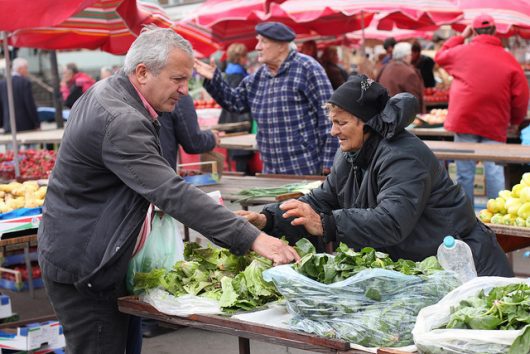
Fewer than 30 years ago, Croatia gained its independence from Yugoslavia, and now this newly independent country is working to find its place in the world economy. With assistance from the United States, not only can Croatia solidify a position, but also the U.S. benefits from foreign aid to Croatia.
The United States’ Foreign Assistance
The United States currently spends approximately $3.4 million on foreign aid to Croatia, with the largest expense being $1.1 million going to military training, $1 million on foreign military financing, $850,000 on mine and explosive remnants of war, $274,000 on counterproliferation programs and $60,000 on humanitarian and civic assistance. This aid not only benefits Croatia but brings many benefits to the United States, including:
- Alliance in international organizations
- Opportunity for new markets for the U.S.
- Foreign aid to Croatia keeps the U.S. safe
International organizations such as the North American Treaty Organization (NATO), and the European Union (EU) are key institutions in coordinating foreign policy to create diplomatic relations and tie nations together.
Foreign Policy Gains
The United States actively supported Croatia’s induction to NATO in 2009, and Croatia’s inclusion to the EU in 2013. According to the U.S. Department of State, Croatia, as a part of these institutions, has taken part in peacekeeping missions in neighboring countries — a priority that aligns with the U.S.
Interestingly, it is also the sector where $3.3 million of foreign aid to Croatia is spent. The U.S. further benefits from this relationship because it gains an ally that can help implement foreign policy, be an outlet for new trade partners or target worldwide policy goals such as global warming.
Economic Benefits
The U.S.-Croatia relationship also opens new markets for U.S. This is arguably the most prominent benefit to the U.S. One of the goals that the U.S. supported upon Croatia’s independence was developing a market-oriented economy.
This support has so far held true and consistent. U.S. aid to Croatia has helped enable the country in becoming a leading partner is southeast Europe. With Croatia’s induction to the EU, the United States has gained another market opportunity for many overseas industries.
Additionally, the United States has been identified as a potential energy partner, which is particularly important given the current energy crisis in Europe.
Nonprofit Organizations and Global Allies
Foreign aid to Croatia comes not only through official government channels, but also through nonprofit organizations. For example, SOS Children’s Villages International sends humanitarian aid to Croatia from the U.S., with the goal of alleviating poverty and helping children and families flourish in the newly independent country.
This benefits the United States as the aid brings individuals in Croatia out of poverty and into educational outlets and the economy, enhancing economic opportunity for the United States.
Many of the top trading partners with the United States were once, or still are, foreign aid recipients, including China, Mexico and Brazil. While these nations receive less aid now, they still receive U.S. foreign aid and simultaneously act as great trading partners for the United States.
Interestingly, Croatia poses the same opportunity. As the nation develops its economy in a post-war era, there is opportunity for new trade opportunities for the U.S.; such a possibility highlights how the U.S. benefits from foreign aid to Croatia.
But, U.S. benefits from foreign aid to Croatia don’t end there. All of these factors — foreign aid, these relationships and numerous economic opportunities — all work together to keep America safe. Economic opportunity, increased government accountability and lessened poverty help create a more stable nation, and pose a lesser risk to both involved nations.
How the U.S. Benefits from Foreign Aid to Croatia
Foreign aid creates diplomatic ties with other nations such as Croatia, and together can work to stop the spread of disease, terrorism and poverty, all of which pose threats to national security.
In one of The Borgen Project’s articles on the benefits of foreign aid, the organization posits a similar perspective to one referenced by Time Magazine — in a powerful statement by Bill Gates, founder of Microsoft, philanthropist and humanitarian: “[Foreign aid] represents less than 1 percent of the federal budget, not even a penny out of every dollar. It is some of the best return on investment anywhere in government.”
While the relationship between the United States and Croatia is still relatively new, U.S. foreign aid to Croatia is helping a nation to become a world player, while also benefiting the U.S. economically and politically.
– Katherine Kirker
Photo: Flickr

Continued Progress for Credit Access in Bolivia
In one respect, the story of credit access in Bolivia has been particularly influential: commercial microfinance. When BancoSol, originally a charity sponsored by Acción Internacional, transformed itself into a microfinance commercial bank in 1992, it became the first chartered microfinance bank in the world.
The transition showed the country that microfinance could function without the largesse of nongovernmental organizations and within a commercial environment. Significantly, by proving this model was feasible, it provided a meaningful lesson for international observers.
Since then, the country has continued to burnish its legacy of credit initiatives in microfinance and beyond. It has consistently ranked highly in the annual Global Microscope, a report prepared by the Economist Intelligence Unit (EIU) that assesses the regulatory environment for financial inclusion in 55 countries.
In 2016, Bolivia ranked thirteenth of 55 and sixth of the 21 Latin American and Caribbean countries included, and in its 2015 report, the EIU highlighted the country’s Financial Services Law (FSL) as a key in moving toward greater financial inclusion. Whether the FSL, enacted in 2013, will achieve all its goals is yet to be determined, but evidence to date suggests the government’s initiatives have had their intended effect.
The law, among other objectives, mandates credit quotas and interest rate caps to encourage lending to designated productive sectors and social housing. This requires banks and other financial institutions to extend a minimum share of their credit toward these objectives at an affordable rate. A 2015 report by the International Monetary Fund (IMF) found that the requirements were spurring progress: total credit reached almost 46 percent of GDP in 2015 from 35 percent in the mid-2000s, and credit directed to the productive sectors and social housing increased 26 percent in the year leading to June 2015.
In combination with elements of the law improving deposit insurance and consumer protection measures, the FSL has laid the groundwork for furthering the expansion of credit access in Bolivia. As the IMF report emphasizes, the Bolivian financial system is fundamentally sound, but the methods employed to increase credit access do not come without risks.
In attempting to lower borrowing costs, interest rate caps can ultimately limit access to credit and hurt bank profitability, while credit quotas can lead to banks’ portfolios becoming over-concentrated and designated borrowers becoming over-indebted, as credit is extended disproportionately to certain sectors. The report stresses that managing these risks will be vital for the country to ensure its expansion of credit is healthy and sustainable.
Overall, from BancoSol’s breakthrough in the 1990s to modern regulatory initiatives, credit access in Bolivia has continued to expand. Given the capability of financial inclusion to economically empower the poor, it is likely to remain an important goal in the country for the foreseeable future.
– Mark Fitzpatrick
Photo: Flickr
How the US Benefits from Foreign Aid to Myanmar
Myanmar (formerly Burma) was once considered an outcast from the international community due to the oppressive, military junta that held power from 1962 until the 21st Century. It was not until 2011 that the nation embarked on their multi-year journey towards political and economic reform. Slowly but surely, Myanmar has begun implementing reforms that work to dismantle its previous, exclusive regimes that were in power for nearly 50 years.
USAID
A big part of Myanmar’s quest for an inclusive, parliamentary democracy and creating a market-oriented economy has been dependent on United States aid. Not only does the U.S. have a commitment to helping Myanmar achieve its gradual liberalization, but there are also a variety of U.S. benefits from foreign aid to Myanmar. Myanmar has immense economic potential, given that they are resource-rich with access to large, growing markets. However, due to decades of systematic corruption, the vast majority of the population have not been receivers of economic prosperity.
One of USAID’s main focuses within its quest to provide foreign aid to Myanmar is the empowerment of small-scale farmers. With agriculture taking up 70 percent of employment, USAID has invested in both agriculture and food security to reduce hunger and poverty.
USAID hopes that these investments in broad-based agricultural growth will not only help Myanmar’s small-scale farmers improve their connection to end markets, but it will also help keep an agricultural epidemic at bay; an occurrence which in turn, helps keep the U.S. economy stable.
Myanmar and Agriculture
The U.S. benefits from foreign aid to Myanmar through this process, as when Myanmar’s agricultural production is healthy and efficient, the U.S. economy has the potential to thrive off purchases of agricultural equipment from U.S. manufacturers.
Currently, Myanmar’s agricultural industry depends on traditional manual labor, and it lack advanced technologies that can add value to their goods. This is why developing Myanmar’s agricultural business is important for the U.S., as when Myanmar is able to produce products like rice, which accounts for 60 percent of their production value, at much quicker speeds, the price has the potential to decrease for U.S buyers.
Rohingya Muslim Refugees
In addition to supporting Myanmar’s agricultural industry, the U.S also contributes nearly $32 million in humanitarian aid to the Rohingya Muslim refugees.
The Rohingya Muslim refugees are a marginalized group forced to seek refuge in camps after the 2012 Rakhine State riots. Their involuntary removable from the predominantly Buddhist nation was a necessary measure to escape the systematic violence and persecution in their home country of Myanmar.
This crisis has greatly jeopardized the U.S.-funded progress Myanmar made in its move away from harsh, military rule to its now democratic state.
U.S. and Internationalism
However, the U.S. benefits from foreign aid to Myanmar in this situation because it help calms international waters. Additionally, the distributed humanitarian aid funds are going a long way in helping these refugees, as it’s supplying food and medicalcare along with sanitation and shelter to a group in desperate need of support.
U.S.-funded aid to Myanmar is a huge factor in helping this developing nation regain full control of its political, economic and social states. Myanmar has already begun to see beneficial provisions that have shifted its connotation as an isolated economy to an invested focal point.
Road of Improvement
There has also been a rise in freedom of speech — in 2015, the country held its first free general elections since 1990. While there is still a continued military influence and weak points in parliamentary politics, the political trajectory of Myanmar is not one set in stone.
Patience is a key factor in allowing Myanmar to carefully and effectively regain control of its politics; it has been a strenuous past sixty years, and peace is not going to come overnight. With the continued help of the United States, both nations are on a likely road of positive improvements.
– Alexandra Dennis
Photo: Flickr
How the US Benefits from Foreign Aid to Croatia
Fewer than 30 years ago, Croatia gained its independence from Yugoslavia, and now this newly independent country is working to find its place in the world economy. With assistance from the United States, not only can Croatia solidify a position, but also the U.S. benefits from foreign aid to Croatia.
The United States’ Foreign Assistance
The United States currently spends approximately $3.4 million on foreign aid to Croatia, with the largest expense being $1.1 million going to military training, $1 million on foreign military financing, $850,000 on mine and explosive remnants of war, $274,000 on counterproliferation programs and $60,000 on humanitarian and civic assistance. This aid not only benefits Croatia but brings many benefits to the United States, including:
International organizations such as the North American Treaty Organization (NATO), and the European Union (EU) are key institutions in coordinating foreign policy to create diplomatic relations and tie nations together.
Foreign Policy Gains
The United States actively supported Croatia’s induction to NATO in 2009, and Croatia’s inclusion to the EU in 2013. According to the U.S. Department of State, Croatia, as a part of these institutions, has taken part in peacekeeping missions in neighboring countries — a priority that aligns with the U.S.
Interestingly, it is also the sector where $3.3 million of foreign aid to Croatia is spent. The U.S. further benefits from this relationship because it gains an ally that can help implement foreign policy, be an outlet for new trade partners or target worldwide policy goals such as global warming.
Economic Benefits
The U.S.-Croatia relationship also opens new markets for U.S. This is arguably the most prominent benefit to the U.S. One of the goals that the U.S. supported upon Croatia’s independence was developing a market-oriented economy.
This support has so far held true and consistent. U.S. aid to Croatia has helped enable the country in becoming a leading partner is southeast Europe. With Croatia’s induction to the EU, the United States has gained another market opportunity for many overseas industries.
Additionally, the United States has been identified as a potential energy partner, which is particularly important given the current energy crisis in Europe.
Nonprofit Organizations and Global Allies
Foreign aid to Croatia comes not only through official government channels, but also through nonprofit organizations. For example, SOS Children’s Villages International sends humanitarian aid to Croatia from the U.S., with the goal of alleviating poverty and helping children and families flourish in the newly independent country.
This benefits the United States as the aid brings individuals in Croatia out of poverty and into educational outlets and the economy, enhancing economic opportunity for the United States.
Many of the top trading partners with the United States were once, or still are, foreign aid recipients, including China, Mexico and Brazil. While these nations receive less aid now, they still receive U.S. foreign aid and simultaneously act as great trading partners for the United States.
Interestingly, Croatia poses the same opportunity. As the nation develops its economy in a post-war era, there is opportunity for new trade opportunities for the U.S.; such a possibility highlights how the U.S. benefits from foreign aid to Croatia.
But, U.S. benefits from foreign aid to Croatia don’t end there. All of these factors — foreign aid, these relationships and numerous economic opportunities — all work together to keep America safe. Economic opportunity, increased government accountability and lessened poverty help create a more stable nation, and pose a lesser risk to both involved nations.
How the U.S. Benefits from Foreign Aid to Croatia
Foreign aid creates diplomatic ties with other nations such as Croatia, and together can work to stop the spread of disease, terrorism and poverty, all of which pose threats to national security.
In one of The Borgen Project’s articles on the benefits of foreign aid, the organization posits a similar perspective to one referenced by Time Magazine — in a powerful statement by Bill Gates, founder of Microsoft, philanthropist and humanitarian: “[Foreign aid] represents less than 1 percent of the federal budget, not even a penny out of every dollar. It is some of the best return on investment anywhere in government.”
While the relationship between the United States and Croatia is still relatively new, U.S. foreign aid to Croatia is helping a nation to become a world player, while also benefiting the U.S. economically and politically.
– Katherine Kirker
Photo: Flickr
Endless Possibilities: Foreign Aid and Credit Access in Djibouti
Credit access in Djibouti is something that activists in the United States have been working to improve for several years. Foreign aid in the form of economic assistance not only boosts the economic health of Djibouti and other foreign markets, but it also provides people with the means to participate in the global economy as well.
Positive Effects of Improved Credit Access
Credit access is a complicated issue that effects several factors including personal wellbeing, access to governmental aid and availability of health resources. Foreign assistance to improve credit access can help countries combat environmental as well as economic issues.
According to the International Monetary Fund (IMF) report, in 2012 a drought in Djibouti resulted in the government requesting access to credit assistance for an environmental crisis:
“The drought in Djibouti has worsened water scarcity, reduced agricultural production and cattle stock, and accelerated refugee inflows. The authorities have requested an augmentation of access under the ECF of 60 percent of quota. As a result of exogenous shocks, financing needs for 2011–12 are expected to be higher than previously projected, despite the pledges from the international community to help Djibouti address the impact of the drought.”
Recovering from Drought
Credit access in Djibouti provided the government with the means to help citizens combat the detrimental effects of the drought in 2012. Foreign credit assistance can also contribute to improving infrastructure and social mobility in the time of an environmental issue. In 2014, a $5.6 million agreement between the U.S. and Djibouti assisted citizens who had been affected by flooding according to a 2014 report:
“The project targets the 25,000 residents of Q7, a flood-prone area in which 70 percent of households have no sewage system. The residents of this neighborhood, the densest in Djibouti City, will benefit from increased access to basic services, urban mobility, flood management, community development activities, and on-site job opportunities.”
Everyday Benefits
The effects of credit access in Djibouti is not limited to government resources. According to the United Nations Development Programme, the establishment of credit unions have affected the lives of citizens who provide for themselves every day. According to the UNDP, credit union members have risen from 1,600 to 3,041 in just six months.
According to Nima Moussa Warfa, the credit union gave her the opportunity to change her living situation. “I used to live over there but as I borrowed money and as my business grew, I was able to build this house,” she said.
The Global Economy
Credit access increases participation in the global economy, improves economic health as well as generates revenue. Credit access in Djibouti would allow tourism and global market participation to contribute to the success of the economy.
Participation in larger market can also improve the economic budget of Djibouti if aid gives the country the resources it needs to be successful. Overall, improved economic health through foreign aid benefits both the assisted country as well as the global economy.
One way this improvement could be achieved is through credit access in Djibouti. For economies and markets that need assistance improving market participation, credit access is a way for people to participate if they do not have the means to do so already.
IMF Loans
IMF loans is one way that foreign credit assistance is provided to countries across the world. The IMF focuses on providing countries with the financial resources it needs to address social and environmental issues, focusing on “crisis resolution.”
The organization states in its 2017 report that “This crisis resolution role is at the core of IMF lending. At the same time, the global financial crisis has highlighted the need for effective global financial safety nets to help countries cope with adverse shocks.”
Improving National and Global Fiscal Health
Foreign credit assistance is something that financial activists work to provide to countries in need across the world as it improves the health of not only the country in need, but the economic health of global markets as well.
It is a form of aid that provides governments with the means to encourage strong health institutions and businesses. In addition, it gives citizens of countries in need of assistance more autonomy over their financial lives. Activists will continue to look for ways to aid those in need, and credit assistance is an excellent place to start.
– Gabriella Evans
Photo: Wikimedia Commons
How the US Benefits from Foreign Aid to South Sudan
A Country Devastated by Conflict
The people of South Sudan are experiencing famine and a huge economic shift due to the cessation of oil exports, a lasting side effect of cutting ties with Sudan. Last year marked the country’s fourth year in civil war, and since then about two million people have been internally displaced and another two million sought refuge in other countries. Approximately 5.3 million people faced severe food insecurity in January of 2018, a 40 percent increase from last year.
The 2013 dispute was a result of tension between President Salva Kiir and ex-vice president, Riek Machar. President Kiir and Machar are part of two of South Sudan’s largest ethnic groups, the Dinka and the Nuer, respectively. The rivalry between the two ethnic groups runs deep; in 2013, Dinka members of the presidential guard attempted to disarm the Nuer members.
This resulted in an eruption of violence across the country, with many Nuers rebelling and seizing oil-producing land and other territory. There were more violent outbursts in July of 2016 and Machar went into exile thereafter. The political unrest has also spurred looting, civilian attacks, rape and torture, among other abuses.
How the U.S. Benefits from Foreign Aid to South Sudan
In addition to moral reasons, there are economic ways in which the U.S. benefits from foreign aid to South Sudan. Studies have shown that the U.S. is one of the highest donors to South Sudan, donating $887.5 million in 2017, although the country only gives about one percent of its budget toward foreign aid.
Another way in which the U.S. benefits from foreign aid to South Sudan is through security. Cutting aid may put the security of the United States at risk as well as jeopardize valuable relationships. Vulnerable states may easily fall under the control of people who do not operate within the best interest of the U.S. Foreign assistance can ward off potential threats. In the case of South Sudan, the country has plentiful oil reserves, which are also of value.
Good relationships with vulnerable states also provide trade opportunity, which may include job opportunities. In 2016, exported goods to South Sudan totaled to about $55 million and imports around $15 million. According to the Office of the United States Trade Representative, U.S. exports of goods to Sudan sustained about 400 jobs in 2015.
USAID’s Humanitarian Work
USAID has been working diligently to alleviate hunger and displacement, provide safe drinking water and begin other initiatives in South Sudan. Its Office of Food for Peace and its partner organizations have responded particularly through food and water intervention, providing assistance to about 1.4 million people per month, as 56 percent of the country’s population faced unrelenting hunger in 2017.
With organizations like USAID and donations from others, innocent civilians caught in violent political crossfire can start to rebuild their lives. By continuing to work toward a peaceful ending to this turmoil, the U.S. benefits from foreign aid to Sudan greatly.
– Camille Wilson
Photo: Flickr
Improving Credit Access in Iraq Improves Nation Overall
There is a plethora of obstacles to overcome when examining the aspects of financial stability in the Middle East, and Iraq in particular. Iraq has an institution called CHF Vitas Iraq geared towards restoring the economy and producing monetary growth in the nation.
Forming a Solid Foundation
“In Iraq, for example, only 11 percent of adults hold an account at a formal financial institution.” CHF Vitas Iraq is doing a tremendous job of, “offering financial services to families and the owners of micro and small businesses, and by supporting homeowners in home improvement and restoration.”
This type of commitment can not only better the lives of the individuals receiving credit access in Iraq, but can also provide the groundwork for an ever-changing economy in the future.
The work CHF Vitas Iraq has invested into the community is incredible. The organization continues to promote and support small businesses as well as supply aid to the region. “They are a subsidiary of Global Communities, which is a non-profit development organization that partners with local stakeholders across a range of topic areas.”
Micro-financing Changing Iraq’s Landscape
In fact, “since its inception, CHF Vitas Iraq has become the largest microfinance institution in Iraq with the largest market share, disbursed more than $1 billion in loan capital, grown an outstanding portfolio of more than $74 million (as of August 2017) and maintained a 98 percent on-time repayment record.”
With the assistance provided by this group, citizens are becoming increasingly stable and proud of themselves as they now have both the purpose and ability to follow their dreams. Aid and assistance comes at a great time for Iraq since they have been experiencing much conflict over the past several years.
The Overseas Private Investment Corporation is working to issue relief in the areas of Iraq that are dealing with the most conflict.
Positive Results of Credit Access in Iraq
There was a survey implemented in the region that represented credit access in Iraq for the population, and “the survey revealed a significant gap between Iraqi citizens who borrowed formally (4 percent) and those who did so informally (65 percent).”
When one notices the impact credit has on people’s lives, it allows a better understanding of how difficult it is to live without access to such a resource. Many Middle Eastern countries do not have a well-developed financial system, so with the ability for these loan companies to provide credit access in Iraq for a majority of the citizens, there can only be positive results on the monetary factors of the economy.
There is still much that needs to be accomplished for this country to become more stable in an economic aspect as well as maintain strength to persevere during conflict. But, if ISIS can be controlled and micro-finance loans can continue to be distributed in a proper manner, then credit access in Iraq will produce many opportunities for the citizens and hopefully lead to a stronger economic system.
– Matthew McGee
Photo: Wikimedia Commons
How the Rapid Transit System in Lagos Helps Fight Poverty in Africa
Lagos is considered a megacity, meaning a city with a population of over 10 million. The population growth in Lagos is faster than that of London and New York put together, with an estimated increase of 500,000 people a year. This boom has placed a major strain on the city’s public transportation system. Traffic congestion is a massive problem in Lagos, as it can take hours to travel just a few kilometers. This gridlocked traffic also contributes heavily to air pollution.
As Lagos grows, so does the demand for more land for housing, industry and social services. This has caused Lagos to spread outward into rural areas. As the rural areas become more populated, more people will need reliable transit to get to work or into the city for commerce and other services.
In 2010, the director of LAMATA proposed the idea for a rapid transit system in Lagos. This system consists of various buses that can fit approximately 30 people, running day in and day out to ensure residents can get to work, shops and back. The buses are often overcrowded and the roads are in poor condition and unable to handle the sheer volume of public transit. While the introduction of a rapid bus transit system in 2010 made great strides toward increasing economic opportunity and increasing connections, the rapid population growth makes it inadequate in addressing congestion and air pollution.
Since 2014, Lagos has been undergoing a massive project to expand its rapid transit system, providing more options for the unique situation of a rapidly growing megacity. In addition to the multitude of busses, Lagos is constructing a light rail system to be developed by LAMATA. LAMATA has proposed seven light rail lines in the new network: red, blue, green, yellow, purple, brown and orange.
The trains Lagos will use in its rapid transit system are known as Electric Multiple Units (EMUs) and are free of carbon emissions. This will continue to aid Lagos in its efforts to reduce air pollution. Furthermore, the EMUs are much easier and more cost-effective to maintain than diesel locomotives. A plan to construct 35 pedestrian bridges over roads and high traffic areas will also work to decrease congestion.
Not only does this plan include the production of light rails and pedestrian bridges, but it also addresses other growing infrastructure needs in the megacity. Other infrastructure improvements as part of the project are stations, control and communication systems, workshop training facilities for train drivers and a drainage system.
Originally, the rapid transit system in Lagos was only capable of transporting 220,000 people both ways in a day. With this new project, a single line is projected to carry 400,000 passengers daily, with a total capacity of 700,000 passengers upon the completion of the light rail system. The interconnectedness of the rapid transit light rail system will work to spur economic growth.
Along with the construction of the EMU trains and stations, many jobs will need to be filled to maintain a stellar experience that continues to attract current private transportation users as well as meet the needs of Lagos residents relying on the rapid transit system. Jobs to be created include working for station operations, station maintenance, ticketing, cleaning, information services kiosks and centers for other public transit needs.
Lagos, Nigeria and the continent of Africa will continue to experience rapid population growth as nations continue to develop. The rapid transit system in Lagos has worked to connect rural areas to centers of commerce, decrease road congestion and decrease growing air pollution. With the addition of EMU train light rails to the rapid transit system, these advancements will only continue increasing the appeal of the megacity to the rest of the world.
– Kelilani Johnson
Photo: Flickr
How to Solve Global Poverty
A developing country’s increased participation in trade has a positive correlation with its decline in poverty. Developing countries now make up 48 percent of world trade, a rise from 33 percent in 2000. Trade has also shown to stimulate economic growth, improve productivity and increase the number and quality of jobs in developing nations.
The joint report provided by the World Bank and the WTO, called “The Role of Trade in Ending Poverty,” provides several examples of the increase in economic growth directly related to an increase in trade. It has also found five areas of focus to solve global poverty:
Lowering trade costs for deeper integration of markets would allow simpler means for deconstructing barriers restricting economic growth. With these barriers gone, growth and poverty reduction would surely follow.
The organizations assert improving the enabling environment. The environment can be strengthened through policies related to human and physical capital, access to finance, governance and institutions and macroeconomic stability. Solidifying the qualifying environment can be done through pioneering policy contexts that improve discussions with the poor, and target their needs more carefully.
Intensifying the poverty impact of integration policies would help bring greater focus on facing inaccessibility of markets. Reforms to challenge costs created by a lack of competition and other sources of domestic costs are another integral aspect of integration. There is also a key focus on the aspect of women’s challenges in smaller, poverty-driven communities as opposed to those faced by men.
The report tackles managing and mitigating risks faced by the poor. Those within global poverty are already at a higher disadvantage when trade risks arise than those of wealthier, developed countries. By addressing these issues, the report sets forth prioritizing resilience for the poor in order to strengthen the prospects of economic growth and make gains to solve global poverty.
Improving data and analysis to inform policy is requested in order to better understand and implement design and effective policies to maximize the poverty reduction gains from trade. The understanding of global poverty and the nature of the informal economy is essential to address trade-related restrictions.
Though all these assertions are quality actions, there is an overriding theme omitted. The World Health Organization (WHO) reports how global poverty creates environments of ill-health due to inadequate sanitation. For this reason, the WHO’s work includes global advocacy, regional initiatives and direct support to ministries of health in developing countries.
With all these actions put into motion to the fullest extent, the work to solve global poverty can have great success.
– Richard Zarrilli, Jr.
Photo: Pixabay
New Advancements Bolster Healthcare in Belize
In April of 2014, the Ministry of Health in Belize released the Belize Health Sector Strategic Plan for 2014-2024. This was done in part to show the commitment that the government has made to improve the health and livelihood of its citizens, as well as to create clear milestones for the government to reach in its pursuit to have a healthier Belize in the future. In this plan, the government identified the six pillars required to improve healthcare in Belize: governance and leadership, service delivery, financing, human resource in health, health information systems and medicines and technology.
Some main areas of focus are maternal health, child mortality rates and infant mortality rates in Belize. Belize has been working to improve the health of women and children and had already been providing mobile and community clinics that treat the leading causes of mortality in women even before the Belize Health Sector Strategic Plan was developed.
These efforts were reflected in the data presented in the plan, which shows that between 2003 and 2012 the child mortality rate dropped from 21 deaths per 1,000 live births to 18.3 deaths per 1,000 live births. During this same time frame, the maternal mortality rate dropped from 82 deaths per 1,000 live births to 41.5 deaths per 1,000 live births. Though these are significant decreases in both child and maternal mortality rates, the Belize Health Sector Strategic Plan has a proposed target of 10 maternal deaths per 100,000 live births.
In order to reach this new goal, the government of Belize has been making infrastructural advancements to its health sector. One example of this is the opening of the Chunox Polyclinic. The official inauguration ceremony for the polyclinic was held on February 16, 2018, and it is hoped that the opening of this clinic will help to reduce the maternal and child morbidity and mortality rates in Chunox, Progreso, Sarteneja, Copper Bank, Little Belize, Fire Burn and Newland and other surrounding communities.
Some of the other advances that the government hopes will come from the opening of the Chunox Polyclinic include a reduction in water-borne, food-borne and vector-borne diseases, as well as communicable and non-communicable diseases. The clinic cost an estimated $979,219 and was funded in part by a loan from the Caribbean Development Bank, with the rest of the funding provided by the government of Belize.
This increased effort from the government of Belize to improve the health of both women and children is just one way in which the nation is attempting to improve its health sector overall. With the continued efforts of the government to meet the milestones that it has set for itself in the Belize Health Sector Strategic Plan, continued improvements for healthcare in Belize can be expected.
– Nicole C. Stout
Photo: Flickr
The Wings to Fly Program: Eradicating Poverty in Kenya
Kenya has spent many years trying to combat its poverty rate. According to UNICEF, Kenya is considered one of the most unequal countries in the world, with 42 percent of their population living below the poverty line. Eradicating poverty in Kenya has become paramount to the success of the country.
Equal Rights for Children
In 2010, the Kenyan government created a new constitution to help battle their numerous human rights violations. Most of Kenya’s population lacked basic needs such as healthcare, education, clean water and sanitation. The government held an election in 2013 where Kenyans were able to peacefully vote in the national and county governments. This vote ensured that children, no matter their social status, would be granted equal and basic human rights.
The Wings to Fly Program materialized in 2010 through a partnership between the Kenyan government and a few generous equity groups, such as Equity Bank, the U.K. government and Mastercard. Ever since, Kenya has seen great results through The Wings to Fly Program as an apparatus to eradicating poverty in Kenya.
The Wings to Fly Program
The program allows children of secondary schools and vulnerable backgrounds to receive scholarships, guidance throughout their academic careers and coaching in leadership skills. As the program is very selective, applicants must be in the top fifth percentile on the Kenya Certificate of Primary Education examination in order to qualify, and must be living within a vulnerable economic status.
Students selected for The Wings to Fly Program attend what is a called an Education and Leadership Congress, where they are given to chance to learn and work with outstanding professionals from public and private sectors. The program advanced rapidly, with reported scholarships at about 8,671 — a long way up from the 5,000 that the program started out with.
Millennium Development Goals
However, Kenya cannot repel poverty just with one program alone. Along with Ghana, Kenya joined The Millennium Development Goal program. The first issue on Kenya’s list is to eradicate extreme poverty and hunger; the Ministry of Agriculture devised a plan called Strategy for Revitalizing Agriculture (2004-2014) and the Strategic Plan (2008-2012) inn order to accomplish this.
Both plans enforced critical mediation to improve agricultural sustainability, and bringing food to those in susceptible situations. Through these efforts, Kenya also created the Njaa Marufuku Project, which helps owners of small farms increase pilancy, while directly benefiting 3,860 farms per year and about 19,300 people over the course of three years. Eradicating poverty in Kenya is crucial for ensuring that the people, especially children, have enough food to sustain them.
Kenya’s Economy
According to the Oxford Business Group, Kenya’s economic structure has grown significantly since the 1990s and early 2000s; in 2013, growth for Kenya’s market grew to 5.7 percent. Henry Rotich, Cabinet Secretary for the National Treasury, made a statement in which he highlighted Kenya’s growth success as a direct correlation to improving the business environment, creating the standard-gauge railway, the completion of programs in constructing roads and energy sectors and lowering the overall cost of living.
Following the Kenya Vision 2030 plan, Kenya is in high hopes that the country will become a middle-income country, with immense industrialization levels and maintaining a high-level of living for its citizens. Vision 2030 encircles three important social pillars: Economic, Social and Political.
Technological Revolution and Eradicating Extreme Poverty
Recently, a Kenyan professor at MIT, Tavneet Suri, realized all of the significant changes coming about in her homeland. After doing some research and conducting a study, Suri credits much of Kenya’s economic growth to the use of cell phones and mobile banking.
Her research found that about 194,000 people had ascended out of extreme poverty thanks to mobile banking. Due to most mobile banking sites and apps that give suggestions on how to save and reduce the cost of transactions, much of the Kenyan population has learned new ways to make and save money.
Kenya, a country which has seen an irregular seesaw of growth each new year, still has a long way to go before destroying poverty altogether. However, with continuous efforts and solid programs in place, eradicating poverty in Kenya to the fullest extent will continue and allow Kenyan citizens to live inn happier and improved conditions.
– Rebecca Lee
Photo: Flickr