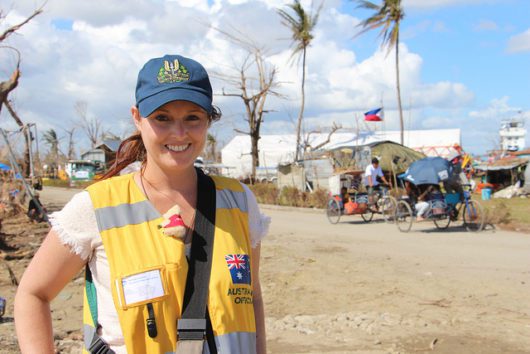
When hearing the term “foreign aid,” one probably thinks of the U.S. giving money to poor countries for food and water. While this assumption is partially correct, U.S. foreign aid is also a means of economic and political strategic fodder for the U.S. Foreign aid often includes providing money to foreign countries for militarization efforts or providing assistance from the U.S. military itself.
U.S. Foreign Aid
While some oppose the U.S. giving aid to other countries in favor of using the same money to bolster the U.S. economy and provide national security, they usually do so under the false pre-tense that around 25 percent of our national budget is geared toward foreign aid; the real number is only around 1.5 percent.
In fact, foreign aid acts as economic investment with other countries and creates trading allies, providing a return on investment. Also, foreign aid works to provide national security for the U.S. by stabilizing countries rife with conflict and poverty; such measures often end wars before they even begin. This notion was confirmed by a letter to President Trump from over 120 retired generals, urging the president to reconsider the ‘benefits’ of the proposed cuts to the foreign aid budget.
Throughout the history of U.S. foreign aid, one can simply follow our military. Here are four of the big shifts in U.S. foreign aid policy.
Marshall Plan
Foreign aid, as we consider it now, started post-WWII. In 1947, two years after the war, Secretary of State George C. Marshall insisted at a Harvard commencement ceremony that the U.S. needed an aggressive plan to rebuild Europe. The Marshall Plan, officially known as the European Recovery Program, passed the next year.
In the next four years, the U.S. provided more than $13 billion in aid to European nations. The move, while helpful, was also tinged with a political agenda — the U.S. needed allies in Europe against an emerging enemy, the Soviet Union. The U.S. remains close allies with these European nations and 13 of them are current NATO members.
President Harry S Truman supplemented the humanitarian efforts provided by the Marshall Plan with further military and economic aid to allies in Europe by way of the Point Four Program, a technical aid program aimed at sharing U.S. technology and knowledge of agriculture and industry. This measure was ultimately a gesture meant to create allies against the emerging USSR. Truman then signed the Mutual Security Act of 1951, which replaced the Marshall Plan and shifted its priorities to containing the spread of communism.
Foreign Assistance Act of 1961
The United States Agency for International Development (USAID) was created out of the Foreign Assistance Act of 1961 by President John F. Kennedy. The assumption was that by combining foreign aid programs, the U.S. could be a better leader and moral authority for the rest of the world (read: prevent the spread of communism).
USAID is now the main operator of U.S. foreign aid programs, leading development and humanitarian efforts across the globe ranging from the Feed the Future program, a global food security program providing funding, health services, water and protection to aiding peoples suffering from conflicts in South Sudan.
The Cold War
In the 1970s, the focus of foreign aid shifted from economic and political development, to meeting “basic human needs.” This lead to an emphasis on food production, nutrition, health and education — all means to providing developing countries with the means to be self-sufficient. Still, there was a political tinge. The U.S. was largely acting on anti-communism interests and Middle East peace initiatives. As a result of these priorities, Israel and Egypt became large recipients from U.S. aid.
Toward the end of the 1980s, Congress was tasked with reducing the national deficit and foreign aid was at less than 1 percent of the national budget. Still, foreign aid followed into the same countries as our military including Panama in 1990 after the U.S. invaded Panama during Operation Just Cause under President George H. W. Bush.
Due to the end of the Cold War and Congress’s continued efforts to maintain the budget deficit, foreign aid remained less than 1 percent of the federal budget until the U.S. invasion of Iraq in 2003.
Contemporary Foreign Aid
From 2003-2014, Iraq and Afghanistan received increases in economic and military assistance from the U.S. Afghanistan became the largest recipient of U.S. aid in 2017 at $4.7 billion. President George W. Bush also created the U.S. President’s Emergency Plan for AIDS Relief (PEPFAR) in 2003, which supports over 14 million people in over 50 countries living with HIV/AIDS. PEPFAR’s website claims to have helped more than 2.2 million babies to be born HIV-free to pregnant women living with HIV and AIDS.
In 2008, President Obama renewed PEPFAR and also signed the U.S. President’s Policy Directive on Global Development. The Obama administration called it the first of its time, but the measure resembles Kennedy’s act to instill the U.S. by way of foreign assistance and development at the forefront of moral and economic authority globally. The directive has a wide berth of goals aimed at providing increased global food security, global health and national security by working on poverty-related issues in impoverished nations.
Today, President Trump continues to insist we trim the U.S. foreign aid budget by over 30 percent, which will inevitably cut some humanitarian programs entirely. The Trump administration claims the cuts will go to bolstering national security, but as we’ve learned and as over 120 retired generals stated to President Trump, U.S. foreign aid is a form of national security.
– Nick Hodges
Photo: Flickr

Eight Facts About Poverty, Crime and Orphans in Ecuador
A simple Google search for “Ecuador orphans,” expected to provide factual information, instead it presents a plethora of pages touting orphanages to donate to, opportunities to volunteer in Ecuador, children to adopt and personal fundraising pages. Even with some keyword tweaking, clearly orphans in Ecuador have abundant needs, but very few scholarly or news articles provide coverage of the issues. In an effort to fill that apparent statistical lack, orphans in Ecuador relate to the country’s poverty and crime rates in eight factual ways.
Eight Facts About Poverty, Crime and Orphans in Ecuador
Clearly, such a system that inadvertently funnels non-orphans into institutions and perpetuates poverty must be directly combated. However, organizations like Restore17 enter into the present reality to provide stable homes and equip boys to overcome poverty as men. It is a good beginning. Such efforts should help create a new financially capable and empowered generation that will be able to raise their children at home and above the poverty line.
– Charlotte Preston
Photo: Flickr
How Identification Closes The Gender Gap
Empowering women has long been acknowledged as a key ingredient in reducing poverty and improving economic development. The United Nations (U.N.) has set 17 Sustainable Development Goals (SDGs) and gender equality underlies almost all of them. More specifically, the fifth SDG is set to achieve gender equality and empower all women and girls. As the World Health Organization (WHO) recognizes, these goals are interdependent, meaning gender equality is essential not only to the economic prosperity of the communities but for other important issues like health and sustainability as well.
Even today, gender inequality persists worldwide, depriving women of basic human rights and equal opportunities. In poverty-stricken communities around the world, an estimated 90 percent sustain long-standing social practices that devalue women.
Need for Identification
Breaking these modes will require great efforts. Both legal and cultural strides need to change in order to counter deeply ingrained discrimination throughout societies. Studies by the U.N. and UNHCR found that women in conflict and poverty affected regions do not have adequate identification documents. These documents are necessary for achieving the benefits of civic and public life.
Access to identification closes the gender gap in the developing world, but a lack of awareness around the documents prevents women from obtaining them in some cases. Many believe that identification cards are only necessary for exceptional circumstances when in reality they are needed to make the most of social programs and civil rights.
Having personal identification cards in the developing world acts as an important stepping stone. In having the ability to access decisive services and claim entitlements as citizens, women are able to increase their voice and agency through civic participation, access to finances and voting. In assisting women’s social engagement, identification closes the gender gap.
Example of Myanmar
All factors of the country development are intertwined. Women’s documentation is often essential to the peace process in some countries. Resolving the issue of land rights, for example, is crucial to the current conflict in Myanmar, and gender inclusion in the peace process is fundamental to reaching a genuine peace accord. The laws in this country allow women to register and co-register for the property even if they are not head of the household.
While progressive laws have been enacted, there lies a major gap between the law and the reality that women face. Cultural conventions exclude women from participating in land governing let alone a peace accord, making it essential that their names are registered to partake in community meetings. The decisions affect both women and men, making identification an important transition step in transforming cultural norms in poverty and conflict-stricken regions.
Problems with Women Identification
In 2012, four out of every 10 infants born worldwide were not registered with civil governments or authorities. Globally, 750 million children lack identification. A 2013 UNICEF survey found that there is no major disparity between the birth registration of boys and girls.
Evidence suggests that adult women, however, face gender-specific barriers to getting identification documents. Women must provide proof of marriage, additional family signatures and conduct many other steps in the process to obtain identification that men simply do not have to deal with. Unmarried women especially face discrimination as, without a male counterpart or marriage certificate, obtaining identification documents (IDs) is often impossible. IDs are also optional for women, although essential to accessing civic opportunities and required for men.
Increasing access to identification closes the gender gap by helping international organizations better plan and target gender inequality in poverty. The incompleteness of civil registration for women has generated holes in statistics and data for organizations like the World Bank to measure the progress of women in the developing world.
Changing Cultural Barriers
Equality is fundamental to building strong societies. Having active members at every level of a community makes the plight of poverty that much easier to conquer. Gender equality is no different. Ensuring that more than half of the population can do its part must remain at the foremost of poverty reduction endeavors.
While the legal framework with these notions in mind has changed for the better, an uphill battle in the mindset of the communities is much needed. Obtaining identification is the first step in employing available programs and in realizing the agency needed to transform the cultural barriers that devalue women.
– Joseph Ventura
Photo: Flickr
Big Data and the Fight Against Global Poverty
Three years into the United Nations’ latest agenda to fight global poverty and promote peace, health and justice, the chief Sustainable Development Goal of 2030 to end extreme poverty has become a contest to procure and deliver the right resources for the world’s most vulnerable people at just the right pace. There is a race against rising inequality and time, but some economic circles have come to regard one performance-enhancing resource as more valuable than oil and with the potential to boost poverty relief — big data.
Big Data to End Global Poverty
During a lecture at Singularity University Global Summit 2018, a lead economist for the World Bank, Wolfgang Fengler, shared his curiosity about using data to end global poverty by asking, “What would it take to create a data revolution for the SDGs [Sustainable Development Goals]?” Fengler oriented summit-goers to subterranean depths as he compared big data to oil, and emphasized how their values are only realized in the efficiency of its production modes: collection, refinement and delivery in a usable form.
In 1990, 1.9 billion people were considered extremely impoverished; in 2015, the final year of the United Nations Millennium Development Goals, that number was 836 million, a 66 percent decrease. Pointing to the World Poverty Clock, a real-time dashboard for poverty numbers created by Fengler, the current global poverty escape rate is 1.1 people per second. That rate should be 1.6 people per second to put an end to global poverty by 2030.
World Poverty Clock
The World Poverty Clock shows data from specific countries, and these types of snapshots provide reliable stories that can inform effective policy and strategic poverty alleviation practices. According to Singularity Hub, next steps for the World Poverty Clock include presenting data by specific regions within countries with the idea in mind that there are region-specific issues related to poverty.
Forbes Magazine contributor Bernard Marr offers some corrections to the data and oil comparison, one that suggests much richer potential for data. Oil is a finite resource that requires a massive amount of ancillary resources to deliver a final product. Contrarily, data has a low cost of production and can become more useful with every use. He also contends big data is environmentally innocuous and has a wider variety of application beyond its crude state.
New Kind of Renewable Resource
While Marr takes issue with comparing big data to an “old world resource,” he does concede to its versatility and value in shrinking hunger and battling climate change. He likens it more so to a renewable energy source such as wind or the sun. The World Poverty Clock reports that poverty is rising in 13 African nations. Two of those nations are Africa’s largest oil exporters: Angola and Nigeria, which both produced more than 1.5 million barrels of oil in 2017.
Rounding out the rest of the African OPEC nations, Guinea and Libya are labeled as “off track,” or “unable to reach the sustainable development goal target at the current rate;” Gabon and Algeria are also considered to have “no extreme poverty.” In Nigeria, oil production accounts for 10 percent of the GDP of the new world capital of extreme poverty; almost half of the nation’s 180 million people live within poverty’s grips.In Angola, 30 percent of its 25 million live in extreme poverty; oil production is expected to comprise 10 percent of its GDP.
Combatting Poverty
These macro-level findings support The Economist’s and Forbes Magazine’s positions on data’s supremacy to oil as a precious resource for profit and a poverty alleviation tool. Crude oil has less of a guarantee, if any at all, to be wielded as such a resource as it does not necessarily translate to economic stability in nations where the gross national income per capita has been decreasing since 2015.
Just as marketing research uses big data to track discrete consumer insights — such as millennial spending trends or researchers’ use of data to identify the demographic most likely to be excessive sun tanners — big data has the power for direct combat against extreme poverty.
Big Data Around the Globe
In China, the Guizhou province developed a cloud-computing platform that tracks the financial status of 6 million impoverished people in 9,000 villages. China aims to usher 10 million people out of poverty annually from 2016 to 2020. In Tongzi county, the government issued subsidies to needy villagers and a data platform monitors the distribution of these subsidies, minimizing the risk of embezzlement by unscrupulous officials.
Zhou Xing, an expert of the poverty-relief office in Guizhou province, said, “Big data really helps make poverty-relief more precise and efficient.” On the days before big data, Xing added, “poverty relief work was difficult because the information of residents was written by hand and passed to central authorities via a series of local officials, which could be hampered by corruption.”
In Rwanda, American researchers have leveraged cellphone metadata to estimate wealth and poverty distributions and the telephoning habits of the affluent and those with more modest means.
Infinite Possibilities
Putting an end to extreme poverty can potentially be achieved through fiber-optic cables rather than petroleum pipelines. The Sustainable Development Goals for 2030 are fixed; through big data, the potential for precisely architected solutions to end extreme poverty seems infinite.
– Thomas Benjamin
Photo: Flickr
Life Expectancy in Uganda
Life expectancy in Uganda has significantly improved in the past decade. Ugandan men born in 2016 are now projected to live 59.8 years, and women have a life expectancy of 64.8 years. This is a marked increase from 2000 when Uganda’s average life expectancy was only 47 years.
The higher rate of life expectancy correlates to more expected years of schooling (11.6 years) and an improved Human Development Index (HDI) value, a summary measure that assesses the long-term progress of a given nation. In 2017, Uganda’s HDI value was 0.516, a substantial 66 percent jump from 1990.
Raising the Life Expectancy Rate
The Ugandan government is working proactively to raise the life expectancy rate even more in the future. In conjunction with The Family Planning Association of Uganda, its initiatives include lowering the population growth rate from 3 percent to 2.6 percent, improving the current population’s physical and mental health as well as social standards and implementing fertility reduction measures. The government additionally plans to incorporate sex education in schools, maternity and paternity benefits and raising the legal marriage age.
The government’s efforts to limit population growth have proven to be effective. “[B]ecause they have smaller families than in the 1980s that makes them enjoy some kind of mental peace and increase their life expectancy,” said Paul Nyende, the head of The Institute of Community Psychology at Makerere University. He also added, “People had an average of eight children in those years, but the number has now been reduced to four because they are sure of their children’s survival.”
Life expectancy in Uganda is steadily improving, but there is much work to be done. Uganda has not yet met the threshold of a developed country. Even with Uganda’s improved HDI, the East African country still remains low in the development category when compared to the 70 years or more found in developed countries.
Issues That Need to Be Addressed
The country’s health care continues to be among the worst in the world. In fact, according to The World Health Organization, Uganda is ranked 186 out of 191 nations. This has gotten worse in recent years since many of Uganda’s hospitals have closed and a large number of medical personnel have left the country for better opportunities.
“Communicable diseases like HIV, malaria and lower respiratory infections are still taking the lives of far too many Ugandans. Children are at particular risk, and neonatal ailments like sepsis, pre-term birth and encephalopathy have killed thousands of infants. There is still a lot of work to be done…” said Dr. Dan Kajungu, Executive Director of Makerere University Centre for Health and Population Research (MUCHAP).
However, Uganda has already set itself up as a global example in regards to addressing the HIV/AIDS epidemic. Uganda continues to successfully combat HIV/AIDS with a comprehensive strategy involving abstinence, partner reduction and barrier protection, all resulting in the reduction of HIV to a manageable level since the early 2000s. This is in contrast to rising HIV rates in many other countries and has played a key part in Uganda’s improvements to life expectancy.
Furthermore, improvements have been made in the health sector in regards to maternal and child mortality rates, which have dropped from 488 to 336 per 1000 for maternal and 54 to43 per 1000 infant. Immunizations are up as well. At least 72 percent of children will receive measles vaccination before their first birthday.
Going forward, in order to continue increasing life expectancy rates in Uganda, the government must entice skilled Ugandans living abroad to return as well as provide opportunities for people currently living in the country, like education and better career options. If the same rapid acknowledgment is given to other areas of concern in national health, life expectancy in Uganda can only rise.
The government is taking steps in the meantime to nurture their health sector despite the imminent challenges. Goals include movement towards universal health coverage, bolstering immunization rates and having prepared responses to disease outbreaks. The future is promising, and Uganda’s ministry of health expects further improvement as other initiatives take deeper root.
– Yumi Wilson
Photo: Flickr
Fighting Human Trafficking in Thailand
Modern slavery plagues millions of communities globally. Human trafficking, a $150 billion plus industry, impacts lives regardless of race, gender or economic status. Human trafficking in Thailand is a major national problem.
Children and Human Trafficking
With convenient trafficking routes that funnel women and children in and out of the country, Thailand has become a popular destination for traffickers. Extreme poverty, particularly in rural areas makes children vulnerable. Research estimates that around 60,000 children are trapped in the sex trade in Thailand. Direct intervention can be extremely difficult, due to the violent nature of this criminal activity.
There are a number of risk factors that make children vulnerable to human trafficking. Poverty and hunger can cause parents to sell their children into slavery with the hope that they will find a better life. In addition, traffickers target homeless and isolated children, hoping to lure them with false promises. A lack of education or understanding of their legal rights, also makes children more vulnerable.
In Thailand, most children only attend school for about 7 years. The most susceptible population are girls living in orphanages who are about to graduate into the outside world.
Peacework Safe Girls Campaign
Peacework, a non-profit based in Virginia, has developed the Peacework Safe Girls Campaign to combat child trafficking in Thailand and other countries through education and empowerment. The Safe Girls Campaign empowers children with financial self-reliance and avoid the chains of trafficking.
The Peacework Safe Girls Campaign hosts a variety of different empowerment projects at orphanages in Thailand staffed by university students from the United States working alongside university students in Thailand.
In Saraburi, Thailand, Peacework partners with Asia Pacific University, a Seventh-day Adventist university east of Saraburi. The partnership between Peacework and Asia Pacific University focuses on the development of a financial independence curriculum. They present the curriculum to the orphanages and shelters on an annual basis.
Peacework Safe Girls Campaign empowers children in Chiang Rai as well. Chiang Rai sits at the top of Thailand, and ineffective border regulation results in well-used trafficking routes. Peacework partners with Keep Girls Safe, an initiative of the Adventist Development and Relief Agency that runs a shelter for young girls. The Safe Girls Campaign sends university students from the United States to Chiang Rai to run educational workshops for shelter residents.
Breaking the Cycle of Poverty
Through these projects, the Safe Girls Campaign helps children achieve self-determination that helps them avoid trafficking. Equipped with knowledge about their legal rights and the skills to pursue a profitable career, vulnerable children can take control of their futures and resist the cycle of trafficking. The work also gives children the tools to lift themselves out of poverty. Entrepreneurial development equips them to pursue a financially stable career.
While the scale of the campaigns’ reach may be small, the impact of economic empowerment on the lives of orphans in Chiang Rai and Saraburi are sure to have a ripple effect. In addition, the tactics they are developing to fight human trafficking and poverty are inherently valuable to ending the epidemic globally.
The prevention work Peacework does through the Safe Girls Campaign is crucial in the fight to end trafficking and it currently hopes to expand the campaign to countries around the world. Their prevention strategy can be applied to any country. The Safe Girls Campaign empowers children to pursue better lives.
– Julia McCartney
Photo: Flickr
US Foreign Aid to Belarus: The Gateway to the East
Although much of Europe has changed since the end of the Cold War, Belarus certainly has not. The leadership of this tiny-landlocked country of more than 9.5 million people has forcefully held onto its Soviet-style economy. So much so that Belarus is often described as Europe’s last dictatorship. Despite this, U.S. foreign aid to Belarus could help foster a new economy and a new partnership.
Belarus Holding Russian Standards
Belarus is a relatively new country, gaining independence from The Soviet Union in 1991. In 1994, Belarus’ first president, Alexander Lukashenko, was elected and has subsequently been the nation’s only president so far. His reign has seen a steady consolidation of power and a weakening of a democratic institution. Because of this, the West has experienced tense relations in regards to aiding and working with the Belarusian government.
Moreover, the state’s economy is comparable to the Soviet model of a centralized economy. Around 50 percent of Belarus’ workforce is employed by state-owned entities, which make up 75 percent of the country’s GDP. This has produced an extremely rigid economic structure that is not rational in a highly globalized world.
While poverty had fallen from 60 percent in 2001 to around 1 percent in 2013, Belarus was still not on steady ground. It was able to reduce poverty rapidly because of favorable energy pricing and productivity growth with its largest trading partner, Russia.
Belarus in Crisis
However, these factors are no longer in play for the benefit of Belarus. Productivity in Russia has dropped while energy prices have increased alongside the accumulation of debt to Russia. Hit by a recession in 2014-2016, the economy’s fragile structure was exposed when poverty increased by 3 percent in Belarus overall with 6 percent in rural areas.
On top of this, the Belarusian state has been unable to adapt to national and transnational health and safety issues. First, Belarus is currently experiencing an epidemic of noncommunicable diseases (NCDs). The U.N. Development Program reports that 89 percent of all deaths in the country are due to NCDs.
Second, human trafficking has become such a significant problem that The U.S. Dept. of State labeled Belarus as a tier 3 country when it comes to trafficking (the worst tier attainable). Here, Belarus serves as an important ‘gate-keeper’ that buffers The E.U. from, or exposes it to, the spread of human and drug trafficking.
What can be done about this situation? E.U., U.N. and U.S. foreign aid to Belarus have begun to answer this question.
U.S. Agency for International Development (USAID)
The first focus of USAID is strengthening the private sector. USAID has implemented numerous projects over the years that have been tasked with helping build a stronger Belarusian economy. One project, called TechMinsk, is a technical and business boot camp for young entrepreneurs and start-ups. As of 2017, $7 million has been invested in 200 entrepreneurs and 90 start-ups newly introduced to Belarus’ economy. Through educational training and international programs, more than 6,000 enterprises have been strengthened and/or created.
The second focus of USAID is to create a stronger civil society in order for a freer form of government to flourish. Civil society organizations (CSOs) are an essential part of this plan. CSOs are meant to increase the involvement of the general public in policy-making decisions. As of 2016, 140 CSOS had been trained and funded, totaling more than 8,000 hours. Each year, more than 60 Belarusian professionals from different sectors (business, law, education, government and civil society) are selected for exchange programs in The U.S. These professionals are exposed to the innovations of U.S. nongovernmental organizations and how to apply these innovations in Belarus.
United Nations Development Program & the European Union
The U.N. has been at the forefront of engaging Belarus with the rest of the world. While free-market businesses only form about 30 percent of the Belarusian economy, the government has invited The U.N. to provide aid and expertise in expanding this percentage. Although Belarus ranks poorly for its control of human trafficking, its government has joined The U.N. Group of Friends United against Human Trafficking. Here, the Belarusian government will receive foreign aid and advice on how to best stop the surge of trafficking through Eastern Europe
The E.U. and Belarus have continued trade relations, although, relations have been strained. However, in 2014, Belarus and The E.U. initiated a new relationship. After years of tense relations and sanctions, 2014 saw the renewed interest on both sides for important talks regarding visa liberalization.
Belarus Working Toward a Better Tomorrow
While Belarus hasn’t let go of its tightly controlled government and economy, foreign aid is changing the narrative. These national and international bodies listed above have all taken steps to open Belarus up to the greater world and expose its people to ideas of different societies and freer economies.
Here, interests overlap on both sides. On the West’s side, it has a vested interest in stopping the spread of human trafficking throughout Europe and The U.S. In comparison, Belarus needs a counterbalance against its dependency on the Russian government and economy. Foreign aid has slowly opened up Belarus to build a sturdier and freer nation. However, more U.S. foreign aid to Belarus will be needed in order to create a strong, new ally in Eastern Europe.
– Tanner Helem
Photo: Flickr
John McCain’s Legacy with Foreign Aid
On August 25 2018, Senator John McCain passed away at the age of 81 from a year-long battle with brain cancer. He had served in The U.S. Senate for over 30 years. During his tenure as an Arizonan Senator, he earned the title of a Maverick because of his service in the navy and his willingness to act independently from The Republican party. One of the most famous instances of this was his choice to vote against the repeal of The Affordable Care Act.
John McCain’s Legacy with Foreign Aid
He left behind him a complex voting and ideological history that included John McCain’s legacy with foreign aid. While he was a strong believer in defense spending and military intervention, he was a strong supporter of foreign aid spending as well. To McCain, one of the best ways to ensure America’s safety was to invest in other countries.
One of the best examples of John McCain’s legacy with foreign aid was in 2017. President Donald Trump’s budget plan for 2018 included cuts to foreign affairs spending, which includes foreign aid. The cuts totaled roughly $18 billion. One of the countries that would have suffered the most was the small North African country of Tunisia. In 2016 the country had received $177 million dollars; in the new budget, they would receive only $54 million dollars.
Sen. McCain spoke against the proposed cuts, wrote several opinion pieces and released a joint memo with Sen. Tim Kaine. In a forum, Sen. McCain promised that funding towards Tunisia would be restored. Funding to Tunisia is important because several Tunisians had been recruited into ISIS and many would return as ISIS lost territory in Syria and Iran. Sen. McCain asked, “haven’t we learned our lesson?” He also cited that Tunisia was important in the fight against ISIS and that cutting foreign aid to Tunisia was both “misguided and dangerous.”
A Memo to Congress
On June 15, 2017, Sen. McCain and Sen. Kaine released a joint memo urging Congress not to cut foreign aid. At the beginning of the article, McCain and Kaine used a famous quote from James Mattis, who now serves as the Defense Secretary under President Trump, “if you don’t fully fund The State Department, then I need to buy more ammunition.”
The memo cited that helping developing countries is one of the best routes to achieving a safer world. It states, “[s]uch cuts will make it harder to make America safer”. It also discussed how improving economies in developing countries can help improve the United States economy because it creates more of a demand for American goods and services.
The memo backs this claim by examining how aid in Africa paid off. “By improving their plight, we improved opportunities for our exports and investments.” A majority of the world’s fastest growing economies are now in Africa. It also addressed some of the misconceptions surrounding foreign aid, including that, in reality, The United States only spends roughly 1 percent of the budget on foreign assistance.
Following Sen. McCain and several other Congressional leaders’ dissent, the Trump Administration did not cut the foreign aid budget nearly as much as it intended to. The foreign affairs budget was only cut by roughly $4 billion instead of the proposed $18 billion.
Sen. McCain’s defense of foreign aid helped stop the President from severely cutting spending. While he was once considered a Warhawk, he understood the importance of foreign aid as another tool of defense for The United States. John McCain’s legacy with foreign aid will remain as an example long after his passing.
– Drew Garbe
Photo: Flickr
How Sea Changes Hurt the World’s Poorest
It’s no coincidence that there is a new natural disaster in the news every day around the world — the earthquake and tsunami that just hit Indonesia; Typhoon Mangkhut in East Asia; Hurricane Florence in the Carolinas; monsoon flooding in Bangladesh; and Hurricane Michael in the Florida Panhandle are just a few of the storms that saturate our daily media sources.
Scientists agree that rising sea levels and sea temperatures as a result of climate change are increasing the frequency and intensity of such disasters. Research shows that climate-change-related natural disasters will disproportionately affect the world’s poorest countries and citizens. These environmental events are just one example of the many ways that sea changes are hurting the world’s poor.
Rising Sea Levels Hurt Agriculture
According to a 2015 World Bank report, “agriculture is one of the most important economic sectors in many poor countries. Unfortunately, it is also one of the most sensitive to climate change, given its dependence on weather conditions: from temperature, sun and rain, through climate-dependent stressors (pests, epidemics, and sea level rise).” This effect is felt by farmers — usually the poorer citizens of poor countries — who find their livelihoods threatened by natural disasters and the heavy flooding that wipes out their crops.
When agriculture suffers, the price of food skyrockets. This change then leaves families who already struggle to acquire adequate nutrition in an even more dire situation. Statistics show that poor families already spend a huge percentage of their income on food, and the World Bank predicts there may be 73 million people pushed into extreme poverty by 2030 from the rising costs of food alone.
Rising Sea Temperatures Breed Disease
The World Bank report says a small rise in sea temperatures “could increase the number of people at risk for malaria by up to 5 percent, or more than 150 million more people affected. Diarrhea would be more prevalent, and increased water scarcity would have an effect on water quality and hygiene.”
People who don’t have access to clean water, generally people living in poverty, would be at the greatest risk of developing diseases and they often lack the resources to treat infectious or bug-borne diseases once a family member is infected. The report, which called for climate-informed development, concludes by saying that poverty reduction and climate change can’t be treated separately, as the two go hand-in-hand.
Refugees
There are over 1600 confirmed deaths in Indonesia after an earthquake and tsunami hit the island of Sulawesi on October 5th, 2018. In fact, the U.N. stated that over 190,000 people are in need of urgent help — aftershocks have caused the destruction of 2,000 homes due to mudslides and makeshift refugee camps are being set up. At the most basic level, these events are pushing already poor people into extreme poverty through the destruction of their homes, forcing them to resettle elsewhere.
A 2017 Cornell study found that rising seas could cause 2 billion refugees by the year 2100 (these are truly climate change refugees). This means that around one-fifth of the world’s population will be made homeless by climate change. The effects will be felt most strongly by people living on coastlines, and those in the world’s poorest countries will suffer the most.
As the seas warm and rise, research shows that the frequency and intensity of these disasters will rise as well, forcing more and more people to abandon their homes.
Sea Changes and the Poor
Rising sea temperatures are a result of global warming’s effects on ocean habitats and the human communities that depend on them.
The authors of an article about how poor countries and fisheries are the most negatively impacted by warming seas found that, “despite having some of the world’s smallest carbon footprints, small island developing states and the world’s least-developed countries will be among the places most vulnerable to climate change’s impacts on marine life.”
Actions for the Future
Andrew King, a climate researcher at the University of Melbourne in Australia and the author of a study from the AGU on global warming, argues that: “The results are a stark example of the inequalities that come with global warming…the richest countries that produced the most emissions are the least affected by heat when average temperatures climb to just 2 degrees Celsius [3.6 degrees Fahrenheit] while poorer nations bear the brunt of changing local climates and the consequences that come with them.”
There are ideas for how to better protect these places in the future to be prepared for these sea changes. Long term, the solution will be tackling climate change head-on.
-Evann Orleck-Jetter
Photo: Flickr
CARE’s Impact on Disaster Relief in the Philippines
CARE is an international humanitarian organization that provides emergency relief and international development projects. Their mission is to save lives, fight against poverty, accomplish social justice around the world and help everyone to live in security. They also place focus on both women and children in several different countries who do not have equal rights and opportunities. CARE works in 94 countries around the world and supports over 1,000 humanitarian-aid and development projects fighting against global poverty.
CARE in the Philippines
This non-governmental organization has worked in the Philippines since 1949, and is known for responding to emergency disasters and providing preparedness and recovery. While typhoons and other natural disasters continue to affect the lives of many Filipino people, CARE’s disaster relief in the Philippines provides effective and innovative responses to emergencies.
CARE has responded to every typhoon in the Philippines, including Typhoon Pablo (Bopha) in 2012 and current Typhoon Mangkhut in 2018. One of the strongest storms, Typhoon Yolanda (Haiyan) in 2013, impacted around 17 million out of over 98 million people in the central region of the Philippines; this storm caused about 1.1 million homes to be damaged or destroyed.
CARES’ Disaster Relief
Regarding this storm, CARE immediately took action starting with providing aid to the Filipino people. After about a year, CARE provided emergency food assistance to over 54,000 households, feeding more than 9,000 children within their supported government school feeding program and training 500 community carpenters to rebuild destroyed homes. The program’s humanitarian aid in the Philippines has also involved and implemented an awareness of principles for building safer houses as well as identifying exactly what the most vulnerable in the Philippines need.
CARE has partnered with disaster professionals to respond to those affected by this typhoon; the organization also hopes to accomplish providing aid to 150,000 Filipino people who survived this emergency and natural disasters.
CARE continues to provide disaster relief in the Philippines and responds to every storm and disaster:
This organization constantly continues their work in providing programs and teams to help relieve the Filipino people’s suffering during these storms and disasters. CARE focuses on providing disaster relief in the Philippines also promotes and desires to increase community resilience.
How CARE Provides its Aid
CARE provides its aid by amplifying the capacity of the people’s needs, adapting and predicting how certain disasters and issues are going to affect the population as well as discovering the causes of those in need of assistance. Due to this effort and dedication, CARE creates a better chance of implementing their humanitarian work while also adapting, protecting and reducing issues arising within the country.
CARE is currently responding to Typhoon Mangkhut, which is known to be one of the strongest storms to hit the northern Philippines in September 2018. CARE has immediately provided emergency response teams to Cagayan and they are continuing to assess damage and needs of the affected villages and towns. According to David Gazashvili, CARE Philippines’ Country Director, Care has “brought some supplies and shelter repair materials ready to be distributed to the affected families.” They are continuing to work with others responding to this typhoon to help assist the Filipino people’s needs.
Other Organizational Aid
Global Hand is a non-profit partnership that supports CARE and everything they do for the Philippines and other countries. The group also supports CARE’s desire to eradicate poverty and help those in need, especially families and those in need of aid and assistance.
Of course, there are other organizations such as USAID who have aided the Philippines during disasters. During the 2013 typhoon, USAID and the World Food Program had the ability to send 55 metric tons of nutritional foods to more than 20,000 children and 15,000 adults. According to USAID, the U.S. offered $20 million for humanitarian assistance for the emergency disaster in the Philippines.
CARE has always been there for the Philippines, never failing to be by the country’s side and help respond to emergency and natural disasters. While CARE also provides assistance in achieving equal rights for women and children as well as responds to sexual, reproductive and gender-based violence, CARE’s continued focus on disaster relief in the Philippines also helps end poverty. Their efforts in creating and implementing projects, programs and assistance will better the future and health of the Philippines.
– Charlene Frett
Photo: Flickr
Global Relations: A Brief History of US Foreign Aid Policy
When hearing the term “foreign aid,” one probably thinks of the U.S. giving money to poor countries for food and water. While this assumption is partially correct, U.S. foreign aid is also a means of economic and political strategic fodder for the U.S. Foreign aid often includes providing money to foreign countries for militarization efforts or providing assistance from the U.S. military itself.
U.S. Foreign Aid
While some oppose the U.S. giving aid to other countries in favor of using the same money to bolster the U.S. economy and provide national security, they usually do so under the false pre-tense that around 25 percent of our national budget is geared toward foreign aid; the real number is only around 1.5 percent.
In fact, foreign aid acts as economic investment with other countries and creates trading allies, providing a return on investment. Also, foreign aid works to provide national security for the U.S. by stabilizing countries rife with conflict and poverty; such measures often end wars before they even begin. This notion was confirmed by a letter to President Trump from over 120 retired generals, urging the president to reconsider the ‘benefits’ of the proposed cuts to the foreign aid budget.
Throughout the history of U.S. foreign aid, one can simply follow our military. Here are four of the big shifts in U.S. foreign aid policy.
Marshall Plan
Foreign aid, as we consider it now, started post-WWII. In 1947, two years after the war, Secretary of State George C. Marshall insisted at a Harvard commencement ceremony that the U.S. needed an aggressive plan to rebuild Europe. The Marshall Plan, officially known as the European Recovery Program, passed the next year.
In the next four years, the U.S. provided more than $13 billion in aid to European nations. The move, while helpful, was also tinged with a political agenda — the U.S. needed allies in Europe against an emerging enemy, the Soviet Union. The U.S. remains close allies with these European nations and 13 of them are current NATO members.
President Harry S Truman supplemented the humanitarian efforts provided by the Marshall Plan with further military and economic aid to allies in Europe by way of the Point Four Program, a technical aid program aimed at sharing U.S. technology and knowledge of agriculture and industry. This measure was ultimately a gesture meant to create allies against the emerging USSR. Truman then signed the Mutual Security Act of 1951, which replaced the Marshall Plan and shifted its priorities to containing the spread of communism.
Foreign Assistance Act of 1961
The United States Agency for International Development (USAID) was created out of the Foreign Assistance Act of 1961 by President John F. Kennedy. The assumption was that by combining foreign aid programs, the U.S. could be a better leader and moral authority for the rest of the world (read: prevent the spread of communism).
USAID is now the main operator of U.S. foreign aid programs, leading development and humanitarian efforts across the globe ranging from the Feed the Future program, a global food security program providing funding, health services, water and protection to aiding peoples suffering from conflicts in South Sudan.
The Cold War
In the 1970s, the focus of foreign aid shifted from economic and political development, to meeting “basic human needs.” This lead to an emphasis on food production, nutrition, health and education — all means to providing developing countries with the means to be self-sufficient. Still, there was a political tinge. The U.S. was largely acting on anti-communism interests and Middle East peace initiatives. As a result of these priorities, Israel and Egypt became large recipients from U.S. aid.
Toward the end of the 1980s, Congress was tasked with reducing the national deficit and foreign aid was at less than 1 percent of the national budget. Still, foreign aid followed into the same countries as our military including Panama in 1990 after the U.S. invaded Panama during Operation Just Cause under President George H. W. Bush.
Due to the end of the Cold War and Congress’s continued efforts to maintain the budget deficit, foreign aid remained less than 1 percent of the federal budget until the U.S. invasion of Iraq in 2003.
Contemporary Foreign Aid
From 2003-2014, Iraq and Afghanistan received increases in economic and military assistance from the U.S. Afghanistan became the largest recipient of U.S. aid in 2017 at $4.7 billion. President George W. Bush also created the U.S. President’s Emergency Plan for AIDS Relief (PEPFAR) in 2003, which supports over 14 million people in over 50 countries living with HIV/AIDS. PEPFAR’s website claims to have helped more than 2.2 million babies to be born HIV-free to pregnant women living with HIV and AIDS.
In 2008, President Obama renewed PEPFAR and also signed the U.S. President’s Policy Directive on Global Development. The Obama administration called it the first of its time, but the measure resembles Kennedy’s act to instill the U.S. by way of foreign assistance and development at the forefront of moral and economic authority globally. The directive has a wide berth of goals aimed at providing increased global food security, global health and national security by working on poverty-related issues in impoverished nations.
Today, President Trump continues to insist we trim the U.S. foreign aid budget by over 30 percent, which will inevitably cut some humanitarian programs entirely. The Trump administration claims the cuts will go to bolstering national security, but as we’ve learned and as over 120 retired generals stated to President Trump, U.S. foreign aid is a form of national security.
– Nick Hodges
Photo: Flickr