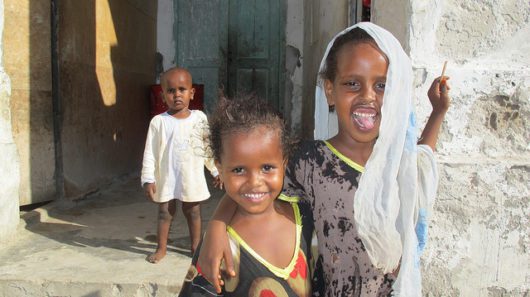
Globally, more than 2 million children are saved every year by immunizations. In Africa, the success of programs for immunization plays a significant role in world health. Immunization programs bring benefits to Africa and other countries around the world by reducing, containing and eliminating life-threatening diseases.
Successful Immunization Program
The Expanded Programme on Immunization (EPI) is responsible for most of the vaccinations in Africa. EPI focuses its attention on immunizing children against six life-threatening diseases: diphtheria, pertussis, tetanus, tuberculosis, polio and measles.
EPI has been acknowledged for maintaining control over many infectious diseases, showing significant progress since its initiation in 1974. For instance, EPI is credited for being on the forefront of eradicating smallpox. The eradication of the polio-virus is currently underway. This disease was responsible for infecting and killing millions of children previous to EPI. After the launch of EPI, enormous reductions of paralysis caused by polio was observed due to polio immunization.
Eradication and Vaccination
In 2017, the required three doses of the polio vaccine were successfully distributed to 85 percent of newborns around the world. With the exception of Afghanistan, Nigeria and Pakistan, polio has been eradicated in almost every country, according to The World Health Organization.
Measles vaccinations have been a huge success as well. In 2015, about 85 percent of children around the world, including Africa, have been immunized with the measles vaccine. In 2017, 167 countries had received two doses of the measles vaccine. Since 2000, more than 20 million lives worldwide have been saved through measles immunization.
MenAfriVac, the first vaccine created specifically for Africa, is a vaccine for adults and children (9 months to 29 years old) that protects them from group A Meningitis. More than 270 million people have been immunized, and cases due to the type A bacterium have declined 99 percent in areas that obtained full vaccinations. It is predicted that more than 400 million people will be vaccinated with MenAfriVac in fewer than two years. This can prevent over 150,000 deaths.
Immunization programs are making huge changes for better healthcare. Immunization coverage in Africa has advanced since the start of EPI, which has helped increase the needed dosages of DPT3 (a vaccine that shields diphtheria, pertussis and tetanus) for children. In 2017, DPT3 had reached as high as 90 percent in 123 countries.
The Economic Impact of Vaccinations
Vaccines also have a strong economic impact on people. “A healthy child is more likely to go to school and become a more productive member of society in later life while their families can avoid the often crippling healthcare costs that diseases can bring” explained Dr. Seth Berkley, CEO of a vaccine alliance (GAVI). “[…] this is enough to save millions of people from the misery of extreme poverty. [..] we now need to redouble our efforts to ensure every child, no matter where they’re born has access to lifesaving vaccines.”
Not only are families saved undo economic hardship thanks to vaccines but also governments save money through ensuring a healthier population. On average, $16 is saved for every $1 that is spent on vaccinations. This can be due to the money that would be lost from missing work, healthcare costs and lower productivity due to illness.
Other Immunization Programs
There are many other programs like EPI that are aiming to make a difference such as The Global Immunization Vision and Strategy (GIVS), The Sustainable Development Goals (SDGs), and The Global Vaccine Action Plan (GVAP). Programs such as these are continuing to help Africa in powerful ways.
Although these developments have been successful, 1 in 5 children still will not get the vaccines needed to prevent life-threatening diseases. Immunization coverage in Africa is still below the goal of 90 percent, leaving many people without vaccines.
The need for extending immunization to everyone is extremely high, and a plan is currently in place through The Global Vaccine Action Plan (GVAP) to continue to achieve the goal. GVAP has set six principles to elaborate on the plan in order for it to be achieved by 2020, saving millions of lives. These principles include partnership, country ownership, equity, integration, sustainability and innovation.
Hope
To help GVAP achieve their goals, each region has developed their own plan in order to ensure that every child will be immunized and protected from deadly viruses. If this plan works out, all communities will have access to life-saving vaccines.
Vaccinations meet the needs to care for weaker societies by enabling good public health, which helps in reducing poverty. Immunization programs bring benefits to Africa as well as saving millions of people in need of vaccines. Challenges are still faced but hope continues.
– Kathleen Smith
Photo: Flickr

Top 10 Facts About Hunger in Nepal
Nepal, located in the Himalayas and parts of the Indo-Gangetic Plain, boasts eight of the world’s 10 highest peaks, ancient golden temples and a very rich history. However, this South Asian country also suffers from high rates of poverty, and as a consequence, hunger. Malnutrition rates are among the highest in the world. In the text below, the top 10 facts about hunger in Nepal are presented.
Top 10 Facts About Hunger in Nepal
Many experts that the above-mentioned goals of Zero Hunger Challenge are unlikely to be met by 2025.
These top 10 facts about hunger in Nepal presented in the text above illustrate that the country has made a lot of progress in its goals to eliminate hunger, but it still has a long way to go. The joint efforts of the government and nongovernmental organizations can certainly be the key to eradicating poverty and improving the economic situation in the country.
– Evann Orleck-Jetter
Photo: Flickr
Treating Tuberculosis in Bangladesh
Every hour, nine people die from tuberculosis in Bangladesh. High rates of poverty, overcrowding and a lack of information about the disease combine to make treating tuberculosis in Bangladesh particularly difficult.
As of 2017, 244,201 Bangladeshis were suffering from tuberculosis. Nearly 6,000 of these patients were infected with drug-resistant tuberculosis.
The Problem of Drug-resistant Tuberculosis
Improper tuberculosis treatment has led to the occurrence of drug-resistant tuberculosis. When physicians prescribe the wrong drug or dose, or when patients do not finish their entire course of treatment, the tuberculosis bacteria evolve to become resistant to that treatment. Multidrug-resistant tuberculosis (MDR-TB) poses a unique challenge in Bangladesh.
While regular tuberculosis is entirely curable with proper treatment, the cure rate for MDR-TB is only 50 percent. Treatment for regular tuberculosis takes as little as six months, while the treatment for MDR-TB takes up to two years. The extra treatment time hits poor families the hardest since more time in the hospital bed means less time at work. Tuberculosis, especially MDR-TB, can deepen the cycle of poverty.
Bangladesh Innovates Treatment Plans
Bangladesh doctors have pioneered a new treatment course that uses a combination of drugs at different doses and they have been able to reduce the MDR-TB treatment time to nine months. This new treatment lowers the cost of treatment from $4,000 down to below $1,000. Since health care resources are scarce, this improvement means that more lives can be saved. New community-based approaches have also been successful in treating tuberculosis in Bangladesh.
Community-based Approach
The new community-based approach has also been successful in treating tuberculosis in the country. In Bangladesh, treatment of MDR-TB was generally confined to a few national hospitals. But in 2012, the Ministry of Health, with support from the National Tuberculosis Program, launched a new approach: community-based programmatic management of drug-resistant tuberculosis (CPMDT). Although it has a long name, this approach has a very simple goal: to shift the focus of treatment away from national hospitals and toward a decentralized, community-based approach. Treatment is now supervised by Upazila-level health centers. An Upazila is a type of administrative region or sub-district.
Instead of staying in a hospital for the entire course of treatment, patients will only spend brief stints there before moving either home or to outpatient Upazila health centers.
DOT Providers Play a Crucial Role
Directly-observed therapy (DOT) means that a health care worker regularly observes the tuberculosis patient, prescribes the proper dosage and actually watches the patient take the proper dose. In the CPMDT intervention, DOT providers visit patients daily, taking the opportunity to screen family members for tuberculosis as well.
The new model also places more emphasis on psychosocial support. DOT providers counsel the patients, focusing on providing nutritional support and even vocational training. The Bangladeshi government even provides patients with a monthly nutrition stipend.
Overall, the intervention has increased the proportion of MDR-TB patients enrolled in treatment, reduced treatment delay and improved outcomes. Following this intervention in Bangladesh, researchers measured a 76 percent cure rate which is much higher than the global average of 56 percent.
Thanks to a dedicated government and devoted community health care workers, treating tuberculosis in Bangladesh has become a more manageable feat. The success of these decentralizing government interventions has promising implications and other governments can learn a lot from Bangladesh to improve their own health care outcomes.
– Ivana Bozic
Photo: Flickr
Top 10 Facts Living Conditions in Kyrgyzstan
Windswept valleys and snowy mountains characterize the landscape of Kyrgyzstan. Yurts, round tents covered with skins or felt, are a common sight in rural areas. This represents a legacy from nomadic ancestors. Legally speaking, the nation itself is a young one, having officially come into existence in 1990. However, the nation’s cultural roots are far deeper than that.
Descending from nomadic forbearers, animal husbandry is heavily practiced in rural areas. Felt making and carpet weaving are still common household skills. In the 20th century, the country found itself as a part of USSR, remaining a member state for decades. Soviet culture would go on to shape national language, infrastructure and politics. The top 10 facts about living conditions in Kyrgyzstan represented in the text below will provide a better insight into the struggles and progress of a country that is both very young and very old at the same time.
Top 10 Facts about Living Conditions in Kyrgyzstan
Many of these top 10 facts about living conditions in Kyrgyzstan demonstrate that progress is being made despite the terrible problems the Kyrgyzstani people face. There are many organizations and people that take steps toward bringing safety, stability and prosperity to their neighbors every day. Although the road ahead of the country will be a difficult one, all journeys begin with a single step.
– John Glade
Photo: Flickr
Universal Basic Income in Iran
Universal Basic Income (UBI) in Iran was originally implemented in 2011, making it one of the first countries to use such a program. While there have been some opponents to this program, it largely remained successful in comparison to existing welfare programs.
Universal Basic Income and Poverty
Universal basic income is used in developing countries to fight poverty and to promote health and education, where the population does not have enough resources to fulfill these needs on their own. Iran started their universal basic income program in 2011 in the form of cash transfers.
The government started monthly deposits of cash into individual family accounts amounting to 29% of the median household income and 6.5% of the GDP. This amounts to about $1.50 extra income per person per day.
In the 40 years prior, there have been subsidies on bread and energy, so people paid less for bread, water, electricity, heating and fuel. This program was changed to the cash transfer program in 2011 because the government believed that energy subsidies always benefit the wealthy more than the poor and also because energy subsidies encourage more fuel consumption which is detrimental to the environment.
Universal Basic Income and Labor Supply
One of the main concerns people had before this program was implemented was that it would negatively affect the labor supply. It was believed that if people received money from the government unconditionally, there would be no incentive for them to work at all.
However, the only negative labor supply that was affected was people between the ages of 20 and 29. But this age group did not have a strong connection with the labor market even before the Universal Basic Income program in Iran was implemented. This is because Iranians have the choice to enroll in tertiary and graduate education, thus largely preventing this age group from working.
Rationing is prevalent in the market for formal work in the private and public sectors, where jobs are highly sought after. Employees are attached to their jobs and are unlikely to withdraw from their positions. This is apparent even with the population receiving cash assistance.
Positive Impact of UBI
Of the individuals employed in 2010, 88.5 percent remained employed, 4.5 percent lost or quit their jobs and the rest became inactive in 2011. Of the unemployed, 26.3 percent found work in 2011, which is about the same number as those who lost their jobs in 2011. Of those engaged in housework in 2010, 3.2 percent found jobs in 2011, which is fewer than those who left their jobs for housework.
There was a positive impact of the universal basic income program on the service sector. This can be explained by the fact that the service sector is populated by credit-constrained small firms that cash transfers can help expand. Some examples of workers in the service industry are housekeepers, teachers and deliverymen. In fact, their weekly hours had increased by roughly 36 minutes.
Conclusion
The overall conclusion is that the program did not affect labor supply in any appreciable way, according to a paper published by economists in 2011. Universal Basic Income in Iran is a proven program despite the fact it went through modifications. It serves as an example of the benefits a UBI has that other countries can look to for comparison.
– Casey Geier
Photo: Flickr
Top 10 Facts About Living Conditions in Mongolia
In 1990, Mongolia transitioned from a Soviet-era single-party system to a democratic system with free elections. The new government prioritized developing the nation’s fledgling economy. International investors soon turned their attention to Mongolia’s rich natural mineral deposits and helped the country take its first steps into the global market. But as the industry in Mongolia grown, harsh winters and the promise of urban jobs have created tension between Mongolia’s traditional nomadic past and its modernistic future. In the text below, the top 10 facts about living conditions in Mongolia are presented.
Top 10 Facts About Living Conditions in Mongolia
Moving Forward
These top 10 facts about living conditions in Mongolia show both the unique challenges the nation faces and the encouraging steps it has taken to improve the lives of the citizens of the country. While hundreds of thousands of Mongolians are currently trapped between their traditional lifestyle and a modernized one, the government is already working with partners and investors around the world to address the crisis.
– Josh Henreckson
Photo: Flickr
Top 10 Facts About Living Conditions in Guatemala
Guatemala is a stunning country with a diverse landscape of mountains, rainforest and volcanoes. Home to ancient Mayan ruins, the country has a rich history and culture, and while the official language is Spanish, many indigenous languages still persist. With a history of civil war and natural disasters, however, Guatemala suffers from a number of problems including poverty, food insecurity, low education rates and poor health care. Below the top 10 facts about living conditions in Guatemala are presented.
Top 10 Facts About Living Conditions in Guatemala
These top 10 facts about living conditions in Guatemala demonstrate the persisting issues facing the country. Government prioritization of these matters, as well as aid from foreign governments and international humanitarian groups, would greatly improve the lives of many Guatemalans who continue to suffer in poverty.
– Georgia Orenstein
Photo: Flickr
What’s Happening with Free Trade in Africa?
Free trade is currently a hot topic in Africa. Several countries have already signed a trade agreement that opens the continent to free internal trade and now the European Union is looking to connect with Africa and form an alliance between Europe and Africa. While these talks certainly seem like a good idea, the question of whether they ultimately help Africa’s poor remains unanswered.
A Move Toward Intra-African Trade Improvement
Early in 2018, many African leaders came together in Kigali, Rwanda, to establish the African Continental Free Trade Area (AfCFTA) with the goal of executing the agreement before January 2019. The deal would allow free movement of capital and business travelers. Ideally, it would give a chance for manufacturing sectors growth in many countries and lead to economic diversification.
AfCFTA will potentially cover the market of more than a billion people in African and will be one of the largest free trade areas ever established in the world. Its goal is to create one continental market for goods and services. AfCFTA should also “enhance competitiveness at the industry and enterprise level through the exploitation of opportunities for scale production, continental market access and better reallocation of resources.” The Economic Commission for Africa has calculated that this deal would increase intra-Africa trade by more than 50 percent through the elimination of trade barriers.
What Does External Free Trade in Africa Look Like Right Now?
Currently, Africa and Europe are committed to the Cotonou Agreement that, unless amended, expires in 2020. Signed at the turn of the millennium, this agreement covers the partnership between the E.U. and many developing countries in Africa, the Caribbean and the Pacific.
The Next Chapter for EU and Free Trade in Africa
European Commission Chief Jean-Claude Juncker stated that Africa does not need charity. He said that this continent needs true and fair partnerships. And Europe needs this partnership just as much. His recent State of the Union address called his colleagues to see Africa as Europe’s “twin.” He argued that the perspective of this continent as the one needing Europe’s help or charity was not only insulting but rather false.
Europe is beginning the process of replacing the Cotonou Agreement, focusing on Africa with the goal of a free trade agreement between E.U. and all Africa countries. A report from the European Commission argues for an Alliance for Sustainable Investment and Jobs. The report summarizes that this alliance is more than a financial plan and it represents a radical shift in the way these two continents work as partners toward a logic focused on Africa’s economic potential and the mobilization of the private sector. This Alliance has 10 main actions in focus:
This Alliance is estimated to create 10 million jobs over the next five years and hopes to strengthen the private sector as well. AfCFTA is crucial in achieving these goals. African Union’s High Representative Carlos Lopes said that AfCFTA should be the main instrument for a free trade agreement with the E.U. Currently, more than a third of Africa’s trade occurs with the European Union. Lowering costs and improving efficiencies would benefit everyone involved.
Poverty and Free Trade in Africa
Free trade agreements have many advantages and can lead to better lives of Africa’s poor population. However, they can also go in the opposite direction and take away jobs leaving unskilled workers with few options to support themselves and their families.
Free trade tends to increase a country’s economic growth, attracts foreign investors and leads to a transfer of expertise and technologies. It also leads to greater outsourcing, destruction of native cultures and can hurt local industries and firms.
Nigerian President Muhammadu Buhari is especially cautious when it comes to opening borders for trade. He has delayed (and may ultimately avoid) agreeing to AfCFTA because he fears that competition from other African nations will destroy local industries. The World Trade Organization meanwhile argues that free trade helps reduce poverty. In fact, their research found that trade liberalization is generally a strongly positive contributor to poverty alleviation since it allows people to exploit their productive potential, assists economic growth, curtails arbitrary policy interventions and helps to insulate against shocks.
The open trade comes with certain consequences, but many countries and many people have benefitted greatly from opening their borders to the free flow of goods and services. If Africa can ratify its internal trade agreement and then form a new alliance with the European Union, it could mean better jobs for the citizens of the continent and poverty reduction.
– Sarah Stanley
Photo: Flickr
Addressing High Rates of Child Poverty in Scotland
Scotland is currently struggling with high levels of child poverty affecting about 25 percent of children. Living in poverty has been shown to have a negative impact on a child’s school performance and overall health, making them more likely to remain in poverty throughout their life. Unfortunately, the rates of child poverty in Scotland have been increasing in recent years, so in 2017, the government was prompted to take action.
The Impact of Poverty on Children
When a child grows up in poverty, they are predisposed to both health and education issues. By the time a child in poverty reaches five years old, they are already underperforming in comparison to their peers from higher income homes, with an education discrepancy of 10 months in problem-solving and 13 months in vocabulary. Similarly, by the age of three, children in poverty are more than twice as likely to develop a chronic illness. In addition to problems with physical health, children in poverty are prone to mental health issues as well.
These risks not only have a significant impact on an individual’s future and overall wellbeing but also create a financial burden on the community. Child poverty is estimated to cost The United Kingdom £29 billion every year, according to a 2013 study. This is a combination of costs to the health care system, the economy and policy efforts. Reducing the rate of child poverty in Scotland would not just improve the lives of the individuals afflicted but also the state of the country’s economy as a whole.
According to The Joseph Rowntree Foundation’s report “Poverty in Scotland 2018,” around 230,000 kids suffer from poverty. This is caused by a number of factors, including unemployment and underemployment, lack of benefits, high housing prices, inability to afford childcare and single-parent households. Most children who suffer from child poverty in Scotland have parents that are unable to work full time because they can’t afford childcare or one of them is disabled. Additionally, 36 percent of impoverished children live in a single parent home. While rates of child poverty in Scotland had been decreasing since the 1990’s, as of 2011 they have been on the rise again.
The Child Poverty (Scotland) Bill
The government has taken steps towards solving the issue of child poverty in Scotland by unanimously passing The Child Poverty (Scotland) Bill in 2017. This legislation requires that, by 2030, the number of children living in relative poverty be reduced from one in four to one in 10. The number of children living in absolute poverty must also be decreased from 21 percent to 5 percent, along with a number of other targets. The Child Poverty (Scotland) Bill is a meaningful first step towards eradicating child poverty from the region and demonstrates the government’s dedication to the issue.
There are a number of effective solutions to address child poverty in Scotland. Making changes to the benefits system, ensuring living wages and increasing preschool education and childcare should be prioritized. Also, the existing barrier to education needs to be removed through programs offering school clothing grants, transportation, free lunches and financial assistance for class trips.
The high rates of child poverty in Scotland are a serious concern for the country, but there is hope for improvement. The government must implement practical solutions to reach its targets while charity organizations continue to offer aid to those in need.
– Georgia Orenstein
Four Sports Organizations that are Changing the World
Sports provide unique opportunities in a child’s life; sometimes, they are the only opportunity some children have to escape poverty. The following is a list of four sports organizations that are changing the world by using sports and sport-driven programs to help youth and communities across the globe enact social change and improve their impoverished situations.
Lengo Football Academy
Lengo Football Academy offers impoverished children and orphans in Tanzania opportunities through football. Emanuel Saakai started the first Lengo (Swahili for ‘goal’) Academy in the northern town of Arusha to give new opportunities to disadvantaged and street kids (both boys and girls). Saakai believes that the hard work necessary to excel in sports helps youths instill a sense of teamwork, respect and passion that will then translate to successes in other avenues of their lives. He has since created an eight-week program in Australia — where he acts as a qualified Football Federation Australia coach — whose proceeds go toward the program in Tanzania.
Lengo Football Academy helps its youth off the field as well. All of its participants are financially aided through primary and secondary education by Lengo. More importantly, enrollment in school is a requirement to participate in Lengo, ensuring its young footballers will go to class.
Lengo is also developing a 12-month employment program for graduating students to combat the rampant unemployment in Tanzania. The graduating students will be able to take jobs as coaches, referees, drivers, administrators and operators. They are also provided money management skills to ensure they are on their way to developing stable, successful lifestyles after the program ends.
Love.fútbol
The task of love.fútbol is to create durable, low-maintenance fútbol pitches in impoverished communities around the world. It is a community-driven endeavor. It provides the raw materials and support, but it insists that the local community helps with the building projects. For its inaugural build in Guatemala, love.fútbol saw a 90 percent participation rate in the rural village of Villa Nueva.
Love.fútbol is about more than sport. During the building process, it works with each community using asset mapping exercises to help the communities identify and use their strengths to their full potential. It also develops social capital networks, engaging the community to “connect with shared resources, building collective goodwill and strengthening relationships across numerous local individuals and organizations.” Love.fútbol and its 5,800 volunteers have had an impact on 29 communities in 8 different countries since its inception, using sports and play to bring about social change in poor communities across the globe.
Street Football World
Street Football World is like Love.fútbol in that it uses football and the model of community-driven football projects to enact social change. It even joined forces with love.fútbol in the lead up to the 2014 World Cup in Brazil. Street Football World strives to use football-driven programs to enact social change around the world in eight key areas, ranging from employability and education to health and the environment. Street Football World even creates ‘pop-up’ stadiums and arenas for communities to use for special events and programs, providing theatres of play for impoverished youths in underprivileged areas.
The organization has a multitude of programs that span all seven continents, aiding and enabling millions of people all across the world by using football as a catalyst. Street Football World partners with a number of football institutions, companies, governments and foundations, ranging from FIFA to The U.S. Department of State. It was recently chosen as Berlin’s ambassador for Germany’s bid to host the UEFA Euro 2024 games. In 2015, founder and CEO Jürgen Griesbeck was featured alongside Nelson Mandela and Michelle Obama in Beyond Sport’s ‘Inspirational 50,’ a list celebrating those using sport to “push boundaries, inspire generations and ultimately, make the world a better place.”
Beyond Sport
Beyond Sport, based in The U.K., differs from the rest of these four sports organizations that are changing the world in that it is an advocacy group. Beyond Sport is a global organization that advocates and celebrates the use of sports to address social issues with the ultimate goal of making the U.N. Sustainable Development Goals a reality. It works with sports organizations directly, along with governments and businesses alike, on how sports can help achieve both social and business goals and successes.
Over the last decade, it has provided more than $1.5 million in funds and distributed $7 million toward long-term strategic goals. Beyond Sport has a vast network of partners, including the major U.S. sports leagues (NFL, NBA, MLB, MLS, NHL and WNBA) that boast a whopping 2,822 projects with 2,690 organizations in 154 countries across 56 sports.
These four sports organizations that are changing the world are great examples of how engaging kids in sports activities can not only change the individual lives of those playing but also those in the communities involved. Through sports and community building activities, these organizations are improving lives around the world.
– Nick Hodges
Photo: Flickr
Immunization Programs Bring Benefits to Africa
Globally, more than 2 million children are saved every year by immunizations. In Africa, the success of programs for immunization plays a significant role in world health. Immunization programs bring benefits to Africa and other countries around the world by reducing, containing and eliminating life-threatening diseases.
Successful Immunization Program
The Expanded Programme on Immunization (EPI) is responsible for most of the vaccinations in Africa. EPI focuses its attention on immunizing children against six life-threatening diseases: diphtheria, pertussis, tetanus, tuberculosis, polio and measles.
EPI has been acknowledged for maintaining control over many infectious diseases, showing significant progress since its initiation in 1974. For instance, EPI is credited for being on the forefront of eradicating smallpox. The eradication of the polio-virus is currently underway. This disease was responsible for infecting and killing millions of children previous to EPI. After the launch of EPI, enormous reductions of paralysis caused by polio was observed due to polio immunization.
Eradication and Vaccination
In 2017, the required three doses of the polio vaccine were successfully distributed to 85 percent of newborns around the world. With the exception of Afghanistan, Nigeria and Pakistan, polio has been eradicated in almost every country, according to The World Health Organization.
Measles vaccinations have been a huge success as well. In 2015, about 85 percent of children around the world, including Africa, have been immunized with the measles vaccine. In 2017, 167 countries had received two doses of the measles vaccine. Since 2000, more than 20 million lives worldwide have been saved through measles immunization.
MenAfriVac, the first vaccine created specifically for Africa, is a vaccine for adults and children (9 months to 29 years old) that protects them from group A Meningitis. More than 270 million people have been immunized, and cases due to the type A bacterium have declined 99 percent in areas that obtained full vaccinations. It is predicted that more than 400 million people will be vaccinated with MenAfriVac in fewer than two years. This can prevent over 150,000 deaths.
Immunization programs are making huge changes for better healthcare. Immunization coverage in Africa has advanced since the start of EPI, which has helped increase the needed dosages of DPT3 (a vaccine that shields diphtheria, pertussis and tetanus) for children. In 2017, DPT3 had reached as high as 90 percent in 123 countries.
The Economic Impact of Vaccinations
Vaccines also have a strong economic impact on people. “A healthy child is more likely to go to school and become a more productive member of society in later life while their families can avoid the often crippling healthcare costs that diseases can bring” explained Dr. Seth Berkley, CEO of a vaccine alliance (GAVI). “[…] this is enough to save millions of people from the misery of extreme poverty. [..] we now need to redouble our efforts to ensure every child, no matter where they’re born has access to lifesaving vaccines.”
Not only are families saved undo economic hardship thanks to vaccines but also governments save money through ensuring a healthier population. On average, $16 is saved for every $1 that is spent on vaccinations. This can be due to the money that would be lost from missing work, healthcare costs and lower productivity due to illness.
Other Immunization Programs
There are many other programs like EPI that are aiming to make a difference such as The Global Immunization Vision and Strategy (GIVS), The Sustainable Development Goals (SDGs), and The Global Vaccine Action Plan (GVAP). Programs such as these are continuing to help Africa in powerful ways.
Although these developments have been successful, 1 in 5 children still will not get the vaccines needed to prevent life-threatening diseases. Immunization coverage in Africa is still below the goal of 90 percent, leaving many people without vaccines.
The need for extending immunization to everyone is extremely high, and a plan is currently in place through The Global Vaccine Action Plan (GVAP) to continue to achieve the goal. GVAP has set six principles to elaborate on the plan in order for it to be achieved by 2020, saving millions of lives. These principles include partnership, country ownership, equity, integration, sustainability and innovation.
Hope
To help GVAP achieve their goals, each region has developed their own plan in order to ensure that every child will be immunized and protected from deadly viruses. If this plan works out, all communities will have access to life-saving vaccines.
Vaccinations meet the needs to care for weaker societies by enabling good public health, which helps in reducing poverty. Immunization programs bring benefits to Africa as well as saving millions of people in need of vaccines. Challenges are still faced but hope continues.
– Kathleen Smith
Photo: Flickr