How Identification Closes The Gender Gap
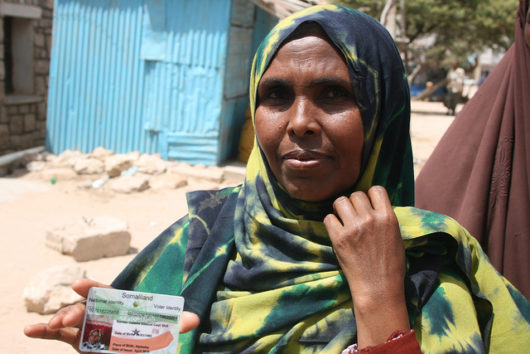
Empowering women has long been acknowledged as a key ingredient in reducing poverty and improving economic development. The United Nations (U.N.) has set 17 Sustainable Development Goals (SDGs) and gender equality underlies almost all of them. More specifically, the fifth SDG is set to achieve gender equality and empower all women and girls. As the World Health Organization (WHO) recognizes, these goals are interdependent, meaning gender equality is essential not only to the economic prosperity of the communities but for other important issues like health and sustainability as well.
Even today, gender inequality persists worldwide, depriving women of basic human rights and equal opportunities. In poverty-stricken communities around the world, an estimated 90 percent sustain long-standing social practices that devalue women.
Need for Identification
Breaking these modes will require great efforts. Both legal and cultural strides need to change in order to counter deeply ingrained discrimination throughout societies. Studies by the U.N. and UNHCR found that women in conflict and poverty affected regions do not have adequate identification documents. These documents are necessary for achieving the benefits of civic and public life.
Access to identification closes the gender gap in the developing world, but a lack of awareness around the documents prevents women from obtaining them in some cases. Many believe that identification cards are only necessary for exceptional circumstances when in reality they are needed to make the most of social programs and civil rights.
Having personal identification cards in the developing world acts as an important stepping stone. In having the ability to access decisive services and claim entitlements as citizens, women are able to increase their voice and agency through civic participation, access to finances and voting. In assisting women’s social engagement, identification closes the gender gap.
Example of Myanmar
All factors of the country development are intertwined. Women’s documentation is often essential to the peace process in some countries. Resolving the issue of land rights, for example, is crucial to the current conflict in Myanmar, and gender inclusion in the peace process is fundamental to reaching a genuine peace accord. The laws in this country allow women to register and co-register for the property even if they are not head of the household.
While progressive laws have been enacted, there lies a major gap between the law and the reality that women face. Cultural conventions exclude women from participating in land governing let alone a peace accord, making it essential that their names are registered to partake in community meetings. The decisions affect both women and men, making identification an important transition step in transforming cultural norms in poverty and conflict-stricken regions.
Problems with Women Identification
In 2012, four out of every 10 infants born worldwide were not registered with civil governments or authorities. Globally, 750 million children lack identification. A 2013 UNICEF survey found that there is no major disparity between the birth registration of boys and girls.
Evidence suggests that adult women, however, face gender-specific barriers to getting identification documents. Women must provide proof of marriage, additional family signatures and conduct many other steps in the process to obtain identification that men simply do not have to deal with. Unmarried women especially face discrimination as, without a male counterpart or marriage certificate, obtaining identification documents (IDs) is often impossible. IDs are also optional for women, although essential to accessing civic opportunities and required for men.
Increasing access to identification closes the gender gap by helping international organizations better plan and target gender inequality in poverty. The incompleteness of civil registration for women has generated holes in statistics and data for organizations like the World Bank to measure the progress of women in the developing world.
Changing Cultural Barriers
Equality is fundamental to building strong societies. Having active members at every level of a community makes the plight of poverty that much easier to conquer. Gender equality is no different. Ensuring that more than half of the population can do its part must remain at the foremost of poverty reduction endeavors.
While the legal framework with these notions in mind has changed for the better, an uphill battle in the mindset of the communities is much needed. Obtaining identification is the first step in employing available programs and in realizing the agency needed to transform the cultural barriers that devalue women.
– Joseph Ventura
Photo: Flickr
