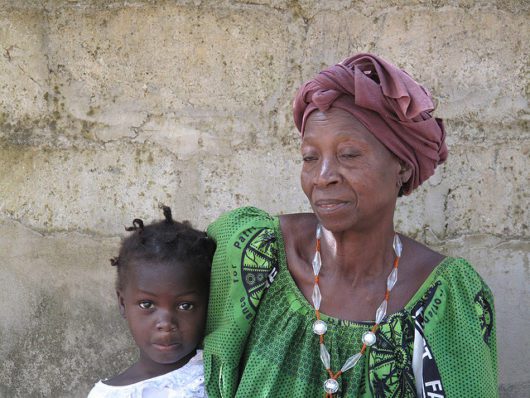
Migration from The Gambia, a nation located in West Africa, has become extremely common due to widespread poverty and the belief that Europe offers more opportunities for success. Thousands of Gambians have begun the difficult journey across Africa to Libya, where they hope to cross the Mediterranean and enter Europe. Families sometimes believe so strongly that Europe is the solution for their children that they spend the last of their money to sponsor the trip.
Journey to Europe
Many migrants are not successful with this journey, however, and get stuck in Libyan prisons, where they often face gruelling conditions. Women are also particularly vulnerable, some of whom have been kidnapped and sold while attempting to reach Europe. Migrants who return to The Gambia because they are unable to get to Europe, perhaps due to detention in Libya, are often looked down upon by other Gambians, who believe that they simply did not try hard enough.
In response to the growing dangers associated with migration, several organizations are working to decrease migration from The Gambia and help Gambians who tried to migrate resettle in their country. In The Gambia, Youths Against Irregular Migration (YAIM) and Returnees From The Backway (RFTB) were formed, while international organizations including the European Union’s Trust Fund for Africa (EUTF) and the International Organization for Migration (IOM) developed programs for this cause.
Youths Against Irregular Migration (YAIM)
YAIM was created in 2017 by Gambian youths detained in a Libyan prison. One of the founders, Ndow, told IRIN News, “We were treated like slaves; we didn’t take a bath for months, so we tried to escape and they beat us seriously.” After this experience, Ndow, along with Sallah, Tunkara and Keita decided that once they got out of the prison they would share their stories and try to prevent other Gambians from attempting to migrate.
YAIM is also working to help Gambians find opportunities in The Gambia, rather than looking to Europe. They advocate for looking for local opportunities, although they recognize this persepcitve requires a significant change in the mindsets of many Gambians, as Europe has been idealized for so long.
YAIM spreads their message through social media, roadshows and airwaves. They finished their second “youth caravan” in the summer of 2018, both of which were sponsored by the German Embassy in Banjul. Thirty YAIM members traveled as a part of the caravan to two different regions in The Gambia, and spoke in public, high-traffic areas. YAIM recognizes the importance of its work and hopes that their efforts will make a difference in reducing migration from The Gambia.
Returnees From The Backway (RFTB)
Like YAIM, RFTB was founded in a Libyan detention center. This group focuses on helping migrants who have returned to The Gambia transition back into society by reducing the stigma associated with returning to the nation. RFTB spreads their message through tea ritual sessions, known as attaya, which are often attended by Gambian men.
Ultimately, RFTB wants to provide agricultural training to returnees and use the land given to them by the Kerewan local government to set up a farm run by returned migrants. If this project is successful, RFTB would like to expand and set up farms across the nation.
European Union’s Trust Fund for Africa (EUTF)
At an international level, the European Union established the Trust Fund for Africa in 2015 to help manage the flow of migrants from Africa into Europe. As a part of this Trust Fund, the Youth Empowerment Program (YEP) — which currently has 11 million Euros in funding — wants to help young people in Africa gain entrepreneurial skills to help create jobs and expand markets.
In The Gambia, YEP plans to help over 7,000 youths complete technical or vocational training, support the return of migrants from Europe, encourage the creation of modern manufacturing jobs and services, and raise awareness amongst young populations about the importance of skills training. Their goal is to decrease migration from The Gambia by invigorating the Gambian economy and showing youths that they do not need to leave.
International Organization for Migration (IOM)
IOM launched their Migrant Protection and Reintegration program in November of 2017. This program will offer reintegration packages to migrants that will help them rebuild their lives in The Gambia. Like the other three organizations, they are attempting to change the mindset of Gambians, encouraging them to view The Gambia as a place with opportunity and potential.
One of the specific projects the IOM is supporting is the founding of a large-scale chicken raising business in Parkour that will provide employment to returnees and help them regain their social standing and earn an income. Similar to the RFTB’s plan to create a migrant-run farm, this initiative will empower returnees and perhaps inspire others to consider returning if they know there are opportunities.
Advocacy and Prosperity
These local and international organizations are taking an important step by focusing on the improvement of The Gambia and discouraging people from embarking on a journey that is often unsafe and sometimes fatal.
Once more people understand the realities of migrating and develop more faith in their country, migration from The Gambia will hopefully begin to decline, increasing safety and prosperity.
– Sara Olk
Photo: Flickr

Fighting Food Waste in Denmark
One out of every eight people worldwide doesn’t have adequate access to food. This sobering statistic is even more upsetting when contrasted with the amount of food wasted each year that amounts to 1.3 billion tons. That is almost one-third of all food produced for humans. This amount is well beyond what would be necessary to feed every hungry person alive today.
Facts like these are why the U.N. is committed to fighting food waste. The 12th U.N. Sustainable Development Goal includes the target of cutting international food waste in half by 2030.
Of course, this goal can only be met through international cooperation. Thankfully, many countries around the world are taking this issue seriously. In recent years, Denmark has risen to become one of the world’s leaders in fighting food waste.
Small Movements, Big Impacts
Despite being one of the smaller nations in Europe and having a population smaller than London, Denmark has more projects aimed at reducing food waste than any other European nation. The country has achieved this by using a highly cooperative approach between the government, businesses and nonprofit organizations.
Several food banks and other nonprofits in Denmark get their supplies through donations from local supermarkets or restaurants. One supermarket in Copenhagen, Wefood, only sells food that would have otherwise been wasted. Typically, this is food that has reached its sell-by date or has not been used up at the end of restaurant business hours. Sometimes, this food consists of perfectly healthy fruits and vegetables that simply appear too misshapen and unattractive to reach market shelves.
Denmark’s government works to support these projects with a combination of funding and official awareness campaigns.
Stop Wasting Food
One of the largest and most impactful waste-fighting organizations in Denmark is Stop Spild Af Mad, known in English as Stop Wasting Food. This nonprofit organization was founded in 2008 and has been working toward achieving Sustainable Development Goal number 12 ever since.
Stop Wasting Food has worked directly with the Danish government and has ongoing partnerships with both E.U. and U.N. organizations. It also harnesses nationwide media attention to raise public awareness of food waste and lobbies supermarkets to implement waste-reducing policies in their stores.
As young as Stop Wasting Food is, it has been instrumental in helping Denmark achieve impressive results. Between the efforts of the government, businesses and willing Danish citizens, Denmark has been able to cut its food waste by a quarter since 2010 alone.
Global Applications
Abovementioned one-quarter mark is significant. If the entire world could achieve the same reduction of food waste, we could feed nearly 95 percent of all food-deprived people in the world without needing to produce any additional food.
The importance of fighting food waste will only become more obvious as we approach the 2030 date set by the Sustainable Development Goals. By 2050, the global population could spike up to nine billion and require significant additional resources for our food production to keep up. While reducing waste may not completely negate this need, it could give us the means to sustainably keep hundreds of millions fed.
Whatever the case, Denmark is a shining example for the rest of the world, and particularly for developed countries, to look up to. Denmark’s policies have both provided cheap sources of food for its own poorer citizens and a roadmap for how government and private cooperation can achieve significant change in only a few years.
Joshua Henreckson
Photo: Flickr
Top 10 Facts about Girls’ Education in Iraq
A history of conflict has negatively reflected on girls’ educational future in Iraq. Education levels have never returned to their pre-Gulf War levels. Furthermore, conflict with ISIS has erased much of the progress for girls’ education seen through higher enrollment rates in times of relative peace. Therefore, a rough chronology of conflicts is useful when reading the top 10 facts about girls’ education in Iraq, as these events drastically change the quality of education.
Top 10 Facts About Girls’ Education in Iraq
As it can be seen through these top 10 facts about girls’ education in Iraq, the education system continues to be plagued by conflicts in the country, and girls are disproportionately at higher risk of dropping out or repeating grades if remained in school.
While this is certainly a cause for concern, the risks for girls’ education in Iraq have not gone unnoticed and many strive to change this. The Iraqi education system was once hailed as the best in the Middle East and many nongovernmental organizations, domestic policymakers, politicians, celebrities, and the local populous desire to return it to this position of dominance.
Georgie Giannopoulos
Photo: Flickr
Five Major Changes Occurring in Ethiopia
Ethiopia has the second largest population in Africa that currently serves as the seat for the African Union. It has a vast history that stretches back to over 2000 years in which kingdoms, monarchies, communism and capitalism have left their footprints.
In recent years the push toward building a strong democratic state with free and fair elections has been a critical question, causing a lot of friction between the ruling party, who has a strong grip on the social, political and economic authority for the past 27 years. This has tarnished the reputation that the government has been trying to create through one of the fastest growing economies in the world with several human rights violations including torture and extrajudicial killing of political dissidents.
The following five major changes occurring in Ethiopia this summer, however, show a different direction that the new leadership is taking with the support of the public through several major reforms.
Five Major Changes Occurring in Ethiopia
Following his rise to power, the government has ended the state of emergency, released numerous political prisoners, held public forums with its citizens nationally and reached the diaspora community in The United States. Furthermore, the state of proxy war and hostility the country faced on its borders by Eritrea has been resolved through a peace deal.
This summer has been a time of monumental political change in Ethiopia both nationally and abroad. The five major changes occurring in Ethiopia this summer were launched with the inauguration of the new prime minister Abiy Ahmed, who has gained more public support than arguably any other leader in the country’s long history. Despite the several security issues, the new leadership is facing and carrying out these changes. The public support remains intact, and the country is making efforts towards building a peaceful and prosperous future.
– Bilen Kassie
Photo: Flickr
Top 10 Facts About Living Conditions in Niger
Following its independence from France in 1960, Niger has faced violent political instability, deadly droughts and difficult living conditions. The following are the top ten facts about living conditions in Niger.
Top Ten Facts About Living Conditions in Niger
In 2016, Save the Children declared Niger the “worst country for girls” based on two key criteria: child marriage rates and adolescent fertility.
A high rate of child marriage often holds girls back. Over three quarters of Nigerien girls marry before the age of 18. Early marriage only continues the cycle of poverty: girls who marry earlier are less likely to finish school than girls who marry later, which means that they earn less income on average.
High adolescent fertility puts women in danger. In Niger, one in five teenage girls gives birth every year. Nigerien women have the highest birthrate in the world, at over seven births per woman. And childbirth is particularly dangerous for younger girls: WHO estimates that pregnancy complications are the second leading cause of death for adolescent girls worldwide.
“Husband schools” help build stronger families. To ease the burden on Nigerien woman, men learn the importance of helping with what was traditionally considered “women’s work.” The nonprofit Mercy Corps invites men to “husband schools,” where they learn about family planning, cooking and sanitation. Mercy Corps runs 124 such schools in Niger.
High illiteracy remains a stubborn challenge. Only one in five adults in Niger are literate, and as a former French colony, the official language of schooling in Niger is French. Most Nigeriens, though, speak local tribal languages instead, making French literacy a particularly difficult goal.
Frequent droughts make food scarce. Since 2000, Niger has weathered four extreme climate-related food crises. In such seasons of poor rainfall, 30 percent of people cannot meet their food needs. In 2017, one and a half million Nigeriens were food insecure, and 42 percent of children under age 5 faced chronic malnutrition.
The World Food Program protects Nigerien children. To tackle the effects of food insecurity, the World Food Program treated 650,000 acutely malnourished children and nearly half a million malnourished pregnant and lactating mothers in 2015 alone.
Uranium mining depletes Nigerien resources. The French company Areva mines for uranium in the Nigerien town of Arlit. Areva uses millions of liters of water each day, while Arlit’s vegetation has entirely dried up. A 2010 Greenpeace study showed that over its decade of operation, Areva has used 270 billion liters of water, entirely depleting ancient aquifers.
Mining contaminates Nigerien water. A 2009 study by Greenpeace showed that five out of six examined water wells in Arlit contained excess radioactivity. And a 2004 study by the French Commission for Independent Research and Information on Radiation showed that uranium levels found in Arlit’s drinking water were up to 100 times the WHO safety standard.
Activists stand up against corporate exploitation. After her mother, father and husband died from cancer traced back to radon exposure from Areva’s uranium mines, Jacqueline Gaudet founded the organization Mounana. The organization works with Doctors of the World to collect testimonies from Areva’s former employees to build court cases.
Remedying Colonialism
These top ten facts about living conditions in Niger reflect the need for international assistance to help remedy the harmful effects of colonialism. While living conditions in Niger are difficult, dedicated activists and nonprofits are steadily changing the landscape.
– Ivana Bozic
Photo: Flickr
Life Expectancy in the United States
The United States is most known for its freedom, economic predominance and technological advancement. However, compared to other developed countries in the world, the United States ranks at or near the bottom in terms of mortality and life expectancy while surpassing other countries in health spending.
Rank of US in OECD
Along with the United States, 35 other countries make up the Organization for Economic Co-operation and Development (OECD), an intergovernmental economic organization that keeps track of developed countries’ economic and human development progress.
In comparison to other OECD countries, the United States ranks 29 for infant mortality and 26 for overall life expectancy. While the life expectancy in the United States has dropped for the second year in a row, this is not surprising as the life expectancy of the country has been dropping for decades.
In 1960, the United States had the highest life expectancy, 2.4 years higher than the average of OECD countries. However, in 1998, the United States dropped below the OECD average and plateaued since. The new average life expectancy in the United States is 78.7 years, which is 1.5 years less than the average life of all OECD countries of 80.3.
To get a better understanding of the life expectancy in the United States, similarities and differences between the United States and other developed countries, the factors that affect the life expectancy rate in the United States and the improvements that can be made to increase the life expectancy have to be taken into consideration.
Factors That Affect the Life Expectancy in the United States
The National Research Council and Institute of Medicine studied the reasons as to why the life expectancy in the United States continue to fall below the OECD average. The researchers found a plethora of problems including obesity, diabetes, HIV/AIDS and homicides.
However, they also found drugs to be one of the main contributing factors with a 137 percent increase in fatal drug overdoses between 2000 and 2014. To emphasize the significance of fatal drug overdoses in the United States- the average of 115 Americans dies every day from an opioid overdose.
On top of that, Fortune reports that six Americans die from alcohol abuse daily, the highest rate in 35 years.
Besides drugs and alcohol, the United States faces health obstacles as well. According to CNN, the top 10 leading causes of death in the United States are heart disease, cancer, chronic lower respiratory disease, stroke, diabetes, influenza and pneumonia, kidney disease, Alzheimer’s disease, suicide and unintentional injuries. These causes account for 74.1 percent of all deaths in the United States.
However, the chances of having any of these problems can be reduced by taking care of oneself physically and mentally through exercise, eating right and in overall, living a positive and healthy lifestyle.
Despite the increase of the deaths in the United States, seven of the top 10 leading causes have decreased in recent years: heart disease, cancer, chronic lower respiratory disease, stroke, diabetes, influenza and pneumonia and kidney disease.
Organizations Improving the Situation
With the help of organizations such as the World Health Organization and Save the Children, the United States, along with other countries, can continue to make economic and human developmental progress. The question of improvement in the quality of life is one most important questions that the United States has to address in the upcoming years.
– Kristen Uedoi
Photo: Flickr
4 Organizations Working to Decrease Migration from The Gambia
Migration from The Gambia, a nation located in West Africa, has become extremely common due to widespread poverty and the belief that Europe offers more opportunities for success. Thousands of Gambians have begun the difficult journey across Africa to Libya, where they hope to cross the Mediterranean and enter Europe. Families sometimes believe so strongly that Europe is the solution for their children that they spend the last of their money to sponsor the trip.
Journey to Europe
Many migrants are not successful with this journey, however, and get stuck in Libyan prisons, where they often face gruelling conditions. Women are also particularly vulnerable, some of whom have been kidnapped and sold while attempting to reach Europe. Migrants who return to The Gambia because they are unable to get to Europe, perhaps due to detention in Libya, are often looked down upon by other Gambians, who believe that they simply did not try hard enough.
In response to the growing dangers associated with migration, several organizations are working to decrease migration from The Gambia and help Gambians who tried to migrate resettle in their country. In The Gambia, Youths Against Irregular Migration (YAIM) and Returnees From The Backway (RFTB) were formed, while international organizations including the European Union’s Trust Fund for Africa (EUTF) and the International Organization for Migration (IOM) developed programs for this cause.
Youths Against Irregular Migration (YAIM)
YAIM was created in 2017 by Gambian youths detained in a Libyan prison. One of the founders, Ndow, told IRIN News, “We were treated like slaves; we didn’t take a bath for months, so we tried to escape and they beat us seriously.” After this experience, Ndow, along with Sallah, Tunkara and Keita decided that once they got out of the prison they would share their stories and try to prevent other Gambians from attempting to migrate.
YAIM is also working to help Gambians find opportunities in The Gambia, rather than looking to Europe. They advocate for looking for local opportunities, although they recognize this persepcitve requires a significant change in the mindsets of many Gambians, as Europe has been idealized for so long.
YAIM spreads their message through social media, roadshows and airwaves. They finished their second “youth caravan” in the summer of 2018, both of which were sponsored by the German Embassy in Banjul. Thirty YAIM members traveled as a part of the caravan to two different regions in The Gambia, and spoke in public, high-traffic areas. YAIM recognizes the importance of its work and hopes that their efforts will make a difference in reducing migration from The Gambia.
Returnees From The Backway (RFTB)
Like YAIM, RFTB was founded in a Libyan detention center. This group focuses on helping migrants who have returned to The Gambia transition back into society by reducing the stigma associated with returning to the nation. RFTB spreads their message through tea ritual sessions, known as attaya, which are often attended by Gambian men.
Ultimately, RFTB wants to provide agricultural training to returnees and use the land given to them by the Kerewan local government to set up a farm run by returned migrants. If this project is successful, RFTB would like to expand and set up farms across the nation.
European Union’s Trust Fund for Africa (EUTF)
At an international level, the European Union established the Trust Fund for Africa in 2015 to help manage the flow of migrants from Africa into Europe. As a part of this Trust Fund, the Youth Empowerment Program (YEP) — which currently has 11 million Euros in funding — wants to help young people in Africa gain entrepreneurial skills to help create jobs and expand markets.
In The Gambia, YEP plans to help over 7,000 youths complete technical or vocational training, support the return of migrants from Europe, encourage the creation of modern manufacturing jobs and services, and raise awareness amongst young populations about the importance of skills training. Their goal is to decrease migration from The Gambia by invigorating the Gambian economy and showing youths that they do not need to leave.
International Organization for Migration (IOM)
IOM launched their Migrant Protection and Reintegration program in November of 2017. This program will offer reintegration packages to migrants that will help them rebuild their lives in The Gambia. Like the other three organizations, they are attempting to change the mindset of Gambians, encouraging them to view The Gambia as a place with opportunity and potential.
One of the specific projects the IOM is supporting is the founding of a large-scale chicken raising business in Parkour that will provide employment to returnees and help them regain their social standing and earn an income. Similar to the RFTB’s plan to create a migrant-run farm, this initiative will empower returnees and perhaps inspire others to consider returning if they know there are opportunities.
Advocacy and Prosperity
These local and international organizations are taking an important step by focusing on the improvement of The Gambia and discouraging people from embarking on a journey that is often unsafe and sometimes fatal.
Once more people understand the realities of migrating and develop more faith in their country, migration from The Gambia will hopefully begin to decline, increasing safety and prosperity.
– Sara Olk
Photo: Flickr
7 Facts about Fishermen Poverty in the South China Sea
The South China Sea represents more than just a geopolitical struggle; it is a hotspot for fishing. Beijing claims that its historic rights give it ownership inside the so-called Nine-Dash Line, covering around 80 percent of the South China Sea. These claims contradict maritime laws, among them The United Nations Convention on the Law of the Sea, and have received backlash from several Southeast Asian countries.
For example, China, Taiwan, the Philippines, Malaysia, Brunei and Vietnam all hold overlapping claims over the Spratlys Islands, a group of islands, archipelagos and reefs. Aggression from all sides and a lack of cooperation on fishing regulations have endangered the livelihoods of fishermen, who rely on the South China Sea for sustenance. Here are seven facts about fishermen poverty in the South China Sea:
7 Facts about Fishermen Poverty in the South China Sea
The South China Sea fisheries constitute the economic lifeblood of claimant states. They are the home of upwards of 3,365 species of marine fish, and 55 percent of marine fishing vessels operate in the South China Sea. Moreover, approximately 12 percent of global fishing catches occur there. In addition to being a source of nutrition, the fisheries provide employment to at least 3.7 million people.
Overfishing has depleted the fishing reserves of the South China Sea. A Stimson report released in December 2012 found that shallow reefs and shoals have been exploited to their limit. Relative to other regions of Earth, portions of the South China Sea are among the most highly affected marine ecosystems.
Coastal development has further aggravated marine species. Mangroves, for example, occupy a mere 70 percent of their original land area in the South China Sea, and seagrass beds have shrunk to 50 percent of pre-industrial levels. Industrial pollutants, tourism and sediment runoff have endangered marine species, which use coastal habitats for spawning purposes. When these coastal habitats become depleted, fishermen venture beyond national limits, leading to confrontations at sea.
Overexploitation of stocks has forced fishermen to turn to dangerous fishing techniques. In order to make up for economic losses, fishermen have used explosives and cyanide to boost yields. Some have resorted to blast fishing, in which dynamite is used to kills schools of fish. This allows for easy collection, but it seriously harms the coral reefs and seabed in the process. In Indonesia alone, fishing explosives have cost up to $3.8 billion between 1980 and 2000.
Fishermen poverty is a common type of poverty in countries surrounding the South China Sea. 80 percent of Indonesian fishing households earn incomes below the country’s poverty line. In the Tay Ninh province of Vietnam, people working in the fisheries sector made up 88 percent of very low-income households in 1999. Moreover, poverty is more prevalent in Filipino fishing households than in the average Filipino household.
Legal uncertainty about the status of artificial islands and false claims in the South China Sea have exacerbated tensions between fishermen from different Southeast Asian nations. Maritime border disputes have prevented countries from establishing a framework for cooperation. With no regulation of fishing activities, illegal and unreported fishing has gone rampant in the South China Sea.
Border disputes have put the lives of Southeast Asian fishermen in danger. CNN reported that, in 2015, Chinese vessels attacked 200 Ly Son (Vietnamese) fishermen and 17 fishing boats. Starting in 2005 and lasting seven years, Chinese government ships kidnapped Vietnamese fishers for ransom near The Paracel Islands. Romel Cejuela, a Filipino fisherman, explained that the Chinese Coast Guard personnel “board our boats, look at where we store the fish and take the best ones.” China is not the sole perpetrator of these acts of violence and robbery. In 2017, Reuters article Indonesia’s navy shot four Vietnamese fishermen on a fishing boat in the South China Sea.
On June 27, 2018, representatives from the member states of The Association of Southeast Asian Nations (ASEAN) and China met in Changsha to negotiate a “code of conduct” for vessels traveling through the South China Sea. For the first time, China and ASEAN reached a consensus on a set of maritime rules and planned to hold joint maritime exercises in the future. While some critics dismiss the meeting as a Chinese ploy, agreements like this one are necessary for fishermen whose lives depend on stability in the South China Sea.
To alleviate fishermen poverty and create an environment more conducive to cooperation and sustainable fishing, it is essential that Southeast Asian nations delineate territorial claims and abide by a rules-based international order. With the negotiations currently underway, this may occur sooner than originally anticipated.
– Mark Blekherman
Photo: Flickr
US Congress Defends Foreign Aid
In mid-August 2018, the Trump administration announced that it was considering freezing more than $3 billion in unspent foreign assistance funding allocated to The State Department and The U.S. Agency for International Development. The proposal, put forth by The Office of Budget and Management, would place a freeze on all unspent foreign aid funding for 45 days. During that time, the U.S. Congress would have to either approve the proposed cuts or reject them and mandate the administration to allocate the funds as specified by the Congressional budget.
Budget Cuts Proposal Did Not Follow Procedure
The funding freeze would have taken effect less than 45 days before the end of the fiscal year; therefore, it would not have provided Congress with the required legal timeframe set to address the proposed rescissions before the close of the fiscal year to the return of the frozen funds to the U.S. Treasury. The precedent for the Trump administration’s move is spelled out in The Congressional Budget and Impoundment Control Act, which allows unspent funds to be frozen for 45 days by the administration. However, the legality of this current move by the President has been questioned given the disregard for the required review time by Congress.
A letter sent to Secretary of State Mike Pompeo and OMB Director Mick Mulvaney, vice chairman of the Senate Appropriations Committee, from Sen. Patrick J. Leahy (D-Vt.), warned against thwarting the will of Congress by submitting recessions without giving lawmakers the required time to act. Senate Foreign Relations Committee Chairman Bob Corker (R-Tenn.) also questioned the proposed plan saying, “It would be a step of bad faith […] I don’t how they can do that legally.”
The concerns expressed by Senators Leahy and Corker reflect a continuing Congressional resistance to Presidential attacks on U.S. foreign assistance funding. This attempt to roll back foreign aid spending is not the first time that the current administration has made clear its lack of interest in bolstering international development. The President’s 2018 and 2019 budget proposals recommended a 28 percent cut in funding for The State Department and USAID. In addition, the budgets have implied a need to consolidate USAID and The State Department into one group, therefore, reducing the size and autonomy of the U.S. government’s foreign aid program.
Bi-Partisan Support of Foreign Aid Remains Strong
Despite the intentions of the executive branch, lawmakers on both sides of the aisle have remained in support of foreign aid programs and have largely disregarded budget recommendations from The White House and maintained established levels of foreign aid funding. Many members of The U.S. Congress have spoken out in favor of the benefits that foreign aid brings to The U.S., citing programs like The President’s Emergency Plan for AIDS Relief (PEPFAR), which has played a major role in reducing the global AIDS death toll by half since 2005, and The President’s Malaria Initiative (PMI), which has saved an estimated 7 million lives since 2000, as essential governmental initiatives.
Recognizing the bipartisan resistance in The U.S. Congress and from State Department head Mike Pompeo, the Trump administration announced in late-August that it would be dropping the proposal. Sen. Patrick J. Leahy praised this move commenting, “Rescinding funds that had been agreed to by Congress and signed into law by the President, in the waning days of the fiscal year, would have set a terrible precedent and harmed programs that further United States interests around the world.” Secretary of State Mike Pompeo has also received acknowledgment for his defense of the funding for his department, which would have been reduced by almost ten percent had the administration’s proposal been enacted.
Though, in this case, the fund allocated by The U.S. Congress for foreign assistance programs was left in place, the Trump administration has set a precedent throughout its term of hostility towards that aspect of the bureaucracy. In this sense, there is much at stake for the future of U.S. foreign assistance. However, what has been demonstrated thus far is that lawmakers in The U.S. Congress remain in support of foreign assistance/ development and will take action to uphold its place within the U.S. government.
– Clarke Hallum
Photo: Flickr
Top 10 Facts About Living Conditions in Nepal
The world’s tallest mountains and most remote areas exist in Nepal, a landlocked country caught between India and China. As a new democracy, Nepal is still trying to become a stable nation after years of war and environmental catastrophe. Here are the top 10 facts about living conditions in Nepal:
Top 10 Facts About Living Conditions in Nepal
As Nepal moves forward, the government will need to address the issues listed in the top 10 facts about living conditions in Nepal as well as many other problems that are born out of extreme poverty. With a new government at the helm and with international aid, Nepal has the chance to continue to make progress and become a thriving economy.
– Laura Landrum
Photo: Flickr
Movement in Progress: 10 Facts on Forced Migration
Forced migration is ever-present in society due to various coercive factors. From cases in the United States to Syria and the Democratic Republic of Congo, the practice can be seen on almost every continent. The International Organization for Migration defines forced migration as the “movement of people caused by threats to their livelihoods.” This article will discuss 10 facts on forced migration that are the most critical in the world right now.
10 Facts on Forced Migration
Columbia University gives categories to displaced persons: conflict-induced and disaster-induced. Those who are displaced by conflict are those who fled their homes due to violence — this circumstance accounts for about 12 million people. Disaster-induced displaced persons are those who undergo and escape natural disaster or human-made disasters such as floods, earthquakes, monsoons, deforestation or industrial accidents; this type of situation displaced about 19 million people in 2017.
The most common distinctions between displaced persons are refugees, asylum seekers and Internally Displaced Peoples (IDPs). As defined by the UNHCR, refugees are people who live outside of their home country due to the fear of persecution. Gaining refugee status is a legal process in which a person must be determined a refugee by international, national or local law. This process can be carried out by a country or by the UNHCR, and this process differs everywhere. Asylum seekers are those who have crossed borders to flee violence, but whose refugee status is undetermined. In contrast, IDPs are those who have been forced to flee their homes due to conflict or disaster but have yet to cross an international border.
Approximately 68.5 million people — mostly from Syria, Afghanistan, and South Sudan — have been forcibly displaced from their homes, which is the highest level of displacement in history. In 2017 alone, there were 30.6 million people displaced from their homes, approximately 11.8 million due to violent conflict or war, and 18.8 million due to natural disasters.
Forced migration impacts the most vulnerable of people. According to the UNHCR, 52 percent of refugees were under the age of 18, and there were approximately 174,000 unaccompanied or separated children. Children may experience obstacles to education as forced migrants, and experience many social and cultural challenges in a place away from their home country. Unaccompanied children experience different challenges as they often lack the same protections and support as children with adult care, and many may suffer or be taken advantage of in a new environment.
Sixty-eight percent of refugees came from Syria, Afghanistan, South Sudan, Myanmar and Somalia in 2017. In fact, 6.3 million refugees came from Syria, 2.6 million from Afghanistan, and 2.4 million from South Sudan. Out of the 25.4 million refugees reported in the world, these three countries, in particular, make up more than half of the refugee population. These refugees come from conflict and war-torn regions where choosing to stay could mean risking their lives.
One reason for the current peak refugee crisis is that only about 103,000 refugees were resettled in 2017. Resettlement is the relocation and integration of people (forced migrants in this case) into another country. The UNHCR lists resettlement as one of the three durable solutions to the refugee crisis as it is a long-term solution for those who cannot go back to their home country. Approximately 44,400 people are being displaced a day, and unfortunately, this resettlement number does not make up the difference. Resettlement numbers are so low because many developed countries are not resettling as many people as they usually do. This decrease could be due to the highly dependent nature of resettlement on political climates as well as the current administrations in charge.
The countries hosting the most refugees are Iran, Lebanon, Pakistan, Uganda and Turkey. Relative to the national population, Lebanon hosted the most refugees of these countries with 1 out of 6 inhabitants being refugees. Jordan is next with 1 out of 14, followed by 1 out 23 in Turkey. Eighty-five percent of refugees in the world are going to other developing countries, and large amounts of displaced peoples can have severe effects on the global economy. There may be serious problems for national economies that lack enough jobs for displaced peoples who seek work, pressure can be put on already fragile infrastructure.
Refugees can benefit economies. In fact, many refugees in the United States pay more in taxes than they receive in benefits. In places that aided refugees in finding work, most were employed within 6 years of their settlement.
Forcible displacement is an issue receiving more attention in the media and one that people are becoming increasingly passionate about. The UNHCR is dedicated to helping those who are displaced in 128 countries, including those in Syria. The UNCHR not only aids refugees that live in Syria but also Syrian Internally Displaced Peoples. The UNHCR provides economic and legal assistance, as well as shelters, health services and violence protection.
Many local cities around the globe have resettlement agencies that aid refugees and other displaced peoples through their resettlement process. Many cities across the United States have an Ethiopian Community Development Council (ECDC), a non-profit responsible for resettling refugees into their communities. The ECDC’s work also involves community integration and education initiatives which shows their commitment to ensuring a happy and healthy future for their clients.
Work to Do
These 10 facts on forced migration help to show that there does not exist a simple solution to combat the forced migration crisis. Vulnerable people are still being forced from their homes and their livelihoods, and there is plenty of work that needs to be done. This work, however, has a dedicated workforce of people working hard for those who need it the most.
– Isabella Niemeyer
Photo: Flickr