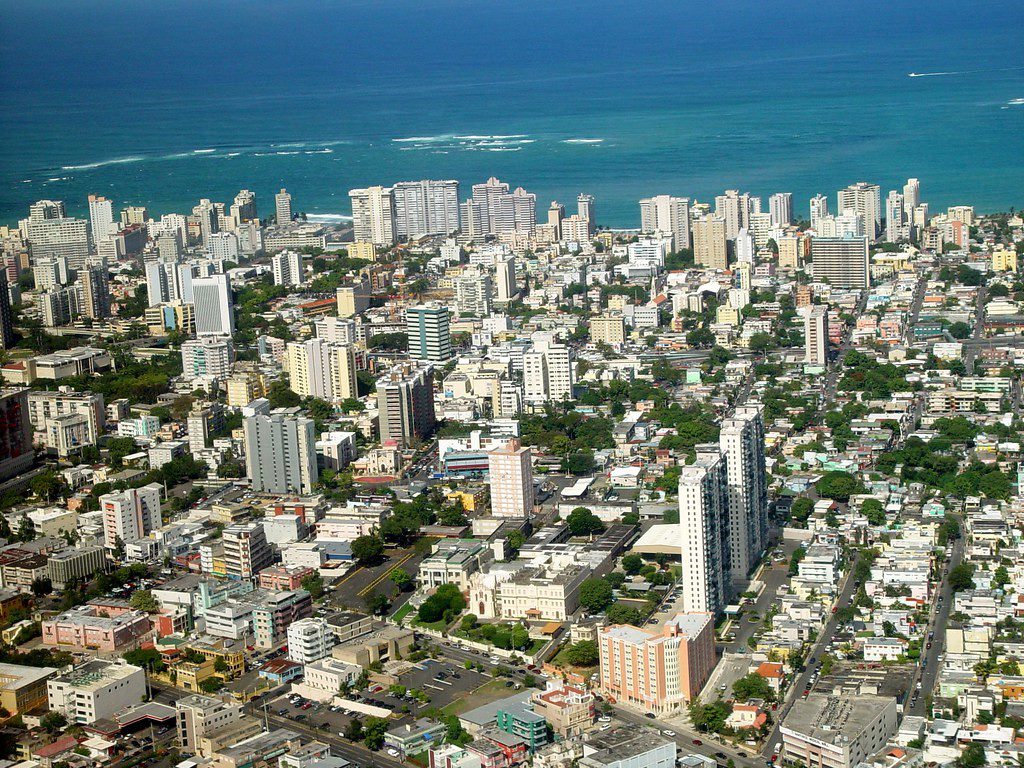
When Hurricane Maria hit Puerto Rico in September 2017, the agricultural sector of Puerto Rico suffered one of the most devastating losses in its history. The island lost about 80 percent of its entire crop value in the initial aftermath alone; according to the Puerto Rican Department of Agriculture, the damage amounted to approximately $780 million in lost agricultural yields. The organization, Boricua, however, promotes agroecology in the hopes of limiting agricultural damage in the face of future disasters.
The Impact and Aftermath of Hurricane Maria
For weeks after Maria, felled trees in the hundreds of thousands dominated the landscape of rural Puerto Rico, stripped of their leaves and bark. The storm also flattened fields of crops or simply blew them away. To make matters worse, the hurricane also killed thousands of livestock and decimated the infrastructure of the area.
For the few farmers who were still able to produce anything, the loss of infrastructure and supply chains rendered it virtually impossible to transport food from farms to cities or towns. Not long after the catastrophe ended, one dairy farmer reported that he had thrown out about 4,000 liters of milk a day for almost a week, since there was no way to transport or sell milk and nowhere to store it safely.
These losses occurred at the worst possible time; according to Carmen Yulin Cruz, the mayor of San Juan, the island of Puerto Rico had “only enough food for about a week.” Before the hurricane, Puerto Rico was importing roughly 80 percent of its food, a large percentage of which came from other islands in the Caribbean, including St. Martin and the Dominican Republic. Puerto Rico became vulnerable to starvation between the destruction of homes, roads and vehicles, as well as the hurricane’s damage on nearby islands that exported food to them.
Food Vulnerability and Efforts to Rebuild
Many Puerto Ricans described the aftermath of Maria as a revelation, exposing the vulnerability of an island dependent on external sources for all of its food. For Puerto Rico to avoid this vulnerability in the face of future disasters, it needed to be able to rely on its own agricultural sector – the same agricultural sector that Hurricane Maria had recently ripped to shreds.
Despite the destruction, some Puerto Ricans saw this as an opportunity to begin rebuilding. After the end of the catastrophe, the Organization Boricua de Agricultura Eco-Organica (often known simply as Boricua, a local word for a native Puerto Rican), along with various other local organizations, such as the Resiliency Fund, mobilized to clear roads and provide assistance and food to rural communities affected by the hurricane. This help came mainly in the form of solidarity brigades, which were groups of local volunteers who had banded together to help their neighbors survive and rebuild after Maria.
Organization Boricua
For the Organization Boricua, these relief brigades came in moving camps which would spend three or four days in each farm they visited. During this time, volunteers would help rebuild farm structures and repair damage to farmers’ houses, along with helping farmers replant crops that had been ruined or blown away.
These relief camps represented a long tradition for Boricua. The organization, which emerged in 1989, promotes agroecology and solidarity among rural communities in Puerto Rico. For Boricua, the use of volunteer brigades was not a new development in response to the hurricane, but an old tactic being put to use in rural Puerto Rico’s time of need. Farmers affiliated with the Organization Boricua frequently form brigades to help their neighbors in times of need. Needy farmers may invite volunteers from neighboring farms to come over with food or spare tools or simply to help with harvests, plantings or repairs.
Agroecology
However, the organization’s work goes beyond promoting solidarity and mutual aid. Boricua is a proponent of agroecology – an ecological approach to agriculture which promotes biodiversity, sustainability and the use of native vegetation in farming. In the aftermath of Hurricane Maria, Boricua relief brigades did more than simply help bereaved farmers keep their heads above water – the organization, along with many others, began preparing rural Puerto Rico for a more sustainable way of life.
Boricua promotes a holistic approach to farming, in which farms contribute to and rely on the natural biodiversity of their surroundings. In addition, agroecology allows farmers to stop being dependent on the use of commercial seeds, pesticides and fertilizers. By cutting free from commercial farming supplies, agroecology both fosters independence in small farms and denies the use of common agricultural practices that damage the environment.
Also, farmers in Puerto Rico have good reason to reject commercial agricultural practices. Research shows that one-third of greenhouse gas emissions come from agricultural production around the globe. Because of this, unsafe and unsustainable farming practices can come back to bite farmers; as the world’s climate grows warmer and more erratic, storms and droughts are growing more and more frequent. Hurricane Maria itself is a perfect example of this as the hurricane was one of the worst storms on record ever to hit Puerto Rico. Experts are worried that storms of Maria’s size and destructiveness may become the new norm if the pattern of global warming does not change. So, by turning Puerto Rico’s agricultural sector away from commercial practices, Boricua may be contributing a small part to the aversion of future storms like Maria.
In addition, there is a reason to believe that a more sustainable, more biodiverse method of farming would be less vulnerable in the face of another disaster like Maria. Research shows that smaller, diversified farms, on average, suffer less damage than larger farms that use monoculture.
Thanks to the efforts of the Organization Boricua and other local environmental organizations, Puerto Rican farmers have begun the slow climb out of the wreckage of Hurricane Maria and toward a greener, more sustainable future. Hopefully, if this trend continues, agriculture on the island will not only be able to heal from the hurricane’s damage but also better prepare itself for the next storm to come along.
– Keira Charles
Photo: Flickr

Chefs Aiding in the Fight Against Global Poverty
When one thinks about what it means to be a chef, whether celebrity or not, aiding in the fight against global poverty does not usually seem to be a prerequisite. However, as foodie culture is in its heyday in the United States, chefs are becoming more publicized in the fight against hunger, as well as bringing unfamiliar cultures to Americans via food. In addition, they often play custodians of the world via sustainability.
The history of chefs in the fight against global poverty within the U.S. and abroad is brief but significant. The creativity and innovation that chefs use to aid the less fortunate and encourage sustainability are inspiring and motivating, encouraging people to think outside the box.
Chefs and Other Cultures
The essence of a chef is that they are there to serve or at least there to create a dish for guests to enjoy. Though chefs all over the world prepare creative, exquisite and unimaginable meals, the thought that they can serve something other than food is overlooked. However, when one digs more into the existentially philosophical explanation of what chefs do in the modern era, it becomes apparent that chefs are not just serving food to their guests; they are also familiarizing guests with recipes from other cultures.
For example, when debating the best foodie destinations, many people start by naming the classics like Paris, Rome or Naples. However, when chefs serve dishes inspired by other cultures around the world, they shift the paradigm by making people familiar with places often overlooked. Anthony Bourdain’s show, “Part’s Unknown”, is an example of bringing people’s attention to different cultures; Bourdain used his reputation as a world-renowned chef to showcase the food and cultures of places that food critics do not usually discuss. He brought viewers to Tanzania, Trinidad and numerous other destinations that Americans forget as cultural destinations. Bourdain did this not by visiting the most elite restaurants in these places, but by eating the food of local street vendors and home cooked meals with the locals.
Nicholas Verdisco and No Kid Hungry
Portland chef, Nicholas Verdisco, a Jean-Georges alumni, spoke about the accessibility of other cultures in an interview with The Borgen Project, but speaking about the similarities between cultures: “Most cultures have a stuffed dough whether it be fried or steamed, think ravioli, dumplings or empanadas… [Simply] Flour and water.” Essentially, cultures have much more in common than one may think. People should not stray from various foods because they are different but enjoy them because of their similarities to more familiar foods. This is an important lesson when discussing how to familiarize different cultures to mainstream America.
Verdisco also talked about how he and other chefs fight against global poverty and poor living conditions. Verdisco focuses on feeding children that are hungry by working with multiple charity organizations, such as No Kid Hungry, a charitable organization that is working to end child hunger in the United States by providing children with access to food. Verdisco says that chefs feel that there is still a chance for children to not worry about where their next meal may come from. He also envisions that food may be their way out of poverty and its symptoms.
Other Chef Endeavours and Sustainability
Along these lines, many other chefs have worked with organizations that battle tough issues like hunger and child poverty; chefs have even created their own organizations. Notably, Jose Andres created Think Food Group which is an organization that attempts to bring food to those in need via education and innovation. Massimmo Botura created Food for Soul, which fights “food waste through social inclusion.”
Upon the lines of food waste, sustainability is also an important area of focus for many chefs around the world. Chef Verdiso told The Borgen Project, “I was raised to eat sustainable… Italians shop a couple of times a week. As a kid growing up I seemed to be at the grocery store all the time… It was definitely not a one stop and get all the shopping done… Now as a chef I write menus with the seasons and with the location of where I am cooking, try[ing] to buy from local farms.”
In terms of food waste, Chef Verdisco notes that chefs’ hands are tied behind their backs with the regulation of food disposal. Food redistribution is difficult without an organization like Think Food Group and most food redistribution organizations are understaffed, to begin with.
Never before have chefs had such an important role in reducing poverty and hunger. Advocacy groups and charitable organizations, sometimes created by chefs, allow chefs to reduce hunger and childhood poverty. With sustainability as a focal point, chefs are also, now more than ever, creating less food waste and a more educated citizenry through serving local and fresh foods. What people must keep in mind, though, is that many organizations that chefs work with suffer understaffing. Also, red tape makes it difficult for chefs to send food to various organizations after restaurants no longer need it.
– Kurt Thiele
Photo: Flickr
U.S. Aid in Honduras, El Salvador, and Guatemala
In March 2019, President Trump announced wanting to cut U.S. aid in Honduras, El Salvador, and Guatemala. These three countries are known as the Northern Triangle of the U.S. government’s Plan of the Alliance for Prosperity (A4P) Initiative.
This is a U.S. strategy to address the security, governance and economic prosperity of these regions. The effectiveness of the A4P initiative and the numerous benefits it presents to both the Central American region and the United States has led to bipartisan support in the U.S., and to cease the aid to the northern triangle would be counterproductive to both the interests of the United States and Central America as a whole.
Since the 1980s, Central America has seen a decline in armed conflict and has become politically stable. Additionally, in the past decade has become a strong economic partner to the United States. While all of this implies significant progress in the region, the region remains stagnant with high crime rates and nearly half of the population currently lives in poverty.
Honduras: History, Plans, and Benefits
Honduras has received over $3 billion from USAID since 1961. The bulk of this aid impacts sustaining economic growth and establishing economic stability. Some efforts to obtaining these goals are increasing access to health services, expanding exports, improving education infrastructure and strengthening the nation’s democratic systems. In sum, these initiatives address threats to Hondura’s stability.
That being said, included are high crime and violence rates and widespread poverty and food insecurity. Additionally, there is a presence of government corruption and ineffectiveness. According to the U.S. Department of State, Honduras reliance on foreign assistance, provided by the U.S. is crucial to there development and safety.
El Salvador: History, Plans, and Benefits
Over the past 50 years, USAID assistance in El Salvador has provided economic opportunity. It aids in improving educational and health care systems and supporting disaster relief and economic development.
Specifically, the bulk of assistance in health care is targeting infant and maternal mortality. With the assistance of USAID, the mortality rate in El Salvador has dropped from 191/1000 to 16/1000 between 1960 and 2008. Access to education and literacy rates have steadily increased over the years as well.
Again, with the assistance of USAID, two key organizations for analyzing the major problems facing El Salvador have been developed. These are the Salvadoran Foundation for Economic and Social Development (FUSADES) and the Business Foundation for Educational Development (FEPADE).
Guatemala: History, Plans, and Benefits
Guatemala is experiencing population growth and has become the most populated country in Central America. The Guatemalan government and USAID have been working together to strengthen security for citizens and stimulate economic growth. The efforts of USAID have had a significantly positive impact on addressing some of Guatemala’s security concerns.
For example, there has been an 18 percent decline in robberies, 50 percent decline in the illicit drug trade and a 50 percent decline in blackmail in communities. In order to stimulate economic growth, USAID has focused on agriculture, education, and health. This development has created 8,734 jobs and the country has seen an increase in coffee sales and implemented widespread reading programs.
Importance of Continued Support
The Northern Triangle’s future development and prosperity are heavily reliant on the continued support of the United States. Eliminating U.S. aid in Honduras, El Salvador, and Guatemala would be counterproductive to both the goals of the U.S. and the Northern Triangle. U.S. aid to El Salvador, Honduras and Guatemala will be able to improve the overall quality of life of Central Americans.
– Randall Costa
Photo: Flickr
Boricua: Agroecology and Puerto Rico
When Hurricane Maria hit Puerto Rico in September 2017, the agricultural sector of Puerto Rico suffered one of the most devastating losses in its history. The island lost about 80 percent of its entire crop value in the initial aftermath alone; according to the Puerto Rican Department of Agriculture, the damage amounted to approximately $780 million in lost agricultural yields. The organization, Boricua, however, promotes agroecology in the hopes of limiting agricultural damage in the face of future disasters.
The Impact and Aftermath of Hurricane Maria
For weeks after Maria, felled trees in the hundreds of thousands dominated the landscape of rural Puerto Rico, stripped of their leaves and bark. The storm also flattened fields of crops or simply blew them away. To make matters worse, the hurricane also killed thousands of livestock and decimated the infrastructure of the area.
For the few farmers who were still able to produce anything, the loss of infrastructure and supply chains rendered it virtually impossible to transport food from farms to cities or towns. Not long after the catastrophe ended, one dairy farmer reported that he had thrown out about 4,000 liters of milk a day for almost a week, since there was no way to transport or sell milk and nowhere to store it safely.
These losses occurred at the worst possible time; according to Carmen Yulin Cruz, the mayor of San Juan, the island of Puerto Rico had “only enough food for about a week.” Before the hurricane, Puerto Rico was importing roughly 80 percent of its food, a large percentage of which came from other islands in the Caribbean, including St. Martin and the Dominican Republic. Puerto Rico became vulnerable to starvation between the destruction of homes, roads and vehicles, as well as the hurricane’s damage on nearby islands that exported food to them.
Food Vulnerability and Efforts to Rebuild
Many Puerto Ricans described the aftermath of Maria as a revelation, exposing the vulnerability of an island dependent on external sources for all of its food. For Puerto Rico to avoid this vulnerability in the face of future disasters, it needed to be able to rely on its own agricultural sector – the same agricultural sector that Hurricane Maria had recently ripped to shreds.
Despite the destruction, some Puerto Ricans saw this as an opportunity to begin rebuilding. After the end of the catastrophe, the Organization Boricua de Agricultura Eco-Organica (often known simply as Boricua, a local word for a native Puerto Rican), along with various other local organizations, such as the Resiliency Fund, mobilized to clear roads and provide assistance and food to rural communities affected by the hurricane. This help came mainly in the form of solidarity brigades, which were groups of local volunteers who had banded together to help their neighbors survive and rebuild after Maria.
Organization Boricua
For the Organization Boricua, these relief brigades came in moving camps which would spend three or four days in each farm they visited. During this time, volunteers would help rebuild farm structures and repair damage to farmers’ houses, along with helping farmers replant crops that had been ruined or blown away.
These relief camps represented a long tradition for Boricua. The organization, which emerged in 1989, promotes agroecology and solidarity among rural communities in Puerto Rico. For Boricua, the use of volunteer brigades was not a new development in response to the hurricane, but an old tactic being put to use in rural Puerto Rico’s time of need. Farmers affiliated with the Organization Boricua frequently form brigades to help their neighbors in times of need. Needy farmers may invite volunteers from neighboring farms to come over with food or spare tools or simply to help with harvests, plantings or repairs.
Agroecology
However, the organization’s work goes beyond promoting solidarity and mutual aid. Boricua is a proponent of agroecology – an ecological approach to agriculture which promotes biodiversity, sustainability and the use of native vegetation in farming. In the aftermath of Hurricane Maria, Boricua relief brigades did more than simply help bereaved farmers keep their heads above water – the organization, along with many others, began preparing rural Puerto Rico for a more sustainable way of life.
Boricua promotes a holistic approach to farming, in which farms contribute to and rely on the natural biodiversity of their surroundings. In addition, agroecology allows farmers to stop being dependent on the use of commercial seeds, pesticides and fertilizers. By cutting free from commercial farming supplies, agroecology both fosters independence in small farms and denies the use of common agricultural practices that damage the environment.
Also, farmers in Puerto Rico have good reason to reject commercial agricultural practices. Research shows that one-third of greenhouse gas emissions come from agricultural production around the globe. Because of this, unsafe and unsustainable farming practices can come back to bite farmers; as the world’s climate grows warmer and more erratic, storms and droughts are growing more and more frequent. Hurricane Maria itself is a perfect example of this as the hurricane was one of the worst storms on record ever to hit Puerto Rico. Experts are worried that storms of Maria’s size and destructiveness may become the new norm if the pattern of global warming does not change. So, by turning Puerto Rico’s agricultural sector away from commercial practices, Boricua may be contributing a small part to the aversion of future storms like Maria.
In addition, there is a reason to believe that a more sustainable, more biodiverse method of farming would be less vulnerable in the face of another disaster like Maria. Research shows that smaller, diversified farms, on average, suffer less damage than larger farms that use monoculture.
Thanks to the efforts of the Organization Boricua and other local environmental organizations, Puerto Rican farmers have begun the slow climb out of the wreckage of Hurricane Maria and toward a greener, more sustainable future. Hopefully, if this trend continues, agriculture on the island will not only be able to heal from the hurricane’s damage but also better prepare itself for the next storm to come along.
– Keira Charles
Photo: Flickr
Foreign Assistance Increasing Trade in Bangladesh
Increased global integration has happened in Bangladesh as a result of domestic policy changes and the ability to take advantage of emerging opportunities in the international market. The increasing openness of the country’s economy reflects this. With the trend of Bangladesh devoting foreign aid towards project aid, foreign assistance has been playing a key role in increasing trade in Bangladesh.
Aid for Trade in Bangladesh by the World Trade Organization
Trade liberalization is not enough as many developing countries are still unable to take full advantage of it due to a lack of proper infrastructure and the relation between aid and trade flows. As a result, the concept of Aid for Trade (AfT) emerged in 2005 as an effort to assist developing countries to overcome supply-side constraints and improve trade capacity. This initiative also included economic infrastructure and productive capacity-building.
Aid for Trade in Bangladesh has helped strengthen its trade-related supply-side capacities through technical and financial support from various bilateral and multilateral development partners. Bangladesh had received a significant amount of trade-related assistance even before the institutionalization of AfT in 2005.
Over the years, AfT disbursements in Bangladesh have increased from $376.2 million in 2006-2008 to $910.1 million in 2015. As of 2015, the top AfT disbursement donors were Japan with $359.5 million, IDA with $292.4 million, AsDB Special Funds with $88.8 million, the United States with $50.6 million and Korea with $35.2 million. Most of these disbursements went to energy generation and supply, followed by transportation and storage, and agriculture, forestry and fishing.
By 2015, exports of goods increased by 183 percent and commercial services increased by 81 percent. Import of goods increased by 164 percent and commercial services increased by 220 percent, reflecting the increase in trade in Bangladesh.
Bangladesh Regional Connectivity Project 1 by World Bank
On December 7, 2017, the World Bank signed a $150 million agreement with Bangladesh to improve trade-related infrastructure, systems and procedures so that Bangladesh could increase trade regionally with India, Bhutan and Nepal.
The Bangladesh Regional Connectivity Project 1 will develop and improve four land ports – Bhomra, Sheola, Ramgarh and Benapole, which are key ports for regional trade, especially with India. The modernization of these ports will not only increase trade in Bangladesh and its freight volumes but also lessen truck clearance times at border posts. For instance, the expectation is that clearance time will decrease by 83 percent in the Bhomra port.
According to Qimiao Fan, World Bank Country Director for Bangladesh, Bhutan and Nepal, “By addressing the key barriers to trade, especially transport and clearance delays, Bangladesh can become more competitive regionally and globally, and reach more emerging and dynamic markets with diversified product mix, including higher-value garments.”
The project will also develop a National Single Window, a single electronic gateway, through which traders can submit all import, export and transit information needed by the Customs and other regulatory organizations. Not only will it reduce transaction time and costs but also increase transparency in international trade procedures.
The project will also initiate skills development programs to include more women in formal trade networks and global value chains, while also developing the necessary infrastructure, logistics and transport services for women.
Trade Finance Program (TFP) by Asian Development Bank
ADB’s TFP provides guarantees and loans to banks in order to support trade and fill the gaps in trade financing. The program works with over 200 banks to provide financial support to companies so they can actively participate in exports and imports in the challenging markets of Asia. The program supports transactions of commodities and capital goods to medical supplies and consumer goods.
This program has been working with Bangladesh since 2004 and has been involved with 13 local partner banks. It has conducted around 1,983 transactions in total, supporting trade in Bangladesh worth $3.1 billion and benefiting 966 small and medium-sized enterprises in various sectors ranging from food and agricultural goods to commodities and industrial machinery, capital goods and more.
Dutch-Bangla Bank Ltd. (DBBL) in Bangladesh partnered with the bank of TFP in 2009 and signed an agreement on February 22, 2018, to receive $10 million in loans annually from the program to support and increase trade in Bangladesh.
Multilateral and bilateral trade preferences towards Least Developed Countries have played an important role in increasing trade in Bangladesh, specifically the growth of exports, and as a result, the contribution of export-oriented sectors towards the country’s GDP, employment and investment. With diversified programs from development partners, the expectation is that the quality, volume and transparency of trade will increase for Bangladesh.
– Farihah Tasneem
Photo: Flickr
Top 10 Facts About Queen Elizabeth II
Princess Elizabeth of York never had the intention to become Queen, but she is now Queen Elizabeth II, the reigning monarch of the United Kingdom of Great Britain and Northern Ireland, and its neighboring kingdoms and territories. In addition, she is the head of the Commonwealth of Nations. Her reign has lasted more 60 years, giving her the title of the longest-ruling monarch in British history. Just this past April 2019, the Queen celebrated her 93rd birthday and continues to make history till this day. Written below are the top 10 facts about Queen Elizabeth II that show a glimpse into her life.
Top 10 Facts About Queen Elizabeth II
These top 10 facts about Queen Elizabeth II only reinforce the fact that Her Majesty is one of the world’s most commemorated public figures in history. There are three generations of heirs lined up for the monarch after her reign including her son, Charles, Prince of Wales; her grandson, William, Duke of Cambridge; and her great-grandson, George, Prince of Cambridge. The legacy of the Royals will continue to create history for years to come due to Queen Elizabeth’s II influential reign over Britain.
– Jillian Rose
Photo: Flickr
3 Efforts to Improve Water Management in Armenia
With 25.7 percent of the population living below the poverty line, the people of Armenia consider water a luxury. Armenians face daily water shortages and unclean water supply in their homes. Despite this, several groups are working together to improve water management in Armenia. Maintaining a stable supply of water is an important step in lowering poverty and improving the lives of citizens.
3 Efforts to Improve Water Management in Armenia
The World Bank, the Global Water Partnership and the Asian Development Bank have changed lives because of their work to improve water management in Armenia. This is a small but mighty step towards decreasing poverty in Armenia.
– Katherine Desrosiers
Photo: Flickr
7 Facts About Living Conditions in Australia
In 2015, Australia was ranked as the second-best country in the world in terms of quality of life. This report was based on a number of living condition factors, including financial indicators, like average income, and health standards, education and life expectancy. The following 7 facts about living conditions in Australia further illustrate what life is like in the Land Down Under. Many of these facts are based upon data retrieved from the Organisation for Economic Cooperation and Development (OECD), comprised of 36 member countries and founded to stimulate world trade.
7 Facts About Living Conditions in Australia
With one of the strongest performing economies in the world, Australians experience thriving, stable financial conditions. The education system is well organized and accessible, and health standards have increased and driven the life expectancies of Australians up over the last 70 years.
Yet, despite the tremendous growth and development in Australia, there are areas in standards of living that demand improvement. Perhaps most importantly, income inequality in Australia is alarmingly high, and poverty rates of citizens, and especially children, plagues the strength of Australian society. These 7 facts about living conditions in Australia indicate a thriving and desirable country with a need for concentrated focus on income inequality to eradicate staggering poverty in the lower class.
– Orly Golub
Photo: Flickr
10 Facts About Corruption in Indonesia
Corruption in Indonesia is present in all three branches of parliament and private business. According to a study conducted by the Centre for Strategic and International Studies (CSIS), less than half of the respondents trust the local government, police and private sector. Transparency International identified decentralized decision-making, ambiguous legislation and a weak judicial system as main sources of corruption in Indonesia. Here are 10 facts about corruption in Indonesia.
10 Facts About Corruption in Indonesia
Corruption in Indonesia holds deep roots in its democracy, but the future looks bright with the Save Our School campaign as just one example. Many participants (58.5 percent) of the CSIS study believe that the Indonesian government is honest in its desire to eliminate corruption.
The central government and anti-corruption organizations work on a day-to-day basis to hold individuals accountable for their actions, but they still have a long way to go. If successful, anti-corruption practices can decrease inequalities, create foreign business opportunities and decrease national poverty levels.
– Haley Myers
Photo: Flickr
Tech Giants are Using AI to Meet the SDGs
Tech giants are using artificial intelligence (AI) and machine learning (ML) to create innovative strategies to meet the United Nation’s Sustainable Development Goals and eradicate global poverty by 2030. A central barrier to development in third-world nations is in-access to high-quality, timely and accessible data.
Big data platforms like AI expand capabilities to acquire accurate, real-time, micro-level information, while ML allows pattern recognition at a macro-level. Combined, these data advances can make data more accessible, applicable and finely scalable while accelerating the speed and scale for private and public development actors to implement change. Companies are partnering across public, private and nonprofit sectors to broaden the collective impact.
Take a look at the innovative approaches tech giants are taking to help global poor communities with data and what the incorporation of AI technologies means for the future of global poverty initiatives. These approaches aim to employ AI to meet the SDGs within its allotted time frame.
Education and Digital Training
On June 19, 2019, the day preceding World Refugee Day, Microsoft announced the inception of two projects partnering with Asylum Seeker Advocacy Project (ASAP) and Kids in Need of Defense (KIND). These projects supplement its AI for Humanitarian Action group to help incorporate AI to meet the SDGs.
The AI for Humanitarian Action group is a $40 million, five-year program part of Microsoft’s larger AI for Good suite (a $115 million, five-year project). The projects will provide AI tools to help staff track court dates, prioritize emergency cases and translate for families with AI speech-to-text. Microsoft also has continuing partnerships to incorporate AI/ML into educational services for refugees with the following groups:
Food Security and Agricultural Development
The fact that farms do not always have power or internet security limits technological developments that address food security and agricultural development. Here are some efforts that consider the capabilities of farmers and the respective developing regions:
Socioeconomic Data Collection
According to a report by The Brookings Institute as a part of its “A Blueprint for the Future of AI series,” data providing national averages “conceal more than they reveal” and inaccurately estimate and map patterns of poverty. Survey data is often entirely unavailable or otherwise low in quality in many of the poorest countries where development needs are greatest. 39 of the 59 countries in Africa conducted less than two surveys between 2000 and 2010.
Even in large countries with sophisticated statistical systems, such as India, survey results remain inaccurate, with the gap between personal reporting and national accounts amounting to as much as a 60 percent difference in some countries. Companies are addressing this by utilizing big data from remote sensing satellites.
The Group on Earth Observations (GEO) is using Earth Observations (EO) to provide finely-tuned and near-real-time data on economic activity and population distribution by measuring nighttime luminosity. Researchers have noted a correlation between luminosity and GDP as well as subnational economic output. Collecting socioeconomic data in this way can ensure higher quality data important to policy implementation and direction to countries with the greatest development needs.
Timothy Burke and Stan Larimer launched Sovereign Sky in 2018, putting satellite data into action. Sovereign Sky is the world’s first space-based blockchain which provides secure private internet networks and powers a new Free World Currency to redistribute the world’s wealth with a goal of eradicating poverty by 2032.
The eight current satellites cover Africa and India and the organization will send boxes of StealthCrypto phones, digital wallets, smart cards and modems to people in need. Sovereign Sky will deploy 36 satellites within three to 10 years to cover the entire world in a secure blockchain internet connection, closing the gap on technological interactions between all nations and including the world’s remotest and poorest areas in internet connectivity.
Pitfalls of AI-Driven Global Development Initiatives, and Moving Forward
AI and ML have crucial capabilities in reshaping education, agriculture and data collection in the developing world. However, these technologies have a history of producing unethical racial profiling, surveillance and perpetuating stereotypes, especially in areas with a history of ethnic conflict or inequality. AI and ML applications have to adapt in ways to ensure effective, inclusive and fair distribution of big data resources in the developing world. Development experts need to be in close collaboration with technologists to prevent unethical allocations.
This diversification is why it is important that tech giants like Microsoft, and projects like those by the ICAT/CGIAR, are created in collaboration with various nonprofit, public and private sector groups to ensure interdisciplinary ethical liability for big data applications in sustainable development contexts. Ensuring the use of AI technologies is context-specific to the affected regions and populations will help prevent misappropriation of the technology and increase quality and effectiveness.
Working with local companies and sectors can create long-lasting engagement and grow permanent technology sectors in the developing areas thus contributing to the local economy. These strategies can put forth effective, ethical and productive applications of AI to meet the SDGs.
– Julia Kemner
Photo: Flickr
Top 10 Facts About Living Conditions in Latvia
Latvia is a country in the Baltic region of Europe. It has a population of about 1.9 million people. Statistics demonstrate that living conditions in Latvia are improving at a slow rate, but that Latvia also still has its fair share of problems. Listed below are the top 10 facts about living conditions in Latvia.
Top 10 Facts About Living Conditions in Latvia
Overall, these top 10 facts about living conditions in Latvia demonstrate that the country has improved significantly in various areas since the 1990s. Though Latvia still has areas that need additional attention and work, the country is on a consistently upward trend of progress and human development.
– Jade Follette
Photo: Flickr