10 Facts About Hunger in Bangladesh
 Bangladesh is one of the world’s most densely populated countries; as home to over 160 million people in an area the size of Illinois. Since the country first garnered international attention, it has made great progress in human development, namely in the areas of literacy and life expectancy. But economic inequality has increased and approximately 32 percent, i.e. 50 million people still live in extreme poverty.
Compounded by inadequate arable land and recurrent natural disasters, Bangladesh has struggled immensely with food insecurity. Despite tripling its rice production, decreasing infant mortality rates, and programs combating malnutrition, 60 million people are still hungry even today.
List of Top 10 Facts About Hunger in Bangladesh
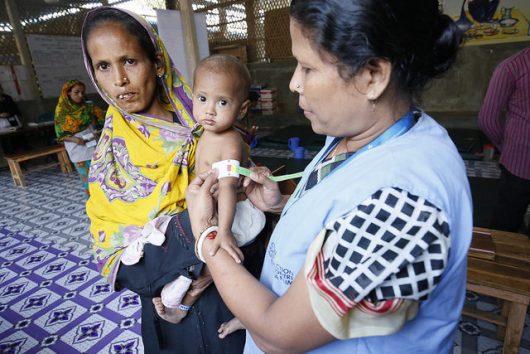
- Bangladesh has the highest rate of underweight children in South Asia. One in two children below 5 years are chronically undernourished or stunted, and 14 percent suffer from acute undernutrition or wasting. WHO estimates that two in three deaths under the age of five are caused by undernutrition.
- Out of the 50 million people who lack food security in Bangladesh, less than half have access to food safety net programs. Food programs have a successful impact, however, poor coverage, targeting and administration have impacted effectiveness.
- Food insecurity and malnutrition among the vulnerable populations are high. These are further impacted by seasonality and the price of available foods. The two lean seasons in Bangladesh worsen food insecurity, reduce food availability as well as employment opportunities particularly for the rural poor.
- Food insecurity in Bangladesh stems from extreme poverty due to underemployment and unemployment, inadequate land access for cultivation, social exclusion and natural disasters. In these vulnerable, poor populations, women and children are most affected by malnutrition and undernutrition.
- Approximately 24 percent of women are underweight and 13 percent are short in stature, significantly increasing the likelihood that their children will be stunted.
- About 25 percent of children’s diets meet dietary variety standards where a minimum of four out of seven food groups are consumed on a daily basis.
- Sacrifices in food consumption for the sake of feeding children, particularly in times of scarcity, is highly gender biased. In most cases, it is an adult woman who must make a sacrifice. Disproportionate poverty faced by women and children comes as a result of discrimination and traditions of exclusion, thereby leaving them the most vulnerable.
- In wealthy households, 26 percent of children below 5 years are stunted and 12 percent are wasted. Undernutrition then is not just a symptom of poverty. Poverty has declined remarkably since the year 2010, dropping from 49 percent to roughly 25 percent in 2016. Yet hunger still persists.
- Micronutrient deficiencies lead to ‘hidden hunger’. Of note, 50 percent of the salt produced in Bangladesh is not adequately iodized, rice dominates the diet and its low nutrient density likely contributes to the high rates of zinc deficiency.
- Environmental disasters if ignored could increase food insecurity. In addition to natural disasters that flood farms and cause rural unemployment, the lack of education and training in sustainable agricultural methods have caused soil degradation that impacts rice production.
Since the year 2000, hunger has been cut by nearly half in Bangladesh. Experts site economic growth, improved agricultural productivity, access to markets for farmers and social safety nets for the most vulnerable as ways to end hunger. Bangladesh’s success in these areas, especially rice production, has helped cut hunger in half.
Yet these 10 facts about hunger in Bangladesh illustrate how several key challenges still remain as millions continue to battle undernutrition, transient food insecurity and hidden hunger every single day.
– Joseph Ventura
Photo: Flickr
