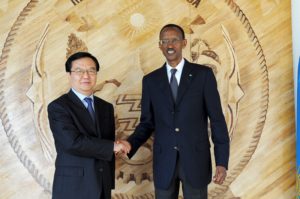
 Rwanda, a small, landlocked country in central-eastern Africa, has made notable progress in reducing poverty over the past two decades. However, recent years have seen a troubling reversal. According to the World Bank, 63.84% of Rwanda’s population lived below the international poverty line in 2016.
As Rwanda struggles to maintain its developmental gains, China has emerged as a major partner. China’s foreign aid strategy in Rwanda ranges from health, education, agriculture and infrastructure support. But are these efforts purely humanitarian or part of a broader geopolitical strategy?
China’s Anti-Poverty Measures in Rwanda
China’s foreign aid strategy in Rwanda spans multiple sectors, with significant investments to reduce poverty and support national development. In March 2025, China partnered with UNICEF to launch “Enhancing Early Childhood Development in Rwanda through South-South Cooperation.” This 18-month project targets 11 districts and aims to improve early childhood development (ECD) services, a crucial area for long-term health, education and economic outcomes.
The initiative is expected to support 2,100 children and indirectly reach 1.5 million. It also sets national goals to increase ECD service coverage from 24% to 45% and reduce child stunting from 33% to 15% by 2029. A key element of the initiative is adopting China’s “Barefoot Social Worker” model, which trains community-based workers to deliver child welfare services directly to families.
Technical workshops and knowledge exchanges between Rwandan and Chinese experts further strengthen the project, aligning it with Rwanda’s National Strategy for Transformation (NST2).
China’s Agricultural Investments in Rwanda
China’s agricultural investments are another important piece of its poverty reduction efforts. One example is the introduction of Juncao, a sustainable agricultural technology developed by Fujian Agriculture and Forestry University. Juncao uses chopped grass to grow nutrient-rich mushrooms for human and livestock consumption. It is an environmentally friendly alternative to traditional wood-based methods and offers a cost-effective solution to food insecurity.
Known in Rwanda as “the happiness herb,” Juncao has already reached more than 4,000 farmers and created thousands of jobs across the agricultural value chain. It has also been introduced into schools to improve children’s diets, providing an affordable protein source comparable to meat. By enhancing nutrition and income generation, this technology is critical in reducing poverty and improving health outcomes.
Another example of China’s foreign aid Strategy in Rwanda is the $40 million Giseke Dam and Irrigation Project, launched in January 2025. This initiative will irrigate 2,640 hectares of farmland in the Gisagara District and provide year-round water access to more than 900 farming households. The project is designed to stabilize food supply, increase crop diversity and improve nutrition. It also supports Rwanda’s NST2 goals for climate resilience and sustainable agriculture.
Funded through a concessional loan, the dam project reflects China’s commitment to building long-term partnerships through infrastructure. However, such projects also raise important questions about cost, impact and sustainability.
Why Is China Investing in Rwanda?
China’s engagement in Rwanda is closely tied to its broader Belt and Road Initiative (BRI), a global development strategy focused on building infrastructure and boosting trade. The BRI often targets developing nations across Eurasia, Latin America and Africa with investments in roads, ports and energy systems.
To better understand China’s foreign aid strategy in Rwanda, The Borgen Project spoke with Michael Beckley, Director of the Asia Program at the Foreign Policy Research Institute. Beckley is also an Associate Professor at Tufts University.
Beckley explains, “[D]eveloped economies already have infrastructure and are wary of China’s political aims. In [underserved) states, China can buy influence more cheaply—building a road or dam there yields outsized diplomatic returns compared to, say, Europe or Japan.” Rwanda, one of the world’s least developed countries, offers China the opportunity to gain influence at a relatively low cost.
He adds, “The region sits on vital shipping lanes, offers access to raw materials and is seen as an entry point for China’s broader engagement with Africa and the Middle East.” In this context, China’s foreign aid strategy in Rwanda is clearly not just about aid but also about advancing national interests through strategic partnerships.
The Risks of China’s Model
While China’s investments offer tangible benefits, they also come with risks. Beckley cautions that “[P]rojects can displace communities, saddle countries with debt or leave behind poorly maintained infrastructure.” He also notes that “local costs—environmental damage, limited local hiring—can be steep.”
These concerns are especially relevant in countries like Rwanda, where technical capacity is limited. According to the National Institute of Statistics of Rwanda, only 2.8% of the population holds a bachelor’s degree or equivalent. Running complex infrastructure projects like dams may require skills not widely available locally. This can lead to dependence on foreign experts and limit long-term sustainability.
An Opportunity for the United States
Given the strategic motivations behind China’s foreign aid strategy in Rwanda, should the U.S. adopt a similar approach? Beckley argues otherwise, suggesting that “[T]he U.S. might instead focus on partnerships that emphasize transparency, local benefits and sustainable projects, rather than competing on raw loan volume.”
China’s efforts to reduce poverty in Rwanda are impactful but often designed to serve its geopolitical objectives. This leaves room for the U.S. and other partners to offer an alternative model: one centered on community-led development, transparency and long-term sustainability.
Looking Forward
China’s foreign aid strategy in Rwanda has produced significant gains in infrastructure, health and agriculture. Initiatives like early childhood education, Juncao technology and the Giseke Dam show how foreign investment can address poverty and improve lives. However, these efforts also highlight the importance of strategic interests and the potential downsides of debt and dependency.
As Rwanda continues its development journey, international actors, especially the U.S., have an opportunity to contribute meaningfully. The U.S. can offer a complementary and potentially more equitable path forward by emphasizing local ownership, skill-building and sustainability.
– William Brentani
William is based in San Francisco, CA, USA and focuses on Politics for The Borgen Project.
Photo: Flickr

Using Climate Data to Map and Fight Poverty in Ethiopia
Using Climate Data to Fight Poverty in Ethiopia
Poverty surveys in Ethiopia are costly and infrequent, leaving policymakers with outdated information. A novel machine-learning method uses temperature and satellite imagery to predict poverty at a fraction of the cost and with much faster turnaround. This innovation promises to sharpen targeting of resources and improve climate resilience.
Ethiopia’s economy is agriculture-heavy, with more than 70% of livelihoods tied to climate-sensitive farming. Yet, poverty measurements rely on household surveys conducted every five to 10 years, which tend to fail to capture sudden crises like droughts. These long intervals and high costs mean that aid often misses emerging hotspots of need.
Machine Learning and Climate Data
The process involves a two-step transfer learning model: it first trains a neural network to predict surface temperature from satellite images, then extracts image features useful for predicting household consumption as an indicator of poverty. The model achieves 80% accuracy in temperature prediction and offers poverty estimates on par with traditional surveys.
By using widely available satellite and climate data, this approach enables real-time, scalable poverty estimation. It can detect early signs of distress like crop failure or environmental degradation, enabling preemptive aid distribution before crises deepen.
In order to be effective, the model must be embedded within Ethiopia’s early-warning systems, development plans and social protection strategies. Integrating these data-driven poverty maps could bolster infrastructure planning, health and education targeting and climate adaptation investments. Collaboration with agencies like the World Bank or the United Nations Development Programme (UNDP) could support institutionalization.
Challenges and Equity Considerations
Despite signs of promise, machine models depend on high-quality data, satellite and survey data whose coverage may be uneven, especially in rural or conflict-affected regions. There is also the risk of excluding marginalized groups such as pastoralists or internally displaced populations. Transparent methods and participatory feedback loops are essential to ensure equitable representation.
This modeling aligns with U.N. Sustainable Development Goal 1 (No Poverty) and Goal 13 (Climate Action). By pushing “beyond surveys,” Ethiopia can pioneer scalable, climate-informed interventions, a model that could inspire other nations in Sub-Saharan Africa and beyond.
Looking Ahead
The use of satellite and climate data with machine learning marks a breakthrough in the fight against poverty in Ethiopia. This method enables timely, cost-effective responses tailored to environmental vulnerabilities. With continued partnerships and ethical oversight, Ethiopia could lead a shift toward climate-smart, data-driven poverty reduction.
– DeMarlo Jon Gray
Photo: Unsplash
China’s Foreign Aid Strategy in Rwanda
As Rwanda struggles to maintain its developmental gains, China has emerged as a major partner. China’s foreign aid strategy in Rwanda ranges from health, education, agriculture and infrastructure support. But are these efforts purely humanitarian or part of a broader geopolitical strategy?
China’s Anti-Poverty Measures in Rwanda
China’s foreign aid strategy in Rwanda spans multiple sectors, with significant investments to reduce poverty and support national development. In March 2025, China partnered with UNICEF to launch “Enhancing Early Childhood Development in Rwanda through South-South Cooperation.” This 18-month project targets 11 districts and aims to improve early childhood development (ECD) services, a crucial area for long-term health, education and economic outcomes.
The initiative is expected to support 2,100 children and indirectly reach 1.5 million. It also sets national goals to increase ECD service coverage from 24% to 45% and reduce child stunting from 33% to 15% by 2029. A key element of the initiative is adopting China’s “Barefoot Social Worker” model, which trains community-based workers to deliver child welfare services directly to families.
Technical workshops and knowledge exchanges between Rwandan and Chinese experts further strengthen the project, aligning it with Rwanda’s National Strategy for Transformation (NST2).
China’s Agricultural Investments in Rwanda
China’s agricultural investments are another important piece of its poverty reduction efforts. One example is the introduction of Juncao, a sustainable agricultural technology developed by Fujian Agriculture and Forestry University. Juncao uses chopped grass to grow nutrient-rich mushrooms for human and livestock consumption. It is an environmentally friendly alternative to traditional wood-based methods and offers a cost-effective solution to food insecurity.
Known in Rwanda as “the happiness herb,” Juncao has already reached more than 4,000 farmers and created thousands of jobs across the agricultural value chain. It has also been introduced into schools to improve children’s diets, providing an affordable protein source comparable to meat. By enhancing nutrition and income generation, this technology is critical in reducing poverty and improving health outcomes.
Another example of China’s foreign aid Strategy in Rwanda is the $40 million Giseke Dam and Irrigation Project, launched in January 2025. This initiative will irrigate 2,640 hectares of farmland in the Gisagara District and provide year-round water access to more than 900 farming households. The project is designed to stabilize food supply, increase crop diversity and improve nutrition. It also supports Rwanda’s NST2 goals for climate resilience and sustainable agriculture.
Funded through a concessional loan, the dam project reflects China’s commitment to building long-term partnerships through infrastructure. However, such projects also raise important questions about cost, impact and sustainability.
Why Is China Investing in Rwanda?
China’s engagement in Rwanda is closely tied to its broader Belt and Road Initiative (BRI), a global development strategy focused on building infrastructure and boosting trade. The BRI often targets developing nations across Eurasia, Latin America and Africa with investments in roads, ports and energy systems.
To better understand China’s foreign aid strategy in Rwanda, The Borgen Project spoke with Michael Beckley, Director of the Asia Program at the Foreign Policy Research Institute. Beckley is also an Associate Professor at Tufts University.
Beckley explains, “[D]eveloped economies already have infrastructure and are wary of China’s political aims. In [underserved) states, China can buy influence more cheaply—building a road or dam there yields outsized diplomatic returns compared to, say, Europe or Japan.” Rwanda, one of the world’s least developed countries, offers China the opportunity to gain influence at a relatively low cost.
He adds, “The region sits on vital shipping lanes, offers access to raw materials and is seen as an entry point for China’s broader engagement with Africa and the Middle East.” In this context, China’s foreign aid strategy in Rwanda is clearly not just about aid but also about advancing national interests through strategic partnerships.
The Risks of China’s Model
While China’s investments offer tangible benefits, they also come with risks. Beckley cautions that “[P]rojects can displace communities, saddle countries with debt or leave behind poorly maintained infrastructure.” He also notes that “local costs—environmental damage, limited local hiring—can be steep.”
These concerns are especially relevant in countries like Rwanda, where technical capacity is limited. According to the National Institute of Statistics of Rwanda, only 2.8% of the population holds a bachelor’s degree or equivalent. Running complex infrastructure projects like dams may require skills not widely available locally. This can lead to dependence on foreign experts and limit long-term sustainability.
An Opportunity for the United States
Given the strategic motivations behind China’s foreign aid strategy in Rwanda, should the U.S. adopt a similar approach? Beckley argues otherwise, suggesting that “[T]he U.S. might instead focus on partnerships that emphasize transparency, local benefits and sustainable projects, rather than competing on raw loan volume.”
China’s efforts to reduce poverty in Rwanda are impactful but often designed to serve its geopolitical objectives. This leaves room for the U.S. and other partners to offer an alternative model: one centered on community-led development, transparency and long-term sustainability.
Looking Forward
China’s foreign aid strategy in Rwanda has produced significant gains in infrastructure, health and agriculture. Initiatives like early childhood education, Juncao technology and the Giseke Dam show how foreign investment can address poverty and improve lives. However, these efforts also highlight the importance of strategic interests and the potential downsides of debt and dependency.
As Rwanda continues its development journey, international actors, especially the U.S., have an opportunity to contribute meaningfully. The U.S. can offer a complementary and potentially more equitable path forward by emphasizing local ownership, skill-building and sustainability.
– William Brentani
Photo: Flickr
Addressing Belize’s Gender Wage Gap
Belize’s Multidimensional Poverty
Belize has a high poverty rate, with 42% of the general population living in poverty. Belizean men are more likely to experience multidimensional poverty at 24%, compared to 19% among women. Large Belizean households with more than seven family members are also more likely to be affected by poverty.
Reports from the Statistical Institute of Belize (SIB) in September 2024 showed that the multidimensional poverty rate fell to 22.1%, compared to 26.4% in 2023. The decrease reflects improvements in areas such as sanitation and Internet access across both urban and rural communities.
Child poverty remains above 50%, with many Belizean children experiencing multidimensional poverty, which includes a lack of basic needs and resources. Expanding social protection programs for Belizean youth and women is essential, as violent crime and gender-based violence continue to pose significant challenges.
Belize’s Gender Wage Gap
Women make up more than 50% of Belize’s population, yet remain underrepresented in the labor force. As of April 2025, the unemployment rate in Belize was 2.1%. For women, it stood at 3.3%, compared to 1.3% for men. Although unemployment is low, Belize’s gender wage gap persists. The Statistical Institute of Belize (SIB) reported in 2021 that the average monthly income for Belizeans was $1,498, but women earned an average of $1,116. Belizean women earn about 24% less than men. Many young Belizean women also work part-time.
The hourly minimum wage is $3.30 Belize dollars (BZD). Since two BZD equal one U.S. dollar, banks, businesses and residents often use both currencies interchangeably. However, the reliance on foreign currency increases the cost of everyday goods for Belizeans.
Belizean men make up nearly 60% of the workforce while women make up the remaining 40%. Men work more physically demanding jobs such as construction, fishing and farming. Belizean women typically work in the medical field, tourism, clothing industry, nonprofits, arts, teaching or are self-employed. However, not all Belizean women are able to access employment opportunities. Women in particular have fewer work opportunities due to barriers such as family care and household duties. One of the leading factors behind the gender wage gap is discrimination against women and girls.
Government Intervention
The Belizean government signed into law the Convention on the Elimination of All Forms of Discrimination Against Women (CEDAW) in 1990. The law seeks to eliminate discrimination against women and girls and establishes standards and principles for their civil and social rights. Nonprofit organizations such as PathLight International and the Belize Education Project have added to this progress, empowering young women to achieve their academic dreams and lifelong goals.
Belizean women have become more educated than men as the education system has improved; however, there is still more progress to be made. In higher education, 9% of Belizean women over 25 have attained a bachelor’s degree, while men are at 7%. In tertiary education, 29% of young women graduate compared to 17% of men. Despite this, they are not selected as often in the job market after graduation. Government agencies such as the National Women’s Commission contribute to the welfare of Belizean women and support their right to pursue better education and employment opportunities.
Looking Ahead
While there has been notable progress since the passage of the CEDAW law, closing the gender wage gap in Belize requires systemic change in both culture and education. Continued improvements in the education system, increased investment in rural towns and cities, expanded job opportunities, and stronger advocacy for gender equality and social upliftment could help narrow the gap. In addition, improving the quality of life for Belizeans will require strengthening the health care system with modern technology, ensuring food security, enhancing sanitation and reducing violent crime and domestic violence.
– Gene A. Lambey, Jr.
Photo: Flickr
Poverty, Fragility and the Rule of Law in Cuba
Fragile Rule of Law in Cuba
Fragility of law has contributed significantly to poverty in Cuba. Cuba has high levels of corruption. Systemic failures in enforcing laws ensure that essential resources never reach the people. A lack of transparency has led to people not having any legal recourse to ensure better living and working conditions. The Cuban government also requires any aid coming from international organizations to go through the state agency in charge and work with local actors connected to the state. Therefore, in actuality, international organizations have very little control over how the aid provided is utilized or even where it is allocated. Weak rule of law and limited institutional capacity mean that vulnerable groups (women, people with HIV and the elderly) continue to face stigma and lack equal access to services
Poor Governance and Food Security in Cuba
However, a more pressing issue is bad governance. Poor fiscal policies have led to anemic economic growth and in the last two years the economy contracted from 1.8% in 2022 to -1.9% in 2023.
This contraction is far below the 5% needed for sustainable growth and to create the income needed for the government to provide basic services to the people. Cuba, according to the World Food Program (WHO), spends at least $1.7 billion annually on food imports. This is an increase from $1 billion of food imports in 2017. Weak enforcement of agricultural policies and poor incentives for producers contribute to persistent shortages. It is clear that the needs of the people are not being met. Severe food shortages have led people to rely more on income from outside sources other than the government such as dealing and working on the black market, remittances from outside aid or community networks.
Efforts To Address Poverty
However, there is some hope. Despite restrictions from the Cuban government, organizations such as the World Food Program (WFP) are having some success in providing aid to fight poverty. The WFP has implemented food security programs such as school feeding programs, nutrition education and training for farmers. It also collaborated with local authorities to enhance food systems and social protection mechanisms. These programs have had a noticeable impact on food security in Cuba. The WFP has managed to provide aid to more than 1.3 million people in Cuba through such programs.
Looking Ahead
According to a report by the Cuban Observatory of Human Rights, more than 89% of the Cuban population live in extreme poverty. There is severe inequality, corruption and a lack of basic services that not only increase poverty but sustain it. While there has been some success, without a strong change in policies and an increase in effective governance, the situation is not likely to change. In the end, addressing fragility and the rule of law in Cuba is essential for reducing poverty and ensuring a more equitable future for its citizens.
– Akash Ramaswamy
Photo: Pixabay
Gilgit Baltistan Floods 2025: A Voice From the Village
The Borgen Project spoke with a 20-year-old girl, Eman Khan from Ghizer, who experienced firsthand the devastating impact of the floods, including the loss of essential family documents.
Warning Signs and Immediate Reactions
A cloudburst triggered the Gilgit Baltistan Floods of July 13. According to the Gilgit-Baltistan Disaster Management Authority, the floods damaged 13 houses, destroyed farmland and washed away irrigation channels. The floods also blocked the Gilgit–Ghizer Highway and isolated communities.
Khan told The Borgen Project that the day began with no major warning signs. The clouds, however, seemed unusually dark and the heavy and intense rain turned into a cloudburst within minutes. According to Khan, while Gilgit experiences seasonal floods, this cloudburst’s sheer force and speed were unlike anything she had witnessed before.
After the cloudburst, the first instinct, she recalled, was to rush outside, gather the family in one safe spot, call the children and move to higher ground as quickly as possible.
Khan said her family stayed calm during the crisis and avoided the river. They then took shelter at a relative’s house, which was built on slightly higher land. Khan added that the neighbors were also very helpful, shouting warnings to each other, helping evacuate children and older adults and sharing food and blankets with families that had to leave their homes.
Damage, Loss and Recovery
Khan told The Borgen Project that the Gilgit Baltistan Floods occurred in a sequence of a cloudburst followed by subsequent floods. The Gilgit Baltistan floods partially destroyed homes, washed away fields of crops, blocked roads and swept electricity poles into the water.
She added that her family lost some household belongings and important family documents. Other villagers lost livestock and stored food they depended on. Despite devastation, Khan said the community showed strong unity and support; people opened their homes to those displaced, cooked meals together and organized local volunteers to clear debris.
In the aftermath of the Gilgit Baltistan Floods, NGOs and local administration sent emergency relief, including food supplies, tents and medical aid. Volunteers from youth groups also played a vital role in rescue and relief work.
Impacts and Future Prospects
Khan shared that the Gilgit Baltistan Floods made her realize how vulnerable her family is in front of the forces of nature. She now recognizes the importance of preparedness and deeply respects the environment.
In the future, she hopes for better adaptive strategies in disaster-prone areas, including early warning systems, flood defences, stronger infrastructure and long-term support for rebuilding livelihoods. Above all, she hopes for a future where children are safe when disasters strike.
– Sidra Tahir
Photo: Pexels
Dr. Fairlie and the Breakthrough in the Fight Against TB
More than Just Numbers
In 2023, 1.3 million people died from TB. In 2022, 10.6 million people fell ill with TB. This is a disease that has claimed countless lives and will not stop unless someone discovers a proper vaccine, and soon. As more time passes, TB becomes more resistant to the vaccines that doctors already use.
This large death toll from TB is not only due to infection, it is also due in part to the large population living with HIV as well. Of those 1.3 million who died of TB, 167,000 of those people were diagnosed with HIV. TB is also the leading cause of death among people with HIV and a major cause of antimicrobial resistance-related deaths.
Progress
Preventing the TB disease, rather than the infection, has been the main target for vaccine development. Development of an effective TB vaccine is a top global priority that many scientists have been working on for decades.
It is because of this that the paediatrician and researcher in Johannesburg, South Africa, Dr Lee Fairlie, has made it her mission to help the people in need. She has seen more than her fair share of TB-related deaths over the course of her career, mostly because of the large population of those with HIV that live in South Africa.
Though the search for a TB vaccine has been slow, researchers are making progress nonetheless. Dr. Fairlie has made it her mission not to give up, and now, she and her colleagues may be on the verge of a breakthrough.
A New Vaccine and Hope for the Future
Her team is one of the sites conducting a landmark M72/AS01E TB vaccine trial, with the help of Gates Medical Research Institute and funded by the Gates Foundation and Wellcome, which includes sites across four African countries (including South Africa) and Indonesia. At first, GSK developed it in collaboration from Aeras and the International AIDS Vaccine Initiative. M72 could possibly be the first new TB vaccine in more than a century and the first-ever to help protect adults and adolescents from the disease.
While the clinical trial is still in its early stages, M72’s initial reports have filled the team with hope. M72 reportedly had a near 50% efficacy after three years in preventing TB-infected adults from developing active disease, which would make them both sick and contagious to others.
While the results are years away, Dr. Fairlie is hopeful for the future, as this could be a step further towards a world without TB.
– Avery Carl
Photo: Flickr
UK Aid for Girls’ Education: Reasons, Aims and Progress
Girls are more vulnerable than boys in terms of education, particularly in low-income countries. As of 2021, women made up 66% of the world’s illiterate population. Furthermore, COVID-19 had a significant impact on education across the world. At its peak, more than 1.5 billion students were out of school.
According to the U.K. government, girls were disproportionately affected, particularly in low-income countries. An estimated 11 million girls never returned to class after the pandemic, as many were forced into early marriage or work to support their families. The U.K. aims to lead international efforts to address this issue through:
UK’s Five-Year Plan
The Foreign, Commonwealth & Development Office (FCDO) released this plan in 2021, a detailed scheme to improve girls’ education globally. It clearly states that boys’ education is just as important. However, it recognizes that girls are generally more vulnerable than boys, requiring more direct aid.
Minister Wendy Morton stated, “Girls’ education is a particularly powerful investment, the benefits are wide-ranging enough to stop poverty in its tracks.”
The pillars of the plan:
In summary, U.K. aid for girls’ education was set to increase significantly in 2021. The U.K. government promised to build international relations, provide direct economic assistance and share technologies and expertise.
What Progress Has Actually Been Made?
In February 2025, the U.K. government further decreased ODA spending from 0.5% of GNI to 0.3%. This decision was made to facilitate increased arms spending. Fundamentally, this will reduce the effectiveness of U.K. aid for girls’ education.
Furthermore, the most recent numbers from the UNESCO Institute of Statistics point to an ongoing decrease in children’s education rates worldwide. By late 2023, 250 million children were reportedly out of education, an increase of six million since 2021, coincidentally the beginning of the Five-Year Plan. UNESCO points out the centrality of girls and young women in this increase. Since 2021, Afghanistan, in particular, has excluded girls from education on a massive scale.
However, there is reason for hope. UNESCO also showed that by 2023, there had been an increase of 50 million girls in school globally since 2015. According to UNESCO, there has been a drastic improvement in girls’ education overall. However, multiple negative pockets, such as Afghanistan, remain. While the increase in girls being enrolled in schools alongside the decrease in children in school may seem contradictory, it is likely to come back to the idea of overall progress being limited by pockets of problems.
Regardless, UNESCO made the clear point that global efforts, including U.K. aid for girls’ education, must increase to reach national and international targets.
Conclusion
Overall, U.K. aid for girls’ education is on the rise and there is cause for hope due to the commitments of the U.K. government to improve education for girls worldwide. By improving education, the U.K. is helping to facilitate the eventual end of poverty.
However, the U.K. government’s reduction of the ODA budget severely limits the impact of its international aid.
– Oliver Evans
Photo: Flickr
UNFPA-UNICEF: Supporting Adolescent Girls in West Africa
Yasmin Sherif, the Executive Director of Education Cannot Wait, described how disruptions caused by natural disasters like this have serious consequences for adolescent girls in West Africa. These girls already face high rates of gender-based violence (GBV) such as abduction and sexual violence, as well as child, early and forced marriage (CEFM).
CEFM in West Africa
An estimated 30% of adolescent girls in Nigeria are married before the age of 18 and approximately 27% of girls aren’t in school. With rooted cultural beliefs already limiting the participation of adolescent girls in West African society, the Malala Fund found that CEFM further reduces their opportunities. It decreases women and girls’ chances of finishing secondary or higher education by 23%.
In 2018, CEFM affected between 30% and 40% of adolescent girls in Liberia and Mauritania. The rates were higher in Nigeria at about 40%. Well-paying job opportunities for teenage girls in West Africa decline even further when they are blocked from education.
Female Genital Mutilation
Female Genital Mutilation (FMG) is a human rights violation with long-lasting consequences on psychological and physical health, with an especially high prevalence in West Africa. Roughly 18% of adolescent girls are affected in Nigeria, 38% in Liberia, 75% in Burkina Faso, 83% in Sierra Leone, 88.6% in Mali and 94.5% in Guinea. As a consequence of social norms, gender biases and false beliefs about female genitalia, the practice is often a prerequisite for adolescent girls’ passage into adulthood or marriage.
UNFPA-UNICEF Joint Program on FGM Elimination
The United Nations Population Fund (UNFPA) and the United Nations Children’s Fund (UNICEF) coordinate the Joint Program, utilizing funding from nations around the world to provide technical assistance. The U.S. was the second largest contributor in 2023, with $5 million donated and $29.2 million raised, outpacing the European Union and Canada.
Collaboration is at the heart of the program from the grassroots to the national levels. It enables it to be the world’s largest FGM elimination effort. The Joint Program’s primary mission seeks to partner with national governments, NGOs and private sector entities to “shift underlying social norms within affected communities.” To protect millions of adolescent girls in West Africa, the Joint Program leads advocacy efforts and supports national and subnational-level policymaking.
It also provides financial assistance to help countries address the issue directly. Other efforts include establishing community surveillance systems, mass media messaging to garner international attention, organizing grassroots entities into powerful coalitions and developing prevention and protection services. Thousands of arrests have sprung from the Joint Program’s enforcement and FGM legislation support.
When the program launched in 2008, FGM affected 30% of girls and women aged 15 to 49 in Nigeria. A decade later, the prevalence dropped to 20%. Burkina Faso is an especially successful example wherein FGM rates were consistently between 72% and 76% from 1999 to 2010, falling to 68% in 2015 and 56% in 2020. Unfortunately, the rate in Mali from 2008 to 2019 fluctuated between 85% and 91%, highlighting the need for further support.
UNFPA-UNICEF Global Program To End Child Marriage
The U.S. contributed $500,000 to the Global Program in 2023, which began in 2016 and is scheduled to end in 2030. It is now in the third and final phase (2024-2030). This program focuses its efforts in West and Central Africa, where six of the top 10 nations affected by child marriage reside.
By supporting school retention rates, mobilizing communities and delivering cost-effective services, the program empowers adolescent girls in West Africa. Through direct advocacy for national policy frameworks and assistance to governments in implementing them, the program further helps them become independent members of society.
As a direct result, multiple nations within the African Union have endorsed the African Common Position to End Child Marriage and the Campaign to End Child Marriage in Africa. Moreover, several African states have begun developing and executing their national strategies and action plans to end CEFM, with the assistance of UNICEF and UNFPA.
The European Union and Canada were the largest contributors to the Global Program in 2023. However, U.S. funding directly benefits adolescent girls in West Africa by expanding resource and opportunity access, empowering young girls and women and securing government commitment to protection from GBV.
The Future of US Support for West African Girls
The U.S. has contributed to significant efforts at reducing GBV, CEFM and FGM among adolescent girls in West Africa. Established programs continue to increase girls’ access to education, expand their economic participation and reduce their exposure to incidents of violence and oppression. While CEFM and FGM rates continue to decline globally, adolescent girls in West Africa still persistently suffer from the highest rates of occurrence. This trend has been consistent over the last 25 years.
Since the release of the U.S.’s 2016 Global Strategy to Empower Adolescent Girls, new challenges have arisen in humanitarian conflicts, natural disasters, crises and access to digital technologies. In the updated 2024 report, the U.S. Office of Global Women’s Issues declared that Africa’s child population will be “an essential determinant of any success in achieving greater economic growth, democracy and stability.” The U.S. thus reaffirmed its commitment to empower adolescent girls in West Africa and around the globe.
– Shea Dickson
Photo: Pexels
Local Leadership in Humanitarian Aid
In recent years, global humanitarian aid has undergone significant shifts. Nationalist policies in major donor countries, including the U.S. and parts of Europe, have redirected focus toward domestic concerns, reducing foreign aid contributions. With less outside help, many countries turn to homegrown solutions to tackle poverty, health crises and displacement. Communities often understand local needs better than distant agencies, making their leadership necessary and effective.
Without adequate resources, dwindling international support has left many populations facing hunger, disease and conflict. Yet this challenge has also led to a new focus: local leadership in humanitarian aid. Across Africa, Asia and Latin America, governments, community organizations and Indigenous leaders are assuming greater roles in planning and delivery.
The Changing Landscape of International Aid
Historically, humanitarian aid relied on cooperation among donor nations and nongovernmental organizations (NGOs). Today, eligibility has become increasingly politicized, often tied to the foreign policy goals of donor nations. This shift creates uncertainty for countries struggling with poverty and displacement, underscoring the need for community-driven solutions that address priorities global agencies may overlook.
Local initiatives bring clear advantages. They leverage cultural knowledge, build trust and respond faster than large institutions. Grassroots groups, women’s collectives and youth organizations lead health, education and economic resilience projects. That way, solutions fit the communities they’re meant for and can still hold up when circumstances change.
Africa
In Nigeria, the Federal Ministry of Humanitarian Affairs and the U.N. now prioritize locally led responses, channeling resources directly to community organizations. This has improved access to aid and strengthened resilience.
In Kenya, handing more responsibility to counties has improved refugee support and crisis response. While the plan has seen successes, it has also faced opposition from some communities, showing that local leadership must balance innovation with inclusive consultation.
Asia
In Bangladesh, women’s collectives and microfinance programs have strengthened rural economies. These projects increase women’s participation in household decisions and provide financial stability. With training added in, microfinance has made a real difference in family resilience. The Consultative Group to Assist the Poorest’s (CGAP) recent analysis underscores that financial inclusion promotes empowerment only when paired with training and support to change outcomes.
Latin America
In Peru, Indigenous farmers lead projects that blend traditional farming with agroecology. Women farmers play a central role, ensuring food security initiatives draw on cultural knowledge and adapt quickly to local needs. These approaches combat hunger and address climate instability, demonstrating how traditional knowledge and innovation can work in tandem.
Advantages and Challenges
Locally led humanitarian responses are marked by agility, accountability and cultural relevance. These efforts earn public trust and often achieve lasting impact. However, local organizations still face barriers, including limited funding, a lack of technical expertise and difficulty gaining international recognition. Overcoming these hurdles takes partnerships that invest in training and flexible funding.
International donors can strengthen humanitarian outcomes by partnering directly with local organizations, supporting training and expanding flexible funding models. Empowering local communities not only improves effectiveness but also fosters global solidarity. As donor nations reassess development priorities, investing in locally led solutions is essential for sustainable progress.
Conclusion
Nationalist policies have reshaped the aid landscape, but local leadership in humanitarian aid across Africa, Asia and Latin America is leading innovation from the ground up. Supporting local leadership, through partnerships, funding and training, could offer the most sustainable path forward.
When local voices lead, aid becomes more resilient and rooted in real communities. Donors and governments that commit to this shift could improve immediate responses and build stronger foundations for future development.
– Jacob Stubbs
Photo: Wikimedia Commons
GiveDirectly’s Cash Transfer Scheme
How it Works
GiveDirectly primarily operates through mobile money platforms, sending recipients one lump sum through a single online transfer. How to spend the money is entirely up to the individual’s discretion, but typically people choose to spend it on health care, education and housing improvements. Typically, the organization targets whole villages at a time. All households eligible within a given community receive the same transfer, which greatly minimises tension but maximises collective benefit.
Cash transfers remain an uncommon form of aid, but there is strong evidence to indicate the effectiveness of this method, especially when it comes to health.
Impacts on Infant Mortality
In rural Kenya, GiveDirectly’s cash transfer pilot scheme, in partnership with Lwala Community Alliance, led to measurable improvements in infant mortality rates. Infant mortality rates in rural Kenya remain six times higher than in the U.S., largely due to barriers in accessing prenatal care, safe delivery environments and adequate nutrition.
According to reports, 1,500 expectant mothers received a single cash transfer, alongside community-based health support. Most women used this money to fund transportation to and from clinics, prenatal visits, food and to purchase items for their newborns. The outcome of the scheme was notable. Infant mortality decreased by 48%, underscoring how financial empowerment, even though only a moderate sum, can enable mothers to secure essential resources that allow for safer pregnancies and healthier babies.
Impacts on Illness
Beyond maternal health, direct cash transfers have also been of significant benefit to individuals living with or at risk of infectious disease, such as tuberculosis (TB). Although TB is both preventable and curable, poverty remains a barrier as many of the poorest populations live in overcrowded conditions, with poor ventilation. Cash transfers enable households to invest in conditions that reduce vulnerability to infection.
Recipients can afford cleaner and less crowded housing, purchase more nutritious food to strengthen immunity access medical treatment if needed. For those already infected, transfers can also provide the financial security necessary to take time off work and focus on rest and completion of treatment. All of these factors remain essential for the prevention of transmission, crucial for bringing rates of disease down.
Evidence from Brazil illustrates this impact further. A national cash transfer programme led to a 50% reduction in TB cases, strongly suggesting that financial assistance plays a significant role in tackling the disease. These findings reinforce the conclusion that cash transfers are an effective tool in increasing the health of the poor, where money remains a key barrier.
A Call for Cash Transfers
GiveDirectly’s positive findings highlight the positive potential of cash transfers within the humanitarian aid sector. Through shifting the decision-making power into the hands of the recipients, these programs have produced measurable improvements in health and well-being. Crucially, however, they affirm the agency and autonomy of individuals living in poverty, challenging the narrative that the poor are passive or incapable of making effective choices for themselves.
– Niamh Trinder
Photo: Flickr