UK Aid for Girls’ Education: Reasons, Aims and Progress
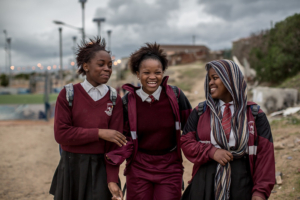 U.K. aid for girls’ education was hit when the U.K. government cut Official Development Assistance (ODA) spending from 0.7% of GNI to 0.5% in 2020. This decreased by $6.13 billion, lowering the overall spending to $13.6 billion. For context, the U.K. spends $25.84 billion just on food waste. This decrease, alongside the COVID-19 pandemic, exacerbated existing inequalities in education. However, the U.K. is making efforts to push back.
Girls are more vulnerable than boys in terms of education, particularly in low-income countries. As of 2021, women made up 66% of the world’s illiterate population. Furthermore, COVID-19 had a significant impact on education across the world. At its peak, more than 1.5 billion students were out of school.
According to the U.K. government, girls were disproportionately affected, particularly in low-income countries. An estimated 11 million girls never returned to class after the pandemic, as many were forced into early marriage or work to support their families. The U.K. aims to lead international efforts to address this issue through:
- Restoring its ODA budget to 0.7% of GNI when feasible.
- Its Five-Year Plan to improve girls’ education.
UK’s Five-Year Plan
The Foreign, Commonwealth & Development Office (FCDO) released this plan in 2021, a detailed scheme to improve girls’ education globally. It clearly states that boys’ education is just as important. However, it recognizes that girls are generally more vulnerable than boys, requiring more direct aid.
Minister Wendy Morton stated, “Girls’ education is a particularly powerful investment, the benefits are wide-ranging enough to stop poverty in its tracks.”
The pillars of the plan:
- A global coalition on girls’ learning. U.K. aid for girls’ education will prioritize international alignment. The government aims to build political and economic cooperation between the countries receiving aid and those giving it.
- Country-led action to get more girls in school, kept safe and learning. The U.K. will focus on building bridges with low-income governments, smaller communities and families within these countries.
- Global goods to support bold education reforms. The U.K. promises to share its advantages in educational institutions and expertise to bring countries in need up to a similar standard.
In summary, U.K. aid for girls’ education was set to increase significantly in 2021. The U.K. government promised to build international relations, provide direct economic assistance and share technologies and expertise.
What Progress Has Actually Been Made?
In February 2025, the U.K. government further decreased ODA spending from 0.5% of GNI to 0.3%. This decision was made to facilitate increased arms spending. Fundamentally, this will reduce the effectiveness of U.K. aid for girls’ education.
Furthermore, the most recent numbers from the UNESCO Institute of Statistics point to an ongoing decrease in children’s education rates worldwide. By late 2023, 250 million children were reportedly out of education, an increase of six million since 2021, coincidentally the beginning of the Five-Year Plan. UNESCO points out the centrality of girls and young women in this increase. Since 2021, Afghanistan, in particular, has excluded girls from education on a massive scale.
However, there is reason for hope. UNESCO also showed that by 2023, there had been an increase of 50 million girls in school globally since 2015. According to UNESCO, there has been a drastic improvement in girls’ education overall. However, multiple negative pockets, such as Afghanistan, remain. While the increase in girls being enrolled in schools alongside the decrease in children in school may seem contradictory, it is likely to come back to the idea of overall progress being limited by pockets of problems.
Regardless, UNESCO made the clear point that global efforts, including U.K. aid for girls’ education, must increase to reach national and international targets.
Conclusion
Overall, U.K. aid for girls’ education is on the rise and there is cause for hope due to the commitments of the U.K. government to improve education for girls worldwide. By improving education, the U.K. is helping to facilitate the eventual end of poverty.
However, the U.K. government’s reduction of the ODA budget severely limits the impact of its international aid.
– Oliver Evans
Oliver is based in Devon, UK and focuses on Politics for The Borgen Project.
Photo: Flickr
