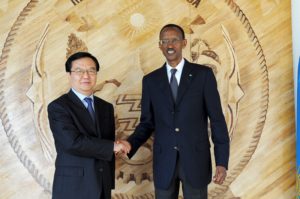
 Rwanda, a small, landlocked country in central-eastern Africa, has made notable progress in reducing poverty over the past two decades. However, recent years have seen a troubling reversal. According to the World Bank, 63.84% of Rwanda’s population lived below the international poverty line in 2016.
As Rwanda struggles to maintain its developmental gains, China has emerged as a major partner. China’s foreign aid strategy in Rwanda ranges from health, education, agriculture and infrastructure support. But are these efforts purely humanitarian or part of a broader geopolitical strategy?
China’s Anti-Poverty Measures in Rwanda
China’s foreign aid strategy in Rwanda spans multiple sectors, with significant investments to reduce poverty and support national development. In March 2025, China partnered with UNICEF to launch “Enhancing Early Childhood Development in Rwanda through South-South Cooperation.” This 18-month project targets 11 districts and aims to improve early childhood development (ECD) services, a crucial area for long-term health, education and economic outcomes.
The initiative is expected to support 2,100 children and indirectly reach 1.5 million. It also sets national goals to increase ECD service coverage from 24% to 45% and reduce child stunting from 33% to 15% by 2029. A key element of the initiative is adopting China’s “Barefoot Social Worker” model, which trains community-based workers to deliver child welfare services directly to families.
Technical workshops and knowledge exchanges between Rwandan and Chinese experts further strengthen the project, aligning it with Rwanda’s National Strategy for Transformation (NST2).
China’s Agricultural Investments in Rwanda
China’s agricultural investments are another important piece of its poverty reduction efforts. One example is the introduction of Juncao, a sustainable agricultural technology developed by Fujian Agriculture and Forestry University. Juncao uses chopped grass to grow nutrient-rich mushrooms for human and livestock consumption. It is an environmentally friendly alternative to traditional wood-based methods and offers a cost-effective solution to food insecurity.
Known in Rwanda as “the happiness herb,” Juncao has already reached more than 4,000 farmers and created thousands of jobs across the agricultural value chain. It has also been introduced into schools to improve children’s diets, providing an affordable protein source comparable to meat. By enhancing nutrition and income generation, this technology is critical in reducing poverty and improving health outcomes.
Another example of China’s foreign aid Strategy in Rwanda is the $40 million Giseke Dam and Irrigation Project, launched in January 2025. This initiative will irrigate 2,640 hectares of farmland in the Gisagara District and provide year-round water access to more than 900 farming households. The project is designed to stabilize food supply, increase crop diversity and improve nutrition. It also supports Rwanda’s NST2 goals for climate resilience and sustainable agriculture.
Funded through a concessional loan, the dam project reflects China’s commitment to building long-term partnerships through infrastructure. However, such projects also raise important questions about cost, impact and sustainability.
Why Is China Investing in Rwanda?
China’s engagement in Rwanda is closely tied to its broader Belt and Road Initiative (BRI), a global development strategy focused on building infrastructure and boosting trade. The BRI often targets developing nations across Eurasia, Latin America and Africa with investments in roads, ports and energy systems.
To better understand China’s foreign aid strategy in Rwanda, The Borgen Project spoke with Michael Beckley, Director of the Asia Program at the Foreign Policy Research Institute. Beckley is also an Associate Professor at Tufts University.
Beckley explains, “[D]eveloped economies already have infrastructure and are wary of China’s political aims. In [underserved) states, China can buy influence more cheaply—building a road or dam there yields outsized diplomatic returns compared to, say, Europe or Japan.” Rwanda, one of the world’s least developed countries, offers China the opportunity to gain influence at a relatively low cost.
He adds, “The region sits on vital shipping lanes, offers access to raw materials and is seen as an entry point for China’s broader engagement with Africa and the Middle East.” In this context, China’s foreign aid strategy in Rwanda is clearly not just about aid but also about advancing national interests through strategic partnerships.
The Risks of China’s Model
While China’s investments offer tangible benefits, they also come with risks. Beckley cautions that “[P]rojects can displace communities, saddle countries with debt or leave behind poorly maintained infrastructure.” He also notes that “local costs—environmental damage, limited local hiring—can be steep.”
These concerns are especially relevant in countries like Rwanda, where technical capacity is limited. According to the National Institute of Statistics of Rwanda, only 2.8% of the population holds a bachelor’s degree or equivalent. Running complex infrastructure projects like dams may require skills not widely available locally. This can lead to dependence on foreign experts and limit long-term sustainability.
An Opportunity for the United States
Given the strategic motivations behind China’s foreign aid strategy in Rwanda, should the U.S. adopt a similar approach? Beckley argues otherwise, suggesting that “[T]he U.S. might instead focus on partnerships that emphasize transparency, local benefits and sustainable projects, rather than competing on raw loan volume.”
China’s efforts to reduce poverty in Rwanda are impactful but often designed to serve its geopolitical objectives. This leaves room for the U.S. and other partners to offer an alternative model: one centered on community-led development, transparency and long-term sustainability.
Looking Forward
China’s foreign aid strategy in Rwanda has produced significant gains in infrastructure, health and agriculture. Initiatives like early childhood education, Juncao technology and the Giseke Dam show how foreign investment can address poverty and improve lives. However, these efforts also highlight the importance of strategic interests and the potential downsides of debt and dependency.
As Rwanda continues its development journey, international actors, especially the U.S., have an opportunity to contribute meaningfully. The U.S. can offer a complementary and potentially more equitable path forward by emphasizing local ownership, skill-building and sustainability.
– William Brentani
William is based in San Francisco, CA, USA and focuses on Politics for The Borgen Project.
Photo: Flickr

Malaria and Poverty in Africa: Funding Cuts Threaten Millions
The Disease-Poverty Cycle
Malaria is more than a health concern. It is part of a disease-poverty cycle that threatens the welfare of generations. For many African countries, approximately 63% of malaria spending comes from foreign investment. Poor areas lack access to health clinics and mosquito nets, leaving millions vulnerable.
Malaria infections leave low-income households facing further financial strain. Missed workdays mean lost wages and medical care is unaffordable. According to the World Bank, treatment for a single case of malaria costs up to 25% of annual income, pushing vulnerable families deeper into poverty. Children bear the heaviest burden, with almost 80% of malaria-related deaths occurring in children under 5. Infections also lead to higher absenteeism and poor learning outcomes. This threatens their future earning potential, making it harder for them to escape poverty as adults.
International aid is the strongest tool to break this cycle. Subsidized mosquito nets and affordable medication have saved millions of lives and reduced the financial strain on families. But the funding cuts in early 2025 are undoing all of the progress. Unless resources are restored, the disease-poverty cycle will only tighten its grip.
How Funding Cuts Impact Malaria and Poverty in Africa
Between 2010 and 2023, the United States (U.S.) contributed an average of 37% of global malaria financing. The $15.6 billion dispersed through the Global Fund averted more than 600 million malaria cases. The recent foreign aid reductions, however, led the Global Fund to cut $1.4 billion from existing grants. These cuts significantly limit resources for the communities that rely on them most.
Within the last year, several African countries saw a sharp increase in malaria cases and deaths. Zimbabwe recorded 119,648 cases and 334 deaths, while Namibia registered 89,959 cases and 146 deaths. Without sustained aid, millions will again face illness and economic hardship. Households lose income, medical expenses increase and children miss school. Each malaria case reinforces the disease-poverty cycle, trapping generations in a world of disease and hardship.
Preventing Malaria: Funding, Care and Innovation
In light of the funding cuts, countries and organizations are taking coordinated action to reduce the impact of malaria and poverty in Africa. At the 38th African Union Summit this year, African leaders emphasized the need for foreign investment to reduce the economic burden of the disease.
African countries are reprioritizing budgets to maintain malaria prevention and treatment programs in high-risk areas. Local health workers bring diagnosis and treatment closer to households, increasing access to treatment and reducing financial strain on families.
The National Aeronautics and Space Administration (NASA), in collaboration with Epidemic Prognosis Incorporating Disease and Environmental Monitoring for Integrated Assessment (EPIDEMIA), developed a malaria early warning system enabling targeted prevention and treatment efforts. In September 2025, the Gates Foundation pledged $912M to the Global Fund to support malaria programs and urged governments to increase funding.
Combating malaria and poverty in Africa requires urgent advocacy. The Global Fund, which provides 59% of international malaria financing, reduced malaria deaths by 29% between 2002 and 2023. It is a sustained investment that could deliver malaria-free Africa.
Key Malaria and Poverty Reduction Actions
According to the Global Fund, the following efforts can help reduce malaria and poverty.
Looking Ahead
Despite recent funding cuts, progress against malaria reveals that the disease can be defeated. Continued support from governments, donors and communities can sustain prevention efforts and protect millions from poverty. With renewed commitment, a malaria-free Africa is within reach.
– Tina Kusal
Photo: Flickr
Being Poor in Afghanistan
Being poor in Afghanistan has reached unprecedented levels, with 64.9% of the population now living in multidimensional poverty and 85% surviving on less than one dollar per day. An estimated 15.8 million people face acute food insecurity, while 23.7 million people require humanitarian assistance to survive. Despite these overwhelming challenges and being poor in Afghanistan becoming increasingly widespread, international organizations created an unprecedented network of support that reached 22.4 million Afghans in 2024.
Revolutionary Food Programs Transform Lives
The World Food Programme (WFP) revolutionized food assistance in Afghanistan, reaching 11.8 million people through a groundbreaking approach that stimulates local economies while fighting hunger. Rather than simply distributing food, 42% of the 1.3 million monthly beneficiaries receive cash-based transfers, allowing families to purchase goods from local vendors and inject vital resources directly into Afghan communities.
The program’s school feeding initiative provides children their only nutritious meal each day. School feeding activities create powerful incentives for families to keep children in school with positive impacts on school participation and learning that help break cycles of poverty through education.
Medical Miracles in Remote Regions
Doctors Without Borders pioneered mobile health care solutions, bringing advanced medical care directly to Afghanistan’s most isolated communities. In 2023, the organization performed 15,200 surgical interventions and assisted 45,260 deliveries across nine projects in eight provinces, maintaining 130 to 200% bed occupancy rates due to overwhelming demand.
The organization’s teams extend life-saving medical services to populations who previously had no access to professional care, with very high bed occupancy rates, sometimes with two or even three patients sharing one bed due to overwhelming demand. More than 50% of MSF’s medical staff are women, creating culturally appropriate care that dramatically improved maternal and child health outcomes.
Children’s Health Revolution Shows Dramatic Results
UNICEF achieved remarkable success protecting Afghan children through comprehensive health and education programs. In 2024, humanitarian efforts expanded to treat 2.9 million acutely malnourished children and pregnant women, representing a significant increase from 2.2 million in 2023. The organization vaccinated 704,002 children against measles and treated 272,791 children for severe wasting in the first half of 2024.
Health care access has expanded significantly with 11.6 million people receiving primary health care services by 2023, up from 7.9 million in 2021. This is driven by the increase in humanitarian health facilities from 422 in January 2022 to 908 in December 2023.
International Commitment Drives Innovation
Major international donors maintained their commitment despite global economic challenges. The United States provided $280 million to WFP in 2024 through USAID, enabling the organization to support more than 3 million people with life-saving food assistance. The United Kingdom reached 2,715,000 people with humanitarian assistance, including water and sanitation, food, nutrition, health and cash transfers between April 2024 and March 2025.
The transformation occurring across Afghanistan proves that even in the world’s most challenging environments, coordinated humanitarian action can deliver extraordinary results. Through innovative programming, local partnerships and sustained international commitment, organizations are building foundations for long-term recovery while showing that with creativity, dedication and adequate resources, no community is beyond help. However, severe funding gaps remain, with only 31.4% of the required $3.06 billion received by October 2024.
Despite these challenges, the fact that humanitarian organizations reached 22.4 million people in 2024 demonstrates what is possible when the international community works together to address the crisis of being poor in Afghanistan.
– Jawad Noori
Photo: Pexels
Higher Education in Barbados
Poverty and Education in Barbados
Barbados has a population of more than 282,000 within its borders. About 9% of its population lives in poverty on less than $6.85 a day. This percentage has only slowly decreased from 11.1% in 2016. The country also depends on tourism, foreign services and international businesses.
The World Bank has expressed concern for education in the Caribbean. It argues that teaching methods within the Caribbean remain traditional and have not caught up to the 21st-century demands. In addition, these countries, like Barbados, do not have the spending potential to implement devices and technological screens in classrooms as opposed to whiteboards and markers. Schools also have poor internet access and students do not have access to the necessary devices to gain a gateway into the internet age.
Barbados is also ill-equipped to work around climate events and diseases that affect the classrooms. For example, during the COVID-19 pandemic, students struggled with online schooling, with some even having no access to devices or the internet altogether. With the lack of wider access to technology and digital infrastructure, there is a worry for a lack in media literacy and critical thinking within the youth population. There is an effort to mitigate these circumstances, however.
Better Life Barbados
Better Life Barbados is an initiative created in 2023 to tackle the nation’s biggest issues. Its vision is that by 2030, poverty will decrease by 50%, home ownership will have increased among Barbadians and wider access to financial services on the island. Its six main missions include achieving a clean and sustainable state, equitable access to clean water and nutritious food and Digital inclusion in a resilient society.
It aims for a digital infrastructure that provides service access for all its citizens. This mission will aid students from primary to tertiary education to gain access to the internet and devices at home and also within their schools. Creating access and inclusion within the digital space for students and teachers will improve the literacy and numeracy rates across institutions. In addition, teachers can transition from traditional teaching methods to a mixed method of teaching as well.
Ministry of Education
The higher education system in Barbados is well known for its emphasis on inclusivity, primarily led by the Ministry of Education. The Ministry of Education is the primary overseer of education from the infant level to the tertiary level. Established in 1974, the ministry is responsible for the development and implementation of programs in relation to education, technology and vocational training. The education system offers a variety of options for students to complete school. There are public schools available, which do not require any school fees. For secondary education, which hosts forms one through five, there are fees for books and resources utilized during the students’ education.
The Ministry administers the Caribbean Secondary Education Certificate (CSEC) exam for Form 5 students interested in higher education. It is a standardized school-leaving exam, provided by the Caribbean Examinations Council. Tertiary education institutions utilize the exam in accepting applicants pursuing post-secondary studies. In order to gain entry to the higher education of Barbados, applicants must have the CSEC or a General Certificate of Education. There is a total of four tertiary institutions that fall within the Ministry of Education in the country.
Tertiary Education
The Ministry of Education offers scholarships and grants to students, based on financial need, to access higher education in Barbados. It is in addition to fee waivers to accommodate students who cannot afford book and resource fees. These waivers are provided for studies at Samuel Jackman Prescod Polytechnic (SJPP) and the Barbados Community College.
SJPP offers the flexibility of choosing programs during the day and night. The school hosts a range of trades, such as building and engineering, agriculture and electrical trades. Similarly, Barbados Community College hosts courses in academic and vocational areas. It covers the arts, sciences and education. In addition, BCC offers associate degrees, post-graduate and post-associate degrees.
The University of the West Indies (UWI) comprises three campuses in the Caribbean. The three campuses are the Mona campus in Jamaica, St. Augustine in Trinidad and Cave Hill in Barbados. The university provides diplomas and certificates at the undergraduate and postgraduate levels. It offers majors such as medicine, computer science, science and technology, humanities and more.
Erdiston Teachers’ College is an institution that provides training to participate in the education system. It gives this training to graduate and non-graduate teachers. Students can attend it after completing secondary education.
Financial Aid
The Ministry of Education governs these four institutions and provides financial aid for students. However, financial expenses often shift from government to government. Before 2014, the government of Barbados took on the bills of tertiary education students of UWI on the island. Post 2014, the government decided to finance only 80% of students’ college education, which caused 20% of fees and costs to be remained. The following academic years at the University of the West Indies saw a significant decline of undergraduate students from 6,159 in 2014 to more than 3,000 in 2017 to 2018. This shows that students struggled to take on these expenses in order to remain in college. In May 2018, after elections ceased, the government fully resumed tertiary education fees but the damage had already been done. Enrollment years since have been unable to meet previous years pre-2014.
The island hosts a multitude of degrees offered at the undergraduate and postgraduate levels. Undergraduate students can aim for associate’s degrees, bachelor’s degrees, diplomas and certificates. Postgraduate degrees offered are a Master’s degree, a Research Master’s and a Doctoral degree. There is a constant need for innovative skills and experiences within the digital landscape. University students are able to be considered for these new jobs that provides a consistent source of income and an increased salary. Through financial funding of public universities and scholarship aid, Barbados is asserting a workforce that contributes to the country’s improvement.
Looking Ahead
Barbados champions its competitive education from childhood to tertiary education. Even though the unemployment rate as of 2023 hung around 7.9%, the Ministry of Education advocates for inclusivity, especially for students with special needs and disabilities. It strengthens the job market and prepares them for their future careers and jobs, thereby maintaining their independence. Additionally, various institutions can be considered for the final step beyond secondary education. There are constantly evolving methods being sought out to cater to students of all needs and the growing labor market as well. Missions like Better Life Barbados ensure a continued commitment to Barbadians and develop these methods to make a high-quality of life and accessible education possible for all.
– Nickaylia Anderson
Photo: Flickr
Poverty Alleviation in Guinea-Bissau Through Fishing
With an economy dominated by a single export – cashews – little attention has been given to the fishing industry as a tool for poverty alleviation in Guinea-Bissau. Thanks to several recent initiatives, however, artisanal and subsistence fishing are receiving investment, providing local people with employment and nutrition.
Importance of Cashews in Guinea-Bissau
Guinea-Bissau is heavily dependent on cashews for its exports, making up 90% of the country’s export earnings. This leaves the country extremely vulnerable to trade shocks, brought about by volatility due to climate instability and fluctuations in the country’s terms of trade. Furthermore, 70% of households are dependent on incomes from cashew production, exacerbating the impacts of this vulnerability.
As such, much attention is paid to levelling up the cashew sector in initiatives to alleviate poverty, often overlooking other pathways.
Importance of Fishing in Guinea-Bissau
Fishing is a major industry in Guinea-Bissau. The industry employs more than 10% of the population, generates 50% of the government’s non-tax revenue and provides 35% of the animal protein intake of Guinea-Bissauans. Much of this government revenue comes from fishing licenses and agreements with foreign fleets, predominantly from Europe, China, South Korea and Japan. The benefits for the local population come predominantly from artisanal fishing, carried out in dug-out canoes called pirogues and subsistence fishing, which is carried out primarily by women.
Recent Initiatives in the Fishing Sector
In order to harness the potential benefits of the fishing sector, recent collaborations between the Enhanced Integrated Framework (EIF) and the U.N. Industrial Development Organization (UNIDO) have focused on upgrading artisanal fisheries and providing employment to women. Working predominantly with women’s cooperatives, this collaboration promoted public-private partnerships to construct and improve refrigeration facilities, allowing for improved storage and marketing capabilities.
Through an iterative process involving locals in Cacheu, Canchungo and Buba, innovative solutions were found, such as the construction of traditional Pirogues with modern insulation. To support women and youth and advance SDG 5, the initiative built two ice-making facilities in Cacheu and Canchungo. These facilities benefit more than 300 fish harvesters, most of whom are women and young people in Guinea-Bissau.
In 2024, the European Union (EU) signed a renewal of its Sustainable Fisheries Partnership Agreement with Guinea-Bissau. For the first time, the $20 million annual contribution includes $5.29 million for “promoting sustainable fisheries management in Guinea-Bissau, control and surveillance capacities and support for local fishing communities.” This demonstrates that both the EU and the Guinean-Bissauan government recognize the role of artisanal fisheries in poverty alleviation. It also highlights their importance in reducing food insecurity in a country where malnutrition remains a persistent challenge.
Why Fishing Matters for Poverty Alleviation
Today, poverty is understood to be multidimensional. Multidimensional poverty is characterized by more than just an absence of wealth or income; it is a complex measure that involves health, nutrition, access to education and housing. Through focusing on an industry like fishing, poverty alleviation in Guinea-Bissau can tackle multiple issues at once, providing more stable income streams for artisanal fishers and providing direct sustenance to families dependent on subsistence fishing.
It is also immensely beneficial as a way of diversifying the Guinea-Bissauan economy, reducing the risks of price fluctuations in the cashew market.
Remaining Challenges
The issue of overfishing is an acute challenge to Guinea-Bissau’s fishing industry. In Guinea-Bissau’s Exclusive Economic Zone, unregulated foreign fishing is a potential existential threat to the country’s fish stocks. While there are certainly positives to the agreement with the EU, it is worth noting that industrial fisheries offer very few job opportunities to Guinea-Bissauans, often ignore local environmental laws and circumvent fishing embargoes by “re-flagging.”
If fishing is to serve as a genuine pathway to poverty alleviation, greater emphasis must be placed on supporting artisanal and subsistence fishers while limiting the damage caused by foreign fleets.
Final Notes
Investing in small-scale fisheries can transform the lives of impoverished Guinea-Bissauans. International support from organizations like the EIF will ensure that artisanal and subsistence fishers can compete with foreign fleets. Artisanal fishing could become a model for sustainable and inclusive development in Guinea-Bissau.
– Henry Weiser
Photo: Wikimedia Commons
Aid Cuts Deepen Lesotho’s Health Crisis
These combined struggles leave families, especially young children, on the brink of survival. Aid cuts from international donors are worsening, forcing organizations like the World Food Programme (WFP) and World Vision to decrease their critical contributions. Without more support, Lesotho’s health crisis risks falling deeper, which could have long-term consequences for its people.
Food Insecurity Collides with HIV
Lesotho’s location in Africa, as well as its climate, makes it very vulnerable to drought. According to the WFP, nearly one in three people face food insecurity during the lean season when harvest numbers are low. Therefore, food prices increase. Families often skip meals, sell their livestock or pull their children out of school to work to cope with these circumstances. These cycles deepen the cycles of poverty.
On top of the food insecurity, Lesotho now has an HIV epidemic. The nation has one of the world’s highest HIV rates, with more than 20% of adults living with the virus. For children, exposure to both HIV and malnutrition creates a deadly combination. If they do not have adequate nutrition, antiretroviral treatment becomes less effective. This leaves the children more prone to infections and reduces their chances of survival.
Clinics across the country are reporting rising numbers of malnourished children who are unable to respond to HIV treatment because their bodies lack the strength. The double burden of food insecurity and HIV is creating an emergency that rarely makes global headlines; however, it devastates families daily.
Aid Cuts and Shrinking Safety Nets
For a long time, international aid programs provided critical support to the country. The WFP’s food distributions and World Vision community outreach programs supported thousands. Recent shifts in global funding, though, have forced cutbacks. The WFP warned in 2023 that it may have to reduce assistance due to shrinking donor contributions. This left tens of thousands without aid. These cuts come when inflation and climate are already straining many households.
Without funding, local programs have been unable to keep up. Families have to walk miles to health centers that no longer stock needed supplements. Those who once relied on emergency food services are left alone.
Innovative Local Solutions
Despite the challenges, Lesotho has developed several initiatives to fight back. One of those efforts is the establishment of nutrition corners in health facilities. The centers provide integrated care from food support to growth monitoring to HIV treatment, all in one place. According to the Elizabeth Glaser Pediatric AIDS Foundation (EGPAF) Lesotho, these facilities have been especially effective for children living with HIV, improving both their nutrition and survival rates.
Another initiative is the use of cash-transfer programs, such as the Emergency Food Assistance Project. Instead of distributing food directly, these programs provide families with money or food vouchers to buy what they need locally. This approach helps households access nutritious meals and supports local farmers and markets.
The Maximum Intervention Programme (MIP) is a government-led partnership backed by the U.N.’s Renewed Efforts Against Child Hunger (REACH). It has made nutrition a national priority. By aligning itself with multiple agencies, it aims to provide food, health, social protection and security in one strategy.
Looking Ahead
Lesotho’s health crisis is not without hope. The solutions are known and are showing progress. Scaling up health and nutrition services, expanding monetary assistance and investing in climate-resilient farming can reduce reliance on unpredictable rainfall. What remains missing is steady international support.
Lesotho may not dominate headlines, but it illustrates the consequences of aid budget cuts on those who need help most. When donors focus elsewhere, vulnerable nations risk being left on their own. In a country where food insecurity and HIV intersect, continued global support is imperative. With sustained commitment, there is still hope for overcoming Lesotho’s health crisis.
– Brody L. Gates
Photo: Flickr
The Impacts of Savings Groups in Malawi
What Are Savings Groups?
Savings groups are small community-based groups, between 15 and 25 people, who each place an amount of money into a central holding, allowing them to save money on a small and relatively stable basis. They provide a transparent and democratic form of microfinance, serving as an alternative where formal banking is unavailable. Benefits include:
Crucially, Plan International emphasizes that savings groups are vital in reaching the first Sustainable Development Goal (SDG). The SDGs are a set of international goals agreed upon by the U.N. and targeted for completion by 2030, with the first goal focused on eradicating global poverty in all its forms.
Impacts of VSLAs in Malawi
Village Savings and Loans Associations (VSLAs) are a version of savings groups in Malawi, organized at the village level rather than within smaller groups. They are widespread throughout the country. Impacts include:
Malawi is also pursuing digital means for its financial future. According to IPA, the main focus currently is on digitizing records and monitoring how it improves access to finance across the country.
How Effective Are Savings Groups in Malawi?
The IPA report shows that saving groups have been incredibly influential in Malawi. They have provided a vehicle through which the Malawian people can bring themselves up financially. Women have significantly benefited, able to become increasingly economically and socially independent. While there is still a long way to go in eradicating poverty in countries like Malawi, saving groups have proven to be a reliable solution in many aspects and will help push the world toward reaching the primary SDG by 2030.
– Oliver Evans
Photo: Flickr
Brazil’s Informal Housing: Pathways To Secure Land Titles
At the same time, NGOs such as Habitat for Humanity Brazil have mobilized to defend housing rights and equip communities to advocate for stronger protections. To better understand the economic importance of secure land tenure, The Borgen Project spoke with Victor Menaldo, Professor of Political Science at the University of Washington. Menaldo’s expertise in property rights and regulation offers insight into the broader stakes for poverty reduction and development.
Historic and Persistent Challenges With Securing Land Titles
Brazil’s struggle to secure land titles has deep historical roots. When the Portuguese Crown colonized Brazil in the 16th century, the land was divided into large captaincies granted to nobles. These nobles then distributed smaller plots, known as sesmarias, to settlers. While this system was intended to accelerate colonization, it concentrated land in the hands of a few. It often left small farmers without legal rights to the soil they worked.
After independence in 1822, Brazil spent nearly three decades without any formal land law. This vacuum allowed large estates to expand unchecked, often at the expense of smaller occupants. The 1850 Land Law attempted to regulate ownership. However, it required the purchase of land for cash. This policy excluded formerly enslaved people and impoverished farmers who lacked resources. Instead of democratizing access, it entrenched land inequality. The 1988 Constitution reaffirmed property rights but also required that land serve broader social purposes.
More recent programs—such as Minha Casa, Minha Vida (2009) and the 2017 Regularização Fundiária Urbana (REURB) law—have introduced mechanisms to convert informal possession into legal property, aiming to regularize urban settlements. These efforts represent significant progress; yet, millions of Brazilians still live without formal land titles, leaving them vulnerable to eviction and exclusion from credit and public services.
Land Regularization Programs
Land regularization programs have greatly aided Brazil’s recent attempts to address the historical causes of weak land title rights. In order to address contemporary issues of Brazil’s informal housing, the Land Regularization Program, which was initially connected to the Social Development Fund in the 1990s (Act No. 8,677/1993), has recently been revived. Brazil’s government has made continuous efforts to curb informality and increase access to legitimate land titles.
It has continued to evolve: in 2025, the Periferia Viva initiative increased support for Brazil’s informal housing improvements in neighborhoods that are at risk. The Regulatory Instruction No. 26 further updated the program’s rules. The program now prioritizes securing tenure and improving housing conditions for residents in Brazil’s informal settlements and low-income families. This is being done through revised regulations, such as Resolution No. 225 (2020) and Normative Instruction No. 2 (2021).
These changes demonstrate that Brazil’s land policies are dynamic and part of a continuous endeavor to improve the right to safe housing and lessen informality. Scholars also warn that poorly designed titling programs can have unintended consequences if not carefully designed. Menaldo noted that once neighborhoods are regularized, “rents and taxes rise; poorer households sell under pressure and re-informalize elsewhere.” He emphasized that while secure titles are powerful, they are “not a panacea.” Better-connected buyers scoop up newly titled plots at low prices when courts and registries are weak, commodifying land and pushing out the very families the programs were meant to protect.
NGO Advocacy for Housing Rights
In Brazil, the lack of affordable housing forces thousands of families into unsafe, informal living situations, often without legal tenure. Habitat for Humanity Brazil advocates for housing as a constitutional right and defends the right to the city, as guaranteed under the 2001 City Statute, which requires land and property to serve a social purpose. Habitat for Humanity Brazil collaborates with organizations such as the Zero Eviction Campaign, the Brazilian Institute of Urban Rights and the Observatory of Evictions. Together, they campaign against forced evictions and the displacement of low-income and informal settlement residents.
Beyond advocacy, Habitat Brazil equips communities with training on sustainable housing, financial literacy, gender equality and human rights. During the COVID-19 pandemic, the group worked with social movements. It even engaged the U.N. Special Rapporteur on Adequate Housing, successfully pressuring Brazil to suspend eviction orders. It also conducted large-scale community interviews in 30 cities to monitor rights violations. The organization mobilized grants for local initiatives that empowered residents to defend their housing rights.
For families in Brazil’s informal housing settlements, weak property rights create what Menaldo calls a “precarious equilibrium.” Without recognized tenure, households often pay more for basic services through intermediaries, face risks of disconnection and underinvest in home improvements due to fear of eviction. NGOs like Habitat for Humanity Brazil work to break this cycle by both defending residents against forced evictions and equipping them with tools to advocate for their rights.
Looking Forward: Balancing Rights and Regulation
Menaldo emphasized that governments should not view property rights and regulation as opposing forces. “They are different tools specialized to solving different problems,” he explained. Assigning property rights can prevent land grabs or overuse, while regulation can address broader challenges, such as pollution and encourage positive practices through subsidies and information sharing. In this way, the state can provide leadership and coordination where markets or civil society fail to do so.
Menaldo also highlighted why secure land titles are central to reducing poverty and expanding economic opportunity. When families trust that they can “use, exclude and transfer” a plot without arbitrary loss, they are more willing to invest in durable improvements such as brick walls, sanitation or even small shops. Clear titles also unlock access to credit by making land legible as collateral for lenders. Lower transaction costs—through reliable courts and predictable registries—make it easier to buy, sell or lease property.
At the same time, official addresses expand the government’s fiscal capacity to tax and deliver services. Over time, these dynamics can strengthen markets, boost productivity and generate a cycle of greater investment in both physical infrastructure and human capital.
– Isaac Nelson
Photo: Flickr
Using Climate Data to Map and Fight Poverty in Ethiopia
Using Climate Data to Fight Poverty in Ethiopia
Poverty surveys in Ethiopia are costly and infrequent, leaving policymakers with outdated information. A novel machine-learning method uses temperature and satellite imagery to predict poverty at a fraction of the cost and with much faster turnaround. This innovation promises to sharpen targeting of resources and improve climate resilience.
Ethiopia’s economy is agriculture-heavy, with more than 70% of livelihoods tied to climate-sensitive farming. Yet, poverty measurements rely on household surveys conducted every five to 10 years, which tend to fail to capture sudden crises like droughts. These long intervals and high costs mean that aid often misses emerging hotspots of need.
Machine Learning and Climate Data
The process involves a two-step transfer learning model: it first trains a neural network to predict surface temperature from satellite images, then extracts image features useful for predicting household consumption as an indicator of poverty. The model achieves 80% accuracy in temperature prediction and offers poverty estimates on par with traditional surveys.
By using widely available satellite and climate data, this approach enables real-time, scalable poverty estimation. It can detect early signs of distress like crop failure or environmental degradation, enabling preemptive aid distribution before crises deepen.
In order to be effective, the model must be embedded within Ethiopia’s early-warning systems, development plans and social protection strategies. Integrating these data-driven poverty maps could bolster infrastructure planning, health and education targeting and climate adaptation investments. Collaboration with agencies like the World Bank or the United Nations Development Programme (UNDP) could support institutionalization.
Challenges and Equity Considerations
Despite signs of promise, machine models depend on high-quality data, satellite and survey data whose coverage may be uneven, especially in rural or conflict-affected regions. There is also the risk of excluding marginalized groups such as pastoralists or internally displaced populations. Transparent methods and participatory feedback loops are essential to ensure equitable representation.
This modeling aligns with U.N. Sustainable Development Goal 1 (No Poverty) and Goal 13 (Climate Action). By pushing “beyond surveys,” Ethiopia can pioneer scalable, climate-informed interventions, a model that could inspire other nations in Sub-Saharan Africa and beyond.
Looking Ahead
The use of satellite and climate data with machine learning marks a breakthrough in the fight against poverty in Ethiopia. This method enables timely, cost-effective responses tailored to environmental vulnerabilities. With continued partnerships and ethical oversight, Ethiopia could lead a shift toward climate-smart, data-driven poverty reduction.
– DeMarlo Jon Gray
Photo: Unsplash
China’s Foreign Aid Strategy in Rwanda
As Rwanda struggles to maintain its developmental gains, China has emerged as a major partner. China’s foreign aid strategy in Rwanda ranges from health, education, agriculture and infrastructure support. But are these efforts purely humanitarian or part of a broader geopolitical strategy?
China’s Anti-Poverty Measures in Rwanda
China’s foreign aid strategy in Rwanda spans multiple sectors, with significant investments to reduce poverty and support national development. In March 2025, China partnered with UNICEF to launch “Enhancing Early Childhood Development in Rwanda through South-South Cooperation.” This 18-month project targets 11 districts and aims to improve early childhood development (ECD) services, a crucial area for long-term health, education and economic outcomes.
The initiative is expected to support 2,100 children and indirectly reach 1.5 million. It also sets national goals to increase ECD service coverage from 24% to 45% and reduce child stunting from 33% to 15% by 2029. A key element of the initiative is adopting China’s “Barefoot Social Worker” model, which trains community-based workers to deliver child welfare services directly to families.
Technical workshops and knowledge exchanges between Rwandan and Chinese experts further strengthen the project, aligning it with Rwanda’s National Strategy for Transformation (NST2).
China’s Agricultural Investments in Rwanda
China’s agricultural investments are another important piece of its poverty reduction efforts. One example is the introduction of Juncao, a sustainable agricultural technology developed by Fujian Agriculture and Forestry University. Juncao uses chopped grass to grow nutrient-rich mushrooms for human and livestock consumption. It is an environmentally friendly alternative to traditional wood-based methods and offers a cost-effective solution to food insecurity.
Known in Rwanda as “the happiness herb,” Juncao has already reached more than 4,000 farmers and created thousands of jobs across the agricultural value chain. It has also been introduced into schools to improve children’s diets, providing an affordable protein source comparable to meat. By enhancing nutrition and income generation, this technology is critical in reducing poverty and improving health outcomes.
Another example of China’s foreign aid Strategy in Rwanda is the $40 million Giseke Dam and Irrigation Project, launched in January 2025. This initiative will irrigate 2,640 hectares of farmland in the Gisagara District and provide year-round water access to more than 900 farming households. The project is designed to stabilize food supply, increase crop diversity and improve nutrition. It also supports Rwanda’s NST2 goals for climate resilience and sustainable agriculture.
Funded through a concessional loan, the dam project reflects China’s commitment to building long-term partnerships through infrastructure. However, such projects also raise important questions about cost, impact and sustainability.
Why Is China Investing in Rwanda?
China’s engagement in Rwanda is closely tied to its broader Belt and Road Initiative (BRI), a global development strategy focused on building infrastructure and boosting trade. The BRI often targets developing nations across Eurasia, Latin America and Africa with investments in roads, ports and energy systems.
To better understand China’s foreign aid strategy in Rwanda, The Borgen Project spoke with Michael Beckley, Director of the Asia Program at the Foreign Policy Research Institute. Beckley is also an Associate Professor at Tufts University.
Beckley explains, “[D]eveloped economies already have infrastructure and are wary of China’s political aims. In [underserved) states, China can buy influence more cheaply—building a road or dam there yields outsized diplomatic returns compared to, say, Europe or Japan.” Rwanda, one of the world’s least developed countries, offers China the opportunity to gain influence at a relatively low cost.
He adds, “The region sits on vital shipping lanes, offers access to raw materials and is seen as an entry point for China’s broader engagement with Africa and the Middle East.” In this context, China’s foreign aid strategy in Rwanda is clearly not just about aid but also about advancing national interests through strategic partnerships.
The Risks of China’s Model
While China’s investments offer tangible benefits, they also come with risks. Beckley cautions that “[P]rojects can displace communities, saddle countries with debt or leave behind poorly maintained infrastructure.” He also notes that “local costs—environmental damage, limited local hiring—can be steep.”
These concerns are especially relevant in countries like Rwanda, where technical capacity is limited. According to the National Institute of Statistics of Rwanda, only 2.8% of the population holds a bachelor’s degree or equivalent. Running complex infrastructure projects like dams may require skills not widely available locally. This can lead to dependence on foreign experts and limit long-term sustainability.
An Opportunity for the United States
Given the strategic motivations behind China’s foreign aid strategy in Rwanda, should the U.S. adopt a similar approach? Beckley argues otherwise, suggesting that “[T]he U.S. might instead focus on partnerships that emphasize transparency, local benefits and sustainable projects, rather than competing on raw loan volume.”
China’s efforts to reduce poverty in Rwanda are impactful but often designed to serve its geopolitical objectives. This leaves room for the U.S. and other partners to offer an alternative model: one centered on community-led development, transparency and long-term sustainability.
Looking Forward
China’s foreign aid strategy in Rwanda has produced significant gains in infrastructure, health and agriculture. Initiatives like early childhood education, Juncao technology and the Giseke Dam show how foreign investment can address poverty and improve lives. However, these efforts also highlight the importance of strategic interests and the potential downsides of debt and dependency.
As Rwanda continues its development journey, international actors, especially the U.S., have an opportunity to contribute meaningfully. The U.S. can offer a complementary and potentially more equitable path forward by emphasizing local ownership, skill-building and sustainability.
– William Brentani
Photo: Flickr
Addressing Belize’s Gender Wage Gap
Belize’s Multidimensional Poverty
Belize has a high poverty rate, with 42% of the general population living in poverty. Belizean men are more likely to experience multidimensional poverty at 24%, compared to 19% among women. Large Belizean households with more than seven family members are also more likely to be affected by poverty.
Reports from the Statistical Institute of Belize (SIB) in September 2024 showed that the multidimensional poverty rate fell to 22.1%, compared to 26.4% in 2023. The decrease reflects improvements in areas such as sanitation and Internet access across both urban and rural communities.
Child poverty remains above 50%, with many Belizean children experiencing multidimensional poverty, which includes a lack of basic needs and resources. Expanding social protection programs for Belizean youth and women is essential, as violent crime and gender-based violence continue to pose significant challenges.
Belize’s Gender Wage Gap
Women make up more than 50% of Belize’s population, yet remain underrepresented in the labor force. As of April 2025, the unemployment rate in Belize was 2.1%. For women, it stood at 3.3%, compared to 1.3% for men. Although unemployment is low, Belize’s gender wage gap persists. The Statistical Institute of Belize (SIB) reported in 2021 that the average monthly income for Belizeans was $1,498, but women earned an average of $1,116. Belizean women earn about 24% less than men. Many young Belizean women also work part-time.
The hourly minimum wage is $3.30 Belize dollars (BZD). Since two BZD equal one U.S. dollar, banks, businesses and residents often use both currencies interchangeably. However, the reliance on foreign currency increases the cost of everyday goods for Belizeans.
Belizean men make up nearly 60% of the workforce while women make up the remaining 40%. Men work more physically demanding jobs such as construction, fishing and farming. Belizean women typically work in the medical field, tourism, clothing industry, nonprofits, arts, teaching or are self-employed. However, not all Belizean women are able to access employment opportunities. Women in particular have fewer work opportunities due to barriers such as family care and household duties. One of the leading factors behind the gender wage gap is discrimination against women and girls.
Government Intervention
The Belizean government signed into law the Convention on the Elimination of All Forms of Discrimination Against Women (CEDAW) in 1990. The law seeks to eliminate discrimination against women and girls and establishes standards and principles for their civil and social rights. Nonprofit organizations such as PathLight International and the Belize Education Project have added to this progress, empowering young women to achieve their academic dreams and lifelong goals.
Belizean women have become more educated than men as the education system has improved; however, there is still more progress to be made. In higher education, 9% of Belizean women over 25 have attained a bachelor’s degree, while men are at 7%. In tertiary education, 29% of young women graduate compared to 17% of men. Despite this, they are not selected as often in the job market after graduation. Government agencies such as the National Women’s Commission contribute to the welfare of Belizean women and support their right to pursue better education and employment opportunities.
Looking Ahead
While there has been notable progress since the passage of the CEDAW law, closing the gender wage gap in Belize requires systemic change in both culture and education. Continued improvements in the education system, increased investment in rural towns and cities, expanded job opportunities, and stronger advocacy for gender equality and social upliftment could help narrow the gap. In addition, improving the quality of life for Belizeans will require strengthening the health care system with modern technology, ensuring food security, enhancing sanitation and reducing violent crime and domestic violence.
– Gene A. Lambey, Jr.
Photo: Flickr