What Catalytic Communities Has to Say About Favelas
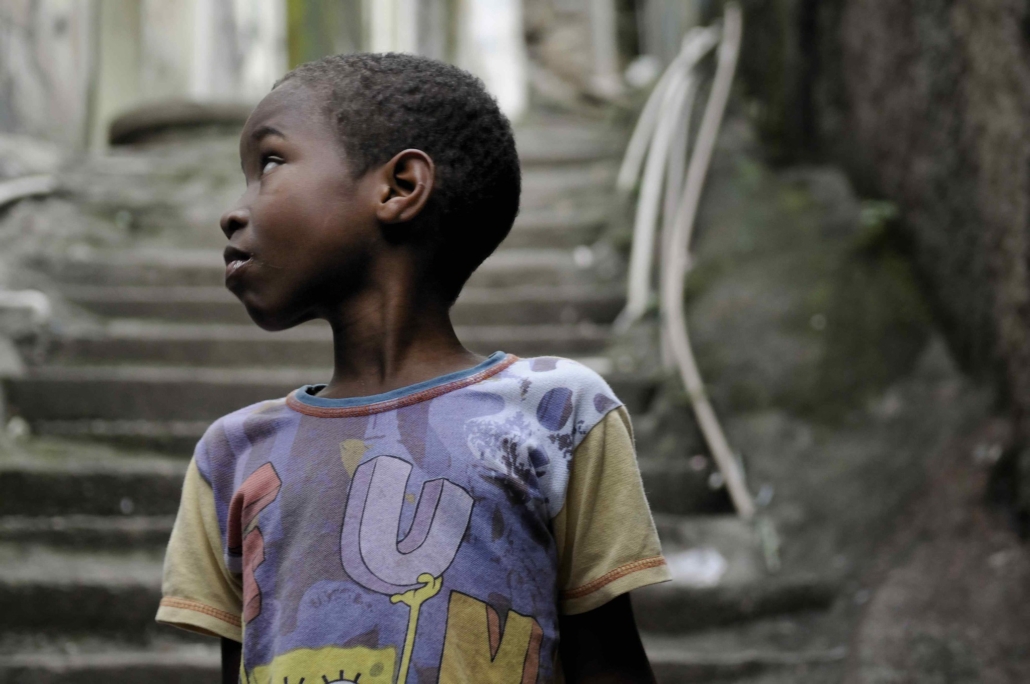
In 2019, the João Pinheiro Foundation estimated that Brazil lacked nearly 6 million homes across the country. The deficit was concentrated in the lower-income population and is certainly now higher given the thousands of evictions that occurred during the COVID-19 pandemic. However, Brazil’s housing crisis cannot just be reduced to numbers. Along with being insufficient, Brazilian social housing has proved to be inadequate, poorly placed and susceptible to crime and violence.
Catalytic Communities (CatComm), an NGO based in Rio de Janeiro, provides a new way of looking at social housing by refusing to demonize favelas. Instead, it draws out the positives of favelas and explains how people should follow these traits as an example for future social housing developments. First, it is important to properly diagnose Brazil’s social housing crisis.
The Minha Casa, Minha Vida (MCMV) Program
In 2009, former President Lula created the social housing program dubbed Minha Casa, Minha Vida (MCMV), meaning “My House, My Life.” In 11 years, the program built 6 million housing units. Essentially, the program functioned by giving lodgings to people in need of social housing. These tenants would pay in subsidized installments every month, and eventually, the property would become theirs. This process would usually take 10 years.
The program has faced several obstacles in its time, often due to political upheaval such as former President Temer’s freezing of the MCMV for budgetary readjustment. In 2020, former President Bolsonaro replaced the program with his own Green and Yellow House Program (PCVA). Critics bemoaned this change with Thalles Vichiato Breda claiming that the new program “only serves as (fake) political propaganda,” for Bolsonaro. While the MCMV provided interest-free payments, PCVA payments had interest rates of 4.5% over a much longer time (35 years). The sum payments were higher too. There were also claims that the PCVA was not meeting MCMV contracts for housing improvements.
Challenges with the MCMV Program
Since President Lula retook power this year, he reinstated the MCMV. Many have praised this change. However, while this is progress, simple praise threatens to obscure the inherent problems of the MCMV. Due to land prices in Brazil, most MCMV developments are very far away from urban centers. This peripheralization has a multitude of drawbacks. First, it places lower-income residents very far away from services and employment opportunities. For men, this means an increase in transport costs, as well as time spent on commutes, especially given that these areas often have poor infrastructural links to urban centers. For women, the lack of infrastructure exacerbates their safety concerns, meaning that they are more likely to stay in urban peripheries, constraining their economic independence.
Social isolation and the above employment constraints mean that MCMV residents are more likely to turn to informal employment, allowing crime to proliferate. A study in the Journal of Illicit Economies and Development details how some social housing developments are virtually run by local militias, which is often abetted by corruption in the local government and police. Residents who disobey militia rules sometimes experience violent expulsion.
At the same time, these houses are often of poor quality, such as not being equipped against dry heat. They are also very small, sometimes just designed as places to sleep rather than proper homes which diminishes their functionality. Also, constantly increasing city sizes through peripheralization threatens green spaces and causes environmental degradation.
While MCMV payments are interest-free, repayments toward owning a house are still difficult to fulfill, and as many as 45% of low-income beneficiaries are indebted under this repayment system. Clearly, the MCMV program is far from perfect. Exploring what works in favelas could provide some solutions.
How Catalytic Communities’ Sustainable Favela Network is Helping?
Catalytic Communities’ Sustainable Favela Network aims to turn consensus from favelas away from being inherent problems towards being “solution factories.” The desired outcome is that favelas undergo sustainable development, rather than being dismantled. Catalytic Communities details many favorable traits of favelas. First, favelas are situated within urban centers, rather than peripheralized like MCMV housing. As a result, they are closer to employment opportunities and public transit services. They also say that the low-rise nature of favelas avoids social isolation, which leads to higher entrepreneurship and collective action through constant knowledge exchanges. In these ways, favelas are the opposite of MCMV developments.
In favelas, CatComm aims to make more visible already existing initiatives within favelas, to both improve knowledge exchange networks and to promulgate the conversation beyond Rio de Janeiro. For example, the NGO has visually mapped about 111 community initiatives, thereby increasing knowledge of, and access to, them.
While it would be unwise to declare that favelas should be the target, given the poverty and crime present, CatComm shows that social housing provisions in Brazil need to be more adaptive. Instead of going ahead with the same projects as before, the newly reinstated MCMV program must respond to the problems of peripheralization. While this is certainly easier said than done, President Lula’s government should begin looking at what the favelas do right and what it can learn from them.
– Ryan Ratnam
Photo: Flickr
