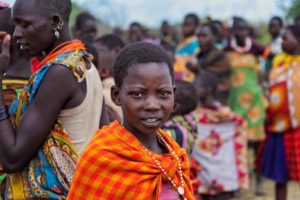
 Period poverty is a leading barrier to education, health and gender equality. It is defined as the inability to access safe, hygienic and educational means of managing menstruation. Financial difficulties, limited education or health care and negative social stigmas can cause this.
Global Girls Glow is a leading international organization that works in countries around the world to empower women to reduce period poverty. By leading with “by girls, for girls,” the organization empowers girls to change the stigma around menstruation, educate and make hygiene products more accessible. By “recognizing agency, exercising voices and building power, it inspires the next generation of young female leaders in their communities, their countries and in the advocacy of reducing period poverty globally.”
Understanding Period Poverty in Uganda
In Uganda, period poverty is a significant nationwide issue. Most concerningly, girls miss 18% of the school year due to absences caused by periods and inaccessible and unhygienic menstrual products. Only 22% of girls in Uganda have access to sanitary pads. This has an immediate knock-on effect on their health, education, income and career prospects.
Additionally, Uganda grapples with a significant negative social stigma against menstruation, which girls experience in their schools and communities. This further perpetuates the vicious cycle of gender inequality. Absence from school can result in increased occurrences of child marriages and domestic abuse.
Schools can often be safe spaces for girls, yet 23% of Ugandan girls aged 12-18 drop out due to the inability to manage their periods. Reducing period poverty isn’t just about access to affordable and hygienic products. It is about safety, education and empowering Ugandan girls to remain contributing members of society without the fear or limitation of being held back by their period.
Global Girls Glow in Uganda
Global Girls Glow addresses all aspects of period poverty. It focuses on creating safe spaces, raising voices and educating. Program Officer and Manager, Faith Vosevwa and Program Manager Mukonyo Muendo spoke with The Borgen Project, saying that they lead with “by girls, for girls” because ‘we believe when we center girls’ voices, we ensure that they are not just beneficiaries but more of active participants.”
Girl participation is at the heart of the charity’s programs; Vosevwa shares that “They share ideas, sit at the decision-making table and evaluate the outcome.” These programs are built by the girls who want to learn about their bodies and empower Ugandan girls to advocate for themselves and for others.
Muendo adds, “Women have always been treated as second-class citizens, not just in Africa but globally. When half of the population is not empowered, when they are disenfranchised, then we are leaving half of the country behind.”
Girls for School Pads
In Uganda, Girls for School Pads was founded by 18-year-old Kashish, a Glow Club member, who challenged community views on periods. She and her team use community-led methods like visiting schools and rural areas, hosting discussions and education forums. Glow Uganda works with local organizations to share information about events, as these voices are familiar to communities.
Girls for School Pads offer affordable period products and demonstrate how to make and properly wash pads to improve access to menstrual products. A hygienic and self-sufficient way to combat period poverty has been created. Muendo adds that GLOW Uganda distributes menstrual hygiene packets annually, including age-appropriate information booklets, underwear and menstrual products.
Community-Led Approaches
The signature program, GLOW Club, offers a curriculum for club members, which is facilitated by local mentors on a weekly basis. The club provides a safe space for girls to ask questions about menstruation and their bodies. There are several techniques GLOW Uganda uses to encourage girls to speak freely and openly. Vosevwa discusses their anonymous sharing sessions, supportive spaces within community-based centers and schools. Girls can drop by to ask questions about menstruation, sex and their bodies.
Vosevwa shares that the most common questions include topics such as family and community expectations, safety, rights, bodily changes and gender differences — for example: “Why are boys given more freedoms than girls? Is it normal for my body to look or develop differently from others? What is safe sex? And how can I protect myself from pregnancy and infections?”
GLOW goes beyond providing these safe spaces, which females facilitate, to ask these questions; it ensures that girls receive the correct, age-appropriate information to make changes. This alleviates anxieties and develops a sense of cultural understanding and acceptance. Vosevwa notes: “Most girls they work with are schoolgirls who can communicate with teachers, peers, parents and school staff.” Events occur in churches and community halls through word of mouth, strong local relationships and partnerships.
Advocacy & Impact Story
Girls for School Pads alone have reached 500 women and girls. About 60 girls have been able to continue their education through the Girls for School Pads scholarship program. Vosevwa shared a story about a girl from Mityana, Uganda. Initially, she had little self-esteem when she was introduced to GLOW Uganda at a local event. After participating in one of the GLOW clubs, she passed on her newly learned information to her friends.
Her mother took note and passed it on to other mothers. That girl mentored more than 30 girls in her community. The impact was tremendous; she went from a “girl who did not believe in herself to a girl who believed she could bring change.”
Advocacy is at the forefront of GLOW Uganda. Many girls and women come from communities where they are being silenced. Through advocacy training and programs, girls become curious, ask questions, share stories and become confident and vocal. Destigmatization involves having normalized conversations about menstruation, alongside providing education and correct, age-appropriate information, which empowers Ugandan girls.
Going Forward
Girls for School Pads and Global Girls GLOW are changing the landscape of period poverty for girls and women across Uganda. By leading with “by girls, for girls,” every aspect of period poverty is addressed, as no girl is left behind. Instead, they become influential voices that empower Ugandan girls to advocate for themselves and inspire girls globally.
– Jule Riemeschneider
Jule is based in Oxford, UK and focuses on Good News for The Borgen Project.
Photo: Flickr

Education: Mitigating Poverty in Ghana
Poverty in Ghana
During British colonial rule, governance prioritized labor in southern Ghana, leaving the north largely underdeveloped. While southern regions benefit from urban infrastructure and employment opportunities, a World Bank report shows that northern Ghana primarily relies on agriculture, making the region more rural and poverty-prone. In addition, recent economic policy has favored crops grown in the south over those in the north, widening the gap in living standards. As a result, the most recent poverty rate recorded in 2016 found that 23.4% of Ghanaians were living in poverty. Though this rate fell from 51.1% in 1991, a 2024 academic journal found that households relying on agricultural labor still make up the majority of the nation’s most impoverished.
A Solution: Education
With national attention focused on reducing poverty, the 2021 study found a correlation between higher living standards and education. Ghana’s education system includes preschool, primary school, high school and tertiary or university education. The study found that households with tertiary education decreased from 7.6% to 5.24% between 2013 and 2017. During this period, the number of Ghanaians living in extreme poverty increased by 200,000. The study concluded that the decline in university education was a major factor in the rise of poverty during those years.
The data also showed that poverty in Ghana is primarily a rural issue, linked to lower levels of educational attainment and long travel times to reach schools. Moreover, obtaining a university education reduced the likelihood of experiencing poverty by 22.5%.
Domestic Policy and International Aid
To improve education access, the Ghanaian government and international organizations have implemented various initiatives. In speaking with The Borgen Project, Professor Nkansah mentioned several national pro-education policies aimed at reducing poverty: “We have the Free Compulsory Universal Basic Education (FCUBE), National Functional Literacy Programme (NFLP), Free Senior High School Initiative, School Feeding Programme and STEM.”
Nkansah also emphasized the positive impact of international assistance on Ghana’s education system. “This dates back to the colonial days till now,” he said. “Catholic and Basel Missions still own and run many public schools in Ghana. There was also the Highly Indebted Poor Countries (HIPC) benefit initiative by the IMF around 2007–08, which helped in the construction of many schools.”
In addition to national and international support, the government has launched scholarship programs. “There have been scholarship initiatives like the COCOBOD scholarship and the IPNC scholarship, both run by the government, which have helped many children from less privileged backgrounds access quality education and improve their living standards,” Nkansah said.
Progress Requires Quality
Given the domestic and international efforts to expand education in Ghana, World Bank data show exponential growth in university enrollment over the last four decades. In 2023, tertiary enrollment stood at 22%, up from 12% in 2013. However, Nkansah and the 2021 study noted that access alone is not enough to reduce poverty.
The study found that higher levels of education have a greater impact on poverty reduction than secondary education. It suggested that the government review existing barriers to university access and improve school-to-work transitions. Nkansah also highlighted the importance of maintaining quality in education. “Although in recent times there has been a tremendous increase in educational access due to several policy interventions, the trade-off in terms of quality still lingers,” he said. “If educational systems are designed in a way that heavily relies on quantity and not quality and also train students for white-collar jobs instead of skill orientation, then there is a problem.”
Despite the challenges, Nkansah added, “Overall, I must say that educational access has improved a lot relative to early years after independence.”
Looking Forward
With quality education proven to reduce poverty in Ghana, one recent initiative by the Jacobs Foundation, an international NGO, is training the nation’s teachers. The System Change Architecture for Learning Excellence (SCALE) program, in partnership with Ghana’s Ministry of Education, aims to train more than 72,000 teachers and improve learning in over 15,000 institutions.
As educational quality becomes a growing focus for Ghana’s government, the results are promising. Though no recent data have been published on the national poverty rate, Ghana’s unemployment rate stood at 3.01% in 2024, down from 10.46% in 2000. The country’s declining unemployment rate and rising university enrollment suggest that as long as Ghana continues to prioritize accessible, quality education, its efforts to reduce poverty will continue to succeed.
– Piper Aweeka
Photo: Flickr
Fighting Food Insecurity in Georgia
Food Insecurity in Georgia
The New Humanitarian reported in 2022 that while Georgia typically did not experience high levels of food insecurity due to its reliance on Russia and Ukraine, the war between the two has caused food insecurity and poverty to rise. Wheat imports to Georgia were significantly reduced after the start of the war, with “105,000 tons in the first three quarters, compared to 283,000 tons in 2021 and 368,700 tons in 2020,” and 30% of people who responded to a poll in Georgia said they could not afford the food they needed every month.
More recent statistics from the Asian Development Bank (ADB) show that of Georgia’s 3.7 million population, 11.8% were living below the national poverty line. Additionally, between 2021 and 2023, 4% of the total population was undernourished. While food insecurity and undernourishment are not as high in children, with 0.6% malnourished (wasting), the Global Hunger Index reports that the growth of 5.1% of children under the age of 5 is stunted and 0.9% of children die before turning 5. Therefore, while Georgia ranks low on the Global Hunger Index, fighting food insecurity in Georgia remains essential.
Organizations Making a Difference in Georgia
While food insecurity remains a problem, numerous charities and organizations are working to tackle the issue. Action Against Hunger has 34 employees in Georgia and has worked to reduce food insecurity in the country since 1993. In 2024, it helped 35,460 people. The organization focuses particularly on helping Ukrainian refugees in Georgia, providing food and hygiene support to 886 refugees. The organization also tackles food insecurity at its source by supporting projects focused on job creation and agricultural livelihood training so that families experiencing poverty and food insecurity become more self-reliant.
Another organization fighting food insecurity in Georgia is People in Need, which collaborated with the European Union in launching Georgia’s first food bank initiative. This program takes a sustainable approach by redistributing unsold food to those in need. It also addresses the causes of food insecurity, not only by reducing food waste through community-level awareness campaigns but also by cutting greenhouse gas emissions and farm losses.
Looking Forward
Through the continued efforts of these organizations dedicated to fighting food insecurity in Georgia, the percentage of those in the country experiencing hunger has stayed low. However, due to the unpredictability of the Russia-Ukraine war, it is crucial that these organizations continue to receive support so they can carry on their important work.
– Victoria Adrados
Photo: Flickr
Leveling the Playing Field: Fighting Poverty in Burkina Faso
Burkina Faso is a country in the volatile Sahel region of Africa, grappling with extreme levels of multidimensional poverty. In 2023, the poverty rate was marginally under 26%, with 2.3 million people experiencing food insecurity. Sport often acts as both a unifying and a divisive arena, but sport in Burkina Faso is emerging as a vital route to escape poverty through increasingly varied employment paths. NGO activity in the country has used sport to foster entrepreneurial spirit and most importantly, bring security and joy to a generation looking for a better life.
Sport Overpowering Security Challenges
A key source of poverty challenges in Burkina Faso is regional instability, which insurgency groups spreading terror across the country further exacerbate. Terrorist groups control swathes of the Sahel region, disrupting the vital agriculture sector in Burkina Faso, in addition to inducing mass internal displacement of Burkinabe residents, which has contributed to extremely high poverty rates.
Sport has found a way to improve this situation. The Olympic Refuge Foundation created the RESPECT campaign, a Sport for Protection program which focuses its efforts on internally displaced Burkinabe residents and refugees, aiming to enhance the resilience, skillset and self-sufficiency of 11,520 young people whose lives have been disrupted.
The RESPECT campaign promotes core values of peace and security through its programs to cultivate a welfare-focused, psychologically healthy environment, ensuring that young people in the program can use sport to enact change and improve their psychological skillset alongside their physical skillset. Furthermore, it undergoes advocacy work promoting Sport for Protection approaches for adoption at the central government and municipal level, which allows for social integration and more facilities available for impoverished young people to realise their talents.
Sport Becoming a Source of Employment
Young people are increasingly entering the world of sporting entrepreneurship, helping them to become more financially independent. Whilst sporting enterprises typically encompass smaller businesses, the average age of these entrepreneurs in Burkina Faso is 37, illustrating the upward mobility and dynamism that the sporting industry offers young people in Burkina Faso.
Procuring funding from central government and other institutions is a major obstacle for these sporting enterprises, but with the support from the African Development Bank (AfDB), the PADEJ-MR is supporting young, aspirational individuals in rural areas with financial training and personalized coaching to instigate business plans in key growth drivers. The focus on young people from rural backgrounds and coordination with the Ministry of Sport and Employment indicate that sport in Burkina Faso will continue to represent a viable route away from poverty.
Sport as “Edutainment”
Sport-for-development initiatives are not just crucial for stimulating employment or fostering psychological wellbeing, but stimulating educational experiences. Othman Mezouar has led numerous sporting initiatives in Burkina Faso designed to improve youth engagement through combining fun sporting activity with learning key life skills and literacy.
Hence, the principle of “edutainment”, where the confluence of vital education and sporting entertainment facilitates young people’s academic and physical development, and these programmes led by Mezouar have helped to reduce dropout rates, strengthening the future employability of young people through maintaining their core education.
The Future
Burkina Faso is still facing extreme poverty struggles and regional factors are causing relentless instability and internal displacement. Sport in Burkina Faso has already proven its potential, though. Vital NGO activity provides a safeguard for displaced Burkinabe to participate in physical activity, promoting key characteristics such as self-sufficiency and resilience. Whilst more centralized support is needed, the growth of the sport sector demonstrates the feasible path to employment for young Burkinabe people, who look up to their heroes like Tapsoba, or Zango, but can also look to themselves for inspiration.
– Oscar McClintock
Photo: Flickr
Femicides in Venezuela: Fighting Gender-Based Violence
A Humanitarian Crisis That Fuels Violence
Since 2015, Venezuela has faced a complex humanitarian emergency marked by economic collapse, institutional deterioration and the breakdown of public services. This situation has disproportionately affected women and girls. According to the International Organization for Migration (IOM), its latest Humanitarian Response Plan 2025 highlights the urgency of the situation: one in four people in Venezuela (about 7.6 million) requires humanitarian assistance, and 6.2 million need protection services, including child protection and support for survivors of gender-based violence and human trafficking.
Although the country has experienced moderate economic growth over the past two years (2023–2024), deteriorating living conditions, food insecurity, the collapse of health care services and the absence of protective policies have allowed gender-based and sexual violence to continue rising. The Organic Law on the Right of Women to a Life Free of Violence, while representing a legislative milestone, has not been effectively implemented due to institutional weakness and corruption. As a result, many victims face impunity, institutional revictimization and a lack of safe shelters. Most cases go unreported: an estimated 7 out of 10 women do not report the violence they experience, mainly due to fear of retaliation or mistrust of the judicial system.
Alarming Numbers and a Climate of Impunity
Recent data reveal the scale of the problem. According to the feminist observatory Utopix, there were 76 femicides in the first six months of 2025—equivalent to one woman murdered every 2.3 days. These killings are not isolated incidents; they reflect a justice system that fails to protect victims, where investigations often remain incomplete and perpetrators rarely face conviction.
Furthermore, Centro de Justicia y Paz (CEPAZ) reports that more than 50% of victims experience physical violence, while 65% suffer psychological abuse. These forms of aggression often escalate over time, frequently culminating in femicide.
Migration and Trafficking: A Double Vulnerability
The crisis has also forced millions of Venezuelans to leave the country, exposing women to new risks. According to platforms such as R4V, the U.N. Refugee Agency (UNHCR) and IOM, as well as surveys like ENCOVI, nearly 8 million people have left Venezuela. During migration, many women face sexual violence, labor exploitation and human trafficking.
These dynamics pose serious risks for women, adolescents, and other vulnerable groups. False job offers or migration promises deceive many, and due to the precarious nature of their journeys, they fall victim to trafficking networks and modern forms of slavery. According to the report Libres y Seguras by the Venezuelan organization Mulier, 1,390 Venezuelan women were rescued from trafficking networks in 2022, including 284 girls and adolescents. Documented cases include sexual exploitation, forced labor, and forced marriages in countries such as Colombia, Ecuador and Peru.
Violence does not end once women cross the border. Xenophobia, labor exploitation, and the absence of legal protection continue to make them vulnerable. According to Utopix, more than 100 Venezuelan women have been victims of violence or femicide abroad between 2024 and 2025.
Organizations Making a Difference
Despite the challenging context, numerous NGOs and humanitarian agencies are supporting Venezuelan women both within and outside the country. Their work focuses on violence prevention, comprehensive care, legal assistance, and creating safe spaces.
CEPAZ leads the defense of women’s rights through free legal assistance, psychological support and accompaniment during judicial processes. It also manages the Digital Femicide Observatory, which compiles data and pressures the state to implement prevention and protection policies.
Utopix has become a national reference by documenting femicides in Venezuela and analyzing patterns of violence. Its work is essential for raising awareness amid a lack of official data. The organization also conducts community education and awareness campaigns to transform cultural norms that perpetuate violence.
UNHCR plays a crucial role internationally by providing legal assistance, shelter, psychological support and documentation. It also coordinates gender-based violence prevention programs with governments and local organizations.
Toward a Future Free of Violence
The increase in femicides, the impact of forced migration and the expansion of human trafficking reflect the profound social deterioration in Venezuela. However, the work of organizations such as CEPAZ, Utopix, Mulier, and UNHCR shows that civil society remains a driver of hope. Through direct support, human rights advocacy and the promotion of public policies, these organizations are laying the groundwork for a future in which women can live free from violence.
– Su Ying Lee Yang
Photo: Flickr
Importance of Development Aid: PCPM
Initiating a Sustainable Change
With the employment rate at only 8.2%, most of the locals in the Akkar region rely on the agriculture and food production sector as a primary source of sustenance and income. The highly diverse landscape provides fertile soil and abundant water sources. At the same time, underdeveloped infrastructure, lack of electricity and unreliable water supply framework pose a significant danger to farmers.
The PCPM aims to address these challenges to ensure self-sufficient solutions. The organization provides not only humanitarian relief but also focuses on development. One of the most important PCPM projects in Akkar is the development of irrigation systems. The benefits of it are threefold: a safe and controlled water source for fields and orchards, the reuse of sewage treatment by-products and the prevention of cholera outbreaks.
Irrigation channels direct the water from the mountains, making it “free” by using gravity and a metal gate to regulate flow, preventing flooding. The channel system in the region is now 10 kilometers long. Less still water on the fields protects not only crops but also the health of the residents. It minimizes cholera outbreaks, especially with a safe drinking water source. The team also modernized local water treatment plants with solar panels to ensure uninterrupted operation during power outages.
The Polish zone in Lebanon provided solar panels for the most important public institutions. It renovated key roads through the region with solar-powered lighting and safety signals. The use of natural resources makes the changes sustainable and self-sufficient.
Why Development Aid Is a Key to Stability
The help within the Polish humanitarian zone in Lebanon starts with analyzing the areas of focus and the scope of the projects. The key to the provided aid is development. It ensures stable progress and self-sufficiency by influencing three crucial aspects: economic and employment growth, better overall quality of life and crisis response.
Development aid means investment in infrastructure, support for locally-owned businesses, investment opportunities and a boost for regional opportunities for growth. Akkar, with its nature and agriculture, has a great potential for expansion in the tourism and food industry.
Clean water, improved sanitation and easier access to healthcare and public institutions improve the quality of life. Societal development follows suit. Lebanon’s location makes it more vulnerable to various crises: health emergencies, natural disasters or regional conflict. The importance of development aid in this area lies in self-sufficiency in rebuilding and stabilizing efforts.
Polish Zone in Lebanon Continues
In 2025, the development aid will focus on “key sectors: education, support for persons with disabilities and environmental protection.” Lebanon remains a priority country for Polish foreign support. PCPM sustains additional programs for families in need, ensuring the supply of food and hygiene products.
– Patrycja Pietrzak
Photo: Unsplash
HIV in the Central African Republic
This epidemic has been declared a national crisis, one intensified by the lasting and prevalent stigma shadowing HIV. This fatally impacts treatment access for people living with HIV (PLHIV) in the Central African Republic. To understand and combat this situation, initiatives in the CAR piloted by Médecins Sans Frontières (MSF) and UNICEF focus on eradicating stigma-based prejudices through community-based aid. Their programs validate the significant impact of providing psychological support to PLHIV, especially in a situation that may feel hopeless.
HIV-Related Stigma
The 2018 PLHIV Stigma Index found that 87% of PLHIV experienced discrimination that affected their daily lives. The health care sector in the CAR is severely underfunded, resulting in insufficient (or sometimes zero) government-led ethics training being delivered to workers.
As a result, these professionals develop inaccurate beliefs about transmission causes and harbor fear-based prejudices against PLHIV. Hence, incidents such as humiliating comments, disclosure of HIV status and alienation from health care professionals affect PLHIV, with 12% avoiding health centers because of their status.
PLHIV in the CAR not only fear discriminatory professional care, but also fear being “found out” by their peers — an exposure that can lead to consequences such as social marginalization, family rejection or even violence from intimate partners. This double barrier creates a deep-seated fear, resulting in fatal disengagement from care, a challenge foreign aid organizations are working to address.
Antiretroviral Treatment
Campaigns across the CAR focus on utilizing community support groups to improve adherence to antiretroviral medicine (ARV) treatment plans. This medication can reduce levels of HIV to an undetectable level and protect the immune system. Thus, without access to it, PLHIV may experience numerous fatal complications and a risk to their quality of life.
However, MSF reported that, in 2016, only 18% of PLHIV in the CAR were actively undergoing ARV treatment provided by the CAR government. It found that by the time the majority of patients begin treatment, their immune systems are too badly compromised and they are already suffering from advanced and unmanageable AIDS. Chillingly, this is the case for two-thirds of PLHIV in the CAR.
Community Groups
The E Bata Guigui (Let Us Protect Life) group, initiated in 2018 by UNICEF in the CAR’s capital city, Bangui, promotes treatment through offering empathy and reassurance for PLHIV. The campaign consists of 2,000 young people offering peer solidarity, encouragement for testing and accompaniment through treatment appointments and journeys.
Results show that more young people aged 0-14 with HIV in the CAR have access to treatment, even after being deterred by their local clinics. Evidently, treating PLHIV with humanity can often be life-saving.
In 2019, MSF launched its Community Groups initiative across West Africa. The program allows one member to collect drug refills on behalf of the group, improving adherence and access to long-term treatment. Its stigma-sensitive approach — centered on self-management and peer support — has led to an increase in viral suppression and patient follow-up rates. Within a year of implementation, more than 1,800 patients had begun HIV treatment and 558 new cases were diagnosed.
Positive Changes
The milestones achieved by Community Group programs surrounding early diagnosis, medication uptake and treatment adherence show valuable strides toward a brighter, healthier future for PLHIV in the CAR. While challenges remain, the progress made in tackling widespread discrimination, through greater acceptance and enhanced psychological support, has already bettered both physical and mental health outcomes, delivering hope to those who once felt there was none.
– Emily Wooster
Photo: Flickr
Power for the People: Iraq’s Energy Infrastructure Issues
Rising Consumption and Dependence on Imports
Over the course of the summer, as temperatures swelled to a scorching 122 degrees Fahrenheit, Iraq’s electricity consumption peaked at about 55,000 megawatts, with the Deputy Minister of Electricity Adel Karim stating that the country is currently only generating up to 28,000 megawatts; 8,000 of which come from the natural gas imported from Iran, according to Al Jazeera. In August 2025, Iraq suffered a nationwide power outage for about a day, with subsequently shorter blackouts taking place almost daily, according to CNBC.
While Iraq is currently the second largest producer of oil in OPEC and houses the fifth largest oil reserves globally, the nation still relies on imports of gas from Iran. Overall, these imports maintain between one-third to 40% of Iraq’s gas and power supply.
Declining Supply and Infrastructure Challenges
Back in March of 2024, Reuters reported the two nations had signed a five-year deal which would supply Iraq with up to 50 million cubic meters of gas per day. However, exports never reached this ceiling, instead lingering around an average of 25 million cubic meters—the same rate dispersed prior to the deal, which by late November of 2024, had decreased to 7 million cubic meters.
Iran had diverted the gas for domestic use, coming to this conclusion on the basis of diminished reserves, which had led to widespread blackouts, compounded by a higher demand for heating. Continuing this spiral, earlier in 2025, Iranian gas exports to Iraq dipped by nearly 40%. While Iraq does harbor massive gas reserves of its own, much of it is lost in oil production due to gas flares.
Furthermore, due to deteriorated infrastructure and energy theft, more than 40% of electricity generated by Iraq’s power plants is lost during transmission. This is on top of the fact that these facilities only have the ability to operate at 60% capacity due to overheating, water shortages and inadequate fuel mixes.
Political Pressures and Blocked Alternatives
The United States (U.S.) announced that it would terminate a waiver on sanctions that had previously allowed Iraq to purchase Iranian electricity, effectively jeopardizing around 3% of Iraq’s power supply. The U.S. made this decision to increase pressure on Tehran amid ongoing nuclear negotiations, according to Al Jazeera.
On September 19th, the U.S. shot down a proposed trade deal between Iraq and Turkmenistan. The agreement would have allowed Iraq to diversify its gas supply by importing 5 billion cubic meters of gas from Turkmenistan; however, the fuel would have to be routed through Iran and the process facilitated by the state-owned National Iranian Gas Company. Through this deal, Iran would have been granted 23% of the daily volume passing through its borders. Therefore, the U.S. saw fit to scuttle the arrangement as nuclear talks with Iran continue, according to Reuters.
Improving Infrastructure
According to Al-Jazeera, Iraq is currently constructing, seeking approval or negotiating for a series of industrial-scale solar power plants which, combined, will generate up to 12.5 gigawatts, potentially supplying 20% of the nation’s demand.
The first of which, housed in Karbala, could produce up to 300 megawatts. Another plant under construction in Babil province is set to produce 225 megawatts, and soon to break ground, estimates suggest that a site in the Basra province could generate one gigawatt. In addition, the French oil conglomerate TotalEnergies, in conjunction with several other corporations, has enacted the second phase of development at the Ratawi oilfield.
ENKA, a Turkish construction company, has been commissioned to build the oil and gas processing complex, which could result in a daily output of 210,000 barrels of oil as well as 163 million standard cubic feet of gas.
Hyundai Engineering and Construction plans to complete a seawater treatment facility that will allow Iraq to reduce its reliance on freshwater for processing.
The Chinese firm Petroleum Engineering and Construction Corp. will also build a separate gas processing plant expected to produce up to 600 million standard cubic feet per day. The entire multi-faceted project will cost the French oil giant a total of $27 billion.
Looking Ahead
While certain deals that would have alleviated dependency and demand may have faltered due to political pressure, Iraq’s dedication to improving its energy infrastructure remains.
– Owen Armentrout
Photo: Flickr
Global Girls Glow in Uganda: Ending Period Poverty
Global Girls Glow is a leading international organization that works in countries around the world to empower women to reduce period poverty. By leading with “by girls, for girls,” the organization empowers girls to change the stigma around menstruation, educate and make hygiene products more accessible. By “recognizing agency, exercising voices and building power, it inspires the next generation of young female leaders in their communities, their countries and in the advocacy of reducing period poverty globally.”
Understanding Period Poverty in Uganda
In Uganda, period poverty is a significant nationwide issue. Most concerningly, girls miss 18% of the school year due to absences caused by periods and inaccessible and unhygienic menstrual products. Only 22% of girls in Uganda have access to sanitary pads. This has an immediate knock-on effect on their health, education, income and career prospects.
Additionally, Uganda grapples with a significant negative social stigma against menstruation, which girls experience in their schools and communities. This further perpetuates the vicious cycle of gender inequality. Absence from school can result in increased occurrences of child marriages and domestic abuse.
Schools can often be safe spaces for girls, yet 23% of Ugandan girls aged 12-18 drop out due to the inability to manage their periods. Reducing period poverty isn’t just about access to affordable and hygienic products. It is about safety, education and empowering Ugandan girls to remain contributing members of society without the fear or limitation of being held back by their period.
Global Girls Glow in Uganda
Global Girls Glow addresses all aspects of period poverty. It focuses on creating safe spaces, raising voices and educating. Program Officer and Manager, Faith Vosevwa and Program Manager Mukonyo Muendo spoke with The Borgen Project, saying that they lead with “by girls, for girls” because ‘we believe when we center girls’ voices, we ensure that they are not just beneficiaries but more of active participants.”
Girl participation is at the heart of the charity’s programs; Vosevwa shares that “They share ideas, sit at the decision-making table and evaluate the outcome.” These programs are built by the girls who want to learn about their bodies and empower Ugandan girls to advocate for themselves and for others.
Muendo adds, “Women have always been treated as second-class citizens, not just in Africa but globally. When half of the population is not empowered, when they are disenfranchised, then we are leaving half of the country behind.”
Girls for School Pads
In Uganda, Girls for School Pads was founded by 18-year-old Kashish, a Glow Club member, who challenged community views on periods. She and her team use community-led methods like visiting schools and rural areas, hosting discussions and education forums. Glow Uganda works with local organizations to share information about events, as these voices are familiar to communities.
Girls for School Pads offer affordable period products and demonstrate how to make and properly wash pads to improve access to menstrual products. A hygienic and self-sufficient way to combat period poverty has been created. Muendo adds that GLOW Uganda distributes menstrual hygiene packets annually, including age-appropriate information booklets, underwear and menstrual products.
Community-Led Approaches
The signature program, GLOW Club, offers a curriculum for club members, which is facilitated by local mentors on a weekly basis. The club provides a safe space for girls to ask questions about menstruation and their bodies. There are several techniques GLOW Uganda uses to encourage girls to speak freely and openly. Vosevwa discusses their anonymous sharing sessions, supportive spaces within community-based centers and schools. Girls can drop by to ask questions about menstruation, sex and their bodies.
Vosevwa shares that the most common questions include topics such as family and community expectations, safety, rights, bodily changes and gender differences — for example: “Why are boys given more freedoms than girls? Is it normal for my body to look or develop differently from others? What is safe sex? And how can I protect myself from pregnancy and infections?”
GLOW goes beyond providing these safe spaces, which females facilitate, to ask these questions; it ensures that girls receive the correct, age-appropriate information to make changes. This alleviates anxieties and develops a sense of cultural understanding and acceptance. Vosevwa notes: “Most girls they work with are schoolgirls who can communicate with teachers, peers, parents and school staff.” Events occur in churches and community halls through word of mouth, strong local relationships and partnerships.
Advocacy & Impact Story
Girls for School Pads alone have reached 500 women and girls. About 60 girls have been able to continue their education through the Girls for School Pads scholarship program. Vosevwa shared a story about a girl from Mityana, Uganda. Initially, she had little self-esteem when she was introduced to GLOW Uganda at a local event. After participating in one of the GLOW clubs, she passed on her newly learned information to her friends.
Her mother took note and passed it on to other mothers. That girl mentored more than 30 girls in her community. The impact was tremendous; she went from a “girl who did not believe in herself to a girl who believed she could bring change.”
Advocacy is at the forefront of GLOW Uganda. Many girls and women come from communities where they are being silenced. Through advocacy training and programs, girls become curious, ask questions, share stories and become confident and vocal. Destigmatization involves having normalized conversations about menstruation, alongside providing education and correct, age-appropriate information, which empowers Ugandan girls.
Going Forward
Girls for School Pads and Global Girls GLOW are changing the landscape of period poverty for girls and women across Uganda. By leading with “by girls, for girls,” every aspect of period poverty is addressed, as no girl is left behind. Instead, they become influential voices that empower Ugandan girls to advocate for themselves and inspire girls globally.
– Jule Riemeschneider
Photo: Flickr
Mass Registration Drive for Foundational IDs in Somalia
The Importance of IDs in Somalia
Somalia, officially the Federal Republic of Somalia, is a country located in the Horn of Africa. Like many countries in that region, Somalia has endured widespread poverty caused by years of drought, famine, conflict and institutional instability. In 2022, more than half of Somalia’s population lived below the national poverty line, while three-quarters experienced non-monetary poverty. Somalia’s nomadic population is especially affected, with approximately three-quarters of nomads living below the poverty line and nearly all experiencing non-monetary poverty.
Despite rapid urbanization, Somalia lags behind other countries with similar income levels in labor force participation and educational access. One major reason for this is Somalia’s low rate of citizen ID possession. According to the 2022 Somali Integrated Household Budget Survey, fewer than 16% of Somalis had some form of government-issued ID.
Foundational IDs are essential for accessing and facilitating multiple private and public services, including:
This same survey found that while most Somalis lack a foundational ID, the vast majority recognize their value and want one.
Challenges to ID Registration
Expanding ID coverage across Somalia presents multiple challenges. Despite recent rapid urbanization, Somalia’s population still remains widely dispersed. Many Somalis live in remote or rural areas, lead nomadic lifestyles or are refugees, returnees or internally displaced persons, which makes it challenging to reach unregistered individuals. Additionally, Somalia’s strong oral tradition and use of various minority languages and dialects create significant communication barriers during outreach and enrollment efforts.
Social norms also play a major role in limiting access to foundational IDs in Somalia. In particular, restrictive cultural practices often hinder women’s participation in public and economic life, which makes it more difficult for them to register or benefit from services that require IDs. Literacy levels in Somalia are also low, estimated at just 54% for people aged 15 and older, with women and youth disproportionately affected. Years of conflict and instability have disrupted education, especially for younger generations.
Security concerns further complicate registration efforts. Many Somalis express wariness toward privacy breaches or surveillance, particularly from hostile groups that may attempt to undermine the digital ID system. These risks create mistrust and cause many individuals to hesitate when seeking out a foundational ID in Somalia.
Current Steps Toward Mass Registration
To address these challenges, earlier this year, the NIRA opened multiple new registration centers in the districts of Shingani and Mogadishu. It aims to increase access to foundational IDs in Somalia. It has deployed several FGS representatives to every district to help with registration. Additionally, the NIRA created a “one-window operation” system, consolidating all necessary steps for obtaining an ID into a single and convenient service point, streamlining services and improving the citizen experience.
Inclusivity and data protection are also a core focus of the pilot program to encourage those without IDs to register. The Ministry of Finance’s Digital ID Inclusive Enrollment and Outreach Strategy instructs that at least 50% of the first one million registrants should be women. Additionally, the FGS has committed to following the United Nations’ Personal Data Protection and Privacy Principles to ensure that registrants’ rights, privacy and data remain secure.
Somalis will have the option to receive their ID in physical, digital or printed certificate formats, further increasing accessibility and adaptability. The NIRA has set the goal to register all 15 million citizens by the end of 2029.
IDs as a Way to Poverty Alleviation and Economic Growth
Expanding foundational IDs in Somalia will facilitate financial inclusion for many, particularly for women and offer a pathway toward economic independence. Mass ID possession will also strengthen national security systems by enabling more effective identity verification, helping to mitigate money laundering and terrorist financing risks and reducing fraud.
For service providers, widespread ID possession improves the ability to identify beneficiaries, eliminate duplication, reduce waste and both improve existing services and offer new ones. Moreover, the digital infrastructure supporting the ID system will enable innovation, drive private sector growth, create new industries and generate more and better jobs.
– Dylan Kretchmar
Photo: Flickr
Farming for Peace: SDG 2 in Colombia
As promoted by the U.N., SDG 2 requires coordinated national efforts to alleviate hunger. Reform and investment in sectors such as agriculture and farming can break rural poverty cycles by offering employment, opportunity and building food security during disasters and violence.
Colombia’s Poverty Problem
Despite Colombia’s status as an upper-middle-income country, food insecurity and poverty are critical issues, particularly in rural areas. The World Food Programme (WFP) reported that in 2025, 25% of the population is food insecure. Many rural Colombians rely on farming to make a living.
Yet, structural challenges and the prevalence of drug production often make this livelihood unstable. As the Colombian Council of Ministers stated, 1% of landowners control the Casa de Nariño, 65% of fertile farming land. Lower-income farmers are often given no legal or formal recognition of their lands.
Due to Colombia’s terrain, many farming communities are remote, with limited infrastructure, investment and access to opportunities. Faced with this, many Colombians become trapped in the cycle of growing the more accessible and demanded coca plant, used to make cocaine, as an option for survival. Coca displaces crops, reduces local food availability and deepens drug-related violence and displacement, contributing to the cycle of food insecurity and poverty.
Creating Change
Introduced in February 2025, President Gustavo commenced the initiative “Pact for Land and Life: Revolution for Life.” It addresses inequalities and promotes rural livelihoods through agricultural reform and farming. The pact focuses on land redistribution and the eradication of coca production.
The program offers farmers financial incentives to transition to sustainable crops such as coffee, sugarcane and livestock. Transition is assisted with technical training, funding and equipment, with some towns requiring infrastructure such as new roads to improve market access. This promotes food security by giving farmers the dignity and opportunity to start again, earn money more safely and trade within the law.
This creates a stronger relationship between rural farmers and the government, boosting the likelihood of further investment and infrastructure in rural communities. It would also stop the prevalence of drug production and the associated violence that it brings.
While the threat of drug violence, difficulties in accessing remote regions and the challenge of generating adequate funding have slowed government plans, nonprofit organizations such as Mercy Corps have stepped in. They provide essential support in alleviating food insecurity.
The Work of Mercy Corps
Since 2005, Mercy Corps has worked in Colombia to tackle the root of coca cultivation, focusing on sustainable agriculture, land formalization and economic inclusion. In rural, impoverished and conflict-affected regions like Catatumbo, where farmers are forced to rely on coca to get by, Mercy Corps helps farmers transition to legal and sustainable forms of income.
Through initiatives such as ALGO Nuevo, more than 3,000 farmers have replaced more than 1,800 hectares of coca with crops such as coffee and yucca. The charity also works alongside the National Land Agency and local governments to develop marginalized groups’ property rights and reduce land formalization costs.
Conclusion
The effect of agricultural focus on reform in Colombia shows the potential of farming in alleviating food insecurity and achieving SDG 2. Land redistribution, coca eradication and training have provided invaluable socioeconomic opportunities to the nation’s most marginalized and vulnerable groups. It builds greater stability, promotes peace and builds resistance to occurrences of violence and displacement, as well as facilitating individuals to have dignified work.
Colombia serves as a case study for the coordinated efforts required for SDG 2 and how farming unlocks a new reality for some of the world’s most impoverished and remote communities.
– Mia Keen
Photo: Flickr