 Nauru, an island country in the southwestern Pacific Ocean, benefitted from the 1900s phosphate mining industry. At its peak, Nauru’s wealth was estimated to be at “$2.5 billion.”
In 1980, a collapse in Australia’s market decreased demand for phosphate exports, pushing the phosphate-dependent nation into economic instability and widespread poverty. With a population of 11,875, around one in four people live below the poverty line.
Nauru’s poverty rate stands at 9.72%, but women are more concentrated in the country’s lower-income groups. Women make up 39.99% of those in the bottom 40% of the income or consumption distribution, pointing to greater economic vulnerability.
Women in Poverty
Poverty in Nauru disproportionately affects women and girls. Poverty for women encompasses a lack of political representation and GBV, alongside economic hardship and health care concerns.
Cultural norms and stereotypes in Nauru set the expectations of women and drive their exclusion from political and public life. As a result, women are more likely to face financial hardship, political underrepresentation, and health concerns amongst other poverty indicators.
Initiatives in poverty reduction in Nauru increasingly target women living in poverty.
Protecting Women and Girls Against Domestic Violence
The Pacific Islands have the highest rate of violence against women and girls. UNICEF found that “48.1% of ever-partnered women” have experienced GBV in their lifetime. Women and girls incarcerated in Australia’s offshore migrant detention center in Nauru also face high rates of GBV.
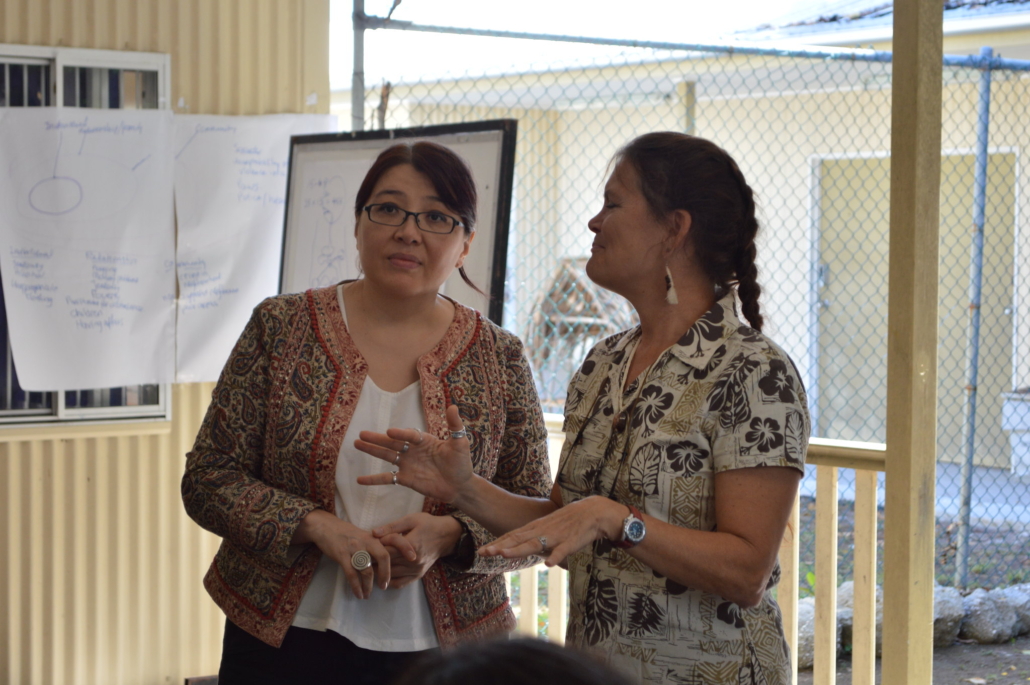
At a UNDP-supported training conference in 2024, Deputy Commissioner Simpson Deidanang reported that “Since 2021, over the past three years, we have received 79 cases, with 53 completed and 23 closed due to insufficient evidence.”
The Nauru Police Force and UN Women agree that women and girls are not sufficiently protected against GBV. UN Women state that “Nauru has no domestic violence, sexual harassment or family legislation, or any other legislation in place that addresses human trafficking or sex tourism.”
In response, the Nauru Police Force has launched specialized GBV training. With support from the UNDP as part of the Nauru Accountable and Inclusive Governance Project, in 2023 the Police Force doubled their domestic violence unit, “increasing from two to five officers.”
ICAAD is a nonprofit organization also working to protect women and girls from GBV. Its program TrackGBV includes the GBV Sentencing Handbook and a TrackGBV Legal Database for the Pacific Islands. This initiative provides information on how to analyze GBV and attitudes towards it on a judicial and community level.
Together, these efforts are working towards poverty reduction in Nauru and target the multidimensional impacts of poverty and violence that women in Nauru face.
Supporting Female Economic and Political Participation
Women in Nauru face exclusion from both economic and political life. UN Women reports that the Pacific region has the “world’s lowest overall average of women in parliament.” Only two women are present in Nauru’s members of parliament, equating to 10.5%.
Economically, women rely on informal work. UN Women report that “Between 75 per cent and 90 per cent of all market vendors in the Pacific are women.” The working conditions are poor, and the profit is low. Consequently, “Female-headed households are more likely than male-headed households to be or fall below the poverty line.”
The UNDP has partnered with the Women Empowerment Nauru Association (WENA) to increase women’s engagement with politics.
At the July 2024 Pacific Islands Forum Women Leaders meeting, regional organizations and UN Women endorsed initiatives to strengthen women’s political and public participation. President Heine highlighted the links between women’s political representation, GBV and economic participation. President Heine emphasized the need to “safeguard women-led industries” to enhance political participation and strive towards poverty reduction in Nauru for women.
Initiatives Supporting Women’s Health
Women’s health is significantly at risk in Nauru, driven by limited access to sanitation. Only “66 per cent” of the population has access to sanitation facilities, restricting menstrual hygiene for many women.
Anemia remains widespread, affecting 44% of pregnant women and 32% of non-pregnant women, with long-term consequences for maternal and overall health. Natural disasters intensify these risks as women lose access to health care, shelter and food at higher rates than the rest of the population.
The nonprofit Hesperian Health Guides supports women’s health in Nauru by supplying free and accessible health information. The organization distributes educational resources covering women’s health, safety, and environmental health.
Their titles are available in “84 languages” across “221 countries.” Its website HealthWiki is also available digitally at no cost. Its outreach is working towards poverty reduction in Nauru by improving health care autonomy.
Final Note
While poverty still affects many in Nauru, especially women, the country is taking action:
- The Nauru Police Force, UNDP, ICAAD and UN Women are tackling gender-based violence.
- WENA and regional forums are boosting women’s political and economic participation.
- Nonprofits like Hesperian Health Guides provide free health education and resources.
These efforts empower women and create real pathways out of poverty.
– Lucy Kerr
Lucy is based in Coventry, UK and focuses on Good News and Politics for The Borgen Project.
Photo: Flickr
 HIV/AIDS in Tunisia is still a challenge, but the country is making steady progress through better testing, treatment and community support. New data highlights