Digital Poverty in the Least Developed Countries
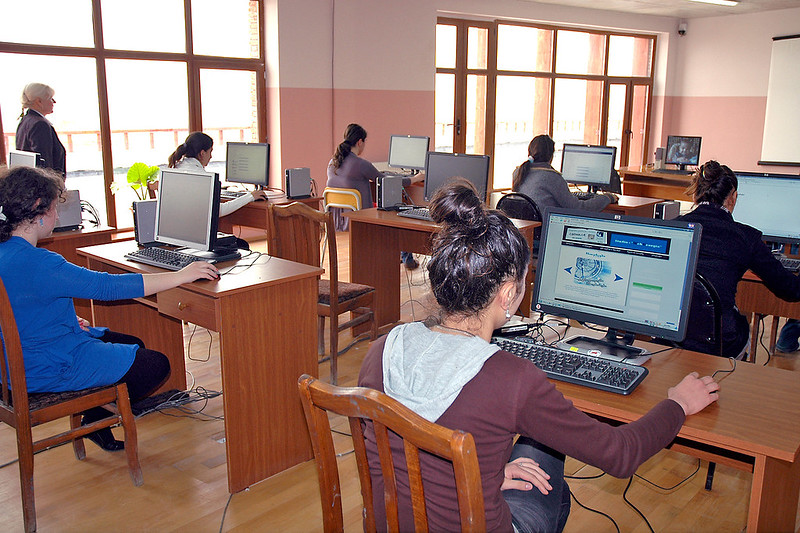 Millions are being left behind in the digital age, as digital poverty in the least developed countries becomes ever more entrenched in global society. As the world sees its’ fourth industrial revolution, the United Nations’ list of the 46 Least Developed Countries (LDCs) is seeing a growing digital divide. Just under a fifth of the world’s population lives in the least developed countries, and yet almost 70% of the collective LDC population still does not have access to the internet.
Background
Digital poverty in the least developed countries could deepen global socio-economic inequalities and exclude those living in LDCs from fully participating in the global economy. Digital poverty is also holding the growth of business back; in Senegal, 80% of people cannot use the internet for work, and in Rwanda this jumps to 99%. Elsewhere, in the LDCs of Mozambique, Tanzania and Uganda, only 10% of businesses have a computer.
As new technologies develop at an exponential rate in more developed countries, LDCs are left outpaced. For example, 5G mobile networks are becoming commonplace in more developed countries, whilst LDCs are still only able to work with 2G and 3G networks, according to the U.N. This digital gap reinforces disparities in education, employment, and economic growth. However, efforts are underway to understand the facts that contribute to digital poverty in least developed countries and to bridge the digital divide.
About Digital Poverty
Digital poverty refers to restricted or no access to digital resources such as the internet, computers and mobile phones. It also encompasses digital illiteracy, where individuals lack the skills or education necessary to utilize online tools effectively. Digital poverty exists on a spectrum—while some individuals may have limited access, others do not have access to technological advancements at all.
Globally, 3.7 billion people lack access to or do not use the internet, with sub-Saharan Africa particularly affected. Digital poverty disproportionately affects vulnerable populations, including women, the elderly, and those with lower education levels.
Key contributing factors to digital poverty include:
- High Costs: Internet services and devices remain unaffordable for many in LDCs.
- Infrastructure Gaps: Unreliable electricity and insufficient ICT infrastructure hinder internet expansion.
- Limited Education: Many individuals lack the skills to navigate digital technologies or do not recognize the benefits of being online, according to Telecommunications Policy.
- Content Accessibility: Many LDCs lack sufficient digital content available in local languages.
The Impact
The impacts of digital poverty can limit other aspects of a person’s life, including their earning potential. More than 80% of jobs that are middle-skilled, and therefore higher earning, rely on individuals having skills in technology and access to digital platforms and technology, according to the Institute of Electrical and Electronics Engineers (IEEE). Lower-skilled jobs, which do not have these requirements, tend to be lower paid. This results in a cycle of individuals in digital poverty taking on lower-income jobs, which further limits possible education, meaning that people cannot gain the digital skills they need to secure the higher-earning, digitally focused jobs.
In LDCs, this cycle could limit a nation’s economic progress, both in terms of its citizens’ economic opportunities and mobility, and in limiting an LDCs ability to partake as effectively in online trade, both nationally and globally.
Digital Poverty: Solutions
Amazon’s Project Kuiper is a low-cost satellite internet initiative that provides broadband access to underserved regions. Whilst precise costs are still not public, the project promises that its 3,232 satellite constellation will provide speeds comparable to 4G internet, addressing infrastructure limitations faced by LDCs.)
The UNDP commenced its Doha Program of Action (DPoA) in 2022, set to run through to 2031. The DPoA is a framework strategy which aims to accelerate digital accessibility in LDCs through five key steps, including early engagements with governments, tailoring digital solutions that “work for everyone,” creating result-driven roadmaps, improving technical capacities and sharing skills and expertise through archives and assemblies.
Whilst the DPoA is still in its’ formative years, initiatives like this, which focus on policy development, equitable digital solutions, and infrastructure expansion, in collaboration with governments, NGOs, academia, and private companies, have previously been successful.
Digital Literacy Workshops
In Bangladesh, the UNDP facilitated digital literacy workshops for female entrepreneurs, boosting their ability to generate income. Similarly, in Nepal, the UNDP collaborated with a local bank firm to equip women from rural areas with the knowledge of how to partake in online transactions.
UNDP reports on its website that an initiative in Afghanistan improved and expanded a digital payment system, which resulted in a growth in financial inclusion and the synchronization of financial services. These success stories demonstrate how global collaboration can boost access to the digital age and enhance local economies.
The Future
Bridging the digital divide extends beyond simple internet access—it directly impacts global poverty reduction. Improved internet access enables entrepreneurship and job creation while allowing individuals to access essential financial services. More than 25% of the global population lacks access to banking, restricting economic mobility, but with the right initiatives, this can change.
Expanding digital access could improve economies by enhancing trade, education and health care. Closing the digital divide could foster international economic growth, benefiting both developing and developed nations.
Closing the digital divide is not a challenge that any single country can solve alone—it requires global collaboration and, when used the right way, technology can even be a part of the solution. While recent technological initiatives provide hope, sustained investment in digital infrastructure, policy reform, and education will be necessary to ensure long-term success.
– Amber Lennox
Amber is based in Suffolk, UK and focuses on Technology and Solutions for The Borgen Project.
Photo: Flickr
